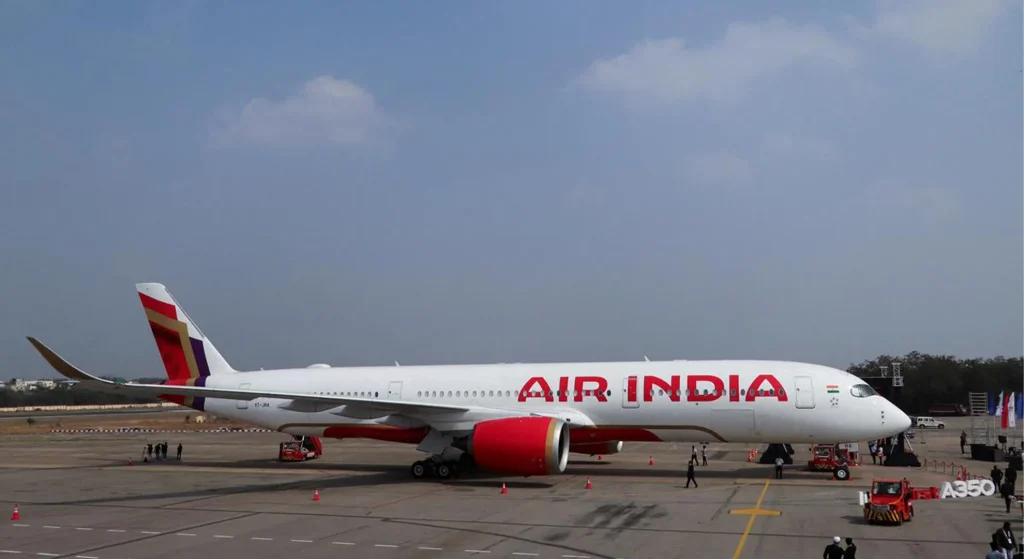
Air India Terminates Pilot After Screening Reveals Psychoactive Substance Use Following August 4 Flight
Pilot’s Employment Terminated by Air India After Substance Test Comes Back Positive.

An Airbus A320 operating a Phuket-to-New Delhi service with 137 passengers and eight crew members experienced a sudden drop in altitude during the flight, leaving 24 passengers and crew injured after the unexpected incident.
Air India Pilot Dismissed After Psychoactive Substance Test Following Phuket-Delhi Incident
Air India has dismissed the pilot who was in command of a Phuket-to-Delhi flight that experienced an unexpected loss of altitude earlier this month after a subsequent test detected the presence of a psychoactive substance.
The airline confirmed that the pilot’s employment was ended immediately after a confirmatory examination produced a non-negative result. Air India said the decision was consistent with its strict approach to aviation safety and regulatory compliance.
In its statement, the airline reiterated that passenger and operational safety remain its foremost concern. It said that any breach involving safety standards, fitness requirements or applicable aviation regulations would be treated seriously.
According to Air India, the Pilot-in-Command of the Phuket-New Delhi service tested positive for a psychoactive substance. The carrier said its zero-tolerance policy required it to take immediate action, resulting in the termination of the pilot’s employment.
The development follows an aviation incident involving an Airbus A320 operated by Air India. The aircraft was travelling from Phuket in Thailand to New Delhi when it unexpectedly experienced a significant change in altitude.
The flight was carrying 137 passengers along with eight members of the crew when the incident occurred on August 4.
Although the aircraft encountered an altitude disturbance during the journey, it subsequently stabilised and completed its flight safely. Twenty-four people were reported to have sustained injuries, with four of those injuries classified as serious.
Indian aviation authorities subsequently designated the event as a serious incident, prompting an investigation into the circumstances surrounding the aircraft’s unexpected change in altitude.
Investigation examines aircraft systems
The incident has attracted attention from aviation investigators because the aircraft briefly experienced the loss of three hydraulic systems.
A preliminary investigation report issued by India’s Aircraft Accident Investigation Bureau on Friday provided additional information about the sequence of events.
According to the report, the aircraft’s flight-control system recorded a temporary loss of three hydraulic systems lasting several seconds.
Hydraulic systems are an important part of an aircraft’s operation because they assist in controlling various flight systems. The temporary loss recorded during the Air India flight contributed to the unusual behaviour of the aircraft and required the flight crew and aircraft systems to respond to the situation.
The investigation report described the aircraft as having experienced an “altitude upset.”
During the incident, the aircraft initially climbed by approximately 372 feet, equivalent to about 113 metres. It then descended by around 292 feet, or approximately 89 metres.
The changes occurred within a relatively short period, creating an unexpected alteration in the aircraft’s flight path.
The report indicates that the aircraft’s automated systems also responded to the hydraulic disruption. The autopilot disconnected following the system failure, while a stall warning was activated for approximately two seconds.
The aircraft’s systems subsequently recovered, allowing the flight to return to a normal operating condition.
Investigators are continuing to examine the incident to establish precisely what caused the hydraulic systems to become unavailable and how the aircraft responded during the event.
Aircraft eventually returned to normal operation
Despite the sudden altitude change and temporary system disruption, the aircraft was able to stabilise.
The preliminary report said that after the systems recovered, the aircraft’s operation returned to normal.
The aircraft ultimately completed the flight and landed safely in New Delhi.
The incident nevertheless resulted in injuries to 24 people. Four of those injured were reported to have suffered serious injuries, highlighting the potentially significant consequences of an unexpected altitude disturbance aboard a passenger aircraft.
The fact that the aircraft landed safely does not mean the event was treated as insignificant by aviation authorities. India’s civil aviation ministry classified it as a serious incident, leading to a formal investigation.
The purpose of the investigation is to establish the sequence of events, identify contributing factors and determine whether any technical, operational or human issues played a role.
Airbus and BEA assisting investigation
The investigation has also received support from international aviation organisations.
Airbus, the manufacturer of the A320 involved in the incident, is assisting the Indian authorities as they examine the aircraft’s operation and the reported hydraulic-system issue.
France’s civil aviation safety investigation agency, the BEA, is also supporting the Indian investigation.
The involvement of both organisations reflects the international nature of modern aviation investigations, particularly when an aircraft manufactured in one country is operated by an airline based in another and experiences an incident involving multiple technical and operational questions.
Investigators will be examining available information to determine how the aircraft systems behaved, what caused the temporary hydraulic-system loss and how the flight crew responded.
The preliminary report represents an early stage of that process and does not necessarily establish a final cause for the incident.
Pilot’s test becomes part of investigation
Alongside the technical findings, investigators also examined the fitness of the flight crew.
The preliminary report specifically addressed the question of whether the Pilot-in-Command had tested positive for a psychoactive substance.
It stated that the pilot was found to be non-negative during a confirmatory test for psychoactive substances.
The finding subsequently led Air India to take disciplinary action.
The airline said the pilot’s employment had been terminated with immediate effect in accordance with its zero-tolerance policy concerning violations of safety, fitness and regulatory requirements.
The timing of the employment decision means the pilot will no longer work for Air India following the test result.
The airline’s statement did not suggest that the psychoactive substance finding alone established that the substance contributed to the aircraft’s temporary altitude disturbance. Determining whether there was any connection between the test result and the flight incident is a matter for the relevant investigation.
Technical failure and pilot fitness are separate issues
The preliminary findings contain two significant areas of investigation: the aircraft’s temporary hydraulic-system failure and the pilot’s psychoactive-substance test result.
The technical information shows that three hydraulic systems were unavailable for several seconds and that the autopilot subsequently disconnected. The aircraft also issued a brief stall warning before its systems recovered.
Separately, investigators recorded the result of the confirmatory substance test involving the Pilot-in-Command.
These findings form part of the broader investigation, but they should not automatically be interpreted as proving that one caused the other.
Aviation accident investigations generally examine multiple factors, including aircraft systems, weather, crew actions, operational procedures, maintenance and other relevant circumstances.
The final conclusions will depend on the complete body of evidence gathered by investigators.
What happened during the flight?
The aircraft was operating a scheduled service between Phuket and New Delhi on August 4 when it experienced the altitude disturbance.
At the time, there were 137 passengers and eight crew members on board.
The aircraft unexpectedly changed altitude, first moving upward by roughly 372 feet before subsequently descending by approximately 292 feet.
The incident caused injuries among people aboard the aircraft. A total of 24 people were injured, and four of those injuries were described as serious.
Following the disturbance, the aircraft stabilised and continued its journey.
It later landed safely in New Delhi.
The event was subsequently referred to aviation authorities, which classified it as a serious incident and began examining the circumstances.
Preliminary report provides new details
The Aircraft Accident Investigation Bureau’s preliminary report has provided the first detailed account of some of the technical events that occurred during the flight.
The report said the aircraft’s flight-control system detected the loss of three hydraulic systems for several seconds.
That temporary failure was followed by an altitude upset.
The aircraft gained altitude before descending, while the autopilot disengaged. A stall warning was also triggered for two seconds.
The hydraulic systems later recovered, after which the aircraft returned to normal operating conditions.
The preliminary nature of the report is important. Such reports are intended to provide information about what investigators have established at an early stage, while the wider investigation continues.
They do not necessarily represent the final determination of the cause or assign definitive responsibility for an aviation incident.
Air India stresses its safety policy
Air India has used the latest development to underline its approach to safety and regulatory compliance.
The airline said safety remains its highest priority and that it maintains a zero-tolerance policy toward violations involving safety, fitness or regulatory obligations.
The immediate dismissal of the pilot followed the confirmatory test result.
The carrier’s decision demonstrates that it treats fitness-for-duty requirements as a critical component of flight safety.
Pilots are responsible for operating aircraft carrying large numbers of passengers, and airlines are required to ensure that flight crew meet applicable medical and operational standards.
Air India’s statement indicated that the pilot’s continued employment was incompatible with its internal safety policy following the test finding.
Questions remain about the full sequence of events
Although the preliminary report has clarified some aspects of the incident, several questions remain under investigation.
Authorities will need to establish the precise cause of the temporary hydraulic-system loss and determine how the aircraft’s flight-control systems responded.
Investigators will also examine the sequence of crew actions during the altitude disturbance.
The psychoactive-substance test result is another element that investigators will consider as part of the overall assessment of the flight.
However, the available preliminary information does not by itself establish whether the test result had any role in the aircraft’s technical problems or altitude change.
A final assessment would require investigators to consider all relevant evidence before reaching conclusions.
Airbus A320 involved in the incident
The aircraft involved was an Airbus A320, one of the most widely operated passenger aircraft families in commercial aviation.
The aircraft was travelling internationally from Thailand to India when the incident occurred.
Because of the aircraft’s technical characteristics and the reported loss of multiple hydraulic systems, Airbus has become involved in the investigation.
The BEA is also assisting Indian investigators, adding technical expertise from France’s aviation safety investigation authorities.
Their involvement is expected to help investigators examine the aircraft’s systems and understand the sequence of technical events recorded during the flight.
Passengers injured but aircraft landed safely
For those travelling aboard the flight, the sudden altitude change resulted in injuries despite the aircraft ultimately reaching its destination.
Twenty-four people were injured during the incident, including four who suffered serious injuries.
The aircraft’s eventual safe landing meant that the flight did not develop into a more severe aviation accident, but the injuries and system disruption were sufficient for authorities to treat the event seriously.
The investigation will therefore focus not only on the fact that the aircraft recovered but also on why the disturbance occurred and what factors contributed to the injuries.
Pilot’s dismissal follows confirmatory test
Air India’s decision came after the pilot underwent testing for psychoactive substances.
The preliminary investigation report said the Pilot-in-Command received a non-negative result in the confirmatory test.
Following that finding, Air India ended the pilot’s employment with immediate effect.
The airline said the action was consistent with its zero-tolerance policy.
The dismissal represents a separate employment and safety decision from the broader investigation into the aircraft incident.
Investigators will determine whether any relationship existed between the pilot’s fitness status and the events that took place during the flight.
Investigation remains ongoing
The current findings should therefore be regarded as part of an ongoing investigation rather than a final explanation of the incident.
The preliminary report has established that the aircraft experienced a temporary loss of three hydraulic systems, an altitude disturbance, autopilot disengagement and a short stall warning.
It also recorded the result of the Pilot-in-Command’s confirmatory psychoactive-substance test.
The aircraft subsequently recovered and returned to normal operation before landing safely.
Meanwhile, Airbus and the BEA are assisting Indian authorities with the investigation.
As investigators continue reviewing the technical and operational evidence, further information may emerge about the cause of the hydraulic-system failure, the aircraft’s response and the circumstances surrounding the crew member’s test result.
For now, Air India has taken immediate action against the pilot, while the official investigation continues to determine the full circumstances surrounding the August 4 Phuket-to-New Delhi flight.
The incident has highlighted two separate areas of aviation safety: the importance of reliable aircraft systems and the requirement that flight crew remain fully compliant with health, fitness and regulatory standards.
Air India has reiterated that it will maintain a strict approach to such requirements, while Indian investigators continue their work to establish the complete sequence of events and determine the factors that led to the aircraft’s unexpected altitude change.
Air India Faces Fresh Safety Scrutiny After Pilot Drug Test Finding
Psychoactive-substance finding raises fresh safety concerns
The discovery that an Air India pilot tested positive for a psychoactive substance has prompted renewed attention to the importance of maintaining strict fitness and safety standards within the aviation industry.
The finding has been described as a serious matter because pilots are responsible for operating aircraft carrying large numbers of passengers and are expected to meet stringent medical and professional requirements before and during their duties.
The confirmation of psychoactive-substance use has therefore raised questions about existing screening procedures and whether additional safeguards are necessary to ensure that flight crew members are fit to operate commercial aircraft.
The incident has also placed greater focus on how airlines and regulators identify potential substance-related risks among pilots.
Authorities consider stronger screening measures
Following the incident, India’s aviation authorities indicated that they were examining whether the existing rules governing psychoactive-substance testing should be strengthened.
The Ministry of Civil Aviation said it was considering tighter screening requirements as part of a broader effort to reinforce aviation safety.
The move reflects concerns that existing procedures may need to be reviewed in light of the latest case.
Any changes could potentially affect how frequently pilots are tested, the circumstances under which screening takes place and the mechanisms used to ensure that crew members meet fitness requirements.
The consideration of stricter measures comes at a time when aviation authorities are under pressure to maintain public confidence in the safety of commercial air travel.
For passengers, knowing that pilots are subject to robust and effective health and substance screening is an important part of that confidence.
Air India introduces mandatory screening for pilots
Air India has also responded directly to the situation.
The airline instructed all of its pilots to undergo a mandatory one-time drug screening.
The decision expands testing beyond the individual pilot involved in the incident and applies across the airline’s pilot workforce.
By requiring the additional screening, Air India is seeking to identify any other potential cases and demonstrate that it is taking the issue seriously.
The measure also comes in line with the airline’s stated commitment to maintaining strict safety standards.
Air India has previously emphasized that safety is its highest priority, and the latest testing requirement represents another step in reinforcing that message.
The one-time screening is expected to provide the airline with a broader picture of compliance among its flight crew while also demonstrating to regulators and passengers that the carrier is responding proactively.
A new challenge for Air India
The latest incident represents another difficulty for Air India as the airline continues its effort to improve its operations and rebuild its reputation.
The carrier is owned by Tata Group, one of India’s largest business conglomerates, which took control of Air India as part of an effort to revive and transform the airline.
Since the takeover, the company has faced the challenge of modernising the carrier, improving operational standards and restoring its position in the highly competitive international aviation market.
That transformation has occurred against a backdrop of several setbacks.
The airline has been working to address long-standing concerns involving its operations, customer experience, fleet and overall public image.
The latest pilot-related incident adds another layer of scrutiny because aviation safety is an area where public confidence can be particularly sensitive.
Safety remains central to the airline’s turnaround
For Air India, improving safety standards is an essential part of its broader turnaround programme.
An airline seeking to expand its international presence must maintain high levels of confidence among passengers, regulators and industry partners.
Any incident involving flight crew fitness can therefore attract significant attention.
The discovery of a psychoactive substance in a pilot’s confirmatory test has placed additional emphasis on the airline’s internal screening and monitoring systems.
Air India’s decision to order a one-time screening for all pilots indicates that the carrier is treating the issue as a matter requiring a broader response rather than limiting action to the individual case.
The airline has also reiterated its zero-tolerance position toward violations involving safety, fitness or regulatory requirements.
The wider regulatory debate
The incident has also opened a wider discussion about how aviation regulators should address psychoactive-substance use among flight crew.
Commercial pilots operate in an environment where alertness, judgment and physical and mental fitness are fundamental.
Any substance that could potentially affect those abilities is therefore treated as a serious safety concern.
The aviation ministry’s consideration of stronger screening rules suggests that authorities are assessing whether additional measures could reduce the possibility of pilots operating aircraft while affected by prohibited substances.
Such measures could form part of a broader approach involving testing, medical assessments, reporting procedures and enforcement.
The objective would be to identify potential problems before they create a risk during flight operations.
The importance of pilot fitness
Pilot fitness is a fundamental component of aviation safety.
While aircraft are equipped with increasingly sophisticated technology and automated systems, pilots remain responsible for monitoring the aircraft, responding to abnormal situations and making critical decisions when necessary.
Ensuring that pilots are physically and mentally fit to perform those responsibilities is therefore a key requirement for airlines.
The recent test result has brought that issue into sharper focus at Air India.
The airline’s response, combined with the aviation ministry’s consideration of tighter rules, suggests that authorities and industry officials are examining whether current procedures provide sufficient safeguards.
Air India’s broader reputation problem
The pilot-testing controversy comes at a difficult period for Air India.
The airline has been undergoing a major transformation since its acquisition by Tata Group.
The objective has been to rebuild the carrier and position it as a stronger competitor in both the Indian and international markets.
That process has involved significant investment and organisational changes, but the airline has also faced a series of challenges.
Each new incident can create additional pressure on the company because the carrier is attempting to change perceptions built up over many years.
The latest development could therefore have implications beyond the individual pilot involved.
It may influence public discussion about the airline’s safety culture, regulatory compliance and ability to implement the standards expected of a modern international carrier.
The June 2025 tragedy remains a major setback
The most serious blow to Air India’s reputation came in June 2025, when Air India Flight 171 crashed shortly after departing from Ahmedabad.
The aircraft was a Boeing 787 Dreamliner operating a London-bound service.
The crash resulted in the deaths of almost everyone aboard the aircraft.
According to the figures cited, 242 people were on board, of whom all but one died. The accident also claimed the lives of 19 people on the ground.
The scale of the tragedy made it one of the most devastating events in the airline’s recent history.
It also generated intense scrutiny of Air India and the wider Indian aviation sector.
A tragedy that changed the safety conversation
The Flight 171 crash became a defining moment for the airline.
The loss of passengers and people on the ground had an enormous human cost and prompted questions about aviation safety, aircraft operations and the circumstances surrounding the crash.
For Air India, the disaster represented a particularly severe setback because it occurred while the company was attempting to rebuild its image and establish itself as a modern global airline.
The airline had been working to strengthen its brand and expand its network, but the accident placed safety at the center of public attention.
The latest pilot testing issue comes against that background.
Although the two incidents are separate, both have contributed to renewed public and regulatory attention toward Air India’s safety standards.
Rebuilding trust after multiple setbacks
Restoring confidence following a major aviation disaster is a long-term process.
Air India’s management must address the immediate operational requirements of running the airline while also demonstrating that lessons are being incorporated into its safety culture.
The response to the pilot’s psychoactive-substance test is therefore significant.
By terminating the pilot’s employment and ordering additional screening across its pilot workforce, the airline is demonstrating that it intends to enforce its stated safety requirements.
The government’s consideration of tighter testing rules adds another layer of oversight.
Together, these measures could contribute to efforts to strengthen confidence in the carrier.
Why the latest incident matters
The significance of the latest case extends beyond the individual pilot.
Aviation safety depends on multiple layers of protection. These include aircraft maintenance, technical systems, operational procedures, air traffic management and the fitness of flight crews.
A weakness in any one of those areas can potentially create additional risks.
For that reason, regulators and airlines closely monitor issues involving pilot fitness.
The discovery of psychoactive-substance use is particularly sensitive because it raises questions about whether existing screening systems were capable of identifying the issue before the pilot operated the flight.
The subsequent decision to conduct a broader one-time screening of Air India’s pilots is intended to address that concern.
Government and airline responses
The aviation ministry’s consideration of stronger screening rules indicates that the government is also evaluating the regulatory implications.
Meanwhile, Air India has taken an internal step by ordering mandatory testing for its pilots.
These responses show that the incident is being treated as more than an isolated employment matter.
The case has prompted consideration of whether the wider system should be strengthened to reduce the likelihood of similar incidents in the future.
Any new requirements would need to balance effective safety monitoring with practical implementation across the aviation sector.
Maintaining passenger confidence
For travellers, confidence in the people operating an aircraft is just as important as confidence in the aircraft itself.
Passengers expect airline pilots to be fully fit, alert and capable of responding to unexpected situations.
The latest development may therefore raise concerns among some travellers, particularly given Air India’s recent history of high-profile setbacks.
The airline’s challenge is to demonstrate through concrete action that its safety policies are not simply statements but are actively enforced.
Mandatory testing, strict disciplinary measures and cooperation with regulators can all form part of that process.
Air India’s continuing transformation
Despite the challenges, Air India remains engaged in a broader effort to transform its business.
The airline’s ownership by Tata Group has brought renewed investment and expectations of significant improvement.
The company is seeking to modernise the carrier, improve its operational performance and expand its position in global aviation.
However, achieving those objectives requires more than fleet expansion or network growth.
A successful turnaround also depends on building a strong safety culture and ensuring that employees at every level comply with applicable standards.
The latest incident illustrates how individual cases can quickly become important issues for the wider organisation.
The road ahead
Air India now faces the task of addressing the immediate concerns raised by the pilot’s test while continuing its longer-term transformation.
The airline has already terminated the employment of the pilot involved and ordered a one-time drug screening programme for all pilots.
The aviation ministry is considering whether additional regulatory requirements should be introduced.
The investigation into the August 4 flight is also continuing, with authorities examining both the technical events involving the aircraft and the circumstances surrounding the pilot’s test.
These processes will help determine what additional measures may be necessary.
A renewed focus on safety
The latest development reinforces the importance of maintaining strict standards throughout commercial aviation.
For Air India, the issue is particularly significant because the airline is attempting to rebuild public confidence after a series of challenges, including the devastating Flight 171 crash in June 2025.
The loss of 241 of the 242 people aboard that Boeing 787, together with 19 fatalities on the ground, represented a profound setback for the carrier and generated intense scrutiny.
Against that backdrop, any new safety-related incident is likely to receive considerable attention.
Air India’s response has been to emphasize its zero-tolerance policy and introduce wider pilot screening.
At the same time, Indian aviation authorities are examining whether existing regulations should be strengthened.
The combination of airline-level action and possible regulatory changes could lead to tighter monitoring of pilot fitness and psychoactive-substance use.
For Air India, maintaining safety standards will remain essential as it works to recover from past setbacks and build a stronger reputation.
The latest case serves as a reminder that an airline’s safety culture depends not only on aircraft technology and procedures but also on ensuring that every member of the flight crew meets the required standards before taking responsibility for passengers.
As the investigations and regulatory reviews continue, the focus will remain on identifying what can be improved and ensuring that similar concerns are detected and addressed as early as possible.