Planning to leave Dubai for an extended summer break? Homeowners should be aware of the potential problems that can develop indoors when air conditioning remains off for several weeks, from excessive humidity and mould growth to unpleasant odours and damage to furniture.
Leaving Dubai for Weeks? Here’s What Can Happen to Your Home When the AC Is Switched Off All Summer.
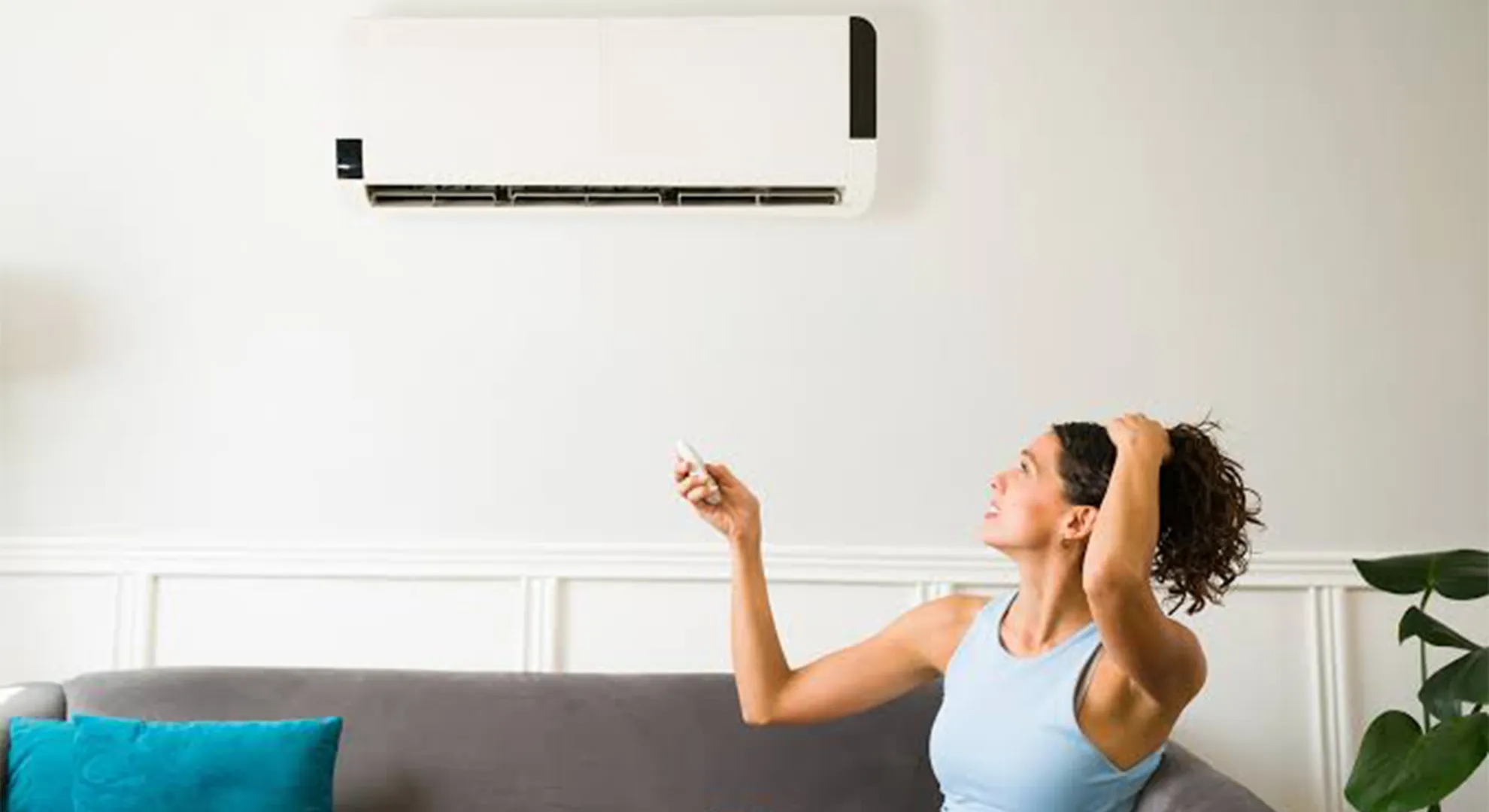
After weeks away during the summer, Dubai residents are coming home to a range of household problems. Cleaning companies and AC specialists are seeing increased demand as homeowners deal with stale odours, reduced cooling efficiency, water leaks, dampness, mould and other maintenance issues.
Returning to a Dubai Home After a Long Summer Break Can Bring Unexpected Problems
For many people living in the UAE, the end of the summer holiday marks a return to normal life. Families come back from overseas trips, children prepare for the new school term, and households gradually return to their usual daily routines.
But after being locked up for several weeks, a home may not be exactly as residents left it.
Apartments and villas that remain vacant throughout Dubai’s hot and humid summer can develop a variety of maintenance issues. Unpleasant odours, reduced air-conditioning performance, water leakage, dampness and mould are among the problems residents may encounter after returning.
For some homeowners, the first indication that something has gone wrong can come as soon as they open the front door.
One resident’s experience
Abdul Basith, an engineer based in Al Quoz, recently experienced this after spending around six weeks away from his apartment in Al Nahda, Dubai.
After a long journey, Basith expected to return home, unpack his luggage and resume his normal routine. Instead, he was greeted by a strong and unpleasant odour inside the apartment.
At first, he assumed the smell was simply the result of the property remaining closed for an extended period.
He opened the windows to improve ventilation and switched on the air-conditioning system, expecting the smell to gradually disappear.
However, the problem continued.
Basith soon discovered that the apartment had another issue. The air-conditioning system was not providing the level of cooling he expected, and an unusual odour became noticeable whenever the unit was operating.
The situation became more concerning when he subsequently found water leaking from one of the AC units.
What had initially appeared to be a simple problem caused by a closed-up apartment had turned into a combination of cleaning and maintenance issues.
“After travelling for several hours, the last thing you expect is to come home and immediately start dealing with AC repairs and cleaning,” Basith said.
The family eventually arranged for the apartment to undergo a detailed cleaning, while technicians were called in to inspect the air-conditioning system.
Only after those problems were addressed could the household properly settle back into the apartment.
Long periods without ventilation can affect homes
Basith’s experience reflects an issue that can become more noticeable during the summer holiday period, particularly when residents leave their homes unattended for several weeks.
Dubai’s climate means homes can be exposed to high temperatures and significant humidity during the summer months.
When a property remains closed, there may be little fresh-air circulation. At the same time, moisture can accumulate in certain areas, particularly around air-conditioning systems, bathrooms, kitchens and other spaces where humidity is more likely to develop.
Dust can also build up during the period when a property is unoccupied.
These conditions can contribute to unpleasant smells and may create an environment in which mould or damp patches develop if moisture is present.
For residents returning after several weeks, the combination of heat, humidity, stagnant air and dust can therefore make the property feel very different from how it did before the holiday.
Cleaning companies see a rise in demand
Cleaning professionals in Dubai and Sharjah say they often experience an increase in demand when residents begin returning from their summer breaks.
Shamveel Khan of Clean Touch, which operates in Al Nahda, Sharjah, said his team has been receiving a high number of requests from residents whose homes have remained closed while they were away.
According to Khan, his cleaners are currently visiting around three or four properties each day.
The increase in demand has made scheduling more challenging, with some customers having to wait until the following day because available appointments are already booked.
“Since families have started coming back from the summer break, our schedule has become very busy,” he said.
The issues found inside vacant homes can vary considerably.
Some properties simply require a thorough cleaning after weeks without regular housekeeping. Others may have more noticeable concerns, including unpleasant odours, accumulated dust, damp areas, insects or mould.
Air-conditioning vents and nearby walls can be particularly important areas to inspect when there are signs of moisture or poor ventilation.
Kitchens and bathrooms can develop strong odours
According to Khan, kitchens and bathrooms are among the areas that frequently require additional attention when homes have been left unused.
Drains that are not used for several weeks can contribute to unpleasant smells. In some cases, ordinary surface cleaning may not be enough to remove the odour, particularly if the source is connected to a drain or another area that has remained undisturbed.
When residents return after a long absence, they may therefore find that a routine cleaning is not sufficient.
Some homeowners request a more extensive deep-cleaning service to address areas that may have accumulated dust, dirt or odours during the family’s absence.
Bathrooms can require particular attention because stagnant water or dry drains may contribute to unpleasant smells.
Kitchens can also develop odours if food particles, rubbish or other organic material were left behind before residents departed.
For this reason, preparing a home before leaving for an extended holiday can be just as important as cleaning it after returning.
Air-conditioning becomes a major concern
While cleaning issues are common, AC-related complaints can be particularly frustrating for residents returning to Dubai during the hottest part of the year.
Asad Niyaz of Al Nafiz AC Repair, which operates around Abu Hail in Dubai, said his team has also been experiencing a busy period.
According to Niyaz, technicians are receiving calls throughout the day and are visiting several homes daily.
Many of the complaints relate to air-conditioning performance.
Residents may expect their AC to cool the home immediately after switching it back on, but an extended period of inactivity can reveal problems that were not apparent before the holiday.
A system that was working normally before residents left may perform poorly when they return.
Dirty filters can affect cooling
One of the problems technicians may discover is a dirty or clogged filter.
Air-conditioning filters collect dust and other particles as air passes through the system. If filters are not cleaned regularly, accumulated debris can restrict airflow and reduce cooling performance.
When an AC system has been inactive for weeks, residents may notice the problem immediately once they restart it, particularly if the filters were already due for maintenance before the holiday.
Regular cleaning and maintenance can help prevent this from becoming a larger problem.
Residents returning home should therefore check whether filters need cleaning rather than assuming that poor cooling necessarily means the entire system has failed.
Drain lines can also cause trouble
Blocked or restricted drain lines are another potential source of AC-related problems.
Air-conditioning systems can produce condensation as they operate. That moisture normally needs to be carried away through a drainage system.
If a drain line becomes blocked, water may not flow away properly and can instead accumulate around the unit.
This can eventually result in visible leakage.
For residents who have been away for several weeks, discovering water around an AC unit can be an unpleasant surprise, particularly if the leak has been present for some time.
A technician can inspect the drainage system and determine whether a blockage or another fault is responsible.
Dust can accumulate on AC components
Dust accumulation can also affect air-conditioning performance.
Coils and other internal components need to remain reasonably clean for the system to operate effectively. Heavy dust buildup can restrict airflow and reduce efficiency.
In a home that has remained closed, dust may settle on surfaces and potentially enter or accumulate around parts of the AC system.
When the system is switched on again, residents may notice weaker cooling or unusual smells.
Regular maintenance can help identify these problems before they become more serious.
Why strange smells can appear when the AC starts
One of the most common complaints after a long period without AC operation is an unusual smell coming from the vents.
Niyaz said moisture can accumulate inside an air-conditioning system when it remains unused for an extended period.
Combined with dust and other particles, this can contribute to unpleasant odours when the system is switched back on.
Residents may initially assume that the smell is coming from the apartment itself, but the source can sometimes be within the AC system.
This is why simply opening windows may not resolve the problem.
If the odour continues after the property has been ventilated and cleaned, an AC inspection may be necessary.
Mould is another concern
Humidity is an important consideration for homes that remain closed during the UAE summer.
Where moisture accumulates and remains undisturbed, mould can potentially develop on suitable surfaces.
Mould may appear around air-conditioning vents, walls, ceilings or other damp areas.
Early signs can include dark spots, discolouration or a musty smell.
Residents returning from a long holiday should inspect areas around AC units and other places where moisture may have accumulated.
If mould is found, simply covering it with paint or wiping away the visible surface may not address the underlying cause. The source of the moisture should also be investigated.
A home can look clean but still have hidden problems
One of the difficulties for returning residents is that some maintenance problems are not immediately visible.
A property may appear tidy at first glance, but issues can exist inside AC systems, drains or less frequently used areas.
For example, a blocked AC drain may not become obvious until the system is switched on again.
Similarly, an unpleasant smell may originate from a bathroom drain rather than from furniture or carpets.
This is why residents returning after an extended absence may benefit from checking the entire property rather than focusing only on visible dust.
The timing of the return matters
For many UAE residents, the summer holiday coincides with some of the hottest and most humid conditions of the year.
That means a property left vacant for six weeks can experience a prolonged period without the usual circulation and maintenance that comes from daily occupancy.
Residents who return toward the end of the summer may also immediately need to restart their AC systems because of the outdoor heat.
This creates a situation where any problems with cooling, drainage or ventilation become apparent very quickly.
Instead of having time to arrange repairs gradually, families may need to deal with several issues at once.
What residents can check after returning
Homeowners and tenants can carry out a basic inspection before settling back into their normal routine.
They can check whether the AC is cooling properly, listen for unusual sounds and look for water around indoor units.
It is also useful to inspect walls and ceilings for signs of dampness or discolouration.
Bathrooms and kitchens should be checked for unusual smells, blocked drains or signs of insects.
Residents can also examine corners, areas behind furniture and locations near AC vents for visible mould or moisture.
If something appears unusual, arranging an inspection early may prevent a minor problem from becoming more expensive.
Cleaning should go beyond visible surfaces
A regular clean can make a significant difference after a long absence, but some homes may require a more detailed service.
Floors, furniture, windows and commonly used surfaces can accumulate dust during several weeks of inactivity.
Air vents, AC filters and less accessible areas can also require attention.
Bathrooms and kitchens should be thoroughly cleaned, with particular attention paid to drains and areas where moisture may have collected.
For properties with visible mould or persistent odours, residents may need specialist assistance rather than relying solely on standard housekeeping.
Preventive maintenance before leaving
Many of these problems can potentially be reduced by preparing the property before going away.
Residents planning to leave for several weeks can arrange an AC inspection before departure, particularly if the system has already shown signs of weak cooling, unusual smells or leakage.
Cleaning filters and checking drain lines can also help reduce the likelihood of problems developing while the property is empty.
The home should be left free of rubbish and perishable food, while kitchens and bathrooms should be cleaned properly.
Residents may also want to ensure that there are no existing leaks or damp areas before locking the door.
Regular checks can make a difference
For people who own or rent a property but will be away for an extended period, having someone check the home periodically can provide an additional layer of protection.
A trusted family member, friend or property representative can inspect the apartment for leaks, unusual smells, AC problems or signs of moisture.
Early detection can be particularly valuable in the case of water leakage. A small leak that is discovered quickly may be easier to address than one that continues unnoticed for several weeks.
Regular checks can also ensure that any developing maintenance problem is identified before the residents return.
Returning home does not have to mean returning to repairs
The experiences reported by residents and maintenance professionals highlight how quickly a vacant home can develop problems during the UAE summer.
For families returning after six weeks or longer, the first priority may be getting children ready for school and returning to work. However, checking the condition of the home should also be part of the return routine.
A strong smell, poor cooling, water around an AC unit or signs of mould should not simply be ignored.
Cleaning professionals and AC technicians say these issues are common enough during the post-holiday period to keep their schedules busy.
For residents, early inspection and timely maintenance can make the transition back to everyday life considerably easier.
A few basic checks before leaving, combined with periodic monitoring during a long absence, can also reduce the chances of returning to an unexpected repair bill.
Ultimately, leaving a Dubai home closed for several weeks does not guarantee that everything inside will remain exactly as it was. The combination of heat, humidity, dust and inactivity can affect both the living environment and essential systems such as air conditioning.
By preparing the property before departure, arranging checks when possible and inspecting key areas immediately after returning, residents can identify potential problems early and get their homes comfortable again before the demands of work, school and everyday life take over.

Why can an empty UAE home develop these problems?
Leaving a Dubai property unoccupied for several weeks during the summer can create conditions that are very different from those experienced when residents are at home. The combination of extreme outdoor temperatures, high humidity, limited airflow and an inactive cooling system can affect the indoor environment.
When air-conditioning operates normally, it helps regulate temperature and, depending on the system and conditions, can also assist with controlling moisture. Once it remains switched off for an extended period, the indoor environment can become warmer and more humid.
Dust can also accumulate on surfaces and within parts of the cooling system. If moisture is present at the same time, it can create conditions that encourage unwanted buildup around filters, coils, ducts and drainage components.
According to UAE home-services platform Justlife, as many as 30 per cent of homes could experience some form of mould accumulation within their AC systems this year. The company said heat, humidity, dust and trapped moisture can contribute to buildup in different parts of an air-conditioning system, sometimes without residents immediately noticing.
Problems may develop before residents see them
One of the difficulties with AC-related mould and moisture issues is that they may remain hidden for some time.
A homeowner may return from a holiday, switch on the air-conditioning and assume that an unusual smell is simply because the property has been closed. Similarly, weak cooling may initially be blamed on the apartment being particularly hot after several weeks without AC.
However, these symptoms can sometimes indicate that a maintenance problem has already developed.
Dr Saira Hyder, medical director at Justlife, said residents often seek professional help only after they notice an odour or realise that their cooling system is no longer performing as expected.
She said regular AC maintenance is among the practical measures residents can take to prepare their homes for the UAE summer. By the time an unpleasant smell or noticeable reduction in cooling becomes obvious, buildup may already have developed inside the system.
This means that waiting for an obvious problem before arranging maintenance can potentially allow a smaller issue to become more difficult to resolve.
Heat and humidity can create the right conditions
The UAE’s summer climate is a major factor in these problems.
High temperatures can cause indoor areas to become extremely warm when cooling is unavailable. At the same time, humid conditions can introduce or retain moisture within the home.
When moisture becomes trapped in areas that receive little airflow, it can contribute to dampness and mould growth.
Air-conditioning systems contain several components where moisture can accumulate, including drain pans and drainage lines. Filters, coils and ducts can also collect dust and other particles over time.
If these components are not cleaned or maintained, the combination of dust and moisture can contribute to unpleasant smells and reduced system performance.
The problem is not new
The increase in demand for mould-related services during summer is not limited to this year.
Previous UAE summers have also seen a rise in requests for inspections and remediation work.
In 2024, reports indicated that one mould-removal company experienced a 70 per cent increase in summer enquiries. Another business recorded a 42 per cent rise in mould inspections during July and August.
Elsewhere, requests for AC duct cleaning and mould-remediation services reportedly doubled between May and August.
These figures suggest that summer-related moisture and mould concerns can become a recurring issue in UAE homes, particularly during periods of high heat and humidity.
For residents who leave their properties vacant for extended periods, the risk can become more noticeable because there is no one present to identify a developing problem.
Switching off the AC can save energy, but there are trade-offs
Turning off the air-conditioning while travelling can obviously reduce electricity consumption.
For residents who are away for several weeks, leaving the AC running continuously may seem unnecessary, especially when nobody is using the property.
However, DEWA has previously told INSIDER 18 that while switching off AC during a long absence can reduce energy use, allowing the indoor temperature and humidity to rise can create other problems.
Increased heat and moisture can contribute to fungus, unpleasant odours and potential damage to household belongings.
Furniture, fabrics and electronic equipment can all be affected by prolonged exposure to unsuitable indoor conditions.
This creates a balancing act for homeowners: reducing energy consumption while also maintaining an indoor environment that does not encourage moisture-related problems.
What should residents do before travelling?
Preparing a home before leaving for an extended holiday can reduce the likelihood of returning to serious maintenance issues.
One of the first steps is to have the AC system checked if it has not been serviced recently.
Filters should be cleaned, and technicians can inspect the system for signs of dust accumulation, leakage or drainage problems.
Drainage lines should also be checked for partial blockages. If a system is already showing signs of condensation or leakage before departure, the problem should be resolved rather than ignored.
Leaving a known leak unattended for several weeks could allow water damage to become significantly worse.
Similarly, if the AC is already producing an unusual smell or failing to cool properly, it is better to investigate the issue before travelling.
Keep an eye on indoor humidity
Humidity management is another important consideration for residents leaving their homes for long periods.
Previous experts quoted by Khaleej Times have recommended keeping indoor relative humidity below 60 per cent to reduce conditions that can encourage mould development.
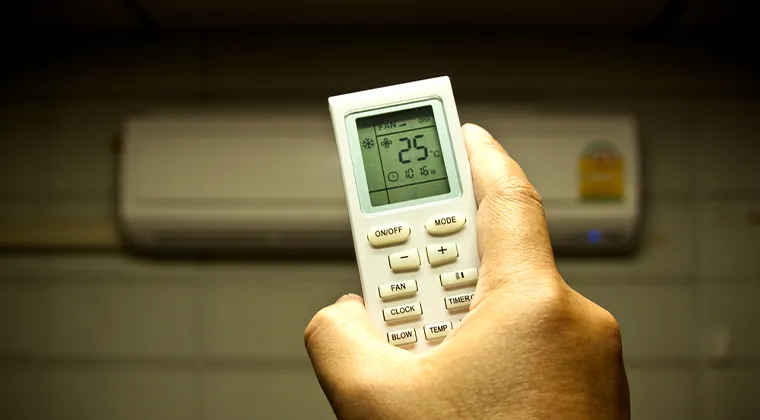
Where residents choose to leave their AC operating during an extended absence, Justlife recommends maintaining the thermostat at approximately 26°C to 28°C and using fan or automatic mode.
The aim is not necessarily to keep the property as cool as it would be while residents are living there. Instead, the objective is to maintain a more controlled indoor environment without unnecessarily consuming large amounts of energy.
Residents should follow their AC manufacturer’s guidance and consider the specific characteristics of their property and system when deciding how to manage cooling during a long absence.
Do not ignore existing AC problems
Residents sometimes notice minor AC issues before leaving and assume they can deal with them after returning.
That approach can be risky when the property will remain empty for several weeks.
A small water leak, for example, may become a much bigger issue if it continues unnoticed.
A partially blocked drainage line could also result in water accumulating around the unit.
Similarly, a dirty filter may restrict airflow and contribute to poor performance once the system is switched back on.
If the AC is already struggling to cool the property, professional maintenance before departure can help identify the cause.
Returning to a hot apartment
Residents coming back from an extended holiday may find that their apartment is extremely hot when they first open the door.
After several weeks without cooling, it can be tempting to immediately set the thermostat to a very low temperature, such as 16°C or 18°C, in an attempt to cool the property as quickly as possible.
However, AC technician Asad Niyaz advises against this approach.
According to Niyaz, residents should not automatically lower the thermostat to an extremely low setting simply because the apartment feels hot.
If the system is not cooling properly, reducing the thermostat further may not solve the underlying problem.
Instead, residents should pay attention to the system’s performance and look for warning signs.
Warning signs residents should watch for
Several symptoms can indicate that an AC system needs attention after a long period of inactivity.
One is weak cooling. If the system is running but the apartment is not becoming cooler as expected, there could be an issue with airflow, filters, coils, drainage or another component.
Another warning sign is an unusual smell coming from the vents.
A persistent odour may indicate buildup or moisture within the system rather than simply stale air in the apartment.
Water leakage is another important sign. Any unexplained water around an indoor AC unit should be investigated rather than ignored.
Residents should also pay attention to unusual sounds. Strange noises when the system starts or operates can indicate a mechanical or maintenance issue.
If any of these symptoms appear, arranging an inspection is preferable to continuing to operate a potentially faulty system.
What about mould inside the home?
Mould can develop in areas where moisture remains present for an extended period.
Residents returning from a long holiday should therefore look beyond the AC itself.
Walls around cooling units, ceilings, bathrooms, kitchens and other areas exposed to moisture should be checked for discolouration or visible growth.
A musty smell can also be an indication that there is a moisture problem even when mould is not immediately visible.
Simply cleaning the visible area may not be enough if the underlying moisture source remains.
If mould keeps returning, the cause should be identified and addressed.
Furniture and electronics also need consideration
The effects of prolonged heat and humidity are not limited to the air-conditioning system.
Furniture, fabrics and electronic devices can also be affected by an indoor environment that remains excessively warm or damp for an extended period.
Wooden furniture may be particularly sensitive to changes in moisture conditions, while fabrics can develop stale smells when left in a closed environment.
Electronic equipment can also be vulnerable to unsuitable environmental conditions.
This is another reason why residents should think about the indoor environment as a whole rather than focusing only on the AC.
Periodic checks can provide extra protection
For residents travelling for several weeks, arranging for someone to visit the property periodically can be a useful precaution.
A trusted friend, family member, neighbour or property manager can check whether the AC is functioning normally and whether there are signs of leakage or unusual smells.
A routine inspection may identify a problem while it is still relatively small.
For example, discovering a water leak after a few days is very different from discovering the same leak after six weeks.
Early detection can give homeowners the opportunity to arrange repairs before the problem causes more extensive damage.
Prepare the property before locking the door
There are several simple measures residents can consider before leaving for a long holiday.
They can begin by cleaning the home thoroughly and removing rubbish or perishable food.
Drains should be checked, and existing leaks should be repaired.
AC filters can be cleaned and the cooling system inspected if maintenance is due.
Residents should also check for signs of dampness or mould that are already present.
Addressing existing issues before departure is generally preferable to leaving them unattended.
Keep essential information accessible
Residents can also prepare for emergencies by ensuring that contact information for their AC technician, building maintenance team or property manager is readily available.
If someone is checking the property during the holiday, they should know whom to contact if they discover a leak, electrical issue or AC fault.
This can reduce delays if something goes wrong while the homeowner is overseas.
Basith plans to take extra precautions
For Basith, the experience of returning to an unpleasant smell, poor cooling and an AC leak has changed the way he intends to prepare for future holidays.
He said that people often spend considerable time organising flights, luggage and other travel arrangements but may not give the same attention to the property they are leaving behind.
His experience has convinced him to arrange AC maintenance before his next extended trip.
He also plans to have someone check his apartment while he is away.
The lesson, he said, is that preparing the home should be treated as another part of holiday planning.
A few preventive steps can make the return easier
For UAE residents, leaving a home empty for several weeks does not necessarily mean problems will develop. However, the combination of summer heat, humidity, dust and inactivity can create conditions that increase the likelihood of maintenance and moisture-related issues.
Taking preventive measures before departure can help reduce that risk.
An AC service, clean filters, properly functioning drainage and the repair of existing leaks are among the areas residents can address before leaving.
For longer absences, maintaining a controlled indoor environment and arranging periodic checks may provide additional protection.
After returning, residents should avoid assuming that every unusual smell or cooling issue will disappear on its own. Persistent odours, weak cooling, water leakage, unusual noises or visible mould can all justify a closer inspection.
Planning the home should be part of holiday planning
The key message for residents preparing for a long summer trip is simple: the holiday does not begin and end with flights and luggage.
The home being left behind also needs some preparation.
Checking the AC, dealing with existing moisture problems, cleaning filters, examining drainage and arranging someone to monitor the property can all help reduce the possibility of unpleasant surprises.
For those choosing to switch off their AC completely, it is particularly important to consider the effect that rising heat and humidity may have on the property and its contents.
For residents who decide to keep the AC running at a moderate setting, the system should still be checked beforehand to ensure it is operating properly.
Ultimately, there is no single approach that works for every home. The appropriate steps will depend on the building, AC system, length of absence and individual circumstances.
What matters most is recognising that an empty Dubai home is still exposed to the region’s summer conditions.
A little preparation before departure may help residents return to a clean, comfortable and functioning home rather than spending the first day back arranging emergency cleaning and AC repairs.