Oil Spill Reaches Oman’s Coastline as Unfavourable Weather Conditions Disrupt Salvage and Cleanup Operations, Officials Report
Oman Coast Hit by Oil Spill as Rough Weather Hampers Cleanup and Recovery Operations, Officials Say.
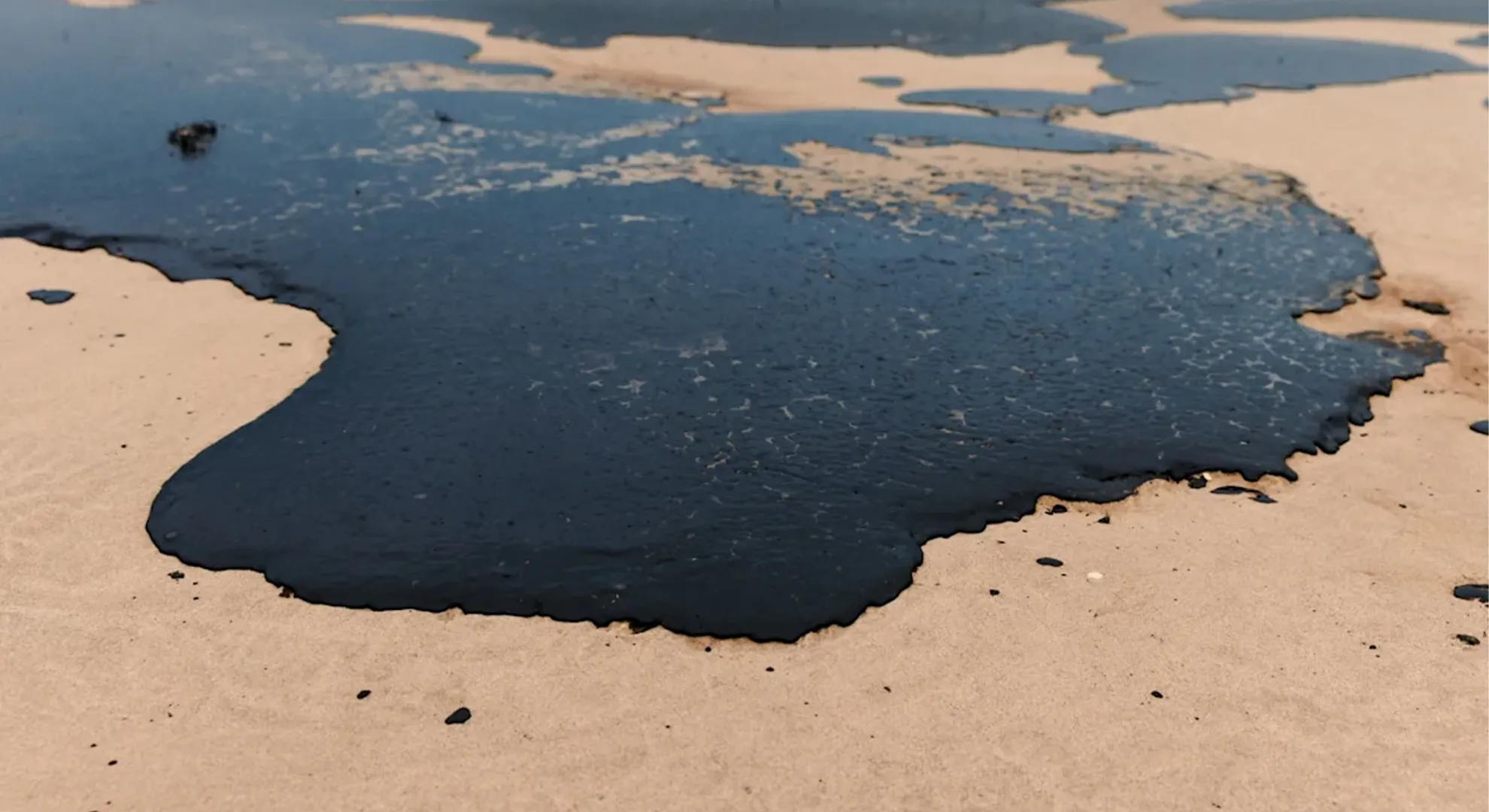
Omani authorities have released additional images showing the Caroline Bezengi tanker after the vessel became stranded along the coast on June 30, providing further visual details about the incident and the ongoing efforts to manage its aftermath.
Oman Oil Spill Response Continues as Rough Seas Hamper Salvage Work
Authorities in Oman are continuing efforts to manage an oil spill after a tanker ran aground near the Sultanate’s coastline, but difficult weather conditions are making the response operation particularly challenging.
An Omani official said on Monday that teams involved in the rescue, containment and pollution-control operation remain engaged at the incident site. However, strong winds and rough seas have complicated attempts to reach the stranded vessel and carry out the necessary work safely.
The incident involves the Caroline Bezengi, an oil tanker that ran aground on June 30 near the Al Hallaniyat Islands.
The grounding resulted in an oil slick that spread along part of Oman’s coastline, affecting approximately 12 kilometres of beaches.
Authorities are working to limit further contamination while also preparing the equipment required to respond to the spill and support the recovery operation.
Severe Weather Creates Major Obstacles
According to Oman’s state news agency, weather conditions around the location of the tanker have made the operation significantly more difficult.
Winds in the area can reach approximately 40 knots, while waves have risen to around four metres.
Such conditions make it difficult for response teams to approach the tanker by sea. They also create additional challenges for operations involving aircraft, vessels and specialised pollution-control equipment.
The combination of strong winds and high waves can make it harder for response vessels to maintain a stable position near the casualty.
It can also complicate the deployment of equipment designed to contain oil floating on the surface of the sea.
For authorities, ensuring the safety of personnel remains a major consideration before attempting more complex salvage or containment activities.
Oil Spill Affected 12km of Beaches
The grounding of the tanker has already had an impact on the surrounding coastline.
The resulting slick reached an estimated 12 kilometres of beaches in the Sultanate.
Coastal oil contamination can be particularly difficult to manage because tides, wind and wave activity can influence where the material moves.
Strong winds can push floating oil towards different parts of the shoreline, while waves can spread the slick over a wider area.
This makes rapid containment important.
However, the current weather conditions have made it more difficult for response teams to work close to the vessel and deploy equipment effectively.
Authorities are therefore coordinating their response while taking into account the conditions at sea.
Oman Works With Ambrey on Response Measures
To strengthen the pollution-control operation, Omani authorities have been working with the risk-management company Ambrey.
The cooperation involves bringing additional pollution-response materials and specialised equipment into Oman.
The equipment is intended to help contain the oil and prevent further spread around the affected area.
Among the materials being prepared are rubber booms and other response equipment.
Chemical dispersants are also part of the planned response.
These resources are designed to give authorities additional tools to manage the spill and reduce its potential impact on coastal waters and beaches.
Specialist Equipment Being Prepared
The response operation involves more than simply delivering equipment to the affected coastline.
Authorities also need suitable vessels and trained personnel capable of transporting and deploying the materials under difficult marine conditions.
The Omani state news agency reported that Ambrey will provide rubber containment booms, response equipment and other materials.
A specialised vessel will also be supplied to transport the equipment to the incident location and assist with deployment.
This is intended to improve the ability of response teams to work at the site once weather conditions permit safe operations.
Technical Challenges Around the Stranded Tanker
Mohammed bin Abdullah Al Rawahi, Director General of Maritime Affairs at Oman’s Ministry of Transport, Communications and Information Technology, described the conditions as presenting exceptional technical and operational difficulties.
The tanker is located in an area affected by the seasonal khareef weather pattern.
During this period, strong winds and rough seas can affect marine operations along parts of Oman’s coastline.
For salvage specialists, such conditions can make even routine tasks considerably more complicated.
Approaching a grounded vessel requires careful planning, particularly when waves are high and wind speeds are strong.
The situation becomes more difficult when pollution-control measures also need to be carried out at the same time.
Safety Remains a Priority
The difficult conditions mean response teams cannot simply approach the tanker whenever required.
Marine operations involving heavy equipment and specialised vessels can become dangerous when seas are rough.
High waves can cause vessels to move unpredictably, while strong winds can make it difficult to position containment equipment accurately.
Personnel working near the grounded tanker may also face increased risks.
Authorities therefore need to balance the urgency of containing the spill with the safety requirements of the salvage operation.
The weather may delay certain activities, but attempting to work in unsafe conditions could create additional hazards.
Containing the Spread of Oil
One of the key priorities is preventing the slick from spreading further.
Containment booms can be deployed around areas affected by floating oil to help restrict its movement across the water.
The equipment being brought into Oman is intended to strengthen these efforts.
Response materials and specialised vessels can provide authorities with greater capacity to manage the pollution once conditions allow operations to proceed.
Chemical dispersants may also be used as part of the response strategy, depending on operational and environmental considerations.
The overall objective is to reduce the movement of oil and limit its impact on additional areas of the coastline.
The Role of Weather in the Response
Weather is a critical factor in almost every marine salvage and oil-spill response operation.
Wind direction can influence where oil moves, while waves can break up floating material and carry it towards shore.
High seas can also make it difficult to place containment barriers accurately.
In Oman’s case, the combination of strong winds and waves of around four metres has created particularly demanding conditions.
The presence of the khareef season adds another layer of complexity to the response.
Officials have therefore described the current situation as involving significant technical and operational challenges.
Difficulties in Approaching by Sea or Air
The weather has affected both marine and aerial approaches to the tanker.
When winds become strong and seas rise, vessels may struggle to safely reach and remain alongside a grounded ship.
Aircraft operations can also be affected by adverse weather, limiting the ability of authorities to inspect the site or conduct certain aerial activities.
This means response teams have to carefully monitor conditions before deciding when particular operations can safely take place.
Weather windows may provide opportunities for teams to move closer to the vessel, deploy equipment or carry out additional assessments.
Ongoing Coordination Between Authorities
The response involves coordination between Omani authorities and specialist companies.
Government agencies are responsible for managing the broader operation, while external specialists can provide technical expertise, equipment and logistical support.
The involvement of Ambrey is intended to help increase the resources available for pollution control.
The response therefore involves several interconnected tasks, including monitoring the spill, preparing equipment, managing marine operations and assessing the impact on the coastline.
Coordination is especially important when conditions at sea are unpredictable.
Additional Resources to Strengthen the Operation
The arrival of additional equipment is expected to support efforts to contain the pollution.
Rubber booms can help establish barriers around affected areas, while other response materials can be used to collect or manage oil.
A dedicated vessel will assist with transporting and deploying the equipment.
Having the correct resources available at the site can make the response more effective once weather conditions improve.
However, equipment alone cannot eliminate the difficulties created by strong winds and high waves.
Specialists must still determine when it is safe and practical to deploy the resources.
Impact on Coastal Areas
The reported impact on around 12 kilometres of beaches highlights the scale of the incident.
Coastal areas can be particularly vulnerable to oil contamination because floating oil may eventually reach beaches and other shoreline environments.
Once oil reaches land, cleanup can become complicated.
Teams may need to assess affected sections of the coastline and determine the most appropriate method of removing contamination.
The condition of the shoreline, weather, tides and movement of the oil can all influence the cleanup strategy.
For this reason, authorities are working to contain the slick and prevent the affected area from expanding.
Continued Monitoring Is Important
Monitoring the tanker and surrounding waters remains an important part of the response.
Officials need to understand how the oil is moving and whether additional sections of coastline are at risk.
Weather conditions also need to be tracked continuously because changes in wind direction or wave height can alter the situation.
The information collected can help authorities determine where equipment should be deployed and when response teams can safely approach the incident area.
Salvage and Pollution Control Are Connected
The operation is not limited to cleaning up oil that has already reached the shoreline.
Authorities also need to deal with the source of the pollution and the stranded tanker itself.
Safely approaching and assessing the vessel is therefore an important part of the wider response.
However, the same rough conditions that make containment difficult also complicate salvage activities.
Specialists must consider the position of the tanker, sea conditions, equipment requirements and potential environmental risks before proceeding with more intensive work.
Khareef Season Adds Complexity
The khareef season is an important weather feature in parts of Oman and can bring periods of stronger winds and rougher marine conditions.
For a salvage operation taking place during this period, the weather can have a direct impact on planning.
Response teams may have to wait for suitable conditions before carrying out certain tasks.
The seasonal conditions can also affect visibility, sea state and the movement of vessels.
Officials have therefore emphasised the exceptional nature of the technical and operational difficulties they are facing.
Balancing Speed With Safety
Oil spills require a rapid response because the longer oil remains uncontrolled, the greater the potential for it to spread.
At the same time, salvage operations must be conducted safely.
Attempting to deploy heavy equipment in dangerous seas could put crew members and vessels at risk.
Authorities therefore need to identify periods when conditions are sufficiently favourable to allow operations to proceed.
This balance between urgency and safety is one of the central challenges facing the response teams.
What Happens Next?
The response is expected to continue as authorities monitor weather conditions and prepare the additional equipment needed for pollution control.
The specialist vessel and other materials being supplied through the cooperation with Ambrey are intended to strengthen the operation.
Once conditions allow, response teams can work to deploy containment equipment and conduct further activities around the affected tanker.
Authorities will also continue assessing the impact on the coastline and monitoring the movement of the oil slick.
A Challenging Marine Response
The grounding of the Caroline Bezengi has created a complex situation for Omani authorities.
The oil spill has already affected a significant stretch of coastline, while difficult sea conditions are limiting access to the vessel.
Winds of up to around 40 knots and waves reaching approximately four metres have made it particularly challenging to approach the tanker safely.
The response has consequently required additional planning, specialised equipment and cooperation with external experts.
Focus Remains on Containment
For now, one of the main priorities is to prevent the spill from spreading further.
The introduction of additional containment materials, including rubber booms, along with response equipment and a specialised deployment vessel, is intended to strengthen those efforts.
Authorities are also working with specialists to determine how best to use chemical dispersants and other resources as part of the wider response.
The effectiveness of these measures will depend partly on the conditions at sea.
Ongoing Efforts Despite Difficult Conditions
Despite the obstacles created by the weather, Omani authorities and their partners continue to work on the response.
The operation involves a combination of salvage planning, pollution containment, coastal monitoring and logistical preparation.
Officials have acknowledged that the conditions are making the work unusually complicated, but additional resources are being mobilised to support the effort.
The priority remains to manage the oil spill, protect affected coastal areas and carry out work around the grounded tanker without exposing response personnel to unnecessary danger.
As weather conditions change, authorities will have to assess when it is safe to move closer to the vessel and deploy the equipment now being prepared.
Until then, monitoring and preparation remain essential parts of the operation.
Shallow Waters and Difficult Terrain Add to Oman Tanker Salvage Challenges
The recovery operation involving the grounded Caroline Bezengi tanker is facing a number of additional complications beyond the rough weather conditions already affecting the area.
Officials say the waters around the vessel are relatively shallow and contain rocky sections, making it difficult for support vessels to approach the tanker safely. The limited availability of precise marine and hydrographic information about water depths and navigable routes is adding another layer of complexity to the operation.
According to Mohammed bin Abdullah Al Rawahi, Director General of Maritime Affairs at Oman’s Ministry of Transport, Communications and Information Technology, these conditions require support vessels to operate with a high degree of accuracy.
When working close to a grounded vessel in shallow and rocky waters, even a small navigational error can create significant risks. Rescue boats and other specialised vessels need to determine the safest possible route before moving closer to the tanker.
Limited Depth Information Complicates Navigation
The lack of comprehensive marine and hydrographic information around the grounding site is one of the issues being considered by authorities.
Accurate information about seabed depth is particularly important when larger vessels or specialised equipment need to approach a grounded ship.
In deeper and well-mapped waters, support vessels can generally rely on established navigation information to determine safe routes.
The situation becomes considerably more complicated in shallow coastal waters where rocks and uneven seabed conditions may restrict movement.
A vessel that approaches too closely could potentially touch the seabed or suffer damage, creating another emergency that would further complicate the existing operation.
For this reason, authorities need to exercise considerable caution before bringing additional vessels and heavy equipment close to the Caroline Bezengi.
Rocky Seabed Creates Additional Risks
The rocky nature of the area surrounding the tanker presents another obstacle for marine operations.
Support vessels need enough clearance beneath their hulls to operate safely. In shallow waters, that clearance can be limited, particularly when the seabed is uneven.
Strong waves can make the situation more challenging because vessels may rise and fall significantly as they move through the water.
This means that a route that appears manageable under one set of conditions could become more difficult when wave heights increase.
Operators therefore need to consider several factors simultaneously, including water depth, seabed conditions, wind, waves, vessel size and the location of the grounded tanker.
Support Vessels Must Operate With Precision
Al Rawahi emphasised that support vessels require a high level of precision when operating near the stranded tanker.
The objective is to bring the necessary equipment and personnel close enough to support the response without exposing vessels or crews to unnecessary risks.
This is particularly important when specialised machinery, generators and other heavy equipment need to be transported to the incident site.
Moving such equipment through shallow and rocky waters requires careful planning.
A mistake during the approach could damage a support vessel, delay the response or create additional environmental and safety concerns.
Alternative Ways of Reaching the Vessel
Because of the difficulties associated with a direct marine approach, Omani authorities are considering other ways of supporting the operation.
The aim is to identify methods that allow technical teams to access the tanker and deliver essential equipment while reducing navigational risks.
Alternative approaches may become increasingly important if weather conditions remain difficult or if the shallow waters prevent larger support vessels from moving close enough to the tanker.
Authorities are therefore assessing the safest practical options before beginning more demanding stages of the salvage operation.
Problems Exist on the Vessel Itself
The challenges do not end with the conditions surrounding the tanker.
According to Al Rawahi, the physical state of the Caroline Bezengi is also creating difficulties for the teams preparing to work onboard.
Oil and seawater have accumulated on parts of the vessel’s deck.
Combined with strong winds and heavy waves, these conditions have made some areas slippery and potentially dangerous for personnel.
Workers operating on a vessel affected by oil and water need to take additional precautions because the risk of slips and falls can increase significantly.
The movement of the ship caused by waves can make working conditions even more unstable.
Unsafe Working Areas Need to Be Secured
Before intensive rescue or cargo-related operations can begin, authorities need to make sure that the areas where technical personnel will work are sufficiently safe.
This involves cleaning contaminated or wet sections of the deck and preparing appropriate working areas.
Safety inspections must also be carried out before personnel can undertake more complicated tasks.
The objective is to create a stable working environment where equipment can be installed and operated without exposing workers to avoidable hazards.
This preparation may take time, but it is an essential part of the wider operation.
No Reliable Power Supply
Another major challenge is the lack of a dependable operational power source onboard the tanker.
The vessel does not currently have a reliable supply of electricity capable of running the equipment required for the response.
Without sufficient power, some of the machinery and technical systems needed for the salvage operation cannot be operated normally.
This means that external generators and other electrical equipment must be prepared and transported to the site.
Installing a suitable power source is therefore an important step before more intensive work can begin.
Generators Are Part of the Preparation
Authorities are working to arrange electrical generators and the equipment required to operate them safely.
The generators will provide the power necessary for certain technical and rescue activities once they are installed in suitable locations onboard.
However, positioning this equipment is itself a task that requires careful planning.
The installation area needs to be stable, accessible and sufficiently safe for technical teams.
Equipment must also be protected from the challenging marine environment as much as possible.
Cargo Transfer Cannot Begin Immediately
Under the current circumstances, authorities cannot simply begin transferring cargo or carrying out intensive rescue operations.
A minimum level of safety must first be established.
The vessel needs to have secure working areas, appropriate equipment and adequate power.
Personnel also need to complete the necessary safety checks before entering or working in certain parts of the tanker.
Starting heavy operations before these conditions are met could put workers at risk and potentially worsen the situation.
Safety Checks Are a Central Part of the Response
One of the priorities identified by Al Rawahi is ensuring that technical teams have a suitable working environment.
This involves more than simply clearing the deck.
Teams need to inspect work areas, identify hazards and determine where equipment can safely be installed.
Gas and oxygen levels also need to be checked.
These measurements are particularly important during operations involving oil tankers because enclosed or poorly ventilated areas can present additional risks.
Before personnel begin more demanding work, authorities need to establish that conditions are appropriate for the planned activities.
Cleaning the Work Areas
Cleaning parts of the vessel is another step in preparing for the operation.
Oil and seawater on the deck can make surfaces slippery and difficult to work on.
Removing these hazards can improve conditions for technical personnel and make it easier to move equipment around the vessel.
However, cleaning activities must also be conducted carefully to avoid spreading contaminants or creating additional environmental problems.
The work therefore forms part of a broader preparation process rather than being treated as an isolated task.
Identifying Equipment Locations
Technical teams also need to determine where generators and other equipment can be installed.
The selected locations must provide adequate stability and accessibility.
Equipment needs to be positioned in a way that allows personnel to operate and maintain it while keeping clear of areas that may remain hazardous.
This planning is particularly important because the vessel is grounded and exposed to rough marine conditions.
The movement caused by waves can affect how equipment and personnel operate onboard.
Gas and Oxygen Measurements
Checking gas and oxygen levels is another important safety measure before work begins.
Tankers can contain areas where potentially hazardous gases may accumulate, particularly around enclosed spaces.
Teams therefore need to assess the atmosphere in relevant areas before allowing workers to enter or carry out certain activities.
Regular monitoring can help identify unsafe conditions and determine whether additional precautions are required.
These checks form part of the minimum safety requirements that need to be satisfied before more intensive operations can begin.
Strong Winds Continue to Affect the Operation
Weather remains a significant factor throughout the response.
The area around the grounded vessel has already experienced strong winds and high waves, making marine access difficult.
Those same conditions can affect workers once they are onboard.
Strong gusts can make it harder to move equipment, while waves can cause the vessel to move unpredictably.
For personnel working on exposed parts of the ship, these conditions can increase the risk of falls and other accidents.
The response teams therefore need to consider both the external sea conditions and the safety of workers on the vessel itself.
The Need for Careful Planning
The combination of environmental, navigational and mechanical problems means the operation cannot be completed through a single straightforward intervention.
Authorities must address several issues in sequence.
First, they need to establish safe access to the vessel.
Next, suitable working areas must be prepared.
Equipment and generators need to be transported and installed.
Safety checks must be completed.
Only after these steps can more demanding salvage and cargo operations move forward.
This staged approach is intended to reduce risks and ensure that each phase is properly prepared before the next begins.
Protecting Technical Personnel
The safety of technical teams remains one of the most important considerations.
Personnel working onboard the tanker may face slippery surfaces, strong winds, moving equipment and potentially hazardous atmospheric conditions.
Workers may also need to operate close to damaged or unstable sections of the vessel.
Creating a controlled work environment is therefore essential.
Authorities need to ensure that personnel have appropriate equipment and that working areas have been inspected before operations begin.
Why Rushing Could Be Dangerous
Although the oil spill requires an urgent response, officials cannot simply accelerate every part of the salvage operation.
Rushing into an unsafe area could lead to injuries, equipment damage or another incident.
A poorly planned approach by a support vessel could also result in grounding or collision in the shallow waters surrounding the tanker.
Similarly, beginning cargo transfer before the vessel and working areas are secure could expose personnel to unnecessary hazards.
The authorities’ focus on preparation reflects the need to balance the urgency of the environmental response with the safety of those carrying it out.
Preparing the Necessary Rescue Equipment
The next stages of the operation will require a range of specialised equipment.
Authorities are working to transport generators, technical machinery and rescue equipment to the site.
Getting these resources to the tanker is itself a logistical challenge because of the shallow and rocky waters.
The equipment must be delivered using methods that do not create additional risks for support vessels or personnel.
Once delivered, the equipment must be positioned and secured before it can be used.
A Multi-Layered Operation
The response to the grounded tanker involves several different areas of expertise.
Marine specialists need to assess navigation and sea conditions.
Technical teams must inspect the vessel and identify safe work locations.
Safety personnel need to conduct atmospheric checks and assess potential hazards.
Equipment specialists must arrange generators and machinery.
Together, these teams must coordinate their activities carefully.
The success of one part of the operation often depends on another part being completed first.
Environmental Protection Remains Important
While worker and vessel safety are central concerns, environmental protection remains another key objective.
The tanker grounding has already resulted in an oil spill affecting sections of the Omani coastline.
Preventing further leakage and containing the existing pollution therefore remain priorities.
However, response activities must be carried out in a way that does not create additional environmental damage.
This is another reason for carefully planning vessel movements, equipment deployment and onboard operations.
A Difficult Combination of Challenges
The grounding site presents an unusual combination of obstacles.
The waters are shallow and rocky.
Reliable detailed depth and route information is limited.
Weather conditions can be severe.
The vessel itself has slippery working areas.
Its electrical power supply is not reliable.
Technical teams therefore face difficulties both outside and inside the tanker.
Each problem adds another requirement to the overall operation.
Authorities Are Exploring Practical Solutions
Despite the difficulties, authorities are continuing to develop ways to reach the tanker and support the teams working on the vessel.
The search for alternative access methods is particularly important because direct marine access may remain difficult while weather conditions are unfavourable.
At the same time, preparations are being made to improve conditions onboard.
Cleaning work areas, carrying out safety inspections, measuring gas and oxygen levels and identifying suitable equipment locations are all part of this process.
Establishing the Right Conditions Before Salvage
The immediate focus is not simply on removing cargo or carrying out major rescue operations.
Instead, authorities are first working to establish the conditions required for those activities to take place safely.
That means preparing the vessel, securing working areas, providing power and ensuring technical personnel can operate without being exposed to unnecessary hazards.
Only after these requirements are satisfied can more intensive work begin.
A Step-by-Step Response
The operation is therefore progressing through a series of carefully planned stages.
The first stage involves assessing the site and understanding the conditions around the vessel.
The next involves preparing safe access and determining how equipment can be transported to the tanker.
Inside the vessel, work areas need to be cleaned and inspected.
Safety checks, including gas and oxygen measurements, must then be completed.
Generators and other equipment can subsequently be positioned in suitable locations.
Once these preparations are complete, technical teams can move towards more substantial salvage and cargo-related activities.
Weather and Geography Remain Major Factors
The surrounding marine environment will continue to influence the pace of the operation.
Even with additional equipment and specialist support, teams cannot completely control wind, waves and water depth.
The shallow and rocky seabed means vessels must approach carefully, while rough seas can make the movement of equipment and personnel more difficult.
Authorities therefore need to continue monitoring conditions and adjust their plans accordingly.
The Priority Is a Safe Working Environment
Al Rawahi said the immediate priority is to establish a suitable and secure workplace for the technical teams.
This involves removing hazards from working areas, completing safety inspections and determining where equipment can be installed.
Only when those requirements have been addressed will the teams be in a position to carry out subsequent operations.
The approach reflects the complexity of working on a grounded tanker in challenging marine conditions.
Looking Ahead
As preparations continue, authorities are working to bring the necessary generators, technical machinery and rescue equipment to the incident location.
Alternative methods of reaching the tanker are also being examined because of the risks associated with navigating the shallow, rocky waters.
Once the vessel’s work areas have been secured and the necessary safety checks completed, teams will be better positioned to begin more intensive operations.
The situation remains challenging, but the ongoing preparations are intended to reduce risks and provide the technical teams with the conditions they need to proceed.
For now, the response is focused on preparation, safety and controlled access.
The combination of rough seas, shallow waters, limited hydrographic information, slippery decks and a lack of reliable onboard power means that every stage of the operation requires careful planning.
Authorities are therefore prioritising the establishment of a safe working environment before moving ahead with cargo transfer, equipment deployment and other major salvage activities.
The ultimate aim is to create the safest possible conditions for personnel while allowing the response operation to progress and addressing the wider environmental consequences of the tanker grounding.
Efforts Underway to Contain the Oil Spill
Alongside efforts to make the tanker safe for technical crews, specialists are also examining ways to control the ongoing oil leakage and reduce the possibility of further environmental damage.
At the same time, teams are assessing the condition of the vessel and looking at measures that could help preserve its stability. Protecting the tanker and its remaining cargo is considered an important part of the wider response because any further deterioration could increase the risk of additional oil escaping into the surrounding waters.
Possible Transfer of Oil Within the Tanker
One of the options being evaluated involves moving oil from damaged or compromised tanks into tanks that remain intact and are considered suitable for storage.
Such an operation could potentially reduce the quantity of oil remaining in tanks that have been affected by the grounding.
The proposed transfer would only be carried out if specialists determine that the vessel’s condition and safety circumstances make the procedure feasible.
Moving large quantities of oil inside a damaged tanker is a complex undertaking. The teams must first understand the condition of the tanks, the stability of the vessel and the possible impact of shifting the cargo from one location to another.
The operation therefore cannot begin until the necessary technical preparations and safety assessments have been completed.
Equipment Needed for Cargo Transfer
According to Mohammed bin Abdullah Al Rawahi, the proposed operation would require several pieces of specialised equipment.
Power-generating systems would need to be installed to provide the electricity required for the machinery.
Pumps and supporting equipment would also have to be brought to the vessel and positioned in suitable locations.
Before any pumping operation begins, technical specialists would need to verify that the equipment can be operated safely and that the vessel can withstand the transfer process.
The teams would also have to continuously monitor the condition of the tanker throughout the operation.
Monitoring the Tanker’s Stability
The stability of the Caroline Bezengi is a particularly important consideration.
Moving oil from one tank to another can alter the distribution of weight inside a vessel.
On a grounded tanker, where the ship is already in an unusual position, any significant change in weight distribution needs to be carefully assessed.
Specialists therefore need to monitor the vessel throughout any proposed transfer.
They must also examine the structural condition of the tanks and determine whether they are capable of safely receiving additional cargo.
If the receiving tanks are not suitable, the operation could create additional risks rather than reducing them.
Continuous Safety Checks Required
The transfer process would involve repeated assessments rather than a single inspection before work begins.
Technical teams would need to monitor the pumps, power systems, tanks and vessel stability throughout the operation.
Weather and sea conditions would also remain relevant.
Strong winds and waves could affect the vessel while work is underway, potentially making an already complicated procedure more difficult.
For that reason, specialists would need to determine whether conditions remain safe as the operation progresses.
Marine Surveys Underway
In addition to examining the tanker itself, authorities are gathering more information about the waters surrounding the incident site.
Marine and hydrographic surveys are being carried out to improve understanding of the seabed and navigation conditions.
These surveys are intended to provide more precise information about water depths, underwater terrain and potential hazards.
The information will be particularly useful for support and rescue vessels that need to approach the grounded tanker.
Mapping Safe Approach Routes
Identifying suitable routes is an important part of the next stage of the response.
Because the waters around the tanker are shallow and rocky, support vessels cannot simply approach from any direction.
Survey teams are examining potential routes to determine which areas provide sufficient clearance and present the lowest navigational risk.
The results can then be used to help guide rescue vessels, equipment carriers and other specialist craft.
Information Will Support Future Operations
Accurate marine data can help authorities plan the movement of vessels and equipment more effectively.
It can also reduce the possibility of another vessel becoming grounded while attempting to assist the Caroline Bezengi.
The survey information may identify areas where vessels can safely position themselves during future stages of the operation.
It could also help technical teams determine where equipment can be deployed and how support vessels can maintain safe distances from the grounded tanker.
What Happened to the Caroline Bezengi?
The incident involving the Caroline Bezengi began before the tanker eventually ran aground off the coast of Oman.
The vessel was carrying an estimated 800,000 barrels of Russian crude oil and was under international sanctions when it became stranded on June 30.
The tanker had already encountered difficulties earlier in its voyage.
On June 8, it reported problems while sailing off Yemen.
Maritime sources subsequently indicated that the vessel may have experienced an explosion or blast.
The precise circumstances surrounding that earlier incident have not been established publicly.
Damage Was Visible on the Vessel
Corey Ranslem, chief executive of maritime security organisation Dryad Global, examined imagery released by Ambrey showing the grounded tanker.
He said the visible damage appeared to include burn marks.
Those marks were consistent with the possibility that a fire or explosion had occurred onboard, although the available evidence was not sufficient to establish exactly what caused the damage.
No organisation had publicly claimed responsibility for an attack on the tanker.
As a result, the circumstances surrounding the earlier incident remained unclear.
A Difficult Voyage Through Conflict Zones
The tanker was travelling from Russia towards India when it encountered trouble.
Its journey took it through areas affected by multiple conflicts and heightened maritime security risks.
The route began in Russia, where the vessel departed from the Black Sea port of Novorossiysk in April.
The Black Sea has remained a major area of concern because of the continuing Russia-Ukraine conflict.
During the war, Ukraine has targeted vessels and infrastructure connected to Russia’s oil trade, including ships described as part of the so-called shadow fleet.
The Shadow Fleet
The Caroline Bezengi has been identified as part of the shadow fleet of ageing tankers used to transport Russian oil.
The term generally refers to networks of vessels that have been used to move sanctioned or otherwise restricted oil while operating through complex ownership, insurance and shipping arrangements.
These vessels have attracted increased international scrutiny because of concerns about sanctions enforcement, maritime safety and environmental risks.
Older ships can also present additional challenges during incidents at sea, particularly when they are carrying large quantities of oil.
The Caroline Bezengi’s journey therefore took place against a backdrop of heightened attention surrounding Russian oil shipments.
Passage Through the Suez Canal
After leaving the Black Sea, the tanker continued its journey towards the Indian market.
Ship-tracking information indicates that the Caroline Bezengi passed through the Suez Canal towards the end of May.
The canal provided the vessel with a route from the Mediterranean towards the Red Sea and onward into waters leading towards the Arabian Sea.
From there, the tanker continued south towards the waters around Yemen.
It was during this part of the journey that the vessel reported difficulties on June 8.
Incident Near Yemen
The reported problems off Yemen added another layer of uncertainty to the voyage.
The region has experienced repeated maritime security incidents, particularly involving vessels travelling through the Red Sea and nearby waters.
The situation became even more complicated as the broader Middle East conflict expanded.
The Caroline Bezengi was therefore sailing through an area where commercial shipping faced increased security concerns.
The reported blast or fire aboard the tanker remains an important part of the sequence of events leading up to its eventual grounding in Oman.
No Confirmed Claim of Responsibility
Despite the reports of possible damage caused by an explosion or fire, no group has publicly accepted responsibility for an attack on the Caroline Bezengi.
This means that the exact cause of the incident off Yemen remains uncertain.
The vessel continued its voyage after the June 8 difficulties and eventually reached waters off Oman.
On June 30, it ran aground near the Al Hallaniyat Islands.
The grounding subsequently resulted in an oil spill affecting sections of the Omani coastline.
From Maritime Incident to Environmental Emergency
The grounding transformed what had already been a complicated voyage into a major salvage and environmental response operation.
The tanker was carrying a substantial quantity of crude oil when it became stranded.
With the vessel damaged and difficult to access, authorities faced the challenge of preventing further oil from escaping while also determining how to stabilise the ship.
The situation became more difficult because of the local geography and weather conditions.
Rough Seas Complicate the Response
The waters around the grounded vessel are shallow and rocky, while strong winds and large waves have restricted access.
These conditions make it difficult for rescue vessels to move close to the tanker.
The response teams therefore have to carefully assess navigation routes before attempting to bring equipment to the site.
The challenge is not simply reaching the tanker.
Once vessels arrive, they also need to remain safely positioned while personnel and equipment are transferred.
Protecting the Vessel and Its Cargo
Stabilising the tanker remains an important part of the overall strategy.
If the vessel’s condition deteriorates further, additional oil could potentially escape.
Moving oil from compromised tanks into intact tanks is one of the options being examined to reduce that risk.
However, the procedure requires extensive preparation.
Specialists must determine whether the receiving tanks can safely accommodate the oil and whether moving the cargo could affect the ship’s stability.
Power Supply Is Essential
The lack of a reliable onboard power source has added to the difficulties.
Many of the systems required for pumping and technical operations depend on electricity.
Authorities are therefore preparing generators and other equipment that can provide an alternative source of power.
The generators must be transported to the tanker and installed in locations that have been assessed as suitable.
This requires additional planning because the vessel’s decks are affected by oil, seawater, wind and wave movement.
Preparing the Tanker for Technical Work
Before intensive operations begin, crews need to create safe working areas onboard.
This includes cleaning sections of the deck and removing conditions that could cause personnel to slip or fall.
Safety inspections are also required.
Teams must assess the atmosphere in relevant areas by checking gas and oxygen levels before certain operations can proceed.
These precautions are particularly important when working on an oil tanker.
Establishing Safe Working Areas
Technical specialists need to identify areas where pumps, generators and other equipment can be installed.
The chosen locations must be stable and accessible.
Equipment also needs to be secured so that it does not become a hazard when the vessel moves in response to waves.
Only after these preparations are completed can crews move towards more demanding stages of the operation.
Cargo Transfer Requires Careful Planning
If the internal transfer of oil goes ahead, specialists will need to work systematically.
Oil would potentially be pumped out of damaged tanks and moved into tanks assessed as safe.
During the process, teams would monitor the vessel’s stability and inspect the condition of the relevant tanks.
The operation could be stopped if conditions change or if technical teams identify a new safety concern.
This cautious approach is necessary because the vessel is already in a compromised position.
Hydrographic Surveys Could Improve Access
The marine surveys being carried out around the tanker could play a major role in the next stages.
By obtaining more detailed information about the seabed and water depth, authorities can identify areas where support vessels can operate safely.
This could allow them to establish practical approach routes for rescue boats and specialist equipment.
The surveys can also help reduce the risk of another vessel grounding while attempting to assist.
Supporting the Salvage Operation
Once the survey information is available, authorities can use it to refine their operational plans.
Support vessels could be assigned specific routes or positions based on the depth and seabed information.
This would provide technical teams with greater confidence when bringing equipment closer to the tanker.
The data may also help determine where vessels can remain safely positioned while equipment is transferred.
A Complex Chain of Events
The Caroline Bezengi incident is the result of a series of events spanning several weeks.
The tanker departed Russia in April carrying Russian oil.
It later travelled through the Suez Canal and continued towards waters around Yemen.
On June 8, the vessel reported difficulties off Yemen following an incident that maritime observers said may have involved a blast.
Weeks later, on June 30, the tanker ran aground near Oman’s Al Hallaniyat Islands.
The grounding led to an oil spill that affected part of the Omani coastline.
Multiple Risks at Once
Authorities are now dealing with several different risks simultaneously.
There is the possibility of additional oil escaping from damaged tanks.
There are also risks associated with the tanker’s stability and the physical condition of the vessel.
The shallow, rocky waters make marine access difficult.
Strong winds and waves create further operational hazards.
And because the tanker lacks a dependable power supply, external generators and equipment are required.
Each issue has to be addressed before the next stage can safely begin.
Response Teams Face a Delicate Operation
The authorities’ approach is therefore focused on gradual preparation rather than rushing into major salvage activities.
Technical teams are first working to secure the vessel and establish safe working conditions.
At the same time, specialists are examining possible methods for controlling the oil spill.
Marine surveys are providing additional information about the surrounding waters.
Generators, pumps and other equipment are being prepared for eventual deployment.
Together, these measures are intended to create the conditions necessary for more substantial operations.
Preventing Further Pollution
Containing the remaining oil is one of the key objectives.
If oil can be safely moved away from damaged tanks, the amount of crude exposed to further leakage could potentially be reduced.
However, the operation must be carried out without destabilising the tanker.
This is why continuous monitoring is required throughout any transfer process.
Protecting the Coastline
The oil spill has already affected approximately 12 kilometres of beaches in Oman.
Authorities therefore have an environmental reason to move carefully but efficiently.
Preventing additional oil from reaching the coastline could help limit the eventual scale of the cleanup.
The longer a spill remains uncontrolled, the greater the possibility that wind, currents and waves could carry it into additional coastal areas.
The Next Phase Depends on Safety Conditions
The response will ultimately depend on whether authorities can establish safe conditions around and onboard the vessel.
The marine surveys should provide better information about approach routes.
The installation of generators could provide the power needed for pumps and other machinery.
Cleaning and preparing the deck should improve conditions for technical crews.
Safety checks and atmospheric measurements will help determine which areas can be safely accessed.
Once these preparations are complete, authorities can consider moving forward with cargo transfer and other intensive salvage activities.
A Delicate Balance
The operation involves balancing two important priorities: preventing further environmental damage and protecting the people involved in the response.
Moving too slowly could allow more oil to escape.
Moving too quickly could expose workers and vessels to unnecessary dangers.
Officials are therefore taking a staged approach, focusing first on safety and preparation.
This approach is intended to reduce the risks associated with operating around a damaged tanker in difficult marine conditions.
Continued Assessment
As the response progresses, technical teams will need to reassess the tanker, its cargo and the surrounding waters.
Conditions can change quickly, particularly when strong winds and high waves are present.
The information obtained through hydrographic surveys and onboard inspections will help authorities determine what actions are feasible.
Any cargo transfer or salvage activity will need to be adjusted according to the latest conditions.
What Lies Ahead for the Caroline Bezengi
The immediate objective is to establish a safe platform from which specialists can work.
That means improving access, preparing equipment, restoring a reliable power supply and securing working areas.
At the same time, authorities are examining how the oil remaining inside the tanker can be managed to reduce the risk of additional leakage.
Marine surveys should also help support future vessel movements around the grounding site.
The response remains technically demanding because the tanker is located in shallow, rocky waters and has already suffered damage.
Combined with difficult weather and the vessel’s compromised condition, these factors mean that salvage operations must be conducted with considerable caution.
For now, authorities are concentrating on preparation and containment.
Once the necessary safety conditions are established, technical teams will be able to move towards the next stages of the operation, including possible oil transfer and more intensive salvage work.
The incident has highlighted the complexity of responding to a damaged oil tanker in a difficult marine environment, particularly when access is restricted and the vessel itself cannot reliably power the equipment required for the recovery effort.