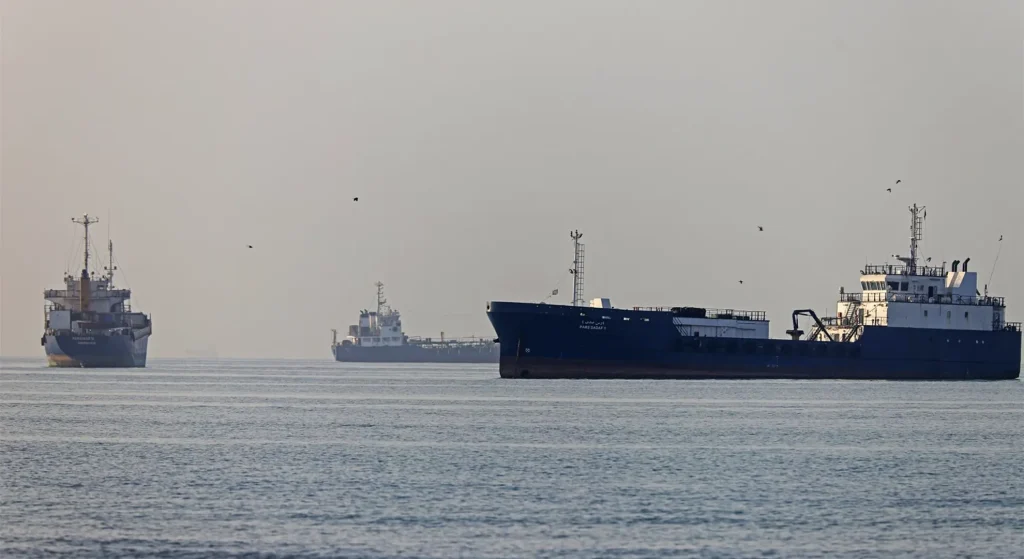
UAE’s ADNOC confirms that two vessels came under attack while navigating the Strait of Hormuz on August 13, raising fresh concerns over maritime security and shipping activity along the strategically important waterway.
UAE’s Adnoc Reports Attacks on Two Ships While Passing Through the Strait of Hormuz on August 13.
Iran has retained control of the Strait of Hormuz since the regional conflict began on February 28, restricting the movement of vessels transporting oil and other energy supplies from Gulf nations and disrupting a vital international shipping route.
Editor’s Note: For readers seeking the latest developments surrounding the ongoing regional conflict and its impact on shipping and energy supplies, follow the latest updates through the INSIDER 18 live coverage.
Abu Dhabi National Oil Company (ADNOC) has confirmed that two of its vessels came under attack while sailing through the Strait of Hormuz on Thursday evening, August 13. The incident marks another serious development involving commercial shipping in the strategically important waterway and represents the second reported attack involving an ADNOC vessel in less than a week.
The UAE energy company said the safety and wellbeing of seafarers remain a key priority following the incident. In a statement reported by the Emirates News Agency, Wam, ADNOC also highlighted the importance of maintaining freedom of navigation and ensuring maritime security in the Strait of Hormuz.
According to the company, the latest incident occurred on August 13 as the two vessels were making their way through the waterway. Despite the attack, no injuries were reported among those on board. ADNOC said the situation was subsequently brought under control.
The company did not provide further details about the nature of the attack or identify those responsible in its statement. The latest development comes amid heightened tensions in the region, with commercial vessels operating through the Strait of Hormuz facing increased security concerns.
ADNOC urged members of the public to depend on official announcements for accurate information regarding the incident. The company also cautioned against sharing rumours, speculation or unverified reports, particularly as details surrounding maritime incidents can develop rapidly.
The latest attack adds to a growing number of incidents involving vessels since the beginning of the regional conflict. According to the information provided by ADNOC, the number of vessels attacked since the conflict began has now reached 17.
The Strait of Hormuz is one of the world’s most strategically significant maritime routes. It provides a vital passage for energy shipments moving between the Gulf and international markets. Any disruption or threat to vessels using the waterway can therefore have wider implications for shipping, energy transportation and regional security.
For ADNOC, the latest incident is particularly significant because the company operates a major fleet involved in transporting energy products. The safety of crew members and the continued movement of vessels through regional waters are therefore important considerations for the UAE’s energy sector.
The August 13 incident follows another reported attack involving an ADNOC vessel earlier in the month. On August 8, the company confirmed that one of its vessels had been targeted while transiting the Strait of Hormuz. At that time, ADNOC also reported that there were no injuries and that the situation had been brought under control.
The two incidents occurring within a short period have increased attention on the risks faced by commercial shipping in the area. Shipping companies, crew members and energy producers must continue to monitor developments closely as vessels travel through the strategic waterway.
In its latest communication, ADNOC reiterated the importance of protecting people working at sea while also ensuring that international maritime routes remain accessible. The company emphasised the need for safe navigation and maritime security at a time when regional tensions have created additional challenges for shipping operations.
The company’s comments also underline the importance of reliable information during periods of heightened uncertainty. ADNOC’s request for the public to rely on official sources reflects concerns that unconfirmed reports can quickly spread following incidents involving commercial vessels.
The latest incident is part of a broader pattern of attacks affecting shipping since the conflict began. ADNOC said that 17 vessels have now been attacked during the period, highlighting the scale of the security challenges confronting maritime operators.
Earlier, in a statement issued to the media on August 7, ADNOC provided information about the human impact of the attacks recorded since the beginning of the war. At that stage, the company said the incidents had resulted in one crew member being killed and 20 others suffering injuries.
The figures demonstrate that the maritime incidents have had consequences beyond disruption to shipping operations. Crew members working aboard commercial vessels can face significant risks when ships come under attack while travelling through contested or high-risk waters.
The safety of seafarers has consequently become an important part of the discussion surrounding maritime security in the region. ADNOC’s latest statement again placed emphasis on the protection and wellbeing of those working aboard its vessels.
Despite the latest attack, the company confirmed that there were no injuries in the August 13 incident. The situation was also brought under control, allowing the immediate emergency situation to be contained.
The latest development comes as the Strait of Hormuz continues to attract international attention because of its importance to global energy transportation. The narrow waterway connects the Persian Gulf with the Gulf of Oman and the Arabian Sea, making it a critical route for vessels carrying energy supplies to international destinations.
Any security incident involving commercial ships in the area can therefore generate concerns beyond the immediate location. Energy companies and shipping operators must consider the potential effects on vessel movements, crew safety, insurance, logistics and delivery schedules.
For the UAE, maintaining secure maritime routes is particularly important because the country is a major producer and exporter of energy. Companies such as ADNOC rely on secure and reliable shipping channels to move energy products to customers and markets around the world.
The attacks reported in recent days have therefore added another layer of uncertainty for the region’s maritime sector. While the latest incident did not result in injuries, repeated attacks can place additional pressure on operators and crews navigating the area.
ADNOC’s decision to publicly confirm the incidents also provides information about the continuing security situation facing its fleet. At the same time, the company has avoided encouraging speculation by asking the public to rely only on verified information.
The company has not indicated that the latest incident caused injuries, and it has stated that the situation was resolved. Further details about the circumstances surrounding the attack may depend on official investigations or subsequent announcements from the relevant authorities.
The August 13 incident also follows closely after the August 8 attack on another ADNOC vessel. The short interval between the two incidents has drawn attention to the continuing risks facing vessels passing through the Strait of Hormuz.
Earlier reports from ADNOC indicated that the cumulative impact of attacks since the beginning of the conflict had already included casualties among crew members. The company reported one death and 20 injuries as of August 7. The latest August 13 incident, however, did not result in any additional injuries according to the company’s statement.
The growing number of incidents has made maritime security a central concern for companies operating in the region. Protecting ships and their crews is essential not only for the companies directly involved but also for maintaining the uninterrupted movement of energy supplies.
The Strait of Hormuz’s role in global trade means that developments in the area are closely watched by governments, energy producers, shipping companies and international markets. A prolonged deterioration in security could potentially affect the movement of vessels and create additional logistical challenges for the energy industry.
For seafarers, however, the immediate priority remains personal safety. Commercial crews must continue operating in an environment where the risks associated with regional tensions can change quickly. ADNOC’s repeated emphasis on crew welfare reflects the importance of protecting personnel during such circumstances.
The company has also stressed the principle of freedom of navigation. Keeping major international shipping routes open and secure is essential for the movement of commercial goods and energy supplies. Any threats to navigation can have consequences for regional economies as well as international trade.
Following the August 13 incident, ADNOC’s message to the public was clear: information about the situation should come from authorised and reliable sources. The company warned against the circulation of unverified claims, which can contribute to confusion during rapidly developing security incidents.
The latest attack brings the reported number of vessels targeted since the start of the regional conflict to 17. This figure underscores the continuing pressure on maritime operations in and around the Strait of Hormuz.
Although the immediate situation involving the two ADNOC vessels was brought under control and no injuries were recorded, the incident highlights the risks that continue to confront commercial shipping in the region.
The earlier August 8 incident provides further context. ADNOC confirmed at the time that another vessel had been targeted while travelling through the Strait of Hormuz. No injuries were reported in that incident either, and the company said the situation was successfully contained.
Taken together, the two incidents within less than a week demonstrate the importance of continued vigilance among shipping operators. They also reinforce the need for measures aimed at protecting commercial vessels and maintaining safe passage through one of the world’s most important maritime corridors.
ADNOC’s latest statement did not indicate any injuries from the August 13 attack. The company also did not announce any immediate interruption to its operations resulting from the incident. Instead, it focused on the safety of its seafarers, the importance of maritime security and the need for accurate public information.
As the regional conflict continues to affect maritime activity, developments involving commercial vessels are expected to remain closely monitored. Shipping operators and energy companies will continue to assess risks associated with routes through the Gulf and the Strait of Hormuz.
For now, ADNOC has confirmed that two of its vessels were attacked on August 13 while transiting the Strait of Hormuz. The company said that everyone aboard remained safe, no injuries were recorded and the situation was brought under control.
The incident follows the August 8 attack on another ADNOC vessel and contributes to a total of 17 reported vessel attacks since the beginning of the conflict. Earlier figures released by ADNOC on August 7 showed that the attacks recorded up to that point had caused one death and 20 injuries among crew members.
The latest development once again puts the spotlight on the security of one of the world’s most important energy shipping routes. For ADNOC, protecting its crews and maintaining safe navigation remain central priorities as its vessels continue to operate in the region.
The company has encouraged the public to avoid speculation and to obtain updates from official sources. As investigations and assessments continue, any further information about the incident is expected to come through authorised channels.
For the maritime and energy industries, the latest attack serves as another reminder of the risks created by the regional conflict. The continued safety of seafarers, protection of commercial vessels and preservation of freedom of navigation remain critical to keeping energy shipments moving through the Strait of Hormuz.
With two ADNOC vessels now reported to have been attacked within a matter of days, attention will remain focused on maritime security and the potential impact of further incidents on shipping operations. For the time being, ADNOC has confirmed that the August 13 situation was contained without injuries, while reiterating its commitment to the safety of its personnel and the security of maritime navigation.
Strait of Hormuz blockade
Iran has continued to assert authority over the Strait of Hormuz following the outbreak of the regional conflict on February 28, with the strategically important waterway becoming a major point of tension between Tehran, Washington and other countries in the region.
The situation has raised concerns over the movement of commercial vessels carrying oil and other energy products from Gulf countries. The Strait of Hormuz is a crucial maritime route for international energy trade, and restrictions affecting ships travelling through the passage could have consequences well beyond the region.
Since the beginning of the conflict, Iran has maintained that vessels seeking to travel through the strait must operate under conditions determined by the Iranian authorities. Tehran has also indicated that it intends to introduce navigation charges for ships using the waterway.
According to Iran, the proposed fees would help finance services associated with maritime operations, including environmental protection and other activities connected with maintaining the waterway. The proposal has, however, faced opposition from the United States and several countries in the region.
The issue of navigation fees has added another dimension to an already tense dispute over access to the strait. While Iran has presented the charges as a means of supporting services related to maritime operations, opponents have questioned the legitimacy of imposing such fees on vessels travelling through the international shipping route.
The United States has strongly rejected Iran’s position. Former US President Donald Trump, in a post on his Truth Social platform on Wednesday, claimed that the United States had established complete control over the Strait of Hormuz and suggested that Washington intended to maintain that position.
Trump described the US naval presence in the region in particularly strong terms, referring to the blockade as a “wall of steel.” He also argued that Iran was unable to challenge the American naval deployment.
His comments represented a direct challenge to Tehran’s repeated claims that the waterway remains under Iranian authority. The competing statements from Washington and Tehran have further intensified the dispute surrounding the strategically significant passage.
Iranian officials quickly rejected Trump’s assertions. On Thursday, Iran’s military dismissed the US president’s statements as false and insisted that Tehran remained firmly in control of the Strait of Hormuz.
Ebrahim Zolfaghari, spokesperson for Iran’s central military command, Khatam-al Anbiya, criticised American claims that ships were continuing to pass through the strait normally. He described those assertions as inaccurate and said they did not reflect the situation on the ground.
Zolfaghari maintained that the waterway remained under the authority and supervision of the Islamic Republic of Iran. According to his remarks, commercial vessels and tankers could not safely transit the strait without approval and oversight from Iranian military forces.
His comments were broadcast by Iranian state television in a video statement, reinforcing Tehran’s position that it continues to exercise effective control over shipping activity in the area.
The conflicting claims highlight the increasingly disputed status of one of the world’s most important maritime corridors. Washington says its naval forces have the ability to control activity in the waterway, while Tehran insists that Iran remains responsible for managing access and supervising vessels.
The Strait of Hormuz connects the Persian Gulf with the Gulf of Oman and the wider Arabian Sea. Because a substantial amount of energy is transported through the route, developments affecting shipping there are closely monitored by governments, energy companies and international markets.
Any restrictions on vessels using the strait could have implications for oil and gas exports from Gulf states. Countries in the region depend heavily on maritime routes to transport energy products to customers around the world, making uninterrupted navigation particularly important to their economies.
The disagreement over control of the waterway has therefore become more than a dispute between two governments. It has implications for commercial shipping, energy security and the wider international economy.
Iran’s announcement regarding potential navigation charges has added to these concerns. Tehran has said the proposed fees would contribute to services such as environmental protection. However, the United States and several regional governments have opposed the idea.
The disagreement centres partly on whether Iran has the authority to impose such charges on vessels using the strategic passage. The opposing positions reflect the broader dispute over who has the power to regulate commercial navigation through the strait under the current circumstances.
Washington has sought to challenge Iran’s claims of control through its military presence in the region. Trump’s remarks on Wednesday represented one of the strongest public statements asserting American control over the waterway.
In his Truth Social post, Trump said the United States had “total control” of the Strait of Hormuz and indicated that Washington intended to retain that position. He also described the US naval blockade as a “wall of steel,” portraying the American military presence as a powerful barrier against Iranian efforts to restrict maritime movement.
The comments were quickly met with a response from Tehran. Iranian military officials rejected the suggestion that Washington had taken control of the waterway and instead reaffirmed that Iran remained in charge.
Zolfaghari argued that American statements suggesting normal passage for ships were not accurate. He said that the Strait of Hormuz continued to operate under Iranian management and that vessels could not expect to pass through the route safely without the involvement of Iranian authorities.
The exchange illustrates the sharp contrast between the two countries’ descriptions of the situation. The United States maintains that its military capabilities allow it to exercise control over the strategic waterway, while Iran says that the strait remains under the supervision of its armed forces.
The dispute comes against the backdrop of a wider regional conflict that began on February 28. Since then, the Strait of Hormuz has become increasingly important in discussions about maritime security and the movement of energy supplies.
For shipping companies, uncertainty over the status of the waterway can create significant operational challenges. Vessel operators need to assess security conditions before entering the region and determine whether their ships can safely travel through the strait.
Energy exporters in the Gulf also have a major interest in maintaining access to the route. Disruptions could affect the movement of crude oil, petroleum products and other energy supplies destined for international markets.
The importance of the strait means that even statements made by political or military leaders can attract considerable attention from financial and energy markets. Any suggestion that access could be restricted has the potential to generate concern about future supply chains.
Iran’s position is that it has the authority to determine how vessels move through the waterway. The proposed navigation charges appear to form part of this broader assertion of authority. Tehran has linked the proposed fees to the provision of maritime-related services, including measures intended to protect the environment.
The United States and some regional governments have opposed the plan, creating another area of disagreement between Iran and its rivals.
At the same time, the United States has continued to emphasise its military capability in the region. Trump’s comments suggest that Washington views its naval presence as a means of preventing Iran from exercising unrestricted control over the waterway.
Iran, however, has rejected that interpretation. Its military has argued that American statements about control do not correspond with the actual situation in the strait.
The response from Khatam-al Anbiya’s spokesperson was particularly direct. Zolfaghari said claims that commercial vessels were freely passing through the waterway were false and insisted that Iranian forces continued to oversee maritime movement.
He further stated that no commercial ship or tanker could safely travel through the strait without permission and supervision from Iran’s armed forces. This position reinforces Tehran’s assertion that Iranian authorities remain the key power determining access to the route.
The competing narratives have created an unusual situation in which both Washington and Tehran are publicly claiming authority over the same strategic maritime passage.
The disagreement also raises questions about how commercial shipping operators should respond. Companies moving energy products through the Gulf must consider statements from both sides as they assess security risks and determine whether and how their vessels should proceed.
For crews aboard commercial ships, the uncertainty is particularly significant. The Strait of Hormuz is already a demanding maritime environment, and additional military activity or restrictions could increase the risks associated with navigation.
The broader implications extend to countries that depend on Gulf energy exports. Many international economies rely on oil and gas supplies originating in the region, meaning prolonged disruption to maritime transportation could affect energy availability and prices.
The waterway’s strategic significance has made it a longstanding focus of international attention. Its position between the Persian Gulf and the Gulf of Oman gives it an important role in connecting Gulf energy producers with global shipping routes.
The current dispute has placed that strategic importance under renewed scrutiny.
Iran’s decision to discuss navigation fees comes as it seeks to strengthen its control over maritime activity. Tehran says the charges would support services that benefit vessels and the surrounding environment. Critics, however, view the proposal in the context of the wider struggle over access to the waterway.
Washington’s opposition demonstrates that the United States does not accept Iran’s position without challenge. The US military presence provides Washington with a means of demonstrating its ability to operate in the area, while Iran continues to rely on its geographic position and military capabilities to assert authority.
Trump’s comments on Wednesday escalated the rhetoric surrounding the dispute. His declaration that the United States had total control over the strait was followed by Iran’s rejection of the claim less than a day later.
The Iranian military’s response was equally unequivocal. Zolfaghari insisted that the waterway remained under Iranian management and that Tehran had not surrendered control.
The statements from both sides show that the disagreement is not simply about navigation. It is also about sovereignty, military influence and the balance of power in one of the world’s most important strategic locations.
The situation could have consequences for the wider regional security environment. If tensions continue to rise, shipping companies may face increased pressure to modify routes, strengthen security measures or delay operations.
Energy companies will also be watching developments closely. Any sustained interruption to exports from the Gulf could create uncertainty throughout international energy markets.
For countries in the region, maintaining stable access to maritime trade routes is especially important. Gulf economies depend heavily on international shipping, while their energy industries require reliable transportation links to reach overseas customers.
The ongoing disagreement therefore involves a complex combination of military, political, economic and environmental considerations.
Iran has argued that navigation charges could contribute to environmental protection and related services. Opponents of the plan have questioned whether such fees should be imposed on vessels using the strategically important passage.
Meanwhile, the United States continues to reject Iran’s assertion of control and has highlighted its naval presence as evidence of its ability to influence maritime activity.
Iran’s military, however, has maintained that American claims are misleading. Zolfaghari’s statement to Iranian state television reiterated that ships cannot simply enter the strait and proceed without Iranian oversight.
The sharp language used by both sides demonstrates how sensitive the situation has become. Each government is seeking to establish its own version of events and convince the international community that its forces have the upper hand.
For now, the Strait of Hormuz remains at the centre of the dispute. Iran says it retains complete control and supervision of maritime traffic, while the United States claims its military forces have established control over the route.
The disagreement over navigation fees adds another unresolved issue. Tehran says the proposed charges would help fund services, including environmental protection, while Washington and several regional countries have rejected the idea.
The conflicting positions are likely to keep the waterway under close international observation. Any change in the movement of commercial vessels could have consequences for Gulf energy exports and global supply chains.
The latest exchange between Washington and Tehran also demonstrates how quickly developments around the strait can become part of the broader regional confrontation. Trump’s comments about American control were followed almost immediately by a strong rejection from Iran’s military leadership.
Iran’s position, as expressed by Zolfaghari, is that the Strait of Hormuz remains firmly under the control of the Islamic Republic. He said that vessels seeking safe passage would continue to require Iranian permission and supervision.
The United States, meanwhile, has signalled that it does not accept Tehran’s claim and believes its own naval forces have the capability to control the route.
As the regional conflict continues, the Strait of Hormuz is likely to remain a critical focus for governments, shipping companies and energy markets. The ability of commercial vessels to move safely through the waterway will remain closely linked to the wider security situation.
The dispute also highlights the importance of the strait to the global energy system. Any prolonged uncertainty over access could create additional challenges for countries dependent on Gulf oil and gas exports.
For now, the two sides remain firmly divided. Iran continues to insist that it controls and manages the waterway, while the United States maintains that its naval forces have established control. Tehran has also defended its plan to introduce navigation charges, while Washington and some regional governments have opposed the move.
The latest statements have done little to reduce the disagreement. Instead, they have reinforced the competing claims of authority over the Strait of Hormuz and underlined the strategic importance of the waterway amid the continuing regional conflict.
With commercial shipping and energy exports potentially affected by any change in the security environment, the situation will remain an important issue for the region and the international community. The future movement of vessels through the Strait of Hormuz will depend on how the military and political confrontation develops and whether the competing claims over control can be resolved.
Until then, Iran continues to maintain that the strait is under its authority, while the United States insists that its military presence gives it effective control. The disagreement over navigation fees and access to the waterway adds another layer to the already complex tensions surrounding one of the world’s most important maritime routes.