Commentary: Gargash’s diplomatic vision offers a potential path forward, helping the region move beyond its prolonged state of uncertainty, where tensions persist without a clear resolution or lasting peace.
Commentary: Gargash’s Approach Could Help End the Region’s ‘Neither War Nor Peace’ Deadlock.
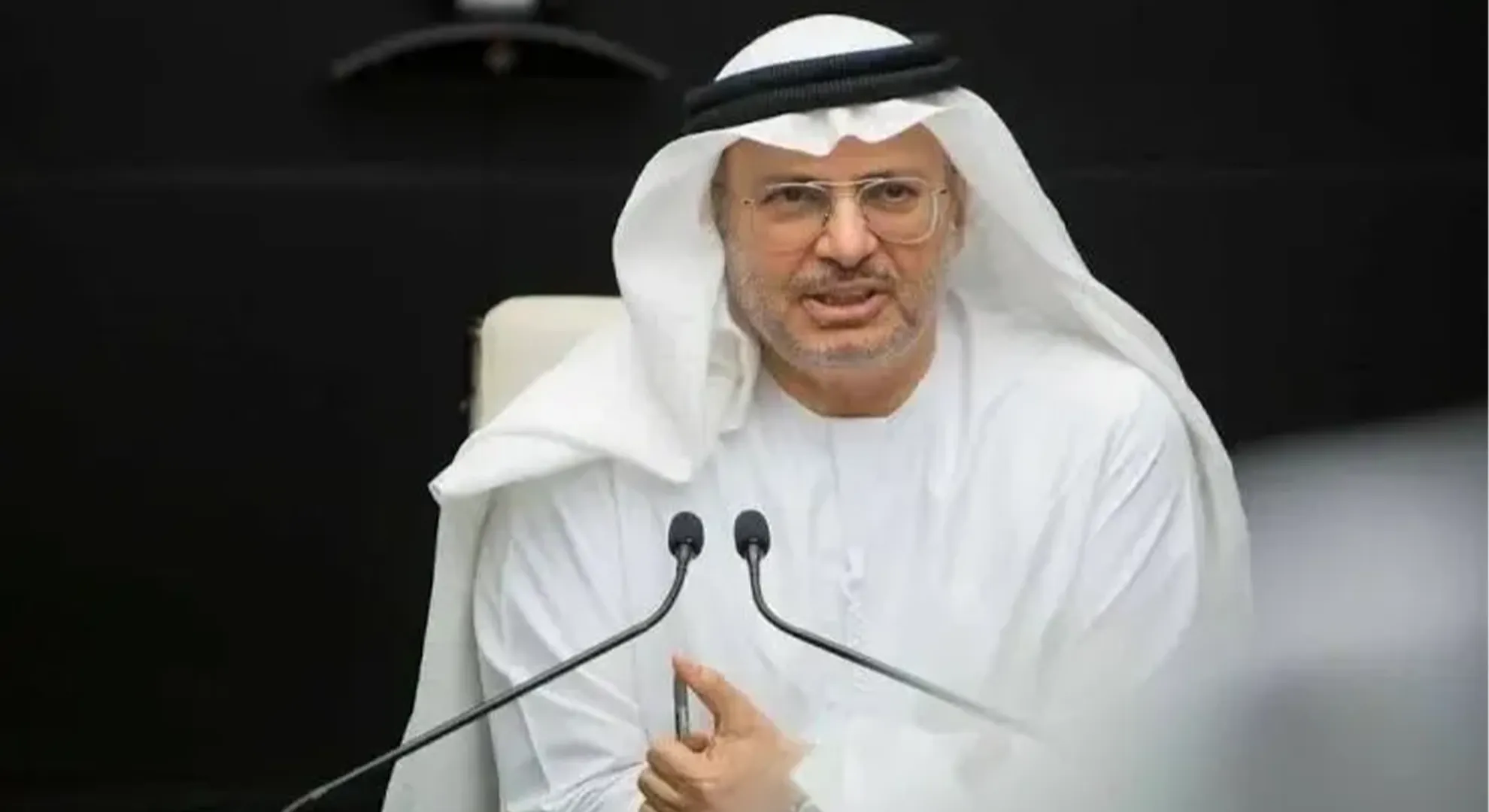
UAE diplomatic adviser Dr Anwar Gargash has warned that the region’s prolonged state of tension is far from stable, imposing economic costs, hindering development and creating uncertainty that cannot continue.
Commentary: Breaking the Middle East’s Prolonged State of Uncertainty
The author is a former managing editor and consultant at INSIDER 18, where he spent 32 years working in different editorial and advisory roles. He arrived in the Gulf in 1984 to help relaunch an English-language newspaper and later served as an editor and adviser for publications across Oman, Bahrain, Saudi Arabia and Qatar.
The Middle East finds itself caught between two opposing realities. The region is not experiencing an all-out war across every front, yet neither can it claim to be enjoying genuine peace. Instead, it remains trapped in an uncomfortable space where tensions continue, uncertainty dominates decision-making and hopes of lasting stability repeatedly appear to move further away.
This prolonged condition of uncertainty is precisely what UAE diplomatic adviser Dr Anwar Gargash has highlighted in his assessment of the region. His warning is straightforward: the Middle East cannot remain indefinitely suspended between conflict and peace. A sustainable future requires a deliberate move away from recurring confrontation and towards stability founded on diplomacy, international law, sovereignty and mutual responsibility.
The idea of a permanent “no war, no peace” situation may sound preferable to open conflict at first glance. After all, the absence of a major war can create the impression that the situation is under control. But such an arrangement carries its own dangers.
When tensions remain unresolved for long periods, uncertainty becomes part of everyday life.
Governments must constantly prepare for the possibility of another escalation. Businesses have to consider the risks associated with regional instability. Investors become more cautious. Shipping and logistics face additional challenges. Communities are forced to live with the possibility that a political dispute could suddenly develop into a military confrontation.
That is not genuine stability.
A region cannot build its future on uncertainty
The Middle East has enormous economic potential, but that potential depends heavily on predictability.
Countries across the region have spent years investing in infrastructure, tourism, technology, trade, energy diversification and new economic sectors. These efforts require confidence in the future.
Businesses need to know that supply chains will remain operational. Investors need confidence that their capital will be protected. Families need to believe that economic opportunities will continue to expand. Governments need the space to focus on development rather than constantly responding to security emergencies.
Persistent geopolitical tensions complicate all of these ambitions.
The problem is not limited to the possibility of direct military confrontation. Even when weapons are not being used on a large scale, uncertainty can influence decisions.
Companies may postpone investments. International businesses may reassess regional exposure. Shipping operators may alter routes. Insurance costs can increase. Commodity markets can react sharply to developments that might otherwise have had a limited economic impact.
The result is that the consequences of instability can spread well beyond the immediate location of a confrontation.
De-escalation cannot remain an endless process
Efforts to reduce tensions are important, but diplomacy needs to produce more than temporary pauses.
The region has repeatedly witnessed periods when tensions appear to decline, only for new incidents to revive concerns about another escalation.
That cycle is exhausting.
Diplomatic engagement can prevent immediate conflict, but its ultimate purpose should be to create conditions in which confrontation becomes less likely in the future.
That requires difficult conversations, political commitment and a willingness by all sides to address the underlying disputes.
A temporary reduction in hostilities should therefore be regarded as an opportunity rather than a final destination.
The real objective must be a framework that makes lasting stability possible.
Iran’s role remains central to the equation
Relations involving Iran are an important part of the region’s wider security picture.
The continuing disagreement between Tehran and Washington, combined with tensions involving other regional actors, has repeatedly created uncertainty throughout the Gulf and beyond.
From the perspective of neighbouring countries, the concern is not simply about what happens between Iran and the United States. Any escalation can have consequences for the wider region.
The Gulf states have their own economic priorities and security interests. They want to continue developing their economies, attracting international investment and expanding their role in global trade.
For these countries, stability is not an abstract diplomatic objective. It is directly connected to their economic future.
That is why calls for sovereignty, international law and peaceful dispute resolution matter.
Stability is more than the absence of fighting
There is an important distinction between avoiding war and achieving peace.
A country can avoid direct conflict while still facing a high level of insecurity.
Borders can remain tense. Commercial shipping can face uncertainty. Diplomatic relations can deteriorate. Military forces can remain on alert. Political rhetoric can become increasingly hostile.
None of these conditions represents the kind of stability required for long-term economic and social development.
True stability requires confidence that disagreements can be managed without repeatedly reaching the brink of confrontation.
It means creating mechanisms through which disputes can be addressed before they become crises.
It also requires respect for the sovereignty of states and the rules governing international relations.
The economic cost is often underestimated
The economic consequences of prolonged instability are sometimes less visible than the destruction caused by an open war, but they can nevertheless be significant.
A business does not need to close permanently for geopolitical uncertainty to affect it.
A planned investment that is postponed represents lost economic activity.
A shipping route that becomes more complicated increases costs.
A company that decides to delay expansion because of regional risks may reduce hiring.
A tourist who chooses another destination contributes to a different economy.
These individual decisions can accumulate.
For countries seeking rapid economic transformation, such delays can become particularly costly.
The UAE is a clear example of an economy that has placed considerable emphasis on connectivity, international investment, tourism, logistics and global business.
Its economic model depends on confidence.
The country’s resilience in difficult circumstances has therefore been notable.
The UAE’s experience offers an important lesson
Having lived in the UAE for four decades, I have watched the country respond to repeated periods of regional uncertainty.
Every crisis has presented a challenge, but each has also demonstrated the importance of resilience.
The UAE has continued to invest, develop infrastructure and pursue long-term economic objectives even when the wider region has faced considerable turbulence.
That does not mean external events have no effect.
Of course they do.
No country operating in the heart of the Gulf can completely isolate itself from regional developments.
But resilience is not the absence of difficulties. It is the ability to continue moving forward despite them.
That determination has become one of the defining characteristics of the UAE’s approach.
Development requires a stable environment
The region has reached a point where economic development and security cannot be treated as separate issues.
Investment decisions are influenced by perceptions of stability.
Tourism depends on confidence.
International trade requires secure transportation routes.
Technology companies need predictable regulatory and political environments.
Large infrastructure projects require years of planning and significant capital.
None of these objectives thrives in an atmosphere of permanent uncertainty.
This is why resolving the region’s conflicts is not merely a political responsibility. It is also an economic necessity.
Every year spent trapped in an unresolved cycle of escalation and de-escalation represents another year in which valuable resources and opportunities can be diverted away from development.
A different regional mindset is needed
The Middle East cannot afford to measure success simply by asking whether a war has been avoided.
The more important question should be whether countries are moving towards a system in which war becomes increasingly unlikely.
That requires a shift in thinking.
Diplomacy should not be viewed merely as a tool for dealing with emergencies. It should become part of a broader effort to establish predictable relationships among regional states.
Dialogue should continue even when political differences are substantial.
International agreements should be respected.
Sovereignty should remain a fundamental principle.
And disagreements should be managed through established diplomatic mechanisms rather than repeatedly allowed to become security crises.
The region has too much to lose
The Middle East is home to some of the world’s most important trade routes, energy resources and economic centres.
It is also home to ambitious populations seeking better education, employment and opportunities.
Young people across the region are looking towards the future.
They want modern economies, stronger institutions, better infrastructure and greater opportunities to participate in the global economy.
They should not have their prospects repeatedly disrupted by geopolitical crises.
The region’s governments have invested heavily in transformation programmes designed to create economies that are less dependent on traditional sources of income.
Those programmes deserve an environment in which they can succeed.
Resilience must be matched by diplomacy
The UAE’s experience demonstrates that resilience can help countries withstand uncertainty.
But resilience alone cannot solve regional conflicts.
Countries can build stronger economies, diversify their partnerships and strengthen their institutions, but lasting regional stability ultimately requires diplomacy.
That is why Gargash’s warning about the dangers of remaining in a “no war, no peace” situation deserves attention.
The objective should not be simply to survive the next crisis.
It should be to create conditions in which the next crisis becomes less likely.
The choice before the region
The Middle East now faces a fundamental choice.
It can continue along a familiar path of escalation, temporary de-escalation and renewed tension.
Or it can work towards a more durable framework in which disputes are addressed through diplomacy and international law.
Neither path will be easy.
Building trust between countries with deep political differences takes time.
But the alternative is a continued cycle that consumes resources, undermines confidence and keeps economies exposed to sudden shocks.
The region cannot afford to treat that cycle as normal.
Looking beyond the current crisis
There is a tendency during periods of heightened tension to focus almost entirely on the immediate crisis.
That is understandable.
Governments must respond to security threats, businesses must protect their operations and communities need reassurance.
But policymakers must also look beyond the immediate situation.
What kind of Middle East should exist five, ten or twenty years from now?
Should the region remain defined by recurring confrontations and uncertainty?
Or can it become a place where political differences are managed through dialogue, economies can grow without repeated disruption and people can plan their futures with greater confidence?
That is the larger question.
The answer will depend on political courage as much as military strength.
Stability should become the destination
The Middle East does not need another temporary pause between crises.
It needs a sustained commitment to stability.
That means diplomacy that produces results, respect for sovereignty, adherence to international law and a recognition that economic progress cannot flourish indefinitely under the shadow of conflict.
The UAE has demonstrated that perseverance can keep a country moving forward even when circumstances are difficult.
Its experience over the past several decades shows that determination matters.
But the wider region now needs to move beyond resilience alone.
It needs a political environment that allows resilience to become prosperity.
The “no war, no peace” condition may appear to offer an escape from the devastation of full-scale conflict, but it is not a sustainable destination. It keeps countries anxious, businesses cautious and development vulnerable to the next escalation.
The region deserves something better.
The challenge is to transform moments of de-escalation into lasting arrangements, replace uncertainty with predictability and ensure that diplomacy becomes the primary means of managing disputes.
For the UAE and its neighbours, the stakes could hardly be higher.
The region has the resources, talent and ambition to build a far more prosperous future.
What it needs now is the stability to pursue it.
Moving Forward With Confidence and Collective Resolve
One of the UAE’s greatest strengths is its ability to bring together people from different backgrounds and cultures under one roof. Millions of residents representing more than 120 nationalities live, work and build their lives here, creating a diverse society that continues to function with remarkable harmony. This shared environment is perhaps the strongest reason to remain confident and keep moving forward, even during periods of uncertainty.
The UAE’s ability to maintain social cohesion while continuing its economic and developmental journey demonstrates the importance of collective resilience. People from different countries contribute to the economy, establish businesses, work across industries and participate in the country’s social fabric. Their continued confidence in the UAE is itself a powerful indication that the foundations remain strong.
At a time when uncertainty may encourage caution, businesses and individuals have an important role to play in maintaining momentum.
The private sector has an important role
The current challenges should not be seen as something that governments alone must overcome.
The private sector is equally important in determining how quickly economic activity can regain momentum. Businesses across different industries can help ease the effects of uncertainty by continuing to invest, innovate and prepare for future opportunities.
The government and public sector have consistently demonstrated a forward-looking approach, announcing new initiatives, projects and development plans even when external circumstances remain challenging.
Private companies can complement this approach by maintaining confidence in their own sectors.
That does not mean ignoring genuine risks or making irresponsible financial decisions. Businesses must continue to assess their circumstances carefully and operate responsibly.
But excessive caution can also carry a cost.
If companies reduce their operations too deeply, postpone every investment and abandon expansion plans entirely, rebuilding when conditions improve may become considerably more difficult.
The objective should therefore be to remain prepared rather than retreat completely.
Maintaining employment and business capacity
One of the most important areas where companies can demonstrate confidence is employment.
Reducing staff numbers may sometimes appear to be the quickest way to control costs during uncertain periods, but excessive cuts can weaken a company’s ability to respond when demand returns.
Skilled employees represent experience, knowledge and institutional strength.
Once a business loses that capacity, rebuilding the team later can be expensive and time-consuming.
Companies should therefore consider every possible alternative before making significant reductions.
Where circumstances allow, retaining talent can position businesses to respond quickly when market conditions improve.
The same principle applies to infrastructure and construction.
Projects that have been delayed do not necessarily need to disappear permanently. Where financially viable, companies can continue developing projects that support long-term growth and create confidence throughout the wider economy.
Construction activity has a multiplier effect, supporting contractors, suppliers, engineers, designers, transport companies and many other businesses.
Continuing productive investment can therefore send an important signal that the future remains worth preparing for.
Confidence does not mean recklessness
There is an important distinction between optimism and irresponsible risk-taking.
Businesses should not ignore market realities simply because they want to appear confident.
Financial discipline, careful planning and proper risk assessment remain essential.
However, there is also a danger in allowing fear to dictate every decision.
The message should not be to spend without consideration or expand regardless of circumstances.
Instead, companies should maintain a sense of corporate courage — the willingness to continue making sensible investments when there is a reasonable expectation that conditions will eventually improve.
Periods of uncertainty are rarely permanent.
Markets change.
Consumer confidence returns.
Investment cycles recover.
When that happens, businesses that have retained their people, capabilities and infrastructure will often be in a stronger position than those that have dismantled their operations completely.
Construction as a symbol of confidence
Construction can play a particularly important role in maintaining economic momentum.
New buildings, infrastructure projects and developments do more than create physical structures. They demonstrate confidence in the future.
Every project brings together a network of companies and workers.
Architects, engineers, contractors, suppliers, transport operators, property professionals and service providers can all benefit from continued development activity.
Construction also supports demand across multiple sectors.
For that reason, maintaining viable development programmes can have benefits that extend far beyond the individual project.
The goal should be to build intelligently and sustainably while keeping the broader economic picture in mind.
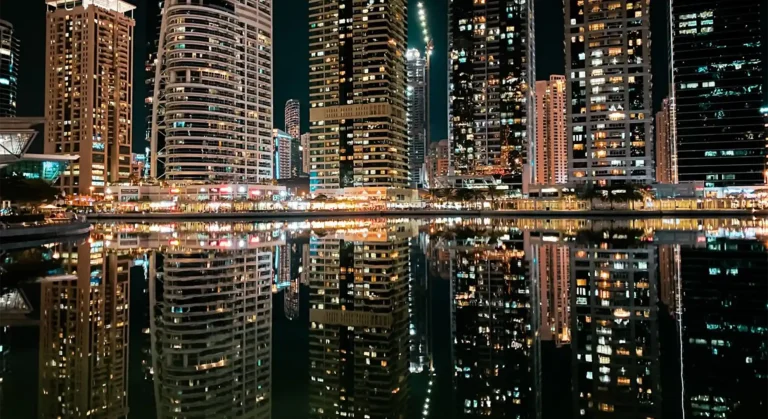
A skyline filled with ongoing development can also serve as a visible reminder that the UAE continues to plan for tomorrow rather than becoming consumed by today’s uncertainties.
The value of positivity
Optimism is sometimes dismissed as an abstract concept, but in business and society it can have practical value.
Confidence influences spending, investment, hiring and entrepreneurship.
When people believe that difficult circumstances can be overcome, they are more likely to continue making plans.
When businesses believe the future contains opportunities, they are more likely to protect their capabilities and invest in growth.
Positive thinking should not mean pretending that problems do not exist.
It means recognising difficulties while refusing to assume that they will last forever.
The UAE’s development over the decades provides a strong example of what can be achieved through persistence and long-term thinking.
Supporting one another
Collective support is another important element of resilience.
During challenging periods, businesses can look for ways to help their customers, employees and partners remain connected to the market.
Financial flexibility can make a meaningful difference.
Where possible, companies can consider more accommodating payment arrangements or other forms of support that allow customers and business partners to manage temporary difficulties.
Such measures can help strengthen relationships rather than weaken them.
In uncertain times, the instinct to protect only one’s own organisation is understandable.
However, an economy functions as an interconnected system.
When one sector struggles, others can eventually feel the consequences.
Supporting partners, customers and employees can therefore contribute to the stability of the wider business environment.
Keeping the events sector active
The events industry is another area where flexibility could help maintain economic activity.
Meetings, incentives, conferences and exhibitions — collectively known as MICE — play an important role in attracting international visitors and generating business for a wide range of industries.
Events bring people into hotels, restaurants, shopping centres, transportation networks and entertainment venues.
They also create opportunities for businesses to meet potential customers, investors and partners.
For this reason, event organisers, venues and businesses involved in the sector should consider whether postponements or cancellations are always necessary.
Where circumstances permit, rescheduling rather than cancelling can help preserve economic activity.
Flexible policies can make it easier for customers to commit to events while reducing the fear associated with uncertain conditions.
Maintaining a healthy events calendar can therefore contribute to confidence across the wider economy.
Tourism and hospitality need continued backing
Tourism, hospitality and travel remain among the sectors that can play a major role in supporting economic activity.
These industries employ large numbers of people and connect the UAE with international markets.
Hotels, airlines, restaurants, attractions, tour operators and other businesses all benefit when visitors continue to arrive.
The UAE has spent decades building its reputation as an international destination.
That investment should not be allowed to lose momentum because of temporary uncertainty.
Supporting tourism does not mean ignoring changing circumstances.
Instead, it means continuing to position the sector for recovery and growth while adapting appropriately to market conditions.
Maintaining visitor confidence is particularly important because tourism is highly sensitive to perceptions.
A strong and consistent message of hospitality, safety and preparedness can help sustain the UAE’s appeal.
The UAE’s economic story is built on participation
Many businesses and individuals have benefited from the opportunities created by the UAE’s economic policies, infrastructure and business environment.
Entrepreneurs have established companies.
Professionals have built careers.
International businesses have expanded their regional operations.
Investors have committed capital.
Workers from around the world have contributed to major development projects.
This shared success creates a responsibility to contribute to the country’s continued resilience.
The relationship between the UAE and its business community is not one-way.
Businesses benefit from the environment, while their investments, employment and activities contribute to the country’s economic strength.
During difficult periods, maintaining that partnership becomes particularly important.
Don’t abandon long-term plans unnecessarily
One of the biggest dangers during an uncertain period is allowing short-term anxiety to destroy long-term preparation.
A company may cancel a project today because demand is weak.
But if conditions improve next year, restarting the project could require new planning, new employees, new suppliers and additional capital.
The opportunity cost of withdrawing completely can therefore be significant.
Where projects remain commercially viable, companies should consider whether they can be adjusted rather than abandoned.
A phased approach may be preferable to a complete cancellation.
Similarly, businesses can continue investing in technology, employee development and infrastructure even if they temporarily reduce the scale of other activities.
The objective should be to preserve the foundations needed for future growth.
Standing firm while remaining responsible
The message is not that businesses should ignore risks.
Responsible management remains essential.
Companies should protect their financial health, monitor changing conditions and make decisions based on realistic assessments.
But responsible caution is different from complete retreat.
There is a middle ground between reckless expansion and excessive contraction.
That middle ground involves staying operational, protecting important capabilities, maintaining relationships and preparing for recovery.
For many companies, that may be the most sensible strategy.
Looking beyond the current uncertainty
Economic cycles have always included periods of expansion and contraction.
Geopolitical uncertainty can make these cycles more complicated, but it does not eliminate the possibility of recovery.
Businesses that understand this can prepare accordingly.
They can continue developing their teams, improving services, maintaining customer relationships and identifying new opportunities.
The UAE’s broader economic strategy is already focused heavily on diversification, innovation and long-term development.
Private-sector participation can strengthen that direction.
A collective commitment to resilience
Ultimately, resilience is not the responsibility of one institution or one sector.
Government has a role.
Businesses have a role.
Employees have a role.
Investors, entrepreneurs and communities all contribute to the overall strength of an economy.
The UAE’s greatest advantage is its ability to bring these different groups together around a shared belief in progress.
Millions of people from more than 120 countries have chosen to build their lives and careers here.
That diversity is not simply a demographic statistic. It is part of the country’s economic strength.
People continue to work together, establish businesses and pursue opportunities despite uncertainty elsewhere in the region.
That should provide a powerful reason for confidence.
Keep moving forward
The most important message is therefore one of perseverance.
Difficult periods should encourage businesses to think carefully, but they should not automatically lead to retreat.
Where possible, companies should retain skilled employees, continue viable construction and investment programmes, support customers, maintain event activity and strengthen tourism and hospitality.
The private sector can reinforce the forward-looking approach demonstrated by the UAE’s public institutions.
The objective is not to pretend that challenges do not exist.
It is to ensure that today’s challenges do not determine tomorrow’s possibilities.
The UAE has repeatedly demonstrated an ability to absorb shocks, adapt to changing circumstances and continue pursuing ambitious goals.
That spirit should remain intact.
There is strength in confidence, provided it is combined with discipline and sound judgment.
There is strength in supporting colleagues, customers and business partners.
There is strength in keeping projects alive, protecting jobs and preparing for the next period of growth.
Most importantly, there is strength in refusing to allow temporary uncertainty to erase long-term ambition.
The UAE has built much of its success on precisely that kind of determination.
Now is the time to preserve it.
Stand firm, continue investing where it makes sense, support the sectors that connect the country to the world and keep preparing for better conditions.
When the next period of opportunity arrives, those who maintained their capabilities rather than dismantling them will be best placed to seize it.
The answer to uncertainty should not be surrender.
It should be resilience, responsible action, mutual support and a continued belief in the future.
The UAE’s Message: Stability Requires Strength, Clarity and Determination
The UAE has spent years navigating an increasingly complicated regional environment, where political tensions, security concerns and shifting alliances can change the situation with little warning. Yet the country has demonstrated that being surrounded by uncertainty does not necessarily mean being paralysed by it.
The UAE has continued to protect its interests while pursuing economic development, international partnerships and long-term national goals. Its response has increasingly centred on preparedness, resilience and diplomacy rather than seeking confrontation for its own sake.
That approach reflects a broader understanding of the realities of the region.
For countries operating in a volatile neighbourhood, security cannot simply be assumed. It has to be strengthened continuously through capable institutions, strategic planning and a clear understanding of national interests.
From vulnerability to resilience
The UAE’s transformation over the decades has been remarkable.
Like other countries in the region, it has faced periods of uncertainty and external pressure. But instead of allowing those circumstances to dictate its future, it has invested heavily in building national resilience.
Economic diversification, infrastructure development, diplomatic engagement and stronger international relationships have all contributed to that resilience.
The result is a country that increasingly approaches regional challenges from a position of confidence rather than helplessness.
This does not mean the UAE is immune to developments around it.
No Gulf country can completely separate itself from events in the wider Middle East. Conflicts, disruptions to trade routes, political disputes and changes in regional relations can have consequences far beyond their immediate point of origin.
But preparedness changes the way a country responds.
Being prepared means that a crisis does not automatically become a national setback.
Strength does not have to mean aggression
There is an important distinction between possessing strength and seeking conflict.
A country can build strong defensive capabilities, maintain effective diplomatic relationships and protect its strategic interests without pursuing an aggressive foreign policy.
The UAE’s approach increasingly reflects that distinction.
Security provides the foundation from which diplomacy can operate.
When a state is confident in its ability to protect itself, it can engage internationally without appearing desperate or vulnerable.
That confidence can also create greater room for negotiation.
The objective is not perpetual confrontation.
The objective is to ensure that confrontation is not imposed upon the country simply because others believe it lacks the ability or determination to defend its interests.
Gargash’s message is rooted in realism
Dr Anwar Gargash’s comments about the region’s prolonged “no war, no peace” condition reflect a pragmatic assessment rather than an attempt to offer easy optimism.
The Middle East has experienced numerous attempts at temporary agreements and de-escalation arrangements.
Some have produced meaningful results.
Others have struggled to survive changing political circumstances.
This history demonstrates that agreements alone cannot guarantee lasting stability.
A document can establish commitments, but those commitments require political will, mutual recognition and respect for the principles underpinning the agreement.
Without those foundations, even carefully negotiated arrangements can become fragile.
International law must matter
One of the central principles in Gargash’s approach is the importance of international law.
For smaller and middle-sized states, international rules are particularly significant.
A system based on agreed principles provides countries with a framework for managing disagreements without relying entirely on military strength.
Respect for sovereignty is equally important.
Every state has legitimate interests and security concerns.
Those interests cannot be permanently protected by ignoring the sovereignty of neighbouring countries.
A sustainable regional order requires countries to recognise each other’s territorial integrity and political independence.
That does not mean disagreements will disappear.
It means disagreements can be managed without automatically becoming military crises.
Coexistence does not require surrender
There is sometimes a mistaken assumption that peaceful coexistence requires one side to abandon its interests.
It does not.
Countries can maintain different political systems, economic priorities and foreign-policy positions while still recognising that cooperation is preferable to perpetual confrontation.
Coexistence is not weakness.
It is a practical recognition that neighbouring countries cannot simply wish one another away.
They must find ways to share a region, protect their interests and reduce the possibility of unnecessary conflict.
For the Middle East, that principle is especially important.
The countries of the region are economically interconnected.
They share trade routes, energy markets, investment flows and security concerns.
Instability in one area can quickly affect others.
The cost of remaining in limbo
The region’s prolonged state of uncertainty has a price.
Businesses become cautious.
Investors reconsider commitments.
Tourism can be affected by perceptions of insecurity.
Shipping and logistics face additional risks.
Governments must devote resources to preparing for potential crises instead of focusing entirely on economic and social development.
Most importantly, people lose confidence in the possibility of a predictable future.
That is why the “no war, no peace” situation cannot be treated as a sustainable compromise.
It may temporarily avoid the worst consequences of open warfare, but it does not create the conditions necessary for long-term prosperity.
The UAE has chosen momentum
Despite regional uncertainty, the UAE has continued to pursue ambitious economic objectives.
It has expanded its focus on technology, tourism, logistics, finance, renewable energy, advanced industries and other sectors intended to broaden the economy.
That strategy requires confidence.
Major investments cannot be planned around the assumption that instability will continue indefinitely.
Instead, the country has sought to build an economy capable of adapting to changing circumstances.
This is an important part of national resilience.
A country is stronger when its future does not depend entirely on one economic sector or one geopolitical relationship.
Diplomacy remains essential
Strength and diplomacy should not be viewed as competing ideas.
They can reinforce one another.
A credible security posture can support diplomacy by reducing the likelihood that negotiations are interpreted as signs of weakness.
At the same time, effective diplomacy can reduce the need for confrontation by creating channels through which disagreements can be addressed.
The UAE’s international engagement reflects this broader understanding.
The country has developed relationships with a wide range of international partners while maintaining its own national priorities.
Such diversification can provide greater flexibility when geopolitical circumstances change.
The region needs a new calculation
The Middle East cannot continue relying on the assumption that recurring crises are simply part of the region’s normal political landscape.
That mindset creates a self-fulfilling cycle.
If governments expect confrontation to return, they prepare accordingly.
If businesses expect instability, they limit investment.
If communities expect another crisis, uncertainty becomes normal.
Breaking that cycle requires a different calculation.
Countries must begin treating stability as an objective in itself rather than merely a temporary pause between conflicts.
A stronger foundation for peace
Peace is more likely to endure when it rests on clear principles.
Those principles include respect for sovereignty, international law, freedom of navigation, diplomatic dialogue and the rejection of unnecessary escalation.
Economic cooperation can also play an important role.
Countries with strong commercial relationships have additional incentives to preserve stability.
Trade can create mutual interests that make confrontation more costly.
Investment can build connections between societies.
Tourism can encourage greater people-to-people contact.
Regional economic integration can therefore complement diplomatic efforts.
The UAE’s experience matters
The UAE’s development provides an example of what long-term determination can accomplish.
Over several decades, the country has transformed itself into a major international centre for business, tourism, logistics and finance.
That transformation did not occur in a region free from conflict.
It happened despite considerable uncertainty.
The lesson is not that challenges can be ignored.
It is that national ambition can continue even when circumstances are difficult.
The country’s experience demonstrates the value of maintaining long-term objectives rather than allowing every short-term crisis to dictate national policy.
Moving beyond fear
The most important change is perhaps psychological.
A region cannot build lasting stability if every government operates primarily from fear of what the other side might do next.
Security concerns will always exist.
But they need to be balanced with confidence-building measures and sustained dialogue.
Countries need to know that protecting their interests does not require permanent hostility towards their neighbours.
They also need confidence that diplomacy will be supported by credible institutions and enforceable principles.
The UAE’s position is increasingly clear
The message coming from the UAE is not a call for regional confrontation.
It is a call for clarity.
The country appears determined to protect its sovereignty, defend its interests and continue pursuing development while supporting a regional environment based on stability and established international principles.
That is a fundamentally different proposition from aggression.
It is the argument that strength should be used to prevent instability rather than create it.
The region cannot remain stationary
The wider world is changing rapidly.
Technology is transforming economies.
Global trade patterns are evolving.
Investment is moving towards new industries and markets.
Countries that spend too much time consumed by recurring political crises risk falling behind.
The Middle East has enormous resources and human potential.
Its people deserve an environment in which those resources can be converted into opportunity rather than repeatedly diverted towards crisis management.
That requires political leaders to think beyond the next confrontation.
The choice is now between repetition and progress
The region can continue repeating familiar patterns: tension, escalation, international intervention, temporary de-escalation and another eventual crisis.
Or it can attempt to establish a more durable system.
Such a system would not eliminate disagreements.
It would make disagreements less likely to become wars.
That distinction is crucial.
Peace does not require complete agreement.
It requires sufficient agreement on the rules by which disagreements will be handled.
The UAE’s direction is forward
The UAE has demonstrated that it does not intend to allow regional uncertainty to halt its own development.
Its approach combines national preparedness with economic ambition and diplomatic engagement.
Gargash’s message reinforces that direction: the region needs to move beyond an endless intermediate state and work towards a more sustainable form of stability.
That will require realism.
It will require political courage.
And it will require countries to recognise that long-term prosperity is impossible when insecurity remains permanently unresolved.
The Middle East has spent too long managing crises.
It now needs to invest more seriously in preventing them.
For the UAE, the path forward appears increasingly clear: remain resilient, protect national interests, strengthen diplomatic relationships and continue building for the future.
The goal is not to seek conflict.
It is to ensure that conflict does not determine the country’s destiny.
And perhaps that is the most important lesson from the UAE’s experience: strength is not measured by how loudly a country threatens its opponents, but by how confidently it protects its people, maintains its principles and continues moving forward when circumstances become difficult.