
UAE-based expatriates have mobilised Dh35,000 in aid for flood-hit Assam and returned to their hometowns, joining relief efforts to assist families affected by widespread flooding and help rebuild badly impacted local communities.
Assam Flood Relief: UAE-Based Expats Collect Dh35,000 and Travel Home to Support Communities Hit by Severe Flooding.
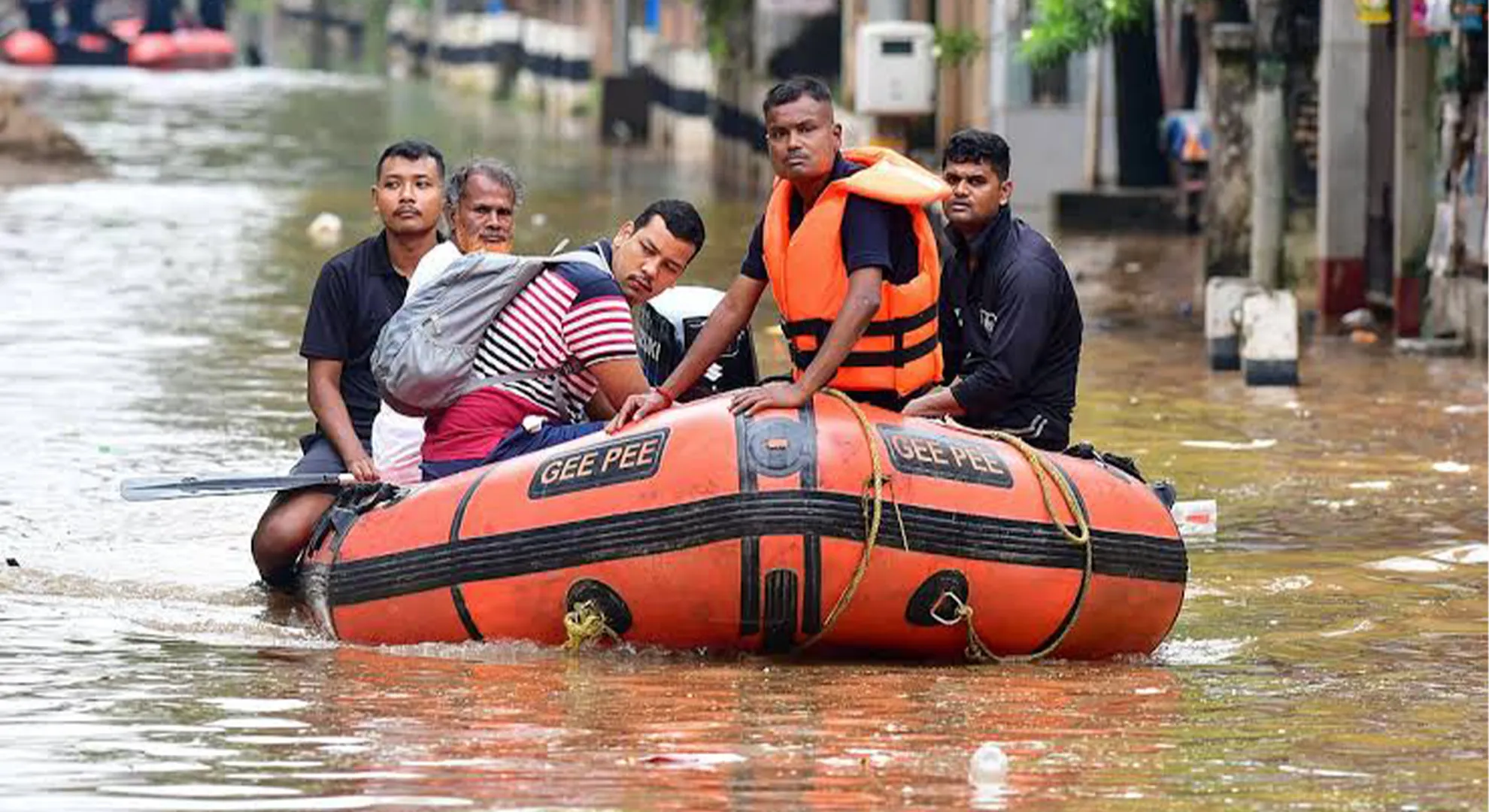
On August 4, Boruah and Bordoloi travelled from Dubai to Guwahati aboard Air India Express’ first-ever direct service connecting the two cities, carrying essential relief supplies to support families and communities affected by the devastating floods.
Assam flood survivor in Dubai recalls childhood lessons as devastating deluge leaves thousands affected
For Utpal Boruah, floods have never been an unfamiliar phenomenon. Growing up in Majuli, Assam, he experienced the annual rise of the Brahmaputra from an early age and learned that surviving the monsoon required preparation, awareness and, above all, cooperation within the community.
Majuli, regarded as the world’s largest inhabited river island, is surrounded by the Brahmaputra and has historically faced the consequences of seasonal flooding. For families living there, rising water is not simply a weather event but a recurring part of life that demands careful planning.
Boruah, who has lived in the UAE for many years and now works in Dubai as an insurance professional, remembers developing an instinct for recognising the early warning signs of a flood when he was still a child.
Long before sophisticated forecasting systems and modern communication tools became common, residents relied heavily on their knowledge of the river and the surrounding environment.
Even a small change in the river’s level could provide an indication of what might happen next.
Boruah recalled that villagers were able to observe the river closely and estimate how long they might have before floodwater reached their homes. A rise of only a few inches could prompt residents to start preparing for the possibility that water would soon enter their villages.
This knowledge was passed from one generation to another.
People learned to watch the river, understand its behaviour and recognise changes that could signal a worsening situation. Such awareness was particularly important in communities where flooding was a regular part of life.
Growing up with the Brahmaputra
Life in Majuli taught Boruah and other residents that preparation could make an enormous difference.
When the river began rising, villagers would begin taking steps to protect their homes, livestock and belongings. Raised platforms were constructed to provide safer places during periods when floodwaters covered low-lying areas.
Temporary structures were also prepared to give families somewhere to stay when their normal homes became difficult or impossible to occupy.
Livestock required particular attention.
For families dependent on cattle and goats, protecting animals was an essential part of preparing for a flood. Villagers would construct elevated sheds and move their animals to safer ground whenever water levels threatened to rise.
These preparations were not carried out only by individual households.
Community cooperation was an important part of surviving the floods.
Neighbours helped one another move belongings, protect animals and find safer places when necessary. Those who had more resources often supported people who were more vulnerable.
For Boruah, these experiences became some of the most important lessons of his childhood.
He learned that surviving a flood was not simply about protecting one’s own family. It also meant looking after neighbours and helping the wider community through difficult periods.
Lessons that stayed with him
The experience of growing up with floods remained with Boruah even after he moved away from Assam and eventually established his life in Dubai.
Although he is now thousands of kilometres from Majuli, memories of those years have continued to shape his understanding of natural disasters and their impact on ordinary people.
He knows from personal experience how quickly a familiar landscape can change once floodwater begins spreading.
Villages that appear safe during normal conditions can become isolated, homes can become inaccessible and families can suddenly find themselves struggling to protect their most basic possessions.
The knowledge he gained as a child also gave him an appreciation for the importance of acting quickly when a flood begins.
Preparation can help reduce some of the damage, but once water rises rapidly, even experienced communities can find themselves overwhelmed.
That reality became particularly painful for Boruah when images and videos from Assam’s latest floods began appearing online.
Watching the disaster from Dubai
Despite his experience with floods, Boruah said the scale and impact of the latest disaster were difficult to comprehend.
From Dubai, he watched reports showing people struggling with rising water in several districts of Assam.
The situation affected Sivasagar, Charaideo, Golaghat and Jorhat, among other areas.
What troubled him most was that some of the affected communities were not traditionally regarded as highly vulnerable to flooding.
For someone who had spent his childhood learning how flood-prone areas behave, seeing water reach places that had previously been considered relatively safe was especially disturbing.
Boruah was thousands of kilometres away, but the scenes brought back memories of his childhood.
The images of families being displaced, communities surrounded by water and people attempting to protect their belongings reminded him of the challenges he had witnessed growing up.
However, there was an important difference.
This time, he was watching the disaster unfold from abroad and could not immediately be there to help.
A sense of helplessness
The reports of deaths and widespread disruption made the situation even more difficult to watch.
More than 100 people were reported to have lost their lives, while over 100,000 others were affected by the flooding.
For Boruah, the numbers were not merely statistics.
They represented families, villages and communities facing the same kind of uncertainty that he had experienced as a child.
The scale of the disaster also extended beyond communities that had become accustomed to seasonal flooding.
People living in areas that had not traditionally been considered vulnerable were also caught in the crisis.
That development highlighted how difficult it can be to predict the full impact of extreme weather events.
Residents who may not have considered themselves at serious risk were suddenly confronted with rising water and the need to protect their families.
Flooding began changing lives in July
The first major wave of flooding brought severe disruption on July 19.
As the water spread, homes and livelihoods were affected and many people were forced to deal with conditions that changed from one day to the next.
The Assam government initially attributed the first wave of flooding to a cloudburst in neighbouring Nagaland.
The explanation subsequently became the subject of debate after the India Meteorological Department disputed the cloudburst theory.
The disagreement led to discussions about what may have contributed to the severity of the flooding, including questions about environmental changes and possible deforestation in the surrounding hills.
Different explanations were put forward as officials, experts and commentators attempted to understand why the flooding had become so destructive.
For communities on the ground, however, the immediate cause mattered less than the reality confronting them.
Water continued to rise.
Debate continued as communities struggled
While discussions about the cause of the floods unfolded, residents in affected areas remained focused on survival.
Families needed food, shelter and safe drinking water.
People needed assistance reaching safer locations, while farmers and livestock owners faced the possibility of losing animals and livelihoods.
The longer the flooding continued, the greater the pressure became on local communities.
For people who had experienced floods before, there was an understanding that the crisis does not necessarily end when the water stops rising.
The period after floodwaters begin to recede can be equally challenging.
Homes may need to be cleaned and repaired, roads can remain damaged, agricultural land can be affected and families may have to replace essential belongings.
There can also be concerns about sanitation, disease and access to basic services.
Boruah’s childhood experiences had taught him this reality.
He understood that recovering from a flood requires more than waiting for the water to disappear.
Community support becomes crucial
One of the strongest lessons Boruah carried from his childhood was the importance of people supporting one another.
In Majuli, communities learned to respond collectively because individual families could not always deal with flooding alone.
Neighbours helped move cattle and belongings. People shared available resources and offered temporary shelter when required.
That tradition of mutual support became particularly meaningful to Boruah as he watched Assam struggle with the latest disaster from Dubai.
The distance made him feel powerless initially, but it also strengthened his determination to find a way to contribute.
The devastation reminded him that communities affected by floods often need assistance from people far beyond the immediate disaster zone.
For expatriates living abroad, contributing to relief efforts can become a way of remaining connected with their home state while supporting families facing difficult circumstances.
Memories turned into action
Boruah’s connection with Majuli gave him a personal understanding of what flood victims were experiencing.
He knew what it meant to watch water levels rise.
He knew how families prepare their homes and livestock.
He knew that the effects of a flood can continue long after the initial emergency has passed.
Most importantly, he understood the value of helping others.
Those childhood lessons became especially relevant as the latest flooding affected thousands of people across Assam.
Instead of simply watching the situation from Dubai, he and others from the Assamese community began looking for ways to support relief efforts.
Their response would eventually involve raising funds and travelling home to help communities affected by the disaster.
More than a natural disaster
For people living outside Assam, the flooding was a reminder of how vulnerable many communities remain to extreme weather.
For Boruah, however, the disaster had an even more personal dimension.
It brought back the environment in which he grew up and the lessons that shaped him.
The Brahmaputra had been part of his childhood, and he had learned to respect its power.
He knew that the river could provide livelihoods and sustain communities while also posing an enormous threat during the monsoon.
The latest floods demonstrated that even generations of local knowledge cannot eliminate the dangers associated with rapidly changing water levels.
Communities can prepare, but extreme events can still overwhelm them.
Concern over changing environmental conditions
The debate surrounding the cause of the floods also raised broader questions about the relationship between environmental changes and disaster risk.
Following the government’s initial explanation involving a cloudburst, the India Meteorological Department rejected that account.
This prompted wider discussion about factors that could have contributed to the severity of the flooding.
Deforestation in the hills became one of the issues discussed in the public debate.
Such questions are important because understanding why flooding becomes more severe can help authorities and communities improve preparedness in the future.
However, while experts and officials debated the causes, affected residents continued dealing with the immediate consequences.
For them, the priority was finding safety, protecting families and securing essential supplies.
The human cost remains the focus
Ultimately, the flooding was not simply a discussion about rainfall, river levels or environmental conditions.
It was a humanitarian crisis affecting thousands of people.
Families were displaced.
Livelihoods were disrupted.
Livestock and property were placed at risk.
Communities that had previously considered themselves relatively safe were forced to confront an unexpected emergency.
For Boruah, these realities were impossible to separate from his own childhood experiences.
The scenes coming from Assam showed him that the challenges faced by flood-affected families today remain remarkably similar to those he witnessed while growing up.
The difference was the scale and the speed with which the latest disaster unfolded.
From childhood experience to helping others
Boruah’s journey from Majuli to Dubai has taken him far from the river island where he grew up.
Yet the lessons he learned there have remained deeply connected to his identity.
The knowledge of how communities respond to floods, the importance of protecting vulnerable people and the value of sharing resources all became relevant again when Assam was hit by severe flooding.
This time, however, he was not simply a child watching the Brahmaputra rise.
He was an expatriate with the ability to mobilise support from abroad.
The devastation prompted him and fellow members of the Assamese community to move beyond concern and take practical steps to assist those affected.
Their response reflected the same spirit of community cooperation that Boruah remembered from his childhood.
The latest floods may have caused enormous destruction, but they also demonstrated the continuing willingness of people to come together when communities are in need.
For Boruah, helping Assam was more than an act of charity.
It was a way of returning to the place that had taught him some of life’s earliest lessons — how to prepare for hardship, how to understand the power of nature and, most importantly, how communities can survive difficult times by standing together.
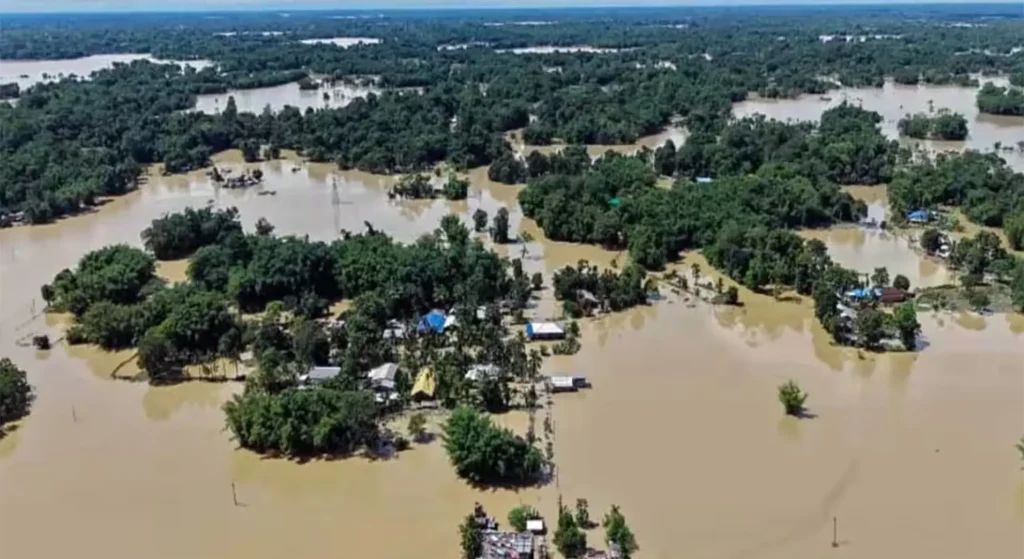
UAE-based Assamese community mobilises aid for flood-hit families in Assam
The devastating situation unfolding in Assam became too difficult for UAE-based Assamese expatriates to watch from afar. Deeply affected by the images and accounts emerging from the flood-hit areas, Utpal Boruah, along with his friends Sumon Bordoloi and Prateek Talukdar, decided that they needed to do something practical to help people back home.
The three members of the Assamese community in the UAE began an effort to collect financial assistance for families affected by the floods. What started as a small initiative quickly gained support from fellow expatriates, with members of the community contributing whatever they could towards the relief campaign.
Within just 10 days, their fundraising effort had collected more than Dh35,000.
For a relatively small Assamese community living in the UAE, the amount was considered a significant achievement.
Talukdar, who is based in Dubai, said the Assamese population in the country is estimated to number only around 300 to 400 people, including children. Despite the community’s limited size, residents responded quickly when they learned about the conditions facing families in Assam.
He expressed his appreciation to everyone who contributed to the campaign, saying the support demonstrated the strong connection expatriates continue to maintain with their home state.
The money collected was intended to support people whose homes, belongings, livelihoods and access to basic necessities had been severely affected by the flooding.
From fundraising to frontline assistance
Rather than limiting their contribution to financial donations, Boruah and Bordoloi decided to travel to Assam themselves and participate directly in relief activities.
On August 4, the two travelled from Dubai to Guwahati on an Air India Express service, which was the first direct flight connecting the two cities. They used the journey to carry relief supplies that would later be distributed among people in some of the worst-affected areas.
Once they arrived in Guwahati, they were joined by several people who had previously lived in the UAE and had returned to Assam.
Together, the group travelled towards villages in upper Assam that had suffered significant damage from the floods.
The journey gave the volunteers an opportunity to see the situation for themselves rather than relying solely on photographs, videos or reports reaching them in Dubai.
What they encountered was far more severe than they had anticipated.
Relief supplies focused on essential needs
The volunteers concentrated their assistance on items that could provide immediate support to families and children affected by the disaster.
School supplies were among the materials distributed during their visits.
The packages included school bags, notebooks, pens, pencils, drawing equipment and other basic stationery.
Boruah explained that providing educational materials was a deliberate decision because a large number of schools had reportedly been damaged or destroyed by the floodwaters.
For children who had lost access to their classrooms and belongings, replacing basic school materials could help them prepare for the eventual return to education.
The volunteers also distributed a range of household and personal-care items.
These included pressure cookers, medical supplies and sanitation kits.
Hygiene materials were particularly important, with packages containing items such as sanitary products for women and girls, bedding, toothbrushes and soap.
The selection of supplies reflected the immediate needs of families who had been displaced or left with very few possessions following the flooding.
Seeing the devastation first-hand
For Bordoloi, travelling to the affected villages transformed his understanding of the disaster.
The stories he had heard before reaching the region could not fully communicate the scale of the destruction.
During one visit, the group encountered residents living in a temporary tent after losing their homes.
The villagers described the frightening moments when the floodwaters first swept through the area.
One story particularly stayed with Bordoloi.
A young man had reportedly gone towards a field to retrieve a tractor after the flooding began. He never came back.
For the volunteers, such accounts demonstrated that the disaster had resulted in more than property damage.
Families had lost relatives, homes, possessions and sources of income, leaving many facing an uncertain future.
The temporary shelters where some residents were living offered a stark indication of how badly communities had been affected.
Damage far beyond normal flooding
Boruah had grown up in Majuli, where seasonal flooding was a familiar part of life.
His childhood had taught him how communities prepare for rising water, including moving livestock, protecting belongings and constructing elevated shelters.
Because of that experience, he initially believed he had a reasonable understanding of what severe flooding looked like.
But visiting the affected villages changed his perspective.
He said the destruction he witnessed was unlike anything he had experienced during his childhood in Majuli.
The force of the floodwaters had apparently destroyed entire structures, leaving little behind in some locations.
Homes had disappeared, while even temporary shelters and other structures had been swept away.
In several places, only the foundations remained where houses had previously stood.
The scale of destruction made it difficult for Boruah to compare the situation with the floods he remembered from his younger years.
He described the disaster as being on a completely different level from the flooding he had known while growing up.
Communities facing a long road ahead
For the volunteers, providing immediate relief was only the beginning.
The damage they witnessed suggested that affected communities would require assistance long after the floodwaters receded.
Replacing household items and distributing food, hygiene products and medical supplies could address some immediate needs, but rebuilding homes, schools and infrastructure would require much more time and resources.
Boruah said the recovery process could take months.
Education was one of the areas where he expected the disruption to be particularly significant.
With schools damaged by the floods, children would need to wait for buildings to be repaired, essential facilities restored and educational materials replaced.
Boruah estimated that it could take around two months before some children were able to return to school.
That timeline, he stressed, was only an estimate, as the extent of reconstruction required meant that recovery could not happen immediately.
Education among the priorities
The decision to distribute school bags and stationery reflected the importance the volunteers placed on helping children resume their education.
For families who had lost almost everything, replacing notebooks and pencils may seem like a relatively small part of the recovery process.
However, these basic items can be crucial when children are preparing to return to school after a disaster.
The volunteers wanted to ensure that students had at least some of the supplies they would need once educational facilities became operational again.
The damage to schools also illustrates how floods can disrupt communities beyond the immediate loss of homes.
When classrooms are destroyed, children’s education is interrupted, teachers may be displaced and families face additional challenges in returning to normal life.
Rebuilding schools therefore becomes an important part of long-term recovery.
Health and hygiene concerns
The volunteers also recognised that health and sanitation would be major concerns following the floods.
When families are forced to live in temporary shelters and lose access to normal household facilities, maintaining hygiene can become difficult.
The relief packages containing soap, toothbrushes, sanitary products, bedding and other essentials were intended to help families manage some of these challenges.
Medical supplies were also included among the items distributed.
For women and girls, access to sanitary products is especially important during displacement and emergency situations.
By including such products in the relief packages, the volunteers aimed to address needs that can sometimes be overlooked during disaster-relief operations.
Support from the UAE community
The relief mission was made possible by the contributions of Assamese expatriates living in the UAE.
Talukdar said the fundraising effort demonstrated the strength of the community despite its relatively small population.
With only a few hundred Assamese people living in the country, raising more than Dh35,000 in 10 days required a strong response from individuals who were willing to contribute.
The campaign also showed that expatriates remained closely connected to their communities in Assam.
Many of those who donated may have been living thousands of kilometres away, but the worsening flood situation created an immediate sense of responsibility to help people back home.
For Boruah, the response also reflected the values he learned while growing up in Majuli.
Floods had taught his community that survival often depends on cooperation.
The same principle was visible in the UAE fundraising effort, where individuals came together to support people they might not personally know.
Recovery will take time
While the volunteers were able to provide essential supplies, they recognised that the scale of the destruction meant that much more work remained.
Homes would need to be rebuilt.
Schools would have to be repaired or reconstructed.
Families would need to replace household possessions and recover their livelihoods.
Roads and other infrastructure could also require extensive restoration.
For residents who had lost almost everything, returning to their previous way of life would not be possible immediately.
Boruah said rebuilding would take time and could not be completed overnight.
The estimate of around two months for children to return to school highlighted only one aspect of the recovery process.
For many families, the process of rebuilding homes and restoring their livelihoods could continue for considerably longer.
A personal mission for Boruah
For Boruah, the relief journey carried a deeply personal meaning.
Having grown up in a flood-prone part of Assam, he understood the anxiety that comes with watching water levels rise.
But the destruction he saw during this visit left him shocked.
The experience showed him that his childhood knowledge of floods could not fully prepare him for the devastation witnessed in these villages.
Instead of seeing water enter homes and communities gradually, he encountered areas where structures had seemingly disappeared altogether.
That difference made the disaster particularly difficult for him to process.
The journey also reinforced his determination to continue helping wherever possible.
From Dubai to Assam
The journey undertaken by Boruah, Bordoloi and their fellow volunteers demonstrates how expatriate communities can respond to disasters in their home regions.
The campaign began in Dubai with fundraising and eventually turned into a direct relief mission in Assam.
The Dh35,000 collected from community members was converted into practical assistance, including educational materials, household equipment, medical supplies and hygiene products.
By travelling to the affected areas themselves, the volunteers were also able to understand the needs of residents more closely.
Their experience revealed that the flood crisis was not simply about temporary displacement.
For many communities, it represented the destruction of homes, schools, belongings and livelihoods.
A long rebuilding process ahead
As the waters recede, the focus will gradually shift from emergency response to reconstruction.
The immediate need for relief materials will remain important, but communities will also require support to rebuild their homes and restore essential services.
Children will need to return to classrooms.
Families will need secure housing.
Livelihoods will need to be restored.
Infrastructure will have to be repaired.
For Boruah and his friends, the relief mission was therefore only an initial contribution towards a much longer recovery process.
Their efforts demonstrated what a small but determined community can accomplish when people come together in response to a crisis.
The volunteers returned to Assam because they wanted to help people facing conditions that were difficult to comprehend from a distance.
After witnessing the destruction personally, they came away with an even clearer understanding of how much work lies ahead.
For the flood-hit communities, recovery will not happen quickly. But the support provided by Assamese expatriates in the UAE has offered immediate assistance while also reminding affected families that people far from home are standing with them during one of the most difficult periods they have faced.
Calls grow for better relief camps as Assam flood victims face a long recovery
As the scale of the flooding became clearer, concerns also emerged over the way relief camps are being managed and whether they are adequately equipped to support displaced families for an extended period.
Swapnanil Baruah, a retired government official from Assam, has called for changes to the way temporary shelters are organised. He argued that relief centres should not be designed only to meet the immediate need for food and shelter, but should also help families maintain a sense of normality and dignity while they remain displaced.
One of the key issues he highlighted was the disruption to children’s education.
With schools in several affected areas damaged by floodwaters, many children have been unable to return to their regular classrooms. Baruah suggested that temporary learning spaces should be established inside or close to relief camps so that students can continue their studies while permanent school facilities are being restored.
His argument reflects a wider concern that natural disasters can have consequences that extend far beyond the initial emergency.
When families are forced to leave their homes, children often lose access to their schools at the same time. The interruption can continue for weeks or even months, particularly when classrooms, roads and other infrastructure have suffered extensive damage.
Baruah therefore stressed that relief arrangements should address both immediate survival and the longer-term needs of displaced residents.
Education should continue during displacement
The creation of temporary classrooms could provide children with an opportunity to continue learning while communities recover.
For families who have lost homes and possessions, education may not appear to be the most urgent priority during the first days of a disaster. However, as the emergency continues, maintaining some form of schooling can become increasingly important.
Temporary education facilities can give children a structured environment and allow them to remain connected with teachers and classmates.
They can also provide parents with reassurance that their children’s academic progress will not be completely halted by the disaster.
The proposal comes at a time when several schools in the flood-affected areas have reportedly suffered damage.
Rebuilding permanent facilities will take time, meaning alternative arrangements could be necessary if authorities want to prevent a prolonged interruption to education.
Relief must provide more than basic necessities
Baruah’s comments also emphasised the importance of treating people in relief camps with dignity.
Emergency shelters are primarily established to protect people from immediate danger, but displaced families can remain there for considerable periods when homes and villages have been badly damaged.
During such circumstances, the quality of accommodation, sanitation facilities, privacy and access to essential services becomes increasingly important.
Providing food and a safe place to sleep is essential, but displaced residents may also need access to healthcare, hygiene products, education and adequate sanitation.
Women, children, elderly people and those with specific needs can face additional challenges in temporary accommodation.
A well-managed relief system therefore needs to consider the different requirements of the people living in the camps.
Doubts over political response
While calls were being made for improvements to disaster management, Talukdar expressed doubts about whether political leaders would make significant changes.
The Dubai-based Assamese expatriate, who is also a professional bodybuilder, said the latest flooding was exceptional even by Assam’s standards.
Assam has long dealt with recurring floods, particularly during the monsoon season, but Talukdar believes the scale of the latest disaster exposed weaknesses that should have been addressed through lessons from previous emergencies.
He said he did not have much confidence that political leaders would move beyond their existing priorities and take sufficient action to address the underlying problems.
His criticism reflects frustration among some residents and expatriates who believe repeated flooding should lead to stronger preparation and more effective long-term planning.
Questions about lessons from previous floods
Assam has experienced severe flooding repeatedly over the years, leaving communities accustomed to preparing for rising water.
For residents of flood-prone areas, the arrival of the monsoon often means preparing livestock, protecting belongings and identifying safer places.
However, the latest disaster has raised questions about whether existing systems are sufficient when flooding reaches areas that have historically been considered less vulnerable.
Talukdar’s comments point to a wider demand for authorities to examine what happened, identify weaknesses in the response and strengthen preparations before the next major flood.
Such improvements could involve better early-warning systems, stronger infrastructure, more effective evacuation plans and improved management of relief centres.
The objective would not simply be to respond after flooding occurs, but to reduce its impact before communities are overwhelmed.
Ordinary people step forward
Despite his disappointment with the political response, Talukdar and his fellow volunteers found another source of encouragement during their journey through the affected areas.
Boruah said one of the most positive aspects of the experience was witnessing ordinary citizens and non-governmental organisations from different parts of India travelling or organising assistance for flood victims.
While travelling through the affected regions, the volunteers saw extensive destruction along roads and in villages.
But alongside the damage, they also encountered people helping one another.
Residents were sharing resources, assisting neighbours and supporting families who had been displaced.
For Boruah, these moments provided an important reminder that communities can show remarkable resilience during a disaster.
A spirit of solidarity
The volunteers’ experience showed that the response to a disaster is not limited to government agencies.
Individuals, community groups, charities and NGOs can all play a role in providing assistance.
People who have little connection to a particular village or district may still decide to contribute food, clothing, medical supplies or financial assistance.
Such support can become particularly important when the scale of a disaster places significant pressure on official relief systems.
Boruah said seeing this solidarity was one of the most memorable parts of his journey.
The devastation was obvious, but so was the determination of people to help each other.
Hope amid destruction
The contrast between destruction and solidarity left a lasting impression on Boruah.
On one side were damaged homes, affected roads and communities struggling to recover.
On the other were individuals stepping forward to offer whatever assistance they could.
For the volunteers, these acts of kindness demonstrated that even in the middle of a devastating crisis, people can find ways to support one another.
The experience also reinforced the importance of community networks during natural disasters.
In places where formal assistance may take time to arrive, neighbours and local volunteers can provide immediate support.
They may help move people to safer locations, distribute supplies or assist vulnerable residents.
Recovery will require collective effort
The comments from Baruah, Talukdar and Boruah highlight different aspects of the same crisis.
For Baruah, the priority is improving relief management and ensuring that displaced children can continue their education.
For Talukdar, the disaster demonstrates the need for authorities to learn from previous floods and improve preparedness.
For Boruah, the most encouraging lesson came from ordinary people who refused to stand by while others suffered.
Together, these perspectives point towards the scale of the challenge facing Assam.
Emergency assistance can provide immediate relief, but rebuilding communities requires longer-term planning and sustained support.
Schools may need to be reconstructed, homes repaired and infrastructure restored.
Families who have lost livelihoods may need assistance getting back on their feet.
Relief camps may also need to remain operational until displaced residents have safe and suitable homes to return to.
The role of community organisations
The involvement of NGOs and independent volunteers can be particularly valuable during the recovery period.
Such organisations can often identify specific needs at the local level and direct assistance towards communities that require it most.
The experience of the UAE-based Assamese volunteers is one example of how community groups can organise resources and deliver them directly to affected residents.
Their fundraising campaign brought together contributions from a relatively small expatriate population, while their subsequent visit allowed them to see the situation first-hand.
Other organisations and individuals from across India have also contributed to relief efforts.
This broader response suggests that the impact of the floods has extended well beyond the affected districts, encouraging people elsewhere to offer support.
A lasting message from the flood response
For Boruah, the most unforgettable part of the experience was not only the destruction he witnessed but also the willingness of people to help each other despite their own difficulties.
Communities facing enormous losses continued to show compassion towards neighbours and strangers.
That spirit of cooperation can become an important foundation for recovery.
The floods have left Assam facing a long and difficult rebuilding process, but the response from ordinary citizens, NGOs and volunteers offers a measure of hope.
As the immediate emergency gradually gives way to reconstruction, the challenge will be to ensure that the lessons from the disaster are not forgotten.
Better-managed relief camps, temporary education facilities, stronger preparedness and more effective disaster planning could help communities cope with future emergencies.
For those who travelled to the affected areas, however, one lesson already stands out: even when a disaster causes widespread destruction, the willingness of ordinary people to support one another can provide strength when it is needed most.