Robot Wedding in the UAE Goes Viral as Man Shares the Motivation Behind the Strange Ceremony
Why a UAE Man Held a Wedding Ceremony With a Robot: The Story Behind the Viral Event.
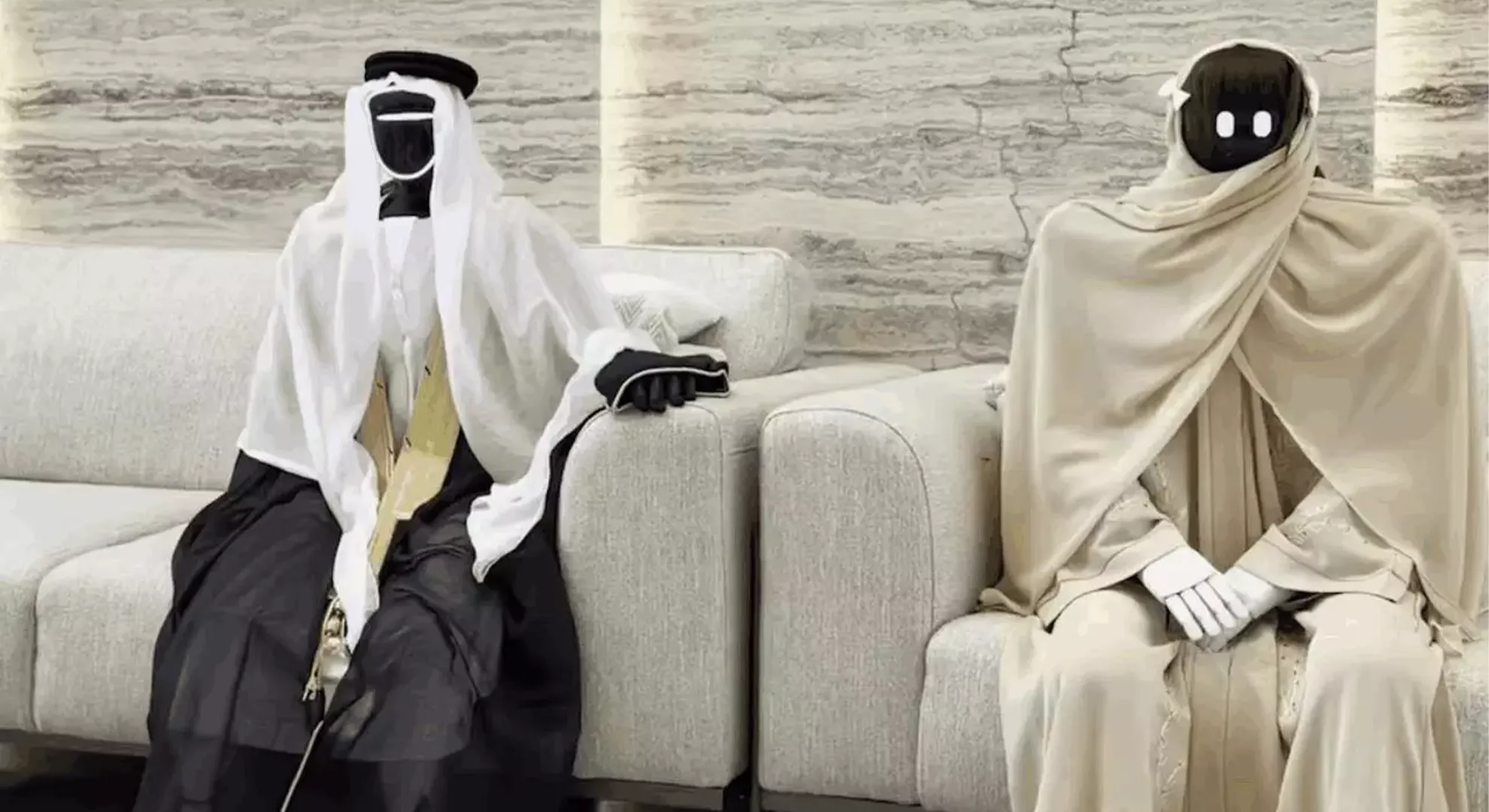
Yousif Lootah shares the inspiration behind arranging a wedding ceremony for two robots, highlighting how the event blended innovation, Emirati culture and the UAE’s vision for the future.
The groom has no appetite, the bride never needs rest, and even their idea of a honeymoon would keep them within the borders of the UAE. At first glance, the wedding of Bu Sunaidah and Moza may sound like an imaginative scene from a futuristic film. In reality, the unusual celebration was created to explore how advanced technology can intersect with Emirati traditions and everyday life.
The two humanoid robots became the centre of attention at a wedding ceremony unlike any other. Dressed and presented as a bride and groom, Bu Sunaidah and Moza were brought into a setting inspired by familiar Emirati wedding customs, creating a striking combination of heritage and emerging technology.
While the robots attracted the cameras and generated curiosity online, there was a larger idea behind the event. The person responsible for bringing the concept to life was Emirati entrepreneur and technology advocate Yousif Lootah, who viewed the ceremony as more than an amusing spectacle.
For Lootah, the wedding offered an opportunity to introduce robotics and artificial intelligence to audiences in a way that felt less intimidating. Rather than presenting robots as complicated machines belonging only in laboratories, research centres or highly technical industries, he wanted people to see them through a more familiar cultural lens.
The unusual ceremony therefore served two purposes. On the surface, it was an entertaining and unconventional celebration. Beneath that, it was intended to encourage conversations about the growing presence of robotics, artificial intelligence and other technologies in society.
Lootah explained that the project was never intended simply to generate attention on social media. Although the unusual sight of two humanoid robots taking part in a wedding was naturally likely to attract viewers, creating an online sensation was not the central objective.
Instead, he wanted to use an engaging concept to make people curious.
The wedding provided a simple way of introducing a subject that can sometimes seem difficult for the general public to understand. Robotics and artificial intelligence are developing rapidly, but conversations around them can often be filled with technical language and complicated ideas. Lootah believed that an entertaining experience could make those subjects easier for people to approach.
The ceremony also reflected a broader question about the relationship between technological progress and cultural identity. As the UAE continues to position itself as a major centre for innovation, artificial intelligence and advanced technologies, the country is also keen to preserve and promote its cultural heritage.
Bringing the two elements together created a distinctive setting in which people could think about the future without being separated from the traditions of the present.
According to Lootah, the inspiration for the project came from a desire to create something capable of bringing people together.
He described the concept as an opportunity to make people smile while simultaneously encouraging them to think about the changing role of technology in their lives.
That combination was important. Rather than beginning with a technical lecture about artificial intelligence or robotics, the organisers used an unexpected and playful idea to attract attention. Once people became interested in the wedding, they could begin asking questions about the robots themselves, how they work and what their growing presence could mean for the future.
In that sense, humour and curiosity became tools for education.
Lootah believes that people often become more willing to learn about unfamiliar subjects when they first encounter them in an enjoyable and accessible way. A person who might normally scroll past a technical discussion about humanoid robots could stop and pay attention when those same robots appear in an unusual cultural setting.
That moment of curiosity can then lead to deeper questions.
What can humanoid robots actually do? How quickly is artificial intelligence developing? Could robots become part of ordinary households and workplaces? How might they interact with people? And perhaps most importantly, what role will such technologies play in the UAE of tomorrow?
Those are the kinds of conversations Lootah hoped the wedding would encourage.
The ceremony was therefore designed to make robotics appear less distant. Technology can sometimes be perceived as something that belongs exclusively to scientists, engineers or large technology companies. Lootah wanted to challenge that perception by placing robots in an environment that people could immediately understand.
A wedding is a familiar social and cultural occasion. By placing humanoid robots within that context, the event made an otherwise complex subject feel more relatable.
The contrast was also part of what made the celebration memorable. Traditional cultural elements were brought together with futuristic machines, creating an image that represented two seemingly different worlds meeting in one place.
On one side was Emirati heritage, with its customs, symbolism and sense of community. On the other was robotics, artificial intelligence and the technological possibilities associated with the future.
For Lootah, those worlds do not necessarily have to exist separately.
The UAE has spent years building a reputation around innovation and technological ambition, while simultaneously placing significant importance on its history and cultural identity. The robot wedding reflected that balance in a playful form.
The celebration also demonstrated how technology can be introduced through storytelling rather than technical explanations. Instead of asking audiences to understand robotics through specifications and complicated terminology, the event gave them a story.
There was a bride.
There was a groom.
There was a wedding.
The difference was that both participants were humanoid robots.
That simple idea was enough to make people stop, look and ask questions.
And for Lootah, those questions were valuable.
He believes that entertainment can serve as an entry point into education. When an unusual idea makes someone laugh or catches their attention, it can create an opening for a much more serious conversation.
Someone might initially be interested because the wedding looks strange or amusing. But after that first reaction, curiosity can take over.
The person may begin searching for information about humanoid robots, learning about artificial intelligence or discussing the possibilities and challenges associated with emerging technology.
That progression—from amusement to curiosity and eventually to knowledge—was at the heart of Lootah’s thinking.
He emphasised that the event was not intended to be viewed simply as a joke. Although the concept was deliberately light-hearted, its underlying message was much broader.
Robots are becoming increasingly visible in modern society, and artificial intelligence is moving from specialised applications into areas that affect ordinary people. From customer service and manufacturing to healthcare, education and entertainment, intelligent technologies are steadily becoming more familiar.
As these changes accelerate, Lootah believes society needs opportunities to discuss them openly.
The wedding offered one such opportunity.
By using a culturally familiar occasion, the event created an environment where people could encounter the idea of humanoid robots without feeling that they needed a technical background. The ceremony became a conversation starter.
It also demonstrated that discussions about the future of technology do not always need to be formal or academic.
Sometimes, an unconventional idea can achieve more by making people curious than a traditional presentation can.
The unusual pairing of Bu Sunaidah and Moza therefore represented more than a fictional-style marriage between two machines. It became a symbolic meeting point between tradition and innovation.
The robots themselves may not eat, sleep or become tired in the same way humans do, but their presence raises questions about the ways technology could eventually interact with human society.
Even the idea of their honeymoon staying within the UAE added another playful element to the story. Beneath the humour, however, was a connection to the country in which the ceremony took place and the technological future Lootah hopes to see develop there.
The UAE has increasingly presented itself as a country looking toward the next generation of technology. Artificial intelligence, robotics and other emerging fields are becoming increasingly important to discussions about economic development, innovation and the future of work.
The wedding offered a more informal way of reflecting that ambition.
Rather than presenting the future as something abstract and distant, it placed futuristic technology directly into a familiar social setting.
That was perhaps the most significant feature of the celebration.
The ceremony did not ask people to imagine a distant future in which robots might one day become part of society. Instead, it showed robots already participating in a human-style social occasion, creating an opportunity to consider how quickly the boundary between technology and everyday life is changing.
For Lootah, getting people to think about that transformation was more important than simply generating headlines.
The online attention surrounding the wedding was useful because it extended the conversation beyond those who attended the event. Images and videos of the robots could reach audiences who might never otherwise have encountered discussions about robotics.
In that respect, social media became a means of spreading the idea rather than the reason for creating it.
Lootah’s approach reflects a broader belief that technology education does not always need to begin with textbooks, classrooms or technical demonstrations. It can begin with something as simple as a surprising moment.
A person sees something unusual.
They become curious.
They ask a question.
They search for an answer.
And through that process, they learn.
That, according to Lootah, was the real value of the robot wedding.
The ceremony used humour and cultural familiarity to introduce a subject that will likely become increasingly important in the years ahead. It gave people a chance to think about artificial intelligence and robotics without requiring them to approach the subject as experts.
At the same time, the celebration showed how emerging technology can be discussed alongside cultural traditions rather than being presented as something that exists outside them.
Bu Sunaidah and Moza may have been the stars of the ceremony, but the deeper story was about people and technology.
The event asked audiences to consider what happens when futuristic innovations enter spaces traditionally associated with human relationships, customs and celebrations.
It also offered a glimpse into how the UAE might continue balancing rapid technological development with its strong cultural identity.
For Lootah, making that conversation accessible was the central goal.
The unusual wedding may have begun with smiles, curiosity and plenty of surprise, but its intended destination was knowledge. By presenting robotics in an unexpected and entertaining way, Lootah hoped to encourage people to become more comfortable discussing technologies that are likely to shape their future.
The ceremony, therefore, was not simply about two robots being presented as a bride and groom.
It was an experiment in communication.
It showed how an unconventional idea can capture public attention, connect technology with culture and encourage people to ask bigger questions about the future.
And that, ultimately, was the message behind the celebration: the future of robotics and artificial intelligence does not have to feel remote or intimidating. By bringing these technologies into familiar surroundings and presenting them in an engaging way, people can begin to understand them, discuss their possibilities and consider how they might become part of everyday life.
For Lootah, if the unusual ceremony made people smile first and think more deeply afterward, then it had already achieved what he wanted.
More than a wedding
For Yousif Lootah and his team, the unusual robot wedding was never intended to feel like a simple technology demonstration. From the earliest planning stages, they approached the occasion as they would any important wedding, giving careful thought to the location, schedule, atmosphere and cultural touches that would shape the experience.
Every part of the programme was considered with the audience in mind. The organisers wanted visitors to feel that they were attending a real celebration rather than simply watching a display of futuristic machines. That attention to presentation became an important part of the concept.
Lootah explained that the small details could determine whether the idea succeeded.
The purpose was not only to create something unusual enough to attract attention. The team wanted to build an experience that people would remember after the event was over. They also hoped that guests and viewers would continue discussing robotics and artificial intelligence, but in a way that felt optimistic, entertaining and accessible.
The wedding was therefore designed to create a lasting impression.
Instead of presenting robotics through a conventional exhibition or technical demonstration, Lootah and his team placed the technology within a familiar social and cultural setting. The result was an event that combined an element of entertainment with a broader message about innovation.
The approach also reflected a central idea behind the project: technological development does not necessarily have to come at the expense of cultural identity.
For the organisers, the wedding was an opportunity to demonstrate that modern technology and Emirati heritage can exist side by side. Rather than treating tradition and innovation as opposing forces, the event presented them as elements that can complement one another.
The ceremony incorporated features intended to give it an unmistakably Emirati character while simultaneously introducing the futuristic presence of humanoid robots.
That combination was deliberate.
Lootah believes that technological advancement should not require people to distance themselves from their heritage. Instead, new technologies can provide additional ways of expressing cultural values and traditions.
In his view, innovation becomes more meaningful when people can recognise something familiar within it.
This philosophy was reflected in the idea of an Emirati robot. Rather than imagining robots as completely detached machines with no connection to the societies in which they operate, Lootah wanted to explore how they could reflect local culture and values.
The concept raises an important question about the future of artificial intelligence and robotics: as these technologies become increasingly integrated into everyday life, how should they interact with the identities and traditions of different communities?
For Lootah, the answer is not to abandon cultural identity in favour of technology. Instead, he sees an opportunity to use technology as another platform through which culture can be communicated.
That perspective became one of the most distinctive aspects of the wedding.
The celebration was futuristic, but it was not designed to look culturally disconnected. By bringing together familiar Emirati elements and humanoid robots, the event attempted to show that innovation can be adapted to local environments rather than simply imported as a foreign concept.
Lootah argued that technology should be approachable and relevant to ordinary people.
An innovative machine may be impressive from an engineering perspective, but its wider value depends partly on whether people can understand how it fits into their lives. By presenting the robots in a setting associated with family, celebration and community, the organisers created a more relatable introduction to the subject.
The financial side of the event, meanwhile, remained undisclosed.
Lootah did not provide a figure for the overall expenditure involved in organising the celebration. The costs would have included elements such as the venue, food, programme and other arrangements, but he chose not to focus on the financial value of the wedding.
For him, the significance of the project could not be measured simply by how much money was spent.
The organisers were more interested in the attention, conversations and ideas generated by the event.
Lootah maintained that the impact of the celebration was ultimately more important than its price tag. From his perspective, spending money on an event only makes sense if it helps communicate a meaningful idea or creates an experience capable of reaching people.
The robot wedding was intended to accomplish both.
It created a memorable public spectacle while opening the door to conversations about robotics, artificial intelligence and innovation.
The ceremony also challenged the common perception of robots as purely mechanical tools.
For many people, the word “robot” immediately brings to mind industrial machines working in factories, automated systems or fictional characters from films. Lootah wanted to encourage a broader understanding of what robotics could represent.
Robots can potentially play roles in education, communication, entertainment and public engagement, among many other areas.
By putting humanoid robots at the centre of a culturally significant celebration, the event offered an unconventional demonstration of that possibility.
The wedding was not intended to suggest that robots are replacing human relationships or traditions. Rather, it was designed to explore how people might interact with increasingly sophisticated technologies in social and educational settings.
That distinction was important to the overall message.
The event used a playful concept to communicate a serious idea: innovation becomes more powerful when it can connect with people.
Lootah believes that robotics should not be viewed solely through the lens of technical achievement. The conversation should also include questions about how technology can inspire people, improve understanding and encourage younger generations to become interested in science and innovation.
An entertaining event can sometimes achieve that more effectively than a formal presentation.
A person who sees a robot participating in a wedding may initially be interested simply because the sight is unusual. But that initial curiosity can lead to questions about artificial intelligence, robotics and the future.
Those questions can become the beginning of a much larger conversation.
That was one of the outcomes Lootah and his team hoped to create.
The celebration was designed to encourage people to think positively about technological change rather than viewing it with fear or uncertainty. As robotics and artificial intelligence continue to develop, public understanding will become increasingly important.
People will encounter these technologies in workplaces, schools, businesses and potentially their homes. Creating opportunities for society to engage with them in an accessible way can help make that transition easier.
The wedding offered one such opportunity.
It turned a complex subject into a familiar story and transformed a technology-focused concept into a social experience.
At the same time, the event reinforced the idea that the UAE’s ambitions for technological innovation can be connected to its cultural identity.
The country has increasingly invested in emerging technologies and positioned itself as a hub for innovation. For Lootah, that forward-looking approach does not mean leaving traditional values behind.
Instead, he sees the future as an opportunity to reinterpret and present those values through modern tools.
The robot wedding became a symbolic example of that approach.
It brought together heritage and innovation in a way that was unusual enough to attract attention but familiar enough to encourage people to engage with the idea.
The event also demonstrated the importance of storytelling in communicating technological concepts.
Rather than simply telling audiences that robots are becoming more advanced, the organisers created a story around them. The bride, the groom, the ceremony and the cultural setting gave people a narrative through which they could explore the technology.
That narrative made the subject easier to remember.
For Lootah, this was ultimately more valuable than the spectacle itself.
The wedding was never intended to be remembered only as an unusual event involving two humanoid robots. Its greater purpose was to leave audiences thinking about the role technology could play in society.
Could robots become educational companions? Could they help introduce children to science and technology? Could humanoid machines become part of cultural events or public experiences? Could they help communicate ideas in ways that are more engaging than traditional methods?
These are the kinds of possibilities the event was designed to stimulate.
Lootah’s approach reflects a belief that innovation should be connected to people rather than existing separately from society.
Technology can be impressive, but its real impact comes from the ways people use it.
For that reason, the robot wedding was conceived as more than an expensive celebration or a publicity opportunity. It was a form of public engagement designed to make an emerging field feel more familiar.
The event’s unusual nature was part of its strength.
Had the organisers simply arranged a standard robotics demonstration, it might have attracted a limited audience. By creating something unexpected, they generated curiosity and encouraged people to discuss the subject.
The conversation could then move beyond the wedding itself and toward the broader future of robotics.
That was the central objective.
Lootah wanted people to leave with the sense that robots and artificial intelligence are not necessarily distant technologies reserved for laboratories or specialists. They are increasingly becoming part of the world around us, and society has an opportunity to decide how they should be introduced and used.
Education, inspiration and innovation were therefore central themes behind the celebration.
The robots were not simply there to perform a novelty role. Their presence represented a larger attempt to imagine how technology could interact with culture, community and everyday life.
By blending Emirati traditions with futuristic technology, the organisers created an event that reflected both where the UAE comes from and where it hopes to go.
For Lootah, that balance is essential.
Progress should not require a society to abandon its identity. Instead, innovation can provide new ways to express, preserve and share cultural values.
The robot wedding offered a playful but thought-provoking illustration of that belief.
Its ultimate success, therefore, was not measured by the amount spent on the venue, dinner or arrangements. Nor was it determined solely by the number of people who saw the event online.
Its real value lay in the conversations it generated.
If the celebration encouraged people to become curious about robotics, think differently about artificial intelligence, or consider how technology could contribute to education and society, then it had achieved its broader purpose.
What began as an unconventional wedding was ultimately presented as a statement about the future.
It suggested that technology does not have to feel cold, complicated or disconnected from everyday culture. With the right approach, it can become a tool for storytelling, learning and inspiration.
For Lootah and his team, that was the message they wanted people to take away: the future of robotics should not be something society simply watches from a distance. It should be something people understand, discuss and explore together—while continuing to carry their cultural identity forward.
The Story Behind Bu Sunaidah and Moza
The unusual robot wedding was not created around two random machine identities. The names chosen for the robotic bride and groom were intended to make the characters feel familiar to people in the UAE and, particularly, to younger audiences who may encounter robotics as an increasingly important part of their lives.
The groom was given the name Bu Sunaidah, while the bride was named Moza. According to Emirati entrepreneur and technology advocate Yousif Lootah, the names were deliberately selected because of their connection with local culture and society.
Rather than giving the humanoid robots generic futuristic names, the team wanted their identities to reflect the environment in which they were created.
Lootah explained that the intention was to develop robotic personalities that Emirati families could recognise and relate to. The characters were imagined as machines capable of communicating with people while remaining connected to the language, traditions and values of the country.
For Lootah, this cultural connection is an important part of making advanced technology more approachable.
A robot can be technically impressive, but people are more likely to engage with it when it feels relevant to their own lives. By giving the characters familiar names and personalities, the project attempted to create that sense of connection.
Bu Sunaidah was designed as an outgoing Emirati male character with an interest in innovation. His personality was intended to make him comfortable in public settings and capable of interacting naturally with people.
Moza was created with a different but complementary identity. She represents an intelligent Emirati female robot associated with education, creativity and the practical use of technology to help people.
Together, the two characters are intended to represent more than a robotic couple.
They form part of a broader idea about what locally developed humanoid technology could look like in the future.
Lootah sees the possibility of expanding the concept beyond the two characters. His long-term vision involves creating a wider collection of Emirati-inspired robotic personalities, each with its own characteristics, skills and purpose.
The wedding could therefore be viewed as the first chapter of a much larger project.
Instead of ending with the ceremony, the idea could eventually develop into an entire community of robotic characters designed around different aspects of Emirati society.
Such characters could potentially be used in educational programmes, public events, exhibitions and other settings where technology needs to communicate with people in a friendly and accessible manner.
Lootah believes that giving robots distinct identities could also make complicated subjects easier for children to understand.
A young student may not immediately be interested in a technical presentation about artificial intelligence. However, meeting a humanoid character with a name, personality and story could create a completely different reaction.
That was one of the reasons the organisers placed so much emphasis on the personalities of Bu Sunaidah and Moza.
Children became an unexpected focus
Although the wedding attracted attention because of its unusual concept, Lootah said the number of people present was not the measurement he cared about most.
The response from the audience mattered more than the size of the crowd.
Among the people who appeared particularly interested were children and young visitors. Their reactions gave Lootah a clearer indication of whether the event had succeeded in achieving its educational purpose.
Children were seen talking about the robots, asking questions, taking pictures and trying to understand how the technology worked.
For Lootah, those interactions were more meaningful than simply seeing large numbers of people attend the celebration.
The event had been created partly to make robotics and artificial intelligence easier for the public to approach. Watching children become curious about those subjects suggested that the idea was working.
A child who sees a humanoid robot at a wedding may initially be interested because it is unusual. But that curiosity can quickly develop into questions about programming, engineering and artificial intelligence.
That transition from entertainment to learning was exactly what Lootah wanted.
He believes that an event does not have to look like a traditional classroom in order to educate people.
Sometimes, an unusual experience can introduce a child to a subject that eventually becomes a career.
For that reason, Lootah said that even inspiring a single future robotics engineer would make the effort worthwhile.
The idea is particularly significant at a time when artificial intelligence and robotics are becoming increasingly important across industries. Future generations will encounter these technologies in workplaces, schools and public services, making early exposure potentially valuable.
The robot wedding provided children with an opportunity to see humanoid technology outside the context of science fiction.
Instead of watching robots on a screen, they could stand near one, take photographs and interact with the concept in a real-world environment.
The experience was also deliberately social.
The guests were able to enjoy a meal and take part in the atmosphere of the celebration, even though the robotic bride and groom could not share the food.
That contrast became another light-hearted part of the occasion.
Bu Sunaidah and Moza may have been unable to sit down and enjoy the dinner like human guests, but their presence provided something different: an experience that people could talk about and remember.
For Lootah, the smiles and excitement surrounding the robots were more important than whether the machines could participate in every traditional part of the celebration.
The internet joins the conversation
Once images and details of the wedding began circulating online, the event quickly became a subject of discussion.
People reacted in different ways. Some responded with humour, while others were genuinely curious about what the ceremony represented and what it might say about the future of artificial intelligence.
The idea of two robots being presented as newlyweds naturally invited jokes about what might come next.
One particularly memorable reaction suggested that if robots were already having weddings, perhaps working alongside humans would soon become equally normal.
Lootah found the comment amusing, but he also saw a serious point behind it.
The possibility of robots becoming part of workplaces is no longer purely a science-fiction concept. Automation, artificial intelligence and robotic systems are already changing how businesses operate around the world.
However, Lootah does not view that development as a simple competition between humans and machines.
He does not believe the future should be framed as a choice between people having jobs and robots taking them away.
Instead, he imagines a workplace in which humans and robots complement each other.
Robotic systems can handle certain repetitive or physically demanding tasks, while people can focus on areas requiring creativity, judgement, communication and emotional intelligence.
In that model, technology becomes a tool that expands human capabilities rather than simply replacing them.
Lootah believes robots could eventually contribute to improving quality of life in a variety of ways.
Their applications could extend across education, industry, healthcare, customer service, research and other areas. The exact roles may continue to evolve as the technology develops.
What matters, in his view, is ensuring that society learns how to use these systems responsibly and productively.
The online reaction to the wedding therefore became part of the larger conversation.
What began as an unusual celebration encouraged people to think about a much broader question: what will the relationship between humans and intelligent machines look like in the future?
Where would the robot couple go on honeymoon?
The playful idea of a honeymoon naturally became another part of the conversation.
If Bu Sunaidah and Moza were ever given the opportunity to travel after their wedding, Lootah already had an answer about where they should go.
The destination would be the UAE.
Rather than sending the robotic couple overseas, he suggested that they should explore the country where their identities and story were created.
The hypothetical trip could include some of the UAE’s most prominent cultural, technological and tourist attractions.
A visit to the Museum of the Future would be an obvious choice, given the couple’s connection with emerging technology. From there, their imaginary journey could include other well-known landmarks and destinations across the country.
But Lootah sees an educational purpose behind the idea rather than simply treating it as a tourism joke.
For him, the real destination is not a particular attraction.
It is the future of the UAE itself.
He wants the country to establish itself as a major global centre for robotics and artificial intelligence. The wedding, in this sense, was only a playful introduction to a much more ambitious vision.
One possibility would be using the robotic characters to encourage children to learn how robots are designed and programmed.
Rather than simply showing young people what robots can do, Lootah wants to encourage them to understand how those machines are built.
That distinction is central to his philosophy.
The UAE should not only consume technologies developed elsewhere. It should also develop the expertise needed to create its own.
A bigger ambition for robotics in the UAE
Lootah’s plans extend well beyond creating entertaining robotic characters or staging unusual public events.
He envisions an environment in which the UAE becomes a major international destination for robotics research, development and education.
That could include specialised robotics centres, advanced laboratories, university programmes and international competitions.
He also hopes the country could host major robotics championships, bringing researchers, students, engineers and technology companies together in the UAE.
Such events could help create a stronger ecosystem around the industry.
Students could meet engineers. Universities could work with technology companies. Young innovators could demonstrate their inventions. International researchers could collaborate with local institutions.
Over time, these interactions could help develop a new generation of specialists.
Education is therefore one of the most important parts of Lootah’s vision.
He wants students to move beyond simply using artificial intelligence tools and begin understanding how those technologies are created.
Knowing how to use AI is useful, but knowing how to develop and improve it can provide an entirely different level of opportunity.
The same principle applies to robotics.
A student who learns how to design, programme and build a robot is not simply a consumer of technology. That student becomes capable of contributing to the next generation of technological development.
Lootah hopes that such skills will eventually become accessible to students across the UAE.
His vision is for young Emiratis to encounter robotics not as something distant or exclusive, but as a field they can actively participate in.
Schools and universities could play a central role in that transformation.
Students could be introduced to programming, engineering, artificial intelligence and robotics through practical projects rather than relying solely on theoretical lessons.
Building a robot, solving a programming problem or developing an AI-powered project could give young people a direct understanding of how technology works.
That hands-on experience could also help students discover interests that later develop into careers.
From technology users to technology creators
One of Lootah’s strongest messages is that young people should not be satisfied with simply using the latest technology.
The rapid growth of artificial intelligence has made powerful tools available to ordinary users, but Lootah believes the next step should be learning how those tools are developed.
Instead of asking only what AI can do for them, young people should also ask how they can contribute to improving it.
That means developing technical skills, experimenting with new ideas and looking for ways to apply technology to real problems.
For Lootah, the ultimate goal is to create a generation that can build rather than merely consume.
He wants Emirati students to see themselves as engineers, developers, researchers and innovators.
That ambition also extends beyond commercial success.
Technology, in his view, should ultimately serve people.
Robotics and artificial intelligence can be used to improve services, support education, encourage creativity and address practical challenges.
The important question is not simply whether a technology is advanced, but whether it creates meaningful value for society.
This philosophy is reflected in the personalities of Bu Sunaidah and Moza.
The two robots were designed to represent a connection between technological development and Emirati identity.
Their names, personalities and roles were intended to make the idea of robotics feel closer to the public.
For children in particular, seeing humanoid machines associated with their own culture could make the field feel more attainable.
A young visitor might look at Bu Sunaidah or Moza and imagine becoming a robotics engineer.
That possibility is perhaps more important to Lootah than the spectacle of the wedding itself.
A vision that begins with two robots
The wedding may have looked like a one-day celebration, but Lootah sees it as the beginning of something much larger.
Bu Sunaidah and Moza could eventually become the first members of a wider family of Emirati robotic characters.
Those personalities could be introduced to children through educational programmes, public events and interactive experiences.
Their purpose would not simply be entertainment.
They could help explain science, technology and artificial intelligence in ways that are easier for young audiences to understand.
The broader ambition is to create an environment in which robotics becomes a normal part of education and innovation in the UAE.
Lootah imagines a future in which students have access to robotics projects in schools, universities develop specialised programmes and research centres attract experts from around the world.
He also wants the UAE to become a place where international robotics competitions and major technological events can take place.
Such ambitions would strengthen the country’s position within the global technology sector while also giving local students more opportunities to participate.
At the heart of the vision is a simple idea: the future should be built by the people who will live in it.
For the UAE, that means developing local talent capable of contributing to the next generation of technology.
Lootah believes the country has already demonstrated its willingness to pursue ambitious projects and adopt emerging technologies. The next stage, in his view, is to develop more home-grown expertise.
The goal is not simply to have advanced robots operating in the UAE.
It is to have robots that are designed, programmed and developed by people in the UAE.
That distinction could become increasingly important as artificial intelligence and robotics continue to influence the global economy.
Looking beyond the wedding
Ultimately, the marriage of Bu Sunaidah and Moza was presented as more than a novelty.
It was an attempt to turn a futuristic subject into something familiar, memorable and culturally relevant.
The ceremony attracted attention because it was unusual, but the larger message was about education and ambition.
Lootah wants people to look at the robots and think beyond the immediate spectacle.
For children, he hopes they will see an opportunity.
For families, he hopes the event will encourage conversations about technology.
For educators, he hopes it will demonstrate the value of introducing robotics in creative ways.
And for the country as a whole, he hopes it will contribute to a larger discussion about becoming a leader in artificial intelligence and robotics.
The project reflects his belief that innovation does not have to be separated from culture.
A robot can carry a local identity.
A technological project can celebrate national values.
And an entertaining public event can become an introduction to serious educational ideas.
Bu Sunaidah and Moza therefore represent a vision that goes far beyond their fictional wedding.
They are symbols of an ambition to make advanced technology feel accessible while encouraging people to participate in creating it.
The ultimate objective is not to fill the UAE with machines simply for the sake of having robots.
It is to build knowledge, skills and creativity around the technologies that are expected to shape the coming decades.
Lootah wants to see young people move from watching technological breakthroughs to creating them.
He wants students to learn programming, engineering and artificial intelligence from an early age and eventually use those skills to develop solutions of their own.
His long-term dream is to see locally designed robots appearing in schools, universities, businesses and public institutions across the country.
The wedding of two humanoid robots may therefore be remembered as an entertaining and unusual moment, but Lootah hopes its significance will be much greater.
For him, the real celebration is the possibility of a future in which Emirati students are not merely impressed by robots—they are the people building them.
That future would combine technological ambition with cultural confidence, allowing the UAE to remain connected to its identity while continuing to push into new fields.
And if Bu Sunaidah and Moza can inspire even a small number of children to become interested in robotics, programming or artificial intelligence, then their unusual wedding may have achieved something far more valuable than simply going viral.
It may have helped introduce the next generation of innovators to the idea that they can play an active role in designing the future.
That is the ambition behind the robots, the wedding and the wider project: not simply to show people what technology can do today, but to encourage them to imagine what they could create tomorrow.