UAE satellite technology could enable everyday smartphones to remain connected in remote locations where conventional mobile networks are unavailable.
UAE’s Satellite Network Could Allow Regular Phones to Work Without Cellular Coverage.
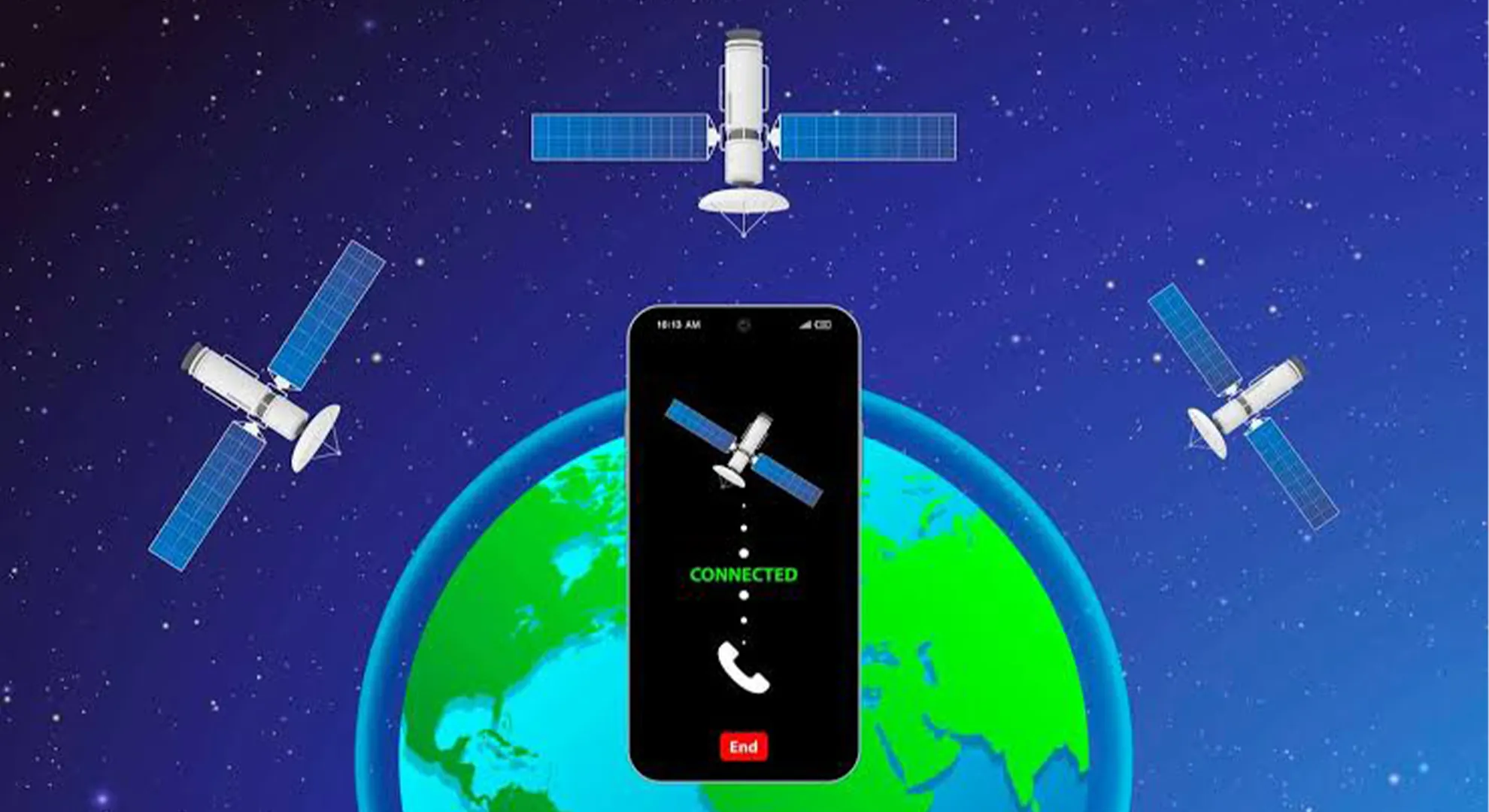
Space42 and US-based Skylo Technologies have successfully demonstrated two-way SMS messaging and emergency SOS connectivity between a regular Android phone and the Thuraya-4 satellite.
UAE satellite technology aims to keep ordinary phones connected beyond mobile coverage
When a smartphone moves outside the reach of traditional mobile networks, its usefulness can quickly become limited. In a remote desert area, for example, a device with no cellular signal may still function as a camera, clock or offline tool, but it cannot normally send messages, share its location or contact emergency services.
Space42 is working to change that situation by developing technology that could allow ordinary smartphones to communicate directly with satellites when conventional terrestrial networks are unavailable.
The Abu Dhabi-based company, together with US satellite communications firm Skylo Technologies, has successfully carried out a demonstration involving two-way text messaging and emergency SOS communication. The test connected a standard Android smartphone directly with Space42’s Thuraya-4 satellite.
The demonstration is significant because it did not depend on a specialised satellite phone or an additional satellite communication terminal. Instead, the companies used a regular Android smartphone capable of supporting the technology.
The test showed that a compatible consumer handset could exchange limited amounts of information through a satellite when it moved outside the coverage area of conventional mobile networks.
This approach is commonly described as direct-to-device connectivity, where a satellite communicates directly with a standard mobile device rather than requiring the user to carry separate satellite equipment.
For people travelling through remote regions, such technology could eventually provide an additional communications option in places where conventional mobile towers are unavailable.
The successful demonstration involved two-way SMS communication, meaning information could travel both from the smartphone to the satellite network and back to the device. Emergency SOS functionality was also tested, showing the potential for a compatible phone to transmit an urgent request for help through satellite connectivity.
The companies said the smartphone did not require a separate antenna or dedicated satellite terminal for the test. This is an important difference from traditional satellite communication systems, which often require specialised equipment designed specifically to establish a connection with satellites.
Instead, the demonstration focused on using an ordinary smartphone as the communication device.
Another notable element of the test was its interaction with existing mobile operator systems. According to Space42 and Skylo, the messages were transmitted using the operator’s existing SIM and subscriber identity arrangements. The companies said this was achieved without requiring changes to the operator’s core network.
That could make the technology easier to integrate into existing mobile ecosystems because users would not necessarily need to replace their normal mobile identity or rely on a completely separate communications service.
The demonstration does not mean that ordinary smartphones can now automatically access unrestricted satellite communications everywhere. The companies specifically clarified the scope of what was shown.
The test established the ability to exchange small amounts of information, including text messages and emergency SOS communications, through a satellite connection when terrestrial coverage was unavailable.
It did not demonstrate unrestricted voice calls, conventional internet browsing or high-bandwidth activities such as video streaming.
This distinction is important because satellite connectivity for ordinary phones is still developing. Sending a short text message requires significantly less data than maintaining a voice conversation or delivering continuous video content.
The test therefore represents an early but potentially important step towards expanding mobile connectivity beyond the reach of terrestrial networks.
The technology could have particular relevance in areas where building conventional mobile infrastructure is difficult, expensive or impractical.
Remote deserts are one example. Large areas of desert may have very few mobile towers because of their distance from populated centres and the challenges associated with installing and maintaining infrastructure.
The same issue can occur in mountainous regions, offshore areas, isolated roads and other locations where traditional cellular coverage is limited.
For people travelling through such areas, the ability to send a basic message or emergency alert could provide an additional layer of safety.
A traveller whose phone displays no mobile signal could potentially use a compatible satellite connection to communicate important information rather than being completely cut off from outside assistance.
Emergency services could be one of the most significant applications.
If a person becomes stranded, injured or otherwise unable to reach a conventional network, an SOS message sent through satellite could alert the relevant support system.
Location sharing could also be valuable in such circumstances. A person in distress could potentially communicate their position even when there is no nearby cellular tower.
Space42’s executives believe the broader significance of direct-to-device technology goes beyond providing an alternative communication method for people in remote locations.
Ali Al Hashmi, CEO of Space Services at Space42, described the development as a major change in the potential market for satellite communications.
Traditional satellite services have often depended on users owning dedicated satellite terminals or specially designed equipment. That naturally limits the number of people who can use the service because customers must first acquire compatible hardware.
Direct-to-device technology changes that model by allowing satellite networks to communicate with mobile phones that people already carry.
The potential audience could therefore be much larger.
Rather than targeting only people who deliberately purchase satellite communication equipment, the technology could eventually reach ordinary mobile phone users who find themselves outside terrestrial network coverage.
This creates a different commercial and technological proposition for satellite operators.
A satellite service that requires specialist equipment is likely to appeal mainly to specific groups, such as remote workers, maritime users, emergency personnel or people who regularly travel beyond mobile coverage.
A system capable of connecting with compatible everyday smartphones could potentially serve a much broader population.
That includes tourists, motorists, hikers, outdoor workers, travellers and residents of areas where cellular coverage is inconsistent.
The technology could also become useful during major emergencies when terrestrial communications infrastructure is damaged.
Natural disasters, for instance, can disrupt mobile networks by damaging towers, power systems or backhaul infrastructure. If satellite connectivity remains available, compatible phones could potentially provide a backup communication route.
In such circumstances, users would not necessarily need to find a functioning mobile tower before sending a basic message or emergency request.
However, the recent test should be understood as a technology demonstration rather than evidence that all smartphones can immediately connect to Thuraya-4.
The functionality depends on compatible devices, network arrangements and the availability of supporting technology.
The demonstration also involved limited data services rather than full mobile broadband.
Text messaging and SOS communications require relatively small data transfers, making them more suitable for early direct-to-device satellite systems.
Future developments could potentially expand the range of services available through satellite connections, but those capabilities would depend on further technological development, network capacity and commercial deployment.
For now, the achievement demonstrates that an ordinary Android handset can communicate with Space42’s satellite infrastructure under the conditions tested.
The use of Thuraya-4 is also significant because the satellite forms part of Space42’s broader satellite communications activities.
The company is exploring ways to extend connectivity and provide services that can operate across large geographical areas.
Direct-to-device technology could add another dimension to those capabilities by connecting satellites not only with specialised terminals but also with consumer smartphones.
The concept essentially creates another layer of connectivity.
In areas covered by conventional mobile networks, phones can continue to use terrestrial infrastructure. When those networks are unavailable, a compatible device could potentially switch to satellite-based communication for selected services.
This could make connectivity more resilient, particularly for users who frequently travel through areas where mobile coverage is unpredictable.
For consumers, the eventual appeal may be simple: their existing phone could remain useful even after the cellular signal disappears.
Instead of showing no service and becoming largely disconnected, the handset could potentially provide access to basic communications through a satellite overhead.
That does not necessarily mean a seamless replacement for conventional mobile networks. Satellite capacity is different from terrestrial cellular capacity, and services may initially be limited to relatively small amounts of data.
Nevertheless, the ability to send a message or emergency alert could be valuable even without full internet access.
The Space42 and Skylo demonstration therefore represents a step towards a more connected mobile environment in which the boundary between terrestrial and satellite communications becomes less noticeable to users.
Rather than requiring consumers to understand the technical differences between mobile towers and satellites, the long-term goal could be to make connectivity available automatically through the device they already own.
The companies’ test illustrates how satellite communications are increasingly moving towards everyday consumer technology.
For decades, satellite communication was associated with specialised equipment, large antennas and dedicated services. Advances in satellite design, mobile technology and network integration are now opening the possibility of connecting smaller and more familiar devices.
Direct-to-device connectivity is part of that transition.
If the technology continues to develop, the ordinary smartphone could become a much more useful tool in remote environments.
A person travelling across a desert could potentially send a short message to family members. A stranded driver could communicate their location. A hiker could issue an emergency alert. A field worker could maintain limited contact with colleagues even when there is no nearby mobile tower.
These examples illustrate why the technology could have applications far beyond simple convenience.
At the same time, the current demonstration shows that satellite-to-phone connectivity still has limitations. The test did not establish unrestricted voice communication, normal web browsing or video services. Instead, it proved that small quantities of information could be exchanged through the satellite using a compatible ordinary smartphone.
That distinction provides a realistic picture of the technology’s current capabilities.
The achievement is nevertheless important because it demonstrates that satellite connectivity can move closer to the devices people already use every day.
Space42 and Skylo’s work points towards a future in which losing a mobile signal may no longer mean losing all communication capability.
Instead, when terrestrial coverage disappears, a smartphone could potentially establish a satellite connection for essential services such as messaging, location sharing and emergency assistance.
The broader idea is to make satellite connectivity accessible without forcing users to purchase separate hardware.
As Al Hashmi noted, the direct-to-device model potentially expands the audience for satellite services dramatically because people who do not currently own satellite communication equipment could still become users of the technology.
In other words, the focus shifts from selling connectivity to a relatively small group of specialist satellite users towards making satellite access available to the much larger community of everyday mobile phone owners.
The latest test does not mean that this vision has been fully realised. More development, compatibility testing and commercial deployment will be required before such services become widely available.
However, the successful exchange of SMS messages and emergency SOS information between a standard Android phone and Thuraya-4 provides a practical demonstration of what may be possible.
For people living or travelling beyond the reach of mobile towers, that could eventually represent a significant change.
A phone that once became almost useless when its cellular signal disappeared could instead retain a basic connection through space.
The technology could ultimately provide a valuable backup for communication, particularly in remote locations and during emergencies, while giving ordinary smartphone users access to satellite services without the need for a dedicated satellite terminal.
From specialist satellite phones to everyday smartphones
Satellite connectivity has historically depended on specialised equipment. People who needed to communicate through satellites often had to carry dedicated satellite phones or external terminals equipped with relatively large antennas. These devices were designed specifically to establish links with satellites, but their size, cost and complexity made satellite communication less practical for ordinary mobile users.
The development of direct-to-device, or D2D, technology is intended to change that model. Instead of requiring a separate satellite handset or terminal, the technology aims to allow compatible smartphones to communicate directly with satellites using standards associated with conventional mobile networks.
The idea is to make satellite connectivity function as an additional layer of the mobile network rather than as a completely separate communications system.
Under this approach, a smartphone could continue using a conventional terrestrial network whenever a mobile tower is within range. If the user travels beyond the coverage area of those towers, the device could potentially establish a connection with a satellite instead.
From the user’s perspective, the transition could eventually become much less noticeable. The same smartphone would remain the primary communication device, while the network connection could change depending on what infrastructure is available in the user’s location.
Such a system could be particularly useful in remote areas where conventional cellular infrastructure is difficult to install or maintain. Deserts, mountains, offshore locations and isolated roads can all present challenges for terrestrial mobile networks.
A satellite positioned high above Earth can cover a much larger geographical area than an individual mobile tower. This makes satellite technology attractive as a way of extending connectivity into locations where building additional ground infrastructure may not be commercially or technically practical.
Thuraya-4 and the challenge of distance
Space42’s Thuraya-4 satellite is an important part of this development. The spacecraft operates in geostationary orbit at an altitude of approximately 36,000 kilometres above the Earth’s surface.
From such a position, a single satellite can provide coverage across a very large geographical region. However, the enormous distance between the satellite and an ordinary smartphone also creates technical challenges.
A small handset has limited power and a relatively compact antenna. Communicating over tens of thousands of kilometres therefore requires careful management of the available radio resources and data capacity.
This helps explain why basic satellite services are emerging before more demanding applications.
Sending a short text message requires comparatively little information to be transmitted. An emergency alert or location update can also involve a relatively small amount of data.
By contrast, services such as continuous internet browsing, high-quality voice communications or video streaming require substantially greater capacity and a more consistent connection.
As a result, early direct-to-device services are expected to focus on functions where small amounts of data can provide significant value.
Text messaging could allow people outside conventional coverage to communicate basic information. Emergency SOS features could provide an important lifeline for someone who becomes stranded or encounters a dangerous situation. Location sharing could also help people communicate their position when conventional mobile networks are unavailable.
These capabilities may appear simple compared with full mobile broadband, but they could be extremely valuable in locations where users otherwise have no connection at all.
A larger satellite network is planned
Space42’s ambitions extend beyond the capabilities of a single geostationary satellite.
A broader project known as Equatys is being developed as a planned partnership between Space42 and Viasat. The concept is intended to create shared satellite infrastructure that mobile network operators could use rather than having each operator develop an independent satellite system.
The proposed architecture could eventually involve as many as 2,800 satellites.
Such a large constellation would represent a major expansion of satellite infrastructure and could provide extensive capacity for direct-to-device communications.
However, according to Ali Al Hashmi, CEO of Space Services at Space42, the number of satellites is not the only factor that determines how successful such a network can become.
He argues that access to spectrum may be just as important, if not more important, than simply increasing the number of spacecraft in orbit.
Spectrum refers to the radio-frequency ranges used to transmit communications signals. It is a limited resource shared among different wireless services, meaning access to suitable spectrum can have a major impact on how efficiently a network operates.
Al Hashmi compared spectrum to a road system used by vehicles.
In his analogy, the vehicle represents the technology used to provide connectivity, while the highway represents the spectrum through which the signals travel.
A highly capable vehicle may be able to travel long distances, but without an appropriate road network, the journey becomes difficult, inefficient and potentially expensive.
The same principle, he suggested, applies to satellite communications.
A company could build highly advanced satellites and sophisticated equipment, but without suitable spectrum, making the system operate efficiently could be much more difficult.
Why spectrum matters
Radio spectrum is particularly important for direct-to-device services because smartphones are already designed to communicate through established mobile frequency bands.
If satellite networks can operate using spectrum that is compatible with mobile services, it could become easier to integrate satellite connectivity into the existing communications ecosystem.
This could reduce the need for users to purchase specialist equipment or adopt entirely separate systems.
Space42 and Viasat say the proposed Equatys network could make use of more than 100MHz of globally allocated and coordinated mobile satellite spectrum.
Access to this spectrum could provide the network with a valuable foundation for delivering direct-to-device connectivity.
The companies’ approach is therefore not simply about placing thousands of satellites into orbit. It is also about ensuring that those satellites have access to the appropriate frequencies and network resources needed to communicate effectively with ordinary mobile devices.
This distinction is important because satellite connectivity involves several interconnected components.
The spacecraft itself must be capable of supporting the required communications. The network must have access to suitable spectrum. Ground infrastructure and mobile operators also need to work together, while compatible smartphones must be able to establish the required connection.
The goal is to bring those elements together in a way that makes satellite connectivity practical for ordinary users.
A different way of building satellite connectivity
The Equatys concept could also change how mobile operators approach satellite coverage.
Rather than every telecommunications company investing separately in its own satellite infrastructure, shared satellite capacity could potentially be made available to multiple operators.
This could reduce duplication and allow companies to access satellite connectivity without having to develop an entire space-based network independently.
For consumers, such an approach could eventually mean that satellite connectivity becomes an extension of the mobile service they already use.
A person could maintain their normal mobile subscription and use terrestrial networks in areas where towers are available. When travelling beyond conventional coverage, the same service could potentially use satellite infrastructure for selected communications.
The transition would effectively connect two different types of infrastructure: mobile towers on Earth and satellites in orbit.
This is one of the central ideas behind D2D technology.
Rather than treating satellite communications as a niche service reserved for specialist users, the objective is to make satellite access part of the broader mobile communications ecosystem.
Cost and efficiency could be important
Al Hashmi believes that spectrum availability could also influence the eventual cost of providing satellite connectivity.
If the network can operate efficiently using suitable spectrum, fewer technical resources may be required to deliver a given service. That could potentially reduce the complexity and expense associated with connecting users in remote areas.
The analogy he used compares traditional approaches to using an extremely powerful vehicle for every journey.
A highly capable vehicle can certainly reach its destination, but it may require more energy and resources than necessary.
His alternative is to think of the network as a bus: rather than giving every passenger an expensive, powerful vehicle, a shared system can transport many people efficiently using common infrastructure.
Applied to satellite communications, the idea is that ownership or access to suitable spectrum could allow Space42 and its partners to build a more efficient connectivity model.
Instead of requiring each user to rely on specialised hardware, the network could potentially deliver a similar basic communications service to a much larger number of people through compatible smartphones.
That could make the technology more accessible to ordinary consumers.
Satellite connectivity could become part of everyday mobile service
The broader vision is therefore not simply to provide another type of satellite phone.
The aim is to make satellite connectivity increasingly invisible to the user.
A traveller could use a smartphone normally while within cellular coverage. Once the terrestrial network disappears, the device could potentially shift to satellite connectivity for services that require only limited bandwidth.
The user would not necessarily need to know whether the connection was being provided by a tower or a satellite.
This could be especially valuable in countries and regions with large areas where building mobile infrastructure is difficult.
It could also provide a backup communications option during emergencies when terrestrial networks are disrupted.
However, the technology will need to overcome several challenges before this vision becomes widespread.
Satellite connections must operate within limited power and spectrum resources. Smartphones must be capable of communicating with satellites despite their small antennas and restricted transmission power. Network operators and satellite companies must also establish the technical and commercial arrangements required to support the service.
The balance between coverage, capacity, cost and device compatibility will determine how broadly D2D services can eventually be deployed.
From remote connectivity to mass-market service
The significance of Space42’s work lies in its potential to expand the role of satellites in everyday communications.
Satellite services have traditionally been associated with remote users who require dedicated equipment. D2D technology could potentially bring those capabilities to people carrying ordinary smartphones.
That creates a much larger potential user base.
A person who has never considered buying a satellite phone could nevertheless benefit from satellite connectivity when travelling outside cellular coverage.
For emergency services, travellers, outdoor workers and people living in isolated areas, even limited connectivity could make a major difference.
A short message or location update may be enough to tell someone that help is needed.
The longer-term objective is to move beyond those basic functions as satellite capacity and technology improve.
For now, however, messaging, emergency alerts and location sharing represent practical applications that can work within the technical limitations of connecting small smartphones to satellites thousands of kilometres away.
Space42’s approach combines this direct-to-device concept with a broader infrastructure strategy involving Equatys and its planned satellite constellation.
The proposed system could eventually include up to 2,800 satellites and make use of more than 100MHz of globally allocated and coordinated mobile satellite spectrum, according to Space42 and Viasat.
The emphasis on spectrum demonstrates that building a successful satellite network is about more than simply launching spacecraft.
Satellites, frequencies, ground systems, mobile operators and compatible devices all need to work together.
If those elements can be integrated effectively, satellite connectivity could become a more natural part of the mobile experience.
The ultimate objective is straightforward: when a mobile tower is available, the phone uses it; when terrestrial coverage disappears, a satellite could potentially provide a backup connection.
For consumers, that could mean fewer areas where a smartphone becomes completely disconnected.
Instead of requiring a specialist satellite terminal, the device already in a person’s pocket could eventually provide access to essential communications beyond the reach of conventional mobile networks.
That would represent a significant shift in the relationship between smartphones and satellite communications, turning space-based connectivity from a specialist service into a potential extension of everyday mobile networks.
Affordability could determine the future of satellite-to-phone connectivity
One of the biggest questions surrounding satellite-based mobile connectivity is whether the technology can eventually become affordable enough for everyday consumers. While satellite links could provide an important lifeline in places without conventional network coverage, the cost of using such a service will play a major role in determining how widely it is adopted.
If satellite communication remains expensive, it may continue to be viewed mainly as an emergency option for people travelling through remote areas or facing situations in which terrestrial networks are unavailable. However, if operators can offer the service at a price comparable with ordinary mobile plans, satellite connectivity could become a routine part of the telecommunications experience.
That could fundamentally change the way people think about mobile coverage.
Instead of seeing satellite access as a specialist service requiring separate equipment or a premium subscription, customers could eventually regard it as another component of their normal mobile package.
Space42 is already exploring how such a model could work with telecommunications operators in different markets. The company has entered exploratory agreements with e& UAE and Indonesia’s Telkomsat.
These arrangements cover areas such as technical integration, regulatory and licensing considerations and the possibility of conducting field trials. Such cooperation is important because satellite-to-device connectivity cannot operate in isolation from existing mobile networks.
For the technology to become commercially available on a broad scale, satellite infrastructure will need to work alongside mobile operators, regulators and handset manufacturers.
The agreements with e& UAE and Telkomsat represent steps towards examining how that integration could take place in real-world environments.
Technical testing will be particularly important. Demonstrating that a smartphone can exchange a small amount of information with a satellite is only the beginning. A commercially viable service must operate consistently, handle users at scale and provide a reliable experience in different locations and conditions.
Compatible smartphones will remain essential
Although direct-to-device technology is designed to work with ordinary mobile phones, not every existing handset will necessarily be capable of supporting satellite communication.
Devices will require the appropriate hardware and software to establish a connection with the satellite network. Smartphone manufacturers and network providers therefore have an important role to play in determining which devices can eventually access these services.
As the technology develops, compatibility could become an increasingly important consideration for consumers.
A person buying a new smartphone may eventually look not only at camera quality, battery life or processing performance but also at whether the device can connect to satellite networks when conventional coverage is unavailable.
However, compatibility alone will not be enough.
Mobile operators will need to determine how the service is incorporated into existing plans and what customers will pay for access. Commercial agreements between satellite companies and telecommunications providers will have to establish issues such as pricing, network access, service levels and revenue sharing.
These decisions could have a significant influence on whether satellite connectivity becomes a mainstream service.
Regulatory approval will be another hurdle
Regulation is also an important part of the equation.
Satellite and mobile communications depend on the controlled use of radio frequencies, meaning companies cannot simply activate a satellite service wherever they choose.
Regulators in individual countries will need to approve the relevant spectrum arrangements and ensure that satellite services operate in accordance with national telecommunications rules.
For a network intended to operate across multiple countries, this process can become particularly complex.
Different markets may have different regulatory frameworks, licensing requirements and spectrum arrangements. Space42 and its partners will therefore need to work with authorities in each relevant jurisdiction before commercial services can be introduced.
The success of the Equatys concept will depend partly on how effectively these technical, commercial and regulatory elements can be brought together.
From a successful demonstration to a usable service
The recent UAE test demonstrated an important technical capability: a compatible Android smartphone was able to communicate with a satellite for services such as two-way messaging and emergency SOS.
But proving that the technology works in a controlled demonstration is different from making it available to millions of people.
A commercial network needs to operate reliably under a wide range of conditions.
It must cope with different locations, varying numbers of users and changing network demands. It also needs to provide a sufficiently straightforward experience that customers do not have to understand the complex infrastructure operating behind the connection.
That is the larger challenge facing satellite-to-device technology.
Consumers generally do not want to think about which network is carrying their message or call. They simply expect their phone to work.
For this reason, the long-term success of the technology may depend as much on the user experience as on the satellites themselves.
The technology should work without demanding attention
Ali Al Hashmi, CEO of Space Services at Space42, has described this idea as a key part of the company’s vision.
From the customer’s perspective, the objective should be simple: make the call, send the message or use the service without having to think about whether the connection is being delivered through a terrestrial tower or a satellite.
The infrastructure should operate in the background.
A user travelling through a city might connect through a conventional mobile network. The same person could later travel into a remote area where cellular coverage disappears. Ideally, the phone would be able to transition to satellite connectivity without requiring the customer to understand the technical process.
This seamless experience could become one of the most important advantages of direct-to-device technology.
If users have to manually change settings, purchase additional equipment or pay unexpectedly high charges every time they move outside cellular coverage, adoption could remain limited.
The service therefore needs to be simple, predictable and financially accessible.
Price could be as important as coverage
Having coverage in a remote location is useful only if customers can afford to use it.
Satellite communications have historically been associated with higher costs because of the specialised infrastructure and equipment involved. Direct-to-device technology aims to change that by allowing satellite connectivity to work with devices consumers already own.
But the price of the service will still matter.
If sending a message or making a call through a satellite connection carries a very high charge, most users may reserve it for emergencies.
On the other hand, if operators can incorporate satellite connectivity into standard or reasonably priced mobile packages, consumers may be more willing to use it regularly.
That could create a much larger market for satellite services.
Instead of serving only people who routinely travel into remote areas, satellite-enabled mobile plans could potentially appeal to a broad range of customers who simply want greater confidence that their phone will remain connected.
Remote areas could benefit first
The earliest widespread applications are likely to be in locations where terrestrial infrastructure cannot provide reliable coverage.
Travellers crossing deserts, people working in isolated areas, hikers and motorists travelling along remote routes could all benefit from the ability to send basic communications when cellular service disappears.
Emergency applications could be particularly valuable.
Someone stranded in an area without mobile coverage could potentially send an SOS alert. A traveller could share their location with family members. A field worker could send a short update to colleagues.
These are relatively simple services, but they can become extremely important when no other communication option exists.
Over time, improvements in satellite capacity and technology could allow the range of available services to expand.
Operators will play a central role
Telecommunications operators are likely to be essential to making the technology commercially successful.
Rather than building an entirely separate communications system, direct-to-device networks are intended to work alongside existing mobile infrastructure.
A customer could continue using their normal SIM and mobile identity while moving between terrestrial and satellite coverage.
This could make the transition more convenient for consumers because they would not necessarily need to purchase a separate satellite subscription or change their identity on the network.
The exploratory agreements involving Space42, e& UAE and Telkomsat are therefore significant because they examine how satellite services could be integrated with established telecommunications networks.
Field trials could provide valuable information about how the technology performs outside laboratory conditions and how customers respond to the service.
Equatys faces a larger commercial test
The planned Equatys venture between Space42 and Viasat represents a broader ambition to develop shared infrastructure for mobile satellite connectivity.
The proposed network could eventually involve a large constellation of satellites and provide mobile operators with access to satellite capacity.
However, building the infrastructure is only one part of the challenge.
The companies must demonstrate that the network can provide reliable connectivity, that compatible devices can use it effectively and that the overall service can be offered at a price consumers are prepared to pay.
The commercial model will therefore be just as important as the engineering.
A technologically impressive satellite network will have limited impact if ordinary mobile customers find the service too expensive or difficult to use.
Seamless connectivity is the ultimate objective
For Al Hashmi, the ideal outcome is one in which customers do not need to know how their connection is being delivered.
A person should be able to make a call or send a message without worrying about whether the phone is connected to a terrestrial tower or communicating through a satellite.
The same principle applies to pricing.
Customers should not have to fear that using satellite connectivity for an essential communication will result in an unexpectedly large bill.
If satellite connectivity is going to become part of mainstream mobile services, the experience needs to feel familiar and predictable.
The technology should work in the background, switching between available forms of infrastructure according to where the user is located.
This would effectively blur the traditional distinction between cellular and satellite networks.
A shift in the meaning of mobile coverage
The broader significance of the technology is that it could redefine what consumers expect from a mobile phone.
Today, losing cellular coverage generally means losing the ability to communicate through conventional mobile services. In the future, that may not necessarily be the case.
A smartphone could potentially remain connected through satellite infrastructure even when the nearest mobile tower is far beyond reach.
This would not mean that satellite networks immediately replace terrestrial systems. Mobile towers will continue to carry the vast majority of everyday communications where they are available.
Instead, satellites could provide an additional layer of coverage for locations where conventional infrastructure cannot reach.
That combination could make mobile networks more resilient and extend their usefulness into areas that have traditionally remained outside reliable cellular coverage.
The UAE demonstration was an important first step
The Space42 and Skylo test demonstrated that a compatible smartphone could communicate through the Thuraya-4 satellite for limited services.
The next challenge is much larger: turning that demonstration into a dependable, widely available and commercially sustainable service.
That requires cooperation among satellite operators, mobile companies, handset manufacturers and regulators.
It also requires a business model that makes sense for both telecommunications companies and their customers.
The technology must be sufficiently reliable for users to trust it, while the cost must be low enough to encourage adoption beyond emergency situations.
If those conditions can be achieved, satellite connectivity could gradually move from being a specialist capability to becoming a normal part of mobile communications.
The goal is for users not to care where the signal comes from
Ultimately, the success of direct-to-device technology may be measured by how little attention users pay to it.
Customers do not normally think about which mobile tower is handling their call. They simply expect their phone to connect.
The same principle could eventually apply to satellites.
A person could be travelling through an urban area, moving into the countryside and eventually entering a remote region without needing to change anything on their phone.
The network could determine which infrastructure is available and use the most suitable connection.
If that happens reliably and at an affordable cost, the distinction between satellite coverage and terrestrial coverage could become largely invisible to the customer.
The UAE demonstration has shown that the basic communication link is technically possible. The more demanding task now is to expand that capability, integrate it with existing operators, secure regulatory approvals, support compatible smartphones and establish a price model that works for everyday users.
The ultimate test will not simply be whether a satellite can reach a phone.
It will be whether millions of people can rely on that connection without needing specialist equipment, complicated settings or expensive subscriptions.
If Space42, its partners and mobile operators can overcome those challenges, satellite connectivity could become an extension of the ordinary mobile network rather than a service reserved for exceptional circumstances.
The vision is straightforward: wherever a customer travels, the phone should remain as connected as possible.
Whether that connection comes from a nearby mobile tower or a satellite thousands of kilometres above Earth should eventually become a technical detail that the user never has to worry about.