Dubai Police successfully located a woman who had lost consciousness after an emergency call made during the early hours was unexpectedly disconnected, prompting officers to launch an immediate search.
Woman Found Unresponsive After Dubai Police Respond to Dropped Early-Morning Emergency Call.
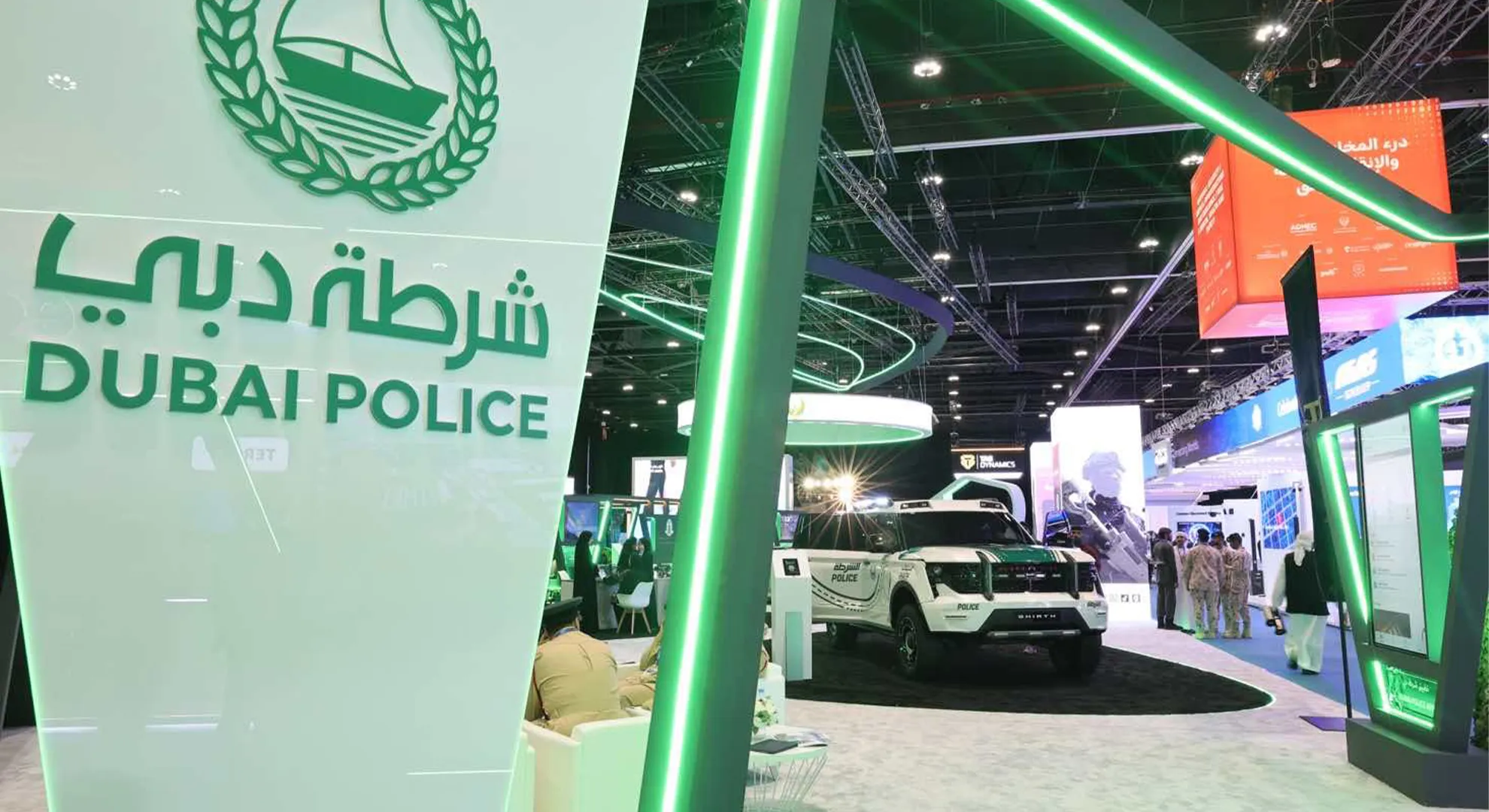
A low-volume distress call and real-time location tracking guided Dubai Police to a locked vehicle, where they found an unconscious woman and provided life-saving assistance within minutes.
Dubai Police Rescue Woman After Emergency Call Leads Officers to Her Location
A swift response by Dubai Police helped save the life of a woman who lost consciousness shortly after placing an emergency call during the early hours of the morning.
At around 3:30 a.m., the police operations centre received a call from a woman who was only able to speak a few words before her voice became too weak to continue. She briefly indicated that she was near a road junction before communication faded, leaving the emergency operator with very little information about her exact whereabouts or condition.
Recognizing that the caller appeared to be in serious distress, the operator immediately treated the incident as a high-priority emergency. Although repeated attempts were made to obtain additional details, the woman could no longer respond, and only faint sounds were heard before the call became completely silent.
Instead of ending the call, the operator kept the connection active while using the emergency location system available to Dubai Police to identify the phone’s approximate position. The technology pointed officers toward the Nad Al Sheba area, close to Sheikh Mohammed bin Zayed Road.
To gather any useful medical information, authorities checked whether the caller’s phone number was linked to records identifying individuals with serious health conditions. No relevant information was found, leaving officers to assume that a medical emergency had suddenly developed.
Police patrols operating nearby were immediately directed to search the surrounding area. Officers were instructed to inspect access roads, parking spaces, and nearby locations where a stranded vehicle might be found. Throughout the search, the operator continued listening to the open call in case any sounds could provide clues about the caller’s location or condition.
Within a short time, one of the responding patrols discovered a stationary vehicle parked away from the main roadway. The car was locked, and a woman was visible inside. As officers approached and knocked on the windows, the operator monitoring the call could hear their attempts to attract her attention, confirming they had located the correct vehicle.
Emergency rescue personnel were dispatched without delay. Despite the vehicle being positioned in a sandy area that was not easily accessible from the main road network, responders reached the scene quickly. They gained access to the locked car and safely removed the unconscious woman so she could receive urgent medical care.
Authorities later determined that the woman had experienced a severe episode of low blood sugar, which caused her to lose consciousness before she was able to provide her location to emergency services. The rapid coordination between the call handler, police patrols, and rescue teams ensured that assistance arrived in time.
The incident has been highlighted as an example of effective emergency response and coordination in the book Operations Management in Critical Incidents, Crises and Disasters, authored by Lieutenant General Dhahi Khalfan Tamim. The account illustrates how emergency call handling, location technology, and quick decision-making can play a vital role in saving lives when callers are unable to communicate fully.
Following the successful rescue, Lieutenant General Dhahi Khalfan Tamim personally checked on the woman’s wellbeing by contacting the hospital to confirm that she had received medical care and was recovering. Once her condition improved, she expressed her appreciation to the police officers and emergency personnel involved in the operation, crediting their rapid response with saving her life.
The incident has since been highlighted by Dubai Police as an example of the importance of quick emergency reporting and advanced response systems. Officials noted that every second can make a critical difference in medical emergencies, particularly when a caller becomes unable to continue communicating.
In light of the case, Dubai Police encouraged residents living with chronic or serious health conditions to enroll in the force’s programme for critical medical cases. By voluntarily registering important medical information in advance, individuals can help emergency responders gain faster access to relevant health details during urgent situations. Authorities say this can improve decision-making and reduce delays when immediate treatment is required.
Police also emphasized that technology plays an increasingly important role in modern emergency operations. Location-tracking capabilities, integrated communication systems, and coordinated dispatch procedures enable officers to identify callers who are unable to explain where they are or describe what has happened. These tools allow patrol units and medical teams to reach people in distress more efficiently, even when vital information is missing.
According to officials, the incident demonstrates how human judgment and technological resources work together during emergencies. The call handler’s decision to keep the communication line open while directing officers to the estimated location helped responders identify the correct vehicle in a short period of time.
Dubai Police have shared similar examples of technology-assisted rescues in the past. In one notable incident, Abdullah Bourguiba contacted the force while he was in Kazan, Russia, using the “Your Security at the Touch of a Button” emergency application. Although he was thousands of kilometres away from the UAE, he sought urgent assistance for a member of Al Wasl Sports Club who required immediate medical attention.
After receiving the request, Dubai Police coordinated with the relevant authorities and emergency services inside the UAE to ensure that help was provided without unnecessary delay. The cooperation between different agencies enabled the athlete to receive prompt medical treatment, illustrating how digital emergency platforms can facilitate rapid assistance even when the person requesting help is outside the country.
Officials say these cases underline the value of combining trained emergency operators, coordinated field teams, and modern technology to protect lives. They continue to encourage residents to familiarize themselves with available emergency services, keep personal information updated where appropriate, and contact authorities immediately whenever urgent assistance is needed.
Dubai Police Emergency App Helps Users Send Instant Distress Alerts
Dubai Police has developed digital emergency tools to make it easier for people to seek immediate help during dangerous or critical situations. One of these services is the emergency SOS function available through the Dubai Police smart application, which enables users to send an urgent alert directly to the police control centre with minimal effort.
The feature is especially useful in situations where a person may be unable to make a traditional phone call, describe their surroundings, or provide clear details about their location. By activating the SOS option, users can quickly notify emergency teams while their exact position is shared through GPS technology.
Once an alert is received, the information is transmitted to the Command and Control Centre under the General Directorate of Operations, allowing response teams to begin assessing the situation and arranging the necessary assistance. The system is designed to reduce delays and improve communication between people in distress and emergency personnel.
The service can be valuable in a wide range of circumstances, including medical emergencies, accidents, safety threats, or situations where a person is unable to communicate verbally. Providing location information automatically helps officers identify where support is needed, even when the caller cannot provide complete details.
Dubai Police’s use of smart technology reflects its broader efforts to modernize emergency services and improve public safety. Digital platforms such as the SOS feature complement traditional emergency channels by offering residents and visitors another way to request assistance when time is critical.
The integration of location services into emergency response systems allows police teams to act more efficiently by receiving important information at the earliest stage of an incident. This approach supports faster decision-making and helps responders reach individuals who may otherwise be difficult to locate.
Authorities continue to encourage the public to become familiar with available emergency tools and use them responsibly. Understanding how these services work can help people respond more effectively during unexpected situations and ensure that emergency teams receive accurate information when it matters most.
Through technology-driven solutions, Dubai Police aims to strengthen communication with the community and provide faster, more effective support for people requiring urgent assistance.