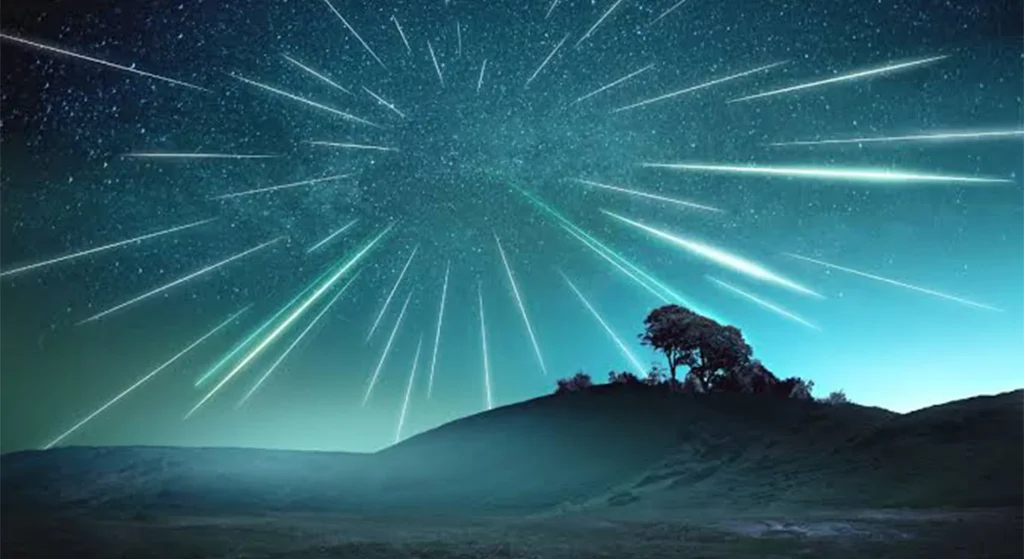
A complete UAE stargazing guide covering the Perseids meteor shower, including the ideal viewing times, where to watch the celestial display and useful tips for capturing the event.
UAE Skywatching Guide: Everything You Need to Know About Viewing the Perseids Meteor Shower.
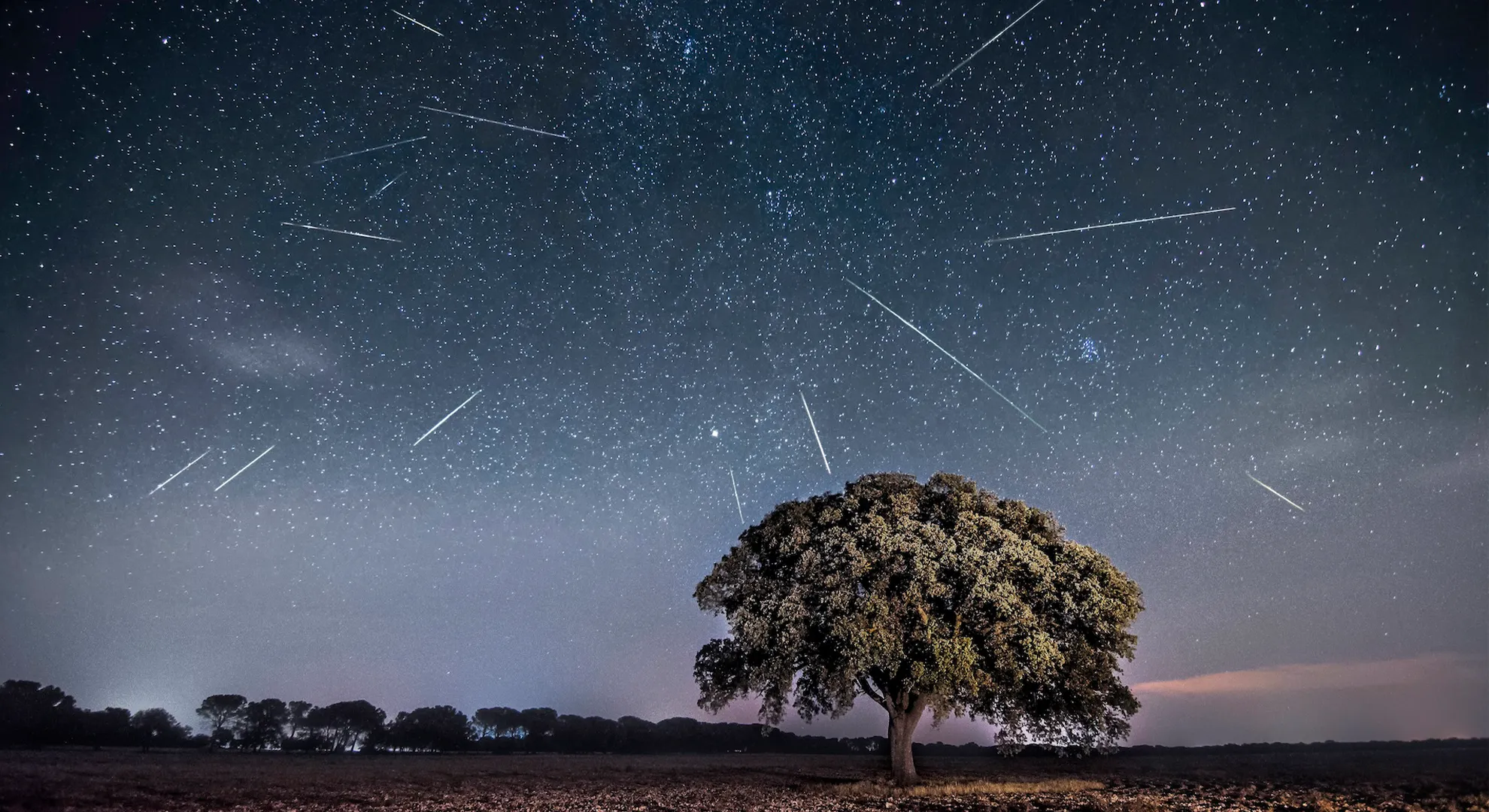
The Perseids meteor shower will reach peak visibility alongside the August 12 new moon, creating ideal dark-sky conditions for UAE observers to witness up to 100 meteors every hour.
The night sky above the UAE is set to become the stage for one of the most anticipated astronomical events of the year as the Perseids meteor shower returns with its spectacular display of bright trails and flashes of light. Skywatchers across the country will have the opportunity to witness dozens of meteors streaking across the darkness as the annual celestial event reaches its peak in August.
The Perseids is widely regarded as one of the most dependable meteor showers visible from Earth. According to Khadijah Al Hariri from the Dubai Astronomy Group, the event is among the most reliable displays for stargazers because of the number, brightness and speed of the meteors it produces.
Unlike some meteor showers that may be difficult to observe due to lower activity levels, the Perseids regularly delivers a memorable experience for both experienced astronomy enthusiasts and casual observers. The shower is known for producing bright meteors that move quickly across the sky, leaving glowing trails that can remain visible for several seconds.
One of the features that makes the Perseids particularly exciting is the possibility of witnessing fireballs. These are exceptionally bright meteors that appear much more intense than ordinary shooting stars. Fireballs can shine brighter than Venus, one of the brightest objects visible in the night sky, and in rare cases they may even be accompanied by sounds caused by the meteor’s movement through the atmosphere.
These dramatic flashes occur when larger fragments of space debris enter Earth’s atmosphere at high speeds. The friction generated as they travel through the air causes them to heat up and glow, creating the brilliant streaks that observers see from the ground.
The Perseids meteor shower is active over several weeks, giving skywatchers multiple opportunities to observe the phenomenon. This year, the activity period runs from July 17 until August 24, with the strongest display expected during the peak nights of August 12 and 13.
During the peak period, the number of visible meteors increases significantly as Earth passes through the trail of dust and debris left behind by the Swift-Tuttle comet. When these small particles enter the atmosphere, they burn up and create the bright flashes commonly known as shooting stars.
This year’s viewing conditions are expected to be especially favourable because the meteor shower coincides with a new moon on August 12. A new moon means the lunar surface will not reflect significant sunlight, resulting in much darker skies compared with nights when a bright moon is present.
The lack of moonlight will reduce interference and allow observers to see even the fainter meteors that might normally be hidden by natural brightness in the sky. Darker conditions provide a better opportunity for residents to enjoy the full scale of the meteor shower.
Under ideal conditions, UAE residents could see up to 100 meteors per hour during the peak of the Perseids. However, the exact number visible to each observer will depend on several factors, including location, weather conditions, surrounding light pollution and how clearly the sky can be viewed.
For the best experience, astronomy experts recommend choosing areas away from city lights. Locations with darker skies and open views of the horizon provide better opportunities to observe more meteors. Remote desert areas, mountain regions and other low-light locations are often preferred by stargazers because they offer clearer views of the night sky.
The recommended viewing period begins after midnight on August 12 and continues through the early morning hours before sunrise on August 13, according to Khadijah Al Hariri. During these hours, the sky is expected to provide the best conditions for spotting the greatest number of meteors.
Observers do not need specialised equipment such as telescopes or binoculars to enjoy the Perseids. In fact, meteor showers are best viewed with the naked eye because meteors can appear across a wide area of the sky. A comfortable viewing spot, patience and a clear view are often all that is needed.
Experts suggest allowing time for eyes to adjust to the darkness before expecting to see meteors. It may take around 20 to 30 minutes for night vision to improve, making it easier to detect weaker streaks of light.
For those hoping to photograph the event, preparation can significantly improve the results. A camera capable of manual settings, a stable tripod and a location away from artificial lighting can help capture the movement of meteors across the sky. Long-exposure photography is commonly used by astronomy enthusiasts to record the bright trails left behind by meteors.
The Perseids offers more than just a visual spectacle; it also provides an opportunity for people to connect with astronomy and learn more about the universe. Meteor showers are reminders of Earth’s movement through space and the ongoing interaction between our planet and objects beyond its atmosphere.
For families, the event can be an enjoyable educational experience, allowing children and adults to observe a natural phenomenon together. Watching the night sky can encourage curiosity about planets, stars, comets and the wider universe.
The UAE has developed a growing interest in astronomy in recent years, with organisations and astronomy groups regularly hosting observation events and educational programmes. Events like the Perseids meteor shower provide opportunities for residents to engage with space science while enjoying one of nature’s most fascinating displays.
As the peak approaches, astronomy enthusiasts across the UAE are preparing for a memorable night of stargazing. With favourable moon conditions, a high meteor rate and the possibility of spectacular fireballs, this year’s Perseids meteor shower is expected to offer one of the best opportunities for residents to witness a remarkable celestial show.
Whether viewed from a quiet desert location or a suitable open area away from bright lights, the Perseids promises to transform the UAE’s night sky into a display of natural beauty, offering observers a chance to experience one of the most impressive astronomical events visible each year.
How to view
Best ways to watch the Perseids meteor shower in the UAE
Residents across the UAE will have a good opportunity to observe the Perseids meteor shower without needing specialised equipment. The most important factor for a successful viewing experience is finding a location with minimal artificial lighting. Areas far away from bright city lights offer darker skies, allowing more meteors to become visible.
Unlike some astronomical events that require telescopes or advanced equipment, the Perseids can be enjoyed simply by looking up at the sky. The meteor shower is visible with the naked eye, making it accessible for families, beginners and experienced stargazers alike.
A telescope is not necessary because meteors move quickly and can appear across a wide section of the sky. In fact, using binoculars or telescopes may limit the view because they focus on a smaller area, while meteor showers are best appreciated when observing a broad section of the night sky.
However, patience plays an important role in getting the best experience. When arriving at a viewing location, observers should avoid immediately looking at bright lights or phone screens. Exposure to artificial light can reduce night vision and make it harder to notice fainter meteors.
Astronomy experts recommend giving your eyes around 20 to 30 minutes to adjust fully to the darkness. During this time, it is best to keep mobile phone use to a minimum, reduce screen brightness or switch devices off completely. Once your eyes adapt, you will have a much better chance of spotting more meteors.
Comfort is also important when spending several hours outdoors. Observers should choose a suitable place where they can sit or lie down comfortably while watching the sky. Since meteor showers require waiting and observing over time, bringing items such as blankets, chairs or mats can make the experience more enjoyable.
Desert locations offer ideal viewing conditions
The UAE’s desert landscapes are among the preferred locations for watching meteor showers because they usually have less light pollution compared with urban areas. Open desert spaces provide wider views of the sky, allowing observers to see more of the meteor activity.
However, anyone planning a desert trip should take safety precautions. It is recommended to travel with other people rather than going alone, especially when visiting remote areas at night. Groups can provide additional support and make the experience safer.
Visitors should also prepare essential supplies before heading out. Carrying enough drinking water is important, particularly during summer conditions, while appropriate clothing, snacks and basic safety items can help make the trip more comfortable.
Lighting should be used carefully. While flashlights are useful for moving around safely, excessive use of bright lights can affect night vision and reduce the viewing experience for others nearby. Using a dim or red light where possible can help preserve darkness.
People planning extended desert stays or overnight camping should also check whether permits are required. Rules and requirements can vary depending on the emirate and the specific location. Residents are advised to confirm regulations with the relevant local authorities before setting up camps or spending long periods in desert areas.
What causes the Perseids meteor shower?
The Perseids meteor shower occurs because Earth passes through a trail of debris left behind by Comet Swift-Tuttle. The material responsible for the spectacular display consists of tiny fragments of dust and ice released from the comet as it travels through space.
According to the Dubai Astronomy Group, many of these particles are extremely small, often no larger than grains of sand. Despite their tiny size, they create impressive flashes of light when they enter Earth’s atmosphere at very high speeds.
As these fragments collide with the atmosphere, friction causes them to heat up rapidly. The intense heat makes the particles glow, producing the bright streaks that people see crossing the night sky. These flashes are commonly called meteors or shooting stars.
Most of the particles completely burn up before reaching the ground. However, in rare situations, larger pieces may survive their journey through the atmosphere. If a fragment reaches Earth’s surface, it is known as a meteorite.
The Perseids appear to originate from the direction of the constellation Perseus, which is why the meteor shower receives its name. Although the meteors seem to come from this area of the sky, the actual particles are travelling through space along the path of Comet Swift-Tuttle.
The story of Comet Swift-Tuttle
Comet Swift-Tuttle is a large periodic comet and the source of the Perseids meteor shower. The comet’s nucleus measures approximately 26 kilometres across, making it one of the largest known objects that regularly passes close to Earth’s orbital path.
The size of the comet has attracted scientific interest because it is significantly larger than many other known comets. Researchers continue to study its movement and orbit to better understand its future path.
Swift-Tuttle follows a long journey around the Sun, completing one orbit approximately every 133 years. Its last close approach to Earth occurred in 1992, when astronomers observed and studied the comet during its return.
The comet is expected to come near Earth again in 2126, potentially creating another remarkable opportunity for future generations to observe it and the meteor activity connected to its debris trail.
Despite its size and impressive appearance, scientists have determined that Comet Swift-Tuttle does not pose a danger to Earth in the foreseeable future. Astronomical calculations indicate that it will continue following its predictable orbit without threatening the planet for thousands of years.
Tips for photographing the Perseids meteor shower
For photography enthusiasts, the Perseids provide an exciting opportunity to capture images of meteors streaking across the night sky. Although photographing meteors requires preparation and patience, the results can be rewarding.
The Dubai Astronomy Group recommends using a DSLR or mirrorless camera because these cameras allow photographers to manually adjust important settings such as exposure, focus, ISO and shutter speed.
A sturdy tripod is one of the most important pieces of equipment for meteor photography. Since photographers often use longer exposure times, keeping the camera completely stable helps prevent blurry images and ensures sharper results.
A wide-angle lens is also recommended because it covers a larger portion of the sky. Since meteors can appear unexpectedly in different areas, a wider field of view increases the chances of capturing a bright meteor trail.
Photographers should consider using a remote shutter release or intervalometer to reduce camera movement when taking pictures. These tools allow the camera to capture images without physically touching it, improving image quality during long exposures.
Extra batteries are also essential because night photography sessions can consume power quickly. Long exposures, cold temperatures and repeated shooting can reduce battery life, so carrying additional batteries or a portable power source is advisable.
In humid or cooler conditions, photographers may encounter another challenge: condensation forming on the camera lens. A lens heater can help prevent moisture from collecting on the glass and affecting image clarity.
Camera settings for capturing meteors
Achieving sharp meteor photographs requires careful adjustment of camera settings. Autofocus should generally be switched off because cameras may struggle to focus in dark conditions. Instead, photographers should manually focus on a bright star, planet or set the focus distance close to infinity.
The camera should be pointed towards the area of the sky where meteors are expected to appear. For the Perseids, aiming towards the shower’s radiant point near the constellation Perseus can increase the chances of capturing more meteors.
Experts recommend using a wide aperture, ideally around f/2.8 or lower, to allow more light into the camera. A larger aperture helps capture faint meteor trails that may not be visible with smaller settings.
A shutter speed between 15 and 30 seconds is commonly used for meteor photography. Longer exposures allow the camera to collect more light, but photographers should balance this with the risk of capturing star movement.
The ISO setting may need to be adjusted depending on conditions, with many photographers using ISO 1600 or higher to capture brighter images in dark environments. However, the ideal setting can vary depending on the camera model, location and amount of available light.
Taking multiple photos rather than relying on a single shot is often the best approach. Meteor activity is unpredictable, and capturing several images increases the chance of recording a spectacular meteor trail.
Enjoying the celestial event responsibly
Whether watching casually with family or photographing the event professionally, the Perseids meteor shower offers UAE residents a chance to experience one of nature’s most impressive displays.
With a dark location, comfortable setup and some patience, observers can enjoy the spectacle without expensive equipment. For photographers, careful preparation and the right camera settings can help preserve the memory of the event.
As the Earth moves through the debris left by Comet Swift-Tuttle, the night sky will briefly transform into a natural light show, giving residents an opportunity to connect with astronomy and witness a phenomenon that has fascinated people for generations.