Sheikh Hamdan travelled to Bahrain to attend and review the Gulf Cooperation Council’s unified military exercises, highlighting regional defence cooperation and the commitment of GCC member states to strengthening collective security and military readiness.
Sheikh Hamdan Arrives in Bahrain to Observe GCC Combined Military Exercises.
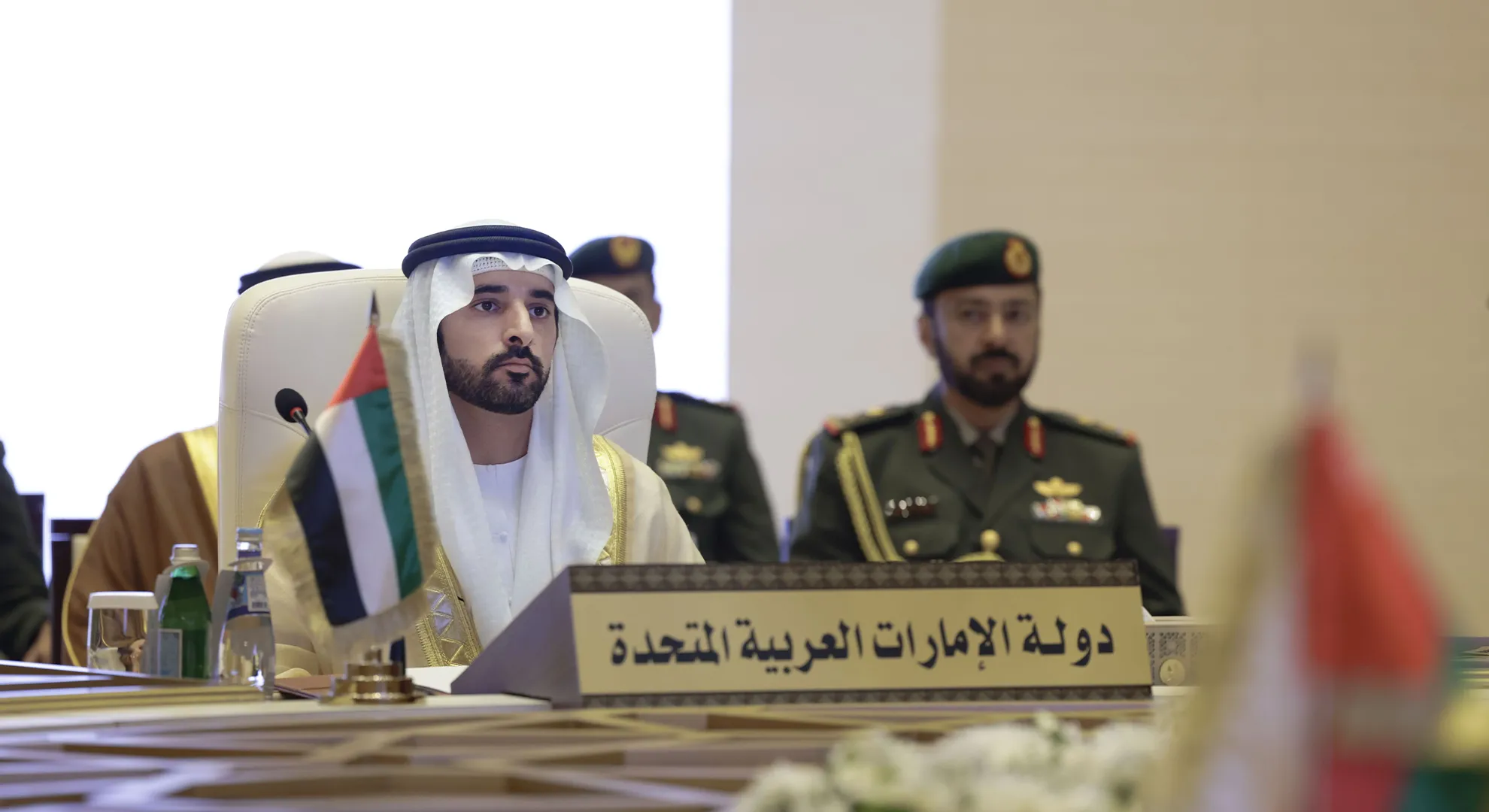
The military exercises are intended to boost defence collaboration among GCC nations, enhance joint coordination and preparedness, encourage the exchange of professional expertise, and evaluate the participating forces’ operational capabilities and combat readiness.
Sheikh Hamdan Joins GCC Military Exercise During Official Visit to Bahrain
MANAMA: Bahrain’s King Hamad bin Isa Al Khalifa welcomed Sheikh Hamdan bin Mohammed bin Rashid Al Maktoum, Crown Prince of Dubai, Deputy Prime Minister of the United Arab Emirates and Minister of Defence, during an official visit to the Kingdom. The visit reflected the enduring strategic partnership between Bahrain and the UAE and highlighted their shared commitment to strengthening cooperation in defence, security and regional stability.
The meeting took place in the Bahraini capital, where the two leaders exchanged views on matters of mutual interest and reaffirmed the close ties that have long linked their countries. Bahrain and the UAE continue to maintain strong political, economic and military relations, working closely through bilateral initiatives as well as within the framework of the Gulf Cooperation Council (GCC).
Several senior Bahraini officials joined the discussions, including Lieutenant General Sheikh Nasser bin Hamad Al Khalifa, who serves as National Security Adviser and Commander of the Royal Guard. Brigadier General Sheikh Khalid bin Hamad Al Khalifa, Commander of the Royal Guard’s Special Operations, was also present, along with other high-ranking officials from the Kingdom’s defence establishment.
During his visit, Sheikh Hamdan attended Bahrain Shield, a multinational military exercise organised by the Bahrain Defence Force. The exercise brought together military personnel from across GCC member states, demonstrating the region’s continued efforts to strengthen collective defence and improve operational cooperation among allied armed forces.
The training programme also included the participation of the UAE’s Mohamed bin Zayed Squadron, whose involvement reflected the country’s active role in regional defence initiatives. In addition, members of the Peninsula Shield Force—the GCC’s joint military force—took part in the drills alongside participating units from other Gulf nations.
Military officials described Bahrain Shield as an important platform for enhancing interoperability between GCC armed forces. Through realistic operational scenarios and coordinated field exercises, the participating forces worked together to improve communication, planning and tactical execution while operating under simulated battlefield conditions.
The exercise was designed to reinforce cooperation across different branches of the military by encouraging coordinated responses to a variety of operational challenges. Commanders focused on developing integrated planning processes, strengthening command-and-control systems and ensuring that participating units could respond efficiently during joint operations.
A major component of the training involved sharing professional expertise among participating forces. Officers and military specialists exchanged operational knowledge, tactical experience and best practices developed through their respective national defence programmes. Such exchanges are considered essential for improving compatibility between allied militaries and promoting common operational standards.
Another key objective of Bahrain Shield was to evaluate the readiness of participating forces. By conducting complex training scenarios in realistic environments, military leaders were able to assess preparedness levels, identify strengths and refine operational procedures where necessary. These assessments help ensure that GCC armed forces remain capable of responding effectively to a wide range of regional security situations.
King Hamad and Sheikh Hamdan received comprehensive briefings from senior commanders overseeing the exercise. The presentations covered the planning process, the implementation of training activities and the progress achieved during different phases of the multinational exercise.
The leaders also observed demonstrations highlighting coordinated military manoeuvres carried out by participating units. These displays illustrated the professionalism, discipline and operational capability of the forces involved while showcasing the growing level of integration among GCC militaries.
According to officials, the exercise demonstrated how joint training contributes to stronger defence partnerships by improving communication between military organisations, refining operational procedures and increasing confidence among participating personnel. Regular multinational exercises remain an important component of GCC defence cooperation, allowing member states to develop common strategies and strengthen collective security.
The participation of multiple GCC countries further underscored the importance of regional collaboration in addressing shared security challenges. Joint military exercises provide opportunities to build trust, enhance interoperability and prepare forces for future missions that may require coordinated action.
The Peninsula Shield Force’s involvement added another significant dimension to the exercise. Established as the Gulf Cooperation Council’s collective defence force, it continues to play an important role in promoting military integration among member states through combined training activities and operational cooperation.
Military experts note that exercises such as Bahrain Shield not only improve tactical readiness but also contribute to long-term institutional cooperation between defence organisations. They allow commanders to test command structures, evaluate logistical support systems and strengthen coordination across land, air and other operational domains.
Sheikh Hamdan’s participation reflected the UAE’s continued support for initiatives aimed at advancing regional defence cooperation. The country has consistently contributed to GCC military programmes designed to strengthen joint preparedness, encourage professional military development and reinforce collective security across the Gulf region.
Accompanying Sheikh Hamdan during the visit was Omar Sultan Al Olama, UAE Minister of State for Artificial Intelligence, highlighting the UAE’s growing emphasis on technological innovation alongside national security. Lieutenant General Issa Saif bin Aboula Al Mazrouei, Chief of Staff of the UAE Armed Forces, also joined the delegation, together with senior officers from the Ministry of Defence.
The presence of senior civilian and military officials demonstrated the strategic importance attached to the visit and reflected the close coordination between the two countries on defence matters. Their participation also provided an opportunity for high-level exchanges on issues related to military cooperation, operational development and future collaboration.
Beyond the military agenda, the visit reinforced the broader relationship between Bahrain and the UAE. Both countries maintain close coordination across numerous sectors, including economic development, technology, investment and regional diplomacy. Their partnership is supported by regular high-level meetings and ongoing cooperation through GCC institutions.
Defence cooperation has remained one of the cornerstones of this relationship. Joint exercises, military exchanges and collaborative training programmes continue to strengthen professional ties between their armed forces while contributing to regional peace and stability.
As Bahrain Shield progressed through its various stages, commanders emphasised the importance of maintaining high standards of operational readiness and ensuring that participating forces remain capable of working together effectively under demanding conditions. Such exercises provide valuable experience in multinational planning, decision-making and coordinated execution.
The visit concluded with renewed emphasis on the value of collective action among GCC member states. By investing in regular military training and strengthening institutional partnerships, Gulf nations continue to enhance their ability to respond to regional challenges while supporting long-term security and stability.
Officials described Bahrain Shield as another step toward deeper military integration within the GCC, demonstrating the shared commitment of member states to improving defence capabilities, encouraging knowledge exchange and reinforcing the effectiveness of joint operations. The exercise also highlighted the professionalism of participating forces and the continued importance of cooperation in safeguarding the region’s security interests.
Sheikh Hamdan’s visit to Bahrain, combined with his participation in the exercise, reflected the UAE’s ongoing commitment to strengthening defence partnerships within the Gulf and supporting initiatives that promote closer military coordination among allied nations.