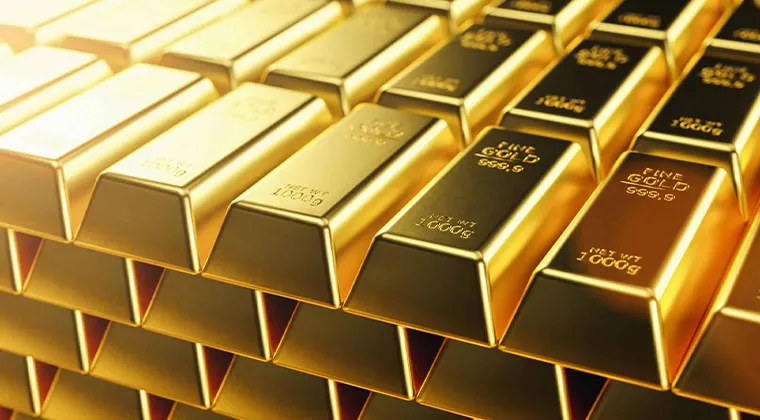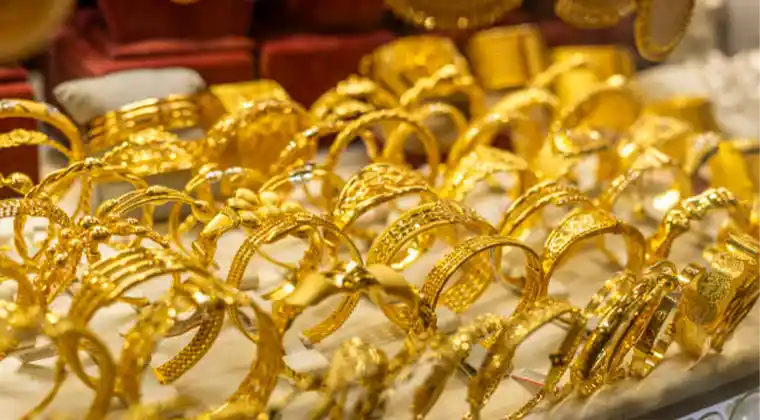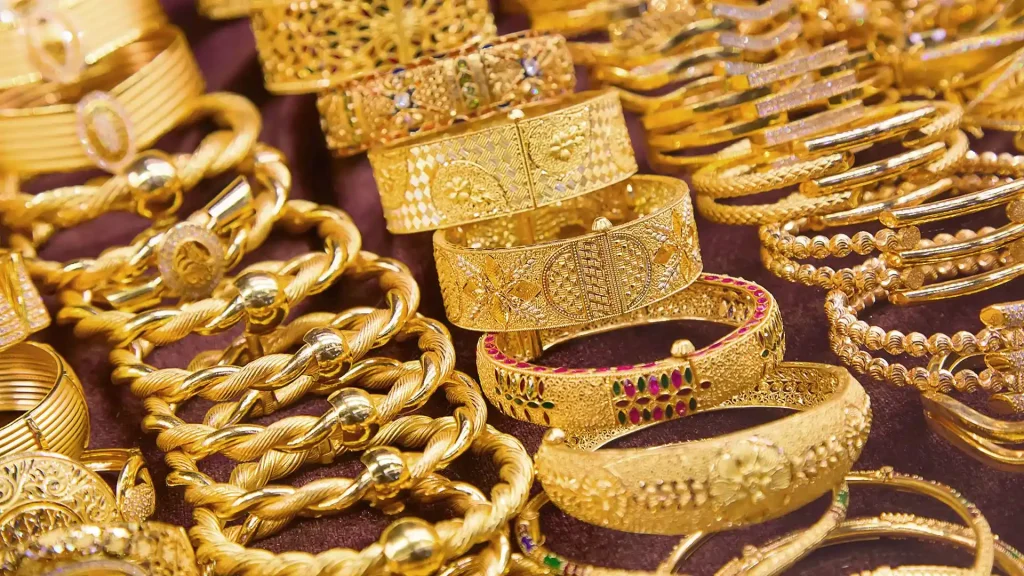
Dubai’s gold market has remained largely unchanged in recent weeks, with prices experiencing only a minor decline over the past month as overall demand and trading conditions stay stable.
Dubai’s Gold Market Shows Minimal Change as Prices Decrease Slightly Over the Month.

Gold in the 24K category opened lower on Friday, trading at Dh491.75 per gram compared with the previous day’s closing price of Dh495.50.
Dubai Gold Rates Hold Steady as Prices Show Only Minor Monthly Movement
Gold prices in Dubai remained relatively stable at the end of the week, with the precious metal recording only a small decline of around Dh2 per gram over the past month. The limited movement has provided some reassurance for buyers, even as uncertainty in global markets continues to influence investor sentiment.
The local gold market opened Friday with slight changes across different categories of the metal. The price of 24-karat gold, considered the purest form of the commodity, was listed at Dh491.75 per gram during early trading. This represented a decrease compared with Thursday’s closing rate, when the same category was trading at Dh495.50 per gram.
Other gold varieties also reflected the day’s market conditions. The 22-karat category was priced at Dh455.50 per gram, while 21-karat gold was available at Dh436.75 per gram. The rates for 18-karat and 14-karat gold stood at Dh374.25 and Dh292 per gram, respectively.
Despite short-term fluctuations, Dubai’s gold market has continued to show resilience. The precious metal remains a popular choice among consumers and investors, particularly during periods of economic uncertainty when many seek assets traditionally viewed as a store of value.
International markets also recorded movement during Friday’s trading session. Spot gold prices declined by 0.51 per cent, reaching approximately $4,080 per ounce by 9:15am UAE time. Silver prices followed a similar trend, slipping 0.29 per cent to around $58.64 per ounce.
Market analysts continue to monitor several factors affecting gold prices worldwide, including currency movements, interest rate expectations, inflation concerns, and geopolitical developments. These elements often influence investor demand and can contribute to changes in bullion prices.
A recent report from the World Gold Council highlighted the continued strength of global gold demand despite fluctuations in prices. According to the organisation’s second-quarter review, overall demand remained steady compared with the same period last year.
The report noted that total gold demand, including over-the-counter investment activity, reached 1,269 tonnes during the quarter. This stability helped push demand during the first half of the year to 2,522 tonnes, representing a 2 per cent increase compared with the previous year.
The value of global gold demand also reached a new milestone, rising to approximately $380 billion during the first six months. The figures underline the continued importance of gold in investment portfolios and consumer markets worldwide.
In Dubai, gold remains closely watched by shoppers, traders, and investors because of the emirate’s position as one of the world’s major gold trading hubs. Daily price movements are influenced not only by international bullion trends but also by local market conditions and currency factors.
While prices have moved slightly in recent weeks, the overall stability has allowed customers to make purchasing decisions with greater confidence. Jewellery buyers often track market changes closely, especially during periods when prices fluctuate due to global economic developments.
Experts expect gold markets to remain sensitive to international events, including geopolitical tensions and changes in monetary policies. However, continued demand from investors and consumers may provide support for prices in the longer term.
As global markets adjust to changing economic conditions, Dubai’s gold sector continues to maintain its reputation as a reliable destination for gold trading and jewellery purchases.
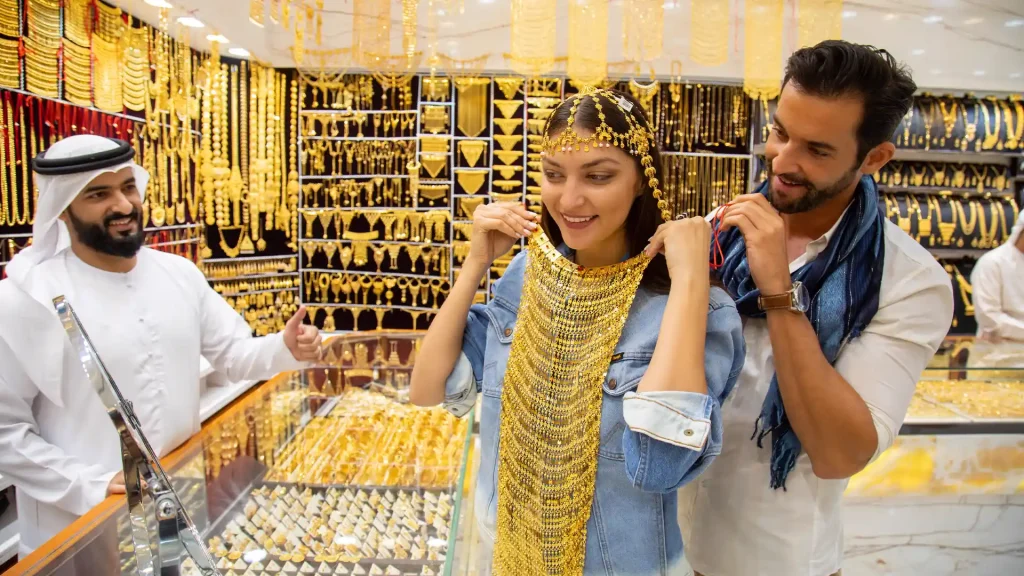
Investment Demand Expected to Support Gold Market Growth as Buying Patterns Shift
Gold market experts expect investment activity to remain a key factor supporting demand in the second half of 2026, although the sources of demand may change as global economic conditions evolve.
Louise Street, Senior Markets Analyst at the World Gold Council, said investors are likely to continue playing an important role in shaping gold market trends. She noted that buying patterns could become more diversified, with over-the-counter transactions and increased interest from Asian investors potentially gaining greater importance in the months ahead.
According to Street, demand from Western gold exchange-traded funds may depend more heavily on broader financial conditions, including movements in real interest rates, expectations surrounding US monetary policy, and fluctuations in the value of the US dollar. These factors often influence investor decisions regarding gold, which is commonly viewed as a safe-haven asset during periods of uncertainty.
The World Gold Council’s latest assessment also highlighted a significant recovery in central bank purchases during the second quarter. After a slower start earlier in the year, official sector demand strengthened considerably, with central banks adding 289 tonnes of gold to their reserves during the period.
Central banks around the world have continued to increase their gold holdings as part of efforts to diversify reserves and manage economic risks. The renewed buying activity has provided additional support to the global gold market despite changing price conditions.
Meanwhile, demand for gold bars and coins remained relatively steady during the quarter. Individual investors continued to show interest in physical gold products, although purchasing patterns varied depending on regional economic conditions and local market sentiment.
Gold-backed exchange-traded funds, however, faced some challenges during the period. Holdings in these investment products declined as investors reacted to lower gold prices, expectations of higher interest rates, and a stronger US dollar. Since gold does not generate regular income like bonds or other interest-bearing assets, rising interest rates can sometimes reduce its appeal among certain investors.
The jewellery sector experienced greater pressure as high gold prices affected affordability for consumers. Demand for gold jewellery fell to its lowest quarterly level since the COVID-19 pandemic period, reflecting the impact of expensive raw material costs on buyers.
Despite the decline in the volume of jewellery purchases, the overall value of consumer spending on gold jewellery increased. Many customers adjusted their buying habits by choosing lighter designs and smaller pieces to manage higher prices while continuing to purchase gold for cultural, personal, and investment reasons.
The latest market trends highlight the changing nature of global gold demand. While traditional jewellery consumption has faced challenges, investment interest and central bank purchases have provided important support for the precious metal market.
Analysts say future gold performance will continue to depend on several factors, including global economic growth, interest rate decisions, currency movements, and geopolitical developments. As investors and consumers respond to changing conditions, the balance between different sources of gold demand is expected to evolve throughout the year.