**Explore a remarkable Dubai residence transformed into a museum, where an extraordinary archive of 200,000 photographs captures the UAE’s heritage, traditions, milestones, and historic moments for future generations.**
Inside Dubai home-turned-museum where 200,000 photographs preserve UAE’s history.
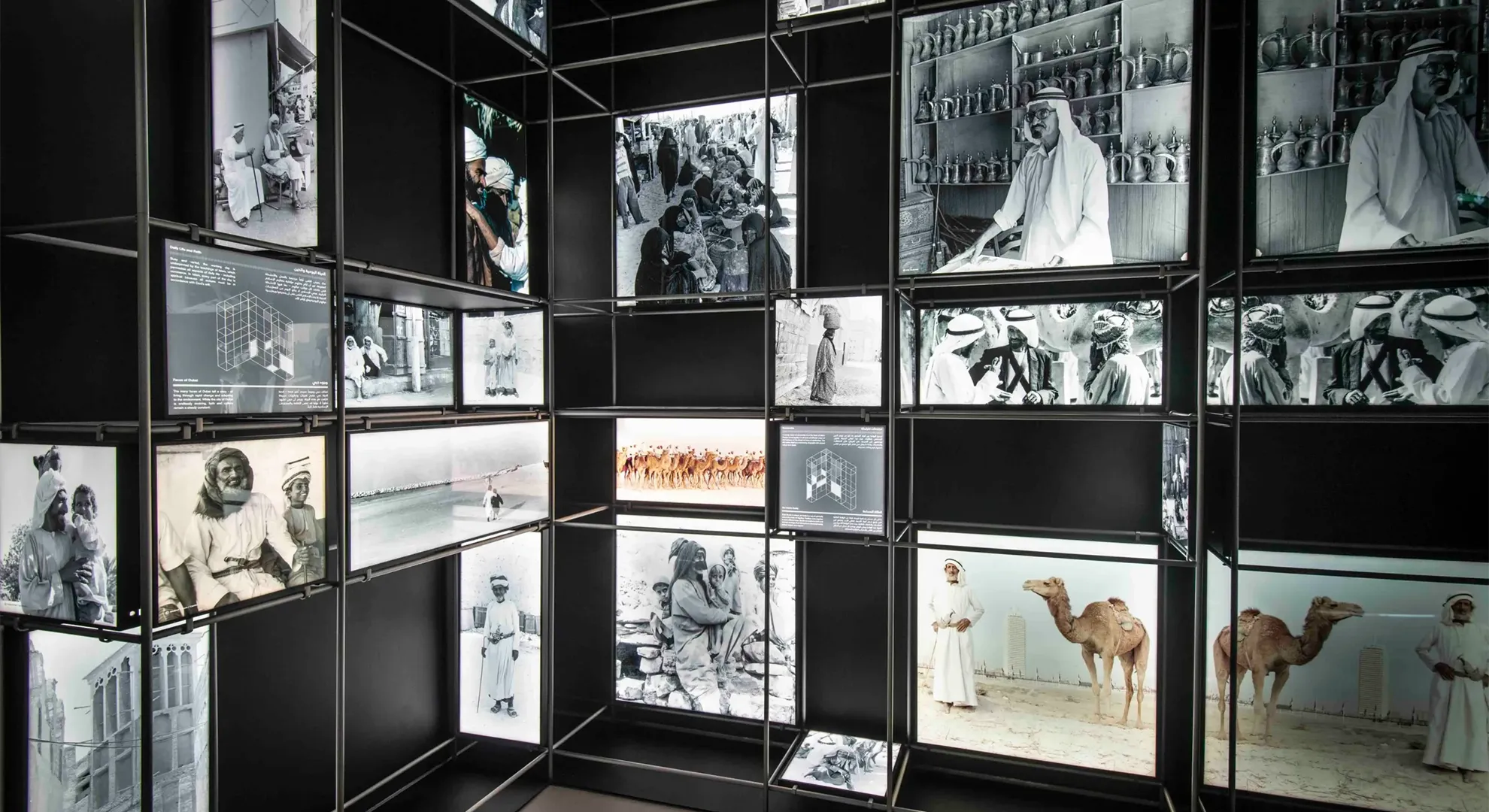
After moving to Dubai as an eight-year-old in 1968, he dedicated his home to preserving history, creating a private museum filled with photographs capturing the nation’s transformation over the years.
A Dubai Villa Becomes a Treasure House of UAE Memories Through One Man’s Lifetime Collection
When visitors walk through the entrance of Shaukat Ali Rana’s villa in Mirdif, they soon discover that the property is unlike a typical family home. Behind the doors lies a carefully preserved archive that reflects decades of change, memories, and moments from the UAE’s past.
Instead of modern decorations or conventional household displays, the walls of the villa are covered with historical photographs, many of them captured in earlier decades when the country was undergoing rapid transformation.
Rows of black-and-white images tell stories of old neighbourhoods, traditional lifestyles, changing landscapes, and important moments from the UAE’s development. Each photograph represents a piece of a larger journey, showing how cities, communities, and daily life have evolved over time.
The villa also houses a remarkable collection of vintage photography equipment. Classic cameras from different eras sit alongside old film projectors, Polaroid cameras, and traditional wooden field cameras once used by photographers before digital technology changed the way images were created.
For Rana, these items are not simply old objects. They represent the tools that helped preserve memories and document a changing nation.
Throughout the home, glass display cabinets contain a wide range of historical materials collected over many years. Visitors can find aged newspapers, old passports, documents, coins, stamps, driving licences, and official papers that provide glimpses into earlier periods of life in the UAE.
Many of these items are everyday objects that people might have thrown away as they became outdated. However, Rana recognised their historical importance and carefully preserved them as part of a broader effort to protect memories of the country’s past.
The collection offers visitors a unique opportunity to see how ordinary documents and personal belongings can become valuable records of social history.
Despite the impressive displays throughout the villa, Rana does not begin his tours by pointing out the rarest objects or the largest collections. Instead, he takes visitors to a single framed photograph that holds special personal meaning.
The image shows Al Maqta Fort near Abu Dhabi captured in black and white. Standing before the photograph, Rana recalls the moment it was taken and describes it as the beginning of his lifelong connection with photography and preservation.
“This was the first photograph I ever took,” he says, holding the frame carefully and smiling as he remembers the early days of his passion.
For Rana, that image represents more than a photograph. It marks the starting point of a journey that eventually transformed his home into a private museum filled with hundreds of thousands of visual records documenting the UAE’s history.
The photograph of Al Maqta Fort became the foundation of a collection built over decades. From that first image, Rana continued photographing places, people, and events, gradually creating an extensive archive that captures different stages of the country’s growth.
Over time, his interest expanded beyond photography. He began collecting historical objects, documents, and everyday items that reflected life in earlier generations.
The result is a personal museum that combines photography, heritage, and social history under one roof.
Unlike traditional museums created by institutions, Rana’s collection developed from personal curiosity, dedication, and a desire to protect memories that might otherwise disappear.
Every item in the villa carries a story. An old passport can reveal how travel documents looked before modern systems were introduced. A border permit can provide insight into movement between areas before the formation of the UAE. A newspaper from decades ago can show the issues and events that shaped communities at the time.
Together, these objects create a visual timeline of the country’s transformation.
The collection also highlights the importance of preserving everyday history. While major events are often recorded in official archives, ordinary moments from people’s daily lives can easily be forgotten.
Through his photographs and collected items, Rana has focused on preserving those details — the streets, buildings, traditions, and objects that reflect how people lived during different periods.
Visitors who enter the villa often find themselves comparing the images of old Dubai and Abu Dhabi with the modern cities they see today.
The photographs provide a connection between the past and present, showing the remarkable changes that have taken place over several decades.
For younger generations, the collection offers a chance to understand the experiences of those who lived through earlier times. For older visitors, it often brings back memories of familiar places and changing surroundings.
Rana’s private museum demonstrates how personal passion can contribute to preserving a nation’s heritage.
What began with a single photograph of Al Maqta Fort has grown into an extensive archive that captures the UAE’s journey from earlier years to the present day.
The villa in Mirdif is not only a place filled with photographs and historical objects; it is a record of countless stories preserved through one man’s commitment to remembering the past.
Every camera, document, and photograph reflects a moment that might otherwise have disappeared. Through his collection, Rana continues to ensure that future generations can explore and appreciate the history of the UAE through authentic images and original artefacts.
From a Childhood Memory to a Historic Archive: How Shaukat Ali Rana Captured the UAE’s Transformation Through His Lens
More than half a century after taking his first photograph, the image of Al Maqta Fort continues to hold a special place in Shaukat Ali Rana’s extensive collection. What began as a simple childhood interest eventually developed into a lifelong mission to preserve the story of the UAE through photographs, documents, and historical objects.
That first photograph became the foundation of a remarkable archive containing more than 200,000 images that chronicle the country’s extraordinary journey. Through his camera, Rana documented the UAE’s evolution from small coastal settlements and quiet desert communities into a modern nation known for its rapid development, global cities, and ambitious achievements.
Looking back at how the collection grew, Rana said he never expected his personal hobby to become such a significant archive.
“I never thought it would reach this scale,” said the 66-year-old. “My only intention was to save memories and protect pieces of history that could otherwise disappear.”
Over almost six decades, Rana’s camera captured countless moments that reflected the UAE’s growth and transformation. His photographs include major infrastructure projects, changing landscapes, cultural events, and everyday scenes that reveal how life developed across the country.
Among his most notable images are photographs documenting the construction of Sheikh Rashid Port, the early days of Dubai International Airport, the development of tunnels and roads, aviation events, landmark buildings, and neighbourhoods that gradually expanded from open desert areas into busy urban communities.
Many of these photographs provide a rare visual record of Dubai’s development before modern skyscrapers, highways, and large-scale projects reshaped the city.
Rana also captured important national moments, including some of the earliest public celebrations following the formation of the United Arab Emirates. His images preserve scenes from a period when the young country was building its identity and creating traditions that continue today.
For him, photography was never only about taking pictures. It was about recording moments that future generations could look back on and understand.
Preserving More Than Photographs
Although photographs form the largest part of Rana’s collection, his efforts to preserve history extend far beyond images.
Over the years, he gathered thousands of items that reflect earlier periods of life in the UAE. His collection includes old stamps, coins, currency notes, passports, licences, official papers, newspapers, and other everyday objects that tell stories about society, trade, travel, and daily routines.
Rana explained that his interest in collecting began with stamps before gradually expanding to other historical materials.
“I first started collecting stamps,” he said. “Later, I began keeping coins, old currency, documents, licences, and anything that I believed would have historical value in the future.”
He recognised that many ordinary objects from the past could become important records over time. Items that once seemed routine or replaceable could provide valuable information about how people lived, travelled, worked, and interacted with institutions.
His goal was to prevent these pieces of everyday history from being forgotten.
“If people do not preserve these things today, future generations may never understand what life was like before,” he said.
A Childhood Beginning in Old Dubai
Rana’s connection with the UAE began long before he became known for his photography and collection.
He arrived in Dubai in 1968 at the age of eight, following his father, Mohammad Rafi Rana, who had moved to the emirate two years earlier.
His father initially came to Dubai for work at the British Bank of the Middle East and later joined Pakistan International Airlines. At the time, Dubai was still a developing town, very different from the modern city it would eventually become.
The family’s early years in the UAE gave Rana a firsthand view of a changing society. He experienced a period when traditional neighbourhoods, open landscapes, and maritime activity were central parts of everyday life.
The family first settled in Satwa before later moving to Karama, an area that looked very different from today.
Instead of high-rise buildings, busy roads, and shopping areas, much of the surroundings consisted of open sand and natural landscapes.
Rana remembers a childhood shaped by the environment around him.
“There was sand everywhere,” he recalled. “We would go outside and collect seashells. Date palm trees were common, and in the evenings we could hear the sound of ships arriving from Port Rashid.”
At that time, traffic was limited, and the city was much quieter. Sounds from the harbour travelled across the open areas, allowing residents living some distance away to hear ship horns from Port Rashid.
For Rana, those sounds became part of his memories of old Dubai — a city connected closely to the sea and trade.
School Life Before Dubai’s Modern Roads
Rana’s childhood experiences also reflected the simpler infrastructure of Dubai during that era.
He attended Pakistan Islamia School in Oud Metha, but reaching school was a very different experience compared with the daily journeys students make today.
There were no modern road networks or organised transport systems serving every neighbourhood. Instead, children often travelled through open sandy areas.
Every morning, Rana walked to school along paths surrounded by sand rather than paved streets.
“There were no proper roads at that time,” he said. “We crossed areas covered with sand every day to get to school.”
Those journeys gave him a close connection with the city’s landscape during a period before rapid urban development changed the appearance of Dubai.
The environment that surrounded him as a child would later become the subject of his photographs, allowing him to preserve images of places that transformed dramatically over the decades.
A Personal Mission Turned Historical Record
Rana’s collection represents more than personal memories. It serves as a visual archive of a country’s development.
Through his photographs, visitors can see the transition from older communities to modern cities, from traditional buildings to major architectural landmarks, and from simple neighbourhoods to globally recognised urban centres.
His work also highlights the importance of preserving everyday experiences. History is not only created through major announcements or famous events; it is also found in ordinary moments, places, and objects.
A photograph of an old street, a document from an earlier period, or a simple household item can reveal details about how people lived.
This belief has guided Rana’s work for decades.
What began with one photograph taken as a young boy eventually became a lifelong commitment to documenting the UAE’s story.
Today, his private museum stands as a reminder of how individual passion can help preserve collective memory. Through hundreds of thousands of photographs and carefully collected historical items, Rana has created a bridge between the UAE’s past and present.
His archive allows visitors to explore the country’s journey through authentic images and objects, ensuring that the experiences of earlier generations remain accessible for years to come.
Memories of Old Dubai: How Simple Family Moments and a Childhood Camera Shaped Rana’s Lifelong Passion
Life in Dubai during Rana’s childhood followed a much slower rhythm compared with the fast-paced lifestyle people experience today. Entertainment was limited, family time was valued, and everyday activities often became memorable experiences.
In those days, television was not available throughout the day and night. Families arranged their evenings around the short broadcasting schedule, gathering together during the few hours when programmes were on air.
Rana remembers how television became a special part of the household routine.
“The television would begin broadcasting at around six in the evening and stop by about ten at night,” he recalled. “Before ending the day, everyone would wait to watch the news.”
Those few hours created a shared family experience. Unlike today, when people have unlimited access to entertainment through digital platforms, families had fewer choices and often enjoyed programmes together in the same room.
The limited television schedule made certain programmes feel more meaningful, especially the evening news, which became an important source of information for households.
Weekend Entertainment Before Modern Technology
While weekday evenings followed a predictable routine, weekends brought their own challenges for families hoping to enjoy entertainment from outside the UAE.
Rana recalls attempts to watch Hindi movies broadcast from Kuwait, but receiving a clear signal was often difficult.
The family had installed an antenna on the rooftop, and watching a film required patience, teamwork, and a little luck.
“One of my brothers would go upstairs to adjust the antenna while the rest of us shouted directions from below,” Rana remembered. “We would tell him to move it left, then right, and then suddenly the signal would disappear again.”
Despite their efforts, the family rarely managed to watch an entire movie without interruptions.
The experience, however, became part of the memories Rana values most. The struggle to adjust the antenna, the excitement of waiting for the broadcast, and the family gathering together created moments that remained unforgettable.
Simple Outings Created Lasting Memories
For Rana, some of the happiest childhood memories came from simple family activities rather than expensive entertainment.
Dubai’s public spaces during that era looked very different. Many roundabouts featured green landscapes, fountains, and open areas where families could spend time together.
Rana remembers those locations as gathering places where children could play freely.
“My father would ask everyone to prepare food from home, and we would go out and have dinner at the roundabouts,” he said.
At a time when traffic was limited and the city was quieter, these spaces felt like neighbourhood parks.
Children could run around safely, explore their surroundings, and enjoy outdoor evenings without the concerns that come with modern city life.
“There were hardly any cars passing by,” Rana recalled. “For us children, those places felt like playgrounds.”
These simple outings reflected the lifestyle of old Dubai, when family experiences were often built around nature, community spaces, and spending time together.
Long Journeys Across the UAE
Travelling between emirates was also a very different experience during Rana’s childhood.
Today, journeys between Dubai and other emirates are quick and convenient because of modern highways and infrastructure. However, decades ago, many routes were unpaved and challenging.
Roads connecting Dubai with places such as Abu Dhabi and Ras Al Khaimah often included long stretches of sand and rough tracks.
Because of these conditions, families generally relied on stronger vehicles capable of handling difficult terrain.
“Most family trips were made using Land Cruisers or other strong vehicles,” Rana explained.
Even with suitable vehicles, journeys depended heavily on weather, road conditions, and the surrounding environment.
One particular trip to Ras Al Khaimah remains deeply remembered by Rana.
During the journey, the driver suddenly stopped the vehicle. When Rana’s father asked what had happened, the driver pointed ahead and explained that seawater had covered part of the route.
The family had no choice but to wait until the water level dropped.
“We stayed there for almost 40 minutes because the driver could not see the track clearly,” Rana recalled.
Such experiences were common during that period and show how travel across the UAE once required patience and flexibility.
A journey that today may take just over an hour could previously take several hours depending on road conditions.
For Rana, those long trips were not only difficult journeys; they also became moments that shaped his life.
The Camera That Changed Everything
During one family trip to Abu Dhabi, Rana received a gift from his father that would influence the rest of his life.
He was around 10 years old when his father handed him a simple roll-film camera.
“He gave me the camera and told me, ‘This belongs to you now,’” Rana said.
At the time, photography was not as simple or affordable as it is today. Every photograph required careful thought because film rolls had limited capacity.
A single roll could capture only around 12 images, meaning each photograph had to be chosen carefully.
Taking unnecessary pictures was costly. After using a roll, families had to pay for film processing and then pay additional costs to print photographs.
“Every picture mattered,” Rana explained.
With each photograph involving time and expense, photographers had to think carefully before pressing the shutter button.
Unlike modern digital cameras and smartphones where thousands of images can be stored instantly, photography in those days required patience, planning, and attention.
The First Photograph
The first image Rana captured was of Al Maqta Fort near Abu Dhabi.
More than 50 years later, that photograph remains one of the most valuable pieces in his collection.
For Rana, the importance of the image is not only connected to the subject itself but also to the memory of that journey and the beginning of his passion.
“I never realised at the time that it would become so meaningful,” he said.
Today, when he looks at the photograph, he remembers the entire experience — the trip, the camera, and the excitement of capturing his first image.
The photograph represents the beginning of a journey that would eventually lead to a collection documenting decades of UAE history.
Learning the Art of Photography
Rana’s interest in photography continued to grow after that first experience.
Back at his home in Karama, he created a small darkroom where he could develop black-and-white photographs himself.
Working with film required technical knowledge, and Rana was eager to learn more about the process.
His father later introduced him to Shamshad, a photographer who worked with the late Sheikh Zayed, the Founding Father of the UAE, at Qasr Al Hosn in Abu Dhabi.
Through this connection, Rana received guidance on developing film, managing a darkroom, and understanding the technical side of photography.
“I travelled to Abu Dhabi to learn from him,” Rana said. “Those lessons remained with me throughout my life.”
The experience transformed photography from a simple interest into a serious passion.
Photography Becomes a Small Business
As Rana became more skilled, he began taking his camera to school and photographing classmates and teachers.
His hobby slowly became a small way to earn money while continuing to support his photography interest.
“I would ask people if they wanted their photograph taken,” he explained. “I charged Dh5.”
After taking the pictures, he would return home, develop the film, print the photographs, and deliver them the following day.
The earnings helped cover the cost of film rolls and developing chemicals.
For a young student, this was not only a creative activity but also an opportunity to learn responsibility and develop technical skills.
Many of those early photographs remain meaningful today. Some former classmates still stay in contact with Rana, and some continue to keep the pictures he took of them during their school years.
Those images now represent more than personal memories — they are snapshots of a generation growing up in a rapidly changing Dubai.
A Childhood Passion That Preserved History
What started with a simple camera gifted by his father eventually became a lifelong mission.
Rana’s early experiences — family outings, long road journeys, school photography, and learning the craft of developing film — shaped his understanding of the importance of preserving moments.
The photographs he captured over the decades became a record of the UAE’s transformation, while the memories behind each image remain a reminder of a simpler time.
Through his collection, Rana continues to share not only pictures of the past but also the stories, emotions, and experiences connected to them.
A Lifetime Behind the Lens: How Shaukat Ali Rana Preserved the UAE’s Journey Through Photographs and Memories
For Shaukat Ali Rana, photography was never just about capturing images. It was a craft that demanded patience, technical knowledge, and dedication — especially during a time when cameras were entirely manual and every photograph required careful preparation.
While black-and-white photography became a skill he mastered during his early years, working with colour images presented an entirely different challenge.
During the 1970s, producing colour photographs was a complicated and time-consuming process. Unlike today, when digital images appear instantly on screens, photographers had to rely on specialised laboratories located outside the country.
Rana remembers sending colour film overseas because local processing facilities were not widely available.
“We had to send colour rolls to the United Kingdom for development,” he explained. “The films were packed carefully, posted abroad, and then we waited for almost two months before receiving the finished photographs.”
For someone passionate about photography, the long waiting period required patience. Every roll represented an investment of time and money, and photographers had to wait weeks before seeing whether their images had turned out successfully.
Rather than being discouraged by the difficulty, Rana saw it as an opportunity to improve his skills and understand photography at a deeper level.
Learning the Science Behind Colour Photography
Determined to expand his knowledge, Rana travelled to Italy for two weeks to study colour processing techniques with Durst, a well-known manufacturer of photographic equipment.
The experience helped him understand the technical side of photography, including the relationship between lighting, chemicals, colour balance, and image quality.
At that time, photography required much more than simply pressing a button. Photographers needed a strong understanding of how cameras worked and how different conditions affected the final image.
“Photography was completely different in those days,” Rana said. “Everything was done manually. You had to understand lighting, chemicals, and colours. Today, cameras can automatically adjust many things, but back then photography was a real art.”
The process required skill, creativity, and attention to detail. A photographer had to understand the environment, choose the correct settings, and carefully develop the film to achieve the desired result.
Those experiences shaped Rana’s approach to photography and strengthened his appreciation for preserving moments through images.
From Photography Enthusiast to Entrepreneur
Rana’s passion eventually developed into a professional career.
In 1976, he took over a family shop located on Yousef Baker Road in Deira. At the time, the business was involved in the cloth trade, but Rana decided to move in a different direction by focusing on photography-related products.
He transformed the shop into a business specialising in photography equipment and supplies.
The company began importing cameras, photographic films, printing paper, chemicals, and materials used for framing pictures.
What started as a small venture gradually expanded into a larger enterprise that later became known as the Rafi Group, which is now managed by his sons.
Although business responsibilities increased, Rana never abandoned his passion for documenting the UAE.
Even while building his company, he continued carrying his camera, recording changes taking place across the country.
For him, photography remained a responsibility — a way to preserve moments that future generations might otherwise never see.
Capturing the UAE’s Transformation
Over decades, Rana’s camera recorded some of the UAE’s most important developments.
His archive includes photographs showing the construction of Sheikh Rashid Port, the expansion of Dubai International Airport, the creation of major tunnels and infrastructure projects, early aviation events, traditional neighbourhoods, and buildings that have since disappeared from the city’s landscape.
Many of these photographs provide a rare look at Dubai before rapid urban growth transformed the skyline.
They show roads before modern highways, communities before large developments, and landmarks that played important roles in the country’s early growth.
Through his photographs, Rana preserved not only major projects but also everyday scenes — streets, homes, markets, and neighbourhoods where people lived their daily lives.
These images offer a visual record of how the UAE changed from a developing nation into a modern global destination.
Recording the Birth of the UAE
Among Rana’s most meaningful photographs are those taken during the early celebrations of the UAE’s formation.
In 1972, shortly after the Union was established, his father recognised that the moment was historically significant and took the family to Abu Dhabi to witness the public celebrations.
Rana was still young at the time, carrying his camera and documenting what he saw.
“My father understood that something important was happening,” Rana recalled. “He brought us to Abu Dhabi for the celebrations. I was only a child with a camera in my hands. At that moment, I did not realise I was recording history.”
Years later, those photographs became valuable historical records of the early days of the nation.
What began as a young boy’s curiosity became a permanent archive of one of the most important chapters in the UAE’s story.
Preserving Memories of a Different Era
Rana’s collection is not limited to photographs. His museum also contains documents and objects that reflect how life worked before modern technology transformed daily routines.
Among the items he values most are old border permits issued before the UAE was formed.
Before the creation of the Union, travelling between emirates involved formal procedures. Drivers travelling from Dubai to Abu Dhabi had to stop at checkpoints, where they received documents allowing them to exit one emirate and enter another.
Rana preserved these papers as reminders of an era when the emirates operated separately.
“I still have those documents,” he said. “Many visitors are surprised when they learn that there was once a border between the emirates.”
For younger generations who have grown up with seamless travel across the UAE, these documents provide a glimpse into a very different past.
A Museum Filled With Everyday History
The private museum inside Rana’s Mirdif home reflects not only national development but also changes in everyday life.
Alongside thousands of photographs, visitors can find objects that once played important roles in communication, travel, and business.
The collection includes old telegrams, pagers, early mobile phones, traditional radios, cameras, stamps, newspapers, and letters exchanged with international companies.
Some of these items represent the way people communicated before digital technology and the internet became part of daily life.
Rana also preserved letters from foreign embassies and companies that helped him source photography equipment during a time when international communication depended on physical mail.
Before emails and instant messaging, business discussions often took months.
“We wrote letters and waited a month for them to arrive in another country, and then waited another month for the response,” he explained.
When a matter required urgent attention, telegrams were used.
However, telegrams were expensive because charges were calculated based on the number of words sent.
“Every word had a cost,” Rana said. “My father taught me how to write shorter messages so we could communicate efficiently.”
These objects demonstrate how dramatically communication has changed over the decades.
A Collection Built on Stories, Not Numbers
Today, visitors can spend hours exploring Rana’s collection, moving between display cabinets filled with photographs, documents, and historical objects.
He patiently explains the story behind each item, sharing memories connected to the people, places, and moments they represent.
However, for Rana, the importance of his collection has never been about the size of the archive.
The value lies in the stories behind each piece.
A photograph taken during childhood, an old driving licence, a faded newspaper, or a pre-Union travel document may appear ordinary, but each item represents a moment in the UAE’s journey.
Together, they create a picture of how the country changed and how people experienced those changes.
Giving Back Through Preservation
After decades of collecting and documenting, Rana sees his work as a personal contribution to the country that became his home.
He believes preserving history is a responsibility, especially as societies change rapidly.
“I wanted to protect history,” he said. “The UAE has given me so much. This is my way of giving something back.”
From a young boy holding his first camera to a collector preserving hundreds of thousands of photographs, Rana’s journey reflects the power of personal passion.
His archive is more than a collection of images and objects. It is a record of memories, a connection between generations, and a tribute to the remarkable transformation of the UAE.