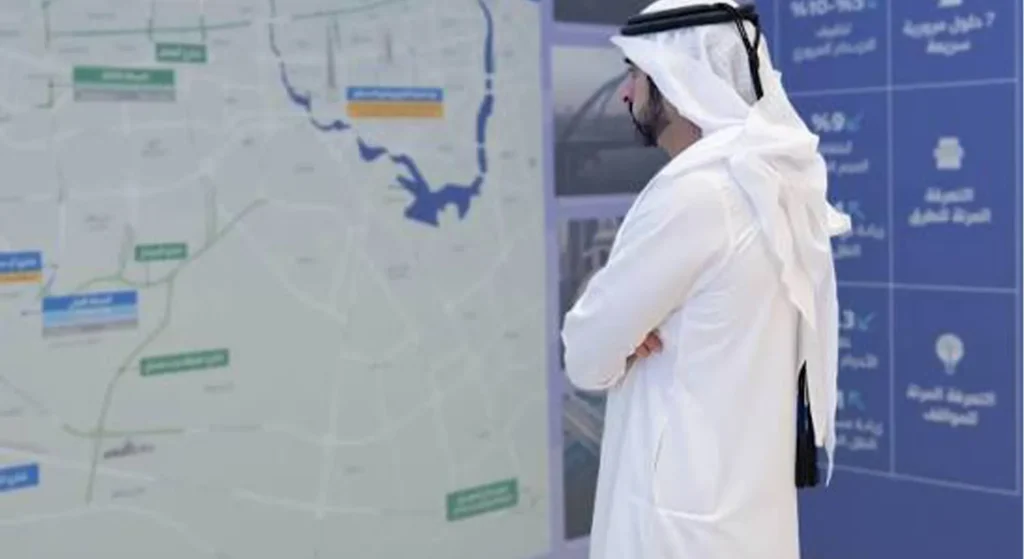
Dubai is investing Dh2 billion in the Latifa bint Hamdan Corridor, a major road infrastructure project. Here are answers to 10 frequently asked questions about its features, benefits, timeline, and expected impact.
Dubai’s Dh2 Billion Latifa bint Hamdan Corridor Explained: Answers to 10 Common Questions.
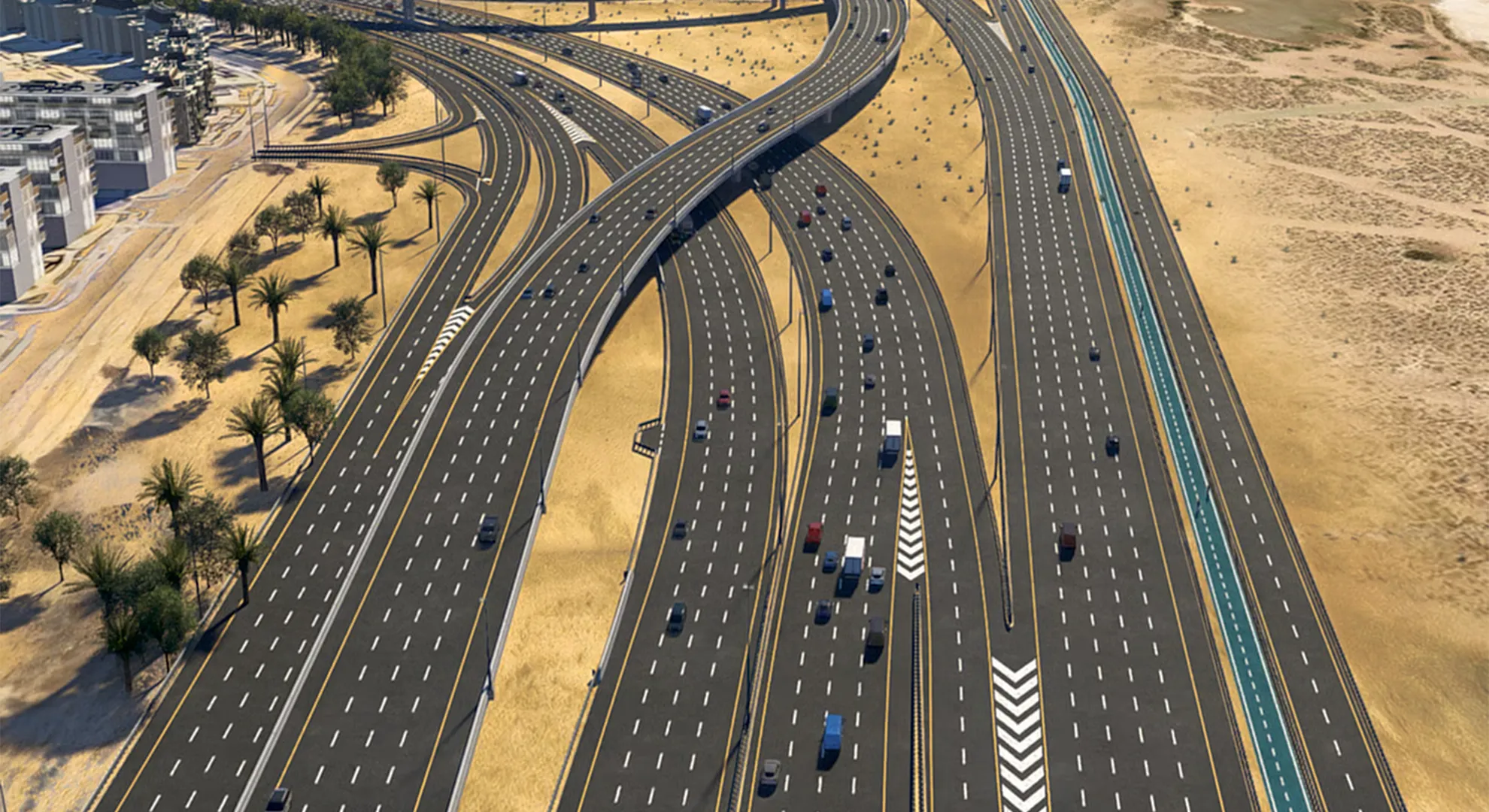
Planned to support Dubai’s growing population and increasing travel demand, the project will improve connections between key road networks while making journeys more efficient and accessible for drivers throughout the city.
Dubai’s Dh2 Billion Latifa bint Hamdan Corridor: Four Key Questions About the Landmark Road Project
Dubai is moving forward with another major transport infrastructure project as the Roads and Transport Authority (RTA) begins work on the Dh2 billion Latifa bint Hamdan Corridor Development Project. The large-scale initiative is part of the emirate’s long-term strategy to create a smarter, more efficient road network capable of supporting rapid urban growth and increasing travel demand.
Once completed, the corridor will provide a vital east-to-west road connection, helping motorists travel more efficiently between several of Dubai’s busiest highways and residential districts. The project includes approximately 12 kilometres of upgraded roadway featuring new bridges, tunnels, and expanded lanes designed to improve traffic flow and reduce congestion.
With Dubai’s population continuing to grow and new residential and commercial communities being developed across the city, transport infrastructure has become a key focus for planners. The Latifa bint Hamdan Corridor is expected to play an important role in ensuring that road capacity keeps pace with future demand while providing smoother journeys for residents, commuters and visitors alike.
Below are answers to some of the most frequently asked questions about this major infrastructure development.
1. What is the Latifa bint Hamdan Corridor Development Project?
The Latifa bint Hamdan Corridor Development Project is one of Dubai’s newest road expansion initiatives aimed at strengthening the city’s transport network. Spearheaded by the Roads and Transport Authority, the project seeks to improve traffic movement across several important districts by creating a modern transport corridor linking multiple strategic roads.
The planned corridor will extend for around 12 kilometres and connect some of Dubai’s busiest highways and arterial routes. These include Sheikh Zayed Road, Al Khail Road, Al Meydan Street, Sheikh Mohammed bin Zayed Road, Sheikh Zayed Bin Hamdan Al Nahyan Street and Emirates Road.
Rather than serving as a single road, the corridor is designed to function as an integrated transport link that allows vehicles to move more easily between different parts of the city. New road infrastructure, additional traffic lanes, bridges and tunnels will improve accessibility while reducing pressure on existing routes.
The development is part of Dubai’s broader transport strategy, which focuses on improving mobility, supporting new urban communities and enhancing connectivity across the emirate as its population continues to expand.
2. How much is being invested in the project and when will it be finished?
Dubai has allocated Dh2 billion for the construction of the Latifa bint Hamdan Corridor, making it one of the emirate’s significant road infrastructure investments in recent years.
According to the announced timeline, construction is expected to continue over the next several years, with completion targeted by the end of 2028.
Large transport projects of this scale require extensive engineering work, including the construction of multiple bridges, tunnels, upgraded junctions and expanded road sections. Once complete, the corridor is expected to provide long-term benefits by increasing road capacity and improving the efficiency of Dubai’s transport network.
The investment reflects Dubai’s continued commitment to building infrastructure that supports future economic development, accommodates population growth and improves the daily travel experience for road users.
3. Which locations will benefit from the new corridor?
One of the primary objectives of the project is to improve access between several established neighbourhoods and rapidly growing communities across Dubai.
Residents travelling to and from Nad Al Sheba are expected to experience better road connectivity, while the development will also improve access to Al Barari and Dubai Hills, two of the city’s popular residential destinations.
Additional communities expected to benefit include District One, Mohammed Bin Rashid Gardens, Living Legends and Majan. The corridor will also enhance transport links to Global Village, one of Dubai’s leading entertainment and tourism attractions.
Commercial and industrial districts situated along Latifa bint Hamdan Street and Al Meydan Street are also expected to gain from improved road access, making travel easier for businesses, employees and logistics operators.
Overall, the project is anticipated to serve approximately 650,000 residents, workers and visitors by providing faster, safer and more convenient road connections across multiple parts of the emirate.
As new housing developments and commercial projects continue to emerge, the corridor will help ensure that transport infrastructure can support the increasing number of daily journeys throughout the city.
4. How will the project improve travel times?
Reducing traffic congestion is one of the major goals of the Latifa bint Hamdan Corridor Development Project.
One of the most noticeable improvements is expected along the route between Umm Al Sheif Street and Emirates Road. Current travel times of around 33 minutes are projected to fall to approximately 15 minutes after the corridor becomes operational.
This represents a reduction of about 54 per cent, allowing motorists to reach their destinations significantly faster during daily commutes.
The upgraded corridor will also distribute traffic more efficiently across Dubai’s road network, helping reduce congestion on several major highways that currently experience heavy vehicle volumes.
Roads expected to benefit from reduced traffic pressure include Al Khail Road, Sheikh Mohammed bin Zayed Road, Dubai-Al Ain Road and Umm Suqeim Street.
By offering additional capacity and alternative travel options, the project is expected to improve traffic flow across surrounding areas while reducing bottlenecks during peak travel periods.
Beyond shorter journey times, smoother traffic movement can also contribute to lower fuel consumption, improved road safety and a more reliable commuting experience for residents and businesses.
Why is the project important for Dubai?
Transport infrastructure plays a central role in Dubai’s long-term development plans. As the city’s population continues to increase and new residential communities, business districts and tourism destinations are established, efficient road connections become increasingly important.
The Latifa bint Hamdan Corridor is intended to support this growth by creating stronger links between key parts of the emirate while ensuring that the road network remains capable of handling future traffic demand.
The project also aligns with Dubai’s broader vision of building a smart, sustainable and well-connected city where residents and visitors can travel more efficiently.
Improved connectivity can encourage economic activity, support commercial development and make it easier for people to access workplaces, schools, healthcare facilities, shopping centres and recreational destinations.
What infrastructure will be included?
The development involves more than simply widening existing roads.
Plans include the construction of new bridges and tunnels, additional traffic lanes, upgraded intersections and modern road engineering solutions designed to improve vehicle movement.
These improvements will help minimise delays at busy junctions while increasing the capacity of the surrounding road network.
The corridor has been designed to integrate seamlessly with existing highways, creating smoother transitions between major routes and reducing traffic bottlenecks.
What does this mean for motorists?
For everyday drivers, the project promises shorter travel times, easier navigation between major highways and reduced congestion on some of Dubai’s busiest roads.
Residents travelling between western and eastern parts of the city are expected to benefit from faster commutes, while businesses may experience more efficient transportation of goods and services.
As Dubai continues expanding, investments such as the Latifa bint Hamdan Corridor are expected to play an essential role in maintaining efficient mobility and supporting the emirate’s future growth.
With construction scheduled for completion by the end of 2028, the project represents another significant step in strengthening Dubai’s transport infrastructure and preparing the city for the demands of the years ahead.
5. What level of traffic is the new corridor designed to accommodate?
One of the primary objectives of the Latifa bint Hamdan Corridor Development Project is to increase the capacity of Dubai’s road network and ensure it can meet the demands of a rapidly growing population. As more residential communities, commercial hubs and business districts emerge across the emirate, traffic volumes are expected to rise steadily over the coming years. The new corridor has therefore been engineered to support high levels of vehicle movement while maintaining smoother traffic flow.
Once operational, the corridor is expected to accommodate around 16,000 vehicles every hour in both directions combined. This additional capacity will help relieve pressure on some of Dubai’s busiest arterial roads, particularly during peak commuting periods when congestion is at its highest.
On a daily basis, the route is projected to carry more than 130,000 vehicle trips, making it one of the city’s significant transport corridors. By providing an alternative route between several major highways, the project will allow traffic to be distributed more evenly throughout Dubai’s road network instead of concentrating vehicle volumes on a limited number of roads.
The increased carrying capacity is expected to deliver several long-term benefits, including:
Reduced congestion during morning and evening rush hours.
Improved travel reliability for commuters.
Faster freight and commercial transport.
Better access to residential neighbourhoods and business districts.
Enhanced connectivity between key destinations across the city.
Rather than simply increasing road space, the project has been designed to optimise how traffic moves through the network. This means motorists are expected to experience fewer delays and more consistent travel times, even as Dubai’s population and economic activity continue to expand.
6. What new infrastructure will be constructed?
The Latifa bint Hamdan Corridor is far more than a road-widening project. It represents a comprehensive transport upgrade involving multiple engineering components that will reshape mobility across several parts of Dubai.
To create uninterrupted traffic movement, the project includes an extensive package of bridges, tunnels and modern interchanges that allow vehicles to travel between major highways without the need to stop at conventional signal-controlled intersections.
Among the most notable features are seven new bridges with a combined length of approximately 2.3 kilometres. These structures will provide grade-separated crossings that enable vehicles to pass above existing roads, reducing conflict points and improving traffic efficiency.
The development also includes eight tunnels extending roughly 900 metres in total. These underground connections will facilitate smoother vehicle movement in areas where surface intersections would otherwise create bottlenecks.
Another important element is the construction of multi-level free-flow interchanges. Unlike traditional junctions controlled by traffic lights, these interchanges enable continuous movement between connecting roads through carefully designed ramps and flyovers. Drivers will be able to merge onto major highways with fewer interruptions, reducing delays and improving overall traffic circulation.
Several loop ramps will also be built as part of the project. These curved access roads make it easier for motorists to change direction or transfer between highways without stopping, helping maintain steady traffic flow throughout the corridor.
To accommodate higher traffic volumes, Latifa bint Hamdan Street will be widened to four lanes in each direction. The expanded carriageway will significantly increase road capacity while providing more space for vehicles travelling during busy periods.
Collectively, these infrastructure upgrades aim to create a more seamless driving experience by minimising traffic interruptions and improving the efficiency of one of Dubai’s most important transport links.
7. Does the project include facilities for cyclists and sustainable transport?
Yes. Although the project primarily focuses on improving road transport, it also supports Dubai’s broader commitment to encouraging sustainable and environmentally friendly mobility.
An important feature of the development is the construction of approximately 12.5 kilometres of dedicated cycling tracks. These paths will form part of Dubai’s growing network of cycling infrastructure, providing safer and more convenient routes for cyclists.
Rather than functioning as an isolated facility, the new cycling route will connect with existing bicycle paths across the emirate. This integrated approach allows cyclists to travel longer distances without interruptions while encouraging greater use of bicycles for recreation, fitness and everyday transportation.
The corridor’s cycling infrastructure will eventually contribute to a wider route linking Al Qudra with Jumeirah, creating one of the city’s more significant cycling connections.
The inclusion of cycling facilities reflects Dubai’s ongoing efforts to diversify transport options beyond private vehicles. Encouraging active mobility can deliver numerous benefits, including:
Promoting healthier lifestyles.
Reducing dependence on cars for shorter journeys.
Lowering carbon emissions.
Supporting environmentally responsible urban development.
Expanding recreational opportunities for residents and visitors.
The project therefore complements Dubai’s long-term sustainability objectives while helping create a more balanced and inclusive transport system.
8. Why is Dubai investing in another major transport corridor?
Dubai has consistently adopted a forward-looking approach to infrastructure planning. Rather than waiting until traffic congestion becomes a major challenge, authorities typically develop new transport projects years before future demand reaches critical levels.
The Latifa bint Hamdan Corridor reflects this planning philosophy.
Dubai continues to experience sustained population growth, ongoing residential development and expanding commercial activity. New communities are being established across the emirate, while existing districts continue to attract additional residents and businesses.
As a result, demand for efficient road transport continues to increase.
The new corridor has been planned to ensure that infrastructure remains capable of supporting future growth while maintaining high standards of mobility across the city.
Beyond population growth, Dubai’s economy continues to diversify, creating greater movement of workers, goods and visitors. Efficient transport links are therefore essential not only for residents but also for supporting tourism, logistics, retail and business activities.
The project also aligns with two of Dubai’s major strategic development frameworks:
Dubai Economic Agenda D33
The D33 Agenda outlines ambitious plans to strengthen Dubai’s position as one of the world’s leading economic centres. Modern transport infrastructure is considered a critical element of achieving this objective by improving connectivity, increasing productivity and supporting investment.
Efficient transport networks reduce travel delays, improve business operations and make the city more attractive for companies looking to establish regional operations.
Dubai 2040 Urban Master Plan
The Dubai 2040 Urban Master Plan focuses on creating a more sustainable, connected and people-centred city over the coming decades.
Transport infrastructure plays a central role in this vision by ensuring that new communities remain well connected while reducing travel times between residential, commercial and recreational areas.
The Latifa bint Hamdan Corridor supports these goals by creating stronger links between key destinations and expanding the city’s overall transport capacity.
9. What impact will the project have on existing roads?
Although the new corridor introduces additional infrastructure, one of its biggest advantages lies in the improvements it will bring to Dubai’s existing road network.
Currently, several major highways experience heavy traffic during peak hours as motorists rely on a limited number of east-west routes.
By providing an additional strategic corridor, traffic can be distributed more evenly across multiple roads instead of concentrating on a handful of heavily used highways.
According to project estimates, the development will increase east-west road capacity across Dubai by approximately 12 per cent.
This additional capacity is expected to deliver several practical improvements.
Reduced congestion
With more routing options available, motorists will have alternative paths for reaching their destinations, reducing pressure on heavily trafficked roads.
Improved travel reliability
One of the biggest frustrations for commuters is unpredictable travel times.
The corridor aims to provide more consistent journey durations by reducing bottlenecks and smoothing traffic flow.
Better network resilience
A transport system with multiple interconnected routes is generally more resilient when accidents, roadworks or temporary closures occur.
If congestion develops on one road, drivers can make use of alternative routes without significantly increasing travel time.
Enhanced connectivity
The project strengthens links between several important highways, making it easier to travel across different parts of Dubai while reducing unnecessary detours.
Improved freight movement
Commercial vehicles transporting goods between industrial areas, logistics centres and retail destinations are also expected to benefit from faster journeys and reduced delays.
Overall, the project is designed to improve the efficiency of the wider transport network rather than focusing solely on one road.
10. Is the Latifa bint Hamdan Corridor connected to earlier road improvement projects?
Yes. The new corridor builds upon previous infrastructure investments made by Dubai’s Roads and Transport Authority in the surrounding area.
Over recent years, significant improvements have already been carried out along Latifa bint Hamdan Street and Umm Al Sheif Street to improve road capacity and strengthen links between major highways.
Those earlier upgrades focused on creating better connections between Jumeirah, Sheikh Zayed Road and Al Khail Road, significantly improving travel efficiency for motorists using these important routes.
One of the most notable achievements from those previous projects was a substantial reduction in travel time between Sheikh Zayed Road and Al Khail Road.
Before the upgrades, motorists typically required around 12 minutes to complete the journey.
Following the improvements, travel time was reduced to approximately four minutes, demonstrating the effectiveness of targeted infrastructure investment.
The Latifa bint Hamdan Corridor represents the next stage of this long-term transport strategy.
Instead of functioning as a standalone project, it extends and strengthens the improvements already made, creating a more comprehensive and interconnected road network.
By linking several strategic highways, expanding road capacity and introducing new bridges, tunnels and free-flow interchanges, the corridor will complete an important section of Dubai’s evolving transport infrastructure.
When construction is finished, motorists will benefit from a more integrated road system capable of supporting future population growth, increasing economic activity and rising travel demand.
The project also reinforces Dubai’s long-term commitment to developing world-class infrastructure that enhances mobility, supports sustainable urban expansion and improves the quality of life for residents and visitors. As the city continues to grow, investments such as the Latifa bint Hamdan Corridor are expected to play a key role in ensuring that transport networks remain efficient, reliable and prepared for the future.