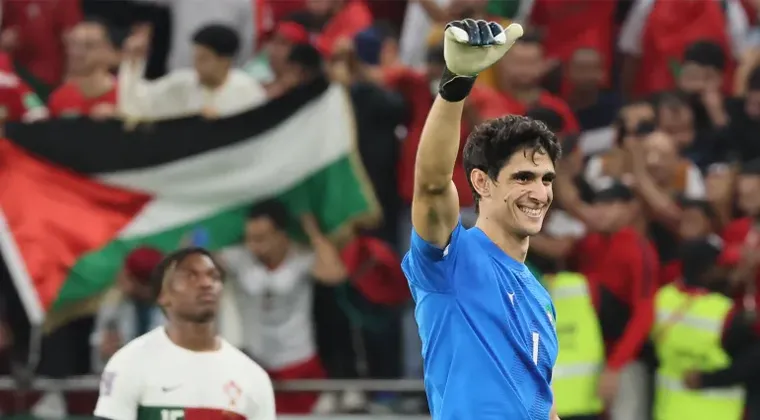
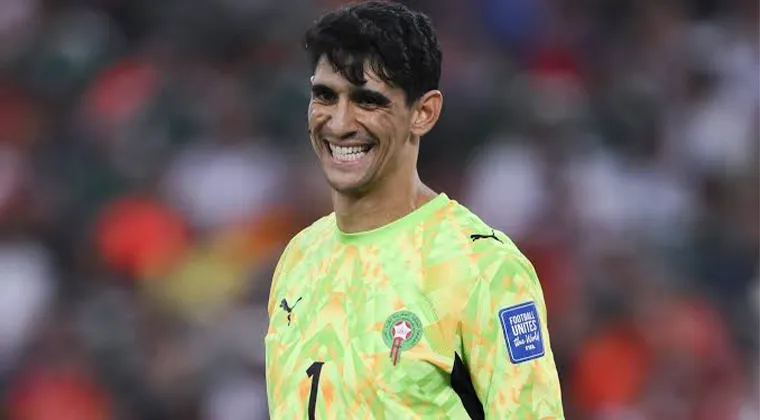
Morocco goalkeeper Yassine Bounou became visibly emotional after his team’s defeat to France, breaking down in tears as their remarkable tournament journey came to a heartbreaking conclusion.
Morocco’s Goalkeeper Bounou Overcome with Emotion Following Defeat to France.
Morocco goalkeeper Yassine Bounou was overcome with emotion after his team’s World Cup campaign came to an end following a 2-0 defeat to France. Moments after the final whistle, the experienced shot-stopper could not hold back his tears, reflecting the disappointment felt by Morocco’s players, coaching staff, and millions of supporters who had hoped the Atlas Lions would continue their historic run in the tournament.
Morocco entered the knockout stage carrying the expectations of not only their own nation but also fans across the Arab world and Africa. Their remarkable performances throughout the competition had inspired millions by becoming one of the tournament’s biggest success stories. Although their journey ended against the defending champions, the team left the competition with widespread admiration for their determination, discipline, and resilience.
France demonstrated why they remain one of international football’s strongest sides, producing an assured display that secured another place in the semi-finals. The victory marked the French team’s third consecutive appearance at this stage of the World Cup, highlighting the consistency they have maintained on football’s biggest stage.
The match remained competitive for long periods despite the final scoreline. Morocco defended bravely and attempted to limit France’s attacking opportunities, but the European giants eventually proved too strong. Kylian Mbappé continued his impressive tournament by adding another goal to his tally in the 60th minute with a curling finish that left the Moroccan defense unable to respond. Only six minutes later, Ousmane Dembélé doubled France’s advantage, effectively putting the contest beyond Morocco’s reach and ensuring a comfortable victory for Les Bleus at Gillette Stadium near Boston.
Although Morocco was unable to progress further, much of the attention after the match focused on Bounou’s emotional reaction. The goalkeeper had delivered another impressive performance despite facing relentless pressure from one of the world’s most dangerous attacking lineups. His visible heartbreak after the defeat resonated with football fans across the globe, many of whom praised both his efforts during the tournament and his leadership throughout Morocco’s memorable campaign.
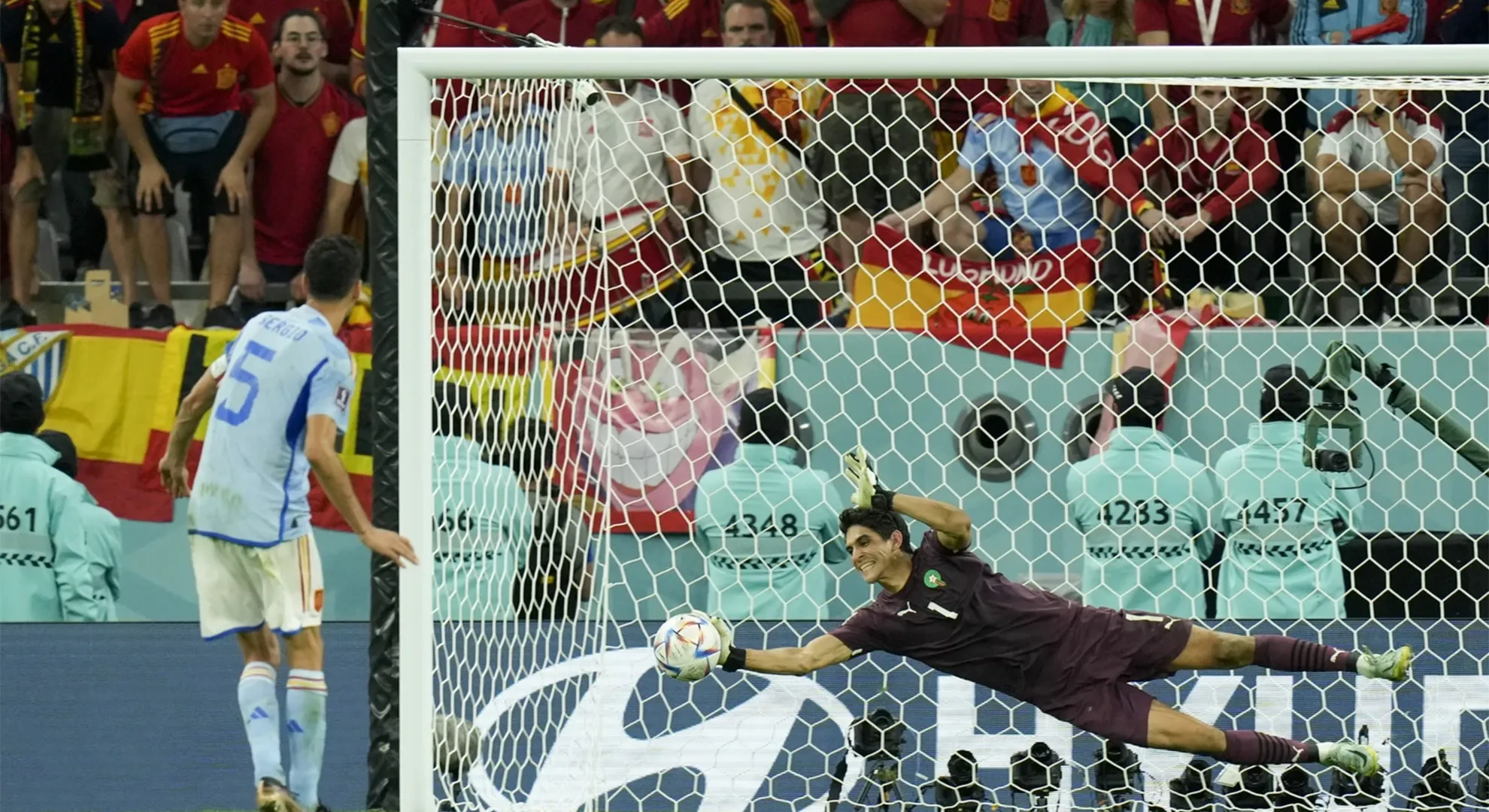
One of the defining moments of the match came during the opening half when Bounou denied Kylian Mbappé from the penalty spot. The crucial save briefly kept Morocco’s hopes alive and demonstrated once again why the goalkeeper is regarded as one of the finest in international football. Throughout the tournament, Bounou consistently produced important saves that frustrated some of the world’s best forwards and helped Morocco achieve results few had predicted before the competition began.
Recognized among FIFA’s highest-rated goalkeepers, Bounou entered the tournament with an established reputation for composure, quick reflexes, and excellent positioning. Those qualities were on display throughout Morocco’s World Cup journey, as he repeatedly made difficult saves under intense pressure. His performances became one of the foundations of Morocco’s defensive success, earning admiration from football analysts, former players, and supporters worldwide.
Social media quickly filled with messages praising the goalkeeper after the final whistle. While many supporters expressed sadness at seeing him in tears, countless others thanked him for helping Morocco produce one of the country’s greatest football achievements. Fans highlighted his courage, consistency, and calm presence, emphasizing that the defeat did little to diminish his outstanding contribution to the team’s success.
Bounou’s emotional reaction also reflected the extraordinary journey that brought him to football’s biggest stage. Long before becoming one of Morocco’s most celebrated players, he was simply a young boy with a passion for football growing up in Casablanca. Like countless children across the country, he spent hours playing informal matches with friends in his neighborhood, making the most of whatever space was available.
One of his earliest playing grounds was the ramp of a parking garage in central Casablanca. The makeshift pitch was far removed from the world-class stadiums where he would later compete, but it became an important part of his football education. Instead of professionally built goalposts, two rubbish bins marked the ends of the field, turning an ordinary urban space into a place where dreams began to take shape.
Those humble beginnings helped shape Bounou’s determination and love for the game. Playing on rough surfaces with limited facilities required creativity, resilience, and quick reactions—qualities that would later define his goalkeeping style. Every match with friends became an opportunity to improve, long before professional coaching or international recognition entered the picture.
Years of dedication eventually transformed those childhood ambitions into reality. Through consistent hard work and perseverance, Bounou rose through the ranks to become Morocco’s first-choice goalkeeper, representing his country on the world’s biggest football stage. His journey from neighborhood games in Casablanca to starring in the World Cup has become an inspiring story for young athletes hoping to follow a similar path.
Throughout the tournament, Morocco consistently exceeded expectations. The Atlas Lions produced disciplined defensive performances, eliminated highly ranked opponents, and demonstrated remarkable team spirit. Their achievements united supporters across Morocco while also earning widespread respect throughout Africa, the Middle East, and beyond.
Bounou played a central role in those accomplishments. Match after match, he provided confidence to the defenders in front of him, making crucial saves whenever the team faced danger. His calm decision-making under pressure helped Morocco withstand sustained attacks from several of the tournament’s strongest sides, allowing them to advance further than any previous Moroccan team had managed at a World Cup.
Even in defeat against France, the goalkeeper’s performance received widespread recognition. Although Morocco conceded twice, Bounou prevented the margin from becoming much larger through several important interventions. His efforts ensured that his team remained competitive despite facing an opponent with exceptional attacking quality.
As the final whistle confirmed Morocco’s elimination, Bounou’s tears reflected the enormous emotional investment shared by every member of the squad. The disappointment of falling short was evident, yet so too was the pride in what the team had achieved throughout the tournament.
While France celebrated another step toward the World Cup title, Morocco departed with its reputation significantly enhanced. The Atlas Lions demonstrated that determination, organization, and belief could challenge even the strongest football nations. Their memorable campaign inspired millions of supporters and created lasting memories that will remain an important chapter in Moroccan football history.
For Yassine Bounou, the tournament may have ended in heartbreak, but his performances ensured he left with the admiration of football fans around the world. His emotional farewell reflected not failure, but the passion, commitment, and pride that defined Morocco’s remarkable World Cup journey from beginning to end.
‘Your tears are precious, Bounou’
Yassine Bounou’s Inspiring Journey From Casablanca Streets to World Cup Glory
Yassine Bounou’s emotional reaction after Morocco’s World Cup defeat revealed much more than the disappointment of losing a football match. Behind the tears was the story of a player who had spent his entire life chasing a dream — representing Morocco on the biggest stage in international football.
Although Bounou was born in Canada, he spent his childhood years growing up in Morocco, where his passion for the sport developed. From an early age, he dreamed of wearing the Moroccan national team jersey and representing the country he considered home. In an interview with the television channel of his former club Sevilla, Bounou previously spoke about his ambition to become part of Morocco’s national football story.
That dream eventually became reality. Years of dedication, training, and perseverance transformed the young football enthusiast into one of Morocco’s most respected players. His journey from a child playing in local neighborhoods to becoming the goalkeeper for the national team became an example of determination and commitment.
Following Morocco’s defeat to France, Bounou struggled to contain his emotions. The heartbreaking loss ended the team’s historic World Cup campaign, but his performances throughout the tournament had already earned admiration from supporters around the world. Fans flooded social media platforms with messages of encouragement, praising him not only for defending Morocco’s goal but also for becoming a symbol of pride for Arab and African football supporters.
Many supporters viewed Morocco’s World Cup run as a moment of unity and inspiration. The team’s success represented a breakthrough for African football, as Morocco became one of the first teams from the continent to reach the later stages of the competition. Bounou’s role in that achievement made him a hero to millions who followed the team’s remarkable journey.
One fan shared a hopeful message online, expressing optimism that Morocco could reach even greater heights in future tournaments. The supporter referred to the 2030 World Cup, which will be jointly hosted by Spain, Portugal, and Morocco, saying they hoped the Moroccan team would eventually reach the final on home soil.
The Moroccan national team also sent a message of support to their goalkeeper after the emotional defeat. In a post shared on Instagram, the team praised Bounou and reminded him that his tears represented his deep love and commitment to the national side. The message highlighted that his emotional response was a reflection of how much the achievement meant to him and the entire country.
According to information shared by FIFA, Bounou’s football journey began in a very different environment from the world-class stadiums where he later competed. As a child growing up in Casablanca, he played football with friends in the streets and improvised spaces around his neighborhood. One of his favorite playing areas was a parking garage ramp in central Casablanca, where ordinary objects became part of the game.
Instead of professional goalposts, two rubbish bins served as markers for the goal area. A simple goal was painted onto a wall, creating a makeshift football field where young players could practice and enjoy the sport. Those humble beginnings reflected the determination and creativity often found among children who develop their skills without access to expensive facilities or formal training grounds.
The young boy who once watched Morocco narrowly miss qualification for the knockout stage of the 1998 FIFA World Cup eventually became one of the country’s most important football figures. Decades later, Bounou was no longer simply a fan watching from the sidelines — he was the player helping Morocco create a new chapter in its football history.
At the age of 35, Bounou had become a leader for the national team, providing stability and confidence during one of Morocco’s greatest international campaigns. His performances throughout the tournament demonstrated his experience, composure, and ability to handle pressure against some of the world’s strongest attacking players.
Supporters reminded Bounou that his journey itself was a victory. They celebrated not only the goalkeeper he had become but also the young dreamer from Casablanca who once imagined representing Morocco at football’s highest level. Messages from fans emphasized that despite the semifinal defeat, he had every reason to feel proud of what he achieved.
Bounou’s performances earned recognition from opponents as well. After the match against France, several French players approached him to acknowledge his efforts and congratulate him on his outstanding displays throughout the tournament. Their gestures reflected the respect he had gained from footballers beyond Morocco’s borders.
The goalkeeper’s ability to remain composed under pressure had been one of Morocco’s greatest strengths during the competition. His saves helped the team overcome difficult challenges and compete against some of the most talented squads in world football. While the final result against France did not go Morocco’s way, Bounou’s contribution remained one of the defining stories of the tournament.
For many fans, Bounou represented more than a football player. He embodied perseverance, ambition, and the belief that dreams formed in childhood can become reality through dedication. His story — from playing with friends on Casablanca streets to standing on football’s biggest stage — became an inspiration for young athletes across Morocco and beyond.
The tears that followed Morocco’s elimination were therefore not simply signs of disappointment. They reflected years of sacrifice, national pride, and the emotional weight of carrying the hopes of millions. Although the World Cup journey ended, Bounou’s legacy as one of Morocco’s greatest football figures was strengthened.
As Morocco looks ahead to future tournaments, including the opportunity to host the 2030 World Cup, supporters will continue to remember the players who helped change the country’s football history. Among them, Yassine Bounou will remain a symbol of determination — a goalkeeper who turned childhood dreams into a global achievement.