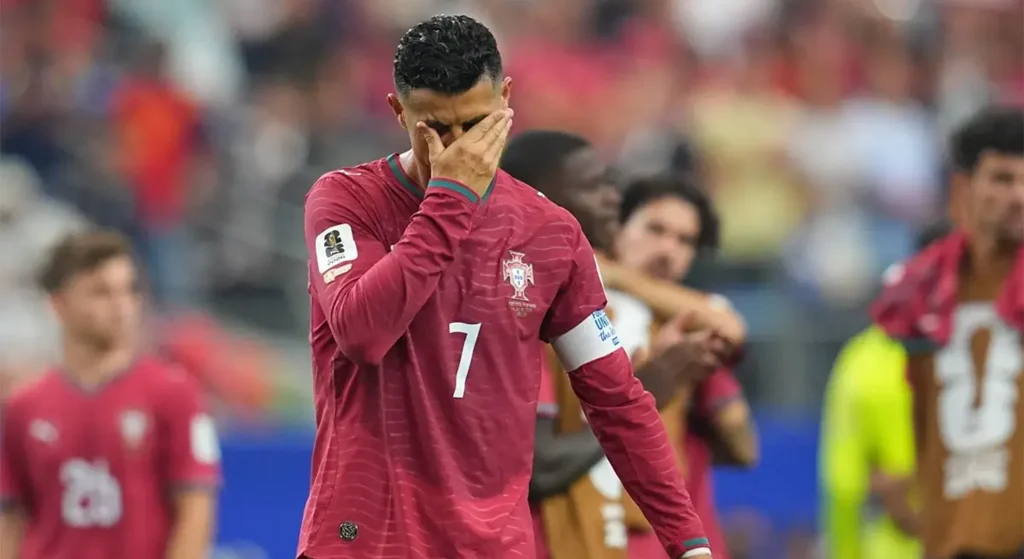
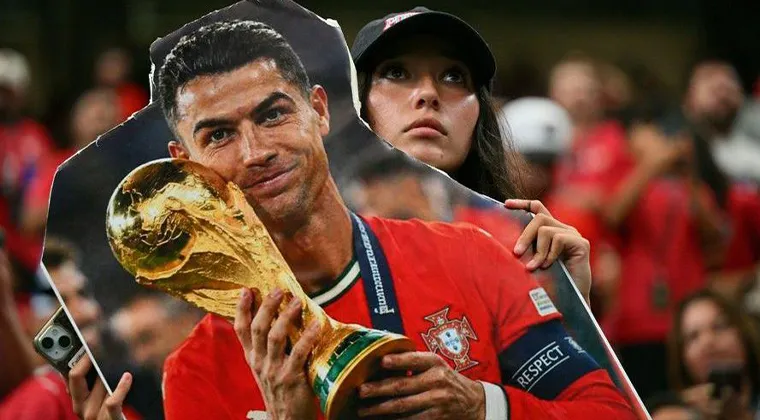
Watch: Ronaldo’s World Cup ambitions suffer a painful setback as the emotional football star says farewell to his lifelong dream of lifting the prestigious tournament trophy.
Watch: Heartbroken Ronaldo says goodbye to his dream of lifting the FIFA World Cup.
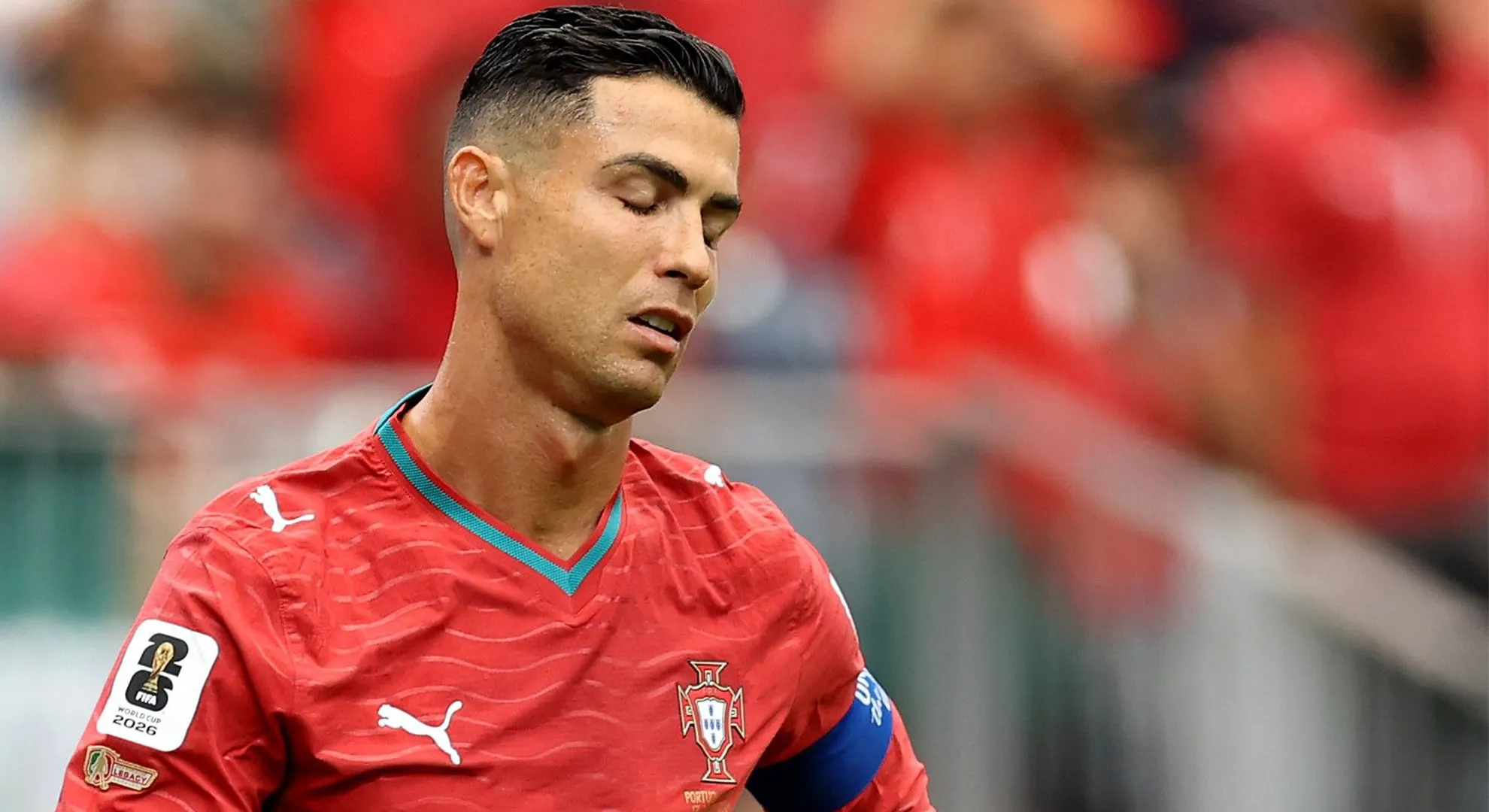
Throughout his remarkable career, he has collected nearly every major honour with some of Europe’s most successful clubs and also achieved continental success while representing his nation.
Ronaldo’s World Cup Journey Ends as Portugal’s Trophy Dream Falls Short
Cristiano Ronaldo’s latest and possibly final FIFA World Cup appearance ended in disappointment on Monday as Portugal’s hopes of claiming football’s most prestigious international trophy disappeared following a narrow 1-0 defeat against Spain. The Portuguese captain, who has spent more than two decades at the highest level of the sport, struggled to make the impact he would have hoped for in what became an emotional conclusion to his World Cup campaign.
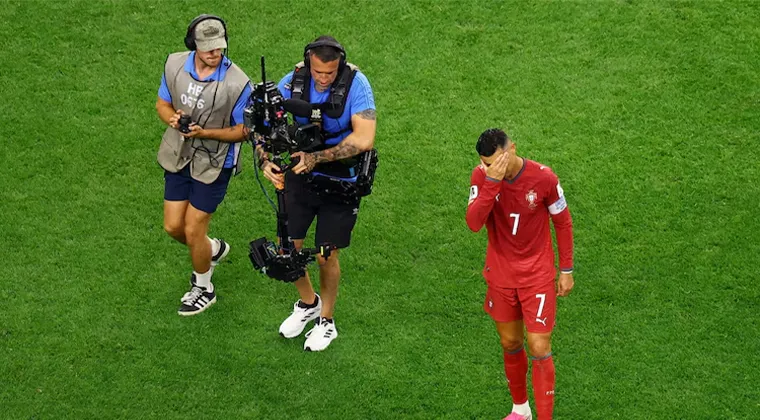
At the final whistle, the 41-year-old forward was visibly affected by the result, unable to hide his emotions as the reality of another missed opportunity became clear. For a player who has achieved almost everything possible in football, the World Cup remained the one major honour that continued to escape him.
Ronaldo has enjoyed one of the most successful careers in football history. Over the years, he has collected a remarkable number of individual awards and team trophies while playing for some of Europe’s most celebrated clubs. His career has included domestic league titles, international club competitions and countless personal milestones that have established him as one of the sport’s greatest-ever figures.
At international level, Ronaldo has also experienced historic success with Portugal. He played a key role in helping his country secure European silverware and has been central to many of Portugal’s biggest moments on the world stage. However, despite his extraordinary achievements, the FIFA World Cup trophy remained missing from his impressive collection.
The defeat against Spain brought an end to another attempt to complete that part of his legacy. Entering the tournament as Portugal’s leader and most recognisable player, Ronaldo carried the hopes of supporters who dreamed of seeing him lift the famous trophy before ending his international career.
However, the match proved frustrating for the veteran forward. Throughout the contest, he found it difficult to influence proceedings and was unable to produce the decisive moments that have defined so much of his career. Despite his determination and experience, Portugal struggled to break through Spain’s defence and ultimately fell short.
The loss highlighted the challenges of competing at the highest level later in a player’s career. Ronaldo’s physical ability, consistency and longevity have allowed him to remain among football’s elite for many years, but even legendary players face difficult moments as they approach the closing stages of their careers.
Following the defeat, Ronaldo indicated that he would take time to consider his next steps. The Portugal captain has not rushed decisions about his future and suggested that he would reflect carefully on what comes next after such a significant moment in his career.
For fans around the world, Ronaldo’s World Cup exit marked a symbolic moment. Since making his tournament debut, he has been one of the most recognisable faces of international football, breaking records and inspiring generations of players with his dedication, professionalism and remarkable goal-scoring ability.
Although he leaves the tournament without a World Cup winner’s medal, Ronaldo’s overall contribution to football remains historic. His achievements with clubs and country, along with his individual records, have secured his place among the sport’s most influential and successful players.
The defeat against Spain may have ended his pursuit of football’s ultimate international prize, but it does not diminish the legacy he has created. Ronaldo’s career has been defined by success, ambition and a relentless desire to compete at the highest level.
As he reflects on his future, the football world will wait to see whether this marks the end of his international journey or whether he has another chapter still to write. Regardless of what comes next, his impact on the game will remain significant for years to come.
Ronaldo Reflects on World Cup Exit as Legendary Career Reaches Emotional Moment
Cristiano Ronaldo accepted Portugal’s World Cup elimination with the understanding that setbacks are part of the game, even as he struggled to hide the disappointment of seeing his final pursuit of the tournament’s biggest prize come to an end.
Speaking after the defeat, the veteran forward acknowledged the unpredictable nature of football and the highs and lows that come with a career in the sport. He said that victories and defeats are both part of a player’s journey and that professionals must find a way to continue moving forward regardless of the outcome.
The Portuguese captain, who holds the record for the most goals scored in men’s international football, said he could walk away from the World Cup stage with a sense of pride and no regrets. Despite falling short of lifting the trophy, Ronaldo insisted that he had given everything during his long international career and could look back with a clear conscience.
For Ronaldo, one of Portugal’s greatest achievements remains the European Championship triumph in 2016. He described that success as one of the most meaningful moments of his career, placing it alongside the importance and prestige often associated with winning the World Cup.
Although the World Cup title remained the one major honour missing from his collection, Ronaldo highlighted that international success is not measured only by one tournament. His contribution to Portugal’s rise as a competitive football nation has been significant, with his leadership and goals playing a central role over many years.
The closest Ronaldo came to World Cup glory was during the 2006 tournament in Germany, when Portugal reached the semi-finals. That run remains his strongest World Cup performance, and the competition has since represented an unfinished chapter in an otherwise extraordinary career.
His final appearance at the tournament reflected the challenges he has faced during the later stages of his career. Once known for his explosive pace, powerful finishing and ability to decide major matches on his own, Ronaldo has gradually adapted his style as age has changed his role on the pitch.
Against Spain, he struggled to influence the match in the way supporters had become accustomed to seeing throughout his career. Operating through the centre of Portugal’s attack, he found limited opportunities and was unable to create the kind of decisive moments that previously made him one of football’s most feared attackers.
Ronaldo managed only a few attempts on goal during the match and spent much of the contest isolated as Portugal’s attacking moves failed to produce consistent danger. His performance reflected the reality of a player approaching the end of a remarkable career, where experience and positioning increasingly replaced the physical qualities that once separated him from his rivals.
During the tournament held in North America, Ronaldo still managed to find the net three times. He scored twice in Portugal’s commanding victory over Uzbekistan and converted a penalty against Croatia in the knockout stage. Those goals added to his historic international scoring record and further extended his legacy.
However, he was unable to provide an assist during the competition and struggled to create the same level of influence that defined earlier World Cup appearances. At one stage during the match against Spain, his frustration was visible as he reacted after a teammate’s misplaced pass prevented a promising attacking opportunity.
The moment captured the emotions of a player who has spent his entire career demanding the highest standards from himself and those around him. Ronaldo’s passion and competitive nature have been key parts of his identity, even during difficult moments.
When the final whistle confirmed Portugal’s elimination, Ronaldo walked away from the pitch at the Dallas Cowboys’ stadium alone, creating a symbolic image of the end of a long and historic World Cup journey.
While the result was not the farewell he had hoped for, Ronaldo’s overall contribution to football remains unmatched in many areas. His records, trophies, longevity and influence have made him one of the most recognisable athletes in sporting history.
The World Cup trophy may not be included among his achievements, but Ronaldo leaves the tournament with a legacy built on determination, consistency and an extraordinary ability to perform at the highest level for more than two decades.
As he considers the next stage of his career, the football world will continue to recognise the impact of a player who transformed expectations of what could be achieved through talent, dedication and relentless ambition.
Billionaire footballer
From Madeira to Global Stardom: Ronaldo’s Extraordinary Journey and the Final Chapter of His World Cup Dream
Cristiano Ronaldo’s rise to football greatness is one of the most remarkable stories in modern sport. Born and raised on the Portuguese island of Madeira, Ronaldo came from a modest background and faced numerous challenges during his childhood. His early years were far removed from the fame, wealth and global recognition that would later define his career.
Growing up in a working-class family, Ronaldo experienced difficulties at a young age. His father struggled with alcoholism, creating hardships at home, but those circumstances did not prevent him from pursuing his passion for football. Instead, they became part of the motivation that pushed him to work harder and chase his ambition of becoming a professional player.
From his early days playing football on Madeira’s streets and local pitches, Ronaldo showed exceptional talent and determination. His dedication to improving every aspect of his game became a defining feature of his personality. Long training sessions, strict discipline and an unmatched desire to succeed helped him transform from a promising young player into one of the greatest footballers the world has ever seen.
Throughout his career, Ronaldo has been driven by an extraordinary hunger for achievement. Breaking records and collecting trophies became central parts of his football journey, but his success was also built on constant self-improvement. Even after reaching the highest level of the sport, he continued working on his fitness, technique and performance, allowing him to compete against younger players well into his 30s and 40s.
His commitment to maintaining peak physical condition became one of the most recognised aspects of his career. Ronaldo’s professionalism, training habits and focus on preparation helped extend his time at the top of world football far beyond what many expected.
Beyond his performances on the pitch, Ronaldo became a worldwide cultural figure. His influence reached far beyond football, turning him into one of the most recognisable athletes on the planet. He became the first footballer to achieve billionaire status and built one of the largest social media followings in the world, with hundreds of millions of fans following his career and personal life.
His famous “Siuuu!” celebration became a global phenomenon, copied by young footballers and fans across different countries. The celebration became a symbol of Ronaldo’s personality, confidence and connection with supporters around the world.
However, despite achieving almost every possible honour in club football and international competitions, Ronaldo was unable to complete the one achievement that remained missing from his collection: winning the FIFA World Cup.
There was no dramatic final triumph or fairy-tale ending on football’s biggest stage for the Portuguese superstar. His final World Cup campaign ended with disappointment, closing a chapter of international football that had been closely followed by millions of fans.
Ronaldo’s professional journey has taken him through some of the biggest clubs in the history of football. He began his senior career at Sporting Lisbon, where his ability quickly attracted attention from top European teams. His performances earned him a move to Manchester United, where he developed under the guidance of manager Sir Alex Ferguson and became one of the world’s leading players.
During his time at Manchester United, Ronaldo won multiple domestic honours and achieved Champions League success, establishing himself as an elite footballer. His combination of speed, skill, athleticism and goal-scoring ability made him one of the most dangerous attacking players in Europe.
After becoming a superstar in England, Ronaldo moved to Real Madrid, where he reached another level of greatness. At the Santiago Bernabeu, he broke numerous records, became the club’s all-time leading scorer and helped the Spanish giants dominate European football. His time in Madrid included four additional Champions League titles, further strengthening his reputation as one of the greatest players in tournament history.
Following his historic spell in Spain, Ronaldo continued his career in Italy with Juventus. He won domestic trophies and maintained his remarkable scoring record before returning to Manchester United for a second spell. Later, he moved to Saudi Arabia, becoming the leading figure in Al Nassr’s project to increase the global profile of football in the region.
Ronaldo’s list of achievements includes numerous individual awards, including five Ballon d’Or victories, placing him among the most decorated players in football history. His career statistics, records and longevity have made him a benchmark for future generations.
However, as Ronaldo entered the later stages of his career, public discussions about his role and abilities began to change. The explosive pace, acceleration and attacking movements that once made him almost impossible to defend against gradually declined with age. To adapt, Ronaldo changed his playing style, moving away from the wing position where he became famous and taking on a more central role as a traditional striker.
This adjustment allowed him to continue scoring goals, but it also changed how fans and analysts viewed his performances. Some critics argued that his international career had continued longer than it should have, questioning whether his influence on the pitch was still the same as during his prime years.
Portugal coach Roberto Martinez also faced criticism over his decision to continue selecting Ronaldo as a key player. During the World Cup match against Spain, Portugal made attacking substitutions in an attempt to change the outcome, but Ronaldo remained on the field as the team searched for an equaliser.
Supporters and critics debated whether Ronaldo’s experience and leadership outweighed concerns about his declining physical impact. For many, his presence still represented belief, confidence and the possibility of producing a decisive moment.
Before the match, Ronaldo addressed questions about his legacy and the importance of winning the World Cup. He rejected the idea that his identity as a player depended on lifting the trophy, insisting that success was not defined by a single achievement.
He explained that winning or losing the World Cup would not change who he was as a footballer or the legacy he had already created. His career, built on determination, discipline and countless achievements, had already secured his place among the sport’s greatest figures.
Although Ronaldo’s World Cup dream ended without the trophy he wanted most, his story remains one of football’s most extraordinary journeys. From a difficult childhood in Madeira to becoming a global icon, his career represents ambition, resilience and an unmatched pursuit of excellence.
The absence of a World Cup medal does not erase the impact he has had on the sport. Ronaldo’s records, trophies, influence and ability to remain competitive for more than two decades have ensured that his name will remain part of football history for generations to come.