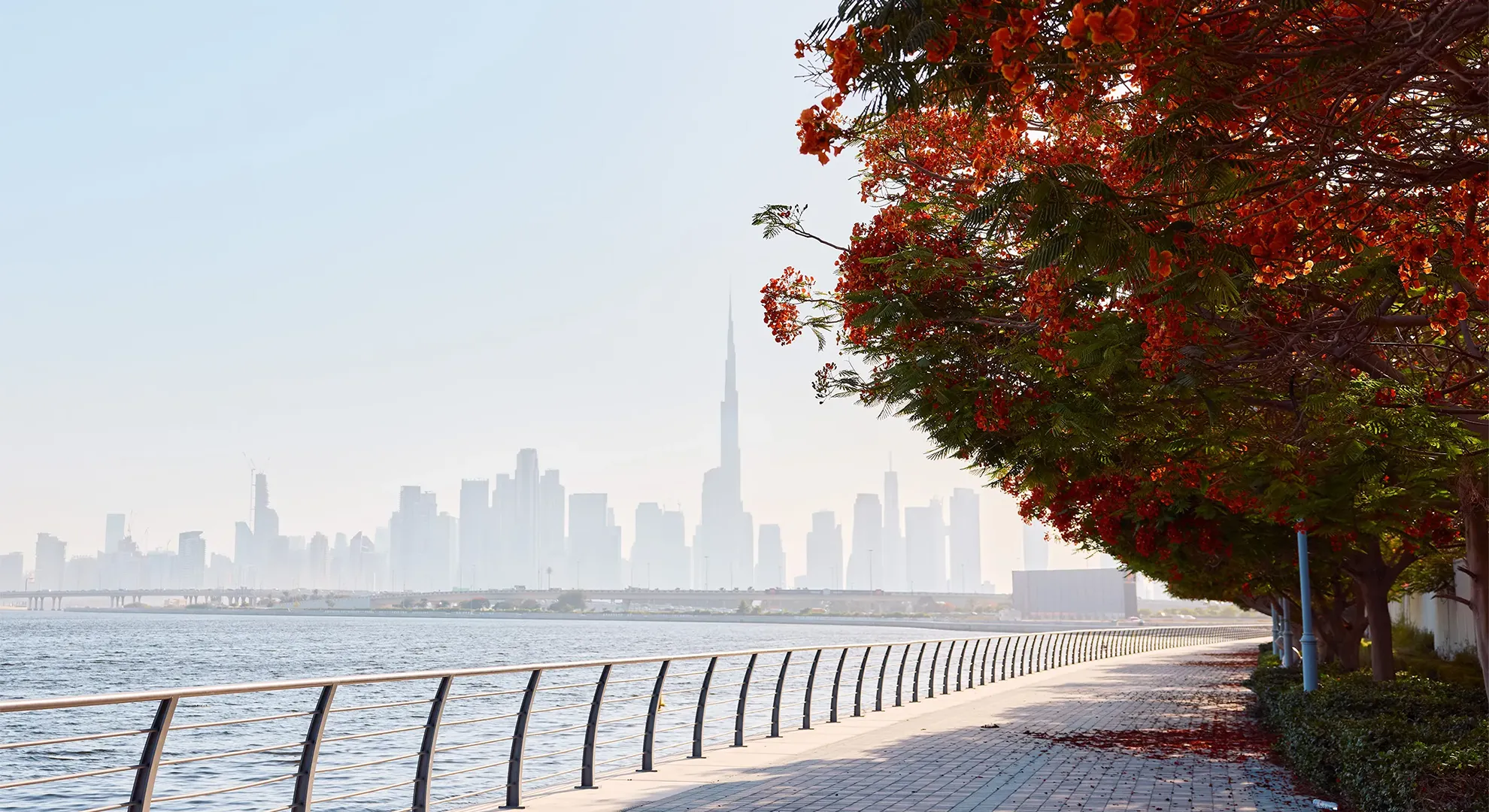
Dubai’s cityscape is glowing with seasonal beauty as thousands of flame trees burst into vibrant blooms, adding colourful scenery, refreshing shade and a greener touch to urban neighbourhoods.
Dubai Welcomes a Spectacular Summer Display as Thousands of Flame Trees Bloom Across Urban Areas.
Dubai is encouraging residents to grow flame trees by providing saplings, transforming the tree’s annual flowering season into a shared city tradition.
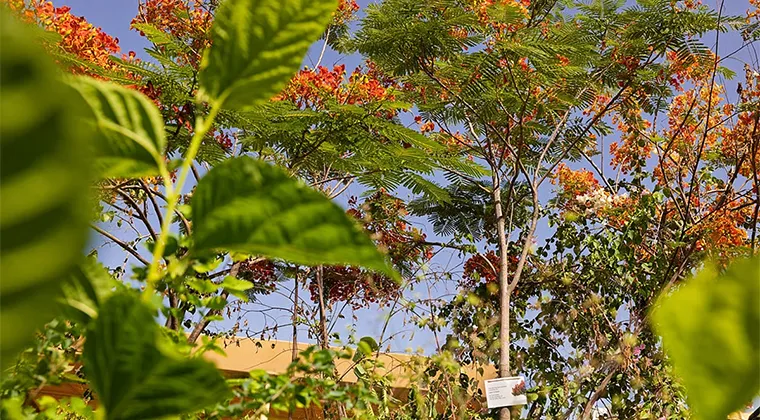
As Dubai moves into the peak of its summer season, the city’s landscape undergoes a colourful transformation. Despite the intense heat and rising temperatures, bright orange flowers begin appearing across roadsides, residential communities and public areas, creating a striking contrast against the summer surroundings.
The tree behind this seasonal display is the flame tree, a species that has become closely associated with Dubai’s urban environment. Known for its vibrant blossoms and wide canopy, the tree has gradually become a familiar feature across many parts of the city, adding natural beauty while providing relief from the harsh summer climate.
Unlike many plants that struggle during the hottest months, flame trees reach their most impressive stage during summer. Their colourful flowers appear when temperatures are at their highest, turning streets and neighbourhoods into eye-catching scenes filled with shades of orange and red.
Over the years, Dubai has expanded the presence of flame trees throughout the city. More than 50,000 of these trees have been planted in different locations, including residential areas, parks, roadsides and public spaces. What began as an urban landscaping effort has developed into a seasonal tradition that residents now look forward to every year.
The annual blooming period has become more than just a natural event. For many people living in Dubai, the arrival of the flame tree flowers has become a symbol of summer and a reminder of the city’s efforts to create greener and more attractive surroundings.
The initiative to increase flame tree planting reflects Dubai’s wider focus on improving the urban environment and expanding green spaces. By introducing more trees into communities, the city aims to enhance outdoor areas, improve visual appeal and create more comfortable spaces for residents and visitors.
Dubai Crown Prince Sheikh Hamdan bin Mohammed previously supported the expansion of flame tree cultivation across the city. The initiative encouraged planting the trees in various locations, including streets, parks, homes and public areas, helping bring the colourful species closer to communities.
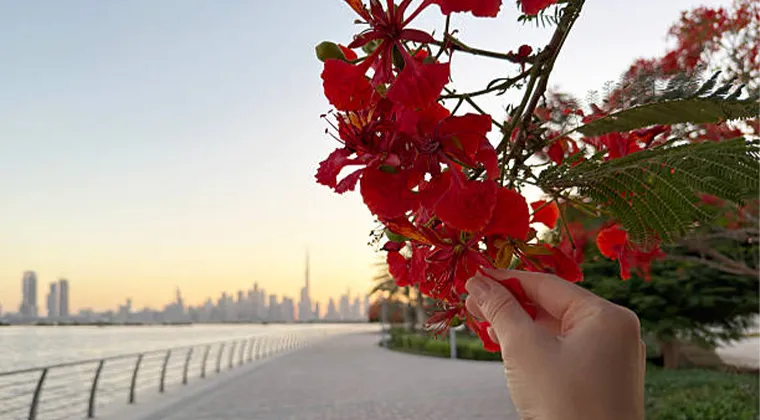
As part of the effort, seedlings were also made available to residents interested in growing flame trees in their own gardens and neighbourhoods. The move encouraged people to participate directly in adding more greenery to the city and making the seasonal bloom a shared community experience.
The flame tree is valued not only for its appearance but also for its environmental benefits. The species can survive for several decades, with some trees living up to around 60 years under suitable conditions. Its long lifespan allows it to remain a lasting part of the urban landscape.
Growing to heights of around 12 metres, the tree develops a broad canopy that provides significant shade. This natural cover can help create cooler areas in outdoor spaces and reduce the impact of direct sunlight during the hottest months.
Experts highlight that trees with wide canopies can play an important role in improving local conditions in urban environments. The shade created by flame trees can help lower surface temperatures, with some areas experiencing reductions of several degrees compared with exposed ground.
For a city known for its modern architecture and rapid development, the presence of trees adds another dimension to the urban experience. Flame trees help soften the appearance of streets and buildings, bringing a natural element into Dubai’s highly developed surroundings.
Residents often capture photographs of the blooming trees during summer, sharing images of the colourful streets and parks. The seasonal display has become a popular feature among communities, with many people viewing it as one of the city’s most recognisable natural highlights.
The popularity of flame trees also reflects Dubai’s changing approach to urban planning. While the city continues to grow with new buildings and infrastructure, increasing attention has been given to creating balanced environments that include greenery and outdoor spaces.
Planting more trees across neighbourhoods also supports efforts to make communities more pleasant for daily life. Shaded areas, greener streets and attractive public spaces contribute to improving the overall experience for people who live and work in the city.
The flame tree’s ability to bloom during summer makes it especially meaningful in Dubai. Its flowers appear at a time when many residents spend more time indoors due to extreme heat, offering a colourful reminder of nature’s presence even during the hottest season.
From major roads to local neighbourhoods, the trees have become part of Dubai’s identity. Their bright flowers now represent a connection between the city’s development and its efforts to preserve natural beauty.
As more residents take part in planting and caring for flame trees, the seasonal display is expected to become even more widespread in the future. The combination of community involvement, urban planning and environmental awareness has helped transform the tree from a simple landscaping choice into a cultural feature.
For many residents, the yearly appearance of flame tree blossoms is now something to anticipate. It reflects Dubai’s ability to create beauty in challenging conditions and demonstrates how greenery can become an important part of city life.
The flame tree season is therefore more than just a visual spectacle. It represents the city’s commitment to expanding green spaces, encouraging community participation and creating an environment where nature and urban development exist together.
Dubai’s annual Flame Tree Season has grown into more than a celebration of nature. Launched by Dubai Future Foundation through Dubai Design Lab, the initiative takes place every year from May 1 until July 31, matching the period when flame trees naturally produce their vibrant blossoms across the city.
Although tree planting remains an important part of the project, organisers say the vision behind the initiative goes far beyond adding more greenery. The goal is to create a shared cultural experience that brings residents together around a natural feature that has already become part of Dubai’s identity.
Rafia bin Sulaiman, Project Lead for the Flame Tree Season, explained that the idea was developed as a city-wide movement rather than a simple environmental campaign. She said the initiative was designed to encourage people to notice and appreciate a seasonal transformation that happens in Dubai every year.
According to her, the flame tree’s annual bloom provides a unique opportunity for residents to connect with the city in a different way. While the trees have always flowered naturally during the summer months, the initiative gives people a reason to slow down, observe the change and celebrate it collectively.
The concept behind Flame Tree Season began with a question: could Dubai create its own floral tradition that becomes recognised year after year? The organisers wanted to identify something naturally connected to the city that could represent the relationship between urban life, nature and community.
Through Dubai Design Lab, researchers and project teams explored the city’s existing landscape to find a symbol that represented sustainability, strength and adaptability. The flame tree emerged as a natural choice because of its ability to survive and flourish in Dubai’s demanding climate.
The tree’s characteristics closely reflect qualities often associated with Dubai itself. Despite extreme summer temperatures and challenging environmental conditions, flame trees continue to grow, bloom and provide benefits to the communities around them.
Rafia said the tree represents qualities such as resilience and the ability to adapt. Its ability to thrive in a hot climate, provide natural shade and contribute to more comfortable outdoor spaces made it an ideal symbol for the initiative.
Beyond its colourful appearance, the flame tree also plays a practical role in the urban environment. Its wide canopy offers shade, helping create more pleasant outdoor areas and supporting Dubai’s broader efforts to increase greenery across the city.
The tree has been part of Dubai’s landscape for many years, with Dubai Municipality contributing significantly to its growth across roads, neighbourhoods, parks and public areas. Over time, the flame tree has become a familiar sight for residents who look forward to seeing its bright flowers appear each summer.
The Flame Tree Season builds on this existing connection by transforming the natural blooming period into a moment of community engagement. Rather than introducing a new tradition from outside, the initiative focuses on celebrating something that has already been present in the city for decades.
Organisers believe that cultural traditions can develop from everyday experiences and shared memories. By highlighting the flame tree’s seasonal appearance, the initiative aims to create a recurring moment that residents and visitors can recognise and participate in each year.
The programme also reflects Dubai’s growing focus on combining environmental awareness with cultural identity. While the city continues to expand through modern development and infrastructure projects, initiatives like Flame Tree Season highlight the importance of maintaining a connection with nature.
Planting activities supported by partners such as Dubai Municipality form one part of the wider effort. However, the larger ambition is to encourage appreciation of the city’s natural spaces and inspire more people to take part in creating greener surroundings.
Residents who plant flame trees in their homes or communities become part of this broader vision. Each tree contributes to the expansion of Dubai’s green landscape while also strengthening the sense of community participation behind the initiative.
The organisers hope that, over time, the flame tree bloom will become a recognised seasonal feature of Dubai, similar to other cultural moments that bring people together. By creating awareness around the tree and its importance, they aim to establish a tradition that continues for future generations.
The initiative demonstrates how a simple natural event can become a larger expression of identity and belonging. The flame tree, which has quietly grown alongside Dubai’s development, is now being recognised as a symbol of the city’s relationship with resilience, sustainability and community.
As the annual blooming season continues, Flame Tree Season serves as a reminder that even in a rapidly changing urban environment, nature can play an important role in shaping the character and culture of a city.
Saplings for residents
The Flame Tree Season is not limited to official environmental efforts or government-led planting programmes. Organisers say the initiative has grown into a wider community movement, with residents becoming active participants in bringing more flame trees into homes, neighbourhoods and shared spaces across Dubai.
As part of the campaign, flame tree saplings are being provided to residents through collaborations with various partners. The response from the public has been highly encouraging, according to organisers, with many people showing interest in growing the trees themselves and becoming part of the seasonal celebration.
Residents have been engaging with the initiative in different ways. Some have requested saplings to plant in their gardens, while others have attended events, followed activities connected to the season and shared personal stories about their connection with flame trees.
Rafia bin Sulaiman, Project Lead for the Flame Tree Season, said the growing public involvement shows that the tree already holds a place in Dubai’s communities. For many years, flame trees have existed in neighbourhoods and private gardens, but the initiative is helping people recognise their importance and appreciate their seasonal transformation.
She explained that the aim is to encourage residents to become more aware of the trees around them and develop a deeper relationship with the natural environment. Rather than simply planting more trees, the focus is on creating experiences and memories connected to the blooming season.
According to organisers, many residents already have flame trees near their homes or in local areas. The new effort encourages people to actively participate by planting, caring for and observing these trees as they grow over time.
The initiative highlights how nature can become part of a city’s identity. By encouraging residents to engage with flame trees, the season aims to create a shared experience where people across different communities can celebrate the same natural event.
For those interested in planting flame trees, organisers have highlighted the importance of choosing suitable locations. The trees require open areas with plenty of sunlight because they develop large canopies and extensive root systems as they mature.
Experts recommend planting flame trees away from walls, buildings and other structures to allow enough room for healthy growth. A distance of around five to six metres from nearby structures is considered ideal, giving the tree space to expand without affecting surrounding areas.
The soil conditions also play an important role in helping the trees grow successfully. Flame trees generally perform well in sandy or loamy soil with good drainage, which supports healthy root development and reduces the risk of water-related issues.
During the early stages of growth, young flame trees need regular watering and attention while they become established. However, once they mature, the trees become more adaptable and require less frequent maintenance compared with younger plants.
The seasonal display typically begins towards the end of April, with flowers becoming more noticeable during May and continuing through the summer months. This timing makes the flame tree especially distinctive, as it creates a burst of colour during Dubai’s hottest period of the year.
Beyond the environmental aspect, the Flame Tree Season has also attracted interest from creative communities and businesses. The Dubai Future Foundation initially approached around 40 brands to introduce the concept and explore opportunities for collaboration.
Organisers said the response developed naturally because the initiative was designed as an open platform rather than a traditional campaign controlled by a single organisation. This approach allowed different partners to create their own interpretations of what the flame tree represents.
Companies, creators and community groups have used the theme in various ways, including artistic displays, public activities, creative projects and brand collaborations. Each participant has been able to connect the flame tree concept with their own ideas and audiences.
This flexible approach has helped the initiative expand beyond a simple environmental programme. Instead, it has become a city-wide cultural experience involving different sectors, communities and creative voices.
Rafia said the collaborative structure was a key reason behind the initiative’s growth. By allowing partners to contribute in their own ways, the Flame Tree Season has been able to reach a wider audience and create a stronger connection with residents.
The involvement of different groups reflects Dubai’s approach to building experiences that combine sustainability, creativity and community participation. The flame tree has become a shared symbol that can be interpreted in many different ways depending on who engages with it.
For some, it represents environmental responsibility and the importance of planting more greenery. For others, it represents memories of neighbourhoods, summer seasons and the changing appearance of the city.
The organisers believe this combination of personal connection and community involvement is what allows the initiative to grow into a lasting tradition. By encouraging people to take part, the Flame Tree Season is creating a relationship between residents and the natural landscape around them.
As more people plant and care for flame trees, the seasonal bloom could become an even more recognisable feature of Dubai’s identity. What started as a celebration of a tree’s natural flowering cycle is evolving into a wider movement that connects residents, businesses and creative communities across the city.
The initiative demonstrates how a simple element of nature can inspire a larger cultural moment. Through planting, storytelling and shared experiences, the flame tree is becoming more than just a flowering tree — it is becoming a symbol of community, sustainability and Dubai’s evolving relationship with nature.
An annual tradition
The long-term goal of the Flame Tree Season is to transform the annual blooming period into a lasting cultural tradition that becomes a recognised part of Dubai’s identity. Organisers hope that every year, as the flame trees begin to flower, residents will look forward to the season as a special time of connection, celebration and appreciation for nature.
The initiative is designed to continue beyond a limited event period. While official activities and programmes run until July 31, the impact of the campaign remains visible throughout the year because the trees themselves continue to grow as permanent parts of the city’s environment.
Once the organised events conclude, the flame trees will continue serving the communities around them. They will keep adding colour to streets and neighbourhoods, providing natural shade and contributing to Dubai’s efforts to create greener and more comfortable urban spaces.
According to organisers, the true purpose of the initiative is not only to highlight the beauty of the flame tree’s flowers during the blooming season. The broader ambition is to build a tradition that encourages people to connect with their surroundings and create meaningful experiences that can be passed on to future generations.
Rafia bin Sulaiman, Project Lead for the Flame Tree Season, explained that the vision extends beyond celebrating a yearly natural event. She said the initiative aims to develop memories, activities and shared moments that residents can continue to experience and contribute to over time.
The organisers believe that traditions are created through participation and personal connections. By involving residents, communities and creative groups, the Flame Tree Season is intended to evolve naturally as more people engage with it and add their own stories to the celebration.
The flame tree’s return every summer could eventually become a familiar seasonal marker for Dubai, much like other cultural occasions that bring people together each year. The repeated cycle of blooming, community activities and public participation can help strengthen the relationship between residents and the city’s natural landscape.
A key part of the initiative’s future vision is ensuring that the flame tree remains meaningful even after the seasonal celebrations end. The trees planted across Dubai will continue growing, creating a lasting environmental contribution while also serving as reminders of the communities that cared for them.
The organisers see the trees as more than decorative additions to the city. They represent sustainability, resilience and the importance of creating spaces where nature can exist alongside modern urban development.
As Dubai continues to expand, initiatives like Flame Tree Season highlight the value of preserving natural elements within a rapidly changing city. The programme encourages people to notice the environment around them and understand how even a single tree can become part of a larger cultural story.
The future of the initiative depends on continued involvement from residents and partners. As more people plant, care for and celebrate flame trees, the season has the potential to grow into a tradition shaped by the community itself.
Organisers hope future generations will inherit not only the trees but also the memories and experiences connected to them. Children growing up in Dubai may come to associate the arrival of flame tree blossoms with a special time of the year filled with community activities and shared celebrations.
The idea is to create something that belongs to everyone — a tradition that is not limited to one organisation or one group but becomes part of the city’s collective identity.
By combining environmental awareness, creativity and public participation, the Flame Tree Season aims to establish a legacy that continues for many years. The annual bloom becomes the starting point, while the experiences and connections created around it become the lasting impact.
In the years ahead, the sight of flame trees flowering across Dubai could represent more than a seasonal change. It could become a reminder of the city’s commitment to sustainability, community involvement and the relationship between people and nature.
The organisers believe that the strongest traditions are those that grow naturally over time. Through continued participation and shared experiences, the Flame Tree Season has the opportunity to become a meaningful part of Dubai’s cultural calendar for generations to come.