**UAE weather conditions saw a refreshing change as Khor Fakkan experienced its first summer rainfall, with experts suggesting the unusual showers could be followed by additional rain activity in the coming period.**
UAE Weather: Khor Fakkan Records First Summer Rain, Raising Hopes for More Showers Ahead.
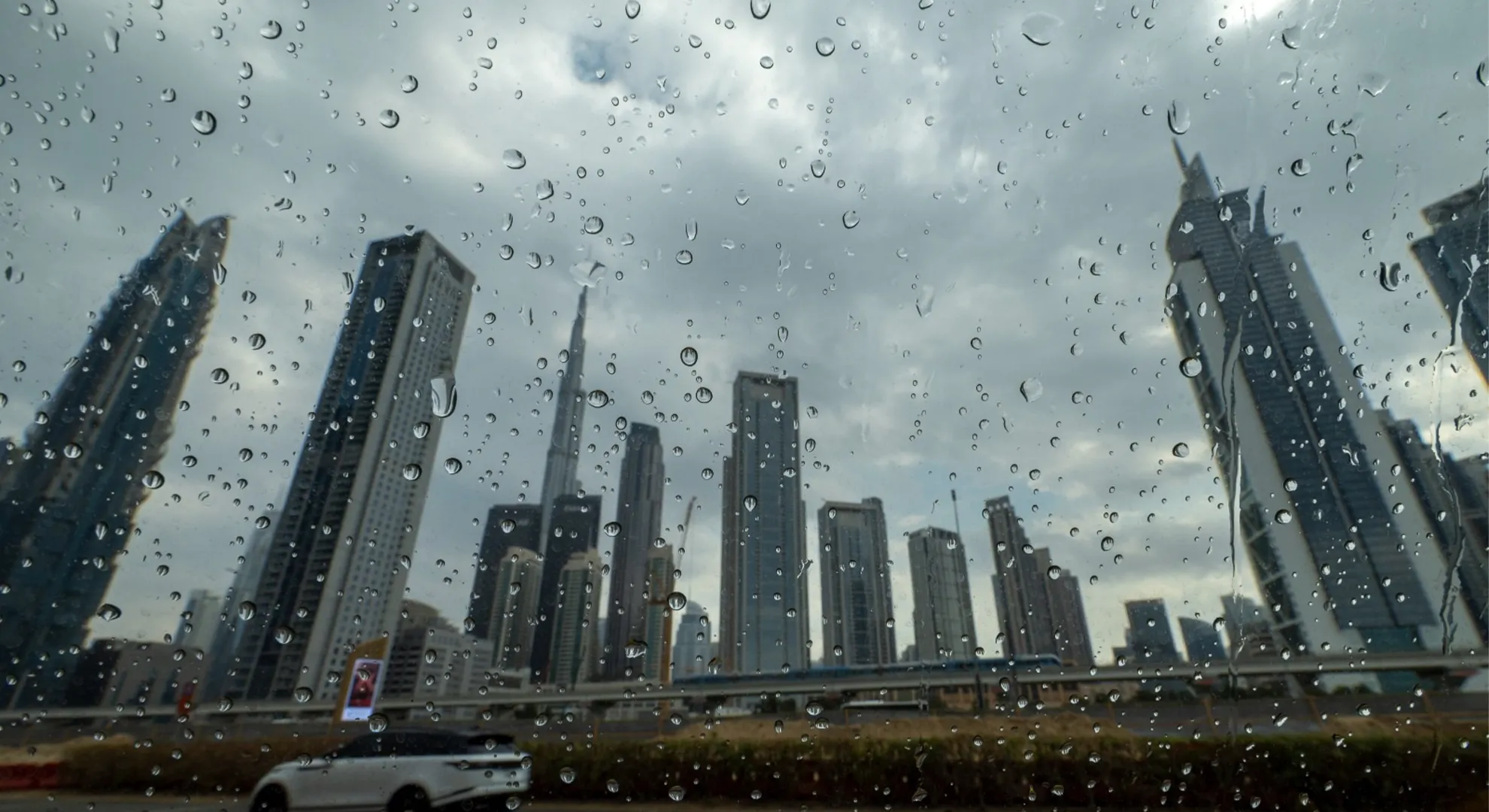
While much of the UAE continues to experience typical summer conditions marked by high temperatures, strong sunshine, and rising humidity levels, some areas along the eastern coastline are witnessing brief periods of rainfall that offer a temporary break from the heat.
Recent showers recorded around Khor Fakkan have once again highlighted the unique weather patterns that can occur along the UAE’s eastern mountain regions. Although rainfall during the summer months is relatively uncommon across most parts of the country, the eastern side often experiences short-lived rain events due to its geographical features and interaction between sea moisture and mountain terrain.
The showers may appear suddenly, bringing moments of rainfall before conditions quickly return to the hot and humid weather that dominates the season. These brief weather changes are not unusual for areas located near the Hajar mountain range, where local atmospheric conditions can create opportunities for summer precipitation.
Weather specialists say the recent rainfall does not necessarily indicate a major change in the UAE’s overall summer climate. Current observations suggest that the country remains under the influence of its normal seasonal weather pattern, with extreme heat continuing across most regions.
However, meteorologists explain that the eastern areas of the UAE have always had the potential to experience occasional summer showers. The combination of mountainous landscapes, moisture coming from nearby waters, and intense daytime heating can create the right conditions for cloud development and rainfall.
Unlike widespread winter rain systems that affect larger parts of the country, summer showers in the UAE are usually localised and depend heavily on specific atmospheric conditions coming together at the right time.
During summer, moisture from surrounding seas can move inland with prevailing winds. When this moist air reaches the higher elevations of the Hajar mountains, it is forced upward. As the air rises, temperatures decrease, allowing clouds to develop rapidly. If enough instability exists in the atmosphere, these clouds can produce short but sometimes heavy bursts of rain.
The strong heat during the day also plays an important role. Rising temperatures cause air near the surface to become warmer and move upward, creating additional energy that can support cloud formation. When combined with mountain effects and available moisture, this process can lead to sudden rainfall in certain areas.
Weather observers say this type of rainfall is part of a recurring seasonal pattern rather than an unusual event. Similar conditions have produced showers across parts of Sharjah, Fujairah, Ras Al Khaimah, and other areas close to the eastern mountain range in previous years.
Muhammed Sajjad KP, a long-time weather observer, said the recent rainfall followed a pattern he had been anticipating. Speaking about the development, he noted that the timing was slightly different compared with last year, with the first signs of this activity appearing later than expected.
He explained that the eastern region often becomes the focus of summer rain activity because of its unique landscape and climate conditions. According to him, the recent showers are consistent with seasonal behaviour that has been observed repeatedly in the past.
Sajjad said he expects additional rainfall activity in the coming days, particularly across eastern and mountainous parts of the country. He suggested that areas stretching from Al Ain toward Dibba could experience further chances of rain as atmospheric conditions continue to support local cloud formation.
The potential areas of interest include Al Ain, Hatta, Kalba, coastal areas of Fujairah, and inland mountain locations. These regions are generally more likely to experience summer showers because of their elevation and proximity to the Hajar mountain range.
He added that rainfall may not be widespread across the entire UAE but could occur in scattered locations depending on local weather conditions. Some areas may receive brief showers, while neighbouring regions may continue to experience dry and hot conditions.
Experts explain that this variation is common during summer rainfall events. Because these showers are usually driven by localised factors, weather conditions can differ significantly from one location to another over relatively short distances.
Residents in eastern parts of the UAE often welcome these summer showers as they provide temporary relief from intense heat. The rainfall can also improve visibility, reduce dust levels, and bring short periods of cooler conditions.
However, authorities continue to remind residents that summer weather can change quickly. Even when rainfall occurs, temperatures generally remain high, and humidity levels can rise again soon after the showers end.
The recent weather activity also highlights the importance of understanding the UAE’s diverse climate patterns. While many people associate summer with completely dry conditions, the eastern coastline and mountainous areas follow a different weather rhythm due to their unique geography.
The Hajar mountain range plays a major role in shaping these local conditions. Rising terrain affects wind movement, cloud formation, and temperature changes, creating an environment where rainfall can occur even during the hottest months of the year.
Climate specialists say that short summer showers in these areas are a natural part of the UAE’s weather cycle. They are usually temporary events caused by specific combinations of heat, moisture, and terrain rather than signs of a nationwide change in climate patterns.
As the summer season continues, weather experts will continue monitoring atmospheric conditions for further developments. While no major shift in the overall weather outlook has been identified, eastern regions may continue to see occasional rainfall opportunities.
Residents and visitors in areas such as Fujairah, Khor Fakkan, Kalba, Hatta, and Al Ain are advised to stay updated with official weather forecasts, especially when planning outdoor activities in mountainous areas.
The recent showers serve as a reminder that even during the peak of UAE summer, certain parts of the country can experience unexpected weather changes. The eastern coastline remains one of the few areas where the combination of mountains and moisture can create brief periods of rainfall, offering a short but welcome contrast to the widespread heat experienced elsewhere.
Evolving weather patterns in UAE
Weather observer Muhammed Sajjad KP explained that although the eastern parts of the UAE are usually the areas most likely to experience summer rainfall, these weather systems are not always limited to those locations. Depending on atmospheric conditions and the strength of the system, showers can sometimes spread beyond the eastern coastline and affect parts of the country’s interior.
He said summer rain events often begin around areas influenced by the Hajar mountain range, but under favourable conditions, cloud formations can travel further inland. In some cases, these developments can extend towards areas around Al Ain and even reach parts of Dubai’s outer regions.
According to Sajjad, locations such as the Dubai–Al Ain Road area and Al Qudra have occasionally experienced rainfall when these systems become stronger. If the cloud formations continue developing and move in the right direction, they can sometimes approach communities located on the outskirts of Dubai, including areas such as Arabian Ranches.
He recalled that previous years have seen unusual summer rainfall events where showers reached areas closer to Dubai city. Such occurrences are not common, but they demonstrate how quickly local weather patterns can change when the right combination of moisture, wind movement, and atmospheric instability comes together.
Sajjad explained that the reason behind these summer showers lies in the interaction between different weather influences affecting the UAE. The country’s summer climate is shaped by a combination of local sea breezes, regional wind patterns, and moisture flows from surrounding areas.
He pointed out that two major sea breeze systems play an important role during the summer months. One originates from the Arabian Gulf, while another develops from the Sea of Oman. When these two airflows meet in certain parts of the country, they can create conditions that encourage cloud growth.
As these moist air masses converge, the air is pushed upward, especially near mountainous terrain. The rising air cools as it gains altitude, allowing clouds to develop and, under suitable conditions, produce rainfall.
This process explains why some parts of the UAE can experience showers even while other regions continue to face intense summer heat. The rainfall is usually highly localised, meaning one area may receive rain while nearby locations remain completely dry.
Beyond these local factors, Sajjad highlighted the influence of broader seasonal weather patterns connected to the Indian Ocean. During the summer monsoon period, large-scale moisture movements across the region can contribute to weather developments that occasionally influence parts of the Arabian Peninsula.
He explained that some monsoon-related systems can begin far away from the UAE. Weather patterns may develop near areas such as Madagascar before moving across the Indian Ocean region towards East Africa, the Arabian Peninsula, and the wider Gulf region.
As these systems travel, they can carry significant amounts of moisture. Some of this moisture reaches areas such as Yemen and Salalah in Oman, where summer rainfall is a more regular seasonal feature. In certain conditions, parts of this moisture flow can extend towards Oman’s mountainous regions and eventually influence areas near Al Ain and the eastern Emirates.
This connection between larger regional weather systems and local mountain effects is one reason summer showers occur regularly in parts of the UAE. While rainfall during the hottest months may seem unusual to many residents, experts say it is actually part of the country’s recurring seasonal weather behaviour.
Sajjad noted that summer rain in these areas should not be viewed as an unexpected event. Instead, it is a pattern that appears year after year when atmospheric conditions become favourable.
He added that he personally looks forward to the first summer rainfall each year because it marks the beginning of a familiar seasonal phenomenon. For weather enthusiasts and observers, the arrival of these showers provides an opportunity to study changing atmospheric conditions and track how weather systems develop.
However, he stressed that rainfall reaching central Dubai remains an uncommon occurrence. While cloud systems can occasionally move beyond the eastern and mountainous regions, the likelihood of widespread rain across Dubai city itself remains low.
The city’s coastal location, lower elevation, and different local weather conditions mean that it does not frequently experience the same summer rainfall patterns seen near the mountains. Most summer showers tend to remain concentrated around areas where elevation and moisture interaction are stronger.
Nevertheless, Sajjad said there is always a possibility that conditions could align during the later summer months, particularly around August. If weather systems become sufficiently strong and wind patterns support movement toward urban areas, some parts of Dubai could experience brief rainfall.
He explained that these events depend on multiple factors occurring at the same time, including moisture availability, cloud development, wind direction, and atmospheric instability. Even small changes in these conditions can determine whether rainfall remains confined to mountainous areas or spreads toward inland and urban locations.
The possibility of summer showers extending beyond their usual areas highlights the complexity of the UAE’s weather patterns. Despite the country’s generally hot and dry climate, regional geography creates opportunities for varied weather experiences across different locations.
Residents in eastern areas and mountain regions are therefore more likely to notice sudden changes in weather during summer months. Short periods of cloud formation, cooler winds, and rainfall can appear quickly before conditions return to normal.
Experts continue to monitor these developments closely, especially during periods when humidity levels increase and atmospheric conditions become more favourable for cloud formation.
While no major change in the UAE’s overall summer climate is expected, occasional rainfall remains a natural part of the seasonal cycle in specific regions. The eastern coastline, mountain areas, and parts of the interior will continue to be the locations most likely to experience these brief but noticeable summer showers.
For many residents, these moments of rain provide a refreshing break from the intense heat and serve as a reminder of the UAE’s diverse weather patterns. Even during the peak of summer, the country’s unique geography allows nature to create unexpected and short-lived weather events.
Does El Niño impact rainfall?
Weather observer Muhammed Sajjad KP also highlighted the possible influence of larger climate patterns, including the El Niño phenomenon, when discussing unusual weather behaviour and rainfall possibilities in the UAE.
He explained that one of the key features associated with El Niño is an increase in global and regional temperatures. When warmer air masses develop and move across certain regions, they can contribute to higher temperatures and alter normal atmospheric behaviour.
According to Sajjad, these temperature changes do not happen in isolation. The Earth’s atmosphere functions as a connected system, meaning that changes in one region can influence weather patterns elsewhere. Increased heat can affect air movement, pressure differences, wind circulation, and the way moisture travels through the atmosphere.
He noted that when warmer conditions influence tropical regions, they can modify large-scale circulation patterns. These changes may affect where air rises, where it sinks, and how moisture-rich air moves across different areas. As a result, weather systems that depend on these atmospheric movements can also experience changes in their behaviour.
Sajjad explained that rainfall patterns are often the result of several factors working together rather than being caused by a single influence. While climate events such as El Niño can play a role in shaping broader weather trends, local conditions within the UAE remain extremely important in determining whether rainfall occurs.
The UAE’s weather is influenced by a combination of regional and local factors, including sea temperatures, wind patterns, humidity levels, mountain effects, and seasonal moisture flows. These elements interact with larger global climate signals to create the weather conditions experienced across the country.
He pointed to the major flooding event in 2024 as an example of how strong weather systems can influence regional conditions. During that period, atmospheric patterns were particularly active, and broader climate influences contributed to changes in weather behaviour across the region.
Sajjad explained that certain periods, especially from the middle of July through August, can see increased interaction between seasonal weather systems and regional climate factors. During this time, conditions linked to large-scale atmospheric changes may sometimes support the development of rainfall-producing systems.
However, he stressed that El Niño alone does not determine whether the UAE will receive rain. Even in the absence of such global climate influences, the country can still experience summer rainfall due to its own unique weather mechanisms.
One of the most important local contributors is the movement of moisture from surrounding seas. During summer, humid air can move inland and interact with heated land surfaces and mountainous terrain. When these conditions combine, clouds can develop and occasionally produce rainfall.
Sajjad explained that monsoon-related moisture flows can also contribute to summer weather activity in the region. Moisture originating from broader Indian Ocean systems can travel across different areas before reaching parts of the Arabian Peninsula and influencing conditions in places such as Oman and the UAE.
The Hajar mountain range plays a particularly important role in this process. When moist air reaches higher elevations, it is forced upward, causing temperatures to drop and encouraging cloud formation. If enough instability exists, these clouds can generate short periods of rain.
This explains why summer rainfall is often concentrated in eastern areas of the UAE, including mountainous regions and locations near the Sea of Oman. The interaction between geography, moisture, and atmospheric movement creates a favourable environment for occasional showers.
Sajjad emphasised that weather patterns are complex and cannot always be explained by one factor. Global climate events, seasonal systems, and local geographical influences all contribute to the final outcome.
He said that while El Niño can influence temperature patterns and atmospheric circulation, the UAE’s summer rainfall events are usually the result of multiple conditions aligning at the same time.
The relationship between global climate patterns and local weather has become an important area of study for meteorologists. Researchers monitor these large-scale events because they can provide valuable information about possible changes in temperature, rainfall distribution, and seasonal weather behaviour.
However, forecasting specific rainfall events remains challenging because local conditions can change quickly. Small differences in wind direction, humidity levels, or cloud development can determine whether a weather system produces rain or simply passes through without significant impact.
Sajjad said this is why summer rain in the UAE remains difficult to predict far in advance. While experts can identify favourable conditions and monitor developing systems, the exact location and intensity of showers often depend on short-term atmospheric changes.
He added that residents should understand that rainfall during the UAE summer is not unusual, particularly in eastern and mountainous areas. Although most of the country experiences hot and dry conditions, certain regions regularly receive seasonal showers due to their unique climate characteristics.
The 2024 floods demonstrated how quickly weather conditions can change when multiple atmospheric factors combine. Strong systems, increased moisture, and favourable circulation patterns created conditions that resulted in significant rainfall.
However, Sajjad clarified that not every summer season will produce similar events. The strength and impact of weather systems vary from year to year depending on broader climate conditions and local atmospheric developments.
He explained that even during years without strong El Niño influence, the UAE can still experience rainfall because of its geographical setting and seasonal weather processes.
Sea breeze interactions, mountain-driven cloud formation, and regional moisture transport all continue to play major roles in shaping summer weather across the country.
For weather observers, the arrival of summer showers remains an interesting seasonal feature. These rainfall events provide valuable insight into how global and local weather systems interact and influence conditions in the UAE.
Sajjad noted that monitoring these patterns helps improve understanding of the country’s climate behaviour and supports better forecasting of future weather developments.
While climate phenomena such as El Niño may contribute to changes in atmospheric conditions, the UAE’s weather remains controlled by a combination of influences. The interaction between global climate signals and local geography ensures that each summer season can bring different weather experiences.
Ultimately, the possibility of summer rain depends on many elements coming together at the right time. Whether influenced by larger climate patterns or local atmospheric processes, rainfall events in the UAE remain a result of a complex relationship between heat, moisture, wind, and terrain.