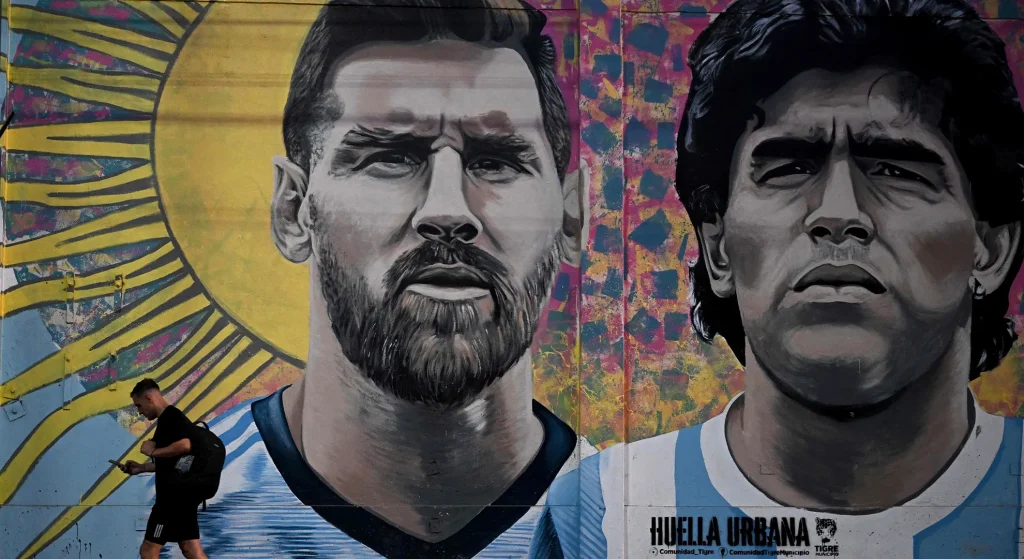
From Mexico to Qatar, Lionel Messi’s global impact on football is often seen as surpassing that of Pele and Maradona, making him widely regarded as the sport’s leading modern icon.
From Mexico to Qatar: The Case for Messi Being the Biggest Football Icon Over Pele and Maradona.
As Lionel Messi prepared for what would become his sixth World Cup appearance, this personal narrative reflects not just the scale of the tournament in Qatar, but also the extraordinary pull the Argentine superstar has over football fans across the world—even those who do not traditionally support his team. The scenes unfolding in Doha during the final hours before the 2022 World Cup final revealed something deeper than sporting competition; they highlighted the emotional gravity Messi carries in global football culture.
Outside the Doha Exhibition and Convention Center, the air felt unusually heavy for such a late hour. It was close to 2:45 in the morning on December 18, 2022, and yet the surroundings were far from quiet. The venue, which had become the central hub for last-minute ticket seekers, was still surrounded by groups of fans hoping for a miracle. Among them was a middle-aged Argentine supporter, visibly exhausted but still determined, clinging to the faint possibility of securing tickets for the most important match of his lifetime.
The final was just hours away—barely seventeen hours remained before kickoff at Lusail Stadium—and desperation had begun to replace optimism. The man’s face reflected the pressure of the moment. He was dressed in Argentina’s iconic sky-blue and white jersey, a symbol of loyalty and hope, but his expression betrayed the uncertainty of his situation. Standing nearby, his two young sons sat quietly on a bench, watching everything unfold with a mixture of confusion and anticipation. They were too young to fully grasp the magnitude of the situation, yet old enough to sense that their father was struggling against something beyond his control.
In the midst of this tense environment, another figure emerged—a young man who appeared to be in possession of several tickets. He approached with confidence, almost casually, as though he controlled access to something priceless. Without hesitation, he quoted an astonishing price: five thousand dollars per ticket. The figure was not just a seller but a symbol of the extreme demand that had taken over Doha in the final hours before the World Cup decider.
As negotiations hovered in uncertainty, the Argentine father hesitated. He stepped aside for a moment, glancing at his sons, perhaps weighing the cost against the dream of witnessing Lionel Messi play in a World Cup final. In that brief pause, emotion overtook urgency. He reached for his phone, possibly trying one last attempt to find another option, another connection, another chance.
It was during this moment of hesitation that the young ticket holder shifted his attention to the children. Instead of continuing the negotiation, he pulled out a football and began performing keepie-uppies right in front of them. The atmosphere changed instantly. What had been a tense and transactional exchange suddenly turned into an impromptu display of skill and playful bravado.
Smiling, he teased the boys, casually remarking that “Messi is not that good, bro—Cristiano Ronaldo is the real man.” His tone was light-hearted, but the effect was immediate. As he began executing quick step-overs and juggling tricks, the two children watched in amazement. For a brief moment, the pressure of ticket prices and final-day chaos disappeared, replaced by pure fascination with the ball at his feet.
The scene was surreal—football as entertainment, negotiation, rivalry, and joy all colliding in a single moment outside a stadium ticketing hub. Yet beneath it all, the emotional weight of the World Cup final remained ever-present.
Unable to stay longer and emotionally drained by what I had witnessed—the father’s helplessness, the children’s innocent hope, and the overwhelming desperation in the air—I slowly walked away from the area. My steps drifted toward the nearest metro station, where the last trains of the night were still running. The thought of the final itself, and the frenzy surrounding it, lingered heavily as I made my way through the quiet corridors of the station.
Just as I prepared to leave the scene behind, a voice called out from behind me. “Hey bro, listen.” I turned around to see two familiar faces—Marco and Allan, brothers from Peru whom I had met earlier at Al Bayt Stadium a week before. Their story was unusual but increasingly common during this World Cup. Peru had not qualified for the tournament, yet they had still made the long journey to Qatar simply to be part of the global football celebration. Their allegiance, however, lay with Brazil, their second-favorite team from South America.
They approached with an urgent question, asking if I could help them find tickets for the final. Their hope was still intact despite the obvious difficulty of the task at hand.
I asked them directly whether they still intended to attend, pointing out that Brazil had already been eliminated in the quarterfinals. Their response was immediate and sincere.
“Yes, we still want to watch the final,” Marco said. “We want Argentina to win. We’re here for Messi.”
Their answer reflected something that had become increasingly visible throughout the tournament—the ability of Messi to draw admiration even from neutral or rival supporters. For many fans in Doha, the final was no longer just about national loyalty; it had become about witnessing one of football’s greatest players on the sport’s biggest stage.
There was little I could offer them except encouragement. I wished them luck, knowing how slim the chances were of finding any remaining tickets at that stage. The city was already overflowing with demand, and the final had long been declared sold out. Still, the search continued.
As I walked away, I began to wonder how many more people were still roaming the streets of Doha in search of last-minute access to the match. The closer it got to kickoff, the more the city seemed transformed into a living marketplace of hope, desperation, and football obsession.
Eventually, I returned to my accommodation for a brief rest. Sleep was limited, as the anticipation of the final made it difficult to disconnect from the atmosphere outside. After a couple of hours, I made my way back once again to the Doha Exhibition and Convention Center, which functioned as FIFA’s official ticketing hub during the tournament.
By the time I arrived at around 11:00 in the morning—just nine hours before kickoff—the scene had escalated even further. The area was now packed with supporters from across the world. Flags and jerseys from Argentina, Mexico, China, Iran, India, and numerous other countries filled the space. The diversity of fans reflected the global reach of the event, but also the shared urgency that bound them together.
Everyone was searching for the same thing: a final opportunity, a last-minute chance, a ticket that might allow them to witness history in the making. Conversations overlapped in different languages, negotiations unfolded in corners, and hopeful eyes scanned every movement of people entering and leaving the area.
Despite the chaos, one theme stood out clearly throughout the entire experience—the gravitational pull of Lionel Messi. Whether through admiration, curiosity, or pure sporting reverence, he had become the central figure drawing people into the orbit of the World Cup final. Fans who had no direct connection to Argentina were still willing to go to extraordinary lengths just to see him play on football’s biggest stage.
In those final hours before kickoff in Doha, the World Cup was no longer just a match. It had become a global gathering shaped by emotion, anticipation, and the shared desire to witness greatness—embodied, for so many, in Lionel Messi himself.
When I approached a supporter from Mexico, Roberto Aguilar, in an attempt to speak with him, he immediately declined to be photographed. His reaction was polite but firm, and he seemed cautious about being identified publicly.
With a slight smile, he explained the reason behind his hesitation. He had told his employer that he was travelling to attend a cousin’s wedding. If his picture were to appear online and his boss discovered that he was actually in Qatar for the World Cup, particularly to watch Lionel Messi, it could lead to uncomfortable consequences at work. His concern reflected a reality many fans faced during the tournament—balancing passion for football with everyday responsibilities back home.
Not far from where he stood, the same atmosphere of urgency continued to unfold. A young Chinese supporter named Li was still engaged in a tense exchange with the same individual who had earlier demanded a steep price of $5,000 per ticket from an Argentine fan during the early hours of the morning. Li appeared determined but increasingly frustrated as negotiations dragged on without progress. The scarcity of tickets had turned the surroundings into an informal marketplace where hope and disappointment coexisted in equal measure.
As that conversation continued, I moved through the crowd and soon came across a group of French supporters. My immediate thought was that this was finally a group clearly aligned with one of the finalists, given that France were preparing to face Argentina in the World Cup final.
Among them were Hervé and his father, Yohann, both of whom had travelled with the expectation of witnessing their national team compete for football’s greatest prize. Their presence represented the pride and anticipation of French supporters who had followed their team’s journey all the way to the final stage.
However, what Hervé shared next added another unexpected layer to the story of that tournament. He suggested that even among fans in France, there was a sense of admiration for Lionel Messi that transcended national rivalry. According to him, many French supporters would not have been devastated had Messi and Argentina lifted the trophy that night.
“Messi is very popular in France,” he said calmly. “I think a lot of people there would actually be happy for him if he wins today.”
His comment underlined something that had become increasingly evident throughout the World Cup in Qatar: Messi’s influence extended far beyond traditional football loyalties. Even in a final where national pride was at stake, admiration for the Argentine captain appeared to soften the edges of rivalry for many spectators.
There was no doubt about the magnitude of the occasion. A World Cup final between Argentina and France is, in itself, one of the most intense and high-profile matchups in modern football. Both nations carry strong football identities, rich histories, and deep emotional connections to the sport. Under normal circumstances, such a fixture would be defined by rivalry, tension, and unwavering national support.
Yet what I witnessed in Doha suggested something more complex. When supporters from opposing countries openly expressed affection for a rival player, and when individuals from around the world travelled without tickets simply to be near him, it became clear that something unusual was unfolding.
At that moment, it felt as though Lionel Messi had moved beyond the traditional boundaries of sport. He was no longer simply the captain of Argentina or a participant in a World Cup final; he had become a focal point for global admiration that blurred the lines between competition and appreciation.
The earlier interaction with Roberto Aguilar further reinforced this impression. Despite his initial reluctance to appear on camera, he eventually opened up about his perspective on Messi and how the Argentine star was viewed in Mexico.
He contrasted Messi’s global image with that of Diego Maradona, noting that while Maradona had an almost myth-like following in certain regions—including stories of dedicated admirers in Mexico who even built tributes in his honour—Messi’s appeal felt different in nature.
According to Aguilar, Maradona’s legacy was often associated with intensity, controversy, and a kind of untamed brilliance that inspired extreme devotion. Messi, on the other hand, represented something more universally relatable: consistency, humility, and excellence without controversy.
He suggested that admiration for Messi in Mexico was widespread and deeply personal. Many fans, he said, followed him not just as a footballer but as a figure who embodied respect and dedication to the game. This sentiment, he explained, was part of the reason he had travelled all the way to Qatar despite not having secured a match ticket.
“I didn’t manage to get a ticket for the final,” he admitted. “But I still came because I wanted to be here, to be part of it, to support Messi even from outside the stadium.”
His presence, like that of many others, illustrated how the World Cup had evolved into something larger than the matches themselves. The tournament had become a gathering of global football culture, where emotional investment often outweighed practical access.
To this day, I cannot say with certainty whether Roberto Aguilar ever succeeded in entering the Lusail Stadium to witness the final in person. What is certain, however, is that Argentina’s dramatic victory over France—decided on penalties after one of the most intense finals in World Cup history—left an unforgettable mark on football history. It ended Argentina’s 36-year wait for a third World Cup title and delivered Lionel Messi the one trophy that had eluded him throughout his career.
From my position in the media tribune at Lusail Stadium, I watched as Messi held the trophy close to his chest, his expression a mixture of relief, disbelief, and fulfilment. The way he embraced it—almost tenderly—gave the moment an emotional weight that went far beyond sport. It felt less like a celebration and more like a long-awaited reconciliation between a player and his destiny.
As I left the stadium after the final whistle, the surrounding scenes were overwhelming. Thousands of Argentine fans filled the exits, singing, crying, and waving flags in celebration. Their emotions were unrestrained, as though years of collective hope had finally found release in a single moment.
Amid the celebrations, I noticed a group of spectators who were not from Argentina. Curious, I approached them and asked whether they were Argentine supporters.
One of them shook his head.
“My name is Alejandro,” he said. “I’m from Mexico.”
He explained that he had travelled with his parents and a Brazilian friend named Danilo, not to support Argentina as a team, but to witness Lionel Messi in a World Cup final.
Even more surprisingly, he revealed that Danilo, despite being Brazilian, was also supporting Argentina that night.
For someone who had followed World Cup football for decades, this was striking. The rivalry between Argentina and Brazil is one of the most intense in global sport, and Mexico itself has historically shared its own competitive tensions with Argentina. Yet here were fans from across these rival nations united in their support for a single player.
Alejandro acknowledged the irony himself. “Argentina and Brazil are huge rivals,” he said. “Mexico and Argentina also have a strong football rivalry. But Messi is different. That’s why we all wanted him to win.”
That statement captured something fundamental about the tournament. While football is built on national pride and rivalry, there are moments when individual brilliance transcends those divisions.
In the years that followed, Lionel Messi continued his career, eventually arriving in North America for what would become his sixth World Cup appearance. At 38, he remains the focal point of Argentina’s hopes, even as expectations grow more cautious with time. The challenge ahead—defending a World Cup title—stands as one of the most difficult tasks in modern football, something no team has achieved since Brazil in 1962.
Argentina’s campaign begins with renewed anticipation, as fans once again look to Messi for inspiration. Even as physical limitations such as fatigue and injury management become more relevant at this stage of his career, his influence on the pitch remains undeniable. Moments of brilliance still appear when least expected, continuing to define matches and shift momentum.
Yet perhaps his most enduring quality is no longer purely technical or athletic. It is the emotional connection he creates with audiences across the world. Few players in football history have been able to generate admiration that crosses national, cultural, and even rival boundaries in the way Messi consistently does.
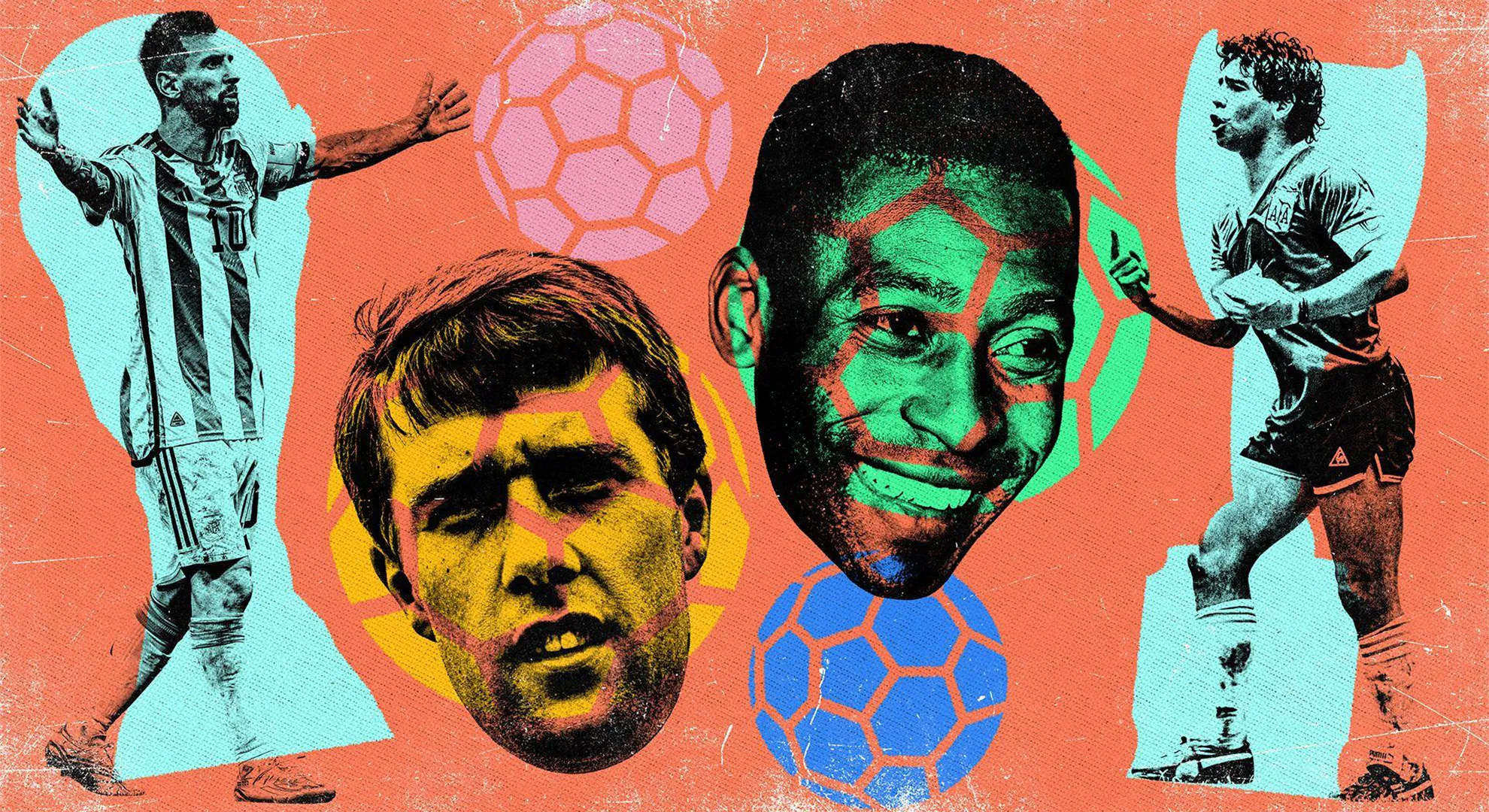
While Pelé lifted more World Cups and Maradona delivered one of the most iconic individual performances ever seen on the tournament stage, neither quite achieved the same universal response from opposing supporters in the stands. Messi’s legacy, shaped over two decades, is defined not only by goals and trophies but also by the rare phenomenon of rival fans cheering for him on football’s biggest nights.
And in that sense, his impact may extend beyond statistics or records. It lies in something more intangible—the ability to unite emotions in a sport built on division, and to earn admiration even from those whose loyalty lies elsewhere.
That, perhaps, is what makes Lionel Messi’s story unlike any other in football history.