Acting on intelligence inputs, Dubai Customs successfully disrupted an international drug smuggling operation, seizing narcotics before they could be transported through illicit channels to an African destination.
Dubai Customs intercepts drug trafficking bid, preventing narcotics shipment to Africa.
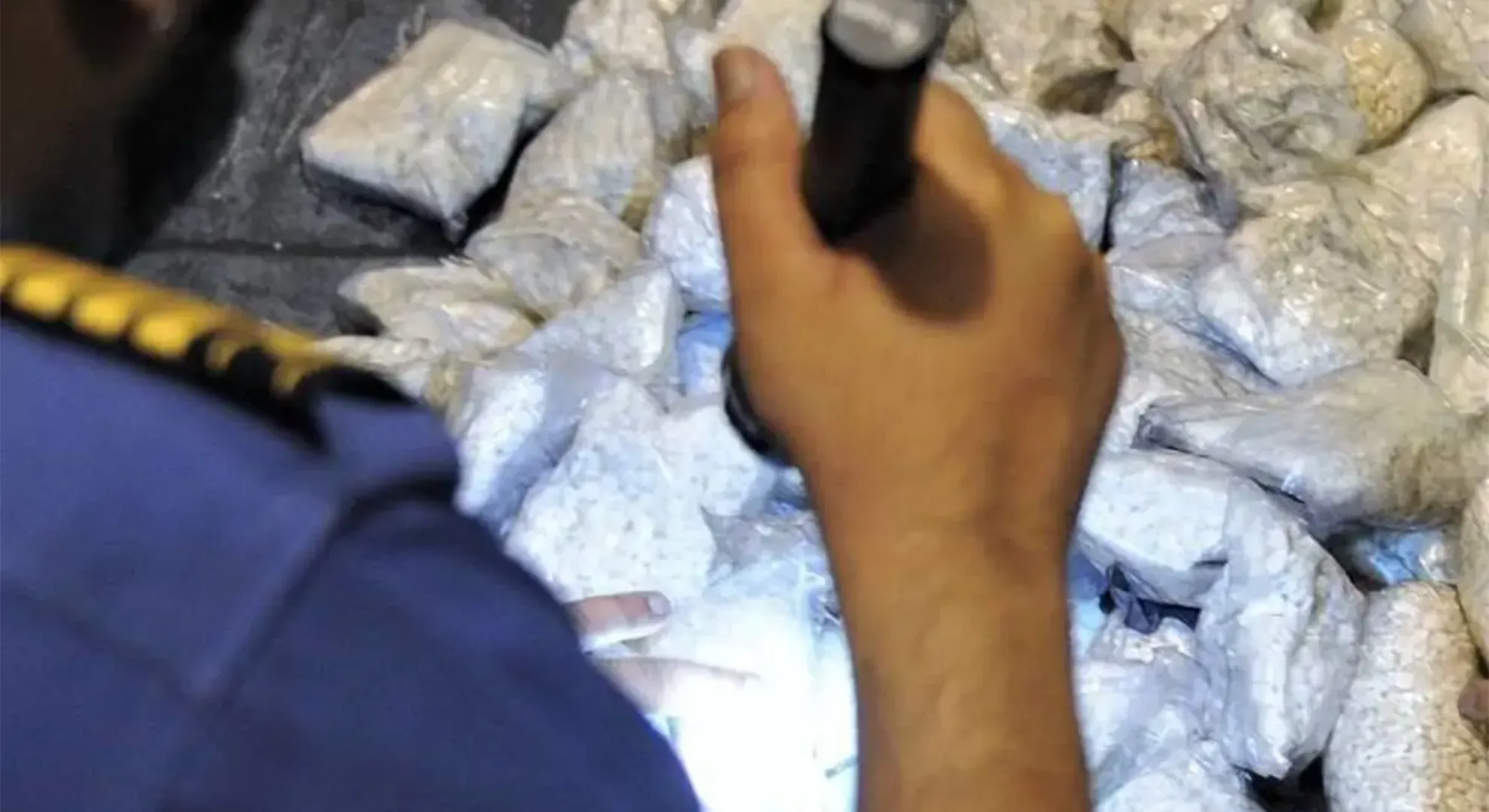
A major international narcotics trafficking attempt was successfully disrupted through coordinated efforts between Dubai Customs and law enforcement authorities in an African nation. The operation resulted in the interception of a large shipment of Tapentadol tablets before it could reach its intended destination, preventing a significant quantity of illicit drugs from entering local markets.
According to officials, the seized consignment weighed approximately 1.332 tonnes and was being transported by air cargo. The shipment had originated from an Asian country and was destined for an African nation, where authorities believe it would have been distributed through illegal networks. Acting on intelligence gathered and shared by Dubai Customs, security agencies in the destination country were able to identify, monitor, and ultimately seize the cargo before it could be released.
The successful operation highlights the growing importance of international cooperation in tackling transnational crime. Drug trafficking organizations increasingly operate across multiple jurisdictions, using complex logistics routes and international transportation systems to move illegal substances. In this case, timely intelligence sharing played a decisive role in enabling authorities to track the shipment and take action before the narcotics entered circulation.
Officials familiar with the case explained that the information provided by Dubai Customs allowed law enforcement agencies to closely monitor the movement of the cargo from the moment it arrived in the destination country. Surveillance and follow-up measures were conducted as part of a coordinated strategy aimed at identifying the shipment and preventing its delivery to criminal networks. The intelligence ultimately led investigators to the consignment, resulting in its successful seizure and the launch of legal proceedings against individuals suspected of involvement in the trafficking operation.
The confiscated cargo consisted of Tapentadol tablets, a powerful opioid pain medication that can be subject to misuse when distributed outside regulated medical channels. Authorities warned that the illegal distribution of such substances poses serious risks to public health and safety, including addiction, substance abuse, and related criminal activity. By preventing the shipment from reaching consumers, officials believe the operation helped avert significant social and economic harm.
Commenting on the success of the mission, Abdulla Busenad, Director General of Dubai Customs, emphasized the importance of international collaboration in combating organized crime. He noted that the protection of communities cannot be achieved by individual countries acting alone and requires cooperation among customs authorities, security agencies, and law enforcement organizations worldwide. According to Busenad, criminal networks often operate across borders, making intelligence sharing and joint action essential tools in disrupting their activities.
He further stated that efforts to stop drug trafficking are not only about enforcing laws but also about safeguarding societies from the harmful consequences of narcotics. Preventing illegal drugs from reaching communities helps protect young people, families, and vulnerable individuals from the dangers associated with addiction and criminal exploitation. Operations such as this demonstrate how proactive intelligence work can prevent harm before it occurs.
Authorities in the African country involved in the operation expressed appreciation for the support provided by Dubai Customs. Security and customs officials acknowledged that the intelligence received was highly accurate and instrumental in guiding their investigation. They explained that the information formed the basis of a comprehensive monitoring operation that enabled them to track the shipment’s movement and coordinate enforcement actions effectively.
Officials added that without the early warning and detailed intelligence, identifying the suspicious cargo would have been considerably more challenging. The information provided allowed authorities to allocate resources efficiently and maintain close observation of the shipment until the appropriate moment for intervention. This strategic approach ultimately ensured the success of the operation and prevented the traffickers from completing their plans.
The case serves as another example of how customs agencies have evolved beyond their traditional role of facilitating trade and collecting duties. Today, customs organizations are increasingly involved in national and international security efforts, using advanced risk assessment systems, intelligence analysis, and cross-border partnerships to identify threats before they materialize. Through these capabilities, authorities can detect suspicious shipments and disrupt criminal activities that exploit global supply chains.
Experts note that international narcotics trafficking remains one of the most significant challenges facing law enforcement agencies worldwide. Criminal groups continuously adapt their methods, seeking new routes and concealment techniques to evade detection. As a result, cooperation among customs administrations and security agencies has become a critical component of successful anti-trafficking strategies.
The interception of the 1.332-tonne Tapentadol shipment underscores the value of intelligence-led enforcement. Rather than relying solely on random inspections, authorities increasingly use data analysis, information sharing, and targeted investigations to identify high-risk shipments. This approach improves efficiency while increasing the likelihood of disrupting sophisticated criminal operations.
With legal proceedings now underway against those linked to the shipment, authorities continue their investigations to determine the full scope of the trafficking network involved. The seizure not only removed a substantial quantity of narcotics from circulation but also dealt a significant blow to the criminal organizations responsible for orchestrating the operation.
The successful collaboration between Dubai Customs and the African country’s authorities demonstrates how international partnerships can produce tangible results in the fight against drug trafficking. By combining intelligence, expertise, and coordinated action, law enforcement agencies were able to stop a major shipment before it reached consumers, reinforcing their commitment to protecting communities and maintaining public safety across borders.
How does Dubai Customs gather intel?
Modern customs operations rely on a combination of intelligence gathering, advanced technology, and highly trained personnel to combat smuggling and other forms of cross-border crime. Within Dubai Customs, multiple departments work together to identify potential threats, monitor suspicious activities, and prevent illegal goods from moving through international trade channels.
At the heart of these efforts is the Customs Intelligence Department, which works closely with specialised task forces dedicated to detecting and disrupting criminal operations. These units continuously gather information from a wide range of sources, including trade data, shipping records, customs declarations, and international intelligence exchanges. Analysts examine this information in detail, looking for irregularities that may indicate unlawful activity.
Rather than focusing on a single factor, intelligence teams evaluate numerous indicators simultaneously. They compare shipment details, transportation routes, cargo descriptions, sender and receiver information, and historical trade patterns. By cross-referencing these elements, investigators can identify anomalies that might otherwise go unnoticed. A shipment following an unusual route, for example, or cargo documentation that contains inconsistencies may trigger additional scrutiny.
The objective of this intelligence-driven approach is to detect risks before they develop into significant security threats. Criminal organizations involved in smuggling often attempt to exploit gaps in international trade systems by concealing prohibited items among legitimate goods. As a result, customs authorities increasingly depend on data analysis and predictive intelligence to stay ahead of evolving criminal tactics.
In parallel with intelligence operations, Dubai Customs has invested heavily in advanced screening and inspection technologies. These tools play a critical role in managing the enormous volume of cargo that passes through the emirate’s logistics hubs every day. Air cargo facilities, in particular, process large numbers of inbound, outbound, and transit shipments, making efficient screening systems essential for maintaining both security and trade flow.
Within the Air Cargo Centres Management, cutting-edge radiographic scanning equipment is used to examine cargo without the need for extensive physical inspections. These systems generate detailed images of shipments, allowing inspectors to identify suspicious contents quickly and accurately. The technology helps reveal hidden compartments, unusual packaging methods, and inconsistencies between declared and actual cargo contents.
Artificial intelligence has become an increasingly important component of this process. AI-powered image analysis systems assist officers by automatically reviewing scanned images and highlighting areas that may require closer examination. By analyzing patterns and identifying irregular shapes, densities, or configurations, these systems can help detect concealed contraband more efficiently than traditional methods alone.
The integration of AI also contributes to faster cargo processing. Given the high volume of shipments moving through international logistics networks, customs authorities must strike a careful balance between security and operational efficiency. Automated analysis enables officers to focus their attention on higher-risk consignments while allowing legitimate trade to move more smoothly through inspection procedures.
Specialised detection technologies further enhance these capabilities. Various systems are employed to identify narcotics, psychotropic substances, and other prohibited materials that may be hidden within cargo. These technologies support frontline officers by providing additional layers of verification during the inspection process. As smuggling methods continue to evolve, the use of sophisticated detection equipment has become increasingly important in identifying concealed threats.
Despite the growing role of technology, human expertise remains a central element of customs enforcement. The Inspection Division combines advanced tools with the experience, judgment, and investigative skills of trained customs officers. While automated systems can identify potential concerns, final decisions often depend on the knowledge and assessment of inspectors who understand the complexities of international trade and smuggling techniques.
To support this role, inspectors are equipped with modern inspection devices designed to improve accuracy and efficiency. These tools enable officers to conduct thorough examinations while minimizing disruption to legitimate commerce. Portable detection equipment, digital inspection systems, and enhanced scanning technologies all contribute to more effective border security operations.
Continuous professional development is another key component of the customs strategy. Smuggling networks frequently adapt their methods in response to enforcement efforts, creating a constant need for updated training and awareness. Officers regularly participate in specialized programs aimed at strengthening their understanding of emerging threats and new concealment techniques.
According to Mohammed Al Ghaffari, Executive Director of the Customs Inspection Division, inspectors are trained to remain informed about the latest smuggling practices as well as newly emerging narcotic and psychotropic substances. This ongoing education helps ensure that personnel are prepared to recognize evolving criminal trends and respond effectively to changing risks.
Training programs cover a broad range of topics, including cargo profiling, risk assessment, behavioral analysis, document verification, and the identification of prohibited substances. Officers may also participate in practical exercises designed to simulate real-world smuggling scenarios, allowing them to refine their skills in controlled environments.
International cooperation plays an important role in these efforts. Customs administrations around the world regularly exchange information regarding new trafficking methods, emerging drug trends, and criminal networks operating across borders. By maintaining close communication with global partners, customs authorities can adapt more quickly to new challenges and strengthen their ability to intercept illicit shipments.
Another important component of Dubai Customs’ security framework is the use of advanced data analytics platforms. Among these systems is the Smart Risk Engine, a technology-driven solution designed to identify potential threats through real-time analysis of available information.
The Smart Risk Engine processes large volumes of data from multiple sources, examining patterns and relationships that may indicate elevated risk levels. Rather than simply reacting to incidents after they occur, the system is designed to anticipate potential problems before they develop into actual security concerns.
Using predictive analysis techniques, the platform evaluates various risk factors associated with shipments, transportation routes, trading entities, and cargo characteristics. When unusual patterns are detected, the system can generate alerts that prompt further investigation by customs officers and intelligence analysts.
This proactive approach represents a significant shift from traditional inspection models that relied heavily on random checks or manual reviews. By leveraging data-driven insights, customs authorities can allocate resources more effectively and focus attention on areas where the likelihood of criminal activity is greatest.
Real-time analysis also provides operational advantages in fast-moving logistics environments. Because cargo shipments often move quickly through airports and transportation hubs, timely identification of risks is essential. Automated systems enable authorities to respond rapidly to emerging concerns, reducing the likelihood that suspicious shipments will evade detection.
The combination of intelligence gathering, technological innovation, and professional expertise has transformed the way modern customs agencies operate. Rather than functioning solely as border control organizations, customs authorities now play a broader role in national security, trade protection, and crime prevention.
As international commerce continues to expand, the challenges facing customs agencies are expected to grow in both scale and complexity. Criminal networks are becoming increasingly sophisticated, utilizing advanced communication methods, global logistics systems, and complex supply chains to facilitate illicit activities. In response, customs organizations must continue evolving their capabilities to remain effective.
Dubai Customs’ approach reflects this evolution by integrating human intelligence, advanced screening technologies, artificial intelligence, and predictive analytics into a unified security framework. Each component supports the others, creating multiple layers of protection against smuggling and other forms of transnational crime.
Through continuous monitoring, rigorous inspection procedures, and data-driven risk assessment, authorities are able to detect suspicious activity more effectively while maintaining the efficient movement of legitimate trade. This balance between security and facilitation remains a critical objective for customs administrations operating in major international logistics centers.
Ultimately, the success of modern customs enforcement depends on the ability to anticipate threats, adapt to changing criminal tactics, and leverage both technology and human expertise. By investing in intelligence capabilities, advanced equipment, specialized training, and innovative risk-management systems, Dubai Customs continues to strengthen its ability to protect supply chains, support international trade, and combat illicit trafficking activities across global borders.