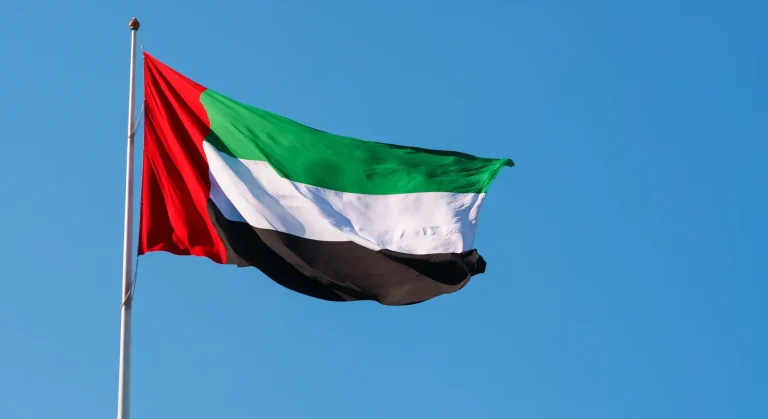
Years after overcoming a severe head injury, a Dubai-based banker successfully reached the summit of Mount Everest, proudly carrying the UAE flag to the world’s highest peak.
Dubai Banker Reaches Mount Everest Summit Years After Recovering From Serious Head Injury.
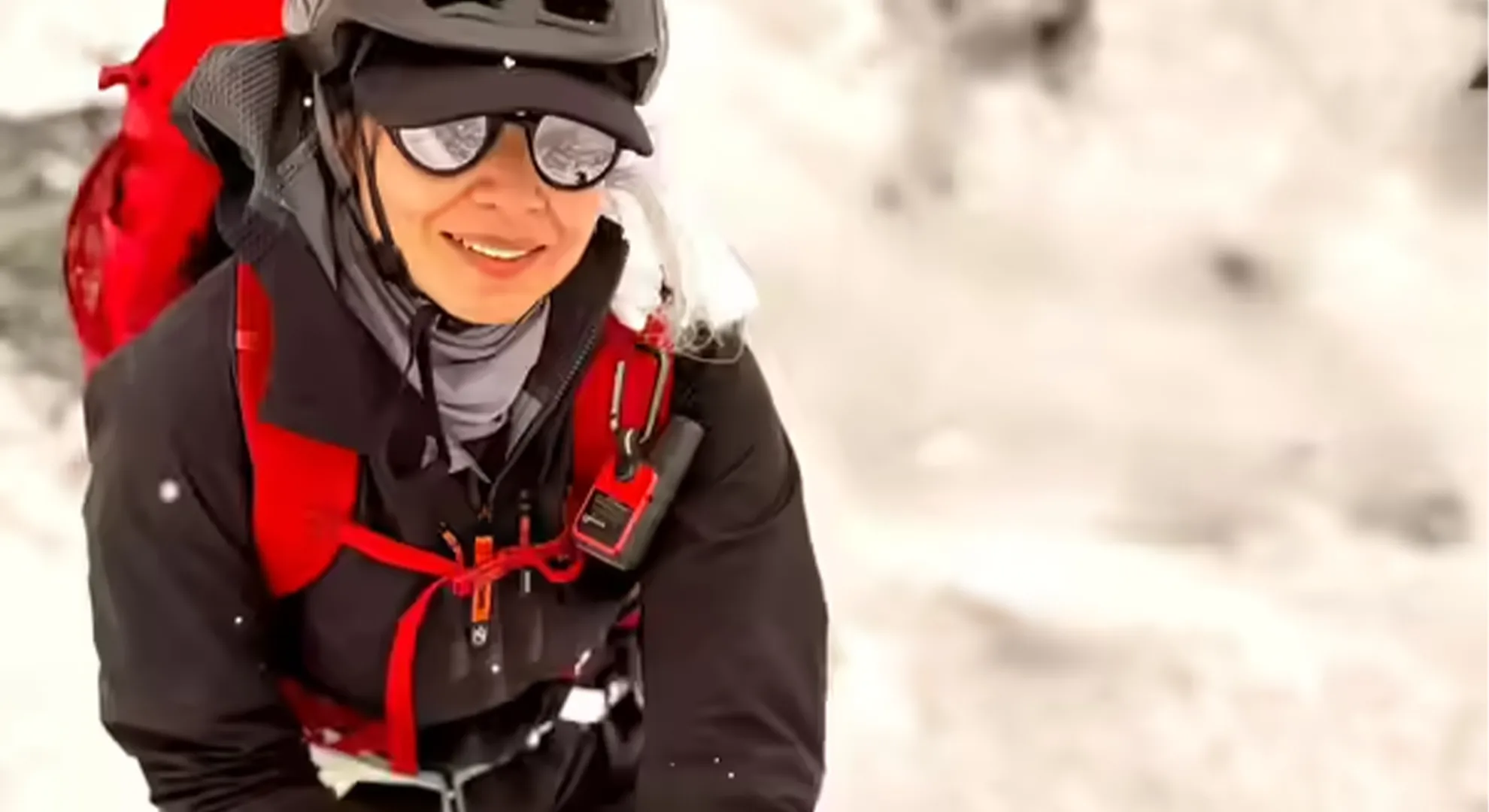
Many expatriates arrive in Dubai with ambitions of advancing their professional careers, attracted by the city’s dynamic economy and opportunities for growth. Shradha Gupta was no different. After relocating to the UAE in 2017, she built a successful career in the financial services industry, eventually securing a senior leadership position and establishing herself as a respected professional in her field.
While her career continued to flourish, another dream quietly remained in the background—one that had accompanied her since childhood. Years later, that dream would lead her to the summit of the world’s tallest mountain.
On May 27, Gupta achieved a remarkable milestone when she successfully climbed Mount Everest and raised the UAE flag at the peak. The accomplishment represented far more than a mountaineering achievement. It was the culmination of years of preparation, determination, and personal transformation that began after a serious accident altered the course of her life.
The turning point came during the Covid-19 pandemic in 2020 when Gupta suffered a significant head injury. The accident forced her to step away from the fast-paced rhythm of professional life and focus on recovery. What initially seemed like a devastating setback soon became a period of deep reflection.
Recovering from the injury was neither quick nor easy. The healing process stretched over nearly a year and a half, requiring patience, resilience, and a complete reassessment of priorities. During those months, Gupta spent considerable time reflecting on her life, her goals, and the passions she had gradually set aside while building her career.
Like many professionals balancing demanding work schedules and personal responsibilities, she had slowly drifted away from some of the activities that once brought her joy. The extended recovery period gave her an opportunity to reconnect with memories from her childhood and rediscover interests that had been overshadowed by the pressures of adult life.
Among those memories was a longstanding fascination with mountains. From an early age, she had felt drawn to nature, adventure, and high-altitude landscapes. The sight of towering peaks had always inspired her imagination, and she often dreamed of exploring them. Yet as the years passed and career ambitions took center stage, those dreams remained largely dormant.
The accident changed that perspective. Instead of viewing recovery solely as a medical challenge, Gupta began to see it as an opportunity to reevaluate what truly mattered to her. The experience reminded her that life can change unexpectedly and that waiting indefinitely to pursue meaningful goals carries its own risks.
As her health gradually improved, she became increasingly determined to reconnect with the adventurous spirit she had known as a child. She decided that once she had fully recovered, she would actively pursue her passion for the outdoors and challenge herself in ways she had never previously imagined.
By 2022, she was ready to begin that journey.
Living in the UAE provided an unexpected advantage. While many people associate the country primarily with its urban skyline and desert landscapes, Gupta discovered a thriving outdoor community and a network of hiking trails that offered ideal opportunities for training and exploration.
Her introduction to hiking began with a visit to Wadi Shawka, a popular destination known for its rugged terrain and scenic routes. What started as a simple outdoor activity quickly developed into something much more significant. The experience reignited her love for nature and gave her a sense of accomplishment that she had been missing.
Encouraged by the experience, she continued exploring additional trails across the UAE. Weekend hikes gradually became a regular part of her routine. Each journey helped build both physical endurance and mental confidence, allowing her to test her limits while gaining a deeper appreciation for the country’s mountainous landscapes.
Over time, the hikes became more demanding. Distances increased, elevation gains became steeper, and challenges grew more complex. Yet with every climb, Gupta discovered new reserves of strength and determination. The mountains that once seemed distant and intimidating were becoming increasingly familiar.
She credits the UAE’s outdoor environment with playing a crucial role in her development as a mountaineer. The local hiking community, accessible trails, and opportunities for regular training provided a strong foundation for the larger goals she would eventually pursue.
As her confidence grew, so did her ambitions.
The next major milestone in her journey was Mount Kilimanjaro in Tanzania. Standing at nearly 6,000 metres above sea level, Kilimanjaro is one of the world’s most famous trekking peaks and a dream destination for adventurers from around the globe.
For Gupta, the mountain held special significance. Climbing Kilimanjaro had been a personal aspiration for many years, dating back to childhood when she first learned about the iconic peak. Reaching its summit represented an opportunity to turn a long-held dream into reality.
She joined a guided expedition and began the ascent with a group of fellow climbers. The journey presented numerous physical and mental challenges, including long trekking days, changing weather conditions, and the effects of increasing altitude. However, her preparation and determination carried her through each stage of the climb.
When she finally reached the summit, the achievement reinforced her belief that she was capable of far more than she had previously imagined. The experience also introduced her to the unique rewards of high-altitude mountaineering and sparked a desire to continue pushing her boundaries.
The successful Kilimanjaro expedition became a turning point. Rather than viewing it as the culmination of her mountaineering ambitions, Gupta saw it as the beginning of a much larger journey.
That journey took another significant step forward in 2023 when she travelled to Nepal to complete the Everest Base Camp trek. The route, one of the most famous trekking experiences in the world, attracts thousands of adventurers each year who seek to experience the breathtaking landscapes of the Himalayas.
For Gupta, the trek offered an opportunity to immerse herself in the environment surrounding the world’s highest mountain. As she made her way through remote villages, suspension bridges, and dramatic mountain scenery, her connection to the region deepened.
The experience reached a defining moment at Kalapatthar, a renowned viewpoint that offers some of the most spectacular views of Mount Everest. Standing at high altitude and looking directly toward the iconic peak, she felt an overwhelming sense of inspiration.
For years, Everest had existed in her mind as a distant symbol of adventure and human achievement. Seeing it in person transformed that abstract dream into something tangible and real.
At that moment, she made a decision that would shape the next chapter of her life.
Rather than simply admiring the mountain from afar, she resolved to attempt climbing it herself. The goal was undeniably ambitious and would require years of preparation, advanced training, financial investment, and unwavering commitment. Yet standing before Everest, Gupta felt certain that the challenge was worth pursuing.
The decision marked the beginning of an extraordinary journey—one that would ultimately lead her from a hospital recovery room to the summit of the world’s highest peak, carrying not only her personal dreams but also the UAE flag to the top of the world.
The idea of climbing Mount Everest did not emerge overnight for Shradha Gupta. It was born during a moment of reflection high in the Himalayas, when she found herself gazing at the world’s tallest mountain during a trek in Nepal. Standing at a vantage point with Everest dominating the horizon, she felt a powerful sense of clarity.
At that moment, what had once seemed like an impossible dream began to feel achievable.
Gupta recalls that the decision was not driven by impulse or emotion alone. She understood the enormous challenge that lay ahead. Reaching the summit of Everest requires years of preparation, technical knowledge, physical conditioning, mental resilience, and a willingness to accept considerable risk. Rather than becoming overwhelmed by the scale of the objective, she chose to focus on progress one stage at a time.
The mountain represented the final destination, but she knew the journey would have to be built gradually.
After returning from Nepal, Gupta began systematically preparing herself for higher-altitude mountaineering. She understood that Everest could not be approached without extensive experience in challenging environments. Instead of rushing toward her ultimate goal, she focused on gaining the skills and confidence required to succeed safely.
Over the following two years, she embarked on a series of increasingly demanding expeditions across different parts of the world. Each mountain offered unique lessons and introduced new challenges that helped prepare her for the conditions she would eventually face on Everest.
One of her major milestones was climbing Mount Elbrus, the highest peak in Europe. Located in Russia’s Caucasus Mountains, Elbrus exposed her to snow-covered terrain and harsher weather conditions than she had previously encountered. The climb demanded careful pacing, endurance, and the ability to adapt to rapidly changing mountain environments.
Completing Elbrus successfully gave her valuable experience in alpine conditions while strengthening her confidence as a mountaineer.
Her next significant challenge took her to South America, where she attempted Aconcagua in Argentina. Standing at nearly 7,000 metres above sea level, Aconcagua is the highest mountain outside Asia and one of the most demanding climbs in the world.
Unlike lower-altitude expeditions, Aconcagua introduced Gupta to the realities of extreme elevation. As climbers ascend higher into the atmosphere, oxygen levels decrease dramatically, forcing the body to work harder with every step. Even routine activities become exhausting, and mental focus becomes increasingly important.
The expedition tested both her physical fitness and psychological determination. Long days of climbing, difficult weather, and the effects of altitude pushed her beyond previous limits. By reaching the summit, she gained a deeper understanding of how her body responded to high-altitude conditions.
However, perhaps the most important step in her preparation came when she travelled back to Nepal to climb Manaslu, one of the world’s 8,000-metre peaks.
For mountaineers, crossing the 8,000-metre threshold represents entry into a different category of climbing altogether. Above this altitude lies what is often referred to as the “death zone,” where oxygen levels become so low that the human body begins to deteriorate over time.
Manaslu provided Gupta with her first opportunity to experience these extreme conditions firsthand.
The climb required not only physical endurance but also technical mountaineering skills, including the use of ropes, ice equipment, and high-altitude safety procedures. It also demanded patience, as climbers often spend extended periods acclimatizing before making summit attempts.
The lessons learned on Manaslu proved invaluable. She gained firsthand experience in managing fatigue, maintaining focus under pressure, and operating effectively in an environment where every movement requires significant effort.
Each expedition added another layer to her preparation.
While international climbs helped build technical skills, much of her day-to-day training took place much closer to home.
Back in Dubai, Gupta transformed preparation into a disciplined lifestyle. Every week was structured around improving her fitness, endurance, and strength. Rather than treating training as an occasional activity, she incorporated it into nearly every aspect of her routine.
The UAE’s mountains became an important part of that journey.
She regularly explored hiking routes throughout the country, using local trails to build stamina and simulate long days of climbing. Weekend hikes often involved carrying heavy packs and covering significant distances to replicate conditions she would face during future expeditions.
Beyond hiking, she devoted considerable time to strength and cardiovascular training. Gym sessions focused on building endurance and developing the muscular strength required for prolonged climbs. Swimming became another key component of her fitness programme, helping improve overall conditioning while reducing impact on joints.
One of her more unusual training methods involved practicing at Ski Dubai. Wearing mountaineering boots and carrying climbing equipment, she spent hours navigating indoor slopes to become more comfortable moving on snow while carrying heavy gear.
For Gupta, the key was adaptability.
She believed that effective preparation did not depend on having access to perfect conditions but on making the best use of available resources. Whether training in gyms, on trails, or indoors, every session contributed toward her larger objective.
The physical preparation was demanding, but the personal sacrifices were equally significant.
Balancing an ambitious climbing programme with a senior leadership role in the financial sector required careful planning and exceptional discipline.
Most days began early and ended late. Training sessions were often scheduled before work or after business commitments had concluded. Weekends that might otherwise have been devoted to relaxation were frequently spent hiking or exercising.
Nutrition also became an important priority.
Meals were carefully planned to support recovery and performance. Maintaining the energy required for both professional responsibilities and intensive training demanded consistency and attention to detail.
Social activities often had to be limited. While friends and colleagues enjoyed spontaneous outings or leisure time, Gupta frequently found herself prioritizing training sessions, recovery, and preparation.
Despite these sacrifices, she remained committed because the goal ahead continued to inspire her.
Eventually, years of preparation culminated in her Everest expedition.
Nothing, however, could fully prepare her for the reality of the mountain itself.
Climbing Everest involves weeks of gradual ascent through a series of camps positioned at increasing altitudes. Climbers move up and down the mountain repeatedly to acclimatize before making a final summit attempt.
The process is physically exhausting.
Days are spent navigating steep terrain, crossing glaciers, climbing fixed ropes, and enduring freezing temperatures. Sleep becomes difficult at high altitude, and the body’s energy reserves are constantly depleted.
Gupta quickly discovered that success depended as much on mental resilience as physical strength.
The final push toward the summit represented the most demanding stage of the entire expedition.
Beginning in darkness, climbers leave camp and continue upward through the night. Temperatures plunge far below freezing, winds can be severe, and oxygen levels are critically low.
For more than ten hours, Gupta continued climbing through these extreme conditions.
Fatigue became a constant companion. Every step required effort. Every breath felt insufficient.
At moments when exhaustion threatened to overwhelm her, she relied on a simple strategy.
Rather than focusing on the immense distance remaining or the summit far above, she concentrated entirely on the next step.
That mindset became her source of strength.
By narrowing her focus to manageable actions, she prevented herself from becoming intimidated by the scale of the challenge. One step led to another, and another after that.
Progress, she realized, did not require dramatic breakthroughs. It required persistence.
During the ascent, she encountered sobering reminders of Everest’s dangers.
Several climbers who had lost their lives on previous expeditions remained on the mountain, visible along the route.
The experience left a profound impression.
In those moments, the risks associated with Everest became impossible to ignore. The mountain’s harsh environment places extraordinary demands on the human body, and even experienced climbers face significant hazards.
Seeing those reminders reinforced both her respect for the mountain and her determination to remain focused.
Eventually, after hours of climbing, the first signs of dawn began to appear.
As daylight gradually illuminated the surrounding peaks, visibility improved and temperatures rose slightly.
The summit, which had seemed impossibly distant throughout the night, finally came into view.
With each step, it grew closer.
When Gupta eventually reached the highest point on Earth, a wave of emotions washed over her.
Many people imagine that standing atop Everest brings overwhelming celebration or excitement. For Gupta, the emotions were more complex.
Happiness was certainly present, but so was relief.
Relief that years of preparation had led to success.
Relief that the challenges, sacrifices, and risks had been worthwhile.
Relief that she had arrived safely.
She spent approximately half an hour on the summit, taking in the extraordinary surroundings and reflecting on the journey that had brought her there.
Among her proudest moments was raising the UAE flag, representing the country that had supported her journey and provided the foundation for much of her training.
Yet even while standing on the summit, she understood an important truth known to all experienced mountaineers.
Reaching the top is only part of the challenge.
Descending safely remains equally important.
Soon after arriving, she began the journey back down.
One of her first priorities was contacting her parents, who had been closely following her progress throughout the expedition.
They shared her joy but also remained aware that the climb was not yet complete.
Only after returning safely from the mountain could the achievement truly be celebrated.
Today, Gupta is recovering in India after spending nearly six weeks on Everest.
Her body continues adjusting after the prolonged exposure to high altitude and physical exertion.
Although she has no immediate plans for another major expedition this year, her passion for mountaineering remains strong. Future objectives already include additional challenges, including the possibility of completing the renowned Seven Summits challenge.
Reflecting on her journey, Gupta believes the lessons learned on Everest extend far beyond climbing.
She hopes her experience encourages others to pursue ambitions they may have postponed.
Many people, she says, convince themselves that they lack the time, resources, experience, or ideal circumstances to follow their dreams.
Her own story suggests otherwise.
Success rarely arrives through extraordinary talent alone.
Instead, meaningful achievements are often built through consistent effort and incremental progress.
The distance between aspiration and accomplishment, she believes, is bridged by action.
Not perfect action.
Not dramatic action.
Simply the willingness to keep moving forward.
For Gupta, Everest ultimately reinforced a lesson that applies to careers, personal growth, and life itself: extraordinary goals are reached one step at a time.
And sometimes, that single next step is all that is needed to begin a remarkable journey.