
Despite heightened tensions and security concerns across parts of the region, Emirates remains focused on sustaining its flight network without implementing any significant reductions to scheduled operations.
Emirates Stands Firm on Operations Despite Conflict-Driven Challenges in the Region.
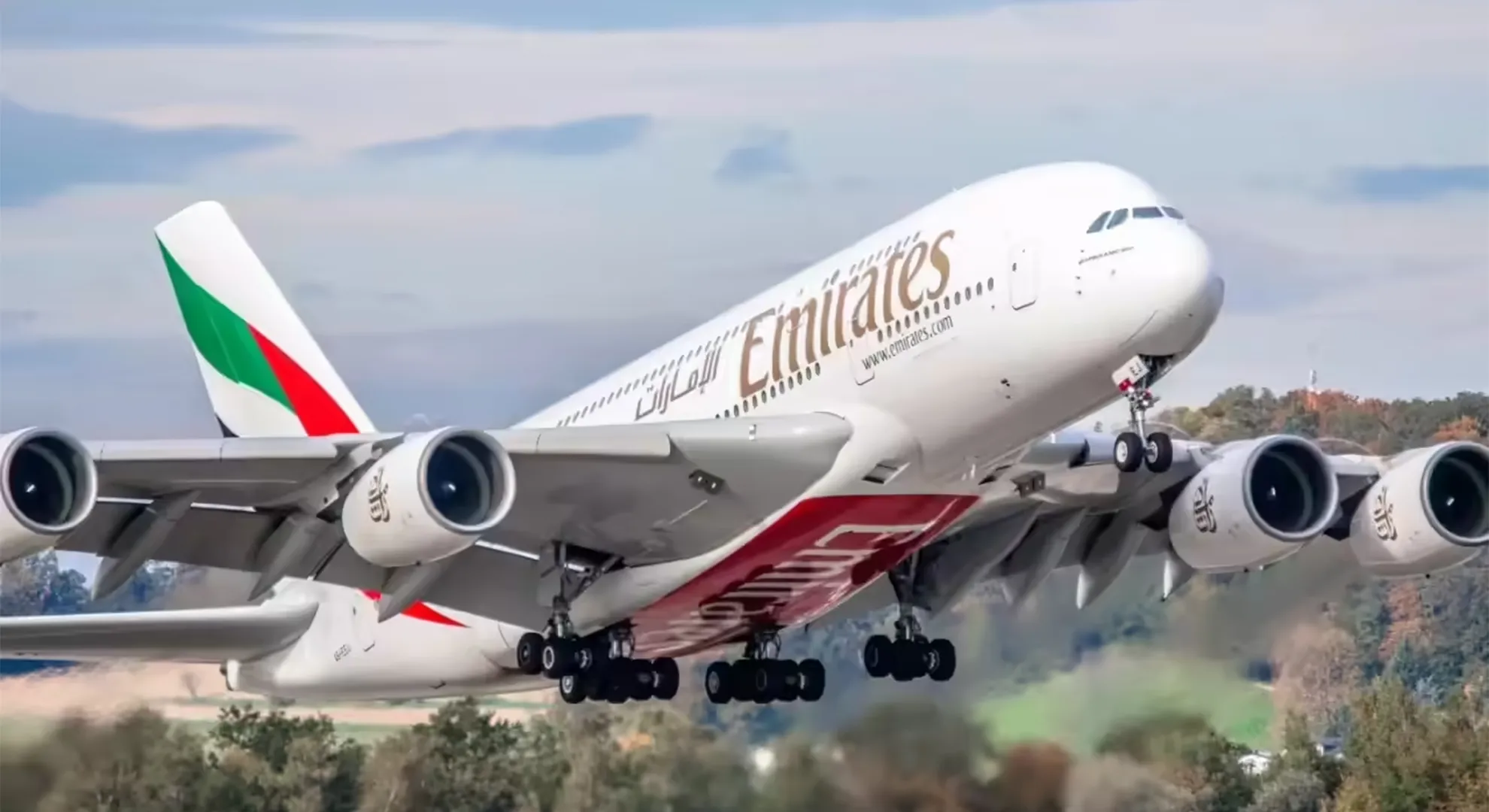
Emirates Maintains Growth Strategy Despite Regional Turbulence and Operational Challenges
Emirates Airline has reiterated its commitment to maintaining its current flight schedule and network capacity despite the ongoing geopolitical instability affecting parts of the Middle East. The Dubai-based carrier, one of the world’s largest international airlines, has indicated that it remains focused on serving global markets without reducing operations, even as regional conflicts create additional logistical and financial pressures for airlines operating in the region.
Speaking about the airline’s outlook, Emirates President Tim Clark emphasized that the carrier has no plans to scale back its services or reduce available seats across its network. While many airlines worldwide continue to evaluate route structures and operational costs amid an uncertain geopolitical environment, Emirates remains confident in its ability to adapt to changing circumstances while continuing to provide reliable connectivity for passengers.
The airline’s position reflects its long-standing strategy of maintaining a strong international presence through its Dubai hub. Despite challenges arising from regional tensions, Emirates continues to operate flights connecting travelers from Europe, the Middle East, Africa, Asia, and Oceania through Dubai, ensuring that passengers can reach major destinations across its extensive network.
A key component of this strategy involves maintaining services to high-demand markets such as India and Australia. These destinations remain among the airline’s most important routes, attracting significant business, tourism, and family travel throughout the year. Emirates has continued transporting passengers to these markets while implementing operational adjustments designed to enhance safety and reliability.
One of the measures adopted by the airline includes carrying additional fuel on certain flights. This precaution provides greater flexibility should aircraft need to alter their routes or respond to unexpected operational developments. Although carrying extra fuel can increase operating expenses due to higher aircraft weight and fuel consumption, Emirates views the approach as a necessary step to ensure uninterrupted service and maintain operational resilience.
Industry observers note that airlines operating near areas of geopolitical uncertainty often face increased costs associated with rerouting flights, avoiding specific airspaces, and implementing additional safety procedures. These adjustments can lead to longer flight times, increased fuel burn, and higher overall operating expenses. Nevertheless, Emirates appears willing to absorb these additional costs in order to preserve network stability and customer confidence.
According to Clark, the airline remains unconcerned about the financial impact of these precautionary measures. Rather than viewing the additional expenditure as a significant burden, Emirates considers it part of the broader operational framework required to maintain a reliable global network during periods of uncertainty.
The airline’s confidence is partly rooted in its scale and operational experience. Over several decades, Emirates has navigated numerous regional and international disruptions, including economic downturns, health crises, airspace restrictions, and geopolitical conflicts. This experience has enabled the carrier to develop robust contingency plans and operational strategies that allow it to respond quickly to changing circumstances while minimizing disruption to passengers.
Beyond maintaining existing services, Emirates is also pursuing opportunities for growth in key international markets. One area receiving particular attention is Germany, where the airline continues to advocate for expanded traffic rights. The carrier believes that additional access to the German market would benefit travelers, airports, businesses, and the broader economy by increasing connectivity between Germany and destinations across Asia, Africa, the Middle East, and Oceania.
The issue of traffic rights has long been a topic of discussion between Emirates and German aviation authorities. Like many international airlines, Emirates operates under bilateral air service agreements that determine how many flights can be operated between countries and which airports can be served. The airline has argued that greater flexibility would enable it to meet growing passenger demand and provide more travel options.
From Emirates’ perspective, increased long-haul capacity would not only benefit travelers but also support economic activity by facilitating tourism, trade, and investment. Enhanced air connectivity can strengthen business relationships, encourage international commerce, and improve access to global markets for companies operating in both regions.
The airline has repeatedly pointed to strong demand for international travel as evidence that additional flights could be successfully absorbed by the market. Germany remains one of Europe’s largest economies and an important source of both leisure and business travelers. Emirates believes that expanded access would create opportunities for growth while providing consumers with more competitive choices.
At the same time, the airline continues investing heavily in improving the passenger experience across its fleet. One of the most significant initiatives currently underway involves the deployment of satellite-based internet connectivity powered by Starlink technology.
The introduction of advanced onboard internet services represents a major step forward in Emirates’ efforts to enhance customer satisfaction. Modern travelers increasingly expect reliable, high-speed connectivity during flights, whether for business communications, entertainment, social media access, or staying in touch with family and friends.
Recognizing this demand, Emirates has begun integrating Starlink connectivity into its aircraft wherever technically feasible. The service is designed to provide faster and more reliable internet access compared to traditional onboard connectivity systems, potentially transforming the in-flight experience for millions of passengers.
However, implementing the technology across a large fleet presents certain challenges. One of the primary obstacles involves the availability of the specialized hardware required to support the system. Global demand for satellite connectivity solutions has increased rapidly, creating supply constraints that affect airlines seeking large-scale deployments.
Despite these limitations, Emirates remains committed to expanding access to the technology as quickly as possible. The airline is working to equip as many aircraft as practical while coordinating with suppliers and technical teams to manage installation schedules efficiently.
The rollout reflects a broader trend within the aviation industry toward digital transformation and enhanced passenger services. Airlines worldwide are investing in new technologies designed to improve customer satisfaction, streamline operations, and differentiate themselves in an increasingly competitive marketplace.
For Emirates, maintaining a reputation for premium service remains a central element of its business strategy. The carrier has historically positioned itself as a leader in long-haul travel, offering modern aircraft, extensive route networks, and a focus on customer experience. Investments in connectivity, cabin upgrades, and onboard services are intended to reinforce that position while meeting evolving passenger expectations.
Industry analysts suggest that Emirates’ decision to continue investing despite geopolitical uncertainty demonstrates confidence in the long-term strength of international travel demand. While short-term disruptions can create operational challenges, global aviation continues to benefit from rising passenger numbers, expanding tourism markets, and growing demand for international business travel.
Dubai’s role as a major global aviation hub also contributes to the airline’s resilience. Located strategically between Europe, Asia, and Africa, the city serves as a natural connecting point for millions of travelers each year. Emirates has built its business model around this geographic advantage, enabling passengers to connect efficiently between destinations across multiple continents.
As regional tensions continue to evolve, airlines operating in the Middle East must balance safety considerations with commercial objectives. Emirates’ approach suggests that the carrier believes these goals can be achieved simultaneously through careful planning, operational flexibility, and ongoing investment in infrastructure and services.
The company’s refusal to reduce capacity signals confidence not only in its own operational capabilities but also in the continued demand for international air travel. By maintaining services, preserving connectivity, and pursuing strategic expansion opportunities, Emirates aims to strengthen its position in global aviation while supporting passengers who rely on its extensive network.
Looking ahead, the airline appears focused on sustaining growth, enhancing customer experience, and expanding market access despite the uncertainties facing the broader aviation industry. Whether through network stability, technological innovation, or international expansion efforts, Emirates continues to pursue a long-term vision centered on connectivity, service excellence, and global reach.
For travelers, the message is clear: despite ongoing regional challenges and the additional costs associated with operating in a complex environment, Emirates intends to keep its aircraft flying, maintain its schedules, and continue investing in the future of international aviation.
Emirates Pushes for Stronger Berlin Access While Renewing Debate Over European Competition Rules
Emirates has been consistently advocating for expanded access to the German capital, with Berlin remaining a key focus in its broader European growth strategy. The airline has long expressed interest in strengthening its presence in the city’s aviation market, arguing that additional long-haul connectivity would benefit both passengers and the wider economy.
According to Emirates President Tim Clark, the airline has already managed to secure operational slots at Berlin’s airport. However, despite having access to scheduling capacity, the carrier is still awaiting the necessary regulatory approvals required to commence or expand services. This gap between slot allocation and operational permission continues to be a central issue in Emirates’ efforts to grow its footprint in Germany.
The airline has frequently used major international aviation events, including air shows and industry exhibitions, as platforms to highlight its long-standing relationship with Germany and its contribution to the country’s aviation sector. These events provide Emirates with opportunities to engage with policymakers, industry leaders, and stakeholders while reinforcing its case for increased traffic rights.
One of the most frequently cited examples of this relationship dates back to a significant aircraft order placed in 2010, when Emirates committed to purchasing 32 additional Airbus A380 aircraft. That deal, according to the airline, played an important role in supporting thousands of jobs in Germany’s aerospace manufacturing sector. The A380 programme involved extensive production and supply chain participation across multiple European countries, with Germany serving as a key contributor.
Emirates often points to this historical partnership as evidence of its positive economic impact in the region. By investing in European-built aircraft and maintaining strong operational ties with manufacturers and suppliers, the airline argues that it has helped sustain industrial activity and employment within Germany’s aviation ecosystem over many years.
Beyond economic contributions, Emirates has also positioned itself as a major facilitator of international connectivity for German travellers. The airline contends that expanded long-haul services from Berlin would enhance travel options for passengers, improve global accessibility, and strengthen tourism and business links between Germany and destinations across Asia, Africa, and the Middle East.
However, the airline’s expansion ambitions have repeatedly intersected with broader debates surrounding aviation competition in Europe. Regulatory frameworks governing international air services are shaped by bilateral agreements and policy considerations, often resulting in complex negotiations between governments and carriers.
Emirates has argued that increasing access to key European cities such as Berlin would not only benefit the airline but also serve the interests of consumers and businesses. It maintains that greater competition on long-haul routes can lead to improved service quality, more competitive fares, and enhanced connectivity across global networks.
At the same time, the airline’s growth ambitions have drawn criticism from some European carriers, particularly Deutsche Lufthansa, which has been one of the most vocal opponents of expanded Gulf carrier access into European markets. Lufthansa has long maintained that airlines based in the Gulf region benefit from structural advantages that are not available to European competitors, including differences in regulatory environments and state support mechanisms.
This ongoing debate has become a defining feature of aviation policy discussions between Gulf and European airlines over the past decade. Lufthansa and other European carriers argue that these perceived imbalances create uneven competitive conditions, while Gulf airlines such as Emirates counter that they operate under commercially driven models and compete fairly in the global marketplace.
In response to such criticism, Clark has been openly critical of Lufthansa’s stance. He has suggested that as a publicly listed company, Lufthansa should focus on strengthening its competitive position through its own operational strategies rather than relying on government intervention to address market challenges.
Clark’s comments reflect a broader frustration within Emirates regarding what it views as protectionist attitudes in parts of the European aviation industry. From the airline’s perspective, restrictions on market access limit consumer choice and prevent airlines from fully responding to demand for international travel services.
The dispute over market access is not new. For years, Gulf carriers have sought to expand their presence in Europe, while European airlines have lobbied their governments to maintain or tighten restrictions on additional long-haul capacity from foreign competitors. These tensions have periodically surfaced in policy discussions, trade negotiations, and industry forums.
Despite these challenges, Emirates continues to pursue a long-term strategy focused on gradual expansion and sustained engagement with regulatory authorities. The airline believes that continued dialogue and demonstration of economic value will ultimately support its case for greater access to markets such as Berlin.
In parallel with its regulatory efforts, Emirates has continued to emphasize its role as a contributor to aviation-related employment and industrial activity in Europe. By highlighting past aircraft orders, partnerships with manufacturers, and ongoing operational investments, the airline seeks to reinforce its position as a significant stakeholder in the global aviation ecosystem.
The 2010 Airbus A380 order remains a particularly important reference point in this narrative. At the time, the deal was widely recognized as one of the largest aircraft purchases in aviation history, and it had substantial implications for European aerospace production. Emirates has frequently cited this transaction to illustrate its long-standing commitment to supporting European industry.
As the aviation sector continues to recover and evolve following periods of global disruption, competition between major international carriers is expected to remain intense. Airlines are increasingly focused on expanding networks, improving efficiency, and securing access to high-demand markets.
Within this context, Emirates’ push for Berlin access reflects a broader strategic objective: strengthening its European network while maintaining its position as one of the world’s leading long-haul carriers. The airline’s continued advocacy suggests that it views regulatory engagement as just as important as operational growth in achieving its long-term ambitions.
At the same time, the ongoing debate with Lufthansa underscores the complexity of global aviation competition, where commercial interests, national policies, and international agreements often intersect. As both sides continue to defend their positions, discussions over fairness, market access, and regulatory balance are likely to remain central to the industry’s future development.
Ultimately, Emirates’ position is rooted in its belief that increased connectivity benefits not only airlines but also passengers, economies, and trade relationships. Whether through expanded access to Berlin or broader European routes, the airline continues to argue that greater openness in aviation markets supports long-term growth and strengthens global connectivity.