
UAE and GCC businesses are increasingly shifting toward virtual meeting platforms as rising air travel costs make frequent business trips more expensive, encouraging companies to adopt more cost-effective communication methods.
UAE and GCC corporates move to digital meetings due to increased air travel expenses.
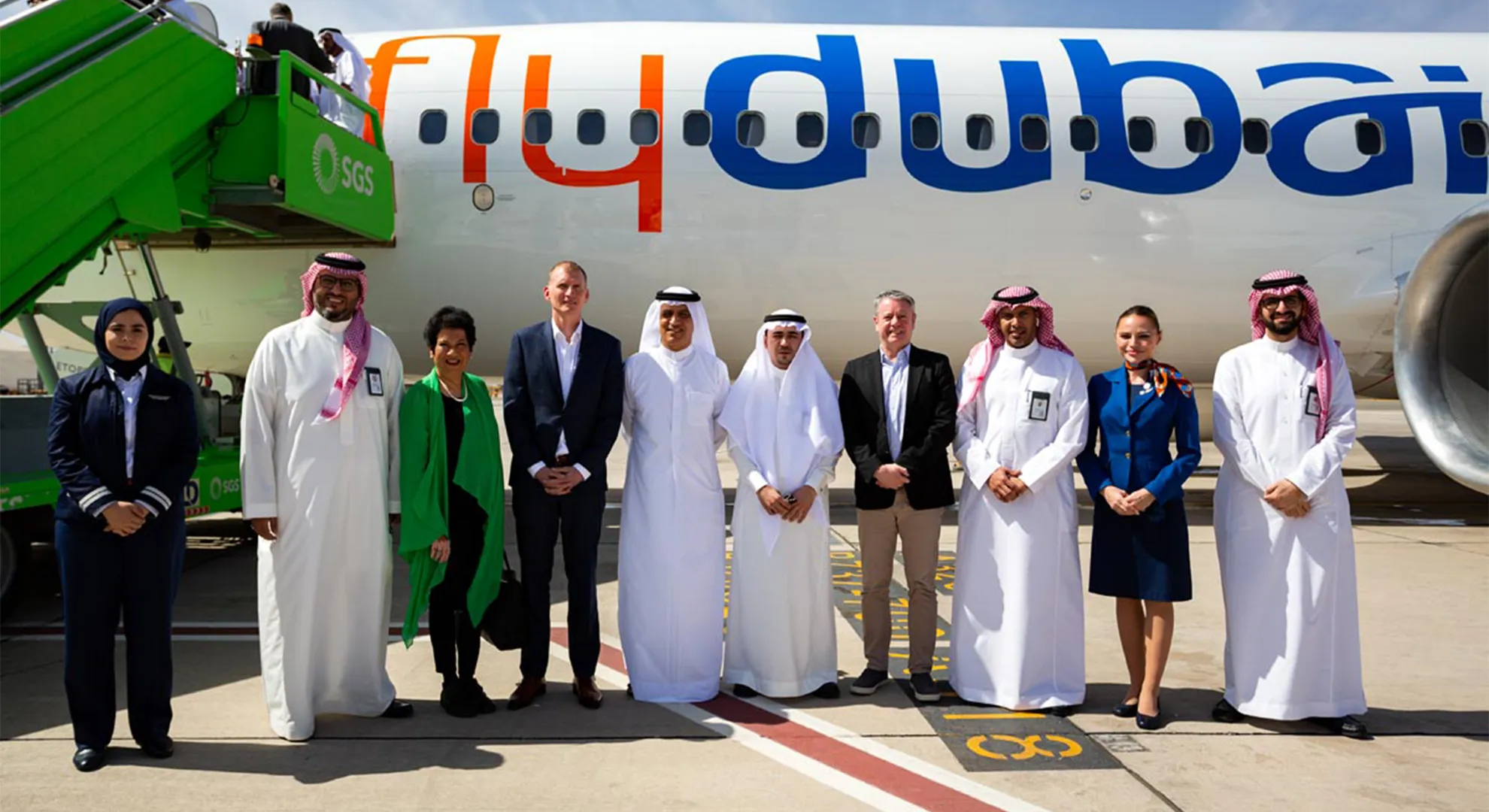
Although global aviation has been gradually recovering in the aftermath of the US-Iran ceasefire, businesses across the Gulf Cooperation Council (GCC) region are continuing to adopt a cautious and more selective approach when it comes to corporate travel. Rather than returning fully to pre-crisis travel patterns, many companies are now favouring a hybrid model that combines limited in-person meetings with a heavier reliance on digital communication tools.
This shift toward virtual engagement is not entirely new. The widespread adoption of online meeting platforms during the Covid-19 pandemic significantly changed the way organisations operate, making remote collaboration a normal part of everyday business. However, what is notable in the current phase is that this trend has regained momentum for reasons that extend beyond health concerns or temporary disruptions.
In the UAE and across the wider Gulf region, companies are once again increasing their use of virtual meetings, but this time the driving forces are more closely linked to economic pressures and financial planning. Rising airfares, higher operating costs, and tightening corporate budgets are all contributing to a renewed emphasis on cost efficiency and strategic travel decisions.
Before the recent regional conflict, business travel in the Middle East had largely returned to levels seen prior to the pandemic. Companies had resumed international meetings, conferences, and client visits, reflecting renewed confidence in both regional stability and global mobility. However, this recovery phase was interrupted by geopolitical tensions and subsequent disruptions that affected travel routes, fuel prices, and overall operational costs.
In the weeks following the ceasefire, business leaders across the region report that travel activity has resumed, but in a far more controlled and selective manner. Rather than frequent or routine trips, companies are now reserving travel for essential engagements where physical presence is considered necessary or strategically important.
Mohammad Osama, Chief Executive Officer of GRG, noted that corporate travel policies have become significantly more restrictive in the current environment. He explained that organisations are carefully evaluating the necessity of each trip, with many approving travel only when it is directly linked to critical business outcomes.
According to him, higher airfares are only one part of the broader picture. While the cost of flights has increased noticeably, companies are also factoring in additional concerns such as regional safety advisories, geopolitical uncertainty, and broader economic pressures affecting profitability. For multinational corporations in particular, travel risk assessments have become more complex, as they must account for varying conditions across multiple jurisdictions.
Osama further pointed out that rising energy prices are placing additional strain on corporate budgets. As fuel costs increase, companies across industries are facing higher operating expenses, which in turn is prompting a reassessment of discretionary spending, including non-essential travel. In many cases, organisations are choosing to reduce overhead costs wherever possible in order to maintain financial stability and protect profit margins.
As a result, business travel decisions are now being made with greater scrutiny than in previous years. Meetings that once required immediate in-person attendance are increasingly being shifted to virtual platforms, particularly when teams are geographically dispersed or when the purpose of the meeting does not require physical interaction.
Airfare inflation has been one of the most visible indicators of this broader shift. Since March 2026, ticket prices have risen significantly, driven largely by an increase in jet fuel costs. This spike in fuel prices followed the escalation of tensions during the US-Israel-Iran conflict, which had a direct impact on global energy markets and aviation operations.
The situation was further complicated by disruptions to key maritime routes, including the temporary closure of the Strait of Hormuz, one of the world’s most critical passages for oil and energy shipments. Any disruption in this region tends to have immediate consequences for global energy supply chains, which in turn affects fuel pricing across multiple sectors, including aviation.
Sultan Ahmed Al Jaber, Minister of Industry and Advanced Technology and Managing Director and Group CEO of Adnoc, highlighted the broader implications of these disruptions. He noted that the closure of the Strait of Hormuz contributed to a substantial increase in global energy costs, which subsequently had a direct impact on transportation and aviation pricing structures.
According to his assessment, airfares have risen by more than 20 per cent as a result of these combined pressures. This increase reflects not only higher fuel costs but also the wider uncertainty in global supply chains, insurance premiums, and operational risk assessments conducted by airlines operating in and around affected regions.
For businesses in the UAE and GCC, these rising costs are having a tangible effect on travel planning and corporate strategy. Companies that previously maintained frequent international travel schedules are now reassessing the necessity and frequency of such trips. In many cases, travel budgets are being reallocated toward digital infrastructure and communication tools that support remote collaboration.
The increased adoption of virtual meetings is also being influenced by broader changes in corporate culture. Many organisations have become more comfortable with remote engagement following the pandemic, and improvements in digital communication platforms have made virtual interactions more efficient and reliable than in the past.
Executives across the region have observed that while face-to-face meetings still hold value, particularly for negotiations, relationship-building, and high-level decision-making, they are no longer viewed as essential for every interaction. Routine discussions, internal coordination, and follow-up meetings are now frequently conducted online.
This evolving approach has led to the emergence of a hybrid business travel model, where companies carefully balance the benefits of in-person engagement against the financial and logistical costs of travel. In this model, physical meetings are reserved for high-impact situations, while digital tools are used to maintain continuity and efficiency in day-to-day operations.
The shift also reflects a broader trend of cost optimisation within corporations. With profit margins under pressure from rising operational expenses, inflationary trends, and fluctuating energy prices, businesses are increasingly focused on identifying areas where spending can be reduced without compromising productivity.
Travel expenses, which often represent a significant portion of corporate budgets, have therefore become a key area of review. By reducing unnecessary trips and replacing them with virtual alternatives, companies are able to achieve substantial cost savings while maintaining operational effectiveness.
At the same time, organisations are also considering environmental factors as part of their decision-making process. Reduced business travel contributes to lower carbon emissions, which aligns with sustainability goals that many regional and global companies have committed to in recent years.
Despite these changes, industry experts believe that business travel will continue to play an important role in the long term. However, its usage is expected to become more strategic, targeted, and selective, rather than routine or frequent. The emphasis is likely to remain on quality rather than quantity when it comes to in-person engagements.
In the current environment, companies across the UAE and GCC are therefore navigating a complex balance between operational necessity, financial discipline, and external risk factors. The result is a more cautious and flexible approach to corporate mobility, shaped by both recent geopolitical developments and longer-term structural changes in how businesses communicate and operate.
As global conditions continue to evolve, organisations are expected to further refine their travel policies, ensuring that each decision aligns with both financial objectives and operational priorities. For now, however, the combination of high airfares, energy market volatility, and corporate cost pressures continues to reinforce the shift toward hybrid working and increased reliance on virtual meetings across the region.
Air travel costs are expected to remain significantly elevated over the course of the year, with industry estimates suggesting that ticket prices could stay around 30 per cent higher compared to last year’s levels. This projection reflects a combination of persistent pressures within the aviation sector, including sustained increases in jet fuel prices, limited airline capacity, and ongoing operational disruptions linked to flight restrictions and periodic airspace closures.
These overlapping challenges have created a more expensive and less predictable environment for both airlines and corporate travellers. Fuel costs remain one of the most influential factors driving airfare inflation, as jet fuel prices continue to fluctuate in response to global energy market conditions. At the same time, reduced flight availability on certain routes has added further strain, allowing airlines to maintain higher pricing due to constrained supply.
Beyond the immediate impact of ticket pricing, broader structural changes in business communication patterns are also shaping corporate travel behaviour. According to GRG chief executive Mohammad Osama, the global shift in meeting culture that began during the Covid-19 pandemic has not only persisted but has become a defining feature of modern corporate operations.
He explained that depending on the sector, a substantial share of meetings that were once conducted face-to-face have permanently transitioned to virtual platforms. In many industries, between 35 per cent and 55 per cent of previously in-person interactions have moved online, and importantly, have not returned to physical formats even after pandemic restrictions were lifted. This shift reflects both improved digital infrastructure and a growing acceptance of remote collaboration as an efficient alternative to travel-heavy business practices.
Osama further noted that the recent geopolitical tensions and temporary ceasefire conditions have influenced how companies are resuming physical meetings. While there has been some revival of in-person engagement, it remains limited in scope. He estimated that roughly 20 to 25 per cent of postponed or delayed face-to-face meetings have actually resumed in physical form. These are typically the meetings considered essential or non-substitutable, such as high-level negotiations, critical deal-making discussions, or engagements requiring direct relationship building.
In contrast, the vast majority of remaining meetings—approximately 75 to 80 per cent—have continued to take place virtually. These include routine business updates, internal coordination sessions, operational planning discussions, and other interactions where physical presence is not strictly necessary. Companies have increasingly concluded that digital platforms are sufficient for maintaining productivity and communication without incurring the costs and risks associated with travel.
This evolving structure highlights a deeper transformation in corporate decision-making. Travel is no longer viewed as a default requirement for business engagement but rather as a selective tool used only when it delivers clear strategic value. Organisations are becoming more disciplined in assessing whether a meeting justifies the expense, time, and potential risk involved in international travel.
A key factor reinforcing this cautious approach is the perception of ongoing regional instability and uncertainty. Industry analysts note that while airfare costs are an important consideration for companies, they are not the sole or even primary driver of reduced travel activity. Instead, concerns about safety, operational continuity, and potential disruptions are playing an increasingly significant role in shaping corporate policies.
Saj Ahmad, Chief Analyst at London-based StrategicAero Research, emphasised that many companies are more influenced by risk perception than by cost alone. He explained that while rising ticket prices certainly contribute to more conservative travel budgets, a larger concern for businesses is the possibility of employees being stranded abroad if geopolitical conditions deteriorate unexpectedly.
According to Ahmad, organisations are particularly cautious about scenarios in which hostilities or regional disruptions could resume suddenly, leaving travellers unable to return home or continue their business activities as planned. In such cases, the logistical and operational complications can far outweigh the financial cost of travel itself.
He noted that this uncertainty has encouraged many companies to favour remote engagement whenever possible. Virtual meetings eliminate the risk of travel disruption entirely, ensuring that business continuity can be maintained regardless of external conditions. From a risk management perspective, digital communication offers a level of stability that physical travel cannot always guarantee in volatile environments.
Ahmad also observed that even though a ceasefire may currently be in place, businesses are not fully reverting to pre-conflict travel behaviour. Instead, they are adopting a more measured and cautious stance, carefully balancing the need for in-person interaction with the desire to minimise exposure to unpredictable external risks.
In many organisations, this has translated into a more structured and selective approval process for business travel. Rather than automatic approval for international meetings, companies are now requiring stronger justification for each trip. Decision-makers are evaluating not only the financial cost but also the strategic importance and the potential risks associated with travel at any given time.
Despite these challenges, there is also a recognition among businesses that face-to-face interaction still plays a vital role in building trust, securing partnerships, and finalising complex agreements. As a result, companies are not eliminating travel altogether but are instead prioritising it for situations where physical presence offers a clear and measurable advantage.
This has led to what many analysts describe as a long-term hybrid model of business communication. In this framework, organisations combine virtual collaboration tools with selective in-person engagement, creating a flexible system that adapts to both operational needs and external conditions.
The hybrid model allows companies to optimise costs while maintaining efficiency. Routine tasks and discussions can be handled digitally, reducing travel expenses and saving time, while essential meetings can still take place in person when necessary. This approach not only improves financial efficiency but also supports better workforce productivity by reducing travel fatigue and logistical complexity.
In addition, companies are increasingly factoring in broader strategic considerations such as investor confidence and market stability. Even as they limit travel, many organisations are still actively engaging with stakeholders and clients through digital platforms to ensure continuity in business relationships. This helps maintain momentum in commercial activity even during periods of uncertainty.
At the same time, corporate leaders are acknowledging that flexibility is now a core requirement of modern business operations. The ability to switch seamlessly between in-person and virtual engagement is seen as a critical advantage in an environment where external conditions can change rapidly.
Looking ahead, industry experts expect the hybrid model to remain a permanent feature of global business practices rather than a temporary response to recent disruptions. While the balance between physical and virtual meetings may continue to evolve, the overall structure is unlikely to revert fully to pre-pandemic norms.
Instead, companies are expected to further refine their travel strategies, focusing on efficiency, risk management, and value creation. As technology continues to improve and geopolitical conditions remain uncertain, the reliance on digital communication tools is likely to grow even stronger.
In this context, the combination of high airfares, supply constraints, and ongoing risk considerations is reinforcing a fundamental shift in how businesses approach global communication. The result is a more cautious, adaptive, and digitally integrated model of corporate engagement that prioritises flexibility and resilience in equal measure.

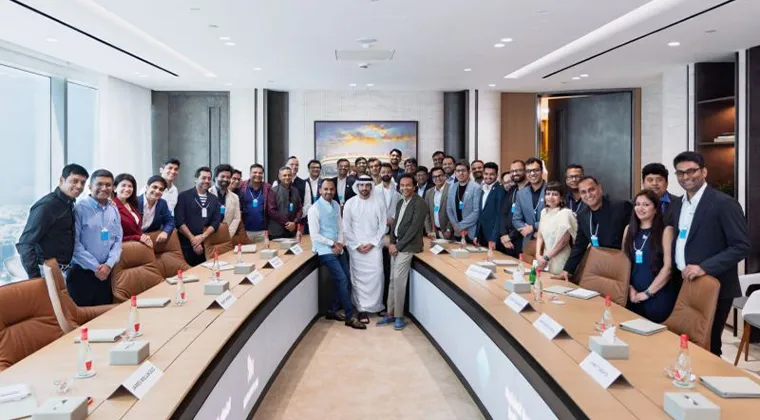
Across the talent acquisition and organisational advisory sector in the Middle East and wider Gulf region, firms are increasingly viewing current shifts in business travel behaviour not as a reaction to short-term disruptions, but as part of a longer-term strategic adjustment in how organisations operate. Rather than interpreting changes in travel patterns as a response to crisis conditions alone, many industry leaders see them as evidence of a more deliberate restructuring of how companies engage with clients, partners, and internal teams.
In this context, the emphasis has moved away from emergency-style decision-making and towards a more calculated evaluation of when physical presence is truly necessary. For advisory firms that operate across multiple markets and serve a diverse portfolio of corporate clients, this shift reflects a broader transformation in corporate culture rather than a temporary adjustment driven by external events.
Vijay Gandhi, Regional Director for Europe, the Middle East and Africa at Korn Ferry Digital, noted that within his experience, organisations are not abandoning business travel simply because of rising costs or external pressures. Instead, companies continue to recognise the importance of face-to-face interaction, particularly when it comes to high-value engagements such as leadership discussions, client relationship building, and strategic decision-making processes.
He explained that in most cases, organisations still prioritise in-person meetings when they believe those interactions will meaningfully contribute to outcomes. For example, when negotiations are complex, when trust needs to be established, or when sensitive strategic conversations are taking place, companies are still willing to invest in travel to ensure direct human engagement.
According to Gandhi, what is emerging across the region is not a rejection of physical meetings, but a more refined and intentional approach to their use. Rather than treating travel as a routine part of business operations, organisations are now applying greater scrutiny to determine whether an in-person meeting is genuinely necessary or whether the same objective can be achieved through digital communication channels.
He described this shift as a move toward greater “intentionality” in decision-making. In practice, this means that companies are becoming more deliberate in how they allocate time, resources, and budget to travel activities. Every trip is increasingly evaluated on the basis of its expected return, both in financial terms and in terms of strategic value.
This approach reflects a broader evolution in corporate thinking that has been shaped by several overlapping global developments. The widespread adoption of remote working tools during the Covid-19 pandemic introduced organisations to the efficiency and convenience of virtual collaboration. At the same time, improvements in digital communication platforms have made remote meetings more productive and accessible than ever before.
As a result, many companies have become more comfortable conducting a significant portion of their operations virtually. Internal meetings, progress updates, routine check-ins, and even some client discussions are now regularly held online, reducing the need for frequent travel. This has allowed organisations to maintain productivity while also controlling costs and improving operational efficiency.
However, industry experts stress that this does not mean physical meetings have lost their importance. On the contrary, in-person interactions continue to play a critical role in areas where human connection, trust-building, and nuanced communication are essential. What has changed is the threshold for deciding when such meetings are necessary.
Gandhi emphasised that organisations are increasingly adopting a balanced model that integrates both virtual and physical forms of engagement. Rather than viewing these two modes of communication as competing alternatives, companies are treating them as complementary tools within a broader operational framework.
In this hybrid model, virtual meetings are used primarily for efficiency. They allow teams to communicate quickly across different locations, reduce travel-related downtime, and facilitate ongoing collaboration without the constraints of geography. This is particularly valuable for global organisations that operate across multiple time zones and regions.
At the same time, in-person meetings are being reserved for situations where their impact is significantly higher. These include strategic planning sessions, high-stakes negotiations, executive-level discussions, and relationship-building engagements where direct personal interaction can influence outcomes in ways that virtual communication cannot fully replicate.
Gandhi also highlighted that this shift is not being driven solely by cost considerations. While financial efficiency is certainly a factor, it is not the primary reason companies are reassessing their travel policies. Instead, the driving force behind this change is a broader reassessment of value creation and effectiveness in communication.
Organisations are increasingly asking not just “how much does this cost?” but “what value does this interaction generate?” This change in mindset reflects a more mature and strategic approach to resource allocation, where travel decisions are aligned more closely with business outcomes rather than tradition or routine.
Within advisory and talent-focused firms, this evolution is particularly evident. These organisations often work closely with senior leadership teams, helping them navigate complex workforce strategies, organisational restructuring, and leadership development initiatives. As such, they have a clear view of how corporate travel behaviours are changing across industries.
From this vantage point, the trend appears consistent: companies are not eliminating travel, but they are becoming significantly more selective. The default assumption is no longer that a meeting requires physical presence, but rather that it must be justified in terms of necessity and impact.
This shift has also been reinforced by broader macroeconomic and geopolitical developments that have influenced corporate decision-making across the region. Periods of instability, fluctuating energy prices, and global economic uncertainty have encouraged organisations to adopt more cautious and flexible operational models.
In this environment, the ability to switch seamlessly between virtual and in-person engagement has become an important organisational capability. Companies that can effectively manage both modes of interaction are better positioned to adapt to changing circumstances without disrupting their core business activities.
As a result, many executives now view hybrid communication not as a temporary workaround but as a permanent feature of modern business operations. This perspective is increasingly shaping how organisations design their internal processes, structure their teams, and plan their external engagements.
The broader consensus among executives, consultants, and industry analysts is that the business landscape in the region has undergone a lasting transformation. First, the Covid-19 pandemic fundamentally altered expectations around remote work and virtual collaboration. Then, subsequent geopolitical developments reinforced the need for flexibility and risk awareness in business travel decisions.
Together, these factors have contributed to a structural shift in corporate behaviour that is unlikely to reverse in the near future. Instead, organisations are expected to continue refining their approach to travel, balancing efficiency, cost management, and strategic value.
Ultimately, the decision to book a flight is no longer a routine administrative step. It has become a strategic consideration, weighed carefully against alternative forms of engagement and assessed in terms of its overall contribution to business objectives.
This represents a significant change from earlier business norms, where in-person meetings were often the default option. Today, companies are more likely to pause and evaluate whether physical travel is truly necessary, or whether digital tools can achieve the same outcome with greater efficiency.
As this mindset becomes more deeply embedded across organisations in the region, the hybrid model is expected to remain the dominant framework for business communication. It reflects not only changing technological capabilities, but also a broader shift in how companies define value, productivity, and effective engagement in a rapidly evolving global environment.