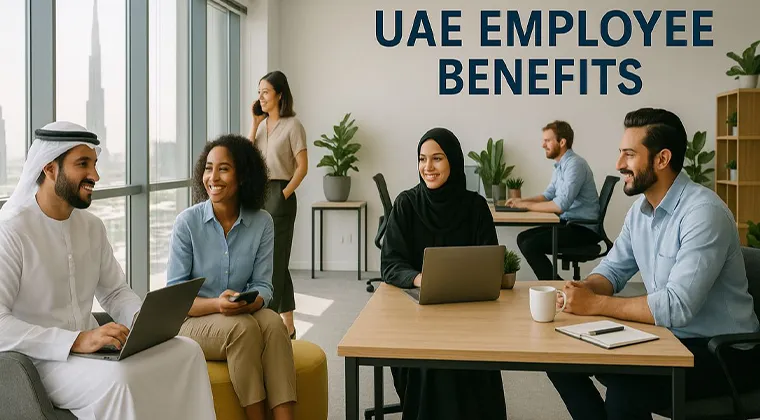
Employers across the UAE are broadening workplace benefits by offering estate-planning assistance, wellness stipends, and greater flexibility in work arrangements, reflecting a stronger focus on employee wellbeing and work-life balance.
UAE Companies Introduce New Benefits Including Estate Planning, Wellness Allowances, and Flexible Work.

UAE Employers Turn to Enhanced Benefits as Salary Growth Slows
Companies across the United Arab Emirates are increasingly redesigning their employee benefit programs as traditional salary increases become less effective in attracting and retaining skilled professionals. Human resources specialists say organizations are placing greater emphasis on workplace flexibility, employee wellness, financial security, and personal development as competition for talent evolves.
In recent years, many businesses relied heavily on pay raises to reward employees and encourage loyalty. However, with wage growth remaining relatively moderate across several sectors, employers are now exploring alternative ways to strengthen employee engagement and improve retention rates. Industry experts note that workers are placing greater value on benefits that support their overall quality of life rather than focusing exclusively on compensation.
As a result, organizations are broadening their benefits packages to include a wide range of services and incentives. These additions often extend beyond conventional offerings such as medical insurance, annual flight allowances, and end-of-service benefits. Increasingly, employees are gaining access to mental health resources, flexible work arrangements, wellness stipends, professional development funding, and financial planning assistance.
HR professionals say this shift reflects changing employee expectations. Modern workers are seeking employers that demonstrate a genuine commitment to their personal well-being and long-term success. Companies that provide meaningful support in these areas are often viewed as more attractive workplaces, helping them stand out in a competitive labor market.
One major trend is the growing adoption of flexible working policies. Many organizations now offer hybrid schedules that allow employees to divide their time between home and the office. Others provide flexible working hours, enabling staff members to better balance professional responsibilities with family commitments and personal interests. Employers believe these arrangements contribute to higher job satisfaction while also improving productivity and reducing burnout.
Mental health support has also become a key component of employee benefit programs. Businesses are introducing confidential counseling services, stress-management resources, wellness workshops, and employee assistance programs designed to help workers navigate personal and professional challenges. HR experts say awareness of mental health issues has increased significantly in recent years, prompting companies to invest more heavily in support systems that promote emotional well-being.
Wellness allowances represent another area of growth. Rather than limiting benefits to traditional healthcare coverage, employers are providing financial support for gym memberships, fitness classes, nutritional programs, and other health-related activities. These initiatives aim to encourage healthier lifestyles while demonstrating a commitment to employee wellness beyond the workplace.
Professional development opportunities are also receiving greater attention. Many companies are establishing dedicated learning budgets that employees can use for training courses, certifications, conferences, and educational programs. Organizations view continuous learning as an important investment that benefits both employees and employers. Workers gain valuable skills that can advance their careers, while companies develop a more capable and adaptable workforce.
According to HR consultants, financial well-being has emerged as one of the fastest-growing categories within employee benefits. Rising living costs and increased awareness of personal financial planning have encouraged employers to offer services that help workers manage their finances more effectively. These initiatives may include access to financial advisors, retirement planning support, savings programs, and educational workshops focused on budgeting and investment strategies.
Legal and estate-planning services are also becoming more common. Some employers now provide access to professional guidance on matters such as wills, inheritance planning, and other legal issues that can affect employees and their families. By helping workers address these important life considerations, companies hope to reduce stress and enhance overall financial security.
Industry observers say the popularity of such benefits reflects a broader transformation in employer-employee relationships. Rather than focusing solely on compensation, organizations are increasingly attempting to build trust and strengthen long-term connections with their workforce. Benefits that address real-life concerns can create a stronger sense of support and belonging, making employees more likely to remain with their employer.
Experts point out that workforce mobility has changed compared with previous years. Employees are generally less likely to switch jobs frequently in pursuit of higher salaries alone. Instead, many professionals evaluate the overall employment experience, including workplace culture, career growth opportunities, flexibility, and personal support. This has encouraged employers to rethink how they position themselves in the labor market.
The introduction of modern savings and investment schemes has further expanded the range of financial benefits available to employees. Under recent regulatory developments in the UAE, private-sector companies have the option to participate in programs that allow end-of-service benefits to be invested rather than simply accumulated under traditional gratuity arrangements. Supporters of these initiatives believe they can help employees build greater long-term financial security while potentially generating additional returns on their savings.
Financial planning services linked to these programs are gaining traction among employers seeking innovative ways to support their workforce. By helping employees understand investment opportunities and long-term wealth-building strategies, companies can play a more active role in promoting financial wellness.
Business leaders acknowledge that salary remains an important factor in recruitment and retention. However, many argue that compensation alone is no longer sufficient to attract top talent. Employees increasingly expect workplaces that recognize their broader needs and provide support throughout different stages of life and career development.
As competition for highly skilled professionals continues, employers are expected to invest further in comprehensive benefit programs. The most successful organizations are likely to be those that combine fair compensation with meaningful support for physical health, mental well-being, financial stability, and professional growth.
Analysts believe this trend will continue shaping workplace strategies across the UAE in the coming years. Companies that adapt to changing employee expectations may gain a significant advantage in attracting and retaining talent, while those that rely solely on traditional compensation models could find it more difficult to compete.
Ultimately, the evolution of employee benefits reflects a growing recognition that workforce satisfaction depends on more than salary alone. Flexible work options, wellness initiatives, learning opportunities, financial planning resources, and legal support services are increasingly viewed as essential components of a modern employment package. By investing in these areas, employers are seeking to build stronger, more resilient relationships with their employees while creating workplaces that support long-term success for both individuals and organizations.
Succession, will-planning support
In addition to strengthening traditional employee benefits, a growing number of companies in the UAE are beginning to introduce legal and financial planning services designed to help workers secure their long-term future. Among the latest additions to corporate benefits packages are will-writing assistance, inheritance planning guidance, and succession planning support—services that were once considered highly specialized and rarely included in workplace offerings.
Human resources experts say these benefits are gaining attention because they address concerns that many expatriate employees face while living and working in the UAE. Unlike conventional workplace perks that focus primarily on health, travel, or short-term financial needs, succession-planning services help employees prepare for unexpected life events and ensure their families are protected in the future.
Industry specialists note that although such programmes remain relatively uncommon compared with more established benefits, interest is increasing steadily. Larger organizations, particularly those operating in major business and financial districts, have started exploring ways to incorporate legal-planning support into broader employee well-being initiatives. These companies view the services as a meaningful way to demonstrate concern for their workforce beyond the workplace.
According to HR professionals, the appeal of these programmes lies in their ability to address issues that many expatriates often postpone or overlook. Employees may spend years building careers, purchasing property, accumulating savings, and raising families in the UAE without having formal plans in place to manage their assets or family affairs in the event of death or incapacity. As awareness of these risks grows, demand for practical guidance has increased significantly.
Experts explain that many expatriates are unfamiliar with local legal frameworks governing inheritance, guardianship, and estate administration. The complexity of cross-border family arrangements can add another layer of difficulty, particularly for individuals who hold assets in multiple countries or have family members residing abroad. For these employees, access to professional advice through their employer can provide valuable reassurance and clarity.
Corporate leaders increasingly recognize that financial security extends beyond salary, bonuses, and retirement savings. As a result, organizations are expanding the definition of employee well-being to include legal preparedness and long-term family protection. By offering support in these areas, employers hope to reduce stress among employees while helping them make informed decisions about their future.
Industry observers describe will-writing assistance as one of the most practical additions to modern employee-benefit programmes. The process helps individuals document their wishes regarding the distribution of assets, guardianship arrangements, and other important matters. While the service may not carry the visibility of wellness allowances or flexible working policies, experts believe it delivers substantial value to employees and their families.
Legal advisory firms operating in the UAE report a noticeable increase in enquiries from businesses interested in workplace succession-planning initiatives. Human resources departments and people-focused leadership teams are increasingly seeking educational programmes that can help employees better understand estate planning and inheritance-related matters.
This growing interest reflects a broader shift in employee expectations. Workers today are looking for employers that support them throughout various stages of life, not just during their working years. Companies are therefore exploring benefits that address long-term concerns and contribute to overall peace of mind.
According to legal consultants, many employees are unaware of the potential consequences of failing to establish a valid succession plan. Without proper documentation, family members may encounter legal and administrative challenges when attempting to manage assets or settle estates. Educational workshops and consultation services are helping to close these knowledge gaps by providing employees with accessible information and expert guidance.
The trend is particularly relevant in Dubai and other major UAE cities, where expatriates represent a significant proportion of the workforce. Over the past several decades, many foreign professionals have transitioned from viewing the UAE as a temporary destination to considering it a long-term home. As a result, they have developed deeper personal and financial connections to the country.
Many expatriates now own residential properties, operate businesses, maintain investment portfolios, and raise families within the UAE. They may also have financial obligations and family relationships that span multiple jurisdictions. These circumstances create unique planning requirements that differ from those faced by individuals living exclusively in their home countries.
As employees establish stronger roots in the UAE, concerns about family security and wealth preservation have become more prominent. Professionals are increasingly interested in understanding how local regulations affect their assets and what steps they can take to ensure their wishes are respected. This growing awareness has contributed to the rising popularity of succession-planning services.
Business leaders say offering access to legal and estate-planning support can strengthen trust between employers and employees. Unlike one-time incentives or short-term rewards, these benefits address deeply personal issues that can have lasting consequences for workers and their families. As a result, employees often perceive such support as evidence of a genuine commitment to their well-being.
Experts also note that these programmes are relatively cost-effective for employers compared with large-scale compensation increases. By partnering with legal specialists and advisory firms, organizations can provide valuable resources without significantly increasing payroll expenses. This makes succession-planning services an attractive addition to broader talent-retention strategies.
The evolution of employee benefits reflects changing attitudes toward workplace support. Historically, benefit packages focused primarily on immediate needs such as healthcare coverage, transportation allowances, annual travel benefits, and insurance protection. While these remain important components of compensation, companies are increasingly acknowledging the importance of long-term planning and financial resilience.
Industry professionals believe the next generation of employee benefits will place greater emphasis on holistic well-being. This approach recognizes that employees perform best when they feel secure not only in their careers but also in their personal and family circumstances. Legal preparedness, financial literacy, and future planning are becoming essential elements of that broader framework.
As awareness continues to grow, experts expect more organizations to incorporate succession-planning services into their employee-benefit offerings. Educational seminars, individual consultations, will-drafting assistance, and estate-planning resources are likely to become increasingly common within corporate wellness programmes.
The shift highlights a broader transformation taking place across the UAE’s employment landscape. Companies are moving beyond traditional benefit structures and embracing a more comprehensive approach to employee care. By helping workers prepare for future legal and financial challenges, employers are positioning themselves as long-term partners in their employees’ success and security.
Ultimately, the rising interest in will-writing and succession-planning services demonstrates how workplace benefits are evolving to reflect the changing realities of modern life. For many employees, particularly expatriates with substantial personal and financial ties to the UAE, access to professional legal guidance offers valuable peace of mind. For employers, it represents an opportunity to strengthen engagement, enhance loyalty, and provide meaningful support that extends well beyond the workplace.