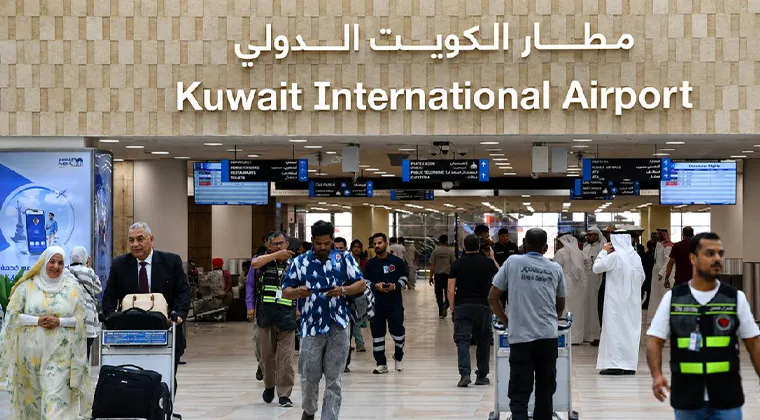
Air operations were suspended at Kuwait airport following an Iranian strike that caused significant damage to airport facilities and resulted in multiple injuries, disrupting travel and emergency response activities.
Flights halted after Iranian strike on Kuwait airport leaves injuries and major damage.
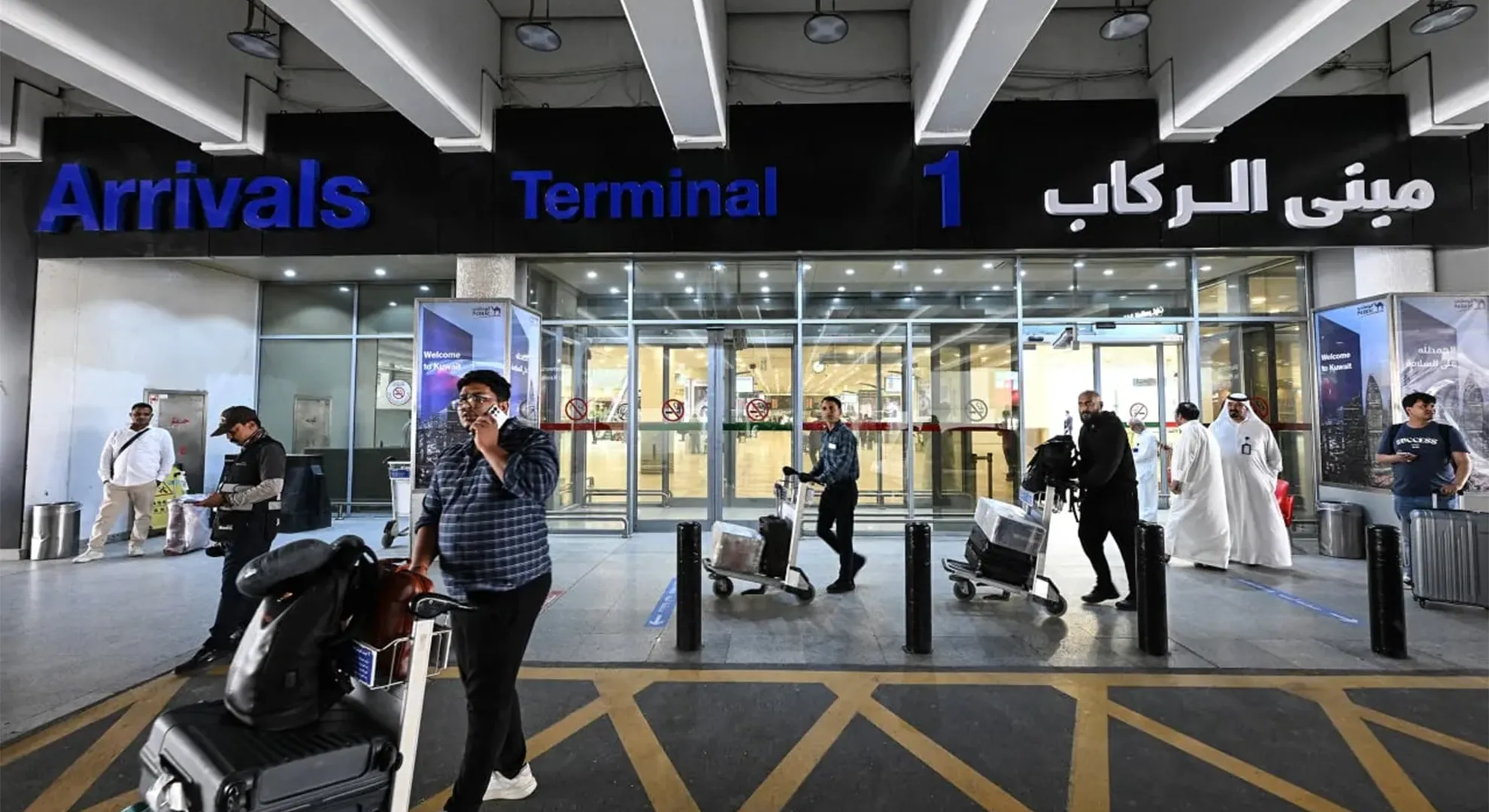
Kuwait authorities confirmed that an emergency response plan was immediately put into action at Kuwait International Airport after an incident involving drone activity. As part of the safety measures, airport operations were either suspended or redirected, with flights being rerouted to other airports until further notice to ensure passenger safety and allow security teams to assess the situation.
According to an official statement from the Kuwaiti Ministry of Defence, a passenger terminal at the airport came under attack early in the morning on June 3. The incident was reportedly carried out using multiple Iranian drones, which targeted airport infrastructure and caused disruption at one of the country’s busiest aviation hubs.
The ministry spokesperson, Brigadier General Saud Abdulaziz Al-Otaibi, provided details about the aftermath of the strike. He stated that the attack resulted in injuries to several individuals present at the airport at the time. In addition to the human impact, the terminal building also suffered noticeable structural and material damage, affecting parts of the facility and leading to operational interruptions.
Emergency services were quickly deployed to the site following the incident. Medical teams began treating the injured on location before transporting them to nearby healthcare facilities for further care. Authorities confirmed that those affected were receiving appropriate medical attention and that efforts were underway to stabilize their condition.
Security forces and military units were simultaneously mobilized to monitor the situation closely. Their role included assessing any ongoing risks, securing the airport perimeter, and ensuring that no further threats were present. Officials emphasized that surveillance and defensive measures remained active as investigations into the incident continued.
The activation of the airport’s emergency plan meant that normal flight schedules were immediately disrupted. Incoming flights were diverted to alternative airports in the region, while outgoing services were suspended to prevent further risk and allow authorities to manage the situation safely. Passengers were advised to follow official updates as the situation remained fluid.
Authorities did not immediately provide a timeline for the resumption of normal airport operations, stating instead that services would remain on hold until security assessments confirmed that the facility was safe to reopen. The priority, officials said, was to ensure the safety of civilians and airport staff while thoroughly evaluating any damage and potential hazards caused by the attack.
The incident has placed Kuwait’s aviation security under heightened attention, with officials reinforcing that all necessary precautions are being taken in coordination with relevant security agencies. Investigations are ongoing to determine the full extent of the attack, the level of coordination behind it, and the implications for regional security.
At the same time, officials reiterated that the situation is being handled with urgency and caution, and that updates will be provided as more verified information becomes available.
Flights suspended
Kuwait’s General Civil Aviation Authority confirmed that an emergency response protocol was promptly activated at Kuwait International Airport following the incident. As part of this contingency arrangement, airport operations have been significantly disrupted, with all flights either suspended or redirected to other airports. Officials stated that these measures will remain in place indefinitely, or “until further notice,” depending on how quickly conditions stabilize and safety is restored.
According to reporting by the Kuwait News Agency (KUNA), immediate technical inspections began soon after the situation was brought under control. Specialized engineering and maintenance teams were deployed to evaluate the extent of the damage caused to both airport infrastructure and operational systems. Their task includes checking critical facilities such as terminals, communication networks, and aviation support equipment to determine what repairs or replacements are needed before normal services can resume.
Authorities emphasized that the assessment process is comprehensive, involving multiple departments working together to ensure no safety risks are overlooked. The focus, they said, is not only on visible structural damage but also on hidden impacts that could affect airport functionality, such as electrical systems, navigation support, and passenger handling infrastructure.
In addition to aviation disruptions, Kuwait Airways also announced a full suspension of its operations in response to the evolving situation. The national carrier stated that it had halted both incoming and outgoing flights as a precautionary measure, aligning with broader airport safety directives. The airline is expected to resume services only after receiving clearance from aviation authorities confirming that airport conditions are safe for normal operations.
The impact of the incident also extended to financial service facilities located within the airport. The National Bank of Kuwait confirmed that its branches situated in Terminal 1 and Terminal 4 have been temporarily closed. This step was taken as part of the wider precautionary response, ensuring the safety of both staff and customers while emergency protocols remain active at the airport.
Bank officials indicated that services will remain suspended until further notice, with customers advised to use alternative branches or digital banking channels during the closure period. The temporary shutdown reflects broader disruptions across airport-based commercial operations, all of which are currently affected by the ongoing emergency situation.
Authorities have not provided a definitive timeline for when normal operations at the airport will resume. Instead, officials have reiterated that reopening will depend entirely on the completion of technical evaluations, safety inspections, and necessary repair work. The priority, they stressed, remains ensuring that all facilities are fully secure and functional before passengers and airline services are allowed to return.
Meanwhile, coordination continues between aviation regulators, technical teams, and security agencies to manage the situation. Officials have highlighted that restoring airport operations is a complex process that requires careful verification of multiple systems, including passenger terminals, runway support infrastructure, and air traffic control systems.
The situation has placed Kuwait’s aviation sector under significant strain, with widespread disruption affecting travelers, airlines, and associated services. However, authorities maintain that the emergency response framework is functioning as intended, helping to manage risks and prevent further complications while recovery efforts are underway.
As investigations and assessments continue, updates are expected to be released in stages. Officials have assured the public that all decisions regarding flight resumption and facility reopening will be guided by technical findings and safety considerations rather than fixed timelines.
Multiple attacks in recent days
Kuwait authorities reported that on June 2, the country’s air defense systems successfully detected and intercepted incoming missiles and drones originating from Iran. The attempted strikes were neutralized before they could cause significant harm, according to official statements. The incident was widely viewed as a serious escalation in regional tensions, drawing strong reactions from Kuwait as well as neighboring countries, including the United Arab Emirates and several other regional and international actors. These governments condemned the attacks, describing them as a destabilizing development that risked further aggravating an already fragile security environment.
In a subsequent update, the United States Central Command (CENTCOM) provided additional details regarding further attempted attacks in the region. According to their statement, two missiles launched from Iran toward Kuwait did not reach their intended targets. CENTCOM explained that these missiles either malfunctioned during flight or disintegrated before impact, resulting in no direct damage on the ground. In a separate but related wave of attacks, three missiles were fired toward Bahrain. These incoming threats were successfully detected and intercepted in real time by coordinated air defense systems operated jointly by US and Bahraini forces, preventing them from reaching their targets.
CENTCOM also reported that another set of aerial threats involved unmanned Iranian drones that appeared to be directed at US military positions in Kuwait. However, these drone operations did not succeed in striking any designated sites. Several of the drones were tracked and destroyed before they could cause damage, while others failed to complete their missions due to interception or technical failure. Officials emphasized that defensive systems in place were effective in countering these threats and minimizing risk to personnel and infrastructure.
The broader situation comes against the backdrop of an uneasy and fragile ceasefire arrangement between Iran and the United States, which has been in place since April 8. Although the agreement was intended to reduce hostilities and stabilize the situation, periodic outbreaks of violence and retaliatory strikes have continued to occur on both sides. These intermittent escalations highlight the ongoing volatility in the region and the difficulty of maintaining a consistent de-escalation framework.
Despite ongoing diplomatic engagement and negotiations, the two countries have not yet succeeded in reaching a comprehensive and lasting agreement that would formally end hostilities. Talks have continued through various channels, but significant differences remain unresolved, preventing the establishment of a durable peace settlement.
Overall, the latest incidents underline the continued risk of escalation in the region, where missile and drone activity, defensive interceptions, and political tensions remain closely interconnected. Authorities across multiple countries continue to monitor the situation closely, while urging restraint and renewed diplomatic efforts to prevent further deterioration of security conditions.