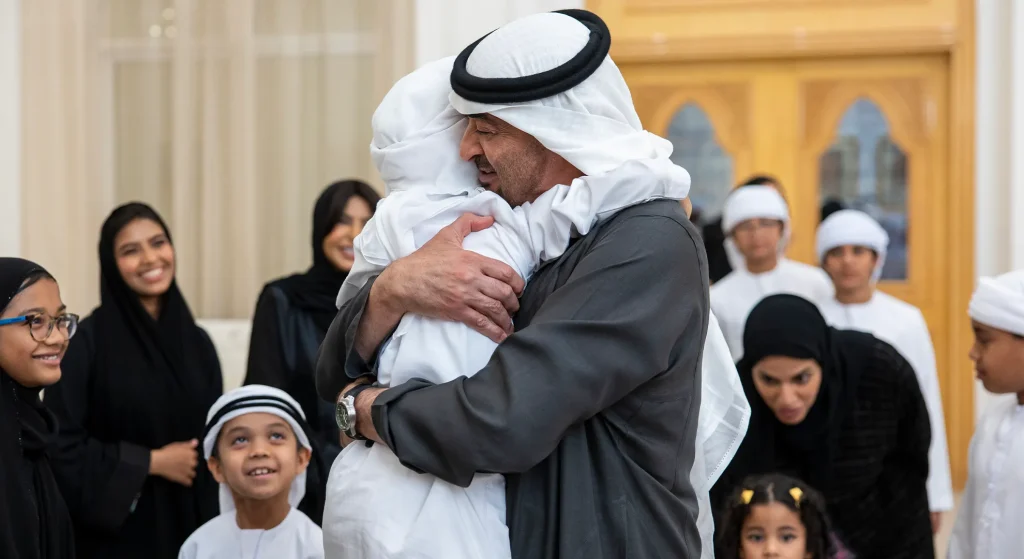
We can expand UAE foster mothers are urging authorities to revise policies regarding naming conventions and legal rights concerning “Heartological children,” seeking stronger protections clarity and improved welfare standards overall.
UAE foster mothers advocate reform of naming conventions and rights issues for “Heartological children”.

For many years, foster mothers in the UAE found themselves managing complex and emotionally demanding responsibilities largely on their own, often without a structured support system to rely on. Their day-to-day experiences went far beyond routine parenting. They were frequently required to navigate administrative systems that were not always designed with foster children in mind, particularly in situations where children did not possess formal identity documentation. This created repeated challenges in places such as hospitals, government offices, and schools, where even basic procedures could become complicated due to the absence of standard identification records.
In medical settings, for example, foster parents often had to spend additional time explaining a child’s legal and custodial status before treatment could proceed smoothly. These delays were not only stressful but also highlighted gaps in institutional awareness about foster care arrangements. Similar difficulties emerged in legal contexts, where questions related to guardianship, residency status, and decision-making authority frequently required clarification. Foster mothers often had to seek external advice or rely on informal networks to understand their rights and responsibilities in different situations.
One particularly sensitive issue involved the naming of foster children. Deciding what a child should be called carried emotional, cultural, and sometimes legal implications. Without clear guidance, families often had to make these decisions cautiously, balancing personal attachment with regulatory considerations. Over time, these repeated challenges built a sense among foster families that their concerns were being handled individually rather than through a coordinated support framework.
For years, this lack of a centralized support system meant that many foster mothers shared similar struggles but addressed them separately, often learning through personal experience rather than institutional guidance. While informal support networks did exist, they were not sufficient to address the broader structural issues that families encountered. As a result, many caregivers felt they were navigating a complicated system without formal guidance or standardized assistance.
In recent years, however, this situation has begun to shift with the establishment and official licensing of the UAE’s first Foster Families Society. This development marked an important transition from isolated individual efforts toward a more organized and collective approach to supporting foster families. The creation of the society provided a formal platform where shared experiences could be brought together and translated into structured advocacy and reform efforts.
The organization was officially recognized as a non-profit public benefit entity under the Ministry of Community Empowerment and is based in Abu Dhabi. Its formation reflects a broader effort within the country to strengthen social welfare systems and improve the support structures available for children without parental care. According to its organizational profile, the society has been established with a clear mission: to support foster families, safeguard the rights of children under foster care, and contribute to the development of a stronger and more informed foster care culture across the UAE.
This institutional recognition has been particularly meaningful for many foster mothers who previously felt that their challenges were largely invisible within formal policy discussions. The society now offers a structured environment where these experiences can be acknowledged, studied, and addressed through coordinated action. It also serves as a bridge between families and relevant authorities, helping ensure that concerns raised at the community level are communicated more effectively to policymakers and institutions.
A central philosophy behind the society’s creation is the idea that lived experience is a critical foundation for meaningful reform. As expressed by Hoda Al Mashjari, one of the founding members and the vice chair of the organization’s board, the initiative was not developed from abstract planning alone, but from real-life experiences faced by foster families over many years. Her statement emphasizes that the organization is rooted in practical reality rather than theoretical frameworks, reflecting challenges that have been personally encountered by its members.
This perspective has helped shape the society’s approach to its work, ensuring that its programs and initiatives remain closely aligned with the actual needs of foster families. Rather than operating as a purely administrative body, the organization positions itself as a responsive and experience-driven institution, one that evolves based on feedback and the changing circumstances of families it serves.
To manage its wide-ranging responsibilities, the society has structured its operations into five specialized teams, each focusing on a distinct area of support and development. These divisions are designed to ensure that different aspects of foster care—ranging from awareness to research—are addressed in a focused and coordinated manner.
One of these teams is dedicated to awareness and community outreach. Its role involves increasing public understanding of foster care, reducing misconceptions, and promoting a more informed and compassionate view of children without parental care. Through educational initiatives, campaigns, and engagement activities, this team works to build a stronger social foundation for foster families.
Another team focuses on partnerships, which plays a key role in building relationships with government entities, private organizations, and community stakeholders. The goal of this division is to strengthen collaboration across sectors so that foster families receive more integrated and consistent support. By working with different institutions, the society aims to ensure that foster care issues are addressed in a more coordinated way.
A third team is responsible for legal and psychological support. This area addresses some of the most sensitive challenges faced by foster families, including custody questions, residency concerns, and emotional well-being. By offering guidance and access to expertise, this team helps families navigate complex legal frameworks while also ensuring that emotional support is available for both caregivers and children.
The fourth team is dedicated to research. Its purpose is to collect data, study patterns, and analyze the needs of foster families in a systematic way. This research-oriented approach allows the organization to base its recommendations on evidence rather than anecdotal experience alone. It also helps identify gaps in the system and propose informed solutions to policymakers and relevant authorities.
The fifth team focuses on events and engagement activities. This includes organizing workshops, gatherings, training sessions, and community programs designed to bring foster families together. These events help strengthen social connections, reduce isolation, and create opportunities for shared learning among families facing similar experiences.
Together, these five teams reflect the broader vision of the organization, which is to build a comprehensive support ecosystem for foster families in the UAE. Each division contributes to a larger framework aimed at improving the overall experience of foster care and ensuring that children without parental care receive the protection, stability, and dignity they deserve.
Since its establishment, the Foster Families Society has seen growing engagement from the community. According to its members, there is increasing demand for guidance and support services, particularly in areas such as legal advice and emotional counseling. More individuals and families are reaching out for assistance as awareness of the organization spreads, indicating a rising recognition of foster care as a structured and supported social responsibility rather than an isolated personal journey.
This growing demand reflects a shift in how foster care is perceived within the community. What was once managed privately by individual families is now gradually becoming part of a broader institutional conversation. Foster mothers who previously had to rely on their own resources and informal advice networks are now able to seek structured support and contribute their experiences to a collective effort aimed at reform.
The transition from private struggle to organized advocacy represents a significant development in the country’s social welfare landscape. It highlights how lived experiences, when brought together through formal institutions, can lead to meaningful change and improved systems of care. The Foster Families Society stands as an example of this transformation, turning years of individual challenges into a coordinated initiative focused on rights, support, and long-term reform for foster children and their caregivers.
Since its recent launch, the organization has moved quickly from establishment to action, with its leadership noting that a range of practical initiatives has already been set in motion within just a short span of three months. According to Al Mashjari, the early phase of the society’s work has included the rollout of structured legal consultation services, the initiation of public awareness programs, and the beginning of formal discussions with relevant government bodies. These early steps, she explained, are intended to lay a strong operational foundation for the society while directly responding to urgent needs expressed by foster families.


She emphasized that the aim during this initial stage has not been to work in isolation, but rather to actively engage with institutions that shape policies affecting foster care. Meetings with government representatives have therefore formed an important part of the society’s early agenda, allowing open dialogue on key challenges faced by families and children within the system. These engagements are designed to ensure that the concerns of foster parents are not only heard but also translated into practical improvements in administrative and legal processes.
One of the central topics currently under review by the organization relates to the terminology used in official and social contexts to describe foster children. Al Mashjari explained that members of the society are carefully examining the impact of existing language, particularly terms in Arabic that are commonly used in legal or bureaucratic settings. Among these is the phrase “majhool al nasab,” which is traditionally used to refer to children of unknown parentage. While this term has been used in formal documentation for many years, foster families associated with the society feel that it may unintentionally contribute to negative perceptions or social stigma surrounding these children.
The concern raised by many caregivers is not only about legal classification, but also about how language shapes identity and emotional belonging. According to them, the words used in official records and everyday speech can influence how children perceive themselves and how society treats them. As a result, there is a growing interest within the organization to explore alternative expressions that are more compassionate and reflective of the emotional reality of foster relationships.
In this context, Al Mashjari shared that discussions have begun around introducing new terminology that better reflects the bond between foster families and the children they care for. One suggested expression is “heartological child,” a term intended to symbolize emotional connection rather than biological origin. The idea behind this proposal is to shift focus away from purely legal or genetic definitions of family and instead highlight the nurturing, caring relationship that forms through foster care. While still in the conceptual stage, the suggestion reflects a broader effort by the society to rethink language in a way that promotes dignity, inclusion, and emotional recognition for foster children.
The proposal has sparked internal discussions within the organization, as members weigh the cultural, linguistic, and administrative implications of introducing such terminology. Any change in official language would require careful coordination with authorities and stakeholders to ensure it aligns with existing legal frameworks while also addressing the concerns of foster families. Nonetheless, the fact that such conversations are taking place marks an important step in acknowledging the emotional dimensions of foster care, beyond its procedural and legal aspects.
Alongside linguistic reform, the society is also focusing on practical administrative challenges that continue to affect foster families on a daily basis. One of the most pressing issues involves access to healthcare services for children under foster care. Al Mashjari noted that while many of these children are issued health insurance cards, difficulties often arise when families attempt to use them in real-world medical situations, particularly before full identity documentation has been completed.
In practice, this means that even when insurance coverage exists on paper, some hospitals and clinics may still hesitate or delay treatment due to the absence of finalized identification records. These procedural gaps can create stress and uncertainty for foster parents, especially in urgent medical situations where timely access to care is critical. Families have reported instances where they needed to provide additional clarification or documentation before services could be rendered, leading to delays that can be particularly difficult when a child requires immediate attention.
To address these concerns, the society has begun engaging in discussions with healthcare providers, insurance authorities, and government stakeholders. The goal of these conversations is to identify the root causes of such administrative barriers and work toward solutions that ensure smoother access to medical services for foster children. This includes exploring ways to streamline verification processes, improve coordination between agencies, and establish clearer protocols that recognize the unique legal status of children in foster care.
The organization is also advocating for greater awareness within healthcare institutions so that frontline staff are better equipped to handle cases involving foster children without unnecessary procedural obstacles. By improving understanding at the operational level, the society hopes to reduce delays and ensure that children receive timely and appropriate care regardless of their documentation status.
Overall, these early initiatives reflect a dual focus within the society’s work: addressing both the emotional and linguistic aspects of foster care as well as the practical, system-level challenges that families face. Through a combination of policy dialogue, service development, and awareness-building, the organization aims to gradually reshape the environment in which foster families operate.
By bringing together government entities, healthcare providers, and community stakeholders, the society is attempting to build a more integrated support system. Its efforts highlight the importance of viewing foster care not only as a private family arrangement but also as a shared social responsibility that requires coordination across multiple sectors.
In doing so, the organization is laying the groundwork for longer-term reforms that could improve both the lived experiences of foster children and the support structures available to their caregivers.