Dubai has introduced a new opportunity for internationally qualified doctors, allowing them to provide part-time medical consultation services in the emirate under updated healthcare regulations and flexible licensing arrangements.
Dubai Opens Door for Overseas Doctors to Offer Part-Time Consultations.
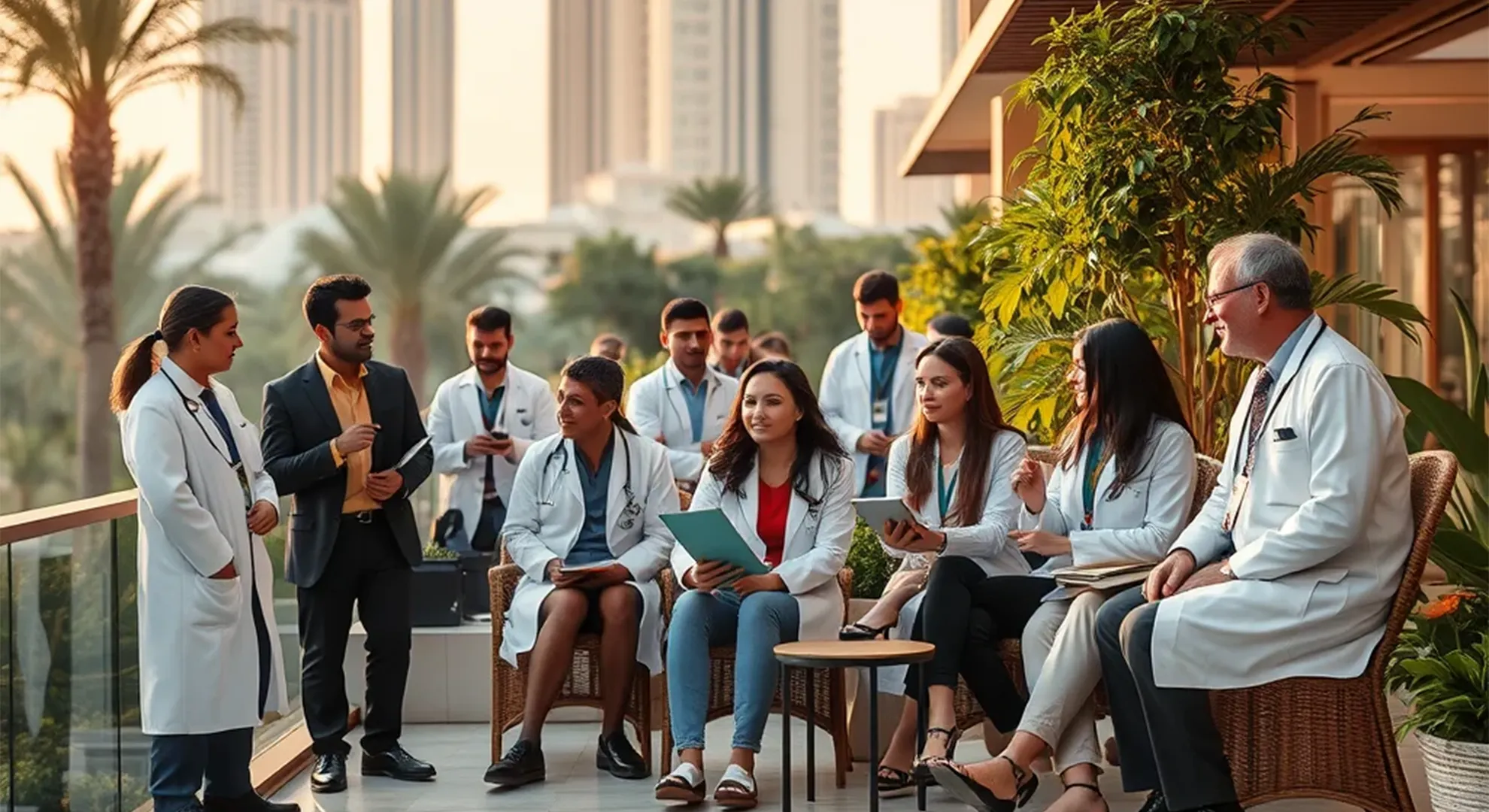
Dubai’s healthcare sector is entering a new phase of transformation as innovative medical service models reshape the way patients connect with specialists. In a move aimed at making advanced healthcare more accessible and efficient, doctors from around the world are now being given the opportunity to consult in Dubai without the need to open or maintain permanent clinics in the city. The approach is changing traditional ideas about medical practice by introducing greater flexibility for physicians while improving convenience for patients seeking expert care.
The shift reflects a broader trend in global healthcare, where medical professionals increasingly prefer agile and collaborative work environments over the conventional model of running standalone clinics or hospitals. Dubai, already recognised as a rapidly growing healthcare destination, is embracing this evolution by encouraging systems that allow both international and UAE-based specialists to provide consultations in a regulated and professionally managed environment.
One of the key organisations driving this transition is C37, a private healthcare workspace located in Dubai Healthcare City (DHCC). The platform has emerged as a unique concept within the UAE’s medical landscape, offering specialists a ready-to-use clinical setting supported by administrative and operational services. Instead of investing heavily in infrastructure, licensing logistics, staffing, and clinic management, doctors can focus entirely on patient care and medical expertise.
The concept behind C37 is designed to reduce the barriers that often prevent highly qualified physicians from offering services in different countries. Traditionally, doctors wishing to practise in Dubai had to establish physical clinics or partner with healthcare facilities, a process that could involve substantial financial and operational commitments. By introducing a shared and fully managed workspace, the platform allows specialists to work more flexibly while still operating within Dubai’s strict healthcare regulations.
Access to the facility is offered through a membership-based structure. Physicians who join the network receive access to consultation rooms, clinical support systems, and a range of business services that simplify the operational side of healthcare delivery. These services include assistance with banking, accounting, legal procedures, marketing, and strategic guidance, enabling medical professionals to establish their presence in Dubai with minimal administrative burden.
According to Dr Mohamed Elbaz, Medical Director at C37 Platform in Dubai Healthcare City, the initiative was created in response to the changing expectations of both patients and healthcare providers. He explained that traditional healthcare systems have long depended on fixed hospitals and permanent clinics, but modern healthcare demands more adaptable models that can quickly connect patients with specialist expertise.
He noted that healthcare today is becoming increasingly patient-centred, with people expecting faster access to consultations, specialised treatment options, and streamlined medical experiences. Flexible healthcare platforms can help bridge the gap between patients and world-class doctors by removing unnecessary logistical barriers. This approach not only improves efficiency for practitioners but also broadens the availability of expert medical services for the community.
Dr Elbaz further highlighted that the platform enables doctors, whether visiting from overseas or already based in the UAE, to work in a professional clinical environment without needing to establish independent facilities. Instead of spending time managing operations, staffing, and compliance requirements, physicians can immediately begin seeing patients within a fully regulated ecosystem that already provides the required infrastructure and support.
The model is especially beneficial for internationally recognised specialists who may wish to visit Dubai periodically to conduct consultations, follow-up appointments, or specialised procedures. Patients in the UAE can gain access to global medical expertise locally, reducing the need to travel abroad for certain treatments or second opinions. This also strengthens Dubai’s reputation as a destination capable of attracting leading healthcare professionals from across the world.
Beyond convenience, the initiative supports collaboration among medical experts. By bringing together local and international doctors under one platform, opportunities are created for knowledge sharing, multidisciplinary treatment approaches, and professional networking. Such collaboration can contribute to medical innovation and improve the quality of healthcare services available in the emirate.
Dubai Healthcare City has long positioned itself as a centre for medical excellence, research, and healthcare innovation. The emergence of platforms such as C37 aligns with the city’s broader ambition to become a global healthcare hub that attracts both top medical talent and international patients. Flexible healthcare workspaces are seen as part of a wider strategy to modernise healthcare delivery while supporting economic diversification and innovation within the sector.
The benefits extend to patients as well. Individuals seeking specialised care often face long waiting times or limited access to highly experienced experts. By enabling more doctors to practise in Dubai through flexible arrangements, the system expands the pool of available specialists across different medical disciplines. Patients can receive treatment closer to home, access second opinions more easily, and experience smoother referral pathways within an integrated healthcare ecosystem.
Administrative support also plays an important role in enhancing patient experience. Since the operational side is managed centrally, consultations can be organised more efficiently, helping reduce delays and improve coordination between healthcare providers. Patients benefit from a streamlined process where clinical services, scheduling, and support systems operate within a connected environment.
Dr Elbaz emphasised that the presence of prominent local and international physicians within the platform represents an important milestone in Dubai’s healthcare journey. He described it as a significant step toward strengthening the emirate’s standing as an international centre for advanced medicine, innovation, and specialised healthcare services.
He added that creating a collaborative medical environment helps bring global expertise directly into the local community. Instead of patients needing to travel internationally to consult renowned specialists, many of these experts can now provide services directly within Dubai. This not only saves time and costs for patients but also contributes to raising healthcare standards across the region.
The new healthcare model also reflects changing professional priorities among doctors themselves. Many physicians today are seeking more flexibility in how and where they work. Shared medical workspaces allow specialists to expand their reach, consult in multiple locations, and maintain a better balance between professional commitments and operational responsibilities. This modern approach to healthcare practice is becoming increasingly attractive in a fast-changing global medical landscape.
As Dubai continues to invest in healthcare innovation and infrastructure, initiatives like C37 demonstrate how the sector is adapting to meet future demands. The focus is shifting toward flexibility, accessibility, collaboration, and patient-centred care. By reducing operational obstacles for doctors and improving access for patients, the city is creating a healthcare ecosystem that is both dynamic and globally competitive.
Ultimately, the model aims to make specialised medical care easier to access, more coordinated, and more efficient for everyone involved. Through flexible consultation arrangements and shared clinical environments, Dubai is redefining how healthcare services are delivered while reinforcing its ambitions to become one of the world’s leading destinations for medical excellence.
Reducing barriers for international doctors
Dr Mohamed Elbaz explained that internationally trained doctors often face several obstacles when attempting to expand their practice into a new country or healthcare system. According to him, even highly experienced specialists can encounter lengthy administrative and operational processes before they are able to begin seeing patients in a new market such as Dubai.
He pointed out that healthcare professionals arriving from abroad are usually required to complete multiple regulatory procedures, including obtaining professional licences, meeting healthcare authority requirements, and securing visas or work permits. In addition to these formalities, physicians may also need to arrange suitable clinical premises, hire qualified nursing and administrative staff, and establish systems for scheduling appointments, managing patient records, and handling billing procedures.
Dr Elbaz noted that these responsibilities can become particularly difficult for doctors who do not intend to establish a permanent medical practice in Dubai. Many international specialists prefer flexible arrangements that allow them to visit the city periodically to consult with patients, conduct specialised procedures, or collaborate with healthcare providers. However, under traditional healthcare structures, setting up a clinic or independent operation for short-term or part-time practice can be expensive, time-consuming, and operationally complex.
He explained that this challenge often discourages highly qualified specialists from offering their expertise within the region, despite strong demand from patients seeking advanced medical care and international treatment options. The process of building a practice from the ground up may require significant financial investment, legal coordination, staffing arrangements, and infrastructure planning, all of which can create barriers for visiting physicians.
To address these concerns, C37 has developed a healthcare model that simplifies the entire process for both overseas and UAE-based doctors. Instead of requiring specialists to independently manage every operational detail, the platform provides access to a fully equipped and professionally managed medical environment where doctors can begin practising with minimal administrative burden.
Dr Elbaz explained that the workspace has been specifically designed to support physicians by handling many of the non-clinical responsibilities associated with running a medical practice. Through the platform, doctors gain access to consultation rooms, treatment facilities, nursing support, and administrative assistance, allowing them to focus primarily on delivering patient care rather than managing day-to-day operations.
He added that the support system extends far beyond physical infrastructure. Physicians using the platform are also provided with appointment scheduling services, billing and collection management, IT assistance, and operational coordination. In addition, the platform helps facilitate professional licensing procedures and visa-related requirements, making the transition into Dubai’s healthcare system significantly smoother for international practitioners.
Medical malpractice insurance support is another important feature offered through the model. Dr Elbaz noted that ensuring compliance with healthcare regulations and maintaining professional protection are essential aspects of practising medicine in any country. By integrating these services into a single managed environment, the platform reduces the complexity that doctors often face when entering a new healthcare market.
According to him, this approach enables specialists to begin consulting in Dubai more efficiently while remaining fully aligned with local healthcare standards and regulations. Rather than navigating multiple service providers and administrative channels independently, doctors can operate within an established system that already provides the required operational framework.
One of the key advantages of the platform is its flexibility. Dr Elbaz explained that physicians are not required to commit to long-term clinic ownership or fixed operational structures. Instead, they can choose arrangements that suit their professional schedules and patient demand. The model offers daily, weekly, and monthly access options, allowing doctors to practise in Dubai according to their availability and level of engagement.
This flexibility is particularly beneficial for internationally recognised specialists who may divide their time between multiple countries or healthcare institutions. Doctors can visit Dubai periodically to provide consultations or specialised services while continuing their primary practice elsewhere. At the same time, UAE-based physicians can also benefit from adaptable workspaces without the need to establish independent facilities.
Dr Elbaz said the system creates a balance between flexibility and regulatory structure. While doctors are given freedom in how they organise their practice schedules, they continue to operate within a fully regulated healthcare environment that maintains professional standards, patient safety requirements, and clinical oversight.
He emphasised that this type of model reflects the evolving nature of global healthcare delivery. Increasingly, medical professionals are seeking practice arrangements that allow them to expand their reach without becoming tied to the financial and operational pressures of managing permanent clinics. Flexible healthcare workspaces provide an alternative solution that supports mobility, collaboration, and efficiency.
For patients, the benefits are equally significant. The streamlined model allows more specialists to offer services within Dubai, improving access to expert care across a wider range of medical fields. Patients can consult internationally experienced doctors locally without needing to travel abroad, while also benefiting from a coordinated healthcare environment supported by trained staff and modern clinical infrastructure.
Dr Elbaz noted that by reducing operational barriers for doctors, the platform ultimately strengthens Dubai’s healthcare ecosystem and contributes to the city’s ambition of becoming a global destination for advanced medical services. The combination of flexibility, professional support, and regulatory compliance is helping create a healthcare environment that is more accessible, innovative, and responsive to the changing needs of both practitioners and patients.
Bringing global expertise closer to UAE patients
Dr Mohamed Elbaz explained that innovative healthcare platforms such as C37 are helping transform access to specialist medical services in the UAE by reducing the need for patients to travel overseas for expert consultations and advanced medical opinions. According to him, the traditional model often required patients to visit other countries to consult internationally recognised specialists, particularly in highly specialised fields where local access was limited. However, flexible healthcare systems are now making it possible for global expertise to be available much closer to home.
He noted that platforms like C37 are designed to bridge the gap between patients in the UAE and leading doctors from around the world. By creating a regulated and fully supported clinical environment in Dubai, international specialists can provide consultations, assessments, and follow-up care without needing to establish permanent medical facilities in the emirate. This approach enables patients to benefit from world-class medical expertise while remaining within the country or region.
Dr Elbaz highlighted that this model is particularly valuable for individuals seeking specialised treatment plans, complex diagnoses, or second medical opinions from internationally experienced physicians. In many cases, patients previously had to arrange costly and time-consuming international travel to access such expertise. The ability to consult visiting global specialists in Dubai simplifies the process significantly and offers greater convenience for patients and their families.
He added that the system also plays an important role in supporting continuity of care, especially for patients who are already receiving treatment from doctors practising across multiple countries. Through platforms like C37, patients can maintain contact with trusted specialists while accessing consultations and follow-up services locally. This creates a more seamless healthcare experience and helps ensure better coordination between medical professionals involved in a patient’s treatment journey.
According to Dr Elbaz, the presence of both UAE-based doctors and visiting international physicians within one healthcare ecosystem encourages a more integrated approach to medical care. Patients are able to access a broader network of expertise without needing to navigate multiple healthcare systems or travel abroad for every consultation. This collaborative structure strengthens referral pathways and allows specialists from different disciplines and regions to work more closely together.
He explained that the platform supports a patient-centred healthcare experience by making specialist services easier to access within a trusted and professionally managed setting. Patients benefit from regulated clinical facilities, administrative support teams, and coordinated appointment systems, all of which contribute to smoother and more efficient care delivery.
Dr Elbaz further emphasised that these types of healthcare initiatives align with Dubai’s long-term vision of becoming a leading destination for advanced medicine and healthcare innovation. By attracting internationally recognised medical professionals and enabling them to practise flexibly within the city, Dubai is strengthening its position as a regional centre for specialised healthcare services.
He pointed out that the emirate is not only becoming a destination for patients seeking treatment, but is also evolving into a hub where global medical expertise is actively integrated into the local healthcare landscape. This helps raise the standard of care available within the UAE while expanding opportunities for collaboration, knowledge sharing, and medical innovation.
The growing presence of international specialists within Dubai’s healthcare sector also contributes to medical tourism and reinforces the city’s reputation as a world-class healthcare destination. Patients from across the region may increasingly choose Dubai for consultations and specialised treatment because they can access renowned experts without travelling to Europe, North America, or other international healthcare centres.
Dr Elbaz said the flexibility of the model benefits both patients and doctors alike. Specialists can offer consultations in Dubai according to patient demand and professional schedules, while patients gain faster and more convenient access to expertise that may otherwise be difficult to obtain locally. This creates a healthcare environment that is more adaptable, globally connected, and responsive to modern patient expectations.
Ultimately, he explained, the objective is to build a healthcare ecosystem where specialised medical knowledge is more accessible within the region. By bringing international expertise into Dubai through regulated and flexible clinical models, platforms like C37 are helping reshape how healthcare services are delivered while supporting the emirate’s ambitions to remain at the forefront of medical excellence and innovation.

A shift towards “on-demand” healthcare
Dr Mohamed Elbaz explained that the flexible healthcare model offered through C37 is not only beneficial for international specialists, but also creates valuable opportunities for doctors already practising within the UAE. According to him, many locally based physicians are looking for more adaptable ways to expand their services without taking on the financial and operational pressures associated with opening and running independent clinics.
He noted that the platform allows UAE-based doctors to provide part-time consultations, launch specialised medical services, or collaborate with fellow practitioners in a professionally managed clinical environment. Instead of investing in separate facilities, hiring administrative teams, and handling operational management independently, doctors can focus more on patient care and professional collaboration.
Dr Elbaz added that this setup is especially useful for physicians offering niche or highly specialised services, as well as those providing second-opinion consultations. Through a shared and fully supported medical workspace, doctors can meet patients in a regulated healthcare setting while avoiding the complexities involved in maintaining a standalone practice. The model gives practitioners greater flexibility in organising their schedules and expanding their medical reach without compromising professional standards.
He also highlighted that the system benefits patients by ensuring consultations continue to take place within a structured and high-quality healthcare environment. Clinical facilities, administrative support, and operational systems are already in place, allowing doctors to deliver care efficiently while maintaining patient safety and service quality.
From the patient perspective, Dr Elbaz said the model helps improve access to specialised healthcare services, particularly in areas where demand may fluctuate throughout the year. Certain medical specialties experience seasonal increases in consultations, while other services may see changing demand depending on patient needs and treatment trends. Flexible healthcare platforms allow the system to adapt more effectively to these variations.
He explained that by enabling doctors to practise on flexible schedules, the healthcare sector can respond more dynamically to patient requirements without compromising governance, safety, or regulatory standards. This creates a more efficient healthcare ecosystem where resources can be aligned with demand, helping patients access specialist consultations more quickly and conveniently.
According to Dr Elbaz, the overall approach reflects a broader shift toward modern, patient-centred healthcare delivery. By combining flexibility for doctors with regulated clinical infrastructure, the model supports a healthcare environment that is more responsive, collaborative, and accessible for both medical professionals and the communities they serve.
Complementing traditional healthcare systems
Dr Mohamed Elbaz explained that although healthcare is gradually embracing more flexible operational models, the sector remains fundamentally different from industries such as technology, finance, or business services because of its strong regulatory requirements and its direct connection to patient wellbeing and safety. He noted that any transformation within healthcare must carefully balance innovation with strict clinical governance to ensure quality standards are consistently maintained.
According to Dr Elbaz, unlike many industries where remote or highly flexible work structures can be implemented with minimal restrictions, healthcare involves complex responsibilities that require regulated environments, professional oversight, and compliance with medical standards. Doctors must continue to work within licensed facilities, follow approved clinical protocols, and meet legal and ethical obligations designed to protect patients. For this reason, he said the healthcare sector cannot adopt flexibility in exactly the same way as other industries.
He emphasised that patient safety remains the central priority in any healthcare model. Medical consultations, diagnoses, and treatments require proper infrastructure, secure systems, trained support staff, and carefully managed operational processes. Healthcare providers are also subject to licensing regulations, quality assessments, and governance frameworks that ensure clinical care is delivered safely and professionally. As a result, any attempt to introduce flexibility into the healthcare system must operate within these established standards rather than bypass them.
At the same time, Dr Elbaz pointed out that innovation and regulation do not need to exist in opposition to one another. He explained that healthcare systems can still adopt modern and adaptable approaches while maintaining strong oversight and accountability. In his view, the future of healthcare lies in creating models that combine flexibility with structured governance, allowing doctors and patients to benefit from greater accessibility and efficiency without compromising medical standards.
He described C37 as an example of how this balance can be achieved successfully. Rather than eliminating the need for proper healthcare infrastructure, the platform provides doctors with access to existing clinical facilities in a more adaptable and convenient way. Physicians are able to work within a professionally managed and regulated environment that already includes consultation spaces, support services, administrative systems, and operational oversight.
Dr Elbaz explained that the concept is designed to make healthcare delivery more efficient while ensuring that all clinical and regulatory requirements remain fully in place. Doctors using the platform continue to practise within licensed medical facilities and are supported by governance systems that prioritise patient care, safety, and compliance. The flexibility comes from how the infrastructure is accessed and utilised, not from reducing the standards required within the healthcare sector.
He added that this approach reflects broader changes taking place across global healthcare systems. Medical professionals today increasingly seek more adaptable ways to practise, particularly specialists who may divide their time across multiple institutions or countries. Patients, meanwhile, are also demanding quicker access to consultations, specialised expertise, and more convenient healthcare experiences. Flexible clinical workspaces can help meet these evolving expectations while still preserving the structure necessary for safe medical practice.
Dr Elbaz stressed that such models are not intended to replace traditional hospitals, clinics, or established healthcare institutions. Instead, they are meant to complement existing healthcare infrastructure by adding new layers of accessibility and operational flexibility. Hospitals and conventional clinics will continue to play a central role in healthcare delivery, especially for emergency care, surgeries, inpatient treatment, and complex medical procedures.
However, he explained that flexible medical workspaces can serve as an additional component within the healthcare ecosystem by supporting outpatient consultations, specialised services, second opinions, and collaborative care models. These platforms can help reduce operational burdens for doctors while improving access for patients seeking expert consultations in a more convenient setting.
Another important advantage of flexible healthcare models, according to Dr Elbaz, is their ability to respond more effectively to changing patterns in patient demand. Certain medical specialties may experience seasonal fluctuations, sudden increases in consultation requests, or shifting patient needs over time. Traditional healthcare systems can sometimes struggle to adapt quickly to these variations because of fixed operational structures and capacity limitations.
By contrast, flexible workspaces allow healthcare providers to scale services more dynamically. Specialists can increase or reduce consultation schedules based on patient demand while continuing to work within a regulated and professionally supervised environment. This adaptability helps improve efficiency across the healthcare system without affecting governance, quality control, or safety protocols.
Dr Elbaz also highlighted the collaborative opportunities created through these models. Bringing together local and international specialists within shared healthcare environments encourages knowledge exchange, multidisciplinary care, and professional partnerships. This not only benefits doctors but can also improve patient outcomes by expanding access to a wider network of expertise.
Ultimately, he said the future of healthcare will likely involve a combination of traditional institutions and innovative service models working together. Rather than replacing established systems, flexible healthcare platforms are expected to strengthen the overall ecosystem by improving efficiency, increasing accessibility, and supporting more patient-centred care.
According to Dr Elbaz, the goal is to create a healthcare environment that remains firmly grounded in regulation, safety, and professional standards while also becoming more adaptable to the changing realities of modern medicine. Through carefully managed innovation, healthcare systems can evolve in ways that benefit both practitioners and patients without compromising the quality of care that clinical settings require.