According to reports, locally built UAE electronic jamming technology was able to neutralise roughly 85% of incoming Iranian drones, helping to counter nearly 3,000 attempted aerial incursions through signal disruption and defence interception systems.
UAE-developed jamming systems reportedly disrupted around 85% of Iranian drones during almost 3,000 attempted attacks.
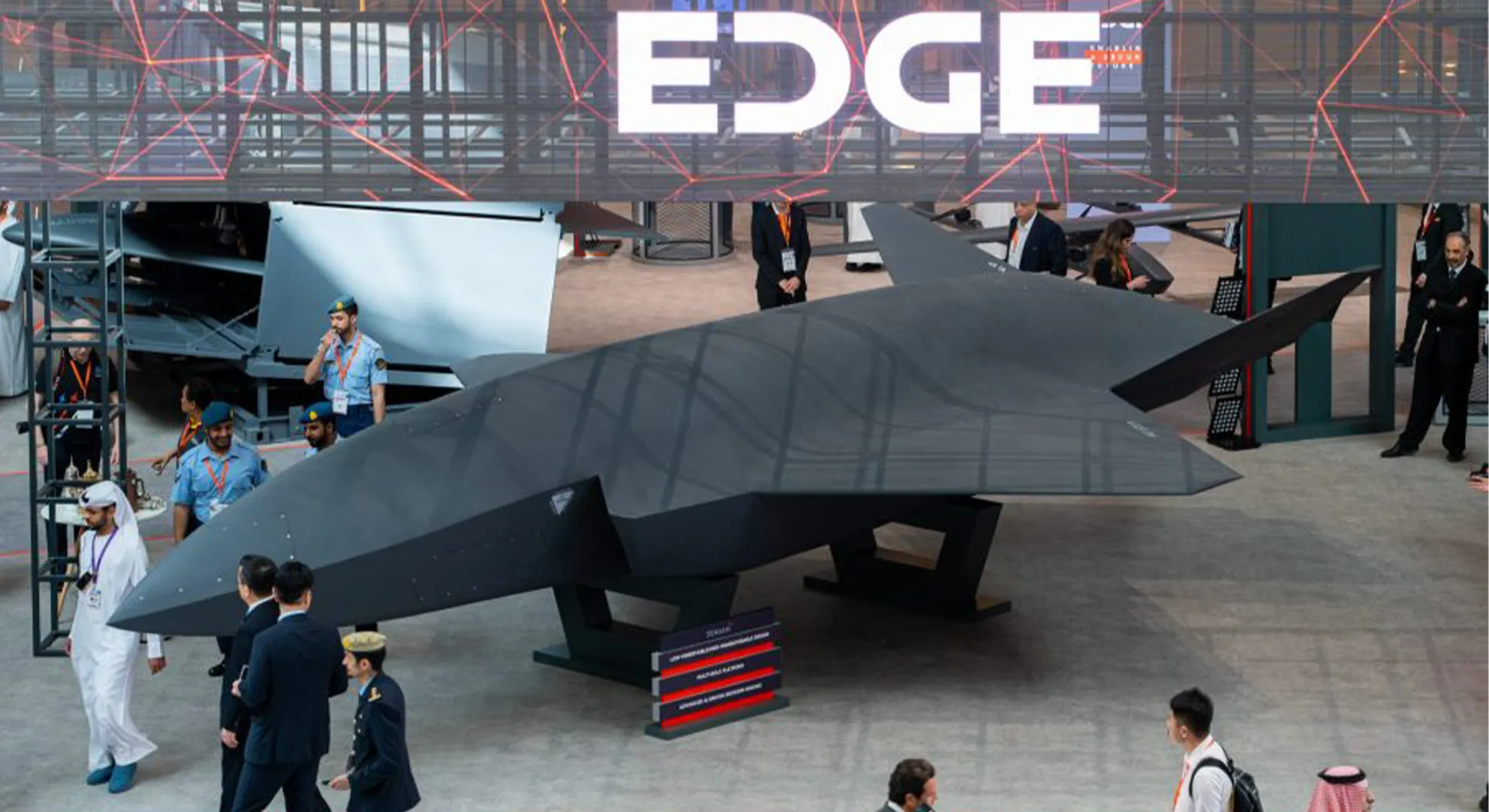
The Chief Technology Officer of EDGE Group spoke to Insider 18, revealing insights into how the UAE’s defence sector operated and adapted during what is described as one of the most prolonged security challenges in the nation’s recent history.
Inside the operational cycle of EDGE Group, the pace of work during the period of sustained aerial threats followed an almost continuous, high-pressure rhythm. Requests for system improvements did not arrive at predictable intervals; instead, they could come at any hour, often in the middle of the afternoon, setting off a chain reaction across engineering teams.
According to accounts shared within the organisation, a typical request might be received around 4 pm. Once flagged, engineers would immediately begin analysing the requirement and breaking it into deployable tasks. One team would stay behind and work late into the night, focusing on coding updates, testing adjustments, and validating system performance under simulated conditions. As that group wound down in the early hours, a second team would already be preparing to take over.
Before dawn, fresh engineers would arrive on site, reviewing the progress made overnight and conducting final checks. Their objective was to ensure that any updated systems could be deployed quickly and safely before operational shifts resumed. In many cases, by around 10 am, the improved versions of the systems would already be in place, ready for the next wave of operators to use without disruption.
This cycle of rapid development and deployment became a defining feature of EDGE Group’s internal response during a period when regional security conditions were highly volatile. The organisation’s engineers were not working in a conventional development environment where software releases could take weeks or months. Instead, they were operating in an accelerated defence technology loop, where response time was measured in hours, not days.
This intense operational tempo coincided with a period in which the UAE’s air defence systems were repeatedly activated. Between late February and early May, defence systems were engaged on a large number of occasions to intercept incoming threats. Reports indicate that hundreds of ballistic missiles, dozens of cruise missiles, and thousands of unmanned aerial vehicles were detected and addressed during this timeframe.
By May 4, cumulative figures showed that UAE air defence networks had responded to approximately 549 ballistic missiles, 29 cruise missiles, and around 2,260 drones since the beginning of the escalation on February 28. In total, this amounted to nearly 3,000 individual attempted incursions. These numbers highlight the scale and intensity of the operational environment in which defence systems were functioning.
A significant aspect of this response involved electronic warfare capabilities, including jamming technologies developed within the country. Locally engineered systems reportedly played a critical role in disrupting incoming drones, with estimates suggesting that more than 85 per cent of hostile unmanned aerial vehicles were neutralised before reaching their intended targets. These systems formed a key part of the layered defence architecture, working alongside radar detection, interception units, and command-and-control platforms.
Within this broader framework, EDGE Group’s electronic warfare solutions were positioned as an essential component of the national response strategy. Engineers and developers were continuously refining algorithms, updating signal processing models, and improving system resilience in real time. The goal was not only to respond to existing threats but also to anticipate adaptations made by adversarial systems.
Dr Chaouki Kasmi, Group Chief Technology Officer and President of Technologies and Industrialisation at EDGE Group, described the environment as one defined by urgency and constant adaptation. Speaking about the internal mindset, he emphasised that the organisation had to move at the same speed as evolving threats, which required an unusually high level of coordination between engineering teams, deployment units, and operational commanders.
He explained that in such conditions, the expectation was to deliver solutions quickly and ensure that clients and end-users received updated capabilities without delay. The focus was on shortening the gap between identifying a requirement and deploying a functional response. This meant reducing traditional development cycles and adopting a more fluid model of continuous improvement.
Kasmi highlighted that adversaries were not static in their approach. Instead, they were actively modifying their systems, adjusting flight characteristics, upgrading sensor capabilities, and introducing countermeasures designed to bypass existing defences. This dynamic created a situation where defence technology could not remain fixed for long periods. It had to evolve constantly to remain effective.
From his perspective, the challenge was not just technological but also operational. Engineers needed to ensure that systems in the field could be updated quickly without disrupting ongoing defence operations. This required a high level of reliability in software deployment processes, as well as strong communication between technical teams and operational users.
Kasmi was physically present during much of this period, working closely with teams across different shifts. When asked about his personal routine during this intense phase, he acknowledged that rest became secondary to operational demands. Sleep, he noted, was minimal and irregular, often taking a backseat to urgent technical priorities.
He also emphasised that his experience was not unique within the organisation. Many engineers, developers, and technical specialists were working under similar conditions, driven by a shared sense of responsibility. The focus was not on individual recognition or reward but on ensuring that systems remained operational and capable of responding to emerging threats.
According to him, the driving motivation across teams was a collective commitment to national security. Employees were aware that their work had direct implications for the protection of the country, which added a strong sense of purpose to their efforts. This shared mission helped sustain long hours, rapid decision-making, and continuous system updates under pressure.
Kasmi described the environment as one where urgency was constant and expectations were high. The organisation had to remain flexible, responsive, and technically prepared at all times. There was no room for delay, as any gap in response could potentially impact defensive readiness.
He also pointed out that working in such conditions required a shift in mindset. Traditional development timelines and structured release cycles were replaced by an adaptive model where systems were improved continuously. Engineers had to think in terms of immediate impact rather than long-term deployment schedules.
Throughout this period, the emphasis remained on maintaining operational readiness while ensuring that technological systems evolved in parallel with emerging threats. The combination of rapid engineering cycles, real-time deployment, and constant monitoring created an environment where defence technology and operational execution were tightly interconnected.
In reflecting on the experience, Kasmi underscored the dedication of the teams involved. For many, the work extended beyond professional responsibility and became a personal commitment to national protection. Despite the intensity and lack of rest, the focus remained steady on one objective: ensuring that the country’s defence systems were capable of responding effectively to any challenge, at any moment.

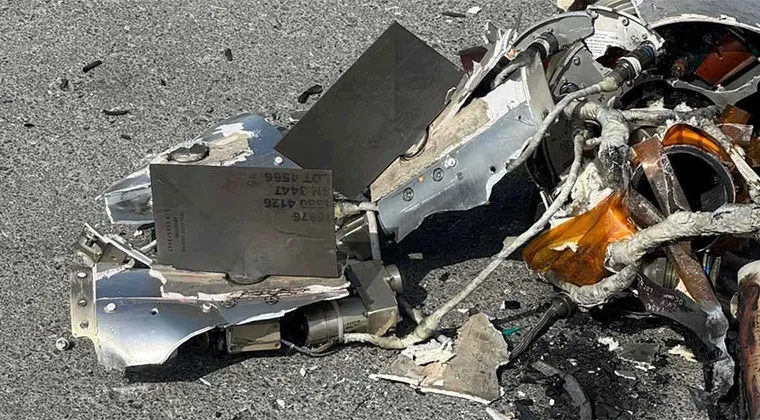
The response during this period, according to Dr Chaouki Kasmi of EDGE Group, was not the result of last-minute improvisation or ad-hoc engineering fixes. Instead, it was built on years of structured investment in integrated defence systems and data-driven technologies that had been steadily developed long before the crisis began.
At the core of this capability was a layered electronic warfare and sensing architecture that brought together multiple technologies into a single operational ecosystem. Radar systems, electro-optical sensors, and radio frequency (RF) detection tools were not functioning in isolation. Rather, they were connected through a unified command-and-control framework designed to provide a real-time operational picture of the airspace.
This integrated structure allowed information from different detection sources to be combined, cross-verified, and processed in a coordinated manner. Over time, these systems accumulated vast amounts of both live operational data and synthetic data generated through simulations and testing environments. This continuous flow of information became a critical asset once active threats intensified.
When the escalation began, the existing data infrastructure meant that the system was not starting from scratch. Instead, it was able to immediately feed historical and real-time data into artificial intelligence models that were already deployed within the operational environment. These models had been trained over time to recognise patterns, classify threats, and support decision-making processes under pressure.
As Kasmi explained, the focus was never simply on collecting large volumes of data. The real priority was ensuring that this data could be operationalised effectively. In his words, the process was structured around a continuous loop: data is collected from sensors and systems, processed and cleaned, then annotated to make it usable for machine learning applications. Once refined, the data is used to retrain AI models, which are then redeployed back into operational systems.
This cycle, he noted, was designed to operate at high speed. Instead of traditional long development timelines for model updates, the system was engineered to complete iterations in a matter of hours. This rapid feedback loop allowed the defence architecture to evolve in near real time, adapting to changing threat patterns as they emerged.
Within the organisational structure of EDGE Group, another important factor was how cross-functional collaboration was implemented during this period. Traditional organisational hierarchies were significantly reduced to accelerate decision-making and problem-solving. In many cases, administrative boundaries between departments were intentionally blurred or removed altogether.
Engineering teams did not operate in isolation from other business functions. Procurement specialists worked directly alongside system designers, while finance professionals were embedded within engineering discussions. This structure ensured that decisions about design, sourcing, and cost were made simultaneously rather than sequentially, significantly reducing delays.
Kasmi described a working environment where engineers developing technical solutions could immediately consult procurement teams if a component was unavailable or delayed. In such cases, rather than waiting for external supply chains to resolve the issue, the design itself would often be adjusted overnight to accommodate available alternatives. This flexibility allowed production and development to continue without interruption, even under supply constraints.
A key principle guiding this approach was sustainability. While speed was essential, cost efficiency remained equally important. Engineers were encouraged to design solutions that could be scaled and maintained over time without excessive financial burden. According to Kasmi, cost-effectiveness was not treated as a secondary concern but as a core requirement for long-term operational viability.
During this period of heightened operational demand, a new generation of engineers was also being rapidly integrated into active projects. Among them were young Emirati trainees who were part of EDGE’s structured engineering boot camp program. This program was originally designed as a six- to eight-month training pathway aimed at developing technical expertise across defence-related disciplines.
However, when the operational situation intensified, these trainees were moved directly into production and development environments much earlier than planned. Instead of completing their training in a classroom or controlled learning setting, they were placed inside working facilities where real systems were being designed, tested, and deployed.
Kasmi noted that this accelerated exposure had a profound impact on their learning curve. Within a short period, these young engineers were able to experience practical challenges that would normally take years to encounter in traditional training pathways. In approximately six weeks, they were exposed to complex problem-solving scenarios, high-pressure decision-making, and real-time system adaptation.
This immersive experience not only accelerated their technical development but also deepened their understanding of operational urgency. They learned firsthand what it meant to deliver under strict time constraints, how to respond to rapidly changing requirements, and how to maintain performance standards in a dynamic environment.
According to Kasmi, this period revealed the emergence of a new generation of national talent within the engineering field. These individuals were not only gaining technical knowledge but also developing leadership qualities shaped by direct exposure to high-stakes operational conditions.
At a broader system level, the conflict also acted as a catalyst for accelerating artificial intelligence integration within EDGE Group. Each operational engagement generated new streams of data. Every interception or defensive action produced information that could be analysed, structured, and fed back into existing machine learning models.
This created a continuous improvement loop in which real-world operational data was immediately reintegrated into the systems that had executed the response. Data from engagements was cleaned, labelled, and processed before being reintroduced into AI models that were already active within the defence infrastructure.
Kasmi explained that this process significantly enhanced the organisation’s ability to refine its systems in real time. Instead of relying solely on historical datasets or laboratory simulations, the models were constantly being updated using live operational feedback. This allowed for more accurate predictions, faster response times, and improved system resilience.
He also highlighted that this approach marked a broader transformation within the organisation’s research and development framework. Artificial intelligence was no longer a supplementary tool used in isolated projects. Instead, it had become a core enabler embedded across both hardware and software development processes.
By integrating AI into every stage of the development cycle, EDGE was able to accelerate innovation and reduce the time required to move from concept to deployment. This shift represented a fundamental change in how defence technologies were designed, tested, and refined.
From a commercial perspective, EDGE Group also entered this period with a strong international footprint. The organisation reported annual revenues of approximately $5 billion, with a significant portion—around 70 per cent—generated from exports to international clients.
Kasmi emphasised that this global presence was not limited to sales agreements but was supported by active operational collaborations and industrial partnerships in multiple regions. The company maintained relationships and projects across different continents, including South America, Europe, and Asia.
For example, EDGE had engagements in Brazil, where trials and demonstrations were conducted with naval forces. It also had strategic involvement with companies such as Milrem Robotics in Estonia and Anavia in Switzerland. These partnerships contributed to a diversified industrial network that spanned multiple supply chains and technological ecosystems.
Through acquisitions and collaborations with various startups and established firms worldwide, EDGE was able to expand its access to different areas of expertise. This included advanced manufacturing techniques, robotics development, and specialised defence technologies.
Kasmi noted that this diversification became particularly important when global logistics were disrupted. At the height of the conflict, international travel and transportation were significantly affected, making it difficult to move personnel, equipment, and components between countries.
In response, the organisation prepared for scenarios where external supply routes might be restricted or delayed. This meant investing in local production capabilities and ensuring that critical systems could continue to be developed and manufactured even under constrained conditions.
Production lines were designed to operate independently of global disruptions, with a focus on maintaining continuity in essential capabilities. The assumption was that certain defence requirements would need to be sustained regardless of external circumstances, including limited access to international transport routes.
This resilience planning ensured that key systems could continue to function and be deployed even when logistical challenges arose. It also reinforced the importance of building self-sufficient industrial capacity within the country’s defence ecosystem.
Ultimately, the scale and intensity of the operational period underscored the importance of preparedness, adaptability, and integrated technological systems. Over a span of 67 days, thousands of attempted incursions were recorded and addressed through coordinated defence mechanisms.
Within this timeframe, the systems developed and operated by EDGE Group played a central role in ensuring that defensive responses remained consistent, data-driven, and continuously evolving.