Etihad Rail is considering adding a dedicated stop at Dubai’s new Al Maktoum International Airport, enhancing connectivity between the airport, major cities, and key economic zones across the United Arab Emirates.
Etihad Rail may include a station at Dubai’s upcoming Al Maktoum International Airport.
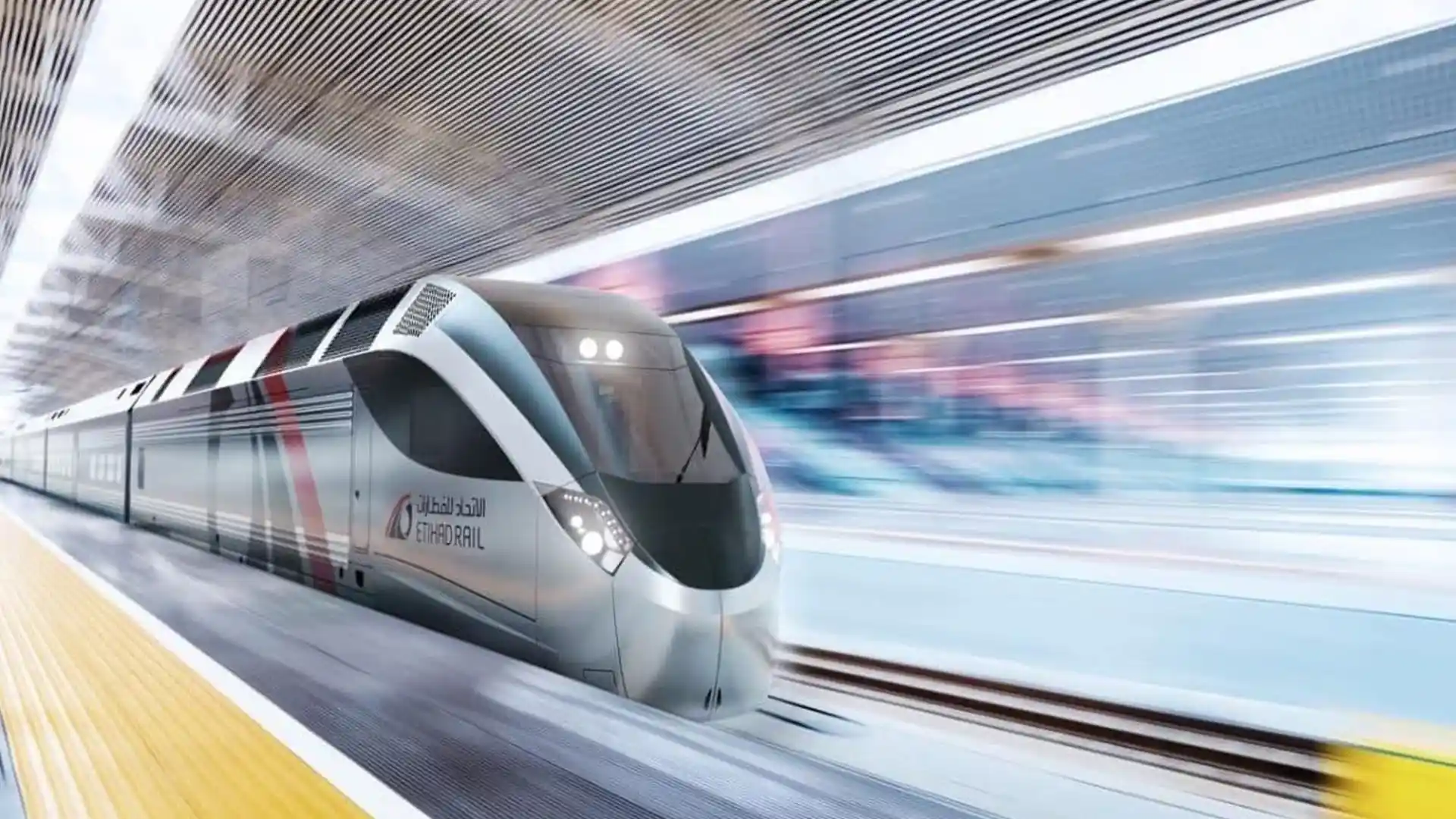
Etihad Rail, the national rail initiative of the UAE, may feature a station at Dubai’s upcoming Al Maktoum International Airport, located within Dubai World Central. This addition could enable travelers to complete check-in procedures directly from train stations.
In an interview with Flight Global, Dubai Airports CEO Paul Griffiths mentioned that the Etihad Rail network planned across the UAE is anticipated to incorporate a stop at DWC (Dubai World Central).
The CEO of Dubai Airports envisions a future fully integrated system that would allow travelers heading to the airport to check in their luggage directly at designated train stations.
Etihad Rail plans to begin its passenger train operations in 2026. By 2030, the network is expected to serve approximately 36.5 million travelers each year.
The railway will link major destinations across the UAE, such as Abu Dhabi, Dubai, Sharjah, Ras Al Khaimah, Fujairah, Al Ain, Ruwais, Al Mirfa, Al Dhaid, and Ghuweifat near the Saudi border, as well as Sohar in Oman through the Hafeet Rail connection.
As part of Dubai’s growing transportation network, a new high-speed electric railway will link Abu Dhabi and Dubai, featuring six stations located at Reem Island, Yas Island, Saadiyat Island, Zayed Airport, near Al Maktoum Airport in Dubai, and Jaddaf close to Dubai Creek. The high-speed service will enable passengers to travel between the two emirates in about 30 minutes, with trains reaching speeds of up to 350 km/h.
In April 2024, Dubai authorities revealed plans to shift all operations from Dubai International Airport (DXB) to Al Maktoum International Airport (DWC). The new passenger terminal at DWC, valued at Dh128 billion, is designed to handle up to 260 million passengers per year and is expected to completely take over DXB’s functions within the next decade.

With Dubai International Airport nearing its maximum capacity, Al Maktoum International Airport is set to take on the city’s rapidly increasing passenger traffic.
Dubai International currently holds the title of the world’s busiest international airport, welcoming 46 million travelers in the first half of 2025 — its highest-ever midyear figure. During the second quarter alone, DXB handled 22.5 million passengers, reflecting a 3.1 percent rise compared to the same timeframe last year.
In a previous interview with Khaleej Times, Paul Griffiths noted that Dubai Airports will need staffing levels equivalent to more than one full airport during the testing and transition phase from DXB to DWC.
He explained that the goal is to build a completely seamless airport experience, allowing travelers to move through every stage of their journey without interruptions, using a single biometric ID for verification.
In his interview with Flight Global, Dubai Airports CEO Paul Griffiths added that the vision is to design an airport where passengers can easily move between compact concourses. Leveraging artificial intelligence, aircraft and connections can be dynamically scheduled, ensuring that transfer passengers are positioned as close as possible to their connecting flights.
Etihad Rail, the United Arab Emirates’ ambitious national railway project, is expected to play a key role in transforming the country’s transportation landscape — and one of its most significant developments could be the inclusion of a stop at Dubai’s upcoming Al Maktoum International Airport. Located within Dubai World Central, the airport is set to become one of the largest and most advanced aviation hubs in the world once fully operational.
If the proposed station becomes a reality, it would mark a major milestone in integrating air and rail travel across the UAE. The connection would not only provide seamless access between key cities such as Abu Dhabi, Dubai, Sharjah, and Ras Al Khaimah but also greatly enhance passenger convenience for those traveling through Al Maktoum International Airport. Future travelers may be able to check in their luggage and complete boarding procedures at train stations before arriving at the airport, reducing travel time and improving efficiency.
This integration aligns with Dubai’s broader vision to build a fully connected, sustainable transport ecosystem, where rail, road, and air networks operate in harmony. Ultimately, the Etihad Rail link to Al Maktoum International Airport could redefine regional mobility and strengthen the UAE’s position as a global transportation hub.