Calisthenics is gaining momentum across the UAE, with athletes combining basic movements such as pull-ups and dips with demanding skills like planches, handstands and other bodyweight exercises that require exceptional strength, balance, control and consistent training.
Calisthenics in the UAE: A Look at Real Training, From Pull-Ups to Advanced Planche Skills.
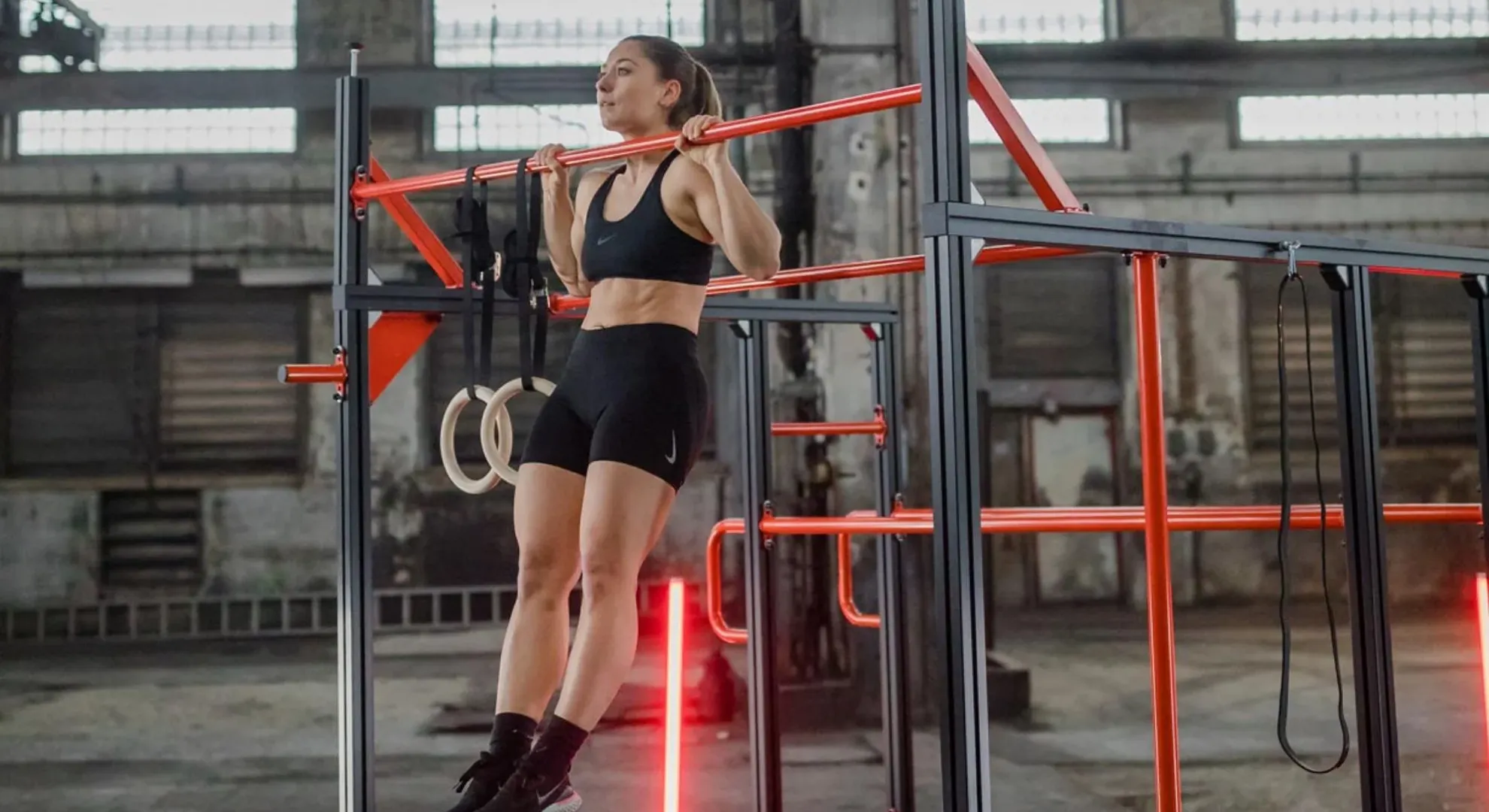
Across social media, calisthenics is frequently promoted through brief workout plans that promise rapid and striking physical changes. However, experienced athletes advise newcomers to approach these advertisements carefully, noting that meaningful progress generally requires patience, consistency, proper technique and realistic expectations.
Beyond Push-Ups: How Calisthenics Is Growing in Abu Dhabi
The idea of calisthenics is often presented online as something simple: spend a few minutes each day performing basic bodyweight exercises and, before long, achieve a dramatically transformed physique.
The reality for serious practitioners is very different.
Inside a gym in Abu Dhabi, calisthenics training can involve athletes exploding upward over horizontal bars, balancing their entire bodies parallel to the floor and performing muscle-ups while carrying additional weight. These movements may look effortless when performed by experienced athletes, but reaching that level can require months or even years of structured preparation.
For competitive athletes, calisthenics is much more than a collection of familiar exercises such as push-ups, squats and pull-ups. Although the discipline developed from bodyweight conditioning and street-workout culture, advanced calisthenics requires a combination of physical strength, balance, mobility, coordination, body awareness and long-term commitment.
Training generally begins with fundamental movements. Athletes gradually increase their strength and technical ability before attempting more demanding skills. The process is progressive, with each stage preparing the body for the next challenge.
Georgi Petkov, an Abu Dhabi-based world champion and trainer who has spent approximately 13 years practising calisthenics and about a decade coaching others, said mastering advanced movements begins with developing a strong foundation.
He explained that repeated practice of fundamental exercises helps prepare the body to handle more complex skills. The more consistently athletes perform the basics, he said, the better prepared their bodies become to learn new movements.
That gradual progression is particularly important when athletes begin working towards skills such as the planche and front lever.
Both movements require athletes to control their bodies while maintaining a largely horizontal position, but they place different demands on the muscles. The planche requires substantial shoulder, arm and core strength, while the front lever places considerable emphasis on the core and lat muscles.
These movements are among the skills that distinguish advanced calisthenics from ordinary recreational bodyweight exercise.
International champion and coach Charbel Khoury said developing the necessary strength can take anywhere from six months to a year for certain skills, although the exact timeframe depends heavily on the individual.
Training history, physical condition, consistency, technique and natural differences between athletes can all influence how quickly someone progresses.
Khoury knows the progression personally. He began training in Lebanon in 2013 when he was just 13 years old. At the time, he recalled being capable of only two or three pull-ups.
His early ability was far removed from the level required for international competition. Over time, however, he progressed from basic exercises to increasingly difficult movements and eventually competed at national and international levels.
He said he won the Lebanese national championship every year from 2014 through 2024-25.
His development demonstrates how dramatically a person’s abilities can change through years of structured training.
For Khoury, calisthenics cannot be reduced to performing a single familiar exercise repeatedly. The discipline involves learning techniques, following progressions, developing strength and becoming part of a community built around those challenges.
“There is a lot more to calisthenics than just doing a push-up,” he said.
A Growing Community in Abu Dhabi
The development of calisthenics in Abu Dhabi has also been accompanied by the growth of a local community.
Today, the city’s scene includes people at very different stages of the discipline. Some are newcomers learning fundamental exercises, while others are experienced athletes preparing for national or international competitions.
Khaled Al Jaberi, founder of Muscle Up Fitness, remembers a time when the local community was much smaller.
When he first became interested in calisthenics around 2018, Jaberi said it was difficult to find a gym in Abu Dhabi that focused specifically on the discipline.
The number of people actively involved was also limited. According to Jaberi, the community at that stage was small enough that its members could almost be counted on one hand.
Over time, that began to change.
His gym started organising competitions, challenges, workshops and free outdoor gatherings in Abu Dhabi parks. These activities were designed not only for experienced athletes but also for people who had never attempted calisthenics before.
The objective was to make the sport more accessible.
For newcomers, advanced calisthenics can initially appear intimidating. Watching an experienced athlete perform a planche, front lever or weighted muscle-up can make the discipline seem far beyond the reach of an ordinary beginner.
The local training community has attempted to bridge that gap by creating structured progressions.
Jaberi said classes were developed for different ability levels, allowing participants to start with easier versions of movements before gradually progressing towards intermediate and advanced exercises.
This approach means that beginners do not have to attempt advanced skills immediately. Instead, they can develop the strength and coordination required for more demanding movements over time.
Progress Looks Different for Every Athlete
The different backgrounds of Abu Dhabi’s calisthenics athletes also demonstrate that there is no single route into the sport.
Abdulla Al Hosani, for example, came to calisthenics through running.
He had already developed an interest in endurance training but experienced repeated running-related injuries, including problems involving his shoulder and lower back.
Those issues encouraged him to search for a form of exercise that would help him develop greater upper-body strength.
Calisthenics eventually became part of his training routine.
Al Hosani said that as he developed more strength in his upper body and core, he noticed improvements in the problems he had previously experienced with his shoulder and back.
Rather than abandoning running, he combined the two forms of training.
He now continues to run while also practising calisthenics several times each week. His development has taken him beyond recreational training and into competition.
His experience illustrates how calisthenics can complement other sports rather than necessarily replacing them.
For some athletes, it provides an opportunity to address weaknesses, improve body control or develop strength that may not be the central focus of another discipline.
From Beginner to Advanced Skills
Other members of Abu Dhabi’s community are taking a different route.
Zayed Al Salami, who is relatively new to the sport, has already begun working towards advanced movements including the front lever.
The local community also includes younger participants who are learning handstands and other technically demanding exercises while continuing their education at school.
Their progress reflects one of the defining characteristics of calisthenics: athletes can continually move from one challenge to another.
A beginner may start by learning how to perform a controlled pull-up. Once that becomes achievable, the next objective could be a muscle-up. From there, an athlete may begin working with additional weight or attempt more advanced strength skills.
The process can continue for years.
Anastasiia Starovoitova, an international champion and trainer, also entered the sport without an extensive calisthenics background.
She encountered the discipline while travelling in Ibiza and became interested in the possibility of training primarily with her own body.
That accessibility was one of the characteristics that attracted her to calisthenics.
Unlike some forms of training that require extensive equipment, many fundamental calisthenics exercises can be performed with minimal equipment. A person can use bars, benches or other suitable structures in a gym or outdoor training area.
Starovoitova eventually progressed from starting at a beginner level to competing internationally.
She competed in France and later participated at European and world-level events. In 2025, she won a world championship in Bulgaria.
Her progression illustrates the distance between the apparent simplicity of calisthenics and the level of physical preparation required for elite competition.
The Difficulty Behind the Movements
Although calisthenics can be practised almost anywhere, that does not mean advanced movements are easy to master.
One of the most recognisable skills is the muscle-up.
Khoury describes the movement as requiring an explosive pull that brings the athlete high enough above the bar to transition into a pushing position.
The movement combines several phases into one continuous action. It requires sufficient pulling strength, coordination, timing and control to move from hanging beneath the bar to supporting the body above it.
Adding weight increases the challenge considerably.
The full planche is even more demanding for many athletes. Instead of relying on the bar to support the body vertically, the athlete must maintain a horizontal body position while supporting the body through the arms and shoulders.
Holding that position requires significant strength and precise control.
For athletes pursuing competitive calisthenics, these movements become long-term objectives rather than quick exercises.
There Is Always Another Challenge
One of the reasons athletes remain involved in calisthenics for years is that progress rarely has a clearly defined endpoint.
Starovoitova said the discipline constantly provides another target.
An athlete may first aim to complete a certain number of pull-ups. After achieving that goal, the next challenge could be a muscle-up. Once the muscle-up is mastered, the athlete might begin experimenting with weighted versions or try to increase the amount of weight lifted.
The cycle continues as athletes increase repetitions, add resistance or attempt increasingly technical movements.
That constant progression is one of the elements that makes calisthenics appealing to experienced practitioners.
There is always another movement to learn or another version of an existing skill to master.
For some athletes, the attraction lies in the measurable nature of the progression. A person can see a clear difference between being unable to perform a pull-up and eventually completing several repetitions. Similarly, mastering a muscle-up provides a tangible milestone before the athlete moves on to weighted variations or more advanced skills.
The same principle applies to static movements such as the front lever and planche.
An athlete may initially struggle to hold even a simplified progression. With continued training, they can gradually extend the duration, move towards more difficult variations and eventually attempt the complete skill.
More Than Physical Appearance
The contrast between social-media fitness marketing and serious calisthenics is particularly noticeable.
Online advertisements sometimes present bodyweight training as a shortcut to a dramatically different physique, suggesting that short daily workouts can deliver rapid results.
Experienced athletes describe a more gradual reality.
Competitive calisthenics is built around progressive overload, technical development and repeated practice. Advanced skills cannot generally be achieved simply by repeating a handful of basic exercises for a few minutes each day.
The discipline demands patience.
Strength must be developed before the body can safely handle more difficult movements. Technique must also be refined because advanced exercises require athletes to control their body position precisely.
Flexibility and mobility can also play a role, depending on the movement.
For someone watching an experienced athlete perform a planche or weighted muscle-up, the final movement may last only a few seconds. Behind those seconds, however, can be years of accumulated training.
Building a Culture Around Training
The growth of Abu Dhabi’s calisthenics community suggests that the discipline is becoming more than an individual form of exercise.
Competitions, workshops, outdoor gatherings and group classes have helped create opportunities for people to train together.
That community aspect can be particularly important for beginners.
Someone entering a gym for the first time may not know which progression to follow or how to structure their training. Working alongside more experienced athletes can provide exposure to different techniques and training methods.
At the same time, experienced practitioners can continue challenging themselves by learning from one another and preparing for competitions.
The presence of athletes with international achievements also provides examples for younger or newer participants who want to understand how far the discipline can be taken.
A Long-Term Training Journey
The experiences of Petkov, Khoury, Jaberi, Al Hosani, Al Salami and Starovoitova show the variety of paths within calisthenics.
Petkov has spent more than a decade practising and coaching the discipline. Khoury progressed from managing just a few pull-ups as a young teenager to becoming a national and international competitor. Jaberi helped build a local training environment in Abu Dhabi when the community was still small.
Al Hosani incorporated calisthenics into a routine that already included running, while Al Salami represents a newer generation of athletes working towards advanced skills.
Starovoitova’s story demonstrates that even someone starting from the beginning can eventually reach the highest levels of competition with sustained training.
Their experiences also highlight the importance of progression.
Calisthenics may begin with movements that appear familiar, but the discipline can develop into highly technical strength training. Pull-ups can lead to muscle-ups; muscle-ups can lead to weighted variations; and those achievements can become stepping stones towards increasingly complex skills.
The journey is not necessarily linear, and progress can differ substantially between athletes.
What one person achieves within several months may take another athlete considerably longer. Training history, physical characteristics, recovery, consistency and coaching can all influence development.
From Basic Movements to Elite Competition
At its foundation, calisthenics remains a form of bodyweight exercise.
But for athletes who take it seriously, the discipline evolves into a demanding combination of strength training and technical skill.
The movements performed by advanced athletes in Abu Dhabi gyms are the result of years of progression rather than quick routines.
The sight of someone holding a perfectly horizontal planche or completing a weighted muscle-up can make the movement appear almost effortless. In reality, such skills represent the culmination of extensive preparation.
The sport’s development in Abu Dhabi is also creating more opportunities for people to experience that progression for themselves.
With gyms, competitions, workshops, outdoor sessions and community training, newcomers have more ways to enter the discipline and learn the basics.
For those who remain committed, the training can become an ongoing cycle of setting goals, achieving them and finding a more difficult challenge.
That may begin with a first pull-up and eventually progress to a muscle-up, a weighted variation, a front lever or a planche.
As Starovoitova noted, there is no obvious final point. Once one movement is achieved, another challenge can take its place.
That continuous progression is perhaps one of the defining features of calisthenics: the goal is not simply to reach a final exercise, but to keep developing strength, control and technique as the next challenge comes into view.
The Reality Behind ‘15-Day’ Transformation Claims
Few phrases attract attention in the online fitness world quite like a promise of a dramatically different body in just 15 days.
Calisthenics has increasingly become part of that marketing language. Across social-media platforms, advertisements promote short bodyweight programmes that claim to deliver striking physical changes within a matter of weeks, and sometimes even days. These promotions are often accompanied by dramatic before-and-after photographs designed to suggest that major transformations can happen almost immediately.
For experienced calisthenics athletes, however, the reality is considerably more complicated.
The discipline can certainly improve strength, endurance, coordination and overall physical fitness, but developing the kind of advanced physique and skills associated with high-level calisthenics generally requires considerably more time than a short online programme suggests.
Georgi Petkov, an Abu Dhabi-based calisthenics world champion and trainer, urged people to approach extreme transformation claims with caution.
He pointed out that someone beginning with a high level of body fat cannot realistically expect to achieve an extremely lean, highly muscular physique within 15 days simply by following a short exercise programme.
“If you’re 100 kilos with a body fat of 40 per cent, it’s impossible to become someone who’s with 6 per cent fat and super shredded” in 15 days, he said.
His point is not that short programmes are necessarily useless.
Instead, Petkov distinguishes between the realistic benefits of beginning regular exercise and the exaggerated physical changes sometimes promised in online advertising.
Someone who has previously been inactive and begins following a consistent exercise routine can reasonably expect improvements in fitness over time. Strength, stamina, movement quality and general physical condition can all improve when training is performed regularly and appropriately.
The problem arises when a short programme is marketed as a shortcut to an extreme physical transformation.
Exercise Can Still Be Valuable
Petkov said that even programmes carrying labels such as “military calisthenics” can have value if they encourage people to become physically active.
Bodyweight exercises can form an effective part of a fitness routine, regardless of the label attached to the programme.
For someone who is new to exercise, movements such as push-ups, squats, pull-ups and dips can provide a starting point for developing strength and coordination.
The important distinction is between the exercise itself and the marketing surrounding it.
A person may become fitter by following a short training routine, but that does not mean the same person will undergo the dramatic physical transformation shown in a promotional image within a few weeks.
Physical development is generally a gradual process.
Strength increases through repeated training and adequate recovery. More advanced movements require the body to adapt to progressively greater demands. Changes in body composition also depend on factors beyond exercise, including nutrition, recovery, individual physiology and consistency.
This is why experienced athletes are cautious about promises of instant results.
What Does ‘Military Calisthenics’ Mean?
Another term that has become increasingly visible online is “military calisthenics”.
The phrase can create confusion because military-style physical training and competitive calisthenics overlap in their use of bodyweight movements, but they are not necessarily the same form of training.
Petkov explained that exercises such as pull-ups, push-ups, dips and monkey-bar movements have long been associated with military and general physical conditioning.
Muscle-ups can also be used in certain forms of physical training.
These movements can develop qualities such as strength, agility, coordination and speed, which are useful in physically demanding environments.
However, competitive calisthenics takes the basic principles of bodyweight exercise considerably further.
Athletes who train competitively may spend significant amounts of time developing specific static holds, explosive movements, weighted exercises and technical combinations.
Depending on the discipline, freestyle calisthenics can also involve linking several movements together in controlled sequences.
As a result, an exercise that looks familiar to someone watching a military-style workout may have an entirely different purpose when performed by a competitive calisthenics athlete.
The Foundation Comes First
The distinction becomes clearer when looking at how athletes actually develop their skills.
A beginner may start with a small number of controlled push-ups or pull-ups.
The objective at that stage is not to perform a spectacular movement but to establish the strength and technique needed for future progression.
With consistent training, a person may increase the number of repetitions they can perform.
Eventually, they may begin working towards a muscle-up.
The muscle-up requires considerably more than simply being able to perform a pull-up. It combines a powerful pulling movement with a transition over the bar and a pushing phase at the top.
For an athlete who eventually wants to perform a weighted muscle-up, even greater strength and control are required.
The same principle applies to static skills.
A conventional plank is a familiar exercise for many people. But a planche is an entirely different challenge.
In a planche, the athlete supports the body through the arms while keeping the body extended horizontally above the ground. The shoulders, arms and core must generate enough strength to maintain the position.
The visual difference between the two exercises is dramatic, but the more important difference is the training required to progress from one level to another.
Progress Takes Time
Petkov said one of the most valuable lessons calisthenics provides is an understanding of progression.
Athletes cannot simply decide to perform an advanced skill and expect to succeed immediately.
The body needs time to adapt.
“If you want to achieve a certain skill, it basically takes time. It teaches you patience,” Petkov said.
That principle is central to the training philosophy followed by many experienced athletes.
Rather than focusing exclusively on the final movement, they break the skill into manageable stages.
An athlete attempting a front lever, for example, may begin with easier progressions before gradually increasing the difficulty.
The same applies to planche training.
Strength and control are built through a series of increasingly demanding exercises rather than through a single attempt at the finished skill.
This process can be repetitive.
Athletes may spend weeks or months working on movements that appear relatively simple to an outside observer.
Yet those repetitions are what allow the body to adapt.
The Reality Behind Viral Videos
Social media tends to show the most impressive moments.
A short video can capture an athlete holding a planche, completing a flawless muscle-up or performing a heavily weighted movement.
What the video usually does not show is the training that came beforehand.
Viewers may see a few seconds of an advanced skill without seeing the years of pull-ups, dips, holds, mobility work, strength exercises and failed attempts that contributed to the final performance.
This can create a misleading impression of how quickly advanced skills can be learned.
The same problem can occur with transformation photographs.
A before-and-after image may suggest that the displayed result came entirely from a particular short programme, even though factors such as previous training history, diet, lighting, posing, genetics and the length of time actually spent training may not be visible.
For beginners, separating realistic training advice from promotional content is therefore important.
Competitive Calisthenics Is Highly Specialised
Competitive calisthenics represents another level of commitment.
Athletes may specialise in different areas, including freestyle combinations, static movements, weighted exercises or endurance-based challenges.
Each area requires its own technical demands.
Freestyle athletes need to combine strength and movement control while executing sequences with precision.
Static specialists may spend large amounts of time developing the strength required to maintain difficult positions.
Weighted calisthenics adds external resistance to movements that are already demanding when performed with bodyweight alone.
Endurance-focused athletes, meanwhile, work on their ability to perform repeated movements while maintaining technique.
Although these disciplines share a common foundation, the training required can differ considerably.
This is why simply describing all bodyweight exercise as “calisthenics” can sometimes obscure the range of activities covered by the term.
Abu Dhabi’s Growing Training Community
The development of calisthenics in Abu Dhabi has provided athletes with opportunities to explore these different areas.
What may begin as casual training can develop into a structured programme.
People can enter the community through basic exercises and gradually discover more advanced aspects of the discipline.
Some may remain focused on general fitness, while others may become interested in specific skills or competition.
The progression from beginner movements to advanced exercises can also create a strong sense of achievement.
For someone who has never completed a pull-up, achieving the first clean repetition can represent a significant milestone.
Once that becomes possible, the athlete may set a new goal.
Perhaps it is reaching 10 pull-ups.
Then it may be learning a muscle-up.
After that, the challenge could become a weighted muscle-up or a more advanced static skill.
This process means that athletes are continually working towards something new.
There Is No Final Level
Anastasiia Starovoitova, an international champion and trainer, has highlighted this continuing cycle of challenges as one of the attractions of calisthenics.
For her, achieving one movement does not mean training has reached an endpoint.
Instead, completing one skill creates an opportunity to pursue another.
An athlete might move from basic pull-ups to muscle-ups and then introduce additional weight. From there, they may increase the resistance, attempt more repetitions or begin learning another technically difficult movement.
This creates an ongoing progression.
The training goal can change as an athlete’s abilities improve.
That characteristic also helps explain why experienced athletes can remain involved in calisthenics for many years.
There is always another movement to learn, another variation to attempt or another performance target to pursue.
Khoury’s Long-Term Development
Charbel Khoury provides another example of this long-term approach.
He began training in Lebanon in 2013 as a teenager, initially able to perform only two or three pull-ups.
Over more than a decade, his training expanded across different areas of calisthenics.
His experience has included freestyle, static skills, weighted exercises and endurance training.
That progression illustrates the breadth of the discipline.
Someone may enter calisthenics through a single basic exercise, but continued training can eventually introduce them to entirely different forms of bodyweight strength.
The process also demonstrates why advanced calisthenics cannot easily be condensed into a short transformation programme.
The physical abilities required at a competitive level are built progressively.
Patience Over Quick Results
For people considering calisthenics, experienced athletes therefore recommend focusing on realistic goals rather than dramatic promises.
A beginner does not need to start by attempting a planche or muscle-up.
The more practical approach is to establish fundamental movements, learn proper technique and develop strength gradually.
Good form is particularly important because advanced movements place significant demands on the body.
Training progression should also account for recovery.
The body needs time to adapt to exercise, and continually increasing the difficulty without sufficient recovery can undermine progress.
A structured approach allows athletes to increase the challenge while maintaining control over their development.
From Fitness Routine to Competitive Discipline
This is where the difference between online fitness marketing and serious calisthenics becomes most apparent.
A short bodyweight programme can be a useful introduction to exercise.
But competitive calisthenics is a much broader discipline.
It can involve years of practice, technical development and progressively harder movements.
The difference is visible in the gap between a standard push-up and an advanced planche, or between a basic pull-up and a controlled weighted muscle-up.
Both movements belong to the broad world of bodyweight exercise, but the physical preparation required to perform them at a high level is vastly different.
For athletes, the goal is therefore not simply to change how their bodies look.
The sport is also about what the body can accomplish.
Strength becomes something measurable through movement.
Control becomes visible through static holds.
Progress can be tracked through repetitions, additional weight, longer holds or increasingly complex skills.
What Beginners Can Take From It
The message from experienced calisthenics athletes is relatively straightforward.
People interested in the discipline can begin with basic movements and develop from there.
There is no need to chase an extreme transformation in a matter of days.
Instead, beginners can focus on building a foundation.
Learning how to perform a movement correctly is more important than rushing towards an advanced version.
As strength improves, the difficulty can gradually increase.
Over time, the person who initially struggled with a single pull-up may be capable of multiple repetitions. Eventually, they may begin working towards a muscle-up.
From there, weighted movements and static skills can provide new challenges.
The process may take considerably longer than a social-media advertisement suggests, but that is part of the discipline.
The Bigger Lesson
The appeal of calisthenics lies partly in the fact that progress is visible.
An athlete can compare what they could do months or years ago with what they are capable of doing now.
That change may involve a first pull-up, a first muscle-up, a longer static hold or the ability to perform a movement with additional weight.
Each achievement becomes the foundation for another goal.
Petkov’s emphasis on patience reflects this reality.
The most difficult movements cannot be rushed simply because a programme promises quick results.
They have to be earned through consistent practice.
For Abu Dhabi’s growing calisthenics community, this gradual progression is becoming an important part of the sport’s identity.
What begins with ordinary bodyweight exercises can eventually lead to highly specialised strength skills and competitive performance.
The impressive movements seen in gyms and social-media videos are therefore only the visible part of a much longer process.
Behind every clean muscle-up, controlled planche or weighted repetition is a period of preparation that may have involved countless repetitions and incremental improvements.
That is why the athletes’ advice to newcomers is considerably less dramatic than the promises found in some online advertisements: begin with the fundamentals, learn the movements properly, remain consistent and allow the body time to adapt.
The advanced skills can come later.
And perhaps the most important change is not the one visible in a mirror. For many athletes, the real attraction of calisthenics is discovering that a movement that once seemed impossible can eventually become achievable through patience, practice and progressive training.