Sheikh Mohammed has expressed an ambitious vision for the UAE, aiming to establish its government as an international benchmark for efficiency, innovation, public services and leadership, while setting new standards for excellence and strengthening the country’s position among the world’s leading nations.
Sheikh Mohammed seeks to position UAE as a global model for government excellence.
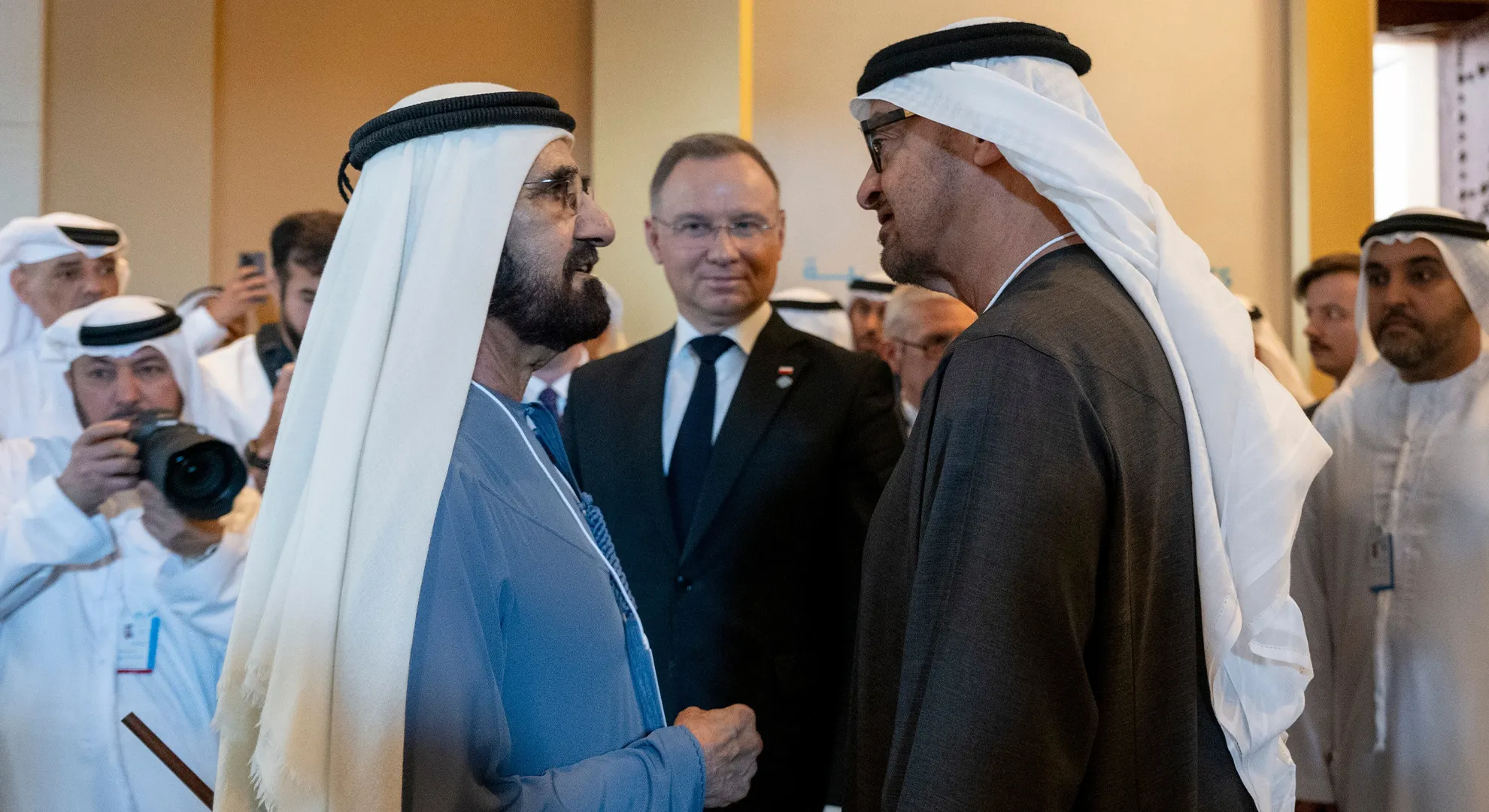
He said that each new government season marks the beginning of a fresh chapter, which he starts by meeting his team. Together, they embark on the journey with renewed enthusiasm, determination and a clear commitment to achieving their goals.
Sheikh Mohammed Sets Out UAE Government Priorities for 2026–2027
Sheikh Mohammed bin Rashid Al Maktoum, Vice President and Prime Minister of the UAE and Ruler of Dubai, has outlined the government’s priorities and ambitions for the new 2026–2027 season, stressing the importance of continued progress, stronger coordination and greater efficiency across government institutions.
The UAE leader held his annual “New Government Season Meeting 2026–2027” with members of his government teams and a group of senior officials. The meeting provided an opportunity to assess the progress made during the previous period and establish a clear framework for the next stage of government work.
During the gathering, Sheikh Mohammed reviewed the main priorities that will guide government performance in the coming season. Discussions also focused on major initiatives, strategic projects and the directions that government entities will follow as they work to translate national objectives into measurable results.
The annual meeting reflects the UAE’s approach to government work, in which each new season begins with a renewed assessment of priorities and a clear focus on the country’s future ambitions. For Sheikh Mohammed, the start of a new government cycle is an opportunity to bring teams together, reinforce their shared objectives and encourage them to approach the next phase with determination and fresh momentum.
Addressing his teams, Sheikh Mohammed emphasised that every government season should begin with a renewed sense of purpose. He explained that his work at the beginning of each new cycle starts with meeting his team and preparing together for the challenges and opportunities ahead.
He said the government enters every new season with fresh energy, firm determination and ambitions that reflect the aspirations of the UAE. His remarks highlighted the importance of maintaining momentum rather than relying solely on previous achievements, with government teams expected to continue improving their performance and pursuing higher standards.
Sheikh Mohammed also reiterated a message that has remained central to his approach to government leadership: the UAE government should aspire to become the best government in the world.
This ambition, he indicated, requires government institutions to constantly raise their standards, improve the quality of public services and develop more effective ways of responding to the needs of society. It also requires officials and government employees to remain focused on outcomes, innovation and the ability to turn national priorities into meaningful achievements.
The emphasis on becoming the world’s best government reflects the UAE’s broader ambition to remain at the forefront of government innovation and institutional performance. Rather than viewing government excellence as a fixed destination, Sheikh Mohammed’s message places the focus on continuous development, improvement and the pursuit of higher levels of performance.
During the meeting, Sheikh Mohammed praised the efforts made by his government teams during the previous period. He recognised the work carried out by officials and employees across different government entities and highlighted the contribution their efforts have made to strengthening the overall performance of government.
The progress achieved over the past period, he noted, has contributed to improving the efficiency of government operations and enabling national priorities to move forward at a faster pace. Government teams have also worked to enhance the quality of services and support the UAE’s wider development objectives.
These achievements were presented not simply as milestones to be celebrated, but as a foundation for the next phase of government work. Sheikh Mohammed’s message made clear that past progress should serve as motivation for further improvement and should encourage teams to set even more ambitious targets.
The UAE government has placed strong emphasis on ensuring that public institutions operate efficiently and respond quickly to changing circumstances. In this context, improving government performance involves more than completing individual projects. It requires stronger cooperation between institutions, faster decision-making, effective implementation and a continued focus on the impact of government initiatives on people and communities.
Sheikh Mohammed therefore called on government teams to increase their efforts during the new season. He urged officials to maintain a high level of commitment and to move more quickly in implementing projects and achieving the priorities established for the coming period.
Speed and effectiveness were among the key themes of his message. Government teams were encouraged to avoid unnecessary delays and ensure that planned initiatives move from strategy to implementation efficiently. The objective is to ensure that national priorities are translated into practical achievements that can deliver visible and lasting benefits.
Another important area highlighted by Sheikh Mohammed was cooperation between government entities. He called for deeper integration among institutions and teams, recognising that many of the UAE’s strategic priorities require coordinated action across multiple sectors.
Greater cooperation can help government bodies share expertise, resources and information while reducing duplication and improving the overall effectiveness of public initiatives. By working together more closely, different entities can contribute to common national objectives while ensuring that government efforts remain aligned.
Sheikh Mohammed also stressed the need to develop government work models that are more efficient and adaptable. In a rapidly changing environment, government institutions must be capable of responding to new developments, emerging opportunities and evolving public expectations.
For this reason, government teams were encouraged to adopt approaches that are flexible, agile and forward-looking. Such models can help institutions respond more effectively to challenges while also allowing them to take advantage of new technologies, ideas and opportunities.
The focus on agility is particularly important as governments around the world face increasingly complex demands. Economic developments, technological advances and changing social expectations require public institutions to rethink traditional approaches and find new ways to deliver services and implement policies.
For the UAE, this approach forms part of a broader effort to maintain its position as a global leader in government performance and innovation. The country has consistently sought to develop institutions capable of delivering high-quality services while supporting economic growth, social development and national competitiveness.
At the annual meeting, Sheikh Mohammed placed particular importance on measurable outcomes. Government teams, he said, should maintain a clear focus on results and ensure that their work creates tangible value for the community.
This means that success should not be measured only by the launch of programmes or completion of administrative tasks. The effectiveness of government initiatives must ultimately be assessed by their real-world impact and the benefits they generate for people.
Such an approach places citizens and communities at the centre of government performance. Improving services, increasing efficiency and accelerating projects are ultimately intended to enhance people’s experiences and contribute to the UAE’s overall quality of life and development.
The meeting also demonstrated the importance Sheikh Mohammed places on direct engagement with his government teams. By meeting officials at the beginning of the new government season, he provides an opportunity to communicate expectations, review performance and establish a shared sense of direction.
The annual gathering serves as a platform for aligning government institutions around common objectives. It reinforces the idea that government work is a collective responsibility and that achieving national ambitions requires cooperation across different levels and sectors.
Sheikh Mohammed’s message to his teams was therefore both a recognition of previous achievements and a call for greater effort in the future. While he acknowledged the progress already made, he encouraged government officials not to become complacent and instead to approach the new season with renewed determination.
The UAE’s rapid development over recent decades has been supported by a government approach that places strong emphasis on long-term planning, effective execution and innovation. The priorities outlined for the 2026–2027 government season continue this approach by combining ambitious objectives with a strong emphasis on implementation.
The new season will require government entities to move forward with planned projects while maintaining close coordination and a strong focus on performance. Officials will be expected to translate the government’s strategic directions into practical programmes and initiatives that can produce measurable results.
Sheikh Mohammed’s call for faster implementation also reflects the importance of maintaining momentum in the UAE’s development journey. Major national projects and priorities often involve multiple institutions and require sustained effort over an extended period. Ensuring that these initiatives progress efficiently will therefore remain a key responsibility for government teams.
At the same time, the emphasis on integration highlights the need for institutions to look beyond their individual responsibilities. Government entities are expected to work as part of a broader system, with their efforts contributing to shared national goals.
This integrated approach can strengthen policy implementation and improve the delivery of services by creating closer links between different government bodies. It can also help ensure that decisions and initiatives are aligned rather than being developed in isolation.
The call for more forward-looking government models similarly reflects the UAE’s desire to anticipate future developments rather than simply respond to existing challenges. Government institutions are expected to identify emerging trends, prepare for potential changes and develop solutions that remain effective in the years ahead.
Innovation will therefore continue to play an important role in the government’s approach. New technologies and new methods of working can provide opportunities to improve efficiency, simplify processes and deliver services more effectively.
However, Sheikh Mohammed’s message suggests that innovation must be connected to practical results. New ideas and technologies are valuable when they improve performance and create meaningful benefits for society.
The annual government season meeting consequently represents more than a routine administrative gathering. It provides a strategic opportunity to review achievements, identify priorities and prepare government teams for the next stage of the UAE’s development.
By bringing senior officials and government teams together, Sheikh Mohammed reinforced the importance of shared responsibility and collective ambition. His message was clear: the government must continue moving forward, improving its performance and raising the standards it sets for itself.
The UAE leader’s repeated ambition for the government to become the best in the world also establishes a demanding benchmark for public institutions. Achieving such a goal requires continuous assessment, strong leadership and a willingness to improve established systems and practices.
It also requires government employees at every level to understand how their individual responsibilities contribute to the country’s wider objectives. Every project, service and policy has a role to play in supporting national development and improving outcomes for society.
As the 2026–2027 government season begins, Sheikh Mohammed has therefore called on his teams to approach the next phase with energy, determination and a clear understanding of the expectations ahead.
The priorities set during the meeting will guide government work as institutions advance their projects and programmes. The emphasis will remain on faster execution, closer cooperation, improved efficiency, greater adaptability and measurable impact.
For Sheikh Mohammed, the UAE’s achievements provide a strong foundation, but they are not the endpoint. The government must continue to challenge itself, pursue higher standards and seek new ways to serve the country and its people.
His message to government officials ultimately centres on continuous progress. The UAE’s future ambitions demand a government capable of moving quickly, working collectively and responding effectively to new challenges and opportunities.
The new government season will therefore be defined by a renewed commitment to performance and delivery. Government teams will be expected to build on the progress already achieved while pursuing more ambitious objectives and ensuring that their work produces clear benefits for the community.
Through the annual meeting, Sheikh Mohammed reaffirmed his vision of a government that does not simply manage current priorities but actively prepares the UAE for the future. His call for greater efficiency, stronger integration and more agile ways of working reflects the country’s determination to maintain its position as a leader in government performance.
As government teams begin the new season, the message is one of ambition combined with action: achievements of the past should provide confidence, but the focus must remain firmly on what can be accomplished next.
The 2026–2027 government season will consequently place strong emphasis on turning plans into results, strengthening cooperation and delivering initiatives that have a meaningful impact on society. With renewed energy and a clear focus on national priorities, Sheikh Mohammed has urged his teams to continue pushing the boundaries of government excellence and to work towards his long-standing ambition of making the UAE government the best in the world.
The annual government meeting provided an opportunity to assess the progress achieved during the previous government season while also establishing the direction for the period ahead. Senior officials reviewed a range of accomplishments and examined the priorities that will shape government efforts during the new season.
A major part of the discussions focused on the UAE’s development agenda and the initiatives being prepared or implemented across several important areas. These included economic and social development, national projects and broader programmes designed to support the country’s continued growth.
Officials also considered how the government can improve the pace at which strategic programmes are carried out. Particular attention was given to ensuring that important initiatives move efficiently from planning to execution and that government institutions remain prepared to respond to changing circumstances.
The discussions reflected the UAE’s emphasis on maintaining momentum in national development. As new opportunities and challenges emerge, government bodies need to be able to adjust their plans, respond quickly and continue delivering projects that support the country’s long-term objectives.
Strengthening institutional readiness was therefore another important element of the meeting. Government entities were encouraged to develop greater flexibility in their operations so they can respond effectively to changes while maintaining the quality and continuity of their work.
The meeting also examined the continued development of the federal government system. Discussions centred on ways to strengthen government structures, improve working methods and create a more connected system capable of supporting national priorities.
Improving coordination among federal entities was identified as an important part of this effort. Greater cooperation between institutions can help government bodies work more efficiently, share expertise and ensure that their individual programmes contribute to common national objectives.
The discussions also highlighted the importance of reducing fragmentation between government entities. When institutions coordinate their efforts and exchange knowledge more effectively, they can improve decision-making, accelerate implementation and deliver more consistent outcomes.
Another area of attention was the development of national human capital. The UAE’s future progress depends heavily on the skills, knowledge and capabilities of its citizens, making investment in national talent an important component of the government’s long-term strategy.
The meeting therefore considered ways to further strengthen the role of national talent within the federal government system. Developing capable professionals and creating opportunities for them to contribute to government programmes can help build a stronger institutional foundation for the future.
The importance of preparing government employees for emerging challenges was also reflected in the discussions. As the nature of government work continues to evolve, officials need access to modern skills and knowledge that enable them to work effectively in an increasingly technology-driven environment.
Emerging technologies were another key area addressed during the meeting. The UAE has placed significant emphasis on technological development and digital transformation, and government institutions are expected to make effective use of new technologies to improve performance and public services.
The integration of advanced technologies into government operations can support faster processes, better decision-making and more efficient service delivery. It can also provide institutions with new tools for responding to complex challenges and anticipating future needs.
The discussions around technology were therefore connected to the wider objective of strengthening the UAE’s competitiveness. By adopting innovative approaches and developing advanced government capabilities, the country aims to maintain a strong position in the global landscape.
Government performance plays an important role in national competitiveness. Efficient institutions can create a more supportive environment for economic activity, strengthen public services and help governments respond more effectively to changes in the global economy.
The meeting’s focus on improving the federal government work system reflects this broader objective. The UAE is seeking to build government institutions that are efficient, flexible and capable of delivering high-quality results while keeping pace with rapid global developments.
The discussions also reinforced the importance of linking government planning with practical implementation. Strategic objectives must be supported by clear programmes, effective coordination and timely execution if they are to produce the intended results.
Speeding up implementation was therefore among the issues considered during the meeting. Accelerating the delivery of national projects can help ensure that government priorities are translated into tangible outcomes and that communities benefit from initiatives without unnecessary delays.
At the same time, faster execution must be accompanied by strong institutional coordination. Government entities need to remain aligned throughout the implementation process to ensure that different programmes complement rather than duplicate one another.
The meeting also highlighted the importance of maintaining readiness for future developments. Government institutions operate in an environment that is constantly changing, making adaptability increasingly important.
A government that can adjust quickly to new circumstances is better positioned to address emerging challenges and take advantage of new opportunities. For this reason, strengthening institutional flexibility remains an important part of the UAE’s approach to government development.
The review of the previous government season allowed officials to consider what had been achieved and how those accomplishments could provide a foundation for the next phase. At the same time, attention was directed towards areas where performance could be further improved.
This process of reviewing results and setting new priorities forms an important part of the UAE’s approach to government work. It enables leaders and officials to measure progress, identify opportunities for improvement and ensure that government activities remain aligned with national ambitions.
The annual meeting also brought together senior figures from across the government, creating a platform for discussing priorities at the highest level. The participation of senior leadership underlined the importance attached to the continued development of the UAE’s government system.
The gathering was attended by Sheikh Hamdan bin Mohammed bin Rashid Al Maktoum, Crown Prince of Dubai, Deputy Prime Minister of the UAE and Minister of Defence. His presence reflected the importance of ensuring that national priorities are supported through close cooperation among senior government leaders.
Sheikh Ahmed bin Mohammed bin Rashid Al Maktoum, Second Deputy Ruler of Dubai, was also present at the meeting. His participation further highlighted the senior-level engagement surrounding the government’s plans and priorities for the upcoming season.
Mohammad bin Abdullah Al Gergawi, Minister of Cabinet Affairs, attended the meeting as well. As a key figure involved in government affairs, his participation contributed to discussions concerning the development and coordination of the federal government system.
A number of ministers and senior government officials also took part in the gathering. Their presence brought together representatives from different areas of government, allowing priorities to be considered from a broad institutional perspective.
The participation of officials from various government entities is particularly important when addressing issues that require cooperation across sectors. Economic development, social programmes, technological transformation and national projects often involve several institutions, making effective coordination essential.
The meeting consequently served as a forum for bringing together different government perspectives and aligning them with the UAE’s wider development objectives. It provided an opportunity for officials to discuss how individual responsibilities can contribute to broader national priorities.
The review of upcoming initiatives covered a wide range of areas connected to the UAE’s development. Economic priorities remain important to the country’s competitiveness, while social initiatives continue to support the well-being and development of communities.
National development also depends on the successful implementation of major projects. Ensuring that these projects remain on schedule and are supported by effective government coordination can contribute to sustained economic and social progress.
The government’s ability to deliver these priorities will depend not only on strategic planning but also on the quality of execution. Institutions must have the resources, skills and systems required to turn plans into measurable outcomes.
This is why the meeting’s emphasis on strengthening the government work system was significant. Improving the way institutions operate can create stronger foundations for implementing policies and programmes efficiently.
Coordination between entities can also help make better use of available resources. By sharing knowledge and working towards common objectives, government institutions can improve productivity and reduce unnecessary duplication.
The focus on national talent adds another important dimension to the government’s future plans. Developing local expertise can strengthen the UAE’s institutional capabilities and ensure that the country has a strong pool of skilled professionals capable of supporting future priorities.
Investing in people is particularly important as government work becomes increasingly specialised and technology-focused. Officials need to be equipped with the skills required to understand emerging technologies, manage complex projects and develop innovative solutions.
Technology, meanwhile, continues to transform the way governments operate. Digital tools and emerging technologies can help institutions improve services, streamline procedures and make government operations more responsive.
The UAE’s focus on emerging technologies is also closely connected to its broader ambitions in innovation. By encouraging government institutions to explore and adopt new solutions, the country can strengthen its position as a centre for technological and institutional advancement.
The meeting’s discussions therefore brought together several interconnected priorities: improving government efficiency, accelerating projects, strengthening cooperation, developing national talent and embracing technological change.
Together, these areas form part of a wider effort to ensure that the UAE’s government system remains capable of supporting the country’s ambitions in a rapidly evolving global environment.
The emphasis on competitiveness also demonstrates that government performance is viewed as an important component of the UAE’s national success. Strong institutions can help create the conditions needed for innovation, investment, economic growth and social development.
Maintaining a leading position in government work requires continuous improvement. Practices that are effective today may need to evolve as technology, economies and public expectations change.
The UAE’s approach therefore focuses on building a government system that is not only effective in addressing present priorities but also prepared for future developments.
The annual meeting offered a structured opportunity to reinforce this approach. By reviewing previous achievements and considering future priorities, government leaders can maintain a clear sense of direction while identifying areas where additional efforts are required.
The discussions also reflected the importance of implementation. Government strategies can achieve their full value only when they are translated into projects, services and policies that deliver practical benefits.
Accelerating implementation can therefore contribute directly to the UAE’s development goals. Faster execution, when supported by strong planning and coordination, can help ensure that national initiatives deliver results within the intended timeframe.
At the institutional level, greater preparedness can help government entities deal with unexpected changes. Whether the challenge involves technological developments, economic conditions or evolving social needs, flexible institutions are better positioned to respond effectively.
The development of agile government structures is consequently an important part of maintaining long-term effectiveness. Institutions must be able to adapt without losing sight of their core responsibilities or national objectives.
The meeting also reinforced the importance of leadership and cooperation in achieving these goals. With senior officials from different parts of government participating, the gathering created a shared platform for discussing priorities and strengthening alignment.
The presence of senior leaders, ministers and officials demonstrated that the UAE’s government development agenda is being approached as a collective effort. Each institution has an important role to play, but cooperation among entities is essential for achieving objectives that extend across the government system.
The new government season will therefore build on the progress of the previous period while introducing fresh priorities and initiatives. Government entities will be expected to maintain momentum, improve their methods of working and contribute to national projects with a strong focus on delivery.
The broader objective is to strengthen the UAE’s government capabilities and ensure that public institutions remain among the most effective and innovative in the world.
Through continued investment in people, technology and institutional cooperation, the government aims to create a system that can respond quickly to change while delivering reliable and high-quality outcomes.
The annual meeting thus marked the beginning of another phase in the UAE’s ongoing effort to enhance government performance. It brought together a review of previous achievements with a forward-looking discussion about the projects, initiatives and reforms that will shape the next stage.
The priorities discussed during the gathering point towards a government model built around efficiency, collaboration, innovation and adaptability. These principles are intended to support the UAE’s development while strengthening its ability to compete internationally.
As the 2026–2027 government season progresses, the implementation of these priorities will remain central to government efforts. Institutions will need to work closely together, make effective use of national talent and emerging technologies, and ensure that strategic projects continue to move forward.
The overall direction is clear: strengthen government capabilities, improve coordination, accelerate delivery and remain prepared for the future. By continuing to develop its institutions and invest in people and technology, the UAE seeks to reinforce its reputation for innovative and high-performing government.
The participation of Sheikh Hamdan bin Mohammed bin Rashid Al Maktoum, Sheikh Ahmed bin Mohammed bin Rashid Al Maktoum, Mohammad bin Abdullah Al Gergawi, ministers and senior officials further underlined the importance of these priorities.
Their involvement reflects a shared commitment to advancing government performance and supporting the UAE’s wider national objectives. As the new government season begins, the focus will remain on converting strategic plans into practical achievements and ensuring that government work continues to contribute directly to the country’s development and competitiveness.
Ultimately, the meeting established a forward-looking framework for the UAE’s government work during the coming period. By combining lessons from the previous season with new priorities, projects and institutional improvements, the government is positioning itself to respond to future challenges while continuing to pursue ambitious national goals.