Restaurants across Dubai are increasingly incorporating artificial intelligence into their operations, using smart technology to understand customer preferences, improve service, recommend dishes and create dining experiences that feel more tailored, efficient and convenient for individual guests.
Dubai Restaurants Turn to AI to Create More Personalized Dining Experiences.
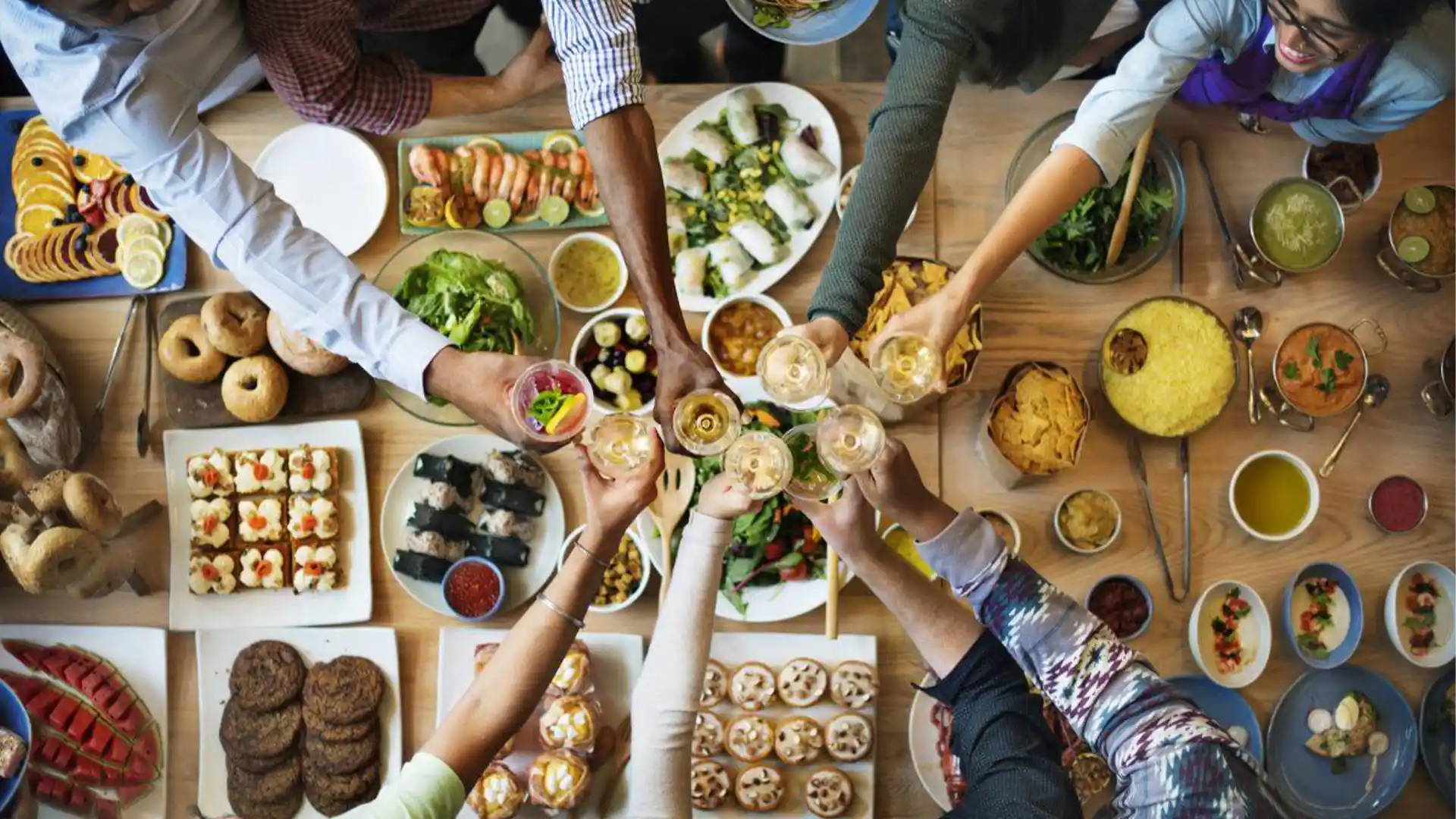
Dubai’s restaurant industry is adopting innovative digital solutions, including intelligent kitchen systems, automated booking platforms, data-driven customer insights and referral-based loyalty programmes. These technologies are helping restaurants streamline operations while offering diners more convenient, customized and engaging experiences from reservation to checkout.
Dubai’s Restaurants Enter a New Era of Technology
Dining out in Dubai has become an increasingly dynamic experience. The city’s hospitality industry is constantly changing, with new restaurants appearing, renowned chefs arriving from around the world and local brands developing concepts designed to stand out in an increasingly crowded market.
For diners, the most visible changes are usually found on the menu. New flavours, creative presentations and innovative concepts tend to attract the most attention.
But some of the biggest changes taking place in Dubai’s restaurant industry are happening away from the dining table.
Behind the scenes, technology is quietly changing how restaurants interact with customers, manage their businesses and build relationships with their guests.
Artificial intelligence, data analytics, digital booking systems and loyalty technology are increasingly becoming part of the hospitality landscape.
The goal, however, is not necessarily to make restaurants appear more automated.
Instead, much of the technology being introduced across the industry is designed to help restaurants become more responsive to individual customers.
In other words, technology is increasingly being used to support the human side of hospitality rather than replace it.
That shift could prove particularly valuable in Dubai, where competition among restaurants is intense and customers have an enormous number of dining options.
When guests have hundreds of restaurants to choose from, remembering their preferences and delivering a consistently personal experience can become a powerful way for a business to stand apart.
Technology Moves Beyond the Kitchen
The role of technology in hospitality has expanded considerably.
Restaurant technology was once largely associated with practical functions such as processing payments, managing inventory or taking reservations.
Those functions remain important, but modern platforms can now collect and interpret much more information about how customers interact with restaurants.
This means technology can potentially influence almost every stage of the dining journey.
A guest might encounter digital technology before even arriving at the restaurant, through an online reservation system.
During the visit, technology can support staff by providing information about previous interactions or preferences.
After the meal, customer data can help restaurants communicate more effectively, encourage future visits or build loyalty.
Several companies operating in the hospitality technology sector are exploring these possibilities.
SevenRooms, for example, uses guest information and technology to help restaurants develop more detailed relationships with customers.
Foodics focuses heavily on restaurant management and operational technology, helping businesses make decisions based on data collected from their day-to-day activities.
At Woohoo, artificial intelligence is being explored as part of the creative side of hospitality.
Firstline, meanwhile, is looking at what could happen after a customer leaves a restaurant, particularly in areas such as loyalty, referrals and recommendations.
Although these businesses operate in different areas, they share a broader objective: using technology to improve the relationship between restaurants and their customers.
Making Hospitality Feel More Personal
There is an interesting contradiction at the heart of this technological transformation.
Restaurants are adopting increasingly sophisticated digital tools, yet the desired result is often a more human experience.
Customers generally do not visit restaurants because they want to interact with complicated technology.
They go out to enjoy food, spend time with friends or family, celebrate an occasion or simply relax.
For that reason, technology works best when it operates quietly in the background.
A guest does not necessarily need to know that artificial intelligence helped organize their reservation or that customer data influenced the way a restaurant prepared for their arrival.
What matters is the result.
Perhaps the host remembers that a particular customer prefers a certain table.
Maybe the restaurant knows that a returning guest has a particular dietary preference.
Or perhaps communication feels more relevant because the restaurant understands the customer’s previous relationship with the brand.
These small details can make an experience feel more thoughtful.
The technology itself may be invisible, but the effect can be noticeable.
The Reservation Becomes More Than a Booking
For many years, restaurant reservation systems had a relatively straightforward purpose.
Customers selected a date and time, restaurants recorded the booking and the reservation process was complete.
That model is becoming more sophisticated.
Modern reservation platforms can serve as the beginning of a longer relationship between a restaurant and its guest.
Rather than simply storing a customer’s name and booking information, systems can allow restaurants to build profiles containing useful details about previous visits and preferences.
Over time, this information can give hospitality teams a clearer understanding of their customers.
A restaurant might know how frequently someone visits, which locations they prefer, what type of dining occasions they typically book and potentially other preferences that can help staff deliver a better experience.
This changes the role of the reservation.
Instead of being merely an administrative task, it can become a valuable source of information that helps restaurants prepare for a guest before they arrive.
AI Enters the Booking Process
Artificial intelligence is adding another layer to this development.
AI can help restaurants process information and identify patterns that might otherwise be difficult for staff to recognize manually.
The technology can potentially assist with recommendations, customer communication and other elements of the booking journey.
Research conducted by SevenRooms in the UAE suggests that diners may be relatively comfortable with this development.
The company’s research found that 95% of surveyed UAE consumers were comfortable with restaurants using AI for reservations.
That figure suggests that many customers may not view the use of AI as inherently negative when it produces a useful outcome.
For restaurants, this could create opportunities to introduce more sophisticated systems without necessarily making customers feel that the human element of hospitality has disappeared.
The key may be how the technology is implemented.
If AI makes booking easier, improves communication or helps staff understand guests more effectively, customers may see it as an enhancement rather than a disruption.
Understanding Guests Before They Arrive
One of the biggest advantages of guest data is the ability to prepare before a customer walks through the door.
A restaurant that understands a guest’s history can potentially anticipate their needs more effectively.
For example, a returning customer may have visited several times previously.
Information from those visits can help staff understand the customer’s preferences and expectations.
The objective is not to overwhelm guests with personalized interactions.
Instead, it is about making the service feel naturally attentive.
A customer may simply notice that the team appears familiar with their preferences.
That can create a sense of recognition that is difficult to achieve when every reservation is treated as an isolated transaction.
For restaurants, this can also strengthen customer relationships over time.
A first-time visitor and a loyal regular may have very different relationships with the same establishment.
Technology can help restaurants identify those differences and communicate accordingly.
Data Can Help Restaurants Understand Behaviour
Customer data can provide restaurants with insights that extend beyond individual preferences.
When information is analyzed across many customers, businesses can identify broader patterns.
They can see when demand is highest, which experiences generate repeat visits and how customers interact with different parts of the business.
This can support more informed decision-making.
Instead of relying entirely on assumptions, restaurant operators can use data to understand what customers are actually doing.
Operational platforms such as Foodics are part of this wider shift toward data-driven restaurant management.
Technology can help businesses monitor performance and make decisions relating to operations, staffing, inventory and other areas.
While these functions may be invisible to customers, they can have a direct impact on the quality of service.
A restaurant that manages its operations efficiently has more opportunity to provide a smooth experience to guests.
The Invisible Technology Behind Hospitality
One of the most interesting aspects of this transformation is that customers may never see much of the technology being used.
Unlike a digital screen or automated ordering system, data-driven hospitality often operates behind the scenes.
The customer may simply experience faster service, better communication or more personalized attention.
This creates an important distinction between technology that replaces hospitality and technology that supports it.
In the first model, technology becomes the experience.
In the second, technology strengthens the people delivering the experience.
For premium restaurants in particular, this distinction matters.
Hospitality is built around personal interaction, and excessive automation could potentially undermine that relationship.
The most effective technology therefore may be the technology that helps employees do their jobs better without drawing attention to itself.
AI and the Creative Side of Restaurants
Technology is also beginning to influence areas that traditionally have been associated almost entirely with human creativity.
Woohoo is one example of a company exploring the role of artificial intelligence in the creative process.
This raises interesting possibilities for restaurants.
AI could potentially be used to generate ideas, analyze trends, support menu development or explore new approaches to the customer experience.
The technology does not necessarily have to replace chefs, designers or hospitality professionals.
Instead, it can act as another tool that helps creative teams explore possibilities more quickly.
The combination of human judgment and machine-assisted analysis could eventually influence how restaurant concepts are developed.
That could be particularly relevant in Dubai, where restaurants are constantly competing to create memorable and distinctive experiences.
What Happens After the Meal?
The technological transformation does not necessarily end when a customer pays the bill and leaves the restaurant.
Companies such as Firstline are exploring ways technology could influence the post-visit relationship.
This includes areas such as loyalty programmes and word-of-mouth recommendations.
Traditionally, restaurants have relied heavily on customers returning or recommending a venue to friends.
Technology can potentially make these relationships easier to measure and encourage.
A customer who enjoys a restaurant may recommend it to someone else.
Digital systems can potentially support referral programmes that reward customers for bringing new guests to a business.
This creates a link between customer satisfaction and business growth.
Instead of treating the end of a meal as the end of the customer journey, restaurants can view it as another opportunity to build a relationship.
Word of Mouth Gets a Digital Upgrade
Recommendations remain one of the most influential forms of restaurant marketing.
People naturally ask friends, family and colleagues where they should eat.
In a city with such a large number of restaurants, personal recommendations can help diners decide where to spend their time and money.
Technology can help businesses understand and encourage this process.
Referral-based rewards, loyalty incentives and personalized communication can all contribute to turning satisfied customers into active advocates.
The challenge is to ensure that these systems remain authentic.
People are unlikely to recommend a restaurant simply because they receive a reward.
The restaurant still needs to deliver an experience worth talking about.
Technology can encourage the conversation, but it cannot replace the underlying quality of the food and hospitality.
Competition Makes Personalization More Important
Dubai’s restaurant market is unusually competitive.
Customers have access to a wide variety of dining options, ranging from casual neighbourhood restaurants to internationally recognized fine-dining destinations.
New venues regularly enter the market, giving consumers more choices.
This makes customer retention increasingly important.
A restaurant cannot always rely on novelty to keep people coming back.
Once the excitement surrounding a new opening fades, the quality of the ongoing relationship with guests becomes more important.
Personalization can help create that relationship.
A diner who feels recognized and appreciated may be more likely to return.
Technology can support this by helping restaurants remember details that would otherwise be difficult to track.
The Human Element Remains Central
Despite the rapid development of AI and restaurant technology, hospitality remains fundamentally human.
A computer can organize information, identify patterns and automate certain processes.
But a welcoming greeting, genuine conversation and thoughtful service still depend on people.
The purpose of technology should therefore be to give hospitality professionals better tools rather than remove the human dimension entirely.
When used correctly, digital systems can reduce administrative burdens and give employees more information.
That can allow staff to focus more attention on the guest.
The result is a situation in which technology becomes an enabler rather than the centre of the experience.
Personalization Without Being Intrusive
There is also a delicate balance involved in using customer information.
Restaurants need to make personalization feel helpful rather than intrusive.
Most diners appreciate being remembered, but excessive use of personal information could make customers uncomfortable.
The best approach is likely to involve subtlety.
A guest should feel understood without feeling watched.
This is another reason why invisible technology can be particularly effective.
When customer data is used responsibly, the result may simply be better service.
The guest notices the benefit rather than the system responsible for creating it.
Dubai as a Testing Ground for Innovation
Dubai’s position as an international tourism, business and hospitality hub makes it a natural environment for experimenting with new restaurant technologies.
The city attracts visitors from around the world and has a highly diverse population.
That creates a complex hospitality market in which restaurants need to understand different customer preferences and expectations.
Technology can help businesses manage that complexity.
At the same time, Dubai’s reputation for innovation means consumers may be more familiar with digital services and emerging technologies than they were in the past.
Restaurants therefore have an opportunity to experiment with new tools while continuing to compete on the fundamentals of food and service.
The Next Generation of Dining
The future restaurant experience may not necessarily look dramatically different from today’s.
Customers will still sit at tables, order food, talk with friends and enjoy meals.
What may change is everything happening around those basic activities.
Reservations could become more intelligent.
Restaurant teams could have more detailed information about returning customers.
AI could assist with creative decisions.
Operational systems could help businesses manage resources more efficiently.
Loyalty programmes could become more personalized.
Recommendations and referrals could become easier to track and reward.
All of these developments could happen without turning restaurants into highly automated environments.
Instead, they could make the overall experience smoother and more personal.
Technology That Disappears Into the Experience
Perhaps the most important trend emerging from Dubai’s hospitality technology landscape is the idea that successful innovation does not always need to be visible.
The best technology may be the technology customers barely notice.
A smoother reservation process, a more informed server, a better-timed message or a more relevant recommendation can all improve the guest experience without drawing attention to the systems behind them.
This is particularly important for restaurants because the fundamental appeal of dining out remains human.
People want to feel welcomed, valued and understood.
Technology can help restaurants deliver those qualities at greater scale, provided it is designed around the needs of guests rather than around technology itself.
A More Connected Dining Journey
The restaurant experience is increasingly becoming a connected journey rather than a series of separate interactions.
The relationship can begin when a customer discovers a restaurant online, continue through the reservation process, develop during the meal and extend into future visits and recommendations.
Each stage can generate information that helps improve the next interaction.
This creates the possibility of a more continuous relationship between restaurants and their customers.
Instead of starting from zero every time a guest books a table, restaurants can gradually build an understanding of the people who choose to return.
That shift could have a significant impact on customer loyalty.
The Future Is Personal, Not Just Digital
Dubai’s restaurant industry is embracing technology at a time when competition for customers is becoming increasingly intense.
Artificial intelligence, data platforms, reservation systems and digital loyalty tools are changing the way restaurants operate and interact with their guests.
But the most important outcome may not be greater automation.
It may be greater personalization.
Technology gives restaurants the ability to understand customers more effectively, anticipate their needs and build stronger relationships over time.
The challenge will be ensuring that these tools enhance hospitality rather than make it feel impersonal.
For Dubai’s restaurants, the winning formula may ultimately be a combination of sophisticated technology and traditional human service.
The technology can manage information, identify patterns and support decision-making.
People can provide warmth, empathy and genuine hospitality.
When those two elements work together, dining can become more seamless without losing the personal connection that makes going to a restaurant special.
As the city’s hospitality sector continues to evolve, diners may increasingly experience the benefits of artificial intelligence and digital innovation without even realizing how much technology is working behind the scenes.
And that may be the clearest sign that restaurant technology has succeeded: not when customers notice the machines, algorithms or platforms, but when they simply feel that the restaurant understands them a little better.

The Technology Working Behind the Dining Experience
When customers walk into a restaurant, their attention is naturally drawn to what they can see and experience: the atmosphere, the menu, the food and the service.
Yet some of the most important technological developments in Dubai’s hospitality industry are taking place completely out of sight.
While platforms such as SevenRooms demonstrate how digital tools can help restaurants understand and connect with individual guests, Foodics offers another perspective. Its technology focuses largely on the operational side of the business, helping restaurant owners and managers make sense of the enormous amount of information generated every day.
For diners, this technology may never be obvious. There may be no screen announcing that artificial intelligence is being used, no robot moving between tables and no visible sign that an algorithm is influencing the evening.
Instead, its impact can be felt indirectly through a smoother and more efficient experience.
AI Behind the Restaurant Counter
Running a successful restaurant involves considerably more than preparing good food.
Operators have to manage sales, staffing, purchasing, stock levels, customer demand, menus, suppliers and costs simultaneously.
Even a relatively small restaurant can generate a substantial amount of data every day.
Managers need to understand which periods are likely to be busy, which dishes are performing well, how much stock should be ordered and how many employees are required for a particular shift.
Getting these decisions wrong can have immediate consequences.
Ordering too much food can increase waste.
Ordering too little can leave popular dishes unavailable.
Having too few employees during a busy service can affect waiting times and customer satisfaction.
On the other hand, scheduling too many staff members during a quiet period can put additional pressure on already limited profit margins.
This is where artificial intelligence and predictive analytics can become useful.
Turning Data Into Decisions
Foodics has developed technology designed to help restaurant operators examine their businesses through data.
Rather than requiring managers to manually sort through large amounts of information, AI-powered business intelligence tools can help identify patterns and highlight important changes in performance.
The objective is to give restaurant owners a clearer picture of what is happening across their businesses.
Sales information can reveal which products are contributing most to revenue.
Inventory data can provide insight into purchasing and stock levels.
Customer information can help businesses understand behaviour and preferences.
Operational data can give managers a broader view of how efficiently their restaurants are performing.
For an industry in which margins can be tight and conditions can change quickly, having access to this information can make a significant difference.
The Impact Diners May Never Notice
The most interesting part of restaurant technology is that its benefits do not always need to be visible.
Imagine a restaurant anticipating a particularly busy Friday evening more accurately.
Managers can prepare by ordering the appropriate amount of ingredients and arranging staffing levels accordingly.
The customer may never know that predictive technology helped make that decision.
They simply arrive and find that the restaurant is adequately staffed and their preferred dishes are available.
The same principle can apply to inventory.
If a restaurant can better estimate demand, it may reduce the likelihood of running out of popular menu items.
At the same time, improved forecasting can prevent the business from purchasing significantly more ingredients than it needs.
That can help reduce food waste while protecting operating margins.
For customers, these improvements can translate into a more reliable experience.
Smarter Scheduling, Better Service
Staffing is another area where data-driven systems can have an indirect influence on hospitality.
Restaurants need enough employees to handle demand, but excessive staffing can increase costs.
Predictive tools can potentially help managers understand expected customer volumes and organize teams accordingly.
During particularly busy periods, having enough people available can help prevent service from becoming overwhelmed.
During quieter periods, operators can avoid unnecessarily large teams.
Again, the technology itself may remain invisible.
Guests may simply notice that orders arrive more efficiently or that employees appear less stretched during busy service.
That is an important distinction.
Technology does not have to replace the waiter, chef or manager to improve hospitality.
Sometimes its greatest contribution is giving those people better information with which to do their jobs.
Reducing Waste Through Better Forecasting
Food waste remains an important operational issue for restaurants.
Perishable ingredients cannot always be stored indefinitely, and demand can be difficult to predict.
A restaurant that prepares for a large crowd that does not arrive may be left with unused ingredients.
Conversely, a restaurant that underestimates demand may run out of popular items.
Predictive analytics can help narrow that gap.
By studying historical sales and other available information, technology can help operators make more informed estimates about future demand.
Better forecasting can potentially lead to more efficient purchasing and preparation.
That has financial benefits for restaurant operators, but it can also have wider environmental advantages by reducing unnecessary waste.
In this sense, technology can influence an aspect of dining that customers rarely consider.
The meal on the table may be the visible product, but a large amount of planning has taken place behind the scenes to make that meal possible.
The Quiet Side of Innovation
This illustrates an important feature of the current restaurant technology revolution.
Not every innovation is designed to impress diners.
Some of the most valuable developments are designed simply to make restaurants function better.
AI does not necessarily have to appear in the dining room to have an effect.
It can operate within management systems, examining information and helping businesses make decisions.
That may ultimately be more transformative than technology designed purely as entertainment.
A restaurant that operates more efficiently can potentially provide more consistent service, manage costs more effectively and reduce waste.
Those improvements can then contribute to a better customer experience.
When Artificial Intelligence Becomes Part of the Meal
While Foodics represents the less visible side of restaurant technology, Woohoo takes almost the opposite approach.
At the Downtown Dubai restaurant, artificial intelligence is deliberately incorporated into the concept itself.
One of the most distinctive elements is Chef Aiman, an AI-powered chef developed as part of the restaurant’s technology-driven identity.
The idea is not that a machine physically stands in the kitchen and prepares every dish.
Instead, artificial intelligence is used as part of the creative development process.
The system can examine culinary information, ingredients, flavour relationships and aspects of food science to generate potential ideas.
Human chefs then take those concepts and turn them into actual dishes.
This creates an unusual collaboration between computational analysis and traditional culinary expertise.
Can AI Be Creative?
The use of artificial intelligence in menu development raises a much larger question about creativity.
Cooking has traditionally been viewed as an intensely human discipline.
Chefs rely on experience, memory, intuition and sensory judgment when developing new dishes.
They taste ingredients, understand how textures interact and make decisions based on years of practical knowledge.
AI approaches the problem differently.
It can process vast quantities of information and identify relationships between ingredients or techniques that a person might not immediately consider.
But identifying a theoretical combination does not necessarily mean that the final dish will be successful.
A recipe still has to taste good.
The ingredients have to work together.
Texture, balance, aroma and presentation all matter.
This is where human chefs remain crucial.
At Woohoo, artificial intelligence can generate possibilities, but people are still responsible for evaluating, refining and executing those ideas.
Humans and Algorithms Working Together
Rather than asking whether AI will replace chefs, it may be more useful to consider how chefs can use AI as an additional creative resource.
The technology can act as a source of suggestions.
It can process information at a scale that would be difficult for an individual chef to manage manually.
A human culinary team can then decide which ideas are worth pursuing.
This creates a partnership in which machines contribute analytical capabilities while people provide judgment and sensory expertise.
The distinction matters because hospitality is not simply about producing food.
Restaurants also depend on atmosphere, emotion, presentation and human interaction.
Those qualities cannot easily be reduced to data.
Technology Becomes Part of the Atmosphere
Woohoo’s approach extends beyond the kitchen.
The restaurant also incorporates immersive digital features into its environment, reinforcing the concept of bringing food and technology together.
In this setting, technology is not merely a tool used by management.
It becomes part of what the customer is actually experiencing.
That makes Woohoo an interesting example of how Dubai’s restaurant industry is willing to experiment with new ideas.
Some restaurants use technology quietly to improve operations.
Others put innovation directly in front of customers.
Both approaches demonstrate different possibilities for the future of hospitality.
Dubai as a Place for Restaurant Experimentation
Dubai provides an unusual environment for this kind of experimentation.
The city’s hospitality sector is highly competitive, and restaurants are constantly looking for ways to distinguish themselves.
A new concept can attract enormous attention, but maintaining that attention requires more than novelty.
Restaurants need to create experiences that encourage customers to return and recommend them to others.
This pressure can encourage businesses to explore unconventional ideas.
AI-powered culinary development is one example.
Advanced reservation systems and customer data are another.
Operational analytics provide a third.
Together, these technologies suggest that the future of dining may involve technology at almost every stage, from the first online booking to the customer’s next visit.
The Part of Hospitality That Has Always Been Difficult to Measure
There is another element of restaurant success that has traditionally been much harder to quantify.
That is the recommendation.
A restaurant can measure reservations.
It can track sales.
It can calculate customer frequency and monitor online engagement.
But determining exactly how one customer convinces another person to visit has historically been much more difficult.
Word of mouth remains enormously valuable.
A recommendation from a friend can carry more influence than a conventional advertisement because it comes with a level of personal trust.
In Dubai’s restaurant scene, that effect can be especially powerful.
Conversations Can Drive Restaurant Demand
Restaurant recommendations increasingly travel through digital channels.
Friends exchange suggestions in messaging groups.
People share restaurants on social media.
A new opening can suddenly become a popular destination after customers begin talking about it.
A recommendation from someone whose taste you trust can influence a dining decision almost immediately.
This means that the conversation surrounding a restaurant can be almost as important as its formal marketing strategy.
For restaurants, the challenge has been finding ways to understand this activity and encourage it without making the experience feel artificial.
Firstline Looks Beyond Traditional Loyalty
This is the area that Firstline is seeking to address.
The hospitality platform selected Dubai as its launch market and is exploring a model that goes beyond conventional loyalty schemes.
Traditional programmes generally focus on rewarding customers for returning.
Customers collect points, receive benefits or gain access to special offers.
Firstline’s approach places greater emphasis on both loyalty and advocacy.
That distinction is important.
A loyal customer is valuable because they return.
An advocate can be even more valuable because they can introduce other people to the restaurant.
If technology can identify and encourage that behaviour, restaurants may gain a new way to build their customer base.
Turning Recommendations Into Measurable Activity
The idea is to make word of mouth easier for restaurants to understand.
When someone recommends a restaurant to a friend, the original business may have no direct way of knowing that the recommendation occurred.
The new customer simply arrives.
Traditional marketing analytics may struggle to identify exactly what caused that visit.
Technology could potentially create a clearer connection between the recommendation and the resulting booking or transaction.
That could allow restaurants to understand which customers are actively driving new business.
It could also create opportunities to recognize those customers through loyalty benefits or other incentives.
Why Advocacy Matters in Dubai
In a highly competitive restaurant market, attracting attention is only part of the challenge.
Restaurants also need people to talk about them.
A strong recommendation can create a chain reaction.
One diner visits a restaurant, enjoys the experience and tells several friends.
Those friends visit, share their own experiences and potentially introduce the venue to another group of customers.
Social media can accelerate that process dramatically.
A restaurant that becomes popular within a particular community can see demand increase rapidly.
For operators, understanding this process could provide a valuable new source of insight.
Technology Does Not Create Good Word of Mouth
However, there is an important limitation.
No loyalty platform can manufacture genuine enthusiasm on its own.
Customers recommend restaurants because they have had experiences worth sharing.
Food quality, service, atmosphere, hospitality and value still matter.
Technology can help identify and reward advocacy, but it cannot substitute for the experience that created the recommendation.
This is similar to the role AI plays elsewhere in hospitality.
Technology can provide tools, information and efficiency.
People and the quality of the restaurant still determine whether those tools lead to something meaningful.
Three Different Approaches to the Same Future
The examples of SevenRooms, Foodics, Woohoo and Firstline illustrate four different ways technology is influencing hospitality.
SevenRooms focuses on the relationship between restaurants and their guests.
Foodics concentrates on business intelligence and operational performance.
Woohoo brings AI into the creative and customer-facing side of dining.
Firstline explores what technology can do after the meal by connecting loyalty with customer advocacy.
They operate in different parts of the restaurant ecosystem, but they point toward the same broader development.
The modern dining experience is becoming increasingly data-driven and connected.
The Restaurant of the Future May Still Feel Traditional
Despite all these developments, the restaurant of the future may not look radically different to a customer.
There may still be tables, menus, chefs and servers.
People will continue to gather for meals, celebrations, business meetings and social occasions.
The difference may be in everything happening underneath the surface.
AI could help predict demand.
Customer platforms could help staff remember preferences.
Business intelligence systems could improve purchasing and scheduling.
Creative AI could support menu development.
Digital loyalty tools could strengthen relationships after customers leave.
Much of this could happen without disrupting the familiar experience of dining out.
Invisible Technology Could Have the Biggest Influence
The most powerful restaurant technology may therefore be the kind that customers rarely notice.
If better forecasting prevents a restaurant from running out of ingredients, the diner simply gets the meal they wanted.
If smarter scheduling ensures enough staff are available, the guest experiences better service.
If customer information allows employees to remember a preference, the interaction feels more personal.
If loyalty technology makes it easier for a satisfied customer to recommend a restaurant, the business gains another potential guest.
None of these experiences necessarily feels technological.
That may actually be the point.
Balancing Innovation With Hospitality
The challenge for restaurants will be finding the right balance.
Too much visible automation could risk taking away some of the personal qualities that make hospitality attractive little technology could leave businesses struggling to manage increasingly complex operations.
Too much visible automation could risk taking away some of the personal qualities that make hospitality attractive.
The most successful operators may be those that understand where technology adds genuine value and where human interaction should remain at the centre.
AI can process information.
People can interpret situations.
Technology can predict demand.
Chefs and managers can respond creatively.
Data can reveal customer behaviour.
Hospitality teams can turn that knowledge into meaningful experiences.
A New Kind of Dining Experience
Dubai’s restaurant sector is therefore becoming a testing ground for a new model of hospitality.
The transformation is happening simultaneously in the kitchen, the reservation system, the management office and the relationship that continues after a guest has left.
Some innovations are highly visible, such as AI-assisted culinary concepts.
Others operate almost entirely in the background.
Together, they demonstrate that restaurant technology is no longer limited to payment systems or online bookings.
It is becoming part of how restaurants understand customers, manage resources, develop ideas and build loyalty.
What Comes Next
As these technologies become more sophisticated, the distinction between digital and traditional hospitality may become increasingly difficult to see.
Customers may not know whether a recommendation came from a person or an algorithm.
They may not realize that predictive analytics helped determine how many employees were scheduled for the evening.
They may never see the systems that analyzed their previous visits.
And they may not think about the technology that helped a chef explore a new combination of ingredients.
What they will remember is whether the restaurant delivered an enjoyable experience.
That remains the ultimate measure.
Technology in Service of Hospitality
The future of dining in Dubai is unlikely to be defined simply by how much technology restaurants can introduce.
Instead, it will be determined by how effectively technology can improve what restaurants already do well.
The most valuable systems will be those that make operations smarter, reduce waste, help teams serve customers better and create more meaningful relationships.
Foodics demonstrates the potential of technology operating quietly behind the scenes.
Woohoo shows what happens when AI becomes part of the visible dining concept.
Firstline explores how digital tools can extend the relationship beyond the restaurant itself.
And platforms such as SevenRooms demonstrate how customer information can help transform a reservation into the beginning of a longer relationship.
Together, these developments suggest that Dubai’s dining revolution is no longer happening only on the plate.
It is happening in the data, the systems, the kitchen, the booking process and the conversations that continue after customers leave.
The most successful restaurants may ultimately be those that combine all of these elements without allowing technology to overshadow hospitality.
The future could be highly digital behind the scenes while remaining remarkably human at the table.
And for diners, that may be the most exciting development of all: a restaurant experience that feels more intuitive, more efficient and more personal, even when the technology responsible for making it happen remains almost completely invisible.
From Dinner to a New Kind of Loyalty
My first opportunity to experience Firstline as a diner came during a meal at Bâoli, which became the first restaurant in Dubai to officially introduce the platform.
Seeing the system from the customer’s side offered a useful perspective on how hospitality technology is evolving.
At first glance, the process is uncomplicated.
A guest downloads the application, sets up the digital wallet before visiting a participating restaurant and then begins accumulating VIP Credits based on eligible spending.
Those credits can subsequently be used toward future dining experiences.
The process is designed to fit around the meal rather than interrupt it.
There is no need for the restaurant visit to become a complicated digital exercise. Instead, the technology is intended to sit quietly alongside the normal dining experience.
That simplicity is important because loyalty programmes can easily become cumbersome when customers are required to complete too many steps.
Firstline takes a different approach by making the restaurant visit itself the starting point for earning value.
But the more distinctive element is not necessarily the credit system.
It is the way the platform approaches recommendations.
Turning Recommendations Into Rewards
One of Firstline’s more unusual features is called Royalties.
The idea behind Royalties is based on something restaurant customers already do naturally: recommending places they enjoy to other people.
A diner may have an excellent meal and later tell a friend about the restaurant.
That friend may then decide to visit.
Traditionally, the original restaurant might never know that the second visit happened because of that recommendation.
The influence exists, but it is difficult to measure.
Firstline attempts to create a mechanism for recognizing that influence.
If a customer’s recommendation results in another person visiting a participating restaurant, the platform can potentially connect that referral to the person who helped generate it.
This creates a different way of thinking about restaurant loyalty.
Instead of rewarding customers only for their own spending, the system also considers the value they can generate by bringing other diners into the ecosystem.
Why Word of Mouth Matters
The concept is particularly relevant in Dubai.
The city has an enormous variety of restaurants, and new venues are constantly competing for attention.
People frequently rely on friends, colleagues and social networks when deciding where to eat.
A trusted recommendation can carry considerable weight.
Someone may ignore an advertisement but immediately become interested when a friend says, “You should try this place.”
Restaurant discovery is therefore influenced heavily by conversation.
Those conversations can happen around dinner tables, in private messaging groups, on social media or through personal networks.
A successful restaurant can gain significant momentum when customers begin talking about it.
Firstline’s approach is interesting because it does not attempt to invent this behaviour.
Instead, it seeks to attach measurable value to something diners are already doing.
Measuring an Existing Behaviour
That distinction is important.
The platform is not necessarily trying to persuade customers to recommend restaurants they would not otherwise mention.
Its premise is closer to recognizing recommendations that already happen naturally.
A diner enjoys an experience.
They tell someone else.
That person visits.
The platform then provides a mechanism for identifying the connection.
For restaurants, this could eventually make an otherwise difficult marketing channel easier to understand.
Businesses can spend substantial amounts on advertising and promotional campaigns, yet word of mouth can remain difficult to quantify.
A recommendation from one customer may produce several future visits, but traditional marketing systems may not clearly identify its origin.
Technology could potentially change that.
Keeping the Technology in the Background
Another interesting aspect of Firstline is that the technology does not have to become the centre of the meal.
Customers can still enjoy the restaurant in the traditional way.
They sit down, order food, talk with their companions and interact with staff.
The digital component largely works around that experience.
This approach reflects a broader pattern across hospitality technology.
The most successful tools may not necessarily be the ones customers see most clearly.
Instead, they may be the systems that provide useful information and functionality without disrupting the atmosphere.
Restaurants remain places built around food and human interaction.
Technology works best when it supports those elements rather than competing with them.
What Restaurants Can Learn From the Data
There is also a significant business opportunity behind the customer-facing experience.
For restaurant operators, referral data could provide insight into where new customers are coming from.
Businesses could potentially identify which guests generate repeat visits through recommendations and understand the relationship between advocacy and revenue.
That information could be valuable when evaluating customer loyalty.
A diner who visits regularly is clearly valuable.
But a diner who regularly introduces new customers could have a different kind of value.
Understanding both behaviours can give restaurant operators a more complete picture of their customer base.
It can also help them think differently about marketing.
Instead of measuring success purely by advertising impressions or promotional spending, operators could begin examining how existing customers contribute to organic growth.
Connecting Technology With Existing Systems
For this type of technology to work effectively, it also needs to fit into the restaurant’s existing infrastructure.
Restaurants already use reservation platforms, point-of-sale systems and customer-management tools.
Introducing another platform can become difficult if staff are forced to manage disconnected systems.
Firstline’s model therefore places importance on integration with existing reservation technology.
The objective is to make the information useful without creating unnecessary administrative work for restaurant teams.
For operators, simplicity can be just as important as functionality.
A sophisticated system has little value if it makes everyday restaurant operations more complicated.
Significant Investment Behind the Concept
The development of Firstline is also backed by a significant financial commitment.
Freedom International Group has committed up to AED10 million toward the platform’s rollout.
The support includes launch activities, premium content, ambassador initiatives and continued marketing efforts.
The investment indicates that there is substantial confidence in the potential of technology-driven loyalty and advocacy within hospitality.
It also reflects the broader direction of Dubai’s restaurant industry, where technology is increasingly being explored as a way to improve customer relationships and business performance.
Whether the platform ultimately becomes a major part of restaurant loyalty remains to be seen.
Its success will depend heavily on whether diners find the concept useful enough to continue using it.
The Customer Decides Whether the Model Works
No loyalty system can succeed without customer participation.
People have to see a reason to download an application, use a digital wallet and engage with the rewards available to them.
The concept becomes particularly interesting if customers begin to see value not only in earning benefits from their own visits but also in being recognized for bringing others into the restaurant ecosystem.
That creates the possibility of a more active form of loyalty.
Customers are no longer simply consumers.
They can also become advocates.
For restaurants, that distinction could prove valuable.
A Bigger Question for Hospitality
Firstline raises a broader question about how restaurants understand their customers.
The industry has become increasingly sophisticated at collecting information.
Restaurants can now learn about reservations, spending patterns, inventory, customer preferences and operational performance.
If businesses can understand when a guest visits, what they spend and what they prefer, perhaps they can also understand how that guest influences other customers.
That is the commercial question behind the idea of Royalties.
How much is a genuine recommendation worth?
And can technology help restaurants recognize that value without making the recommendation feel artificial?
Looking at the Bigger Picture
Firstline becomes even more interesting when considered alongside other developments in Dubai’s hospitality technology sector.
Taken individually, SevenRooms, Foodics, Woohoo and Firstline are addressing very different problems.
But viewed together, they show how technology can now interact with almost every stage of the restaurant journey.
The transformation begins before the guest even arrives.
It continues while the restaurant is operating.
It can influence the food itself.
And increasingly, it can continue after the customer has left.
Before the Guest Arrives
Reservation technology has become much more sophisticated than simply recording a name and a time.
Platforms such as SevenRooms can help restaurants build a deeper understanding of their guests.
Information about previous visits and preferences can give restaurant teams more context before a customer arrives.
That can help create a more personalized experience.
A returning guest may not need to explain the same preferences every time.
Instead, information collected from previous interactions can potentially help staff prepare in advance.
The result can be subtle.
The customer simply feels recognized.
Behind the Scenes
Foodics represents another part of this technological shift.
Its focus is primarily operational.
Restaurant businesses generate huge quantities of data, and interpreting that information can be difficult without specialized tools.
AI-powered business intelligence can help operators examine areas such as sales, inventory, customer behaviour and overall performance.
This can support decisions about staffing, purchasing and demand forecasting.
The diner may never know that technology influenced those decisions.
But they may benefit from the result.
A popular dish is available because inventory was forecast more accurately.
Service is smoother because staffing was better planned.
Waste is reduced because purchasing was more closely aligned with expected demand.
The technology remains invisible while its consequences become part of the dining experience.
AI Moves Onto the Plate
Woohoo offers a much more visible interpretation of technology.
At the Downtown Dubai restaurant, AI is integrated into the culinary concept through Chef Aiman.
The system does not replace the human chefs physically preparing the food.
Instead, artificial intelligence contributes to the creative development process by examining culinary information, ingredients, flavour combinations and food science.
Human chefs then assess and execute the resulting ideas.
This creates a collaboration between computational analysis and human culinary judgment.
The experiment raises questions about what creativity might look like when chefs have access to AI as a creative tool.
Rather than treating artificial intelligence as a replacement for people, the concept demonstrates how it might expand the range of ideas available to them.
The Journey Continues After Dinner
Firstline occupies another point in that journey.
Its focus begins after the customer has already experienced the restaurant.
The platform considers what happens next.
Does the guest return?
Do they tell someone else about the restaurant?
Does that recommendation result in another visit?
Can the restaurant recognize the customer who helped create that new relationship?
These questions turn the traditional idea of loyalty into something broader.
Loyalty is no longer simply about rewarding someone for returning.
It can also involve recognizing their role in bringing other people to the business.
Four Technologies, One Larger Trend
SevenRooms, Foodics, Woohoo and Firstline may appear unrelated at first.
One deals with guest relationships.
Another focuses on restaurant operations.
A third explores AI-assisted culinary creativity.
The fourth looks at loyalty and referrals.
But all four are responding to challenges created by the same competitive environment.
Dubai diners have an extraordinary range of choices.
Restaurants therefore need to attract customers, provide memorable experiences and encourage people to return.
At the same time, operators have to control costs, manage resources and understand whether their investments are producing measurable results.
Technology can provide tools for addressing each of those challenges.
The Value of Data Is Increasing
Data has become one of the most valuable resources available to modern restaurant operators.
It can reveal customer behaviour.
It can identify operational patterns.
It can help predict demand.
It can support marketing decisions.
It can even provide insight into customer advocacy.
But data alone is not enough.
Restaurants must understand how to use it without allowing the technology to overwhelm the experience.
That balance is especially important in hospitality because customers are not simply buying a product.
They are buying an experience.
The Risk of Making Dining Too Digital
There is a potential downside to excessive technological intervention.
If every part of a restaurant visit becomes automated, the experience could begin to feel transactional.
People do not necessarily want their dinner to resemble an interaction with a machine.
The appeal of restaurants comes partly from human connection.
A knowledgeable server, a welcoming host or a chef who cares about the food can create an emotional response that technology alone cannot reproduce.
For that reason, the most useful technology may be technology that strengthens human interaction rather than replacing it.
Technology as an Assistant, Not a Replacement
Consider the different examples.
SevenRooms does not need to replace the person greeting a returning guest.
Instead, it can give that person more information about the customer’s previous experiences.
Foodics does not need to eliminate the restaurant manager.
It can provide the manager with better information on which to base decisions.
AI at Woohoo does not physically take over the kitchen.
Human chefs remain responsible for transforming concepts into finished dishes.
Firstline cannot force a diner to recommend a restaurant.
It can only recognize the value of a recommendation when a customer genuinely chooses to make one.
That distinction may be the key to understanding the future of hospitality technology.
Great Hospitality Still Starts With the Basics
Despite all the technological innovation taking place, the fundamental ingredients of a successful restaurant have not changed dramatically.
The food still needs to be good.
Service needs to be attentive.
The atmosphere needs to suit the concept.
Customers need to feel welcome.
The overall experience has to provide a reason to return.
No algorithm can compensate for a disappointing meal.
Artificial intelligence cannot manufacture genuine warmth from a server.
Predictive analytics cannot create an atmosphere that people enjoy.
A loyalty programme cannot persuade someone to revisit a restaurant they disliked.
Technology can strengthen a good restaurant.
It cannot magically turn a poor one into a great one.
What Is Really Changing?
The biggest transformation is taking place around the traditional dining experience.
Restaurants now have access to more information than ever before.
They can understand guests before they arrive, manage operations using real-time data, experiment with AI-assisted creativity and continue engaging customers after they leave.
That represents a significant expansion of what hospitality technology can do.
The restaurant is no longer an isolated moment that begins when a customer enters and ends when the bill is paid.
It is becoming a longer relationship.
The booking is part of the relationship.
The meal is part of the relationship.
The post-visit communication is part of the relationship.
The recommendation to a friend can also become part of that relationship.
Dubai Could Be a Major Testing Ground
Dubai’s fast-moving hospitality market makes the city particularly suitable for these experiments.
Restaurants are competing aggressively for attention and customer loyalty.
Diners are exposed to new concepts constantly.
International visitors bring different expectations and preferences.
Local customers have an enormous selection of venues from which to choose.
In such an environment, restaurants have strong incentives to understand their customers and find more effective ways to retain them.
Technology provides one route toward achieving that goal.
The challenge will be determining which innovations genuinely improve hospitality and which simply add complexity.
The Future May Be Less Visible Than Expected
When people imagine the future of restaurants, they may picture robots serving food, screens replacing menus or completely automated kitchens.
Those possibilities may exist, but the more meaningful transformation could be much quieter.
The restaurant may look almost exactly the same to the customer.
There could still be a host at the entrance, a chef in the kitchen and a server bringing food to the table.
The difference will be the technology supporting those people.
Data can help the host understand the returning guest.
Analytics can help the manager prepare for demand.
AI can give chefs new ideas.
A loyalty platform can help the restaurant understand which customers are bringing in new business.
The technology does not have to become the star.
The New Definition of Personal Service
Personalization used to depend heavily on human memory.
A restaurant employee might remember a customer’s name, favourite table or preferred dish.
Technology can now extend that ability.
It can help restaurants retain information across visits and across larger customer bases.
The opportunity is to combine the scale of technology with the warmth of human service.
A restaurant may have thousands of customers, but each guest can still feel recognized.
That could become one of the defining advantages of hospitality technology.
From First Booking to the Next Visit
The overall picture is therefore becoming increasingly connected.
The customer’s relationship with a restaurant can begin when they discover it, continue when they make a reservation and develop further during the meal.
Operational technology works behind the scenes to ensure the business can deliver the experience efficiently.
AI may contribute to the creation of the food itself.
Afterward, loyalty and referral systems can help maintain the relationship.
The next reservation then becomes part of the same continuous cycle.
This is very different from the traditional view of a restaurant transaction as a single event.
A More Human Future Through Technology
The most interesting conclusion may be that greater use of technology does not necessarily mean less human hospitality.
In fact, the opposite could happen.
If technology takes care of repetitive administrative work, analyzes complex information and helps teams anticipate customer needs, employees may have more time to focus on the things people value most.
That includes conversation, attention, creativity and genuine care.
The technology becomes infrastructure rather than the experience itself.
And that may be the most successful model for the future.
The Real Test
Ultimately, the success of these innovations will not be measured by how impressive the technology sounds.
It will be measured by whether diners notice an improvement.
Do reservations become easier?
Does service become more consistent?
Are restaurants better at understanding their customers?
Does food become more interesting?
Do loyal guests feel more appreciated?
Do genuine recommendations receive meaningful recognition?
If the answer to those questions is yes, technology will have a meaningful role to play.
If not, even the most sophisticated platform may struggle to justify itself.
A Quiet Revolution in Dubai Dining
Dubai’s restaurant industry is therefore undergoing a transformation that extends far beyond digital bookings or electronic payments.
Technology is becoming part of customer relationship management, restaurant operations, culinary creativity and loyalty.
The examples of SevenRooms, Foodics, Woohoo and Firstline illustrate different pieces of that much larger change.
One helps restaurants understand who is coming through the door.
Another helps operators understand what is happening inside the business.
A third experiments with artificial intelligence as a culinary creative partner.
And another explores how the relationship with a customer might continue after the meal through loyalty and recommendations.
Together, they suggest that the future of hospitality may not be about making restaurants more technological for the sake of technology.
It may be about using technology intelligently enough that restaurants can become more responsive without becoming less human.
For diners, the ideal outcome is simple.
The booking feels effortless.
The restaurant seems to remember them.
The service feels well prepared.
The food remains creative and enjoyable.
And if they love the experience enough to tell someone else about it, that recommendation can become part of an ongoing relationship.
The systems behind all of this may be complex, but the experience itself should remain straightforward.
That could be the real opportunity for Dubai’s hospitality sector.
The future may not arrive in the form of restaurants dominated by machines and screens.
Instead, it may emerge quietly through smarter systems operating in the background, giving restaurant teams better information, helping businesses work more efficiently and allowing hospitality professionals to understand their guests in ways that were previously difficult to achieve.
Technology, in that sense, does not have to make dining feel less personal.
Used thoughtfully, it could help make it more personal than ever.