UAE Restaurants Welcome Onam Season With Elaborate Traditional Sadyas Featuring Nearly 30 Authentic Dishes, Giving Diners an Opportunity to Experience Kerala’s Rich Culinary Heritage Through a Grand Festive Feast Served Across Participating Restaurants.
Onam Festivities Begin Across UAE Restaurants With Lavish Sadyas Offering Up to 30 Dishes.
Restaurants are dealing with increased expenses this Onam season as prices of vegetables and banana leaves have climbed by as much as 40 per cent, with supply challenges and disruptions caused by the ongoing regional conflict adding to operational pressures.
UAE Restaurants Prepare for a Busy Onam Season as Sadya Service Begins
The UAE’s Indian restaurant scene is already getting into the spirit of Onam, with several eateries beginning to serve traditional Onam sadyas ahead of the main festive period. Others are preparing for a major increase in demand as thousands of residents are expected to enjoy the elaborate Kerala-style feast from August 26.
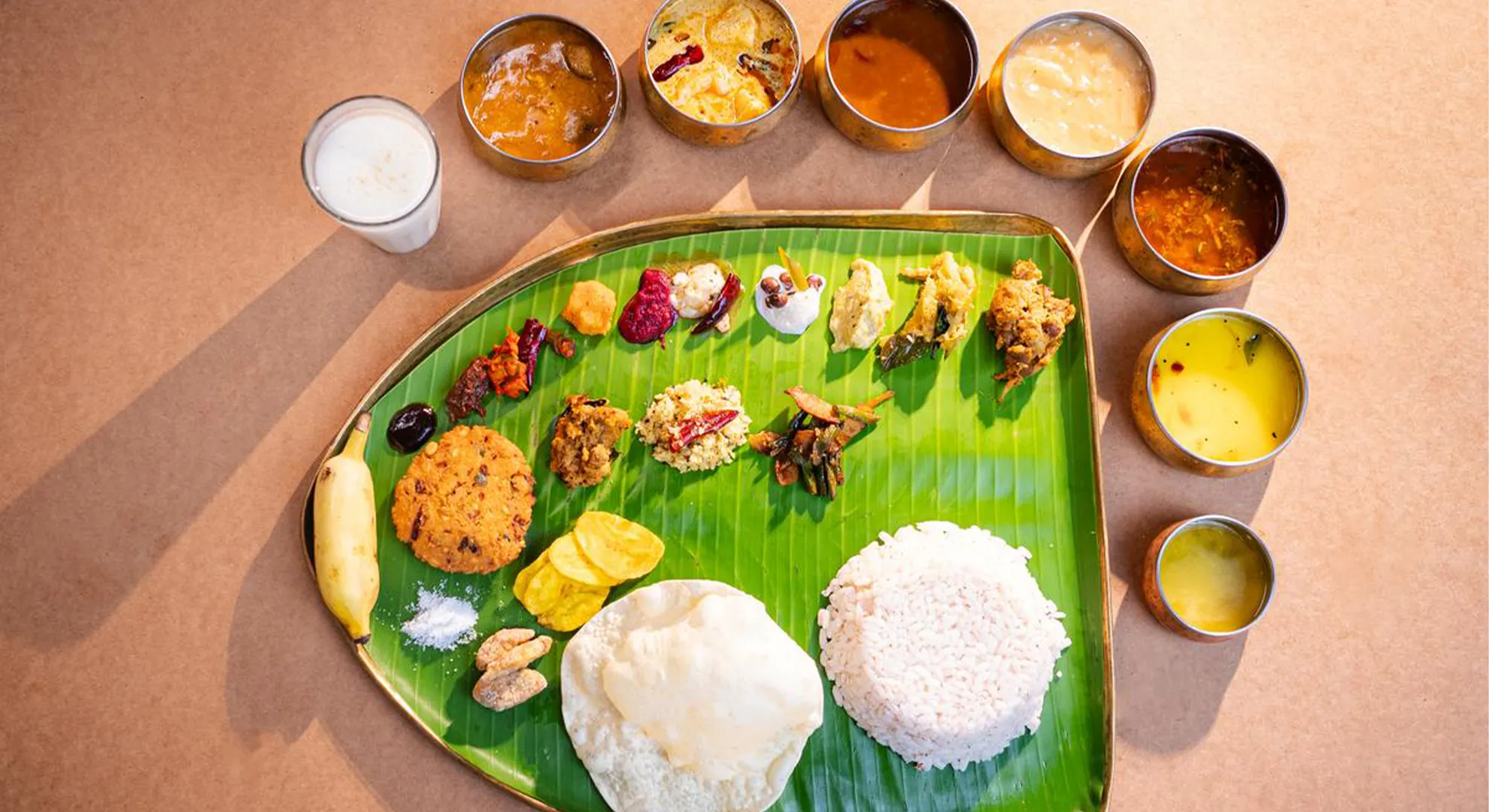
Onam is one of the most important celebrations for the Malayali community, and the traditional sadya is at the centre of many gatherings. Served on a banana leaf, the meal typically includes a wide variety of vegetarian dishes, curries, pickles, side dishes, rice preparations and desserts.
This year, however, restaurants are preparing for the celebrations against a more challenging business environment. The cost of ingredients, particularly vegetables and banana leaves, has increased significantly. Supply disruptions associated with the regional conflict have added further pressure on restaurants that are preparing large quantities of food for the festival.
Restaurants begin early sadya services
While the main Onam celebrations are expected to attract large crowds from August 26, some UAE restaurants have decided to start serving their festive meals earlier.
The early start is partly driven by strong demand from customers who want to celebrate Onam over the weekend, as well as corporate organisations arranging large meals for employees and guests.
For restaurants, corporate bookings can involve preparing hundreds of complete sadyas at once. This requires significant quantities of fresh produce, banana leaves and other ingredients, along with additional kitchen staff and careful preparation.
Calicut Paragon was among the restaurants that had already handled a large order on Friday, serving sadya meals to more than 600 people as part of a corporate booking.
The scale of such orders illustrates the level of preparation required during the Onam season.
Corporate bookings add to demand
Corporate Onam celebrations have become an important part of the festive dining season in the UAE.
Companies often organise traditional meals for their employees as a way of marking the festival and bringing colleagues together.
Mabalar Tiffin House has also received substantial corporate bookings, with some orders involving as many as 800 people.
Preparing a meal for several hundred diners is considerably different from regular restaurant service.
Large quantities of vegetables must be sourced, cleaned and prepared, while the various dishes that make up a sadya have to be cooked and served according to schedule.
Restaurants also need to make sure that enough banana leaves are available because the traditional feast is generally served directly on the leaf.
Weekend dining demand increases
Some establishments have also decided to make the traditional feast available to individual diners before the main Onam period begins.
A number of restaurants started serving sadya to regular customers from Saturday, August 21.
One of them is Malabar Street Food on Sheikh Zayed Road.
The restaurant is expecting strong demand after receiving a large number of enquiries from customers interested in experiencing the traditional feast.
Restaurant manager Noushad said the early availability of the sadya has already generated considerable interest.
The restaurant is among a relatively small number of establishments offering the festive meal during the earlier weekend period, which could make reservations particularly important for diners hoping to secure a table.
Expectations of a full house
With demand already building, restaurants offering early sadya services are anticipating busy dining rooms.
Malabar Street Food expects to be particularly busy because it is starting its service before many competitors.
The restaurant has reportedly received numerous enquiries, indicating that customers are keen to celebrate Onam as soon as possible rather than waiting for the main feast period.
For restaurants, an early start can help spread demand across several days.
Instead of handling all customers during the main Onam weekend, eateries can accommodate diners over a longer period.
However, the additional days of service also mean restaurants must secure sufficient supplies and maintain the quality of the food throughout the festive period.
Most restaurants will start later
Despite the early services being offered by some restaurants, the majority of UAE eateries are expected to begin their main Onam sadya programmes from August 26.
The date is expected to mark the beginning of a particularly busy period for Kerala restaurants and other establishments serving traditional Malayali cuisine.
Many restaurants are preparing to continue their sadya offerings throughout the long weekend to accommodate the expected rush.
For diners, this means there will be multiple opportunities to enjoy the festive meal, but popular venues may become heavily booked.
Restaurants are therefore preparing for large numbers of customers over several consecutive days.
A feast that requires extensive preparation
An Onam sadya is not a simple meal that can be prepared quickly.
The traditional feast can contain a large number of individual dishes, with some restaurants offering menus featuring dozens of items.
Each preparation requires its own ingredients, cooking method and timing.
The dishes may include different vegetable preparations, curries, lentil-based dishes, pickles, chutneys and desserts, all served alongside rice.
The variety is one of the defining characteristics of the sadya and is part of what makes the meal particularly popular during Onam.
For restaurants, however, producing such a large number of dishes at high volume requires careful planning.
Ingredient costs put pressure on restaurants
This year’s festive season is also proving more expensive for restaurants.
The cost of vegetables has risen, while banana leaves have also become significantly more expensive.
Supply disruptions linked to the regional conflict have contributed to difficulties in sourcing some products, putting additional pressure on restaurants that need large volumes of fresh ingredients.
The increase in costs is particularly significant for restaurants serving hundreds of customers.
Even relatively small increases in the price of individual ingredients can add up quickly when multiplied across thousands of meals.
Banana leaves are an important part of the experience
The banana leaf is more than just a serving surface for a traditional sadya.
Serving the meal on a fresh leaf is an important part of the dining experience and helps preserve the traditional character of the feast.
Restaurants therefore need to secure sufficient quantities of good-quality banana leaves before their Onam service begins.
With leaf prices also increasing, the cost of maintaining the traditional presentation has become another challenge for restaurants.
For establishments serving hundreds or thousands of meals, the additional expense can be considerable.
Balancing tradition and rising costs
Restaurants are now faced with the challenge of preserving the traditional sadya experience while managing higher operating costs.
The festive meal is expected to contain a wide range of dishes, meaning restaurants cannot simply reduce the variety without potentially affecting the experience customers expect.
At the same time, higher ingredient prices put pressure on profit margins.
Restaurants therefore have to carefully calculate their menus, purchasing requirements and staffing needs.
Some may absorb part of the additional cost, while others may adjust their prices to reflect increased expenses.
Strong demand from the Malayali community
The UAE is home to a large Malayali population, making Onam an important event for restaurants serving Kerala cuisine.
The festival provides an opportunity for families, friends and colleagues to come together over a traditional meal.
For many residents, enjoying a sadya in the UAE is also a way of maintaining a connection with Kerala’s culture and traditions.
This strong demand makes the Onam period one of the busiest times of the year for many Kerala restaurants.
Restaurants are therefore preparing well in advance to ensure they have enough ingredients, staff and seating capacity.
Corporate celebrations continue to grow
The large corporate bookings received by restaurants demonstrate that Onam celebrations are not limited to family gatherings.
Companies across the UAE also organise festive meals for their teams.
A booking for several hundred people can provide restaurants with a substantial order, but it also requires considerable logistical planning.
Food needs to be prepared in large quantities without compromising consistency.
Restaurants must also coordinate delivery or service arrangements, depending on whether the corporate event is being held at the restaurant or at another venue.
Restaurants expect sustained demand
The demand is unlikely to be limited to a single day.
Because Onam celebrations are spread across several days, restaurants expect customers to visit throughout the festive period.
Some diners may choose to celebrate with family during the weekend, while others may attend corporate events or arrange meals with friends later in the week.
This extended demand provides restaurants with several opportunities to serve customers but also means that kitchen operations need to remain efficient for an extended period.
Early reservations may be important
With some restaurants already reporting strong interest, customers planning to enjoy a sadya during the early part of the festive period may need to reserve tables in advance.
Popular restaurants can expect significant demand, particularly during lunch hours when sadya is traditionally served.
Large groups may also need to make arrangements ahead of time because accommodating families and corporate groups requires additional seating and preparation.
The high demand could continue through the long weekend as more restaurants begin their festive services from August 26.
The traditional meal remains the attraction
Despite the higher cost of ingredients, the appeal of the Onam sadya remains strong.
For many diners, the feast is about more than the food itself.
The experience brings together traditional flavours, festive presentation and the communal spirit associated with Onam.
A typical sadya is served with numerous dishes arranged on a banana leaf, allowing diners to sample a wide range of Kerala’s vegetarian culinary traditions in one sitting.
The elaborate nature of the meal is precisely what makes it such an important part of Onam celebrations.
UAE’s restaurants prepare for the rush
As August 26 approaches, restaurants across the UAE are increasing preparations for what is expected to be a busy festive period.
Some establishments have already completed large corporate orders, while others are beginning their public sadya services.
Restaurants that have chosen to start early are already seeing strong interest, while those waiting until the main festive period are preparing for potentially large crowds.
The combination of corporate bookings, family celebrations and individual diners is expected to create sustained demand throughout the long weekend.
Higher costs add another challenge
The increased prices of vegetables and banana leaves mean restaurants have more to consider this year.
Supply disruptions have made procurement more complicated, while the higher cost of essential ingredients is putting pressure on operating budgets.
Yet restaurants must continue meeting customer expectations for an authentic sadya.
For many diners, the number and variety of dishes, the use of a banana leaf and the traditional style of service are all important parts of the celebration.
Restaurants therefore have to find a balance between controlling expenses and delivering the festive experience customers expect.
A busy Onam season ahead
With some restaurants already serving sadya and many more preparing to begin from August 26, the UAE’s Onam dining season is officially gathering pace.
Calicut Paragon has already catered to a corporate group of more than 600 people, while Mabalar Tiffin House has handled bookings involving as many as 800 diners.
Meanwhile, restaurants such as Malabar Street Food are opening their doors to individual customers earlier than many other establishments and are expecting strong demand.
The early enquiries suggest that interest in the traditional feast remains high.
For restaurants, however, meeting that demand will require careful planning, particularly with ingredient and supply costs higher than usual.
As the main Onam feast days approach, kitchens will be working to prepare large quantities of food, restaurants will be managing reservations and suppliers will be working to meet the increased demand for fresh produce and banana leaves.
Despite the additional challenges, the festive atmosphere is expected to remain strong.
For UAE residents looking to celebrate Onam with a traditional meal, the coming days will offer plenty of opportunities to enjoy a full sadya, whether through a family outing, a corporate event or a gathering with friends.
With services beginning at some restaurants ahead of the main celebrations and most establishments expected to join from August 26, the UAE is set for another busy Onam dining season.
What is Onam and why is the sadya so important?
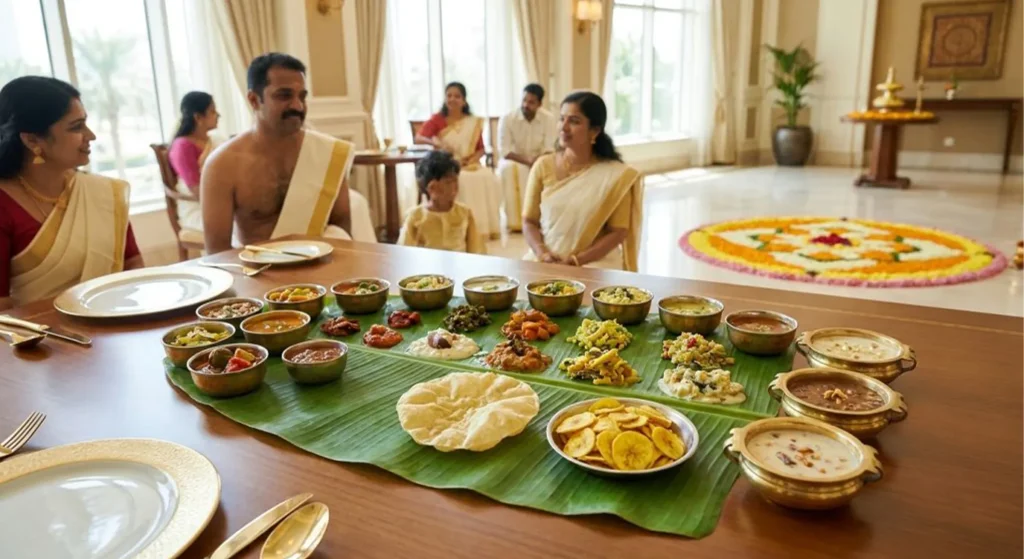
Onam is Kerala’s traditional harvest festival and one of the most widely celebrated cultural occasions associated with the southern Indian state. The festival brings together communities through religious observances, family gatherings, cultural programmes and, most importantly for many food lovers, the elaborate Onam sadya.
The sadya is a traditional vegetarian feast that is usually served on a banana leaf. Depending on the restaurant or household, the meal can include a remarkable variety of preparations, with some elaborate versions featuring close to 30 different dishes.
The feast is known for its wide selection of flavours and textures. Rice forms the centre of the meal, while different curries, vegetable preparations, pickles, chutneys, lentil dishes and other accompaniments are arranged around it.
Traditionally, the meal is eaten by hand, allowing diners to mix the different preparations with rice and experience the flavours together.
The way the food is served and eaten is also part of the tradition. Diners may sit on the floor in a cross-legged position, particularly during traditional celebrations, while the dishes are placed in a specific arrangement on the banana leaf.
The meal is generally served according to an established sequence, with different preparations added to the leaf at various stages.
One of the most anticipated parts of the sadya comes towards the end of the meal — payasam, a sweet dessert traditionally prepared with ingredients such as milk, sugar, jaggery, rice, lentils or other grains.
Payasam comes in many varieties, and restaurants often use Onam as an opportunity to showcase several different versions of the dessert.
Onam celebrations culminate on August 26
This year’s Onam celebrations will reach their main day on August 26, following a traditional 10-day period of festivities.
The days leading up to the main celebration are marked by various cultural and family activities.
For Malayali communities living in the UAE and elsewhere outside Kerala, the festival is also an opportunity to maintain a connection with their cultural roots.
Restaurants, supermarkets and community organisations often prepare special programmes and food offerings to mark the occasion.
The sadya remains one of the biggest attractions during this period, with restaurants preparing large quantities to meet demand from families, businesses and community groups.
Lulu Group prepares more than 150,000 sadyas
Among the largest Onam preparations taking place across the Gulf is the initiative by the Lulu Group.
The retailer is preparing to serve more than 150,000 Onam sadyas across the GCC this year.
The scale of the operation highlights just how significant Onam has become for the region’s Malayali community and for businesses catering to them.
In addition to the enormous number of complete sadya meals being prepared, the group is also expecting to serve more than 100,000 litres of payasam during its Onam campaign.
According to V. Nandakumar, Director of Global Marketing and Communications at the group, customer interest has been particularly strong this year.
Pre-bookings have reportedly received an encouraging response through both physical stores and online platforms.
The level of demand has made the Onam period one of the busiest times for the group’s food operations across the region.
Advance bookings show strong interest
The strong pre-booking response provides an indication of the demand for traditional Onam food across the GCC.
Customers have been placing orders through both online channels and physical outlets, allowing the group to prepare in advance for the large number of meals expected to be served.
Advance bookings are particularly important for an operation of this size.
Preparing tens of thousands of meals requires careful coordination of ingredients, kitchen staff, packaging, transportation and distribution.
The large number of orders also means that preparations need to begin well before the main festival day.
Preparations started weeks ahead
The scale of the Lulu Group’s operation means that the Onam menu cannot be prepared at the last minute.
Planning and procurement began several weeks before the festival, with specialist teams working to make sure the necessary ingredients and kitchen resources were available.
More than 100 chefs from across the group are involved in the preparations.
The chefs are working under the culinary direction of sadya specialist Pazhayidom Mohanan Namboothiri and celebrity chef Suresh Pillai.
Their involvement is intended to help maintain the traditional character of the feast while allowing it to be produced on a very large commercial scale.
Bringing Kerala’s flavours to the Gulf
One of the challenges involved in preparing such a large number of traditional meals outside India is sourcing the right ingredients.
The group has arranged for more than 2,500 tonnes of fresh produce and other ingredients to be brought in from India.
Specially organised charter flights are being used to transport the supplies.
The move reflects the importance of maintaining the traditional taste and character of the dishes.
A sadya contains a large number of individual preparations, and each one can require different vegetables, spices and other ingredients.
For a commercial operation serving hundreds of thousands of people, ensuring consistency across different locations is a major logistical undertaking.
Maintaining authenticity at a huge scale
The traditional sadya is known for its variety, and replicating that variety for such a large audience requires detailed planning.
The chefs need to prepare multiple dishes simultaneously while ensuring that the flavours, textures and presentation remain consistent.
The involvement of experienced chefs and specialists helps the group preserve traditional cooking methods while adapting the process to meet the demands of a large-scale operation.
The use of fresh ingredients sourced from India is another part of the effort to retain the authentic character of the feast.
Payasam becomes a festival of its own
While the sadya is the centrepiece of the Onam meal, the Lulu Group is also placing considerable emphasis on payasam this year.
The group’s payasam festival will feature more than 25 varieties of the traditional dessert.
The selection is expected to include several familiar favourites as well as different interpretations of the sweet dish.
Among the varieties mentioned are mango, jackfruit, ghee, ada and wheat payasams.
The special payasam offering will continue until August 30, giving customers several days to sample the different preparations.
A wide range of payasam flavours
Payasam is a particularly versatile part of Kerala cuisine.
Different versions can vary considerably depending on the ingredients used.
Some varieties are made with milk, while others use coconut milk or jaggery as key components.
The choice of ingredients can change the colour, texture and flavour of the dessert.
By offering more than 25 versions, the payasam festival gives customers an opportunity to explore the diversity of this traditional Kerala sweet.
For many people celebrating Onam, payasam is closely associated with the conclusion of the sadya and is one of the most memorable parts of the meal.
Onam products beyond the sadya
The group’s festive offerings are not limited to traditional meals and desserts.
Customers can also find a range of special products prepared specifically for the Onam season.
These include festive cakes and pastries, as well as chips, ice creams and other popular treats associated with the celebration.
The expanded selection allows customers to bring the flavours and atmosphere of Onam into their homes even if they are not attending a traditional sadya.
It also gives shoppers more options when preparing for family gatherings and festive celebrations.
Shopping for Onam begins early
Interest in the festival has already extended beyond food orders.
According to Nandakumar, customers have begun shopping for Onam products across the group’s locations.
This early shopping activity reflects the importance of the festival for the Malayali community in the GCC.
Families often make preparations well ahead of the main celebration, buying ingredients, sweets, snacks, clothing and other items needed for the festivities.
For retailers, the period therefore represents a significant seasonal opportunity.
A major celebration for the Malayali community
Onam has a particularly strong presence in the UAE because of the country’s large Malayali population.
For residents who have moved from Kerala, celebrating the festival abroad provides a way to preserve traditions and share them with younger generations.
Food plays a central role in this process.
The sadya allows families and communities to recreate an important part of the traditional Onam experience even when they are thousands of kilometres away from Kerala.
Restaurants and retailers across the UAE have responded to this demand by offering increasingly elaborate festive menus.
The social side of the sadya
The traditional feast is not simply about the number of dishes on the leaf.
It is also about bringing people together.
Families, friends and colleagues can gather around a shared meal and celebrate the festival collectively.
Corporate organisations also increasingly arrange Onam meals for employees, helping colleagues from different backgrounds experience Kerala’s culinary traditions.
This has contributed to the growth of large-scale sadya services across the UAE.
From traditional homes to large restaurants
Traditionally, sadya is closely associated with homes and community celebrations.
Today, however, restaurants and major retailers are capable of preparing the feast on a scale that would have been difficult to imagine in the past.
The preparation of more than 150,000 sadyas by a single retail group demonstrates how commercial demand for the traditional meal has grown.
The involvement of specialist chefs, imported ingredients and dedicated festive programmes shows how businesses are investing in the Onam market.
A demanding culinary operation
Producing a sadya for a handful of family members is already a substantial cooking task.
Preparing tens of thousands of meals is a completely different challenge.
Each dish needs to be prepared in large quantities while maintaining quality and consistency.
The kitchens must also coordinate timing so that the meals are ready for customers when required.
Ingredient procurement becomes another major consideration, particularly when large quantities of fresh vegetables and other perishable products are involved.
Transport and storage must also be carefully managed to ensure that the ingredients remain fresh.
Why the banana leaf matters
The banana leaf is one of the most recognisable elements of a traditional sadya.
Serving the meal on the leaf adds to the authenticity of the experience and reflects the way the feast has traditionally been presented in Kerala.
For restaurants serving large numbers of people, sourcing sufficient leaves can therefore become an important logistical requirement.
The presentation also adds a visual element to the feast, with the different dishes arranged in specific positions around the rice.
A feast with dozens of flavours
The appeal of a sadya lies partly in its extraordinary variety.
Rather than focusing on a single main dish, the meal brings together numerous vegetarian preparations.
Some dishes may be spicy, others sweet or sour, while different curries and accompaniments provide contrasting textures.
When eaten together with rice, these individual preparations create a range of combinations.
The meal is therefore designed as a complete culinary experience rather than a single course.
Onam’s culinary tradition reaches the UAE
The growing popularity of Onam sadyas in the UAE demonstrates how strongly Kerala’s food culture has travelled with its communities.
Restaurants can now offer traditional meals to large audiences, while supermarkets and retailers provide ingredients and festive products for customers who prefer to celebrate at home.
Large-scale programmes such as Lulu Group’s Onam campaign further expand access to the festival’s traditional foods.
With more than 150,000 sadyas and over 100,000 litres of payasam planned across the GCC, the scale of this year’s celebration is expected to be significant.
The festival continues beyond the main day
Although August 26 marks the main Onam celebration this year, the festive atmosphere extends beyond a single day.
Restaurants may continue serving special menus, while retailers keep festive products available for customers.
The payasam festival, for example, is scheduled to continue through August 30.
This gives residents several opportunities to take part in the celebrations even if they cannot attend a sadya on the main day.
A large-scale celebration with traditional roots
From family kitchens to restaurants serving hundreds of diners and retailers preparing hundreds of thousands of meals, Onam continues to combine tradition with modern life.
At the heart of the celebration remains the sadya — a meal built around variety, hospitality and community.
The UAE’s large Malayali population has helped make the festival an important part of the country’s multicultural food scene.
This year, the preparations are particularly extensive, with restaurants already taking bookings and major retailers organising enormous quantities of food.
The Lulu Group’s plan to serve more than 150,000 sadyas and over 100,000 litres of payasam across the GCC underlines the scale of the celebrations.
With more than 100 chefs involved, thousands of tonnes of ingredients sourced from India and a payasam selection featuring more than 25 varieties, the preparations represent a significant culinary operation.
For UAE residents, the result will be a chance to experience the flavours of Kerala through one of the region’s most elaborate festive meals.
Whether enjoyed at home, in a restaurant or as part of a corporate celebration, the Onam sadya remains a central part of the festival and a powerful way for Malayali communities to celebrate their heritage while sharing it with the wider UAE population.
A Sadya That Requires Precision and Teamwork
Preparing a large-scale Onam sadya is far more complicated than simply cooking a collection of dishes. Restaurant teams must coordinate dozens of preparations, manage huge quantities of ingredients and ensure that everything is ready at the right time.
Sumesh Govind, CEO of Paragon Group of Restaurants, said the group expects to serve approximately 25,000 to 30,000 sadyas across seven outlets during this year’s Onam celebrations.
The numbers give an indication of the enormous amount of work that goes into meeting demand during the festive period. Each sadya requires several individual dishes, and producing thousands of complete meals means restaurant kitchens have to operate with careful planning and precise coordination.
Thousands of meals require careful preparation
The scale becomes even clearer when looking at the requirements for a single large gathering.
For an event involving around 450 diners, the kitchen can require more than 70kg of rice alone.
Rice is only one component of the traditional feast. Alongside it, chefs need to prepare a wide selection of curries, vegetables, pickles, chutneys and other accompaniments before finally completing the meal with traditional desserts such as payasam.
The preparation process takes several hours.
Restaurant staff typically spend around three to four hours cooking and assembling the sadya, while additional work such as chopping vegetables and preparing pickles can take another two to three hours.
Much of this preparation is completed the previous day so that the kitchen can cope with the heavy workload when customers begin arriving.
Planning begins well before service
The preparation of an Onam sadya requires more than simply increasing the number of cooks in the kitchen.
Every dish has its own ingredients, cooking time and preparation method. Some components need to be prepared ahead of time, while others have to be cooked closer to service to maintain their flavour and texture.
This means chefs need to create a detailed schedule covering everything from ingredient preparation to cooking and final service.
For restaurants expecting hundreds or thousands of diners, even a small delay in one part of the process can affect the entire operation.
Why chefs compare it to an orchestra
Muhammed Anees, head chef at Malabar Tiffin House, likened the preparation of a large sadya to conducting an orchestra.
The comparison reflects the number of moving parts involved in producing the traditional meal.
Different members of the kitchen team may be working on separate dishes at the same time, while others prepare vegetables, cut ingredients, make pickles or organise the final presentation.
Each task needs to be completed at the appropriate moment.
Aneees said the process involves considerable manual work, slow cooking and extensive planning.
Rather than being a meal that can simply be prepared quickly when customers arrive, a sadya requires a carefully organised sequence of tasks.
Demand remains strong in the UAE
The large Malayali population in the UAE is one of the main reasons restaurants experience exceptionally high demand during Onam.
With more than one million Keralites living in the UAE, according to Anees, the festival represents a major period for restaurants serving Kerala cuisine.
For many residents, ordering or dining out for a sadya is an important part of their Onam celebrations.
The long weekend surrounding the festival is expected to increase demand further this year.
Families may have more opportunities to dine together, while groups of friends and colleagues can also arrange festive meals during the extended break.
Restaurants prepare for a bigger rush
Anees said the restaurant is anticipating stronger demand this year because of the long weekend.
The extended holiday gives customers more flexibility about when they celebrate, potentially spreading demand across several days.
However, it can also lead to particularly busy periods around the main festival day.
Restaurants must therefore balance the number of meals they can realistically prepare with the expected customer demand.
At Malabar Tiffin House, there were no immediate plans to extend the sadya service beyond the scheduled period.
However, the restaurant will continue monitoring customer interest before deciding whether additional days should be added.
A massive service on Thiruvonam
The busiest period is expected to be Thiruvonam, the main day of the Onam celebrations.
At the Karama branch of Calicut Paragon, approximately 4,000 people are expected to enjoy the sadya on Thiruvonam alone.
The restaurant plans to serve customers between approximately 11.30am and 3.30pm.
After the lunch service, the branch will close for dinner, allowing the restaurant team to take a break following the intense workload.
Serving thousands of people within a few hours requires substantial preparation.
The kitchen must have enough food ready before service begins, while staff need to coordinate seating, food service and replenishment throughout the lunch period.
Onam attracts diners from different backgrounds
The popularity of the sadya extends well beyond Kerala’s Malayali community.
Govind said people from a wide range of nationalities also visit the restaurants to experience the traditional feast.
Koreans, Japanese, Europeans and Americans are among the international customers who have tried the meal.
For some of these diners, the experience goes beyond simply tasting Kerala cuisine.
They have also become comfortable with the traditional practice of eating the meal by hand.
This growing interest among international residents demonstrates how Onam food has become part of the UAE’s wider multicultural dining scene.
A cultural experience as well as a meal
The appeal of the sadya comes from more than its extensive menu.
The traditional method of serving food on a banana leaf, the variety of dishes and the communal nature of the meal all contribute to the experience.
For people unfamiliar with Kerala cuisine, an Onam sadya provides an opportunity to sample numerous dishes in one sitting.
The meal can also introduce international diners to different combinations of flavours, textures and spices.
As a result, restaurants serving the feast during Onam often attract customers who may not traditionally celebrate the festival themselves.
Rising costs create new challenges
Despite the strong demand, restaurants are dealing with increased costs this year.
The price of vegetables has risen, putting additional pressure on businesses that need to purchase large quantities of fresh produce.
Because a sadya contains numerous vegetable-based preparations, the impact of higher vegetable prices can be significant.
Restaurants cannot easily reduce the quantity of ingredients without affecting the quality and variety of the feast.
Banana leaves also cost more
The cost of banana leaves has also increased substantially.
According to Govind, prices have risen by around 35 to 40 per cent.
The increase is particularly relevant for restaurants serving thousands of sadyas because every traditional meal requires a banana leaf for authentic presentation.
When multiplied across thousands of customers, even a relatively small increase in the cost of each leaf can add considerably to overall expenses.
Supply disruptions affect restaurants
The higher ingredient prices have been linked to supply-chain disruptions associated with the regional conflict.
Disruptions to transportation and supply networks can affect the availability and cost of fresh produce and other essential ingredients.
Restaurants preparing for Onam therefore have to deal with both higher prices and the challenge of securing sufficient quantities of ingredients.
For large-scale operations, advance planning becomes particularly important.
Restaurants need to estimate demand, place orders early and ensure that ingredients arrive in sufficient quantities before the busiest days begin.
Balancing demand with expenses
The combination of strong customer demand and rising operating costs creates a complicated situation for restaurants.
On one hand, the Onam season provides an opportunity to serve a large number of customers.
On the other, the cost of producing each sadya has increased.
Restaurants must therefore manage their purchasing, staffing and kitchen operations carefully to maintain the quality of the traditional feast while dealing with higher expenses.
For establishments preparing tens of thousands of meals, this becomes a significant logistical challenge.
A festival bringing people together
Despite the additional pressures, the popularity of the Onam sadya remains strong.
The expected crowds at restaurants across the UAE demonstrate how important the traditional meal has become during the festival.
For Malayali residents, it provides a connection to Kerala and its traditions.
For people from other communities, it offers an opportunity to discover a different culinary culture.
The fact that diners from countries around the world are willing to sit down and eat the meal by hand shows how food can bring people from different backgrounds together.
A carefully coordinated operation
From cutting vegetables and preparing pickles a day ahead to cooking large quantities of rice and coordinating dozens of individual dishes, the preparation of an Onam sadya involves significant planning.
The comparison with an orchestra is particularly fitting because every member of the kitchen team has a specific role.
If one part of the process falls behind schedule, it can affect the timing of the entire meal.
For restaurants expecting thousands of diners, teamwork is therefore essential.
The result is a traditional feast that may appear simple to customers once it reaches the banana leaf, but requires hours of preparation and coordination behind the scenes.
Strong demand expected during the long weekend
With the long weekend providing residents with additional time to celebrate, restaurants expect another busy Onam season.
Large corporate bookings, family gatherings and individual diners are all expected to contribute to demand.
Some restaurants have already started serving their festive meals, while others are preparing for their busiest days from August 26.
For major outlets, the numbers can be substantial, with thousands of sadyas expected to be served within only a few hours.
The cost of keeping tradition alive
This year’s higher prices highlight another side of the Onam celebrations.
While customers may focus on the variety and flavour of the finished meal, restaurants have to manage a complex supply chain to make the feast possible.
Fresh vegetables, banana leaves, rice and numerous other ingredients all need to be sourced in large quantities.
With supply disruptions affecting prices, maintaining the traditional sadya experience has become more expensive.
Yet restaurants continue to prepare for the expected crowds, reflecting the enduring popularity of Onam and its food traditions across the UAE.
For diners, the finished sadya may look like a colourful collection of dishes served together on a banana leaf. Behind that presentation, however, is a carefully choreographed operation involving hours of preparation, dozens of staff members and substantial quantities of ingredients.
That combination of tradition, teamwork and growing demand is helping make the Onam sadya one of the UAE’s most anticipated seasonal dining experiences.