Dubai’s upcoming bridge is expected to significantly ease congestion, connecting key areas near the World Trade Centre and reducing typical driving times from around 10 minutes to only two minutes.
Dubai Traffic: New Bridge Set to Slash World Trade Centre Journey Time to Just Two Minutes.
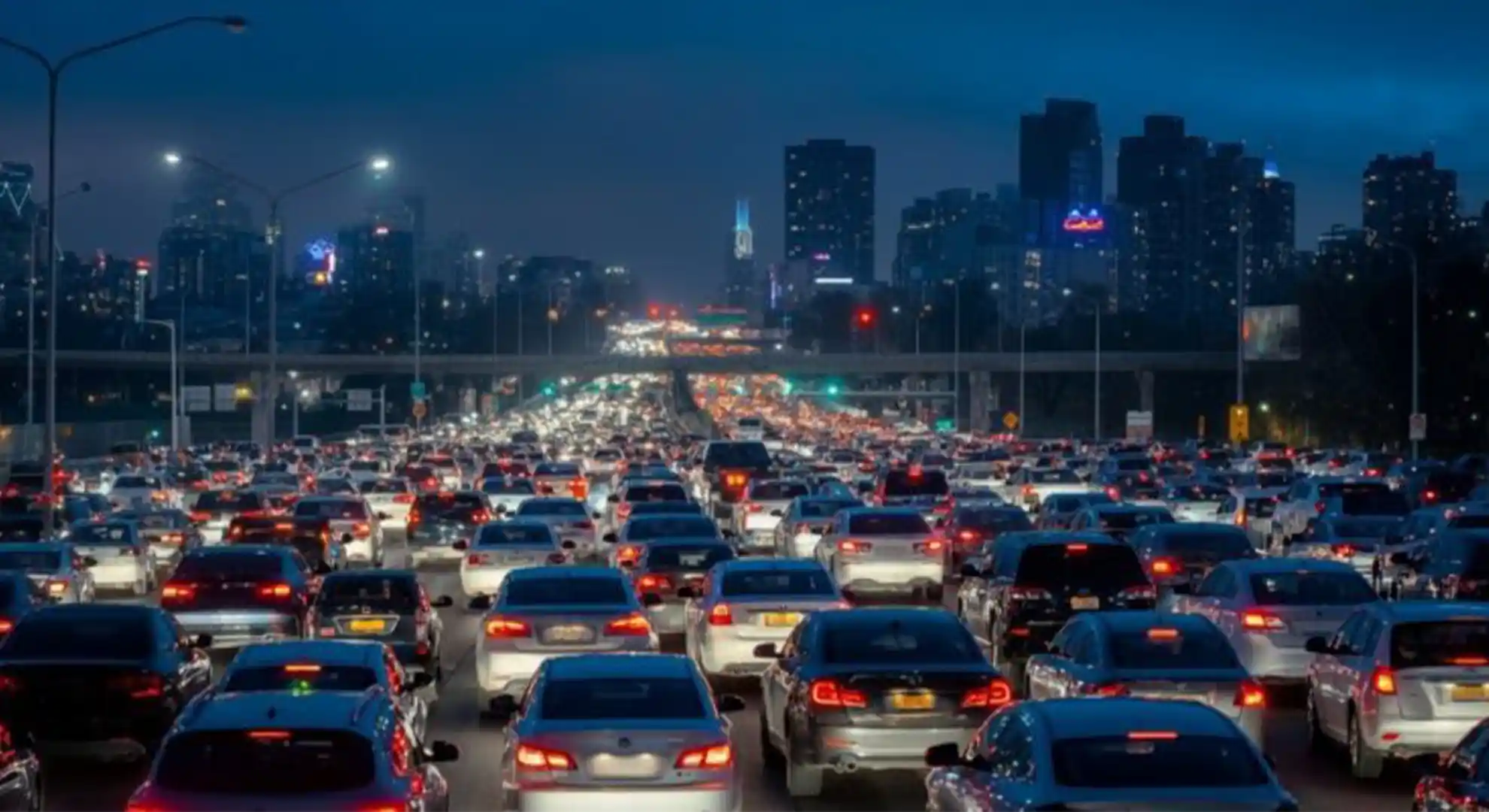
The new 500-metre overpass will provide a faster exit for drivers departing Dubai World Trade Centre and One Central, with additional bridges and underground routes scheduled to become operational soon.
New Dubai bridge expected to significantly reduce travel times near World Trade Centre
Motorists travelling away from Dubai World Trade Centre are set to benefit from a new road link designed to make journeys considerably quicker, particularly during large-scale exhibitions, conferences and other major events.
The new bridge is scheduled to open on Friday and is expected to reduce the time required for vehicles leaving the Dubai World Trade Centre area from approximately 10 minutes to just two minutes.
The infrastructure forms part of Dubai’s ongoing efforts to improve traffic movement and strengthen road capacity in areas that experience heavy congestion during major events.
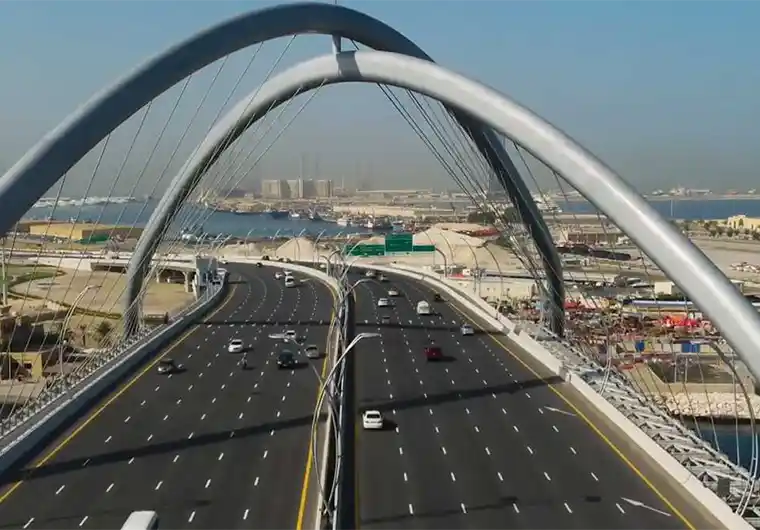
The bridge itself stretches for around 500 metres and has two lanes. It has been designed to provide a more direct route for vehicles travelling from Dubai World Trade Centre and One Central towards the junction connecting Al Mustaqbal Street with Za’abeel Palace Street.
The project was announced by Dubai’s Roads and Transport Authority (RTA) as part of a wider programme aimed at improving traffic flow and reducing delays on one of the city’s important corridors.
Part of a Dh633 million road project
The new bridge is not a standalone improvement. It forms part of the larger Al Mustaqbal Street Development Project, which has a total investment of Dh633 million.
The wider scheme is intended to increase the capacity of Al Mustaqbal Street while making journeys along the route faster and more efficient.
Once all components of the development are completed, the road will be capable of accommodating around 8,800 vehicles per hour in both directions.
That represents a substantial increase compared with the road’s current capacity of approximately 6,600 vehicles per hour.
The additional capacity is expected to help accommodate increasing traffic volumes and reduce bottlenecks, particularly around locations that attract large numbers of visitors and commuters.
Faster movement during major events
Dubai World Trade Centre regularly hosts major exhibitions, conferences, business events and public gatherings, all of which can result in a sharp increase in traffic around the surrounding roads.
During particularly busy events, thousands of visitors can arrive and leave within a relatively short period, putting significant pressure on nearby road networks.
The new bridge has therefore been designed to provide a quicker route for vehicles leaving the World Trade Centre and One Central.
Under the new arrangement, motorists who previously needed around 10 minutes to complete the journey could potentially make the same trip in approximately two minutes.
The reduction is expected to be particularly noticeable during peak periods when congestion around the event venues is at its highest.
Improving connectivity around Al Mustaqbal Street
The development is also intended to strengthen connectivity between key roads in the area.
The bridge will connect traffic from Dubai World Trade Centre and One Central towards the intersection of Al Mustaqbal Street and Za’abeel Palace Street.
By providing an elevated route, the project can help separate certain traffic movements and reduce pressure on existing road intersections.
This can allow vehicles to move through the area more efficiently, particularly when traffic volumes increase.
The improvement is part of Dubai’s broader approach to expanding road infrastructure in line with population growth, economic activity and the increasing number of visitors using the city’s transport network.
Wider improvements expected
The bridge represents only one component of the Dh633-million development.
The broader project is expected to bring significant improvements to Al Mustaqbal Street, including increased road capacity and shorter journey times.
At present, travelling along the corridor can take around 13 minutes.
Following completion of the overall development, that journey is expected to take approximately six minutes.
The reduction would represent a significant improvement for people who regularly use the route.
The project is also expected to support smoother traffic movement by increasing the number of vehicles that can be handled by the road every hour.
Road capacity to rise by one-third
One of the key objectives of the development is to increase the capacity of Al Mustaqbal Street by around 33 per cent.
The road currently handles approximately 6,600 vehicles per hour in both directions.
Once the complete project is operational, that figure is expected to rise to around 8,800 vehicles per hour.
The additional capacity will give the road network greater ability to accommodate future demand.
For a rapidly developing city such as Dubai, expanding transport infrastructure is important as residential areas, commercial districts, tourist attractions and major venues continue to attract more people.
Greater road capacity can also help reduce the likelihood of severe congestion when traffic levels temporarily rise because of major events or other activities.
Benefits for commuters and visitors
The improvements are expected to benefit more than just visitors attending events at the World Trade Centre.
People travelling through the area for work, business meetings or other destinations could also experience shorter journeys once the wider development is completed.
One Central, which is located alongside the Dubai World Trade Centre area, is home to offices, businesses and other facilities that attract employees and visitors throughout the day.
Providing more efficient road connections around these locations could therefore improve accessibility for a wide range of road users.
The project may also help reduce delays for motorists travelling towards nearby commercial and residential districts.
Reducing congestion through infrastructure
Dubai has continued to invest heavily in transport infrastructure as the emirate’s population and economic activity expand.
Road improvements such as bridges, tunnels and additional lanes are intended to address congestion by giving motorists more direct routes and increasing the ability of major roads to handle traffic.
The Al Mustaqbal Street project follows the same approach.
Rather than relying solely on existing intersections and road layouts, the development introduces additional infrastructure to improve traffic distribution.
The new bridge will allow certain vehicles to bypass slower movements and reach their destination more directly.
This is particularly useful around major venues, where traffic patterns can change dramatically depending on the timing of events.
A major upgrade for a busy corridor
Al Mustaqbal Street is an important part of Dubai’s road network, connecting several key areas.
Improving its capacity can have benefits beyond the immediate project area because traffic congestion on one road can often affect surrounding routes.
When a major corridor becomes overloaded, queues can spread to nearby intersections and streets.
Increasing capacity and improving traffic movements can help limit these knock-on effects.
The expected reduction in journey time from 13 minutes to six minutes once the complete project is finished indicates the scale of the planned improvement.
Immediate benefit from the new bridge
Although the wider development will take longer to complete, motorists will begin to see a direct benefit from the new bridge when it opens on Friday.
The 500-metre structure will provide two lanes specifically serving traffic travelling from Dubai World Trade Centre and One Central towards the Al Mustaqbal Street and Za’abeel Palace Street intersection.
Its opening is expected to be particularly useful during periods when the World Trade Centre is hosting major events.
Instead of remaining in slow-moving traffic for several minutes while leaving the area, motorists will have access to a dedicated route designed to improve the flow of vehicles.
Preparing for future traffic growth
The project is also intended to prepare Dubai’s road network for future demand.
As the emirate continues to attract residents, businesses, tourists and international events, the number of vehicles using major roads is expected to increase.
Infrastructure projects that expand road capacity can help the transport network accommodate this growth.
The planned increase from 6,600 to 8,800 vehicles per hour represents a significant addition to the corridor’s ability to handle traffic.
The reduction in journey time is another important element, as faster travel can improve the overall efficiency of the road network.
Part of Dubai’s continuing transport development
The Al Mustaqbal Street project reflects Dubai’s continuing focus on developing its transport infrastructure alongside the city’s rapid growth.
New bridges and road connections are being introduced to improve traffic circulation, while existing corridors are being upgraded to handle greater volumes.
For motorists, the immediate attraction of the latest project is the dramatic reduction in travel time expected when leaving the World Trade Centre during busy events.
However, the long-term benefits are broader.
Once the full Dh633-million project is completed, Al Mustaqbal Street is expected to carry significantly more traffic while allowing motorists to complete journeys in less time.
With the new bridge opening on Friday, one part of that wider transformation is now moving into operation.
For thousands of motorists who use the World Trade Centre and One Central area, the new connection could provide a noticeably faster and more convenient way to leave the district, while the completed project is expected to deliver further improvements to traffic movement across the corridor.
What the new road improvements mean for Dubai drivers
Motorists travelling through the Dubai World Trade Centre area are set to benefit from a series of road upgrades designed to make traffic movement quicker and more efficient.
The first major change will come with the opening of a new bridge on Friday. The structure has been introduced to improve the movement of vehicles around Dubai World Trade Centre, particularly during large exhibitions, conferences and other events that can attract thousands of visitors and create significant increases in traffic.
For drivers leaving Dubai World Trade Centre and One Central, the new bridge will create a more direct route towards Al Mustaqbal Street and Za’abeel Palace Street.
The aim is to reduce delays at busy intersections and allow vehicles to move through the area with fewer interruptions.
Faster exits from Dubai World Trade Centre
Dubai World Trade Centre is one of the emirate’s busiest event destinations, regularly welcoming large numbers of visitors for international exhibitions, business conferences and other major gatherings.
When these events end, traffic volumes can rise sharply as large numbers of motorists attempt to leave the area at roughly the same time.
The new bridge has been designed to address this problem by providing an alternative route for vehicles travelling away from the World Trade Centre and One Central.
Instead of relying entirely on existing ground-level intersections, motorists will be able to use the new elevated connection to reach Al Mustaqbal Street and continue towards Za’abeel Palace Street.
This is expected to improve traffic circulation and reduce the amount of time drivers spend waiting at intersections.
The bridge is therefore expected to have its greatest impact during periods of particularly heavy traffic, although it will also provide a useful connection during normal hours.
A wider transformation of Al Mustaqbal Street
The new bridge forms part of a much larger development programme covering approximately 3.5 kilometres of Al Mustaqbal Street.
The project extends between Financial Centre Street and Za’abeel Palace Street and is intended to significantly improve the road’s capacity and connectivity.
As part of the upgrade, the existing road will be expanded.
Al Mustaqbal Street currently has three lanes in each direction, but the completed project will increase this to four lanes on both sides.
That additional lane in each direction will allow the road to accommodate a greater volume of traffic.
The development also involves the construction of approximately 2 kilometres of bridges and tunnels.
Together, these structures are intended to provide smoother traffic movements and reduce delays at key intersections along the corridor.
Free-flow connections at important junctions
Another major component of the project is the creation of free-flow connections at the intersections of Al Mustaqbal Street with Exhibition Street and Trade Centre Street.
These improvements are designed to reduce the need for vehicles to stop or wait at conventional junctions when making certain movements.
Instead, dedicated road connections will allow traffic to move more continuously between the different routes.
This type of infrastructure can be particularly valuable in areas where several major roads meet and traffic volumes are consistently high.
By separating different traffic movements through bridges and tunnels, the project aims to prevent vehicles travelling in one direction from unnecessarily slowing traffic moving elsewhere.
Benefits for residents and visitors
According to Dubai’s Roads and Transport Authority, the completed development is expected to benefit approximately 500,000 residents and visitors.
The improvements are designed to make several important destinations easier to reach, including Dubai World Trade Centre, Dubai International Financial Centre, Za’abeel, Downtown Dubai and Business Bay.
These areas attract a large combination of office workers, residents, tourists and business visitors.
Improved road connections between them could therefore have a wider impact on daily travel across central Dubai.
For commuters, the upgraded road network could mean shorter journey times.
For visitors attending major events, it could provide faster access to and from the World Trade Centre.
For businesses, better connectivity could improve access for employees, customers and suppliers.
More infrastructure on the way
The bridge opening on Friday is only one stage of the overall development.
Motorists using the corridor will see further changes as additional bridges and tunnels are completed.
Among the most significant additions will be three new tunnels at the intersection of Al Mustaqbal Street and Trade Centre Street.
Together, the three underground routes will have a combined length of approximately 1,500 metres.
They are currently under construction and are scheduled to open in February 2027.
The tunnels will provide additional routes for traffic moving through the intersection and are expected to play an important role in improving traffic flow.
Three tunnels with different functions
Each of the three tunnels will serve a different traffic movement.
The largest structure will be a three-lane tunnel running along Al Mustaqbal Street towards Deira.
It will have the capacity to handle approximately 4,500 vehicles per hour.
Its three lanes will provide additional underground capacity along one of the key directions through the corridor.
By moving a significant volume of traffic below the intersection, the tunnel is expected to reduce pressure on surface-level roads.
A dedicated turning route
The second tunnel will have two lanes and will provide a left-turn movement from Al Mustaqbal Street towards Trade Centre Street.
It will serve vehicles travelling in the directions of both Deira and Jebel Ali.
The tunnel will have a combined capacity of around 3,000 vehicles per hour in both directions.
Providing a dedicated underground route for this movement is expected to reduce conflicts between turning vehicles and traffic travelling through the main intersection.
This can help improve the overall efficiency of the junction and reduce the formation of queues during busy periods.
Dedicated access for One Central
The third tunnel will be a single-lane facility designed to serve traffic from One Central.
Although smaller than the other two tunnels, it will still provide important additional capacity for vehicles leaving the development.
The tunnel is expected to accommodate up to 1,500 vehicles per hour.
Its dedicated function means traffic from One Central can be channelled more efficiently without placing additional pressure on other movements at the intersection.
Improvements beyond vehicles
The road development is not focused exclusively on motorists.
The project also includes changes designed to improve conditions for pedestrians and cyclists.
A new pedestrian bridge is planned on Al Sukook Street, providing people with a safer and more convenient way to cross the road.
Pedestrian walkways will also be upgraded as part of the development.
These improvements are intended to make movement through the area easier for people travelling without cars.
The project will also include a cycling track, supporting alternative forms of transport and contributing to Dubai’s wider efforts to improve facilities for cyclists.
Upgraded intersections
Existing intersections in the area will also undergo improvements.
These changes are intended to make traffic movements more organised and efficient while improving connectivity between the different roads.
The combination of wider roads, bridges, tunnels and upgraded junctions is expected to create a more integrated transport network around Al Mustaqbal Street.
Rather than relying on a single solution, the project uses several types of infrastructure to address congestion from different directions.
Preparing the area for future demand
The scale of the project reflects the importance of the corridor to Dubai’s wider road network.
Central Dubai continues to attract large numbers of residents, businesses and visitors, while major destinations such as Downtown Dubai, DIFC and Dubai World Trade Centre generate substantial daily traffic.
Large events can add another layer of pressure to the roads.
By increasing road capacity and introducing separate traffic routes, the development is designed not only to address existing congestion but also to prepare the area for future increases in demand.
The widening of Al Mustaqbal Street from three to four lanes in each direction will provide additional capacity, while the new bridges and tunnels will allow traffic to bypass congested intersections.
Shorter journeys for motorists
One of the most noticeable benefits for drivers is expected to be a reduction in travel time.
The new bridge opening on Friday is expected to cut the time required to leave the Dubai World Trade Centre area during major events from around 10 minutes to approximately two minutes.
The broader project is also expected to reduce travel times along the Al Mustaqbal Street corridor.
As additional components become operational, motorists should have more direct routes and fewer delays at major junctions.
The improvements could be especially significant during peak periods, when even relatively short distances can take considerably longer because of congestion.
A connected network of bridges and tunnels
When completed, the development will create a network combining surface roads, elevated structures and underground routes.
This approach allows different traffic movements to be separated instead of forcing all vehicles through the same intersections.
The new bridge will handle traffic leaving Dubai World Trade Centre and One Central, while the planned tunnels will address several movements at the Al Mustaqbal Street and Trade Centre Street intersection.
The widened road will provide greater capacity along the main corridor.
Together, these elements are intended to create a more efficient traffic system.
Benefits beyond rush hour
Although reducing congestion during busy periods is a key objective, the infrastructure could provide benefits throughout the day.
More road capacity can help absorb fluctuations in traffic and reduce the likelihood of long queues forming when volumes suddenly increase.
For residents and workers travelling between central Dubai districts, this could make journeys more predictable.
For visitors, particularly those attending major events, improved access could make arriving at and leaving venues less time-consuming.
The development could also improve the movement of commercial vehicles and other traffic serving businesses in the surrounding districts.
A major investment in central Dubai connectivity
The Al Mustaqbal Street development represents a significant investment in improving one of Dubai’s important central road corridors.
Its combination of additional lanes, bridges, tunnels, pedestrian infrastructure and cycling facilities means the project is designed to benefit several categories of road users.
The immediate opening of the 500-metre bridge will provide the first major change for motorists leaving Dubai World Trade Centre and One Central.
Further improvements will follow as construction progresses.
The three planned tunnels, scheduled for February 2027, will add substantial underground capacity at the busy Trade Centre Street intersection.
Meanwhile, improvements for pedestrians and cyclists will provide alternatives to travelling by car.
Once all the planned elements are completed, Al Mustaqbal Street is expected to offer significantly better connectivity between major destinations in central Dubai.
For motorists, the main advantage will be simpler routes, greater road capacity and shorter journey times. For the wider community, the project is expected to make movement between key business, residential and visitor destinations more efficient while helping Dubai’s transport network cope with continued growth.
More bridges to open
RTA projects advance as Dubai continues expanding road capacity
Dubai’s Roads and Transport Authority (RTA) is making steady progress on several major infrastructure projects aimed at improving traffic movement and reducing journey times across key parts of the city.
Mattar Al Tayer, Director General and Chairman of the Board of Executive Directors of the RTA, said construction of the Al Mustaqbal Street Development Project has now passed the halfway mark.
According to Al Tayer, more than 50 per cent of the work has been completed, with construction moving faster than the schedule originally approved for the project.
The progress is part of a wider programme of road improvements being carried out across the area. The Al Mustaqbal Street works are taking place at the same time as the World Trade Centre Roundabout Development Project, another major scheme designed to improve traffic flow around one of Dubai’s busiest areas.
World Trade Centre project nearing completion
Work on the World Trade Centre Roundabout Development Project has also advanced significantly, with more than 85 per cent of the construction already completed.
The project is designed to transform the existing roundabout into a conventional at-grade intersection while adding a series of bridges to improve traffic movement.
Further stages of the development are expected to become operational over the coming months.
The RTA plans to open another bridge by the end of August. The new structure will provide a dedicated route for motorists travelling from Sheikh Rashid Road towards 2nd December Street.
A further bridge is scheduled to open in October.
That structure will cater to traffic travelling from Al Majlis Street towards 2nd December Street, adding another connection for motorists moving through the area.
Five bridges planned
Once fully completed, the World Trade Centre Roundabout project will feature five bridges with a combined length of around 5 kilometres.
The introduction of these elevated routes is intended to separate major traffic movements and allow vehicles to travel through the area more efficiently.
Converting the existing roundabout into an at-grade intersection will also change how motorists navigate the junction.
The overall objective is to create smoother connections between major roads while reducing congestion and improving travel times.
The project is particularly important because the surrounding area experiences significant traffic volumes throughout the day.
Dubai World Trade Centre and nearby business districts attract large numbers of employees, visitors and event attendees, meaning efficient road connections are essential for keeping traffic moving.
Al Mustaqbal Street upgrade progressing
The Al Mustaqbal Street Development Project is another major part of the RTA’s efforts to improve connectivity in central Dubai.
With construction already exceeding 50 per cent completion, the project is progressing ahead of its planned schedule.
The development includes new bridges, tunnels and road improvements designed to increase capacity and provide more direct routes for motorists.
Once completed, the upgraded corridor is expected to offer smoother traffic movement between several important destinations.
The improvements are also expected to be particularly useful during major events at Dubai World Trade Centre, when traffic levels can rise considerably within a short period.
More road capacity for growing traffic
Dubai’s continued population growth and expanding economic activity have increased demand on its road network.
Major commercial districts, residential communities and visitor attractions all contribute to traffic volumes.
Infrastructure projects such as Al Mustaqbal Street and the World Trade Centre Roundabout development are designed to increase the capacity of the network and prepare it for future demand.
By adding bridges, widening roads and improving intersections, the RTA aims to create more efficient routes for motorists.
The projects are also intended to reduce the time people spend travelling between major parts of the city.
Oud Maitha and Al Asayel Streets project
Another major development taking shape in the area is the Oud Maitha and Al Asayel Streets Development Project.
This scheme is scheduled to become fully operational by the end of August and includes several significant road improvements.
The project covers four major intersections, approximately 4.3 kilometres of bridges and around 14 kilometres of roads.
The scale of the work reflects the importance of the corridor and the expected growth in traffic in the surrounding areas.
The development is designed to improve connectivity between key roads while reducing delays at major junctions.
Journey times expected to halve
One of the main benefits expected from the Oud Maitha and Al Asayel Streets project is a significant reduction in travel time.
According to the plans, journeys that currently take approximately 20 minutes could be reduced to around 10 minutes once the development is fully operational.
A reduction of this scale could make a noticeable difference to residents, commuters and businesses that regularly use the route.
Shorter travel times can also improve the efficiency of the wider road network by reducing congestion and allowing vehicles to move between major routes more quickly.
Preparing for population growth
The project is also being developed with future population growth in mind.
The areas served by the Oud Maitha and Al Asayel Streets improvements are expected to have a combined population of more than 420,000 people by 2030.
Increasing road capacity ahead of this expected growth will help ensure that infrastructure keeps pace with demand.
The development therefore has a longer-term purpose beyond addressing today’s traffic conditions.
By completing major road improvements before traffic volumes increase further, authorities can create additional capacity and strengthen connections between growing communities.
Multiple projects working together
The progress of these projects highlights the coordinated approach being taken by the RTA to improve Dubai’s transport network.
Rather than focusing on a single road or intersection, several connected developments are being delivered at the same time.
The Al Mustaqbal Street project is improving one major corridor, while the World Trade Centre Roundabout scheme is addressing another important junction nearby.
The Oud Maitha and Al Asayel Streets project is also contributing to improved connectivity in another busy part of the road network.
Together, these developments are expected to improve traffic movement across a wider area.
More direct routes for motorists
Bridges and tunnels can provide motorists with routes that avoid heavily congested intersections.
This is particularly useful in areas where large volumes of traffic need to move in different directions at the same time.
The new structures being built as part of these projects will allow certain traffic movements to be separated, reducing potential conflicts between vehicles.
For drivers, this can mean fewer stops, shorter queues and more predictable journey times.
The benefits are likely to become more noticeable as additional sections of the projects open and the road network begins operating according to its new layout.
Upcoming openings
The RTA’s construction schedule means motorists will see several changes over the coming months.
The next bridge under the World Trade Centre Roundabout Development Project is expected to open by the end of August, providing a connection between Sheikh Rashid Road and 2nd December Street.
The final bridge planned as part of that project is due to open in October and will connect Al Majlis Street with 2nd December Street.
These openings will gradually bring the wider road system into operation.
Once all five bridges are completed, the World Trade Centre Roundabout will have been transformed into a new road configuration designed to handle traffic more efficiently.
Focus on long-term mobility
The RTA’s ongoing construction programme reflects Dubai’s broader focus on improving mobility as the city continues to grow.
Road infrastructure needs to accommodate not only existing traffic but also future increases resulting from population growth, new developments and expanding business activity.
The projects currently under construction are intended to provide that additional capacity while reducing journey times.
For residents and visitors, the ultimate goal is a road network that allows them to reach major destinations more quickly and with fewer delays.
A changing road network
As the new bridges, tunnels and intersections become operational, motorists will gradually see significant changes to familiar routes.
Some journeys will be redirected through new connections, while others will benefit from additional lanes and free-flow routes.
The transition will ultimately create a more interconnected road network with greater capacity.
The expected reduction in travel times is one of the clearest indicators of the potential impact.
With the Al Mustaqbal Street project progressing ahead of schedule, the World Trade Centre Roundabout project nearing completion and the Oud Maitha and Al Asayel Streets development approaching its planned opening, several major improvements are moving closer to becoming fully operational.
For Dubai’s motorists, the projects promise shorter journeys, improved connectivity and greater road capacity, while helping the emirate prepare its transport infrastructure for the demands of the coming years.