
Abu Dhabi Customs has cautioned residents about misleading messages circulating across online platforms, urging the public to remain vigilant and avoid responding to potentially fraudulent communications.
Abu Dhabi Customs Alerts Residents About Scam Messages Spreading Online.
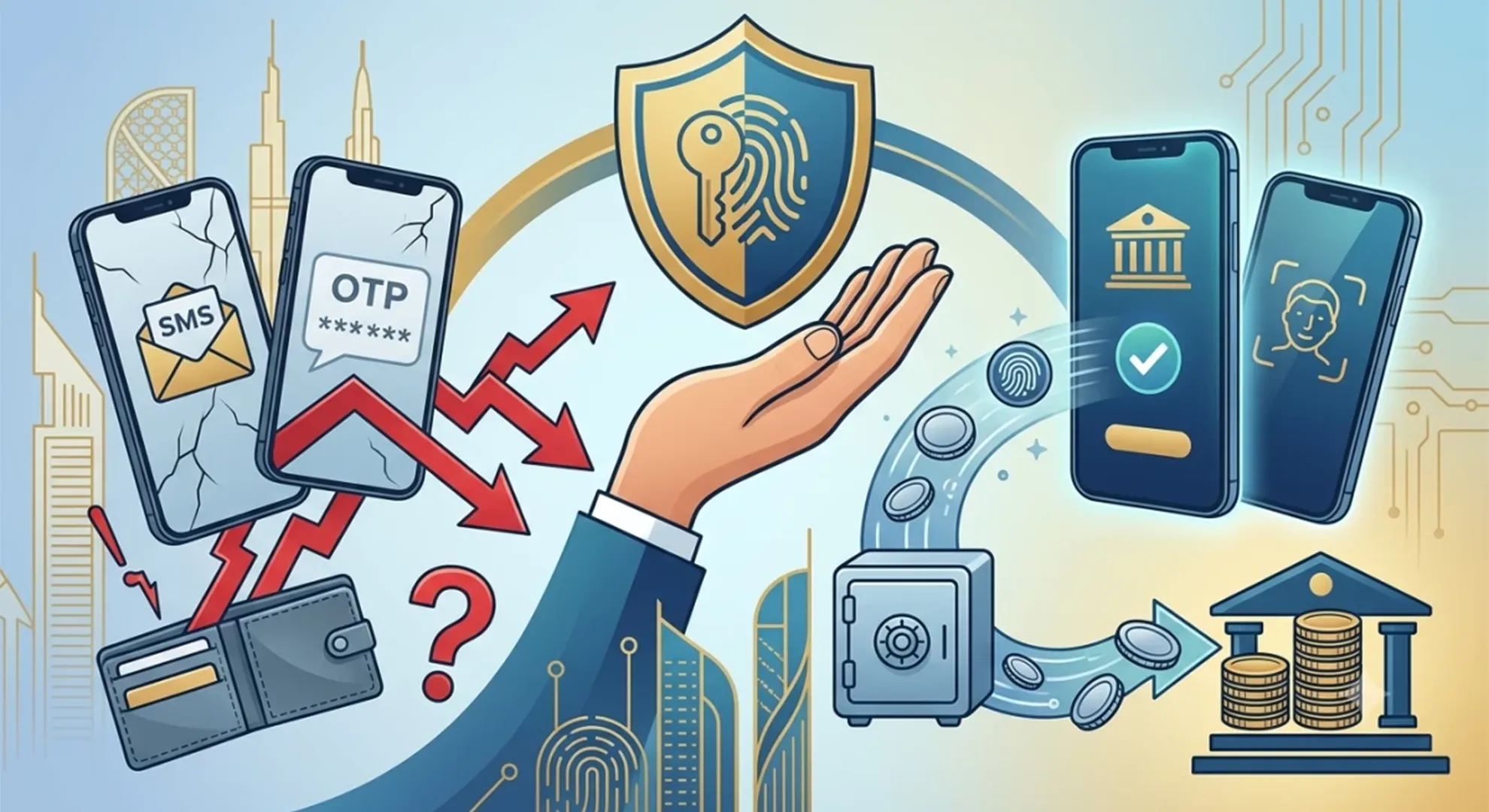
Officials urged members of the public to exercise caution when receiving unusual messages and avoid opening unfamiliar links, as these could potentially lead to scams, fraud, or attempts to steal personal information.
Abu Dhabi Customs Warns Residents About Fraudulent Messages and Online Scams
As online fraud continues to evolve, cybercriminals are adopting increasingly sophisticated methods to deceive individuals and obtain sensitive personal information. In many cases, scammers attempt to gain access to private data, banking details, passwords, or other confidential information by pretending to represent trusted government departments and well-known organisations. Against this backdrop, Abu Dhabi Customs has issued a warning to residents about a fraudulent message currently being circulated online, urging members of the public to remain cautious and take appropriate steps to protect themselves from potential scams.
The warning was issued by Abu Dhabi Customs on Wednesday after the authority became aware of a misleading message being shared with members of the public. Officials advised residents not to engage with the suspicious communication or follow any instructions contained within it. The alert is intended to prevent people from unknowingly providing their personal information to individuals who are attempting to impersonate the government authority.
According to Abu Dhabi Customs, the fraudulent communication carries the subject line, “Official Customs Hold Notice – Customs Tariff Classification Required (Harmonized System).” The message has been designed to appear as though it has been sent by the customs authority and may give recipients the impression that they need to take immediate action in relation to a customs-related matter.
Residents who receive such a message have been advised not to respond to it. They should also avoid following any instructions provided by the sender, particularly where the communication asks them to click on a link, submit personal information, or complete an online process through an unfamiliar website.
The authority clarified that the messages being circulated are not genuine communications from Abu Dhabi Customs. Scammers are reportedly using the authority’s name and identity in an attempt to make their fraudulent messages appear legitimate and trustworthy. By impersonating a recognised government entity, fraudsters may try to convince recipients that the request is official and requires urgent attention.
Such tactics are commonly used in online scams because people may be more likely to respond when a message appears to come from an official organisation. Fraudsters can use convincing language, official-looking terminology, and references to customs procedures to create a false sense of authenticity. Recipients may therefore feel pressured to follow a link or provide information without first checking whether the message is genuine.
Abu Dhabi Customs stressed that members of the public should exercise particular caution when receiving unexpected electronic communications that request personal details or direct them to external websites. Clicking on an unknown or suspicious link can potentially expose users to fraudulent websites or other online threats. In some cases, such links may be used to collect confidential information or encourage users to disclose details that scammers can later misuse.
The authority has therefore urged residents to remain vigilant and avoid taking immediate action simply because a message claims to be urgent or official. Instead, individuals should verify the source of the communication through trusted and official channels before responding or providing any information.
Residents who have questions or require assistance from Abu Dhabi Customs can contact the authority directly through its official support number, 800 555. Using a verified contact channel allows members of the public to confirm whether a particular message or request is genuine rather than relying on the contact information provided in a suspicious communication.
The warning also highlights the importance of maintaining good online security practices. As fraudulent schemes become more convincing, users should avoid assuming that every message carrying a government department’s name is authentic. Scammers can imitate the identity of organisations and create communications that look credible, making it increasingly important for individuals to carefully examine unexpected requests before taking any action.
The fraudulent customs message is reportedly intended to persuade recipients that they have an outstanding customs-related requirement that needs to be addressed. By referring to customs tariff classification and the Harmonized System, the communication uses technical terminology that may make it appear more official to an unsuspecting recipient.
However, Abu Dhabi Customs has made it clear that the message does not represent an official communication from the authority. Members of the public should therefore treat such messages with caution and should not attempt to resolve the alleged issue by using links or instructions supplied by the sender.
The authority has also reminded the public about the importance of safeguarding personal information while using digital platforms. Personal details should only be entered on trusted and verified websites, particularly when a communication involves financial information, identification documents, account credentials, or other sensitive data.
Residents should also be careful about messages that create unnecessary pressure by suggesting that immediate action is required. Fraudulent communications often attempt to make recipients act quickly before they have time to question the legitimacy of the request. Taking a moment to verify the sender and the information contained in the message can help reduce the risk of falling victim to such schemes.
As part of its public advisory, Abu Dhabi Customs has outlined a number of precautions that residents can follow to strengthen their online safety and protect their personal information. The authority’s guidance is particularly relevant as more government and commercial services move online and scammers continue to look for new ways to exploit digital communication.
One of the most important precautions is to avoid clicking on links contained in suspicious or unexpected messages. Even if a link appears to lead to an official website, users should independently verify the website before opening it or entering any information. A message may contain a link that looks legitimate at first glance but redirects users to a fraudulent website created to imitate an official platform.
Residents should also avoid providing personal information in response to unsolicited messages. Government authorities and legitimate organisations will have established channels for handling official requests, and individuals should verify any unusual demand before sharing confidential details.
Another important measure is to carefully examine the sender and content of an unexpected message. Spelling mistakes, unusual wording, unfamiliar addresses, suspicious links, or requests for information that seem unrelated to the recipient’s circumstances can all be warning signs. However, scammers can also produce highly convincing messages, so the absence of obvious mistakes does not necessarily prove that a communication is genuine.
Individuals should be particularly cautious if a message asks them to provide passwords, banking information, identification details, or other sensitive data. Such information should not be shared simply because a message claims to come from a government department or another trusted institution.
Residents should also rely on official websites, verified social media accounts, and recognised contact numbers when checking information. If there is any doubt about a communication claiming to be from Abu Dhabi Customs, people can contact the authority directly through its official support channel at 800 555 to verify the matter.
The latest warning serves as a reminder that online scams can target anyone, regardless of their level of digital experience. Fraudsters frequently adapt their methods and may use current events, government services, delivery notices, financial matters, or other familiar subjects to make their messages appear believable.
For this reason, residents are encouraged to remain alert whenever they receive an unexpected communication requesting action. Rather than responding immediately, they should take the time to verify the information through a reliable source.
Abu Dhabi Customs’ advisory also reinforces the wider importance of digital awareness. Protecting personal information requires users to be cautious about the websites they visit, the links they open, and the details they share online. Simple precautions can significantly reduce the chances of becoming a victim of an impersonation scam.
Anyone who receives the fraudulent message titled “Official Customs Hold Notice – Customs Tariff Classification Required (Harmonized System)” should not respond to the sender or follow the links included in the communication. Instead, the message should be treated as suspicious, and any concerns should be addressed directly with Abu Dhabi Customs through its verified channels.
The authority’s warning comes as cybercriminals continue to exploit the trust people place in official institutions. By impersonating government departments, scammers can make fraudulent requests appear more credible and encourage recipients to disclose information or visit malicious websites.
Residents can help protect themselves by remaining sceptical of unexpected requests, verifying communications independently, and avoiding links or attachments from unknown sources. They should also refrain from sharing confidential information unless they are certain that the recipient and platform are legitimate.
Ultimately, Abu Dhabi Customs is urging the public to stay alert and adopt safe online habits. The authority has emphasised that the circulating customs-related message is fraudulent and should not be treated as an official notification. Anyone who is uncertain about a message claiming to come from the authority should verify it through the official support number rather than relying on the information provided by the sender.
By following these precautions and reporting or ignoring suspicious communications, residents can reduce the risk of exposing their personal information to scammers and help prevent fraudulent activity from spreading further online.
UAE Authorities Step Up Warnings Against Online Fraud and Digital Scams
Residents have been urged to remain cautious when dealing with unexpected messages, unfamiliar websites and online requests that could be connected to fraudulent activity. As scammers continue to refine their techniques, authorities across the UAE are encouraging the public to adopt safer digital habits and carefully verify information before responding to suspicious communications.
One of the key recommendations for residents is to avoid opening links received from unknown or unverified sources. A link included in an unsolicited message may direct users to a website designed to imitate a legitimate government department, financial institution or other trusted organisation. While such pages can sometimes look convincing, they may be created specifically to collect personal information or mislead users into completing fraudulent transactions.
Residents should therefore avoid clicking on links when they are unsure about the identity of the sender or the purpose of the message. Instead, they should independently access the relevant organisation’s official website or contact the organisation through a recognised channel to confirm whether the communication is genuine.
The public has also been reminded not to disclose personal or confidential information in response to suspicious messages. Scammers may attempt to obtain details such as identification information, account credentials, financial data or other private records by pretending that the information is required for an official procedure.
People should never assume that a request is legitimate simply because it contains the name or branding of a government authority. Fraudsters can imitate official organisations and use convincing language to make their communications appear authentic.
Another important precaution is to verify the origin of a message before taking any action. This is particularly important when a communication asks the recipient to make a payment, provide documents or complete an online form. Taking a few moments to check the information through an official source can help prevent individuals from making costly mistakes.
If a message appears unusual, contains an unfamiliar link or requests sensitive information without a clear explanation, residents are advised to treat it with caution. Rather than replying to the sender, they should use independently verified contact details to determine whether the request is genuine.
Suspicious communications should generally be ignored and should not be used as a basis for further interaction. Responding to scammers can confirm that a particular phone number, email address or social media account is active, potentially leading to additional fraudulent messages.
The latest warning from Abu Dhabi Customs forms part of wider efforts by UAE authorities to raise public awareness about digital fraud. Government agencies across the country regularly issue alerts when new scams or impersonation schemes are identified, helping residents recognise potential threats before they become victims.
Online fraud has become increasingly adaptable, with criminals changing their approach according to current trends and the services people commonly use. Social media platforms, messaging applications, emails and other digital channels can all be exploited to distribute deceptive offers or requests.
Scammers may use different methods to establish credibility. Some may pretend to represent government departments, while others may impersonate banks, delivery companies, telecommunications providers or other familiar organisations. Their objective is often to persuade recipients that the communication is legitimate and that immediate action is necessary.
The use of urgency is another common feature of fraudulent messages. A recipient may be told that an account is at risk, a payment is overdue, a document needs to be submitted or a service will be suspended unless action is taken quickly. Such language is intended to discourage people from carefully checking the information.
Authorities are therefore encouraging residents not to allow pressure or urgency to influence their decisions. If a message creates concern or asks for immediate payment, individuals should pause and independently verify the claim before proceeding.
The UAE has also continued to strengthen efforts aimed at tackling digital and technology-related crime. Law enforcement agencies are using a combination of investigative techniques, technology and data analysis to identify suspicious activity and respond to emerging threats.
In Dubai, police shut down 103 fraudulent social media accounts during the second quarter of 2026 as part of efforts to protect residents from online scams. The move reflected ongoing action against accounts allegedly being used to promote fraudulent services and offers through digital platforms.
Social media has become an increasingly important channel for communication and commerce, but the same accessibility can also make it attractive to fraudsters. Fake accounts can be created to promote services, products or opportunities that do not actually exist. Unsuspecting users may then be encouraged to provide personal information, make payments or communicate privately with individuals behind the fraudulent accounts.
The closure of the 103 accounts demonstrates the importance of monitoring digital platforms and taking action against accounts suspected of being involved in scams. It also highlights the need for members of the public to remain careful when responding to advertisements, messages or offers encountered online.
Residents should not assume that an account is trustworthy simply because it has an attractive profile, professional-looking photographs or a large amount of content. Fraudulent accounts can be designed to appear established and credible. Users should therefore conduct their own checks before entering into financial transactions or sharing sensitive details.
The warning is particularly relevant when an online offer appears unusually attractive. Extremely low prices, guaranteed returns, urgent promotions or promises of easy financial benefits can sometimes be signs of a fraudulent scheme. Before making a payment, users should verify the business, check its official contact information and confirm that the offer is genuine.
Authorities have also highlighted the role of technology in strengthening the fight against crime. Earlier in August, Dubai Police said artificial intelligence and crime-data analysis were increasingly being used to support investigations and identify developing threats.
The use of advanced technology can help law enforcement agencies analyse large amounts of information, recognise patterns and identify activities that may require further investigation. Such tools can support officers in detecting potential criminal behaviour and responding more effectively to emerging forms of fraud.
The increasing use of artificial intelligence and data-driven analysis also reflects how law enforcement is adapting to a rapidly changing digital environment. As criminals develop new techniques, authorities are looking for ways to identify threats earlier and prevent offences rather than relying solely on traditional responses after a crime has already occurred.
This approach can be particularly valuable in tackling online fraud, where criminals may operate through multiple accounts, platforms or communication channels. Technology can assist investigators in identifying connections and patterns that may otherwise be difficult to detect.
At the same time, residents continue to play an important role in preventing scams. Technology and law enforcement measures can help identify fraudulent activity, but individual awareness remains an essential part of online safety.
People can reduce their exposure to scams by being selective about the information they share online and by carefully checking unexpected communications. They should also avoid making financial decisions based solely on messages received through social media or messaging applications.
When a communication claims to come from an authority or company, residents should independently locate the organisation’s official website or contact number rather than using the information contained in the suspicious message. This can help prevent scammers from directing victims to fake websites or fraudulent contact channels.
Users should also be cautious about providing one-time passwords, account login details or financial information. Such information can be highly sensitive and should not be disclosed simply because a message claims that it is required to complete a procedure.
Another useful practice is to keep digital accounts protected with strong passwords and appropriate security measures. Residents should also be cautious about where they enter their login credentials and should avoid using unfamiliar websites to access important accounts.
The public should also remember that scams are not always obvious. Some fraudulent communications may contain professional language and appear to come from legitimate organisations. Others may use familiar names, logos or terminology to create an impression of authenticity.
For this reason, residents should consider the overall context of a message. If they have no reason to expect a particular request, they should verify it before responding. An unexpected demand for payment or personal information should always be treated carefully.
Authorities have repeatedly stressed that prevention is an important part of combating fraud. Public awareness campaigns can help residents recognise common warning signs and understand what steps to take when they encounter suspicious activity.
The closure of fraudulent social media accounts in Dubai also demonstrates that enforcement measures are being taken alongside public awareness initiatives. While police action can remove accounts involved in suspected scams, residents can further contribute by refusing to engage with suspicious profiles and reporting questionable activity through appropriate channels.
People should also be careful when sharing or forwarding suspicious messages. Passing fraudulent communications to friends, relatives or colleagues without warning could unintentionally help scammers reach more potential victims. If a message is believed to be fraudulent, it is better to verify it first and alert others appropriately.
Parents and families can also play a role in improving digital awareness. Older relatives or less experienced internet users may be particularly vulnerable to convincing messages and should be encouraged to seek advice before responding to unusual requests involving money or personal information.
Businesses and organisations can likewise help by ensuring that customers know how legitimate communications are normally delivered. Clear information about official websites, contact numbers and payment procedures can make it easier for people to identify impersonation attempts.
The continued emergence of online scams shows why digital vigilance remains important. Criminals can quickly adapt their methods, adopt new technologies and move between different online platforms. A scam that appears on one platform can potentially be modified and distributed through another.
Residents should therefore avoid becoming complacent after learning about one particular type of fraud. New variations can emerge, and scammers may change their messages, identities or tactics to target different groups.
The most effective response is to maintain a consistent level of caution. Unsolicited messages should be checked carefully, unfamiliar links should be avoided, sensitive information should remain private and financial requests should be independently verified.
The public is also encouraged to remember that legitimate organisations have established channels for communicating with customers and residents. When there is uncertainty, contacting the relevant authority directly is safer than responding to a message that may have been created by a fraudster.
The recent warnings from UAE authorities underline the importance of cooperation between law enforcement agencies and the public. Authorities can investigate fraudulent activity, remove suspicious accounts and use technology to identify emerging threats, while residents can help by recognising warning signs and avoiding engagement with scammers.
As digital services become an increasingly important part of everyday life, online safety is becoming a shared responsibility. Remaining alert does not require avoiding digital platforms altogether. Instead, users should develop the habit of checking information before trusting it, particularly when money or personal information is involved.
Residents should also avoid allowing fear, curiosity or attractive offers to override basic safety precautions. A suspicious message may be designed to provoke exactly such a reaction. Pausing before clicking, replying or paying can provide valuable time to determine whether the communication is genuine.
The UAE authorities’ continued efforts to tackle fraudulent accounts and improve the use of technology in crime prevention indicate that combating online scams remains a priority. However, public vigilance remains equally important in reducing opportunities for fraudsters to succeed.
For residents, the message is straightforward: remain cautious, verify unexpected communications and avoid sharing sensitive information with unknown parties. Suspicious links should not be opened, questionable requests should be independently checked, and unfamiliar messages should not be treated as official without confirmation.
By following these basic precautions and reporting suspicious activity through appropriate channels, residents can help protect themselves while also making it more difficult for scammers to reach potential victims.
Although authorities are using increasingly advanced tools, including artificial intelligence and crime-data analysis, to identify and prevent emerging threats, individual awareness remains one of the strongest defences against online fraud. Staying informed, questioning unusual requests and taking time to verify information can significantly reduce the risk of becoming involved in a scam.
The public is therefore advised to remain vigilant as fraudsters continue to explore new ways of exploiting digital platforms. Whether a suspicious communication arrives through social media, email, text messaging or another online service, residents should think carefully before responding and always confirm the source through an official channel.