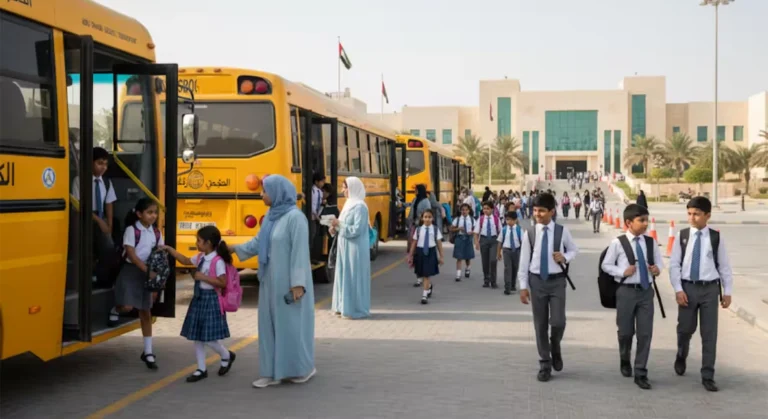
Students in the UAE planning to begin their studies at American universities are facing growing uncertainty as limited US visa interview availability makes it increasingly difficult for families to complete the required travel documentation on time.
US Visa Appointment Shortages Create Hurdles for UAE Students Bound for Universities.
Families report that scarce US visa interview slots in the UAE, combined with limited appointment availability in their home countries, are creating significant obstacles and jeopardizing students’ plans to pursue higher education in the United States.
UAE Families Face Growing Anxiety as US Student Visa Delays Threaten University Plans
For many families across the UAE, what should have been an exciting period of preparing children for higher education has instead become a time of uncertainty. Students who have secured admission to universities in the United States are encountering significant challenges in obtaining student visa appointments, raising fears that they may miss the start of the academic year.
As universities prepare to welcome new students for the upcoming fall semester, parents say the visa application process has become increasingly unpredictable. Limited appointment availability at US diplomatic missions in the UAE, together with a lack of interview slots in applicants’ home countries, has complicated travel plans for many prospective students.
Several families explained that they have spent weeks monitoring online appointment systems in the hope of finding an available interview date. Despite repeated attempts, many have been unable to secure a booking, leaving them uncertain about whether their children will arrive on campus before classes begin.
The situation has created additional pressure during a period that is already filled with important preparations, including arranging accommodation, paying tuition fees, completing university paperwork, and organizing international travel. Parents say the visa uncertainty has overshadowed what should have been a celebratory milestone in their children’s lives.
Some families are now reviewing contingency plans in case visa appointments are not available in time. These include requesting deferred admission from universities, exploring online study options where available, or even considering institutions in other countries with more predictable visa processing timelines.
Among those affected is Akshay Jain, a long-term UAE resident whose son recently received an offer to study at a university in California. After years of academic preparation and a successful university application process, the family expected the final stage to involve completing routine travel formalities. Instead, they have encountered unexpected hurdles while trying to obtain a student visa interview.
According to Jain, his family has lived in the UAE for more than two decades, making it their home for most practical purposes. However, because of the limited availability of visa appointments locally, they were advised to seek an appointment in India, where they hold citizenship.
That alternative has presented its own difficulties. Jain said the family has searched extensively for available interview dates at multiple visa application centres across India but has been unable to find a suitable appointment despite checking regularly over several weeks.
The lack of available slots has left them in a difficult position. While the university’s academic calendar continues to approach, they remain unable to complete one of the final requirements needed for their son’s departure to the United States.
Jain also noted that the family explored possibilities in neighbouring countries where appointments might have been available sooner. Those efforts were unsuccessful, as demand for interview slots appeared to be high across the region, leaving few practical alternatives for students hoping to begin their studies on schedule.
He said many parents in similar circumstances are experiencing growing concern as deadlines draw closer. Missing the start of the semester could affect accommodation arrangements, orientation programmes, course registration, and, in some cases, scholarship conditions or university deadlines.
Families say they understand that visa demand can fluctuate throughout the year, particularly during the months when thousands of international students prepare to travel abroad. Nevertheless, they hope that additional appointment capacity or alternative processing arrangements can help students who have already received confirmed admission offers.
Education consultants have also observed heightened anxiety among students heading to the United States this year. They say families are closely tracking appointment availability while remaining in regular contact with universities regarding possible late arrivals or other academic accommodations if visa processing takes longer than expected.
Despite the uncertainty, many parents remain optimistic that appointments will become available before the semester begins. Until then, they continue checking booking systems daily, gathering required documentation, and preparing for travel in the hope that their children will soon be able to begin the next chapter of their education without further delays.
For students who have spent years working toward admission to American universities, the final obstacle has proven to be one of timing rather than academics. Families say they are eager for greater certainty so that months of planning and years of hard work are not disrupted by administrative delays beyond their control.
Some families turn to alternative university destinations
For another family living in the UAE, the uncertainty surrounding US student visa appointments prompted a major rethink of their son’s higher education plans. Although he had earned admission offers from several well-regarded American universities after months of preparation, the absence of available visa interview slots made it increasingly difficult for the family to move forward with confidence.
Alok Bhagwat said the admissions process had gone smoothly until it was time to arrange the student visa. Like many parents preparing to send their children overseas for the upcoming academic year, they assumed the remaining formalities would be completed without major obstacles. Instead, they encountered repeated setbacks while trying to schedule the mandatory visa interview.
According to Bhagwat, the family initially began the application process through a visa services agent, expecting guidance on the quickest route to securing an appointment. They were informed that because of limited processing capacity in the UAE, applying through India, their country of citizenship, would be the most practical option.
However, that alternative also proved challenging. Despite multiple attempts, their representative was unable to obtain an interview appointment in India because available slots were either fully booked or unavailable within the required timeframe. At the same time, no suitable appointments could be found at US diplomatic missions in the UAE, leaving the family with few realistic alternatives.
As the weeks passed and university deadlines drew closer, uncertainty replaced the excitement that had followed the admission offers. The family closely monitored appointment availability while considering whether their son would be able to begin his studies in the United States as planned. The lack of clarity made it difficult to finalize travel arrangements, accommodation, and other preparations typically completed before the start of the academic year.
Fortunately, another opportunity emerged. Bhagwat’s son had also received a conditional offer from Imperial College London. After the release of his International Baccalaureate (IB) examination results, he successfully met the academic requirements attached to that offer, giving the family a reliable alternative to their US plans.
Bhagwat said the confirmation of his son’s place at the UK institution brought an immediate sense of relief. Rather than continuing to search for scarce US visa appointments with no certainty of success, the family was able to proceed with preparations for the United Kingdom, where the admissions and travel process became considerably more straightforward.
While they had initially hoped their son would pursue his education in the United States, the ability to move ahead with another leading international university removed much of the stress that had built up during weeks of uncertainty. Bhagwat noted that the experience highlighted how visa-related issues can influence students’ final study destinations, even after they have secured admission to their preferred universities.
The family’s experience reflects the broader concerns expressed by several UAE residents whose children are preparing to study abroad. Many parents say they have spent considerable time searching for appointments, contacting visa service providers, and exploring options in different countries as they work to meet university reporting deadlines.
Meanwhile, the US diplomatic missions in the UAE said that the US Embassy in Abu Dhabi and the US Consulate General in Dubai continue to operate, although routine visa processing services are currently unavailable within the country. The update has left many prospective students and their families awaiting further clarity on when regular appointment availability may resume, as they continue making contingency plans ahead of the new academic session.
Addressing concerns over student visa appointments, a spokesperson for the US Embassy in the UAE said current consular services have been temporarily adjusted because of regional security considerations. According to Maura Pfeifer of the embassy’s Public Affairs Section, staffing changes were introduced after the departure of non-essential personnel in response to heightened risks linked to the possibility of armed conflict.
Pfeifer said that although the US Embassy in Abu Dhabi and the US Consulate General in Dubai continue to operate, regular non-immigrant visa services are not currently being offered in the UAE. As a result, individuals seeking student, visitor, or other routine visas may experience delays and should be prepared for longer processing times than usual.
She advised prospective applicants not to wait until the last minute to begin the visa process. Students planning to travel for the upcoming academic year, as well as other non-immigrant visa applicants, were encouraged to submit their applications well in advance of their intended travel dates, allowing sufficient time for administrative processing and appointment scheduling.
The embassy also reiterated its longstanding guidance that visa applicants should generally arrange interviews in the country where they normally reside or in the country of which they are citizens. Officials noted that this approach provides the most straightforward processing pathway and helps consular officers assess applications using the appropriate local procedures.
According to Pfeifer, people who choose to apply in a third country instead of their country of residence or nationality may encounter additional challenges. Appointment availability at overseas diplomatic missions can vary significantly depending on local demand, staffing levels, and operational capacity. In some locations, interview slots may be extremely limited, particularly during peak travel and student visa seasons.
She explained that applying outside one’s usual jurisdiction may also require applicants to provide sufficient evidence demonstrating that they qualify for the visa category requested. Consular officers evaluate every application individually under US immigration law, and applicants remain responsible for establishing that they meet all relevant eligibility requirements regardless of where they submit their application.
For students and other travellers facing urgent circumstances, the embassy said there is a mechanism to request accelerated consideration. Applicants who believe their case requires priority handling can submit an expedite request through the online appointment system. However, Pfeifer emphasized that these requests are assessed individually and that approval is not automatic. The final decision rests entirely with the consular officer reviewing the request, taking into account the circumstances of each case and available appointment capacity.
Embassy officials further encouraged applicants to monitor official government resources for the latest updates. Visa wait times differ widely between countries and even between diplomatic posts within the same country. Because appointment availability can change as schedules are updated or additional interview slots are released, travellers should regularly review the US Department of State’s Global Visa Wait Times portal before making travel plans or booking flights.
The mission also reminded applicants to rely on official sources for information regarding visa procedures, processing timelines, and appointment availability. Checking these resources frequently can help applicants stay informed about any operational changes and identify opportunities if additional interview appointments become available.
With thousands of international students preparing to begin their studies in the United States each year, embassy officials stressed the importance of planning ahead, maintaining flexibility in travel arrangements where possible, and following the latest guidance issued through official US government channels as consular operations continue to adapt to changing regional circumstances.
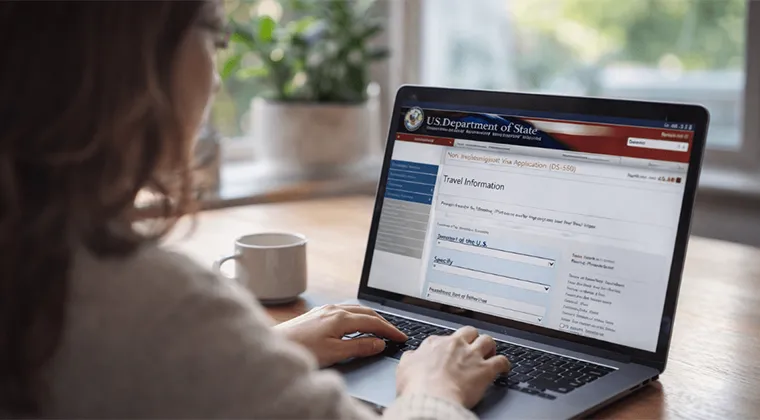

Families must plan earlier amid changing study-abroad landscape
Higher education advisors say the difficulties surrounding student visa processing are only one element of a much broader set of challenges affecting families considering overseas education. In recent years, parents have had to navigate rising tuition fees, fluctuating exchange rates, evolving immigration policies, and uncertainty over post-study employment opportunities, making the decision to study abroad more complex than ever before.
According to Rema Menon Vellat, Founder and Director of Counselling Point Training and Development, the international education landscape has undergone significant changes. While students continue to aspire to degrees from leading universities abroad, external factors beyond academics are increasingly influencing where they eventually choose to study.
Vellat said geopolitical developments in different parts of the world have had a direct impact on visa processing, with some diplomatic missions operating under constraints that have reduced appointment availability. At the same time, several countries have introduced tighter immigration measures, including restrictions on student visa approvals or revised eligibility requirements, prompting families to reassess their options.
She explained that these developments have transformed the planning process. Families now begin preparations much earlier, allowing additional time for visa applications, document verification, financial arrangements, and contingency planning in case their preferred destination becomes difficult to access.
Another major consideration is the rapidly increasing cost of international education. Tuition fees at universities in many popular destinations have continued to rise over the past few years, while accommodation, transportation, health insurance, and everyday living expenses have also become more expensive. For many households, the total financial commitment extends well beyond the published cost of a degree.
Currency fluctuations have further added to these pressures. Since many universities charge fees in US dollars or other major international currencies, families whose income is earned in different currencies may find that exchange rate movements significantly increase the overall cost of education. Even modest changes in currency values can have a substantial impact over the duration of a three- or four-year programme.
Vellat said that because of these financial realities, parents are taking a more strategic approach when evaluating study destinations. Instead of focusing solely on institutional rankings or global reputation, they are examining whether the investment is likely to produce meaningful long-term benefits. Employment prospects, internship opportunities, industry partnerships, graduate salaries, and post-study work pathways have become key factors in the decision-making process.
She noted that families increasingly want to understand how quickly graduates are likely to secure employment after completing their studies and whether they will have opportunities to gain professional experience in the country where they study. The availability of post-study work permits and clear career pathways can significantly influence a student’s final choice of destination.
According to Vellat, today’s education decisions require balancing academic ambitions with practical considerations. Students must identify programmes that align with their career goals, while parents need confidence that the financial investment is sustainable and justified by future opportunities. This has led many families to compare multiple countries before making a final commitment.
She added that education counselling has become more comprehensive than in previous years. Advisors are now helping families understand not only admission requirements but also visa procedures, changing government regulations, scholarship opportunities, living costs, and labour market trends. Such guidance enables students to make informed decisions based on both educational quality and long-term career outcomes.
Despite the challenges, Vellat believes international education continues to offer significant value for students seeking global exposure and specialized academic programmes. However, she emphasized that careful planning, realistic budgeting, and staying informed about policy developments are now essential parts of the process. Families that begin preparations early and evaluate all aspects of studying abroad—from visa requirements to financial commitments and employment prospects—are better positioned to navigate an increasingly competitive and unpredictable global education environment.