Before submitting content to artificial intelligence platforms, users should understand which types of personal or confidential information must be kept private to avoid potential security and privacy risks.
Using AI Platforms? Avoid Sharing These Three Types of Information Online.
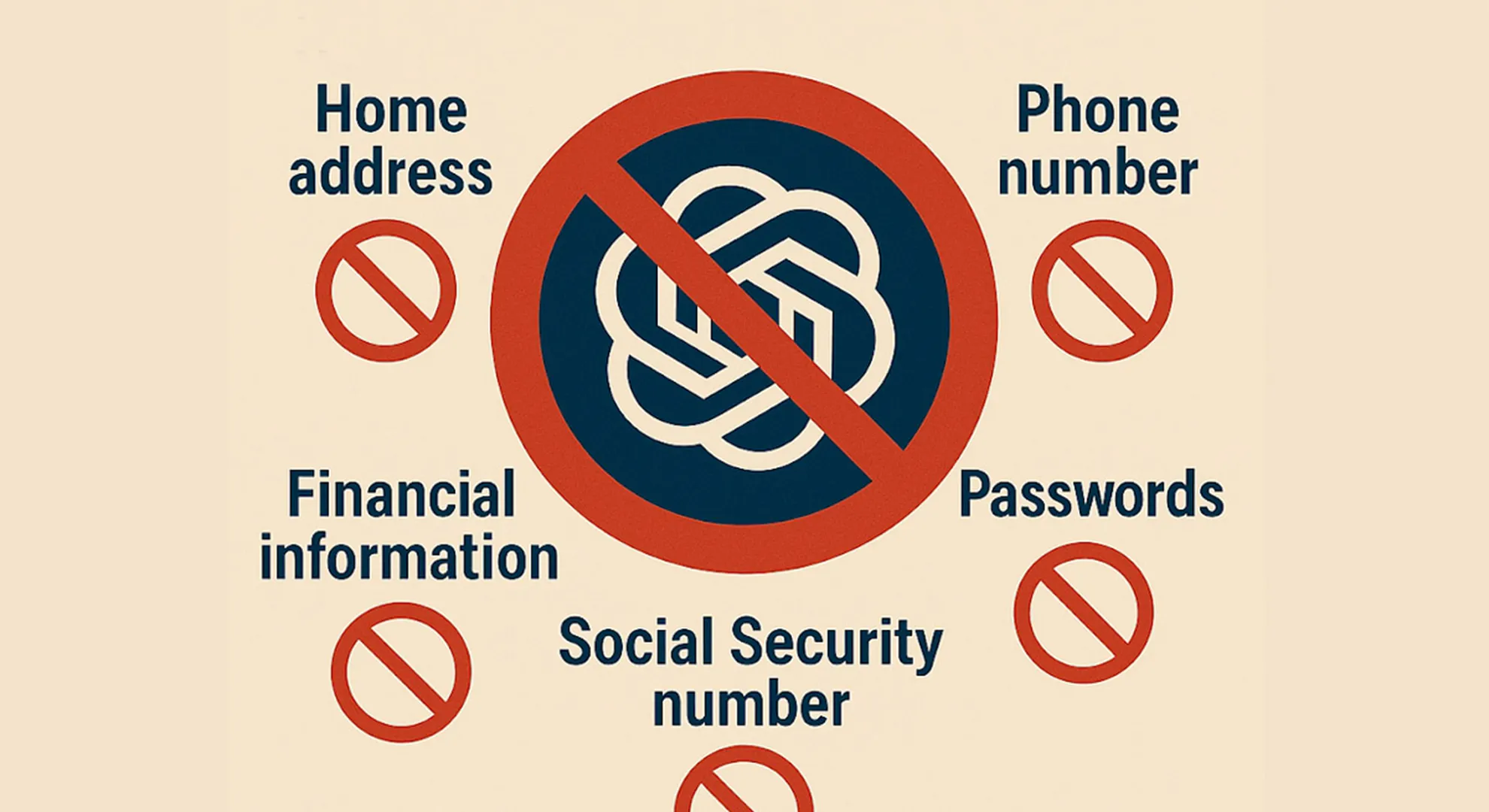
Before sharing text with ChatGPT, Claude, or any artificial intelligence assistant, ensure you are not uploading information that falls into these three sensitive data categories.
Important Information You Should Avoid Sharing With AI Tools
Artificial intelligence has rapidly moved from being a specialised technology to becoming a common part of daily digital activities. Millions of people now rely on AI assistants such as ChatGPT, Google Gemini, Claude and other similar platforms to complete tasks more efficiently, from preparing documents and generating ideas to answering questions and improving written communication.
These AI-powered tools have changed the way people work, study and manage everyday responsibilities. They can help users summarise lengthy reports, explain complex topics, create drafts, organise information and assist with professional or personal tasks within a matter of seconds. As these platforms continue to improve, their use is becoming increasingly widespread across workplaces, schools and individual users.
However, with greater reliance on artificial intelligence comes a growing need for awareness about data privacy and online security. Cybersecurity professionals have repeatedly advised users to be cautious about the type of information they enter into AI systems. While AI platforms have introduced stronger privacy features, security measures and user controls, people should still carefully consider what they choose to share.
Many AI providers now offer options that allow users to manage their data settings, control conversation history and adjust how information may be used. These features provide additional protection, but they do not mean that users should freely upload every type of content. Any information entered into an online service should be reviewed carefully, especially when it involves private, confidential or sensitive details.
Experts say that users often forget that AI assistants are online services, and information shared with them should be treated with the same level of caution as any other digital platform. Even when tools are designed with privacy protections, avoiding unnecessary sharing remains one of the simplest ways to reduce potential risks.
Before copying and pasting text, uploading documents or providing details to an AI chatbot, users should check whether the information contains anything confidential. Personal records, business-related material and other sensitive data may create privacy concerns if shared without proper consideration.
The convenience offered by AI can sometimes encourage people to provide more information than necessary. For example, users may upload complete documents when they only need help with a small section, or they may include private details while asking for assistance with writing or analysis. Removing unnecessary information before using AI tools can help protect personal and professional data.
As artificial intelligence continues to become more advanced, responsible usage is becoming increasingly important. Understanding the limits of these platforms and knowing what information should remain private can help users benefit from AI while reducing security risks.
Cybersecurity specialists recommend treating AI assistants as helpful digital tools rather than secure personal storage spaces. These platforms are designed to process information and provide responses, not to replace secure systems used for storing confidential records.
Users should also remember that privacy risks are not limited to one specific AI service. Whether using ChatGPT, Google Gemini, Claude or another chatbot, the same basic precautions apply. Being careful about uploaded information is an important habit for anyone using artificial intelligence technology.
To use AI safely, experts suggest reviewing content before submission, removing personal identifiers where possible and avoiding the sharing of confidential information unless there is a clear need. Simple steps like these can help maintain better control over personal and professional data.
Artificial intelligence offers significant benefits and has become a valuable resource for productivity and creativity. However, using these tools responsibly requires a balance between convenience and caution. By understanding what information should stay private, users can make smarter decisions and enjoy the advantages of AI without unnecessarily exposing sensitive details.
Here are three categories of information that should never be uploaded to an AI chatbot unless there is a specific, secure reason to do so.
1. Financial and Banking Details
One of the most important categories of information that should never be shared with AI platforms is your financial data. Details related to your money, banking accounts and payment methods are highly sensitive and should always be protected.
Users should avoid uploading information such as credit card numbers, debit card details, bank account information, online banking usernames or passwords, transaction records, financial statements and other documents containing private financial records. Even if an AI tool appears helpful for analysing or organising such information, sharing these details can create unnecessary security risks.
Financial information is valuable to cybercriminals because it can potentially be used for fraud, unauthorised transactions or identity-related crimes. Once sensitive banking details are entered into an online platform, users may have limited control over how that information is stored, processed or handled.
Although many AI companies have introduced privacy features and security measures, no digital service should be treated as a replacement for secure banking systems. AI assistants are designed to process information and generate responses, but they are not intended to function as protected storage platforms for confidential financial records.
There are several situations where financial information could become exposed. For example, if an account is accessed by an unauthorised person, if a conversation containing private details is accidentally shared, or if the platform’s data protection practices do not meet expectations, sensitive financial information could potentially be at risk.
For this reason, users should avoid providing complete financial documents when asking AI for assistance. If they need help understanding a financial report, budgeting information or a transaction record, they should remove private details first and share only the general information needed for the task.
For example, instead of uploading a full bank statement, users can provide a summary of the information without including account numbers, addresses, transaction references or other identifying details. This allows them to receive useful AI assistance while reducing the amount of sensitive data being exposed.
Financial records should always be handled with the highest level of caution. Whether using AI for personal tasks, workplace assistance or financial planning, protecting banking information should remain a priority.
2. Personal Identity Documents
Another category of information that should not be uploaded to AI tools includes official identification documents. These documents contain personal details that can be misused if they fall into the wrong hands.
Important documents such as passports, Emirates IDs, driving licences, residency permits, visas and other government-issued identification records contain information that can directly identify an individual. These documents often include names, photographs, dates of birth, identification numbers, nationality details and other personal information.
Uploading such documents to AI platforms without a clear reason may increase the risk of identity theft or misuse of personal data. If these files are exposed through account security issues, accidental sharing or inadequate privacy controls, criminals could potentially use the information for fraudulent activities.
Identity documents are especially sensitive because they cannot simply be replaced like a password or payment card. Once personal identification details become publicly available or are accessed by unauthorised individuals, it can be difficult to prevent misuse.
Users sometimes upload identification documents because they want AI assistance with tasks such as summarising information, checking forms or understanding document requirements. While AI may be able to help with these tasks, there are safer ways to use the technology without sharing complete personal records.
Before uploading any document for analysis, users should consider removing unnecessary personal details. This process, often called redaction, involves hiding or deleting information that is not required for the specific task.
For example, if someone needs help understanding the format of a document, they may only need to share the relevant section rather than the entire file. Sensitive information such as identification numbers, addresses, photographs and other personal details should be removed whenever possible.
Another safer approach is to manually type the non-sensitive parts of the document into the AI tool instead of uploading the original file. This reduces the amount of personal information being transferred to an external platform.
Protecting identity documents is an important part of maintaining online security. As AI services become more common, users should develop the habit of reviewing files carefully before sharing them and avoid uploading any document that contains unnecessary personal information.
AI tools can provide valuable support for many tasks, but they should be used carefully when dealing with confidential records. By keeping financial details and identity documents private, users can enjoy the benefits of artificial intelligence while maintaining stronger control over their personal security.


3. Medical Information and Health Records
Healthcare information is among the most sensitive types of personal data a person can have. Medical records often include deeply private details about an individual’s health, including past and current diagnoses, treatment history, prescriptions, laboratory reports, scan results, medical advice, insurance information and other details connected to healthcare services.
Because of the private nature of this information, users should be extremely cautious when considering whether to upload medical documents or health-related records to AI platforms. While artificial intelligence can be helpful for explaining complex medical terms, summarising general information or helping users understand reports, it should not be treated as a secure digital storage system for confidential health records.
Many people use AI tools when they receive medical documents they do not fully understand. For example, an AI assistant may help explain technical language in a laboratory report, clarify the meaning of medical terms or provide a simpler summary of information. However, before sharing any health-related document, users should first review the content carefully and remove details that could identify them personally.
Sensitive information such as a full name, patient identification number, date of birth, contact details, insurance numbers, medical record numbers and other personal identifiers should be removed whenever possible. Limiting the amount of personal information shared with an AI system reduces potential privacy risks while still allowing users to receive assistance with general explanations.
Healthcare records are particularly sensitive because they reveal information about a person’s physical condition, medical history and personal circumstances. If such details were exposed, they could potentially be misused in ways that affect privacy, personal security or even employment and insurance matters.
For this reason, experts recommend sharing only the minimum amount of information required to complete a task. If a user needs help understanding a medical report, they may not need to upload the entire document. Instead, they can provide selected sections or rewrite the information without including identifying details.
For example, rather than submitting a complete health report containing personal details, a user could copy a general medical term or a non-identifying section of the report and ask the AI tool for an explanation. This approach allows the person to benefit from AI assistance while keeping private health information protected.
It is also important to remember that AI tools are not a replacement for professional medical advice. While they can help explain information in simple language, they cannot diagnose conditions, replace doctors or provide personalised medical decisions based solely on uploaded documents. Users should continue relying on qualified healthcare professionals for medical guidance.
A simple privacy guideline can help determine whether information is safe to share with an AI chatbot: if you would feel uncomfortable with the information being publicly visible, it is better not to upload it. This approach encourages users to think carefully before submitting any private material online.
The growing popularity of AI has encouraged technology companies to improve their privacy systems and security practices. Many providers now offer stronger protections, including business and enterprise-level controls, data management options and settings that allow users to manage how information is processed.
Despite these improvements, users should remain responsible for protecting their own information. Security features can reduce risks, but they do not eliminate the need for careful decision-making. The safest practice is to avoid sharing sensitive personal information unless there is a clear and necessary reason to do so.
When using AI assistants, people should focus on providing only the information needed for the specific request. Removing unnecessary details, anonymising documents and avoiding the upload of confidential records are simple steps that can significantly improve privacy protection.
Artificial intelligence can be a powerful tool for learning, productivity and problem-solving, including helping users better understand complex healthcare information. However, the benefits of AI should be balanced with responsible data-sharing habits.
By keeping medical records private, limiting personal details and using AI carefully, individuals can take advantage of modern technology while maintaining better control over their sensitive health information.