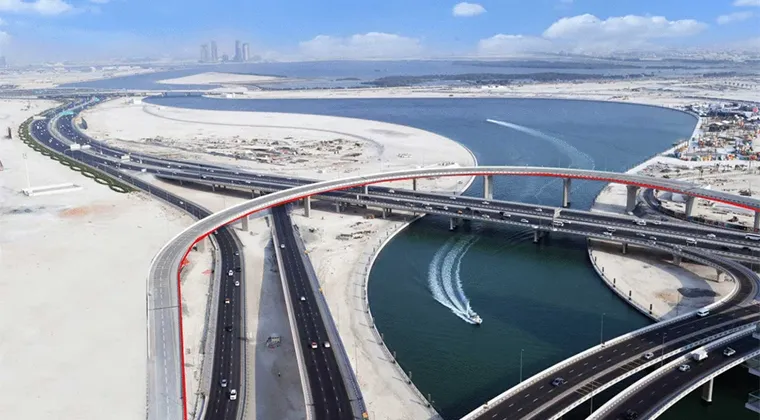
Dubai is developing the new First Al Khail Street corridor to improve traffic flow, with the project expected to reduce travel times along Sheikh Zayed Road by 51%, making daily commutes quicker and easing congestion across the city.
Sheikh Zayed Road journeys set to become 51% faster with Dubai’s new First Al Khail Street corridor.
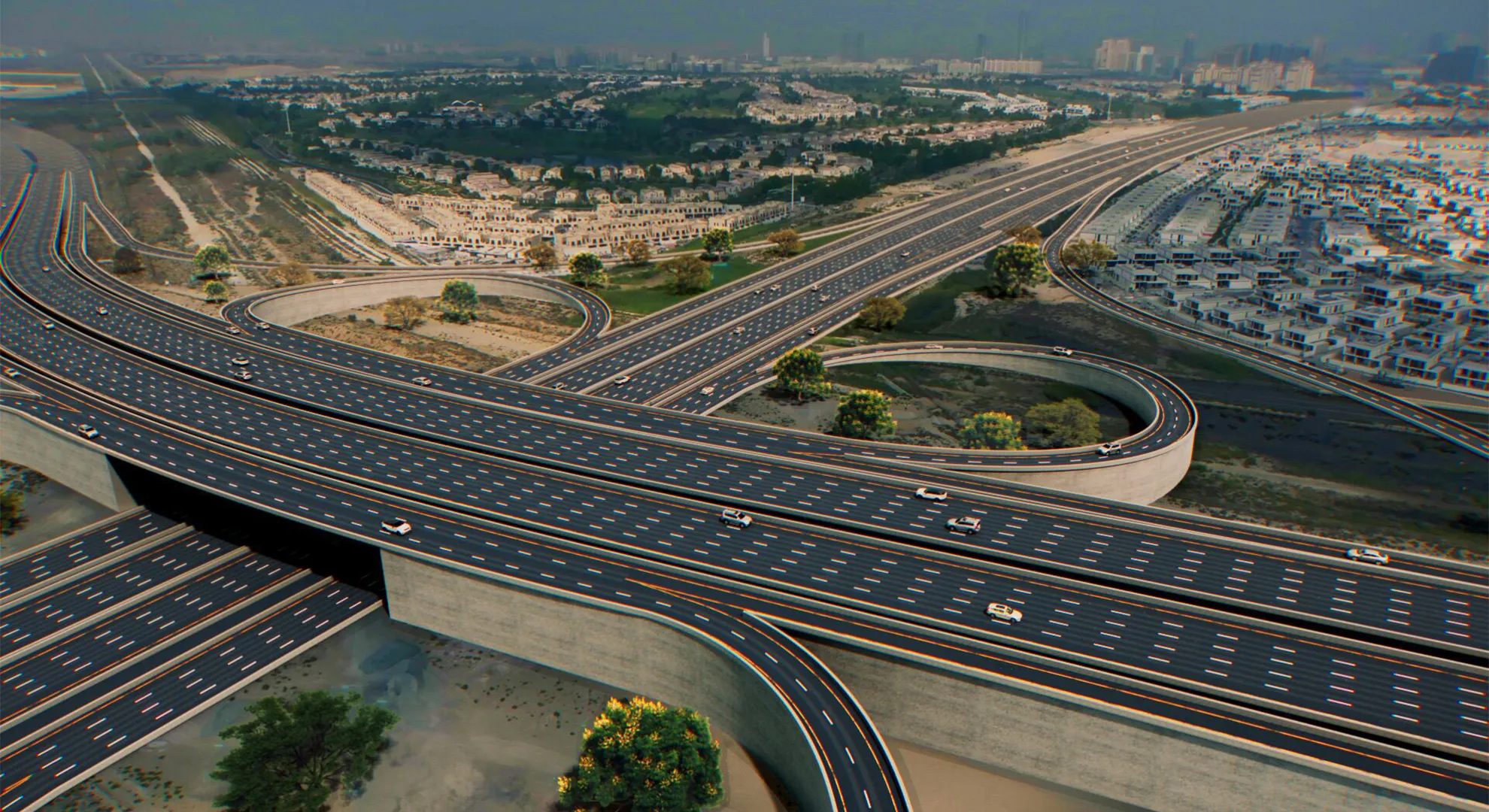
The development features a 15-kilometre elevated road designed to improve connectivity and is expected to benefit around 2.6 million residents and commuters across the surrounding areas.
Dubai is preparing for a major upgrade to its transport network with plans for a new road corridor that will run alongside Sheikh Zayed Road, one of the city’s busiest highways. The initiative received official approval from Sheikh Hamdan bin Mohammed bin Rashid Al Maktoum during a meeting of Dubai’s Executive Council held on Wednesday, July 1. The project forms part of the emirate’s long-term strategy to improve road infrastructure, reduce traffic congestion, and support the city’s growing population and economy.
The newly approved First Al Khail Street Development Plan is designed to create an alternative route for motorists travelling through some of Dubai’s busiest districts. By expanding the road network and offering an additional high-capacity corridor, authorities aim to improve traffic movement and make daily commutes more efficient for residents and visitors alike.
One of the project’s biggest expected benefits is a significant reduction in travel times along Sheikh Zayed Road, particularly during the busiest hours of the day. Officials estimate that motorists could experience journeys that are up to 51 per cent shorter during peak traffic periods once the development is completed. The improvement is expected to ease congestion on one of the emirate’s most heavily used roads while providing drivers with faster and more reliable travel options.
Besides reducing delays, the project will substantially increase the road network’s capacity. The upgraded corridor is expected to accommodate around 9,000 additional vehicles every hour, helping to meet the transportation demands of Dubai’s expanding population. With residential communities, commercial centres, and business districts continuing to grow, the increased capacity is intended to support future traffic volumes while maintaining smoother traffic flow.
The First Al Khail Street Development Plan is one of several infrastructure initiatives included within a broader package of projects and incentives valued at Dh18 billion. This investment reflects Dubai’s ongoing commitment to building world-class infrastructure capable of supporting economic growth, urban expansion, and improved quality of life for residents.
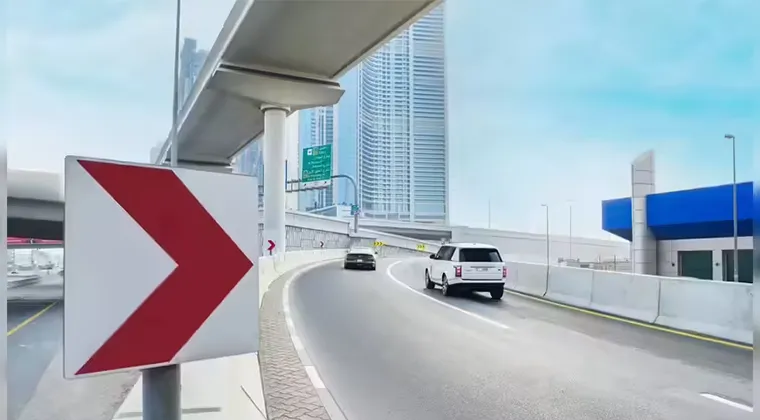
A central feature of the development will be the construction of an elevated roadway stretching approximately 15 kilometres. The new structure will include three traffic lanes in each direction, creating additional space for vehicles while improving connectivity between key areas of the city. The elevated design is intended to minimise traffic interruptions at ground level and allow vehicles to move more efficiently across major intersections.
Once operational, the corridor is expected to benefit an estimated 2.6 million people by improving access to several important residential, commercial, and business districts. The upgraded route will provide easier connections to Al Barsha, Al Quoz, Business Bay, and Meydan, all of which continue to experience rapid development and increasing traffic demand. Improved links between these areas are expected to support both daily commuters and businesses that rely on efficient transportation networks.
The project has also been planned with Dubai’s long-term urban development goals in mind. As the city’s population continues to rise and new communities emerge, authorities are investing heavily in transport infrastructure to ensure road networks remain capable of handling future growth. By introducing alternative travel routes and expanding capacity, the development is expected to strengthen the resilience and efficiency of Dubai’s transportation system.
According to the announced timeline, construction is scheduled to begin during the third quarter of 2027. The large-scale engineering project will take several years to complete, with authorities targeting completion in the final quarter of 2030. Throughout the construction period, detailed planning and phased implementation are expected to help minimise disruption while allowing work to progress safely and efficiently.
Approval for the road development came during a meeting of Dubai’s Executive Council, where Sheikh Hamdan also endorsed a number of additional initiatives focused on supporting the emirate’s continued growth. The projects discussed during the meeting are aimed at enhancing infrastructure, improving public services, and strengthening Dubai’s position as a leading global city for business, tourism, and innovation.
The Executive Council’s decisions reflect Dubai’s broader vision of preparing for future growth through strategic investments in transport, urban planning, and public infrastructure. As new residential communities, commercial hubs, and business districts continue to expand across the emirate, improving mobility has become a central priority for policymakers.
Officials believe that projects such as the First Al Khail Street corridor will play an important role in reducing travel delays, improving connectivity between different parts of the city, and supporting sustainable economic development over the coming decades. Faster and more efficient road networks are also expected to enhance the overall experience for residents, businesses, and visitors by making travel across Dubai more convenient.
With construction expected to begin in 2027 and completion targeted for late 2030, the First Al Khail Street Development Plan represents another major step in Dubai’s ongoing investment in modern infrastructure. Once completed, the new corridor is expected to transform traffic movement across several key districts while helping accommodate the city’s continued expansion and growing transportation needs.
Dubai has unveiled a series of long-term strategies designed to strengthen its position as a global centre for culture, trade, innovation, education, and sustainable urban development. Approved during a meeting of the Executive Council, the initiatives reflect the emirate’s vision of preparing for future growth through strategic planning, technology-driven governance, and investment in human capital. Together, these programmes support Dubai’s broader development agenda while reinforcing its ambitions to become one of the world’s leading cities across multiple sectors.
Dubai Cultural Strategy 2033
Among the most significant announcements was the approval of the Dubai Cultural Strategy 2033, a comprehensive roadmap intended to elevate the city’s cultural and creative landscape over the coming decade. Overseen by the Dubai Culture and Arts Authority, the strategy seeks to strengthen Dubai’s international reputation as a centre for artistic excellence, cultural innovation, and creative entrepreneurship.
The long-term plan is designed to nurture both local and international talent while encouraging creative industries to flourish. Officials envision Dubai becoming a preferred destination for artists, designers, writers, performers, filmmakers, and entrepreneurs working across various creative sectors. The strategy also places considerable emphasis on protecting and promoting the emirate’s rich cultural heritage while encouraging innovation that reflects the city’s diverse identity.
A key objective is to transform Dubai into an internationally recognised destination where creativity, culture, and business intersect. By encouraging collaboration between cultural institutions, educational organisations, government entities, and private-sector partners, authorities hope to create an environment that attracts investment and stimulates continuous innovation.
The strategy has been developed in alignment with Dubai Plan 2033 and the Dubai Social Agenda 33, ensuring that cultural development contributes to broader economic and social goals. Rather than treating culture as a standalone sector, the roadmap integrates creative industries into Dubai’s wider vision for economic diversification, tourism, education, and community development.
The framework is built around four strategic pillars that collectively guide future policies and projects. To translate these goals into action, the plan includes 40 individual initiatives supported by five sector-wide performance indicators and 23 key performance measures that will be used to monitor progress over the coming years.
Several flagship programmes have been introduced as part of the strategy. One of the centrepiece initiatives is the Dubai Cultural and Creative Innovation Programme, which aims to encourage experimentation, entrepreneurship, and innovation across creative industries. The programme will provide opportunities for artists and innovators to develop new ideas while supporting projects capable of contributing to Dubai’s cultural economy.
Another major initiative is the UAE Heritage Design Challenge. This programme encourages designers and creative professionals to reinterpret traditional Emirati heritage through contemporary design, ensuring that cultural traditions remain relevant while inspiring modern artistic expression. By blending history with innovation, the initiative aims to preserve cultural identity while encouraging fresh perspectives.
The Future Talents Development Programme forms another important component of the strategy. It focuses on identifying promising young creatives and providing them with the education, mentorship, training, and professional opportunities needed to build successful careers in creative industries. Authorities believe that investing in future generations of artists and innovators will strengthen Dubai’s cultural ecosystem for decades to come.
The strategy also sets ambitious measurable goals. Dubai aims to support more than 6,000 local creative professionals while simultaneously attracting over 6,000 international artists, designers, and innovators to establish careers or projects in the emirate. These efforts are expected to enrich the city’s creative environment while encouraging greater collaboration between local and global talent.
Officials also intend to significantly expand Dubai’s cultural infrastructure. Plans call for increasing the city’s cultural assets by more than 200 per cent, creating additional museums, galleries, creative districts, cultural venues, public art installations, and heritage sites. These investments are expected to improve access to arts and culture for both residents and visitors.
Economically, the strategy aims to increase the contribution of the cultural and creative industries to Dubai’s gross domestic product, targeting a share of 5.4 per cent. At the same time, authorities hope to strengthen cooperation between the government and private sector by expanding partnerships valued at approximately Dh2.75 billion. These collaborations are expected to generate new opportunities for investment, innovation, and sustainable growth within the creative economy.
Dubai Customs Strategy 2030
Alongside cultural initiatives, the Executive Council approved the Dubai Customs Strategy 2030, a roadmap intended to reinforce Dubai’s status as one of the world’s leading international trade and logistics centres.
Given Dubai’s strategic geographical location and extensive transport infrastructure, customs operations play a vital role in supporting regional and international commerce. The new strategy focuses on making trade processes faster, more efficient, and increasingly secure while maintaining high standards of regulatory compliance.
One of the primary objectives is to simplify customs procedures through greater use of digital technologies and intelligent systems. By reducing administrative complexity and streamlining border operations, authorities aim to improve the experience for businesses importing and exporting goods through Dubai.
The strategy also seeks to strengthen economic partnerships with international markets and trading partners. Improved customs efficiency is expected to enhance Dubai’s attractiveness as a destination for global businesses, logistics companies, manufacturers, and investors seeking access to regional and international markets.
Security remains another central priority. Authorities plan to enhance inspection capabilities, improve risk assessment systems, and strengthen compliance mechanisms to protect supply chains while facilitating legitimate trade. Advanced technologies and data-driven decision-making will support customs officers in identifying potential risks without unnecessarily delaying commercial activities.
Customer experience also features prominently within the strategy. Businesses, logistics providers, customs brokers, and other stakeholders are expected to benefit from faster services, simplified procedures, and improved digital platforms designed to reduce paperwork and accelerate transaction times.
Ultimately, the Dubai Customs Strategy 2030 aims to reinforce the emirate’s competitive position in global commerce while ensuring that trade remains efficient, secure, and responsive to the evolving needs of international markets.
Dubai Population Now
Another major initiative approved during the meeting is the launch of “Dubai Population Now,” an advanced real-time population monitoring system designed to improve urban planning and policymaking.
Unlike traditional population censuses conducted periodically, the new platform continuously monitors demographic changes using artificial intelligence, smart analytics, and forecasting technologies. The system provides decision-makers with up-to-date population information rather than relying solely on historical data.
One of the platform’s most visible features is a live population clock that displays continuously updated estimates of Dubai’s resident population. The initiative reflects the city’s growing reliance on digital technologies and data-driven governance to improve public services and infrastructure planning.
The need for such a system has become increasingly important as Dubai continues to experience rapid population growth. By the end of 2025, the emirate’s population had reached approximately 4.58 million residents, representing an increase of around 332,000 people compared with the previous year. This annual growth rate of roughly 7.5 per cent highlights the pace at which the city continues to expand.
Real-time demographic information will help government agencies make better-informed decisions across multiple sectors. Housing authorities will be able to anticipate future residential demand more accurately, while education planners can assess requirements for new schools, teachers, and educational facilities.
Healthcare providers will benefit from improved forecasting of future medical service needs, allowing investments in hospitals, clinics, and healthcare professionals to better reflect population trends. Likewise, transport authorities will be able to design road networks, public transport systems, and mobility solutions based on continuously updated demographic data rather than outdated census figures.
Officials believe that using artificial intelligence and predictive analytics will significantly improve long-term planning while enabling faster responses to changes in migration patterns, employment trends, and urban development.
Emirati Talents Strategy in Private Education
The Executive Council also endorsed a comprehensive strategy focused on increasing the participation of Emirati nationals within Dubai’s private education sector.
Known as the Emirati Talents Strategy in Private Education, the initiative supports broader Emiratisation objectives while contributing to the goals outlined in the Dubai Education Strategy 2033. Authorities aim to create more employment opportunities for UAE nationals across schools, educational institutions, and related organisations.
The strategy establishes a target of employing approximately 3,000 Emiratis within Dubai’s private education sector by the year 2033. Officials believe greater national participation will strengthen educational institutions while providing meaningful career pathways for Emirati professionals.
Rather than focusing exclusively on classroom teaching, the strategy encourages employment across a range of educational roles, including academic leadership, administration, student support, curriculum development, counselling, and specialised educational services.
To measure success, authorities will monitor several performance indicators throughout implementation. These include tracking the proportion of Emiratis working in teaching positions as well as employee retention rates to ensure long-term career sustainability rather than short-term recruitment.
Several specialised initiatives have been introduced to support these objectives.
One of the most important is the Teacher Qualification and Accreditation Academy, also known as “Bridge to Teach.” The programme is designed to prepare aspiring Emirati teachers through professional training, certification, and practical classroom experience. By equipping participants with internationally recognised teaching skills, authorities hope to increase the number of qualified educators entering private schools.
Another initiative, the Success Partners Programme, focuses on mentoring and supporting Emirati employees throughout their professional development. The programme encourages collaboration between experienced educators and new recruits, helping participants adapt successfully to their roles while developing leadership capabilities.
The Flex Emiratisation initiative introduces more adaptable employment models aimed at encouraging greater participation from Emiratis with varying career needs and personal circumstances. Flexible working arrangements are expected to make careers within private education more attractive and accessible.
The Teaching Experience initiative, branded as TeachXperience, provides opportunities for prospective teachers to gain practical classroom exposure before committing to long-term careers in education. Through supervised teaching experiences, participants can develop confidence while schools identify promising candidates for permanent positions.
The strategy also creates opportunities for retired professionals to return to the workforce through structured employment pathways. By drawing on the expertise and experience of retired educators and specialists, schools can benefit from valuable knowledge while expanding opportunities for Emirati participation across the education sector.
Collectively, these initiatives demonstrate Dubai’s commitment to investing in its people while preparing the emirate for continued growth. By combining cultural development, trade facilitation, advanced data technologies, and education reform, the newly approved strategies aim to build a more innovative, competitive, and inclusive city capable of meeting the demands of the future.
Dubai has announced a new set of strategic initiatives aimed at strengthening its position as a global destination for investment, innovation, smart governance, and financial technology. Approved by the Executive Council, the measures are designed to improve the ease of doing business, modernise public services, attract international investors, and reinforce the emirate’s long-term economic ambitions. The newly endorsed programmes support Dubai’s broader development agenda while contributing to the goals outlined in the Dubai Economic Agenda D33.
Dubai Investor Register to simplify investment processes
One of the major initiatives approved is the creation of the Dubai Investor Register, a comprehensive digital platform that will serve as a unified database for investors and businesses operating throughout the emirate.
The register is intended to bring together information relating to both individuals and organisations involved in investment activities across Dubai. Instead of maintaining separate records across multiple authorities and jurisdictions, the new system will provide a single, integrated platform that connects investors with the city’s regulatory framework.
Officials believe the initiative will significantly simplify business operations by reducing administrative procedures and making it easier for companies to establish and expand their presence in Dubai. The unified register is expected to improve efficiency while supporting a more transparent and connected investment environment.
The project forms part of Dubai’s wider efforts to achieve the objectives of the Dubai Economic Agenda D33, a long-term strategy designed to double the size of the emirate’s economy and strengthen its position among the world’s leading commercial centres.
A key target of D33 is attracting approximately Dh650 billion in foreign direct investment by the year 2033. Authorities believe that creating a more streamlined regulatory environment will play an important role in encouraging international companies, entrepreneurs, institutional investors, and multinational corporations to choose Dubai as their preferred regional headquarters.
One of the most significant advantages offered by the Dubai Investor Register is the removal of repetitive registration requirements. Under the new framework, businesses and investors will be able to conduct activities across multiple economic zones without completing separate registration procedures for each jurisdiction.
Traditionally, organisations operating in different free zones or mainland jurisdictions often needed to submit similar documentation to multiple authorities. The unified register aims to eliminate much of this duplication by allowing approved entities to use a single registration profile across participating areas.
Officials expect this change to reduce paperwork, shorten processing times, and lower compliance costs for investors while making it easier for businesses to expand into new sectors and locations.
The register has also been designed to support international regulatory standards. Authorities confirmed that the system aligns with recommendations issued by the Financial Action Task Force (FATF), the international organisation responsible for developing measures to combat money laundering, terrorist financing, and other financial crimes.
By improving transparency and strengthening access to verified investment information, the register will assist regulators in maintaining high standards of financial governance while enhancing confidence among global investors and financial institutions.
The initiative also supports better coordination between government departments. Instead of maintaining multiple disconnected databases, authorities will be able to share verified information through a unified platform, improving efficiency while reducing administrative burdens.
Businesses are expected to benefit from faster licensing procedures, simplified compliance processes, and more consistent regulatory services. For investors, the new system provides a clearer and more predictable environment in which to establish and expand commercial operations.
The government believes these improvements will further enhance Dubai’s reputation as one of the world’s easiest places to start, operate, and grow a business.
New visual identity introduced for Dubai’s address system
The Executive Council also approved a comprehensive redesign of Dubai’s address system through the introduction of a new visual identity for street and location signage across the emirate.
The initiative is intended to modernise the appearance of public addresses while improving navigation for residents, visitors, businesses, and emergency services.
Rather than serving purely functional purposes, the redesigned address system has been developed to reflect Dubai’s unique urban character. Officials explained that the visual design draws inspiration from the emirate’s natural surroundings, architectural heritage, and contemporary identity, creating a distinctive appearance that reinforces Dubai’s global image.
The new identity has been carefully structured to recognise the diversity of Dubai’s urban landscape. Different districts will feature signage that reflects their specific characteristics while remaining consistent within a unified citywide design framework.
Authorities believe that integrating visual identity into address infrastructure will strengthen the individual character of neighbourhoods while making the city easier to navigate.
The updated signage system is expected to improve geographic orientation for both residents and tourists by providing clearer location references and more intuitive wayfinding.
As Dubai continues to expand with new residential communities, commercial districts, and mixed-use developments, accurate and user-friendly addressing systems have become increasingly important for transportation, logistics, deliveries, tourism, and emergency response services.
Officials stated that the project has been developed in accordance with internationally recognised urban planning and navigation standards. By adopting global best practices, Dubai aims to create an addressing system that is both visually appealing and highly functional.
The initiative extends well beyond traditional street signs. Future phases of implementation will integrate the new visual identity across transport infrastructure, residential services, navigation systems, and public facilities.
Authorities expect the redesigned address framework to support digital mapping technologies while improving consistency between physical signage and electronic navigation platforms.
Emergency response organisations are also expected to benefit from more precise location identification, helping police, ambulance, and civil defence teams reach destinations more quickly.
Businesses involved in delivery services, logistics, ride-hailing, courier operations, and e-commerce are likewise expected to experience improved routing efficiency through clearer and more standardised addresses.
Implementation will occur in multiple phases over several years.
According to the approved roadmap, the upgraded address system will eventually cover approximately 186 areas throughout Dubai, with full rollout scheduled for completion by 2029.
By introducing a modern visual identity alongside improved navigation standards, authorities aim to strengthen Dubai’s image as a technologically advanced and globally connected city while enhancing the everyday experience of people living in and visiting the emirate.
Dubai launches Global Centre for Technology and Innovation in Islamic Finance
Another landmark decision approved during the Executive Council meeting was the establishment of the Global Centre for Technology and Innovation in Islamic Finance.
The new institution will operate under the management of Dubai International Financial Centre (DIFC) in collaboration with international partners specialising in financial services, technology, innovation, and Islamic banking.
The centre represents an important milestone in Dubai’s ambition to become one of the world’s leading hubs for Islamic financial technology, commonly known as Islamic fintech.
Islamic finance has experienced rapid expansion over recent decades as financial institutions increasingly develop products and services that comply with Sharia principles. At the same time, advances in digital technology have transformed banking, payments, investment management, insurance, and financial services worldwide.
Dubai’s new centre seeks to combine these two trends by encouraging innovation within Islamic finance through technology-driven solutions.
Officials believe the initiative will create opportunities for entrepreneurs, financial institutions, researchers, regulators, investors, and technology companies to collaborate on developing next-generation financial products.
The decision reflects growing international interest in Islamic fintech, a sector that continues to attract investment from financial institutions across the Middle East, Asia, Africa, and Europe.
Market projections indicate that the global Islamic finance industry could reach approximately US$9.31 trillion by 2030, highlighting significant opportunities for innovation, investment, and international cooperation.
By establishing a dedicated centre focused on technological advancement within Islamic finance, Dubai aims to position itself at the forefront of this rapidly evolving industry.
The centre will support research into emerging technologies such as artificial intelligence, blockchain, digital identity, smart contracts, open banking, digital payments, cybersecurity, regulatory technology, and financial data analytics.
Authorities expect these technologies to play an increasingly important role in improving financial services while maintaining compliance with Islamic financial principles.
Collaboration between banks, fintech companies, universities, regulators, investors, and start-ups will be encouraged through a variety of specialised programmes.
Among the flagship initiatives is the Islamic Finance Innovation Challenge.
This programme is intended to encourage entrepreneurs, software developers, financial experts, and researchers to design innovative digital solutions capable of addressing real-world challenges within Islamic financial services.
Participants will have opportunities to develop products that improve banking accessibility, investment platforms, payment technologies, digital lending, wealth management, and financial inclusion while remaining compliant with Sharia requirements.
The competition is expected to attract participants from around the world, strengthening Dubai’s reputation as a centre for financial innovation.
Another important initiative involves the creation of a dedicated innovation platform connecting Islamic banks with emerging technology companies.
The platform will encourage partnerships between established financial institutions and fintech start-ups seeking to develop new digital services.
Rather than operating independently, banks and technology firms will be able to collaborate on pilot projects, test innovative ideas, exchange expertise, and accelerate commercial implementation.
Officials believe these partnerships will help modernise Islamic banking while creating opportunities for new investment and entrepreneurship.
The centre will also organise international conferences, networking events, research forums, and industry discussions designed to encourage knowledge sharing across global financial markets.
One of the most prominent upcoming events will be the Future Islamic Finance Forum, scheduled to take place on November 4, 2026.
The forum will bring together policymakers, regulators, banking executives, academics, investors, fintech founders, technology experts, and industry leaders from around the world.
Participants will discuss emerging trends, regulatory developments, investment opportunities, technological innovation, and the future direction of Islamic financial services.
Authorities expect the annual forum to become a major international platform for dialogue and collaboration within the global Islamic finance community.
Developing skilled professionals also forms a central part of the centre’s long-term strategy.
To support workforce development, the DIFC Academy will introduce specialised education and training programmes focused on Islamic finance, financial technology, digital innovation, regulation, leadership, and entrepreneurship.
These programmes will provide practical learning opportunities for university graduates, early-career professionals, experienced bankers, entrepreneurs, and technology specialists seeking to expand their expertise.
The academy plans to train more than 3,000 participants by 2031, helping build a highly skilled workforce capable of supporting continued growth within Islamic fintech.
Courses are expected to combine academic instruction with industry experience, ensuring participants develop both theoretical knowledge and practical skills relevant to rapidly changing financial markets.
Officials believe investing in education is essential for sustaining innovation over the long term.
The establishment of the Global Centre for Technology and Innovation in Islamic Finance reflects Dubai’s broader strategy of positioning itself as a leader in future-focused industries.
By encouraging collaboration between financial institutions, technology companies, universities, investors, and regulators, the emirate hopes to accelerate innovation while creating new opportunities for economic growth.
Together, the Dubai Investor Register, the redesigned address system, and the Global Centre for Technology and Innovation in Islamic Finance represent significant additions to Dubai’s long-term development agenda. While each initiative focuses on a different sector, all share a common objective: improving efficiency, embracing innovation, attracting international talent and investment, and strengthening Dubai’s standing as one of the world’s leading cities for business, technology, finance, and sustainable economic development.