
Could UAE fuel costs decline next month as global oil prices fall following the US–Iran peace agreement, potentially easing pressure on motorists and influencing the country’s monthly pricing adjustments?
Will UAE Fuel Prices Fall Next Month as Oil Prices Drop Following US–Iran Peace Deal?

Fuel prices in the UAE continued their upward trajectory in June, marking the fourth straight month of increases as global oil markets remained under pressure due to heightened geopolitical tensions in the Middle East. The ongoing conflict involving the United States, Israel, and Iran, along with disruptions in key maritime routes, contributed to sustained volatility in crude oil prices, which in turn influenced domestic fuel costs across the country.
The situation in global energy markets has been particularly sensitive in recent months, with traders closely monitoring developments in the Strait of Hormuz, one of the world’s most strategically important shipping corridors for oil transportation. Concerns over restricted access and potential closures of the waterway had already pushed crude prices higher, creating ripple effects in fuel pricing systems worldwide, including in the UAE.
However, the outlook for fuel prices in the UAE may be shifting as global oil markets begin to reverse some of their earlier gains. Early indications suggest that petrol prices could decline in the coming month, following a noticeable drop in crude oil benchmarks after the announcement of a peace agreement between the United States and Iran.
The easing of geopolitical tensions on Monday morning triggered a sharp reaction in international oil markets. Brent crude, the global benchmark for oil pricing, recorded a significant decline, with closing values falling by more than $11 per barrel compared to the beginning of the month. The most immediate reaction came shortly after the peace deal was announced, when prices dropped by over four percent in a single trading session, equating to a decrease of approximately $3.7 per barrel.
Market analysts attribute this sudden decline to improved expectations regarding global oil supply stability. The prospect of reduced conflict in the region and the potential reopening of key shipping routes has eased fears of supply disruptions, prompting traders to adjust their positions and driving prices downward. As uncertainty decreases, oil markets tend to stabilise or retreat from previously elevated levels driven by risk premiums.
The Strait of Hormuz has played a central role in recent fluctuations in oil prices. Any threat to its operation typically leads to immediate increases in crude prices due to concerns over supply bottlenecks. In recent months, heightened tensions in the region had contributed to what analysts described as an effective tightening of global supply chains, with shipping activity facing uncertainty and insurance costs rising for vessels passing through the area.
As a result of these disruptions, global oil prices had been on an upward trend, which directly affected fuel pricing structures in the UAE. Since domestic fuel rates are closely linked to international oil benchmarks, any sustained increase in crude prices tends to filter through to retail petrol and diesel prices in the country.
The recent decline in oil prices, however, has raised expectations that this upward trend may soon reverse. With Brent crude showing a double-digit dollar drop since the beginning of the month, market participants are now assessing whether these reductions will be sustained long enough to influence the next monthly fuel price adjustment in the UAE.
In the UAE, fuel prices are reviewed and revised at the end of each month under a deregulated pricing system introduced in 2015. This system links domestic petrol and diesel prices directly to global oil market movements, allowing adjustments to reflect international trends more accurately. The mechanism was designed to ensure transparency and align local fuel costs with global market conditions, rather than relying on fixed or subsidised pricing.
Under this framework, the recent downturn in crude oil prices could potentially lead to lower fuel prices for consumers in the coming month, provided that current market conditions persist. The timing of the price review means that fluctuations observed in the final weeks of the month often play a crucial role in determining the next adjustment cycle.
For motorists in the UAE, fuel prices have been on a steady rise over the past several months, largely influenced by geopolitical instability and supply concerns. The combined effect of the US-Israel-Iran conflict and disruptions linked to the Strait of Hormuz had placed upward pressure on global crude benchmarks, resulting in higher retail fuel costs during consecutive monthly revisions.
The latest developments, however, suggest a possible easing of this trend. The announcement of a peace agreement between the United States and Iran has shifted market sentiment significantly, reducing fears of prolonged conflict and easing concerns over supply interruptions. This change in outlook has already been reflected in oil trading patterns, with prices reacting quickly to the improved geopolitical environment.
On Monday morning, the oil market responded sharply to the news, with prices falling as traders reassessed the risk premium previously built into crude valuations. The decline of more than four percent in a single session highlights the sensitivity of energy markets to geopolitical developments, particularly in regions that play a critical role in global oil supply.
Despite this recent drop, analysts caution that oil markets remain subject to ongoing uncertainty. While the peace agreement has improved short-term sentiment, the long-term stability of the region will depend on the successful implementation of the deal and continued diplomatic engagement between the involved parties. Any setbacks or renewed tensions could quickly reverse current price trends.
For now, however, the downward movement in crude prices has provided relief to global markets and raised expectations of potential cost reductions for consumers in oil-importing economies. In the UAE context, this could translate into lower petrol and diesel prices when the next official adjustment is announced at the end of the month.
Energy market observers will continue to monitor Brent crude movements closely in the coming weeks, as even small fluctuations can influence final pricing decisions under the UAE’s monthly review system. Traders, policymakers, and consumers alike are now watching to see whether the current decline in oil prices will stabilise or continue further into the next pricing cycle.
Overall, the combination of easing geopolitical tensions and falling crude prices has created a more optimistic outlook for fuel costs in the UAE. While uncertainty remains, the latest market developments suggest that motorists may see some relief at the pump if current trends persist into the next monthly revision period.

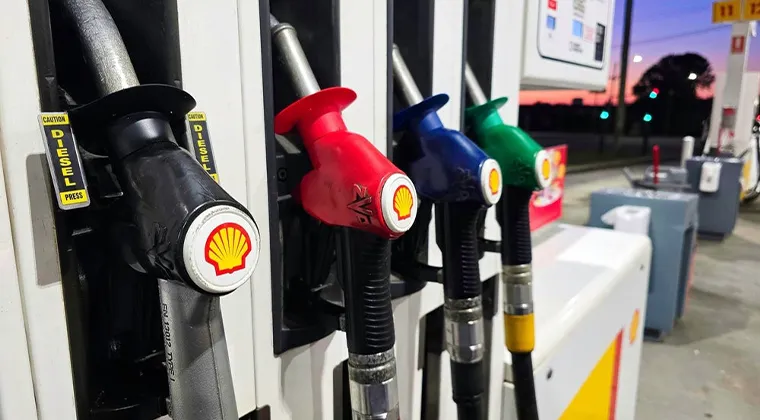
Fuel prices in the UAE recorded another monthly increase in June, marking the fourth consecutive rise in retail petrol rates as global oil market conditions remained tight throughout the period. The continued upward movement in domestic fuel costs reflected sustained pressure in international crude oil benchmarks, which had been influenced by geopolitical instability and supply-side concerns over recent months.
In the latest pricing cycle, motorists saw noticeable adjustments across all major fuel categories. Super 98 petrol was priced at Dh3.95 per litre, while Special 95 stood at Dh3.83 per litre. E-Plus 91, the lowest-grade petrol option, was priced at Dh3.76 per litre. On a month-on-month basis, these rates represented an overall increase of approximately eight percent, highlighting the impact of elevated global oil prices on the UAE’s deregulated fuel pricing structure.
The UAE’s fuel pricing system, which was introduced following deregulation in 2015, adjusts petrol and diesel rates at the end of each month in line with movements in international oil markets. This mechanism ensures that local fuel prices remain closely aligned with global trends, allowing for both upward and downward revisions depending on market conditions.
The recent series of increases has largely been driven by fluctuations in global crude oil prices, particularly Brent crude, which serves as a key benchmark for international energy markets. In the first half of June, Brent’s average closing price was recorded at approximately $92.96 per barrel. This represented a notable decline compared to the previous month, when average prices in the first two weeks of May exceeded $105 per barrel.
Despite the mid-month decline in crude prices, earlier spikes linked to geopolitical tensions had already contributed to upward pressure on fuel costs. Market volatility during this period was influenced by concerns surrounding supply disruptions in the Middle East, particularly in relation to ongoing instability and the strategic importance of key shipping routes such as the Strait of Hormuz.
Looking ahead, market expectations suggest that UAE fuel prices could ease in the next monthly adjustment cycle, provided that current downward trends in oil prices continue and no new geopolitical shocks emerge. Analysts note that the final pricing decision will depend heavily on how global crude benchmarks perform in the closing weeks of the month, as well as broader developments in international energy markets.
An official announcement regarding the revised petrol and diesel prices is expected at the end of the month, in line with the country’s established monthly review process. This announcement will reflect the average global oil prices recorded during the relevant assessment period, along with other market factors considered by the fuel pricing committee.
The outlook for oil markets in the coming months will likely be shaped by a combination of geopolitical developments, production decisions by major oil-exporting countries, and global demand trends. As tensions in parts of the Middle East show signs of easing and diplomatic efforts progress, attention is gradually shifting towards the fundamental balance between global supply and demand.
One of the key factors under observation is the potential response from major oil producers, who may adjust output levels in response to changing market conditions. If geopolitical risks continue to decline, there is a possibility that producers could gradually increase production in an effort to stabilise markets and maintain competitiveness. Such moves could contribute to further easing of crude prices if supply growth outpaces demand.
On the demand side, global consumption trends remain uneven, with particular focus on major importing economies. China, the world’s largest importer of crude oil, remains a critical factor in shaping global demand dynamics. Recent data indicates that Chinese crude imports slowed to their lowest level in more than eight years in the previous month, raising questions about the strength of demand recovery in the world’s second-largest economy.
This slowdown in Chinese imports has added another layer of complexity to global oil market forecasts. Weaker demand from a major consumer typically places downward pressure on prices, especially when combined with stable or increasing supply levels. As a result, analysts are closely monitoring Chinese economic indicators, industrial activity, and energy consumption patterns for signs of future direction.
At the same time, the broader global economic environment continues to influence oil demand expectations. Inflation trends, interest rate policies, and economic growth forecasts in major economies all play a role in determining how much energy is consumed across industrial, transportation, and commercial sectors. Any slowdown in global economic activity could further reduce oil demand, reinforcing downward pressure on prices.
However, despite these potential easing factors, uncertainty remains a key feature of current energy markets. Geopolitical developments, particularly in energy-producing regions, continue to pose risks that could quickly alter market sentiment. Any escalation in tensions or disruption to supply routes could lead to sudden price spikes, reversing recent downward trends.
In contrast, a sustained period of stability and diplomatic progress in the Middle East could support a more balanced and predictable oil market environment. This would allow prices to respond more directly to supply and demand fundamentals rather than being driven primarily by risk premiums associated with conflict.
For consumers in the UAE, these global developments are directly reflected in monthly fuel price adjustments. The country’s deregulated pricing model ensures that local petrol and diesel rates respond relatively quickly to international market changes, providing transparency while also exposing consumers to global volatility.
As the current pricing cycle draws to a close, market participants will be closely watching the final days of trading activity to assess whether the downward trend in crude oil prices is sustained. Even small fluctuations in Brent crude during this period can have a measurable impact on the final average used to determine next month’s fuel prices.
In summary, while June saw continued increases in UAE fuel prices due to earlier market pressures, the outlook for the coming month appears more uncertain and potentially more favourable for consumers. The direction of global oil prices in the short term, combined with geopolitical developments and shifting demand patterns, will ultimately determine whether motorists see relief at the pump or continued price stability at elevated levels.