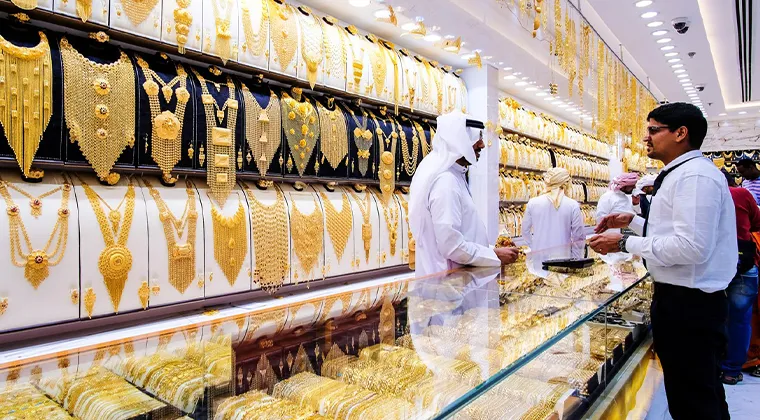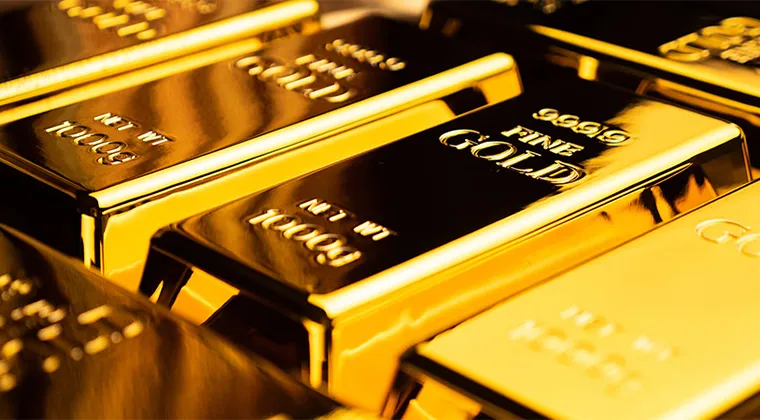
Gold prices in Dubai climbed sharply, gaining more than Dh13 per gram after easing geopolitical tensions following a US–Iran peace agreement boosted market sentiment and influenced bullion trading trends.
Dubai Gold Prices Surge by Over Dh13 Per Gram Following US–Iran Peace Agreement.
Gold prices in Dubai witnessed a strong upward movement on Monday morning, recovering after weeks of pressure that had weighed on the precious metal market. The rebound came as global geopolitical tensions eased following reports of a peace agreement between the United States and Iran, which also triggered a decline in oil prices and reshaped investor sentiment across commodity markets.
In recent weeks, gold had been trading under pressure due to heightened uncertainty linked to the conflict involving the United States and Israel against Iran, which began in late February. During that period, market volatility increased as investors reacted to shifting geopolitical developments, leading to fluctuations in both energy and precious metal prices. However, the announcement of a peace deal marked a turning point, helping restore confidence and prompting renewed buying activity in gold markets.
As trading resumed on Monday, Dubai’s gold market opened with noticeable gains across all major categories. The 24-karat gold rate, which is considered the purest form of the metal and widely tracked by investors and consumers, rose significantly at the start of the trading session. It increased by Dh13.75 per gram, reaching Dh521.75 per gram, reflecting strong upward momentum in the local bullion market.
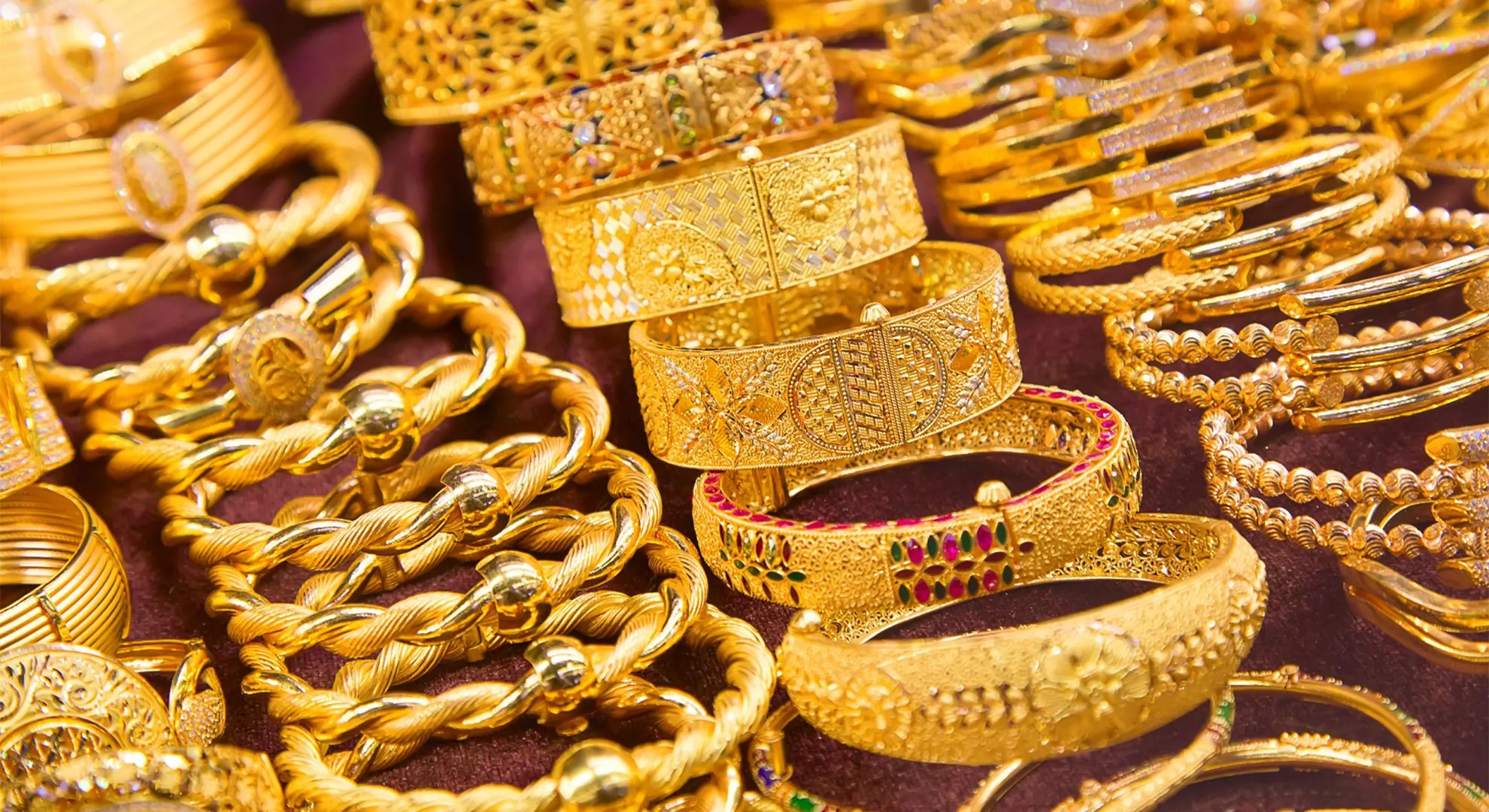
Other popular purity levels also recorded gains. The 22-karat variant, commonly purchased for jewellery in the UAE, climbed by Dh12.25 per gram to trade at Dh483 per gram. This increase indicated broad-based strength across different gold categories rather than movement limited to a single segment of the market.
Mid-range and lower-karat gold categories followed the same trend. The 21-karat gold price opened higher at Dh463 per gram, while 18-karat gold was priced at Dh396.75 per gram at the start of trading. The 14-karat variant, often chosen for more affordable jewellery options, also moved upward, opening at Dh309.50 per gram. The across-the-board rise suggested that both retail demand and global pricing trends were aligned in pushing the market higher.
Market analysts linked the sudden recovery in gold prices to improved global risk sentiment following the easing of geopolitical tensions. When international conflicts intensify, investors typically move towards safe-haven assets such as gold, driving prices upward. Conversely, when tensions ease, other macroeconomic factors such as currency movements, interest rates, and commodity demand begin to influence price direction more strongly.
In this case, the peace agreement between the US and Iran played a significant role in calming investor concerns. The reduction in geopolitical risk led to a shift in capital flows, with energy markets reacting almost immediately. Oil prices, which often rise during periods of conflict due to supply concerns, saw a decline following the announcement, reflecting expectations of improved stability in global energy supply chains.
In parallel, precious metals markets responded differently, with gold gaining strength despite the easing tensions. This movement suggested that investors were also responding to broader market adjustments, including inflation expectations, currency fluctuations, and repositioning of investment portfolios after a period of uncertainty.
On the international front, spot gold prices also recorded gains during the same trading session. The metal was priced at approximately $4,329 per ounce, marking an increase of 1.24 percent. This rise reinforced the upward momentum seen in Dubai and indicated that global bullion markets were moving in a similar direction.
Silver, another widely traded precious metal often influenced by both industrial demand and investment activity, also experienced a strong upward movement. The metal rose by 1.88 percent to reach $70.49 per ounce. Analysts noted that silver’s performance often mirrors gold during periods of market adjustment, although it can also be influenced by manufacturing demand trends, particularly in electronics and renewable energy sectors.
The recent volatility in precious metals highlights the sensitivity of global commodity markets to geopolitical developments. Events such as conflicts, peace agreements, and diplomatic negotiations often have immediate effects on investor sentiment, leading to rapid price adjustments across multiple asset classes.
For Dubai’s gold market, which serves as a major trading hub for the region, such fluctuations are particularly significant. The city’s bullion market is closely linked to international pricing trends, and changes in global sentiment are quickly reflected in local retail and wholesale rates. Traders, jewellers, and consumers often monitor these movements closely, as they directly influence purchasing decisions and investment strategies.
Despite recent volatility, gold continues to be viewed as a key safe-haven asset in times of uncertainty. Even with the easing of geopolitical tensions, underlying economic concerns and market unpredictability continue to support demand for the metal. Investors often turn to gold as a store of value when traditional financial markets experience instability or when long-term inflation risks remain uncertain.
The recent price recovery also underscores the complex relationship between geopolitical events and commodity pricing. While peace agreements typically reduce demand for safe-haven assets, other market dynamics can offset this effect, leading to mixed or even counterintuitive price movements. In this case, broader market adjustments and investor repositioning appear to have contributed to the upward trend in gold prices.
As trading continues throughout the week, market participants are expected to closely monitor further developments related to global politics, currency movements, and central bank policies. These factors are likely to play a key role in determining whether the current upward trend in gold prices will continue or stabilize in the coming days.
Overall, the latest movement in Dubai’s gold market reflects a combination of geopolitical relief, shifting investor sentiment, and broader global economic influences, all of which continue to shape the direction of precious metal prices.
US and Iranian officials announced on Sunday that both sides had reached an understanding on a broad peace framework aimed at ending ongoing hostilities between the two countries. The proposed arrangement is intended to bring a halt to the conflict, ease long-standing economic restrictions, and restore stability to key international shipping routes that have been disrupted in recent months.
According to statements from both sides, the agreement outlines steps to de-escalate tensions, including the lifting of the US blockade on Iran and measures to reopen the Strait of Hormuz, one of the world’s most critical maritime passages for global energy trade. The waterway has remained a focal point of geopolitical concern due to its strategic importance in transporting a significant share of the world’s oil and gas supplies.
The development marks a major shift in diplomatic relations after a prolonged period of confrontation that escalated earlier this year. Since the outbreak of the conflict between the United States and Israel against Iran in late February, global markets have experienced heightened volatility, particularly in the energy sector. The announcement of a potential peace framework has therefore been closely watched by governments, investors, and energy analysts around the world.
Further details about the agreement emerged through statements attributed to Pakistani Prime Minister Shehbaz Sharif, who indicated in a post on social media platform X that the deal is expected to be formally signed later this week. According to his remarks, the official signing ceremony is scheduled to take place on Friday in Switzerland, a neutral venue often chosen for high-level international diplomatic negotiations.
The confirmation of an imminent signing helped ease market fears that had been building over continued instability in the Gulf region. Energy traders responded quickly to the news, leading to a sharp downward movement in crude oil prices at the start of the week. On Monday, oil benchmarks fell by more than 4.5 percent as investors priced in the possibility of improved supply stability and reduced risk of disruption in key shipping lanes.
The Strait of Hormuz has played a central role in recent market uncertainty. Any perceived threat to its operations has historically triggered immediate reactions in global energy markets due to its importance in facilitating oil exports from major producing countries in the Middle East. In recent months, partial disruptions and security concerns in the region had already contributed to upward pressure on crude prices, adding to inflationary concerns across multiple economies.
Prior to the announcement of the peace framework, oil markets had been experiencing sustained gains driven by fears of supply constraints. The situation was further intensified by the escalation of military tensions in the region, which led to what analysts described as an effective closure or severe restriction of maritime traffic through the Strait of Hormuz. This development significantly reduced shipping confidence and contributed to a surge in global energy prices.
As oil prices climbed, inflation expectations also rose in many parts of the world. Higher energy costs tend to feed into broader price increases across transportation, manufacturing, and consumer goods sectors. As a result, central banks faced increased pressure to maintain tighter monetary policies for longer periods, with expectations that interest rates would remain elevated in order to control inflationary trends.
This macroeconomic environment had a direct impact on financial markets, including precious metals. Gold, which is often viewed as a safe-haven asset during periods of geopolitical and economic uncertainty, had been under pressure at various stages of the conflict due to shifting investor sentiment and fluctuating expectations regarding interest rates.
The escalation of the US-Israeli conflict with Iran in February initially supported demand for gold as investors sought protection from market instability. However, the broader impact of rising interest rate expectations and stronger inflation concerns created mixed conditions for the precious metal. In many cases, higher interest rates tend to reduce the attractiveness of non-yielding assets such as gold, leading to periods of price weakness even during geopolitical crises.
The situation became more complex as the energy crisis intensified. The effective disruption of maritime traffic through the Strait of Hormuz led to a sharp spike in global oil prices, which in turn reinforced inflationary pressures. Rising energy costs contributed to concerns that inflation could remain elevated for a longer period than previously anticipated, influencing expectations that central banks would delay interest rate cuts or maintain restrictive monetary policies.
These dynamics placed additional pressure on precious metals markets, which were already reacting to global uncertainty. Investors were forced to balance competing factors, including safe-haven demand driven by geopolitical risks and negative sentiment linked to higher interest rate expectations. As a result, gold prices experienced periods of volatility and downward pressure throughout the conflict period.
With the announcement of a potential peace agreement, however, market sentiment began to shift. The prospect of reopening the Strait of Hormuz and restoring normal maritime operations immediately altered expectations in the energy market. Traders quickly adjusted their positions, leading to a rapid decline in oil prices as fears of supply shortages eased.
The more than 4.5 percent drop in crude oil prices on Monday reflects this recalibration of risk. Investors now appear to be pricing in a scenario where global energy supply chains become more stable and predictable, reducing the likelihood of sudden price spikes driven by geopolitical disruptions.
At the same time, financial analysts note that the impact on precious metals remains more nuanced. While easing geopolitical tensions typically reduce demand for safe-haven assets, other economic factors such as inflation trends, currency movements, and central bank policies continue to play a significant role in determining gold’s direction.
The recent period of instability has demonstrated how closely interconnected global commodity markets have become. Developments in one region can rapidly influence energy prices, inflation expectations, and investment behaviour across multiple asset classes. The situation involving the US, Iran, and Israel has been a clear example of how geopolitical events can create ripple effects across the global economy.
As attention now turns to the expected signing of the agreement in Switzerland, market participants are closely monitoring further announcements for clarity on implementation timelines and enforcement mechanisms. Any delays or changes to the agreement could quickly reverse current market trends, given the sensitivity of oil and commodity prices to geopolitical developments.
For now, however, the announcement of a peace framework has provided temporary relief to global markets, easing concerns over energy supply disruptions and helping stabilize investor sentiment after weeks of volatility. The coming days are expected to be critical in determining whether this shift marks the beginning of a longer-term stabilization or merely a short-term correction in an otherwise uncertain geopolitical landscape.