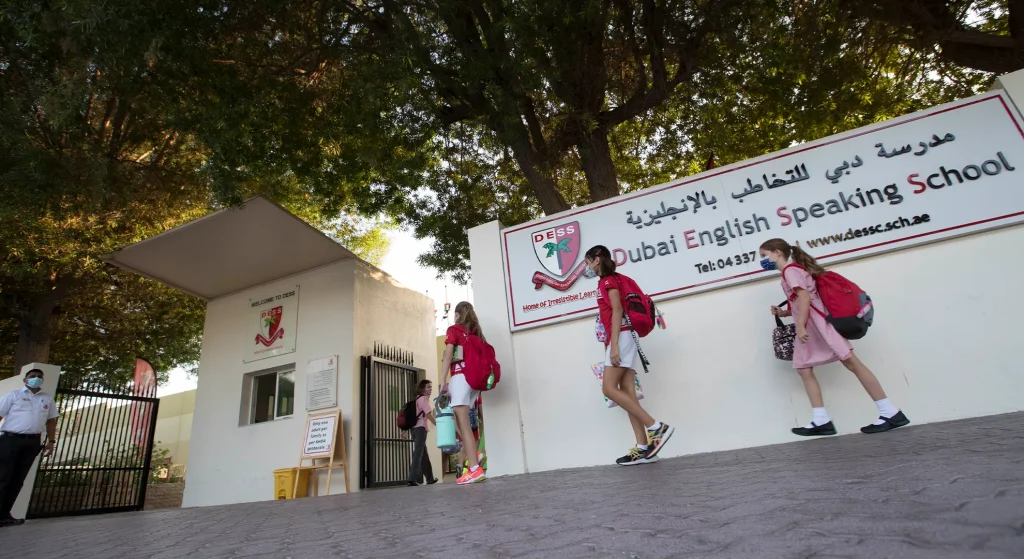
Dubai’s KHDA is set to resume inspections in schools, with authorities providing only up to 24 hours’ advance notice before visits, aiming to maintain oversight and ensure compliance standards remain.
Dubai’s KHDA to restart school inspections, giving as little as 24 hours’ prior notice.

Dubai’s private education sector is entering a renewed phase of oversight and evaluation as the Knowledge and Human Development Authority (KHDA) prepares to restart its structured quality assurance programme from the 2026–27 academic year. This renewed framework is designed to ensure that schools across the emirate continue to meet expected standards of teaching, leadership, student wellbeing, and overall educational performance, while also supporting ongoing improvement rather than relying on periodic assessments alone.
Under this updated system, every eligible private school in Dubai will be subject to one of two forms of review. The first is the traditional full inspection, which involves a comprehensive evaluation of the school’s performance across multiple dimensions such as academic achievement, teaching quality, curriculum delivery, leadership effectiveness, student development, and safeguarding practices. The second is a shorter, more focused monitoring visit, which is intended to provide a quicker yet still meaningful snapshot of how the school is performing in key areas. Together, these two approaches aim to create a more continuous and responsive quality assurance model.
The KHDA’s decision reflects a broader shift toward strengthening accountability while also encouraging schools to consistently improve rather than prepare only for scheduled inspection cycles. By reintroducing these visits, the authority seeks to maintain a steady level of oversight across Dubai’s rapidly growing private education sector, ensuring that schools remain aligned with the emirate’s expectations for high-quality learning environments.
A central goal of this initiative is to improve student outcomes. This includes not only academic performance but also the overall development and wellbeing of learners. The KHDA places increasing emphasis on the idea that education should support students in a holistic manner, helping them develop critical thinking skills, emotional resilience, creativity, and social awareness, in addition to strong subject knowledge. The renewed inspection system is therefore intended to capture a more complete picture of how schools are contributing to these outcomes.
Another important objective is to enhance student wellbeing across all private schools. In recent years, wellbeing has become a key indicator of school quality, encompassing areas such as mental health support, pastoral care, student engagement, safety, and the overall school environment. Through regular inspections and monitoring visits, the KHDA aims to ensure that schools are not only delivering strong academic programmes but are also providing environments where students feel supported, safe, and motivated to learn.
In addition, the initiative is expected to reinforce trust among parents. In a diverse education market like Dubai, where families have access to a wide range of curricula and schooling options, transparency and accountability play a crucial role in decision-making. By conducting consistent evaluations and sharing insights on school performance, the KHDA helps parents make more informed choices about their children’s education. The resumption of inspections is therefore seen as a way to maintain confidence in the quality and reliability of private schooling in the emirate.
The new framework also aligns with Dubai’s long-term strategic direction. Education is a key pillar of the emirate’s development plans, and the KHDA’s approach supports several major initiatives aimed at shaping Dubai’s future. One of these is the Dubai Education 33 Strategy, which focuses on building a world-class education system that prepares students for future challenges and global competitiveness. This strategy emphasizes innovation in teaching methods, improved learning outcomes, and stronger connections between education and future workforce needs.
Similarly, the Dubai Economic Agenda (D33) places strong importance on human capital development as a driver of economic growth. A high-performing education system is considered essential for preparing skilled, adaptable, and knowledgeable individuals who can contribute to the emirate’s evolving economy. By ensuring consistent quality across private schools, the KHDA’s inspection programme supports this broader economic vision.
The Dubai Social Agenda also plays a role in shaping this initiative. This agenda prioritizes the wellbeing, happiness, and social development of residents, with education forming a central component. Schools are seen not just as places of academic learning but as institutions that contribute to shaping responsible, well-rounded members of society. The renewed inspection model therefore supports this vision by evaluating how schools contribute to students’ social and personal development in addition to academic progress.
Overall, the KHDA’s decision to resume school inspections and monitoring visits represents a significant step in reinforcing educational quality across Dubai’s private school sector. By combining full inspections with shorter visits, the authority aims to create a more dynamic and continuous evaluation system. This approach is intended to help schools improve steadily over time, ensure consistency in standards, and maintain alignment with the emirate’s broader strategic goals.
In essence, the initiative reflects a long-term commitment to placing learners at the centre of Dubai’s development plans. It recognizes that strong education systems are built not only through periodic assessment but through ongoing support, accountability, and a shared focus on continuous improvement.
Focus on continuous improvement in schools
Under the updated quality assurance system, each eligible private school will now be assessed through one of two formats: either a comprehensive inspection or a shorter, more focused monitoring visit. This dual approach is intended to provide a more accurate reflection of what schools are like in everyday operation, rather than relying solely on heavily prepared inspection periods. In most cases, schools will receive very limited advance warning—typically no more than 24 hours—so that evaluators can observe genuine classroom practices, leadership routines, and student experiences as they naturally occur.
This revised method is built on a foundation of ongoing cooperation between the Knowledge and Human Development Authority (KHDA) and schools across Dubai. Over recent years, this relationship has evolved into a more collaborative model, where schools are not only assessed but also actively supported in their improvement journeys. Instead of functioning as isolated evaluations, inspections are now designed to complement internal school development processes. Institutions are encouraged to continuously review their own performance using structured self-assessment tools, student achievement data, and external assessment results, all of which feed into the broader evaluation framework used by KHDA teams.
A key principle behind this approach is flexibility. Schools in Dubai operate within diverse contexts, serving varied student populations and following multiple curricula. The renewed framework acknowledges that schools are not all at the same stage of development, and therefore should not be judged in a one-size-fits-all manner. By incorporating both full inspections and shorter monitoring visits, KHDA aims to tailor its oversight according to the specific needs and progress levels of each institution. Schools that require deeper evaluation will undergo full inspections, while others may be assessed through lighter, more frequent monitoring visits that still provide valuable feedback.
In addition to general school evaluation, the framework continues to place strong emphasis on supporting schools with significant populations of Emirati students. These targeted support initiatives are designed to ensure that Emirati learners receive high-quality education that aligns with national priorities and prepares them effectively for future roles within the UAE. Through specialised programmes and focused guidance, schools with higher numbers of Emirati students are given additional resources and attention to help raise outcomes and strengthen engagement. This reflects a broader commitment to ensuring equitable educational opportunities across all segments of society.
The 2026–27 academic year marks an important milestone in the evolution of Dubai’s school quality assurance system, with a more targeted and refined inspection model being introduced. This model is designed not only to evaluate performance but also to drive meaningful and sustained improvement across the education sector. KHDA has highlighted that the renewed system is not about increasing pressure on schools, but about creating a more intelligent and responsive framework that supports long-term development.
In explaining the philosophy behind the updated approach, KHDA has emphasised the importance of partnership with schools and the wider community. The authority views schools as collaborators in a shared mission to enhance educational standards, rather than as institutions subject to periodic external scrutiny alone. This collaborative spirit is intended to strengthen trust, improve communication, and ensure that feedback is both practical and constructive.
Fatma Belrehif, who serves as the Chief Executive Officer of the Education Quality Assurance and Compliance Agency within KHDA, has underlined this vision in her remarks. She stated that as quality assurance visits return in the 2026–27 academic year, the authority remains firmly committed to working closely with schools and the broader community. The ultimate aim, she explained, is to ensure that every student in Dubai benefits from an education that meets world-class standards and prepares them effectively for the future.
She also noted that the renewed approach is expected to strengthen parental confidence in the education system. In a diverse and competitive schooling environment like Dubai, parents rely heavily on transparent and reliable evaluations when choosing schools for their children. By maintaining consistent oversight and providing clear insights into school performance, KHDA seeks to reassure families that the education offered across the emirate meets high and consistent standards.
Furthermore, she highlighted that this model directly supports the goals of the Education 33 Strategy, which focuses on advancing Dubai’s education system over the coming years. The strategy is centred on innovation, quality enhancement, and aligning educational outcomes with the needs of a rapidly evolving society and economy. The inspection framework plays a key role in ensuring that these strategic ambitions are translated into measurable progress within schools.
Another important aspect of her statement was the recognition that schools are at different stages in their improvement journeys. Some institutions may already be performing at a high level, while others are still working to strengthen core areas such as teaching quality, leadership, or student outcomes. The differentiated inspection approach acknowledges these variations and allows KHDA to focus its attention more precisely where it is needed most.
According to her, this tailored system ensures that evaluators can concentrate on the factors that have the greatest impact on student learning and wellbeing. Instead of applying uniform assessments in every case, inspectors are able to adapt their focus based on each school’s context, strengths, and areas for development. This makes the evaluation process more relevant and meaningful for schools.
She further explained that grounding inspections in the daily reality of school life is a key priority. By conducting visits with minimal prior notice and observing authentic classroom interactions, KHDA aims to gain a clearer and more accurate understanding of how schools function on a regular basis. This helps ensure that feedback is based on genuine practice rather than temporary improvements made in preparation for inspection.
Ultimately, the renewed inspection framework is designed to be more effective in driving continuous improvement across Dubai’s private education sector. It combines accountability with support, structure with flexibility, and evaluation with collaboration. By doing so, it aims to create a system where schools are consistently encouraged to grow, adapt, and enhance the quality of education they provide to every student.
Data-driven monitoring tools
The revised quality assurance system will remain anchored in the UAE School Inspection Framework, which continues to serve as the core reference point for evaluating school performance across Dubai. By retaining this established framework, the Knowledge and Human Development Authority (KHDA) ensures that schools are already familiar with the expectations, standards, and criteria used in assessments. This continuity helps maintain stability in the education system, allowing schools to build on existing practices rather than adjust to entirely new evaluation structures. At the same time, the updated approach introduces more modern and flexible tools that rely heavily on data and continuous monitoring, making the process more responsive to real-time developments within schools.
Rather than depending solely on periodic inspection cycles, the new model integrates a wider range of information sources to form a more complete picture of each school’s performance. This includes academic achievement data, internal school assessments, student progress indicators, attendance patterns, wellbeing metrics, and other relevant performance signals. By combining these different datasets, KHDA is able to move toward a more evidence-based system of evaluation, where decisions about school visits are informed by objective trends rather than isolated observations.
This evolution reflects a broader shift in educational quality assurance—from static inspection events to ongoing monitoring systems that better capture the dynamic nature of school life. Schools are not viewed as fixed entities that can be fully assessed within a single visit; instead, they are understood as continuously evolving environments where performance can vary across time, subjects, and student groups. The integration of data-driven tools allows KHDA to track these changes more effectively and identify patterns that may require closer attention or support.
Within this framework, the Education Quality Assurance and Compliance Agency plays a central operational role. Acting behind the scenes, the agency is responsible for coordinating evaluation activities, analysing school performance data, and determining the most suitable type of visit for each institution. This includes deciding whether a school requires a full inspection, which involves a comprehensive on-site evaluation, or a shorter monitoring visit that focuses on specific aspects of performance.
The agency’s decision-making process is guided by a structured analytical approach. Rather than applying uniform inspection schedules across all schools, it assesses each institution individually based on a combination of quantitative and qualitative indicators. Quantitative data includes measurable outcomes such as examination results, progress scores, and attendance rates, while qualitative insights may be drawn from previous inspection reports, school improvement plans, leadership evaluations, and feedback from stakeholders. Together, these inputs allow KHDA to build a nuanced understanding of how each school is functioning.
This method enables a more targeted deployment of inspection resources. Schools demonstrating consistent high performance and stable outcomes may be subject to lighter monitoring visits, while those showing fluctuations in results or signs of underperformance may receive more comprehensive inspections. In this way, the system ensures that attention is focused where it is most needed, rather than distributing resources evenly regardless of context.
Another important aspect of this approach is its emphasis on fairness and contextual understanding. By using a wide range of data points, KHDA aims to avoid overly simplistic judgments based on single performance measures. Instead, schools are evaluated within their specific circumstances, taking into account factors such as student demographics, curriculum type, and development stage. This helps create a more balanced and accurate assessment of school quality across Dubai’s diverse education landscape.
The introduction of more agile monitoring tools also enhances the authority’s ability to respond quickly to changes in school performance. If data indicates sudden improvements or declines, KHDA can adjust its evaluation approach accordingly, ensuring that support or intervention is provided in a timely manner. This responsiveness is a key feature of the updated system, as it allows quality assurance to function as an ongoing process rather than a fixed annual event.
Over time, this integrated model is expected to contribute significantly to raising overall school performance standards. By maintaining continuous oversight and providing regular feedback, schools are encouraged to engage in ongoing self-improvement rather than preparing only for scheduled inspections. This fosters a culture of sustained development, where progress is monitored, evaluated, and refined throughout the academic year.
In addition to improving performance, the initiative is also designed to strengthen equity across Dubai’s education system. Equity in this context refers to ensuring that all students—regardless of background, nationality, or school type—have access to high-quality education and opportunities for success. By closely monitoring school outcomes and identifying gaps in performance, KHDA can support targeted interventions aimed at reducing disparities between different institutions.
This focus on equity is particularly important in a diverse educational environment like Dubai, where private schools serve students from a wide range of cultural, linguistic, and socio-economic backgrounds. The updated system allows regulators to identify where additional support may be needed, whether in teaching quality, resource allocation, leadership development, or student wellbeing programmes. As a result, the inspection framework becomes not only a tool for evaluation but also a mechanism for promoting fairness and inclusion.
Beyond individual school improvement, the broader ambition of the initiative is to reinforce Dubai’s reputation as a leading global destination for quality education. The emirate has invested heavily in building a competitive and internationally recognised education sector, attracting schools from a wide variety of curricula and educational models. Maintaining high and consistent standards across this diverse system is essential to sustaining that reputation.
By adopting a more sophisticated and data-informed quality assurance approach, KHDA aims to demonstrate that Dubai’s education system is both rigorous and forward-looking. The ability to combine established inspection frameworks with modern analytical tools reflects a commitment to innovation in governance and policy implementation. This positions Dubai as a model for other education systems seeking to balance accountability with flexibility.
In the long term, the initiative is expected to create a more resilient education ecosystem—one that is capable of adapting to change, addressing challenges proactively, and continuously improving outcomes for students. Schools will benefit from clearer feedback, more relevant evaluations, and better-aligned support mechanisms, while parents gain greater confidence in the reliability and transparency of school performance information.
Overall, the updated system represents a significant step forward in how school quality is monitored and enhanced. It moves beyond traditional inspection cycles toward a more integrated, intelligent, and responsive framework. By combining established standards with advanced data analysis and targeted evaluation strategies, KHDA is working to ensure that every school in Dubai is held to high expectations while also receiving the guidance needed to achieve them.