The Islamic New Year in 2026 is set to bring the next public holiday in the UAE, with residents now awaiting confirmation of the exact date for the upcoming break.
Islamic New Year 2026 Marks Upcoming Public Holiday in the UAE: When Is It?
Following the extended break enjoyed by UAE residents during Eid Al Adha, attention has now shifted towards the next official public holiday in the country. With many people returning to work after a much-anticipated long weekend, discussions have naturally turned towards when the next opportunity for rest and travel will arrive.
For residents across the UAE, public holidays are not only periods of rest but also important occasions for planning. Many use these breaks to travel abroad, visit family, book short staycations within the country, or simply take time away from daily routines. Because of this, official holiday announcements are often followed closely, allowing individuals and families to organise their schedules well in advance.
The UAE government typically releases a calendar of public holidays at the beginning of the year, giving residents a clear overview of expected days off. This advance planning helps both individuals and businesses manage workloads, staffing schedules, and travel arrangements. It also allows the tourism and hospitality sectors to prepare for increased demand during peak holiday periods.
As residents settle back into routine after Eid Al Adha, the next anticipated break is the Islamic New Year holiday, also known as Hijri New Year. According to expected timelines, this occasion is likely to fall around mid-June, although the exact date is subject to official confirmation based on lunar observations.
The Islamic New Year marks the beginning of the Hijri calendar, which is based on the lunar cycle rather than the solar Gregorian calendar. As a result, the date shifts each year, moving approximately 10 to 12 days earlier in the Gregorian calendar annually. This is why Islamic holidays do not fall on fixed dates and must be determined through moon sighting or astronomical calculations.
Hijri New Year holds religious and historical significance in the Islamic calendar. It commemorates the Hijrah, the migration of Prophet Muhammad (PBUH) from Makkah to Madinah, an event that represents the beginning of the Islamic era. While the occasion is observed as a public holiday in the UAE and many other Muslim-majority countries, it is generally marked as a day of reflection rather than large-scale celebration.
In terms of calculation, the Islamic calendar consists of 12 lunar months, each lasting either 29 or 30 days depending on the sighting of the crescent moon. Because lunar months are shorter than solar months, the Hijri year is approximately 10 to 11 days shorter than the Gregorian year. This difference explains why Islamic New Year moves earlier each year on the Gregorian calendar.
The exact date of the Islamic New Year holiday in the UAE is typically confirmed closer to the time by official authorities, based on moon-sighting committees and astronomical data. Until then, residents often rely on expected projections to plan travel and personal commitments, especially when the date falls close to weekends or other holidays.
Another aspect that often interests residents is whether the Islamic New Year holiday is transferable or fixed. In the UAE, some public holidays that fall on weekends may be shifted or combined depending on official government decisions. However, whether a specific holiday is transferable depends on the nature of the occasion and the regulations announced for that year. For Hijri New Year, any adjustment would be communicated officially if applicable.
For many residents, even a single-day public holiday can be valuable, particularly when combined with weekends or annual leave. It provides an opportunity for short trips, family gatherings, or simply a break from work routines. As a result, anticipation builds each year as the expected date approaches.
Travel agencies, hotels, and tourism operators also pay close attention to such announcements, as public holidays often lead to increased demand for local tourism and short international travel. Staycation packages and promotional offers are frequently launched around these periods to attract residents looking for quick and convenient holiday options.
With the UAE’s structured approach to announcing public holidays, residents are able to plan ahead with a reasonable degree of certainty. However, because Islamic holidays depend on lunar sightings, final confirmation is always awaited closer to the date.
As mid-June approaches, residents continue to keep an eye on official updates regarding the Islamic New Year. Whether used for travel, relaxation, or family time, the upcoming holiday is expected to provide another short break following the busy post-Eid period, giving people across the country a chance to pause and recharge before returning to their routines.
What is Islamic New Year?
Islamic New Year, also known as Hijri New Year, signifies the start of a new year in the Islamic lunar calendar. Its date is determined by official moon sightings and it begins with the month of Muharram, the first month in the Hijri system.
When is Islamic New Year 2026 in the UAE?
In the Islamic lunar calendar, the beginning of each new month is traditionally determined by the sighting of the crescent moon. This process typically takes place on the 29th day of every Hijri month, when religious authorities and moon-sighting committees observe the sky to confirm whether the new lunar cycle has begun.
For the current cycle, attention is focused on the 29th day of Dhul Hijjah, which is expected to fall on June 15. On this evening, if the crescent moon is successfully sighted, it will signal the end of the existing month and the immediate start of a new one. In that case, the month of Muharram, which marks the beginning of the Islamic New Year, will commence the very next day, on Tuesday, June 16.
However, if weather conditions or astronomical factors prevent the moon from being sighted on June 15, the current month of Dhul Hijjah will be completed as a full 30-day cycle. In such a scenario, the Islamic calendar rules require that the month continues for one additional day before transitioning into the next lunar month.
As a result, Muharram would then begin on Wednesday, June 17. This slight variation in dates is a natural feature of the lunar calendar system, which depends on visual confirmation of the moon rather than fixed numerical calculations alone.
Because of this method of timekeeping, Islamic months can shift by a day depending on local sightings and official announcements made by relevant religious authorities. This is why exact dates for Islamic occasions are often confirmed only shortly before they occur.
The process ensures that the Islamic calendar remains closely aligned with lunar phases, preserving its traditional method of calculation that has been followed for centuries.
Is it a transferable holiday?
Under a Cabinet Resolution introduced in 2025, the UAE government formalised updated rules regarding the movement of public holidays. According to this policy, most official holidays—excluding the Eid holidays—may be shifted to either the start or the end of the working week, depending on administrative decisions and the structure of the calendar in a given year.
This adjustment mechanism is designed to provide greater flexibility in how public holidays are observed, while also maximising the benefit of extended weekends for residents. By aligning certain holidays with weekends, authorities aim to create longer breaks that can improve work-life balance and support travel, tourism, and leisure activities within the country.
In the context of the upcoming Islamic New Year, this rule means that if the holiday is officially confirmed to fall on either Tuesday, June 16, or Wednesday, June 17, there is a possibility that it may be rescheduled. In such a case, the day off could be moved either to the preceding Monday or the following Friday, depending on the final government announcement for that year.
If the holiday is shifted to Monday, residents would benefit from an extended break beginning with the weekend. This would effectively create a three-day weekend, followed by the official holiday on Monday, resulting in a longer period of rest for employees and students. In certain emirates, such as Sharjah, where government institutions and schools often align their schedules with federal holiday decisions, this arrangement could even extend the break further.
For example, in Sharjah, government employees and students could potentially enjoy a four-day break if the weekend is combined with a Monday holiday. This would offer an extended period away from work and academic responsibilities, allowing families more time for travel, relaxation, or personal commitments.
On the other hand, if authorities decide to shift the holiday to Friday instead, the impact would be felt differently across the country. In this scenario, residents would benefit from a long weekend consisting of Friday, Saturday, and Sunday. This arrangement would create a three-day break for most people, aligning the public holiday with the regular weekend structure observed in many workplaces.
Such flexibility in scheduling holidays reflects a broader approach by UAE authorities to optimise the distribution of rest days throughout the year. By adjusting the timing of certain public holidays, the system ensures that residents can enjoy more continuous breaks, rather than isolated single-day holidays that fall in the middle of the working week.
The decision to shift a holiday is typically announced closer to the actual date, after considering multiple factors including the official confirmation of the Islamic calendar date, operational requirements across different sectors, and alignment with public and private sector schedules. As a result, residents are usually advised to wait for official announcements before finalising travel or vacation plans.
Overall, the possibility of moving the Islamic New Year holiday highlights how calendar flexibility can enhance the way public holidays are experienced in the UAE. Whether extended into a four-day break or structured as a three-day weekend, the adjustment offers residents additional opportunities to rest, travel, and spend time with family, depending on the final decision issued by authorities.
What are the remaining public holidays?
Following the Islamic New Year break, residents in the UAE will still have two official public holidays remaining on the calendar—Prophet Muhammad’s Birthday and UAE National Day—both of which are expected to provide additional opportunities for rest, travel, and family time later in the year.
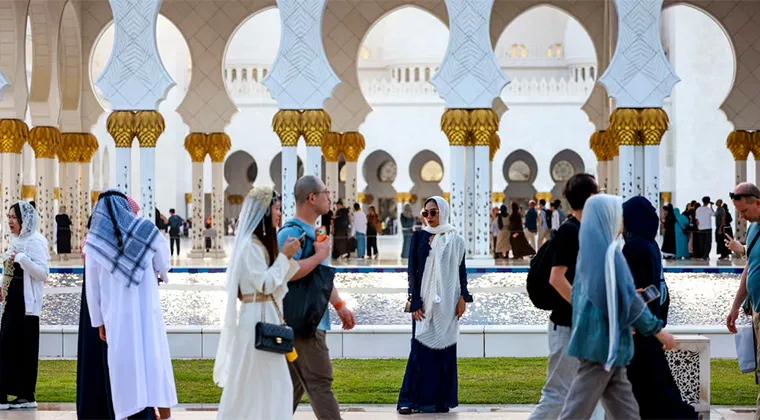
Prophet’s Birthday
This public holiday is observed on the 12th of Rabi Al Awwal in the Islamic calendar, and its exact timing is determined by the sighting of the moon, which means the date can vary slightly each year. Based on current projections, it is expected to fall around August 25, although this remains subject to official confirmation by the relevant authorities.
In addition, the final announcement will depend on a Cabinet decision, which may allow the holiday to be moved to a more suitable day in the week. If approved, this flexibility could create an extended weekend for residents, giving them another opportunity for a short break, travel, or time with family.
UAE National Day (Eid Al Etihad)
The UAE is set to mark its 55th National Day in 2026 with a scheduled two-day public holiday. The break is expected to fall on Wednesday and Thursday, December 2 and 3, providing residents across the country with the final official holiday period of the year.
For employees and students in Sharjah, the timing could result in an even longer pause from routine work and studies. If the holiday remains unchanged and is not shifted, combining it with the surrounding weekend could effectively give government employees and school students in Sharjah a total break of up to five consecutive days.
However, if authorities decide to adjust the holiday under the official transfer rules, the duration of the break may differ slightly across the country. In such a case, residents in all emirates could still benefit from an extended weekend, likely resulting in a four-day holiday period.