
Here’s a fresh 30-word rewrite: Gold prices in Dubai showed a strong recovery after recently slipping to their lowest level in two months, as renewed market demand and investor confidence pushed rates higher once again.
Dubai gold prices rebound after falling to a two-month low.
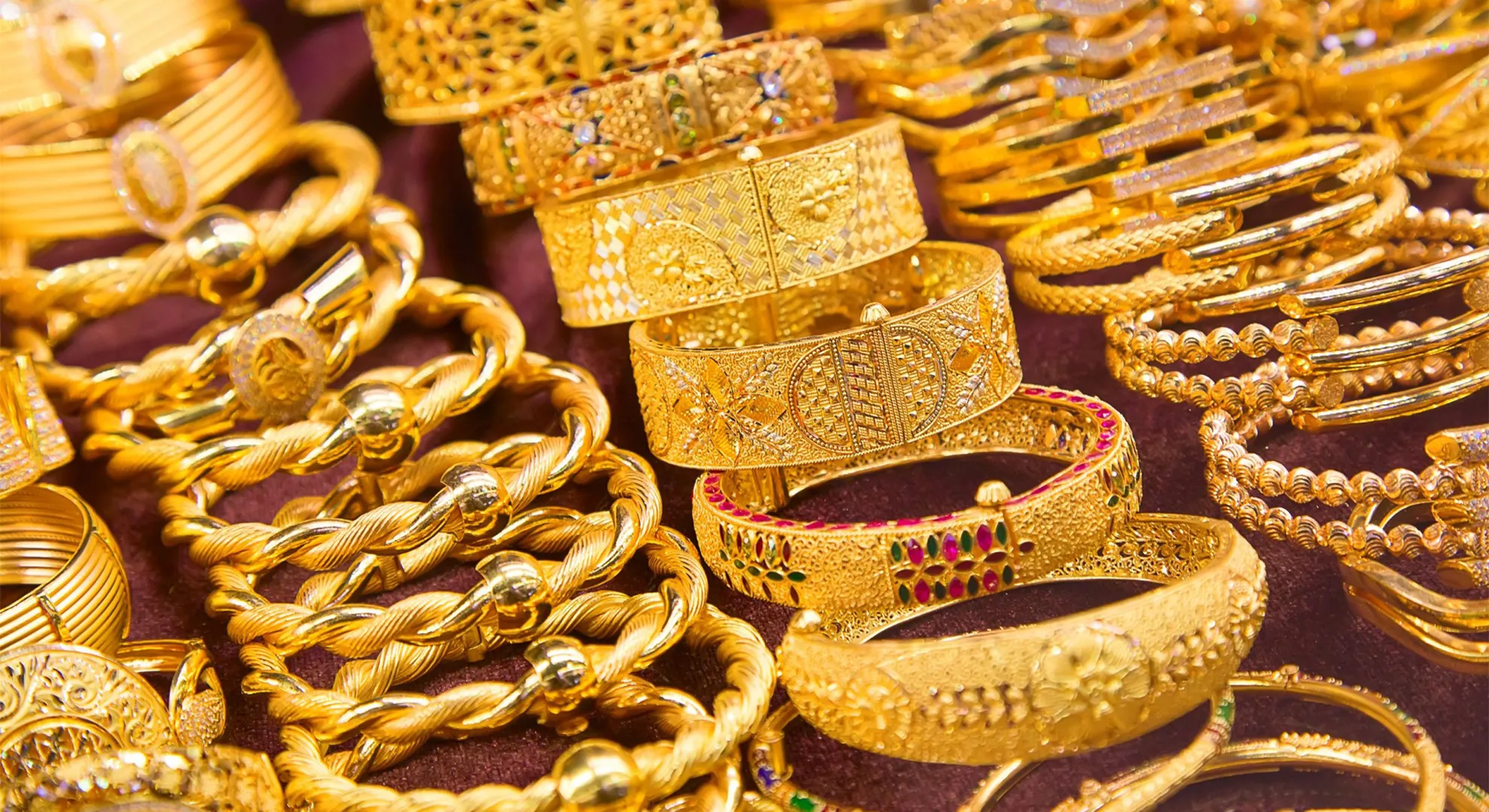
Gold prices in Dubai moved higher again on Friday morning, continuing their recovery after recently touching the lowest levels seen in nearly two months. The rebound in rates came as investors closely monitored global economic developments, geopolitical tensions, and expectations surrounding future monetary policy decisions in the United States.
At the opening of the market, 24K gold was priced at Dh544 per gram, reflecting a noticeable increase compared with Thursday’s closing level of Dh541.25 per gram. Only a few days earlier, on May 27, the same category of gold had slipped to Dh537 per gram, marking one of the weakest price points recorded in recent weeks. The latest recovery suggests that buying interest has gradually returned to the precious metals market after a period of sharp declines.
Other gold categories also registered gains during early trading hours. The price of 22K gold climbed to Dh503.75 per gram, while 21K gold rose to Dh483 per gram. Meanwhile, 18K gold was trading at Dh414 per gram and 14K gold reached Dh323 per gram. The increase across all major variants indicates stronger overall sentiment in the bullion market. Earlier this week, the price of 22K gold had briefly dropped below the Dh500-per-gram mark, creating significant interest among jewellery buyers and investors looking for lower entry prices.
Internationally, spot gold prices edged higher as market participants evaluated fresh geopolitical developments and economic indicators. Gold in the global market was trading around $4,511 per ounce, reflecting a modest gain of 0.22 percent. Traders remained cautious while assessing reports related to a possible ceasefire arrangement between the United States and Iran, alongside concerns about inflationary pressures and the future direction of US interest rates.
Reports circulating in international media suggested that Washington and Tehran had reached an understanding aimed at extending a temporary ceasefire agreement and easing restrictions on shipping activity through the strategically important Strait of Hormuz. Sources familiar with the discussions indicated that negotiations had progressed positively. However, uncertainty persisted because former US President Donald Trump had not officially endorsed the arrangement, while Iranian state-linked media outlets stated that the agreement was still not fully completed.
The Strait of Hormuz remains one of the world’s most critical oil transportation routes, and any instability in the region often influences commodity markets, including precious metals. Investors typically shift toward safer assets such as gold whenever geopolitical risks intensify, particularly in the Middle East. As a result, even tentative progress toward diplomatic solutions can trigger movements in energy prices, inflation expectations, and safe-haven demand.
At the same time, inflation concerns in the United States continued to shape investor sentiment. Recent economic data showed that US inflation accelerated at its fastest pace in approximately three years during April. Analysts attributed much of the increase to rising energy costs linked to tensions involving Iran and broader disruptions in global supply chains. Higher fuel and transportation expenses contributed significantly to upward pressure on consumer prices.
The latest inflation figures reinforced expectations among economists that the US Federal Reserve may keep interest rates elevated for a prolonged period rather than moving quickly toward monetary easing. Policymakers remain focused on bringing inflation under control, and persistent price pressures could delay any potential rate cuts. Financial markets are now increasingly expecting the central bank to maintain its current stance well into next year.
Traditionally, higher interest rates tend to limit gains in gold prices because bullion does not offer interest or yield. However, gold also benefits from uncertainty, inflation fears, and geopolitical instability. This creates a complex environment where investors weigh the impact of tighter monetary policy against the metal’s role as a store of value during uncertain times.
Silver prices, meanwhile, showed little movement during the session. The metal was trading near $75.72 per ounce, remaining relatively stable compared with recent fluctuations. Although silver often follows gold’s broader direction, it is also influenced by industrial demand trends, manufacturing activity, and broader economic conditions.
Market analysts believe that the overall outlook for gold remains constructive despite short-term volatility. Vijay Valecha, Chief Investment Officer at Century Financial, noted that technical indicators continue to support a positive long-term trend for the precious metal. According to market experts, ongoing geopolitical uncertainty, elevated inflation risks, and expectations surrounding central bank policy decisions are likely to remain key drivers of price action in the coming weeks.
Many investors continue to view gold as an effective hedge during periods of financial uncertainty. Demand for the metal often strengthens whenever markets become concerned about inflation, economic slowdowns, political instability, or currency weakness. In the UAE, fluctuations in gold prices are also closely watched by residents, tourists, jewellery buyers, and traders due to Dubai’s reputation as one of the region’s leading gold trading hubs.
Jewellery retailers in Dubai reported renewed customer interest after prices briefly declined earlier in the week. Lower rates encouraged some shoppers to make purchases ahead of the upcoming travel and festive seasons. However, traders also observed that many consumers remain cautious because of continued volatility in global markets.
Industry experts believe that the direction of gold prices over the coming days will largely depend on several major factors. These include developments surrounding the US-Iran situation, movements in crude oil prices, inflation trends in major economies, and signals from the Federal Reserve regarding future interest rate decisions. Any escalation in geopolitical tensions could further strengthen demand for safe-haven assets, while signs of easing inflation may reduce some upward pressure on bullion prices.
Currency market movements are also expected to play an important role. Gold prices generally move inversely to the strength of the US dollar. If the dollar weakens, gold often becomes more attractive to international buyers because it becomes cheaper in other currencies. Conversely, a stronger dollar can place pressure on bullion prices.
Investors are additionally monitoring upcoming economic reports from the United States, including employment data, consumer confidence figures, and manufacturing indicators. These reports could provide fresh clues regarding the health of the economy and the Federal Reserve’s future policy path. Any unexpected weakness in economic data may increase speculation about possible rate cuts, which could support gold prices further.
In recent months, global financial markets have experienced heightened volatility due to a combination of geopolitical risks, concerns about slowing economic growth, and uncertainty over central bank policies. This environment has encouraged many institutional and retail investors to maintain exposure to precious metals as part of their broader investment strategies.
Despite short-term corrections, analysts say the long-term fundamentals for gold remain relatively strong. Central bank purchases of gold have also remained robust in several countries, contributing to underlying demand. In addition, concerns over global debt levels, persistent inflationary pressures, and geopolitical uncertainty continue to support investor interest in safe-haven assets.
For consumers in Dubai and across the UAE, daily movements in gold prices remain particularly significant because of the region’s strong cultural and commercial connection to gold jewellery and bullion trading. Buyers often monitor rates closely to identify favourable purchasing opportunities, especially during periods of market weakness.
Although prices have recovered from their recent lows, market participants expect volatility to continue in the near term as traders respond to new economic data and geopolitical developments. Analysts recommend that investors remain cautious and closely follow market trends before making major investment decisions.
Overall, Friday’s gains reflected a broader recovery in the gold market following recent declines, with investor sentiment supported by ongoing geopolitical concerns and inflation worries. While uncertainty surrounding global economic conditions remains high, many analysts believe gold could continue to attract demand as a defensive asset in the months ahead.