Job market trends in the UAE highlight several sectors anticipated to drive recruitment activity, with certain industries set to expand workforce needs and generate new employment opportunities in the coming period.
UAE employment outlook: Key industries expected to lead hiring growth.

A new survey indicates that hiring activity across the Gulf is recovering after slowing during the Iran conflict, with the UAE job market gradually regaining strength as business confidence and recruitment demand begin to improve again.
The employment market across the Gulf region is beginning to recover after experiencing a significant decline earlier this year due to regional tensions and conflict-related uncertainty. Recent figures suggest that hiring activity and jobseeker participation are gradually improving as the business environment becomes more stable following the ceasefire agreement.
Data published by GulfTalent showed that the impact of the conflict was strongly felt in March, when the number of professionals registering for jobs across Gulf countries dropped by 35 per cent compared to February. During the same period, employer activity also weakened, with companies posting 24 per cent fewer job openings as businesses adopted a more cautious approach to recruitment amid geopolitical instability.
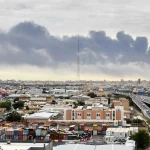
The downturn in Gulf hiring activity began after tensions escalated into open conflict on February 28, creating widespread uncertainty across the region’s business environment. The outbreak affected several important industries by disrupting trade routes, weakening investor and employer confidence, and slowing commercial activity in sectors heavily linked to regional stability. Areas such as tourism, aviation, logistics and retail were among the most immediately impacted as companies responded cautiously to the rapidly changing geopolitical situation.
Economic uncertainty intensified throughout March, with labour market activity falling to particularly low levels during the Eid Al Fitr period. Analysts noted that both employers and jobseekers became more hesitant during this phase, as businesses delayed expansion plans and many professionals reconsidered relocation or career decisions until the regional outlook became clearer.
However, conditions gradually began to improve after the ceasefire came into effect on April 8. Recruitment activity and market participation started recovering as confidence slowly returned and businesses resumed postponed hiring plans. Industry experts say the rebound demonstrates both the sensitivity and resilience of Gulf economies during periods of geopolitical instability.


Although the conflict temporarily slowed recruitment and reduced the willingness of overseas professionals to move to the region, analysts believe the overall demand for skilled workers in the UAE and the wider Gulf remains fundamentally strong. They point out that the slowdown appeared to be driven more by caution and uncertainty rather than any deep structural weakness in the region’s economies.
The UAE, in particular, continues to maintain strong long-term growth prospects due to ongoing economic diversification efforts and major development initiatives. Large-scale investments in infrastructure, technology, advanced manufacturing, logistics and financial services are continuing to create demand for talent across multiple sectors. Experts say these underlying economic drivers helped support the relatively quick recovery in hiring activity once regional tensions eased.
A Dubai-based recruitment consultant explained that many companies temporarily paused hiring decisions because they were waiting for greater clarity regarding the conflict and its potential economic consequences. According to the consultant, businesses remained cautious during the height of the crisis but did not abandon long-term workforce plans, reflecting continued confidence in the Gulf’s future growth trajectory.
Data from GulfTalent also revealed major differences in how job market interest changed across regions. Professionals already living within Gulf Cooperation Council countries showed the smallest decline in job search activity, with a drop of only 15 per cent. Analysts say this suggests that residents familiar with local conditions remained relatively confident despite the uncertainty.
In contrast, interest from Europe recorded the sharpest decline globally, falling by 48 per cent. Recruitment specialists attributed this drop partly to extensive international media coverage, which heightened concerns among overseas professionals about security and regional stability. Interest from Asian countries also declined significantly, dropping by 40 per cent, while applications from African professionals fell by 34 per cent.
Experts noted that many international candidates adopted a cautious “wait-and-see” strategy during the most unstable phase of the conflict. Rather than cancelling plans permanently, many prospective applicants postponed relocation decisions until signs of stability began to emerge again.
At the same time, the regional slowdown created a larger pool of local jobseekers already based in the Gulf. Professionals working in industries directly affected by reduced travel and consumer activity — including tourism, hospitality, retail and aviation — increasingly entered the job market as companies adjusted operations during the conflict period.
This rise in locally available talent helped partially compensate for the decline in overseas applications. Employers therefore continued to have access to candidates despite reduced international mobility.
Recruitment activity among businesses declined less dramatically than jobseeker registrations because corporate hiring cycles generally operate over longer timeframes. Many organisations had already finalised staffing budgets and approved recruitment plans months before the conflict began, allowing some hiring processes to continue even during periods of uncertainty.
Certain industries also maintained relatively strong demand throughout the disruption. Logistics and supply-chain related positions remained particularly active as businesses worked to reorganise shipping operations and secure alternative trade routes in response to disruptions affecting regional maritime corridors. Companies involved in transportation and operational continuity sought skilled professionals capable of managing rapidly changing supply chain conditions during the crisis.
Overall, analysts say the recovery now underway reflects the Gulf region’s ability to rebound relatively quickly once stability improves, particularly in economies such as the UAE where diversification and long-term investment continue to support employment growth across multiple industries.