Before the discovery of oil, the UAE’s economy was shaped by traditional livelihoods such as pearl diving, textile weaving, and dhow construction, which together laid the foundation of its earliest industrial activity.
UAE’s early economy before oil: How pearl diving, weaving, and traditional boat building formed the country’s first industries.
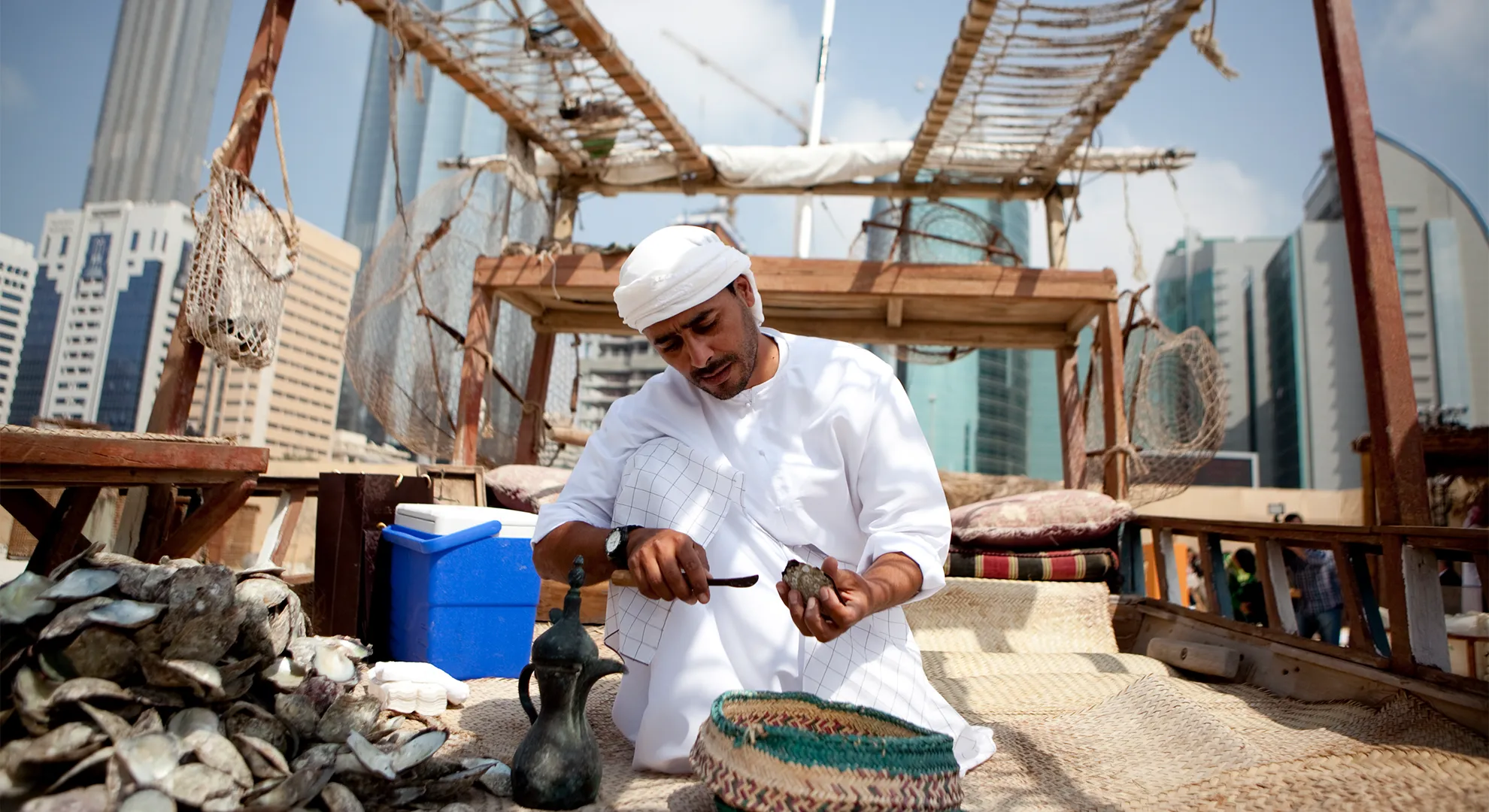
Long before modern factories appeared, Emiratis were actively organising trade networks, coordinating supply systems, and sustaining economic activity through well-established routes that supported regional and international commerce.
Before modern definitions of industry or formal economic systems existed in the region, the foundations of what would become the UAE’s economy were already being shaped by its early communities. Long before factories, financial institutions, or free zones, everyday life was sustained by skilled pearl divers, experienced fishermen, expert boat builders, palm weavers, and traditional craftsmen. These groups formed interconnected networks of trade and production that stretched across the Arabian Gulf, supporting both local livelihoods and regional exchange. Their work operated without formal blueprints, written economic theories, or structured capital investment, yet it functioned as a highly organised system of survival and commerce. This early way of life laid the groundwork for the UAE’s later economic transformation, beginning well before the emergence of modern infrastructure and industrial development.
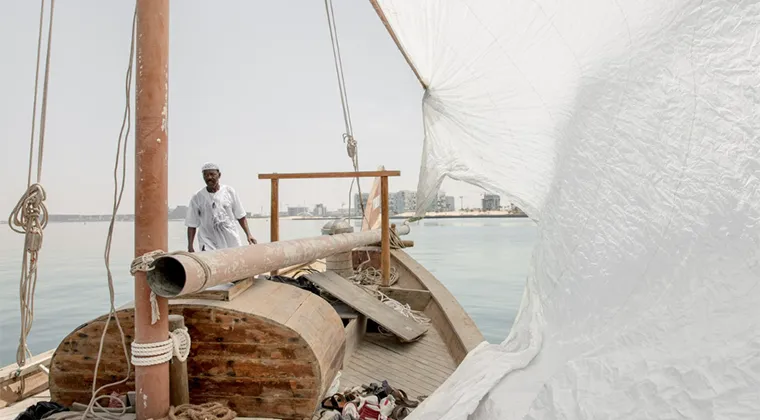
The Arabian Gulf functioned as far more than a geographic feature for early Emirati communities; it served as the backbone of a fully developed economic system. In many ways, the sea operated like a natural production hub where different skills, roles and seasonal activities came together to sustain livelihoods and enable trade across the region. Before the arrival of modern industry, Emirati boat builders were already designing and constructing vessels with remarkable precision. These craftsmen relied on inherited knowledge passed down through generations, shaping wooden boats suited specifically to the Gulf’s unique environmental conditions, including its tides, wind patterns and trading routes. Their work required deep understanding of navigation and material strength, making each vessel a carefully engineered tool for commerce and survival.
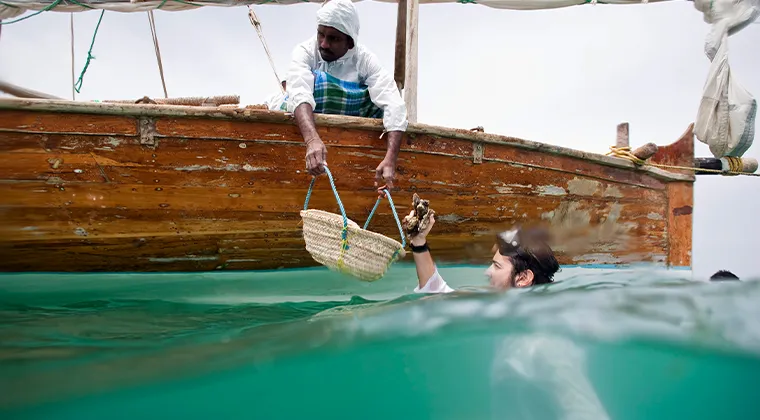
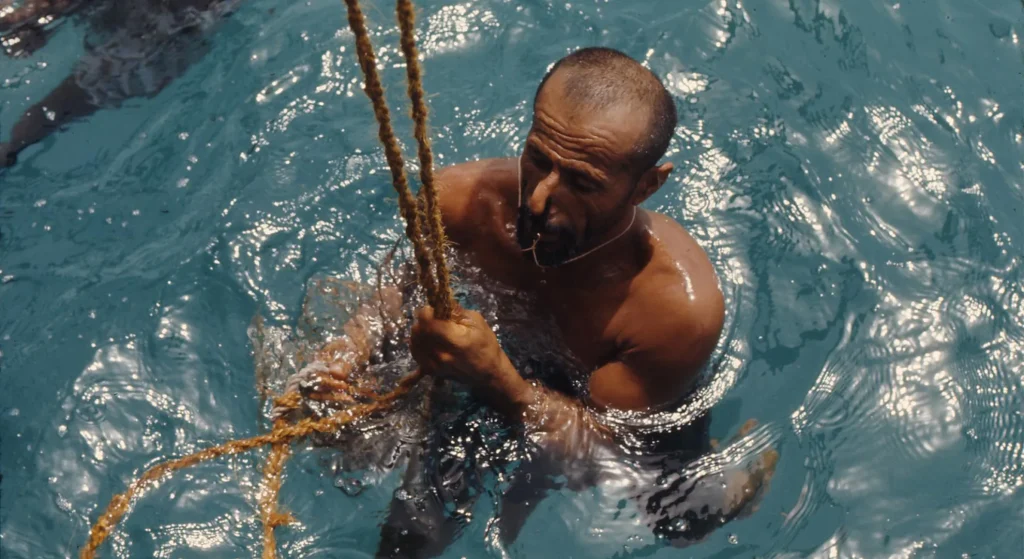
Similarly, pearl diving was not an individual pursuit but a highly organised profession. Diving crews worked in structured teams where every member had a specific responsibility, from divers and assistants to captains who managed voyages. The activity followed strict seasonal cycles and was governed by informal but well-established agreements that regulated profit-sharing and cooperation. Entire communities depended on this system, which linked coastal settlements through trade networks that extended well beyond the Gulf.
This organised maritime activity closely resembled what today would be recognised as a sophisticated supply chain. Goods were sourced, processed, transported and exchanged in a continuous cycle that connected different regions. Although there were no written manuals or economic models guiding these operations, the system functioned with consistency and efficiency comparable to modern logistics frameworks.
Beyond maritime industries, early Emirati economic life also included strong contributions from women, particularly in textile production. Long before the establishment of formal manufacturing sectors, women in households played a key economic role by producing fabrics using simple hand-operated looms and locally sourced materials. The textiles they created were not merely for domestic use; they were functional goods that entered trade networks and reached markets beyond their immediate communities.
These weaving practices represented an important form of production that supported both household economies and wider commercial exchange. In many cases, women managed continuous cycles of production that involved sourcing materials, crafting finished goods and preparing them for trade. While this work may not have been documented in formal economic terms at the time, it effectively functioned as a decentralised production system contributing to regional commerce.
Together, these early activities—maritime trade, organised pearl diving, boat building and textile weaving—formed a complex and interconnected economic foundation. Though lacking modern terminology such as industry, supply chains or trade regulation, these systems demonstrated a high level of organisation, skill and economic interdependence that laid the groundwork for the UAE’s later development.
Long before sustainability became a global policy term or a corporate priority, the early communities in the region that is now the UAE were already practising a way of life that naturally followed its principles. Their daily survival depended on using resources carefully, creatively, and completely, leaving no material unused or wasted. What today is described as “circular economy thinking” was then simply common sense shaped by environment and necessity.
Palm trees, for example, were one of the most valuable natural resources available. Every part of the tree had a role in supporting daily life. The fronds were woven into roofing materials that provided shade and insulation against the harsh desert climate. They were also shaped into baskets, mats, ropes, and storage containers used in households and trade. Even the trunks found purpose in construction or simple structural support. Nothing from the palm tree was discarded because everything could be transformed into something useful.
Animal resources were also carefully utilised. Hides were processed and turned into practical items such as water containers, clothing elements, tools, and storage bags. These were essential in an environment where durability and adaptability were critical for survival. Once again, the guiding principle was not environmental policy but necessity—materials were too valuable to waste, and communities developed skills to ensure every part served a function.
This approach to resource use created an early form of sustainable living that was deeply embedded in everyday culture. Households and communities organised their routines around efficiency and reuse. Waste was not seen as an option because replacing materials was difficult and often dependent on seasonal availability or long-distance trade. Over time, this mindset evolved into a practical system of living that balanced human needs with environmental limitations.
Today, these same ideas are reflected in the UAE’s modern environmental and industrial strategies, particularly those focused on green growth and sustainable development. Policies promoting recycling, energy efficiency, and resource optimisation echo the traditional practices of earlier generations. The difference lies not in the principle itself, but in the scale and technology now used to implement it.
Traditional construction methods also reflected this resource-conscious approach. Early homes were built using materials sourced directly from the surrounding environment, including clay, stone, palm trunks, and woven palm fronds. These structures were not only functional but also carefully adapted to the harsh climate. Thick walls helped regulate indoor temperatures, while ventilation techniques allowed air circulation in extreme heat. Roof designs provided shade and protection, ensuring comfort without modern cooling systems.
The builders of these homes were not formally trained engineers, yet their knowledge of structure and design was highly advanced in a practical sense. They understood how weight distribution worked, how materials responded to heat and humidity, and how to construct dwellings that could withstand environmental challenges. This expertise was not written in manuals but passed down through generations, with skills transferred from fathers to sons and within communities over time.
In this way, architecture became a form of inherited knowledge, continuously refined through experience rather than formal education. Each generation built upon the techniques of the previous one, improving durability and efficiency while maintaining traditional methods. The result was a built environment that was both functional and deeply connected to its natural surroundings.
The foundations of the UAE’s modern economic development can therefore be traced back to these early practices. Before formal industries, government policies, or global trade integration, economic life was already active at a local level. Fishermen constructed their own boats to support trade and fishing activities. Women played a significant role in production by transforming raw materials into textiles that were exchanged in local and regional markets. Craftsmen worked with natural resources such as wood and palm materials to create goods that supported everyday life and commerce.
These activities were not isolated efforts but part of a broader, interconnected system of production and exchange. Each role supported another, forming a balanced economic structure that functioned effectively long before modern institutions existed. Although there were no formal industries or economic terminology to describe these systems at the time, they operated with a level of organisation and interdependence that laid the groundwork for future development.
Over time, as the region transitioned into a modern state, these traditional skills and practices did not disappear. Instead, they evolved, influencing new industries and economic strategies. The values of resourcefulness, efficiency, and adaptability continued to shape development, even as technology and infrastructure advanced.
Today, this heritage is being recognised and preserved in cultural and industrial platforms. One such example is the presentation of traditional crafts at initiatives like the Artisan Pavilion under broader national events focused on innovation and production. These exhibitions highlight the continuity between past and present, showing how historical practices remain relevant in contemporary discussions about sustainability and industry.
By showcasing traditional craftsmanship alongside modern manufacturing, these platforms emphasise that the UAE’s economic story is not a sudden transformation but a long continuum. What began with simple tools, natural materials, and community knowledge has evolved into a diversified economy, yet the underlying principles remain remarkably consistent.