
A collision involving several vehicles on Sheikh Zayed Road has caused significant delays during rush hour, slowing traffic movement and prompting authorities to urge motorists to drive carefully.
Authorities report at least 22 deaths after crane collapses onto train in Thailand
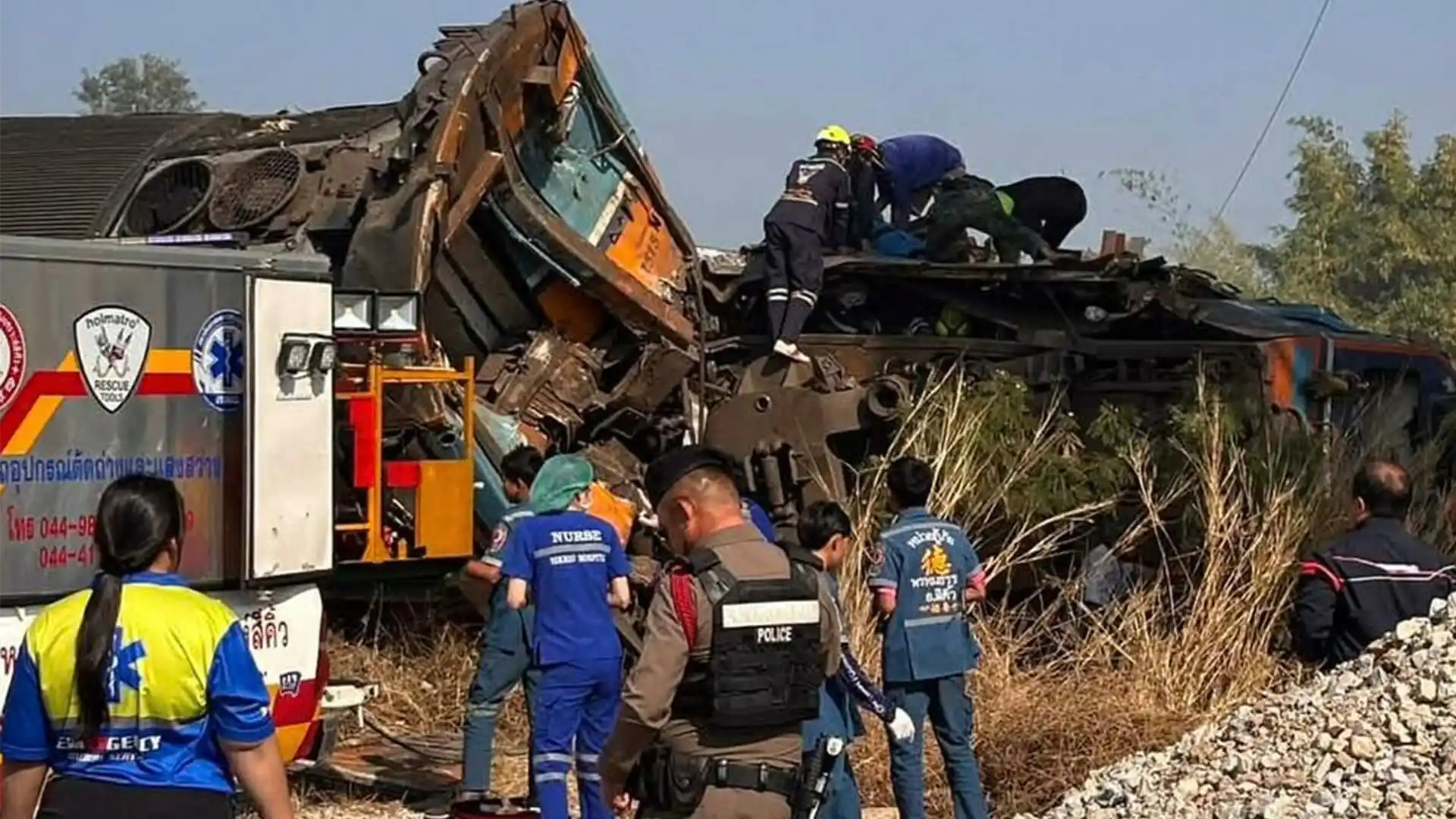
A passenger train heading from Thailand’s capital toward the northeastern region was involved in a deadly accident on Wednesday when a construction crane toppled onto one of its carriages, leaving at least 22 people dead and no fewer than 30 injured, according to Thai police.
The incident occurred earlier in the day in the Sikhio area of Nakhon Ratchasima province, about 230 kilometres northeast of Bangkok. The train was en route to Ubon Ratchathani province at the time of the crash.
Police told Reuters that the crane, which was being used for work on a high-speed rail construction project, suddenly collapsed and struck the moving train. The impact caused the train to derail, and a brief fire broke out following the collision. Authorities said the flames were quickly put out and emergency rescue operations were immediately launched.
Confirming the casualties, Thatchapon Chinnawong, a local police chief in Nakhon Ratchasima province, told AFP that 22 people had lost their lives and more than 30 others sustained injuries in the incident.
Emergency response teams, including police, medical personnel, and disaster relief units, were rushed to the scene shortly after the accident was reported. Injured passengers were transported to nearby hospitals, where several were said to be in critical condition. Rescue workers carefully searched the derailed carriages to ensure no passengers were trapped inside, using cutting equipment to access damaged sections. Authorities established a safety perimeter around the site to facilitate rescue operations and prevent further risks from unstable construction equipment or rail infrastructure.
Eyewitnesses described moments of panic as the crane collapsed onto the train, causing a loud impact followed by smoke and flames. Passengers inside the affected carriage reportedly felt a sudden jolt before the train came to an abrupt stop. Some survivors managed to escape through broken windows, while others assisted fellow passengers in evacuating. The brief fire added to the chaos, but emergency crews were able to contain it before it spread to additional carriages or nearby structures.
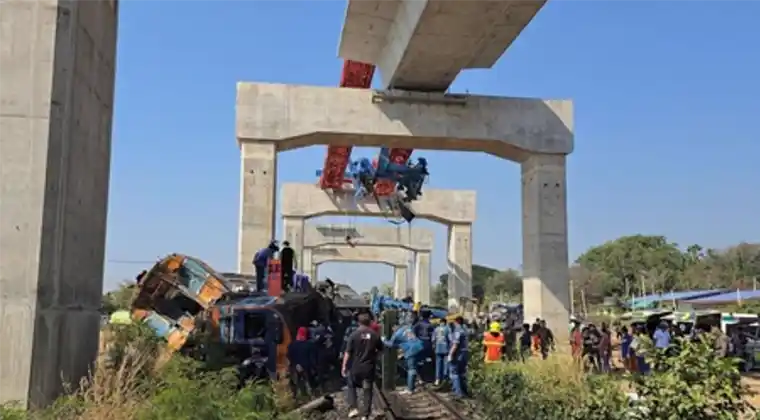
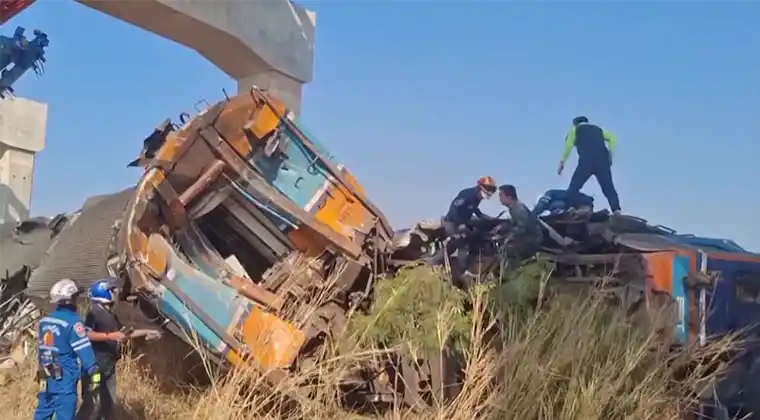
Thai transport authorities have launched an investigation to determine the cause of the crane collapse and assess whether safety protocols were followed at the construction site. Officials are examining the structural integrity of the crane, weather conditions at the time of the incident, and compliance with operational guidelines. Rail services along the affected route were temporarily suspended as engineers inspected the tracks for damage and ensured the area was safe before any trains were allowed to resume operations.
The accident has raised concerns about construction safety near active railway lines, particularly as Thailand continues to expand its rail infrastructure through large-scale projects. Experts have long warned of the risks associated with heavy construction work carried out close to operational transport corridors. Authorities are expected to review safety measures for similar projects nationwide to prevent such incidents from recurring and to strengthen coordination between construction teams and rail operators.
Government officials expressed condolences to the families of those killed and injured, pledging support for victims and a thorough review of safety standards. Compensation arrangements for affected passengers are expected to be announced once casualty figures are finalised. As investigations continue, officials have assured the public that accountability will be enforced if negligence is found. The tragedy has sparked renewed debate about balancing rapid infrastructure development with strict adherence to safety regulations.