As Dubai enters 2026, construction on the Oud Metha and Al Asayel road development has reached the 60 per cent completion mark, reflecting steady progress on the major infrastructure project aimed at improving traffic flow.
60% of Oud Metha–Al Asayel road project completed as 2026 gets underway in Dubai.
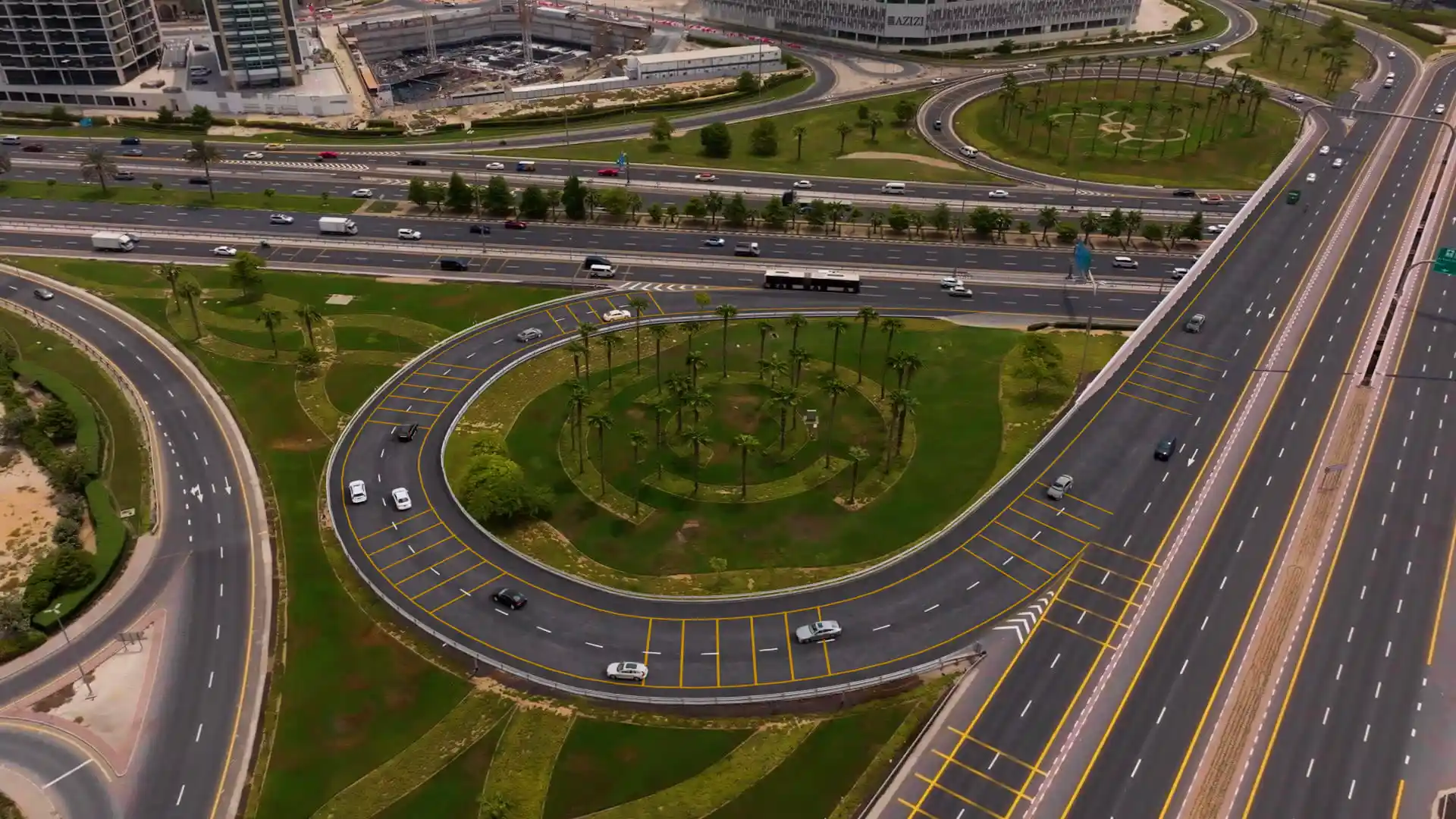
t the start of the new year, Dubai’s Roads and Transport Authority (RTA) confirmed significant progress on a key infrastructure initiative, announcing that work on the Oud Metha Road and Al Asayel Street upgrade has reached the 60 per cent completion mark. The development forms a major component of the broader Sheikh Rashid Corridor Development Project, which aims to enhance road capacity, ease congestion, and improve connectivity across some of the city’s busiest areas.
The large-scale project focuses on upgrading vital transport links that serve residential, commercial, and recreational districts. Once finished, the improved road network is expected to play a crucial role in supporting Dubai’s growing population and rising traffic volumes. According to the RTA, the development has been carefully planned to meet future demand, with projections indicating that the upgraded corridor will cater to more than 420,000 residents by the year 2030.
A key feature of the project is the construction and enhancement of four major intersections designed to streamline traffic movement and reduce delays during peak hours. These intersections will include a network of bridges with a combined length of approximately 4.3 kilometres, allowing for smoother vehicle flow across multiple directions without frequent stopping. In addition, around 14 kilometres of roads are being developed or upgraded as part of the project, significantly expanding capacity and improving overall road efficiency.
The upgraded infrastructure will strengthen links between several important routes in the city. One of the major improvements includes better connectivity between Al Asayel Street and Al Khail Road through Al Wasl Club Street. This enhancement is expected to provide motorists with more direct travel options, helping to reduce journey times and ease congestion on surrounding roads. The project also introduces a dedicated exit connecting Oud Metha Road with Al Wasl Club Street, making access to these areas more convenient and reducing traffic pressure on existing junctions.
RTA officials highlighted that the project is designed not only to address current traffic challenges but also to support long-term urban growth. As new residential and commercial developments continue to emerge, the enhanced road network will play a vital role in maintaining smooth mobility across the city. Improved connectivity is also expected to benefit public transport services, emergency response times, and daily commuting for thousands of residents.
Construction work has been progressing steadily, with teams focusing on completing bridge structures, road expansions, and supporting infrastructure such as lighting, drainage systems, and safety features. Despite the scale of the development, the RTA has emphasised its commitment to minimising disruption to road users by implementing phased construction schedules and traffic management plans.
The Sheikh Rashid Corridor Development Project, under which this road upgrade falls, is one of several strategic initiatives aimed at modernising Dubai’s transport network. By investing in large-scale infrastructure improvements, the city continues to reinforce its position as a global hub with efficient, future-ready mobility systems.
As the project moves closer to completion, residents and commuters can expect noticeable improvements in traffic flow and accessibility. With more than half of the work already finished, the RTA remains confident that the development will be delivered on schedule, contributing to safer roads, reduced congestion, and a better overall travel experience for the growing number of people who rely on these key routes every day.
The authority also provided an update on the progress of several key components within the wider development, noting substantial advancements in bridge and tunnel construction. According to officials, the contractor responsible for the project has achieved around 70 per cent completion on the bridge structures designed to support traffic travelling from Al Asayel Street to Al Khail Road in the northbound direction, leading towards the Business Bay Crossing. Work on these bridges has now entered its final stages, with teams focusing on finishing structural elements, safety installations, and surface works in preparation for opening.
Authorities indicated that these bridges are expected to become operational during the first quarter of the year, a milestone that is anticipated to significantly improve traffic flow in the area. Once opened, the bridges will offer motorists a more direct and efficient route, helping to ease congestion on existing roads and reduce travel times for commuters heading towards Business Bay and surrounding districts.
In addition to the bridge works, progress has also been made on the tunnel that will facilitate traffic movement from Dubai–Al Ain Road towards Al Wasl Club Street. The authority confirmed that approximately 60 per cent of construction on this tunnel has been completed so far. Current efforts are focused on structural finishing, internal fittings, and the installation of essential systems such as lighting, ventilation, and drainage to ensure the tunnel meets safety and operational standards.
Meanwhile, work continues on the remaining sections of the project, including road widening initiatives and the construction of additional bridge elements that will further enhance capacity and connectivity. These improvements are aimed at accommodating increasing traffic volumes while ensuring smoother and safer journeys for road users. Engineers and construction teams are working in phases to minimise disruption, while maintaining steady progress across all sections of the development.
Officials stated that the remaining road expansion works and related bridge structures are scheduled to be completed and opened during the third quarter of the year. Once these elements are operational, the full benefits of the project are expected to become more evident, with improved traffic distribution and reduced pressure on surrounding routes.
The authority emphasised that the project is being closely monitored to ensure timelines are met and quality standards maintained. With multiple components nearing completion, the development is steadily moving towards its final stages, marking another significant step in enhancing Dubai’s road infrastructure and supporting the city’s long-term mobility goals.
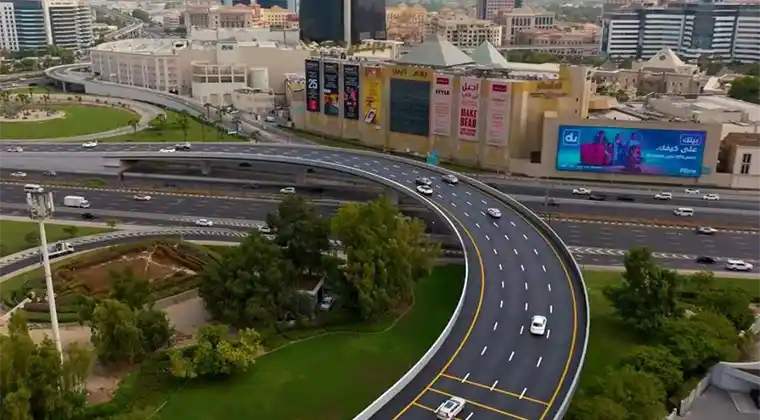
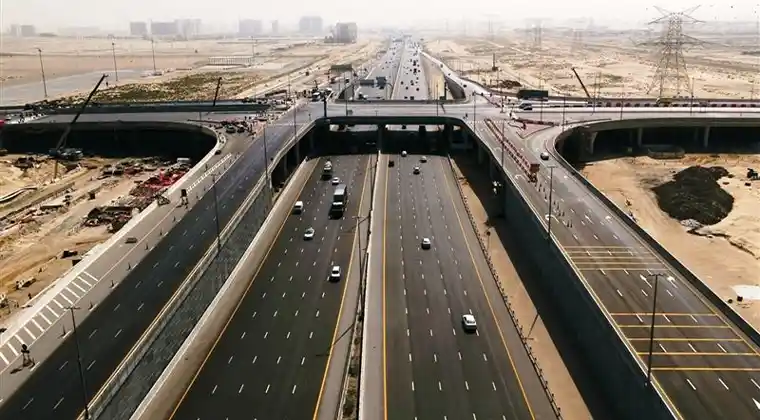
The comprehensive road development initiative encompasses improvements to four major intersections and is designed to serve several important residential, healthcare, and development districts across Dubai. Among the key areas benefiting from the project are Zabeel, Al Jaddaf, Oud Metha, Umm Hurair, the Latifa Hospital precinct, and the Al Wasl Club neighbourhood. Together, these locations form a vital urban corridor that supports daily commuting, commercial activity, and access to essential services.
Authorities estimate that by 2030, the population within the areas connected by this project will surpass 420,000 residents, underlining the importance of expanding road capacity and improving traffic efficiency. One of the most significant outcomes of the development will be the enhancement of Oud Metha Road, where vehicle-handling capacity in both directions is set to increase from 10,400 vehicles per hour to 15,600 vehicles per hour. This represents a substantial 50 per cent rise in capacity. At the same time, average travel time along the corridor is expected to be reduced dramatically—from around 20 minutes to approximately five minutes—delivering a 75 per cent improvement in journey efficiency.
The first of the four upgraded intersections is located at the junction of Oud Metha Road and Sheikh Rashid Road. This intersection is undergoing several targeted enhancements aimed at easing congestion and improving traffic flow. A new left-turn slip ramp is being added for vehicles travelling from Oud Metha Road onto Sheikh Rashid Road in the direction of Al Garhoud Bridge. This improvement will increase the turning capacity at the junction to approximately 1,800 vehicles per hour, allowing traffic to move more smoothly during peak periods.
In addition to the new ramp, the project includes upgrades to the service road along Sheikh Rashid Road between the existing bridge and the Al Zahrawi Street exit. These changes are intended to eliminate current traffic overlaps that cause delays and raise safety concerns. By reorganising traffic movements and improving road layout, the upgrade will enhance safety and efficiency for motorists. Furthermore, the number of right-turn lanes for vehicles travelling from Sheikh Rashid Road onto Oud Metha Road towards Dubai–Al Ain Road will be expanded from two to three. This change will increase capacity to around 4,000 vehicles per hour, significantly easing congestion at this busy junction.
The second major intersection included in the project is the junction of Oud Metha Road with Al Asayel Street and Al Wasl Club Street. This area will see extensive upgrades through the construction of two key bridges that will improve connectivity between Al Asayel Street and Al Khail Road via Al Wasl Club Street. The first bridge will feature two lanes and will accommodate traffic moving from Al Asayel Street towards Al Wasl Club Street, with a capacity of approximately 2,400 vehicles per hour. The second bridge, which will consist of three lanes, is designed to handle traffic travelling from Al Khail Road towards Al Asayel Road and will support up to 3,600 vehicles per hour.
Beyond these bridges, the project also includes a separate two-lane bridge dedicated to left-turn movements from Al Asayel Street towards Oud Metha Road. This structure will have a capacity of around 2,400 vehicles per hour and is expected to significantly reduce delays for drivers making this turn. Additional improvements include upgrades to the access road leading to Al Wasl Club, as well as enhanced entry and exit points along Al Wasl Club Street. These measures aim to resolve existing merging and weaving issues that currently disrupt traffic flow along the corridor.
The third intersection targeted for development is the junction of Al Wasl Club Street with Al Khail Road. Enhancements at this location include the construction of a two-lane bridge that will serve vehicles travelling from Al Asayel Street towards Al Khail Road in the direction of Business Bay Crossing. This bridge will be capable of handling up to 3,000 vehicles per hour, providing a more efficient route for commuters and reducing pressure on surrounding roads.
In addition, Al Wasl Club Street itself will undergo significant upgrades. Exit capacity towards Al Khail Road will be expanded to two lanes, improving traffic movement during peak hours. Service roads will be constructed on both sides of the street to separate local traffic from through traffic, further enhancing flow and safety. Dedicated parking spaces will also be introduced, helping to organise roadside activity and improve accessibility for nearby facilities.
The fourth and final intersection included in the project is located at the junction of Zabeel Palace Street with Al Khail Road and Oud Metha Road. Works at this intersection include the addition of an extra left-turn slip lane on the ramp serving vehicles travelling from Al Khail Road towards Dubai–Al Ain Road. This improvement will double the ramp’s capacity from 900 vehicles per hour to 1,800 vehicles per hour, significantly reducing bottlenecks.
The scope of work at this junction also features the construction of a single-lane tunnel designed to carry traffic from Dubai–Al Ain Road towards Al Wasl Club Street. With a capacity of approximately 1,200 vehicles per hour, the tunnel will help eliminate existing traffic conflicts and streamline vehicle movement. Additionally, the number of lanes on the existing bridge serving traffic from Al Khail Road towards Oud Metha Road will be increased from two to three. This enhancement will raise the bridge’s capacity from 2,200 vehicles per hour to 3,300 vehicles per hour, further supporting smoother and more efficient travel.
Collectively, these four intersection upgrades form a critical part of the wider road development project, delivering long-term benefits in terms of reduced congestion, improved safety, and significantly shorter travel times for thousands of daily road users.