Abu Dhabi plans to introduce a fleet of luxury self-driving taxis by 2026, offering residents and visitors a high-tech, convenient, and safe transportation option as part of the emirate’s smart mobility vision.
Luxury self-driving taxis are scheduled to hit the roads in Abu Dhabi by 2026
Lumo, the UAE’s national smart-mobility provider, will introduce a fleet of high-end autonomous robotaxis in Abu Dhabi in 2026, working in collaboration with Mercedes-Benz and Momenta, an AI firm focused on self-driving technology.
The service will use Momenta’s L4 autonomous system integrated into the latest Mercedes-Benz S-Class, creating the world’s first premium robotaxi model developed from a mass-produced luxury vehicle. Commercial operations are expected to start in Abu Dhabi next year, with plans to expand into global markets later on.
This rollout marks another milestone in the UAE’s push toward futuristic transport, adding to several autonomous mobility initiatives already underway across Abu Dhabi and Dubai.
Driverless Transport in UAE
Last month, Abu Dhabi became the first city in the MENA region to roll out commercial services using fully autonomous vehicles. Following two weeks of closed testing, the Integrated Transport Centre announced the start of public operations for driverless cars.
WeRide and AutoGo-K2 received the initial permits to operate Level 4 autonomous vehicles. With this, Abu Dhabi also became the first city outside the United States to offer completely driverless taxis through Uber Technologies and WeRide.
At present, rides with safety drivers are available via Uber in select areas, including Yas Island, Abu Dhabi Airport, and Al Maryah Island. Uber’s system automatically assigns a self-driving vehicle when both the pick-up and drop-off locations fall within WeRide’s active zones.
Some of the smart mobility solutions already operating in Abu Dhabi — and others still being developed — include:
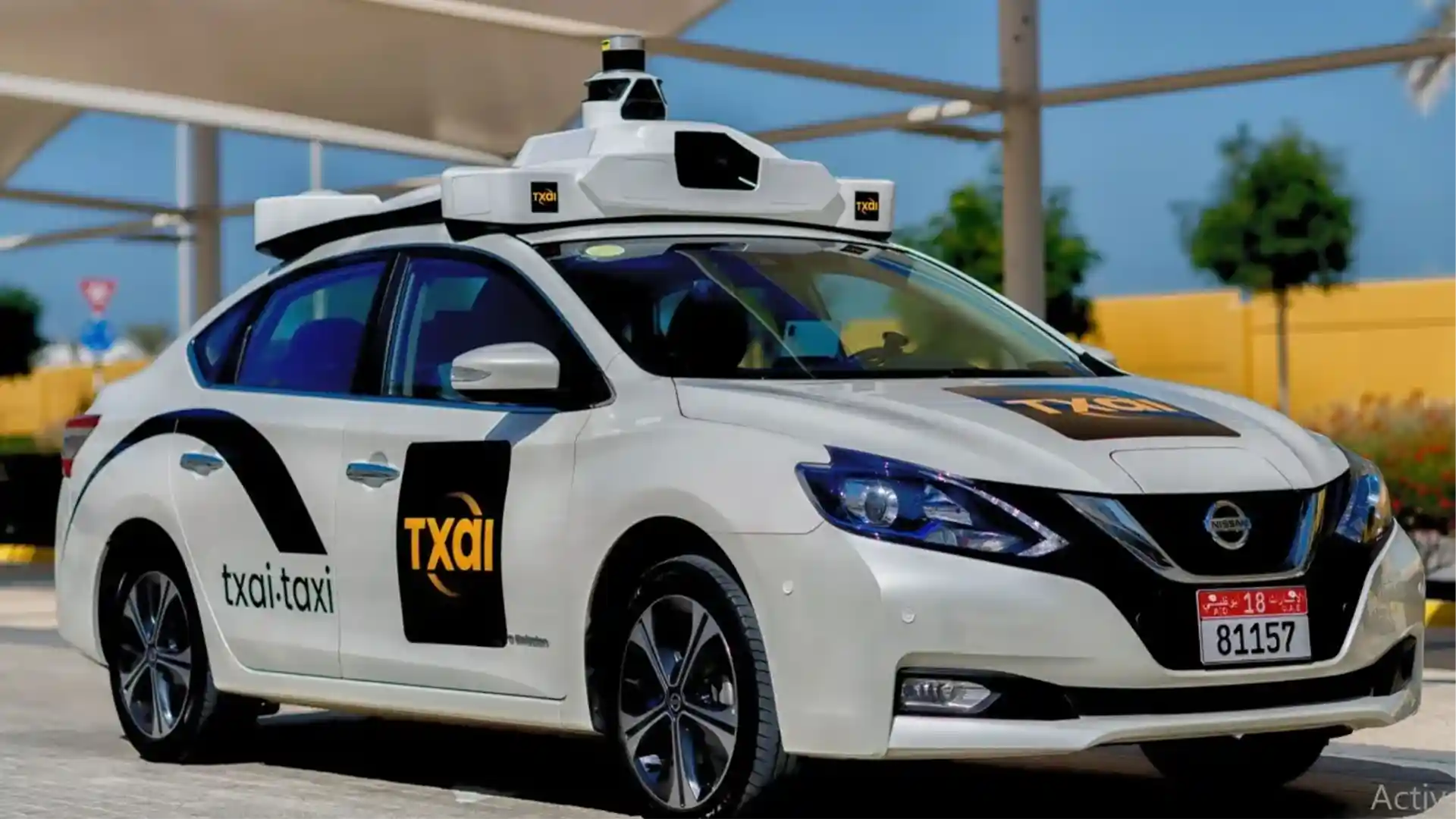
Electric and hybrid robotaxis under the TXAI brand currently operate on Yas Island, Saadiyat Island, and on the routes leading to Zayed International Airport.
Masdar City also features autonomous electric Personal Rapid Transit (PRT) pods that move passengers around the district.
In addition, the Smart and Autonomous Vehicle Industries (SAVI) cluster in Masdar City serves as a dedicated hub to advance autonomous technologies across land, air, and sea transport.
Dubai is also preparing for the arrival of driverless taxis next year. The Roads and Transport Authority (RTA) has broadened its collaborations with companies specializing in autonomous driving systems to introduce self-driving taxis in 2026.
Three Chinese firms — Baidu’s Apollo Go, WeRide, and Pony.ai — have received approval from the RTA to carry out autonomous vehicle testing on selected routes, allowing them to begin on-road trials across Dubai’s urban areas.
Dubai aims for 25% of all journeys in the city to be smart and autonomous by the year 2030.