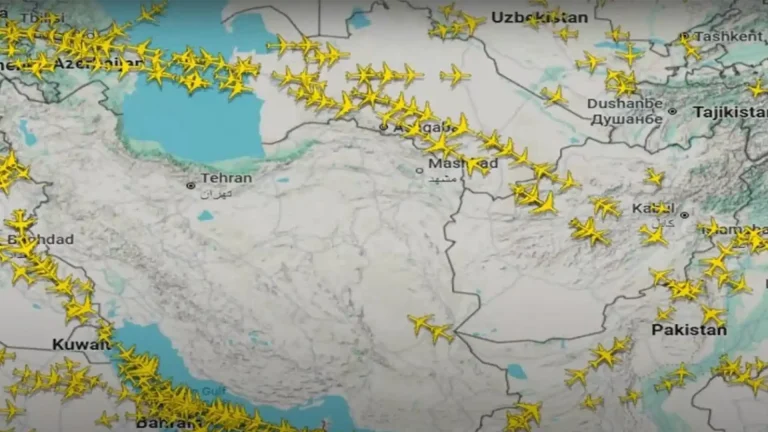
Iran temporarily closed its airspace for nearly five hours, with flight tracking data showing widespread diversions, grounded aircraft, empty corridors, and gradual normalization as operations cautiously resumed across the region.
Iran Airspace Closed for Almost 5 Hours — What Flight Data Reveals
Relations between Iran and the United States have remained strained, with several significant developments unfolding over the past two days. Political statements, internal unrest, and security concerns have all contributed to a rapidly evolving situation that has had ripple effects beyond diplomacy — including the temporary shutdown of Iran’s airspace.
Earlier this week, the Trump administration warned that it would respond forcefully if Iran proceeded with the execution of protestors amid ongoing anti-government demonstrations. However, late on Wednesday night, former US President Donald Trump stated that he had received reliable information suggesting that the executions would not move forward and that the reported killings had ceased.
Against this backdrop of uncertainty, Iranian authorities opted to temporarily close the country’s airspace overnight as a precautionary step. The move appeared aimed at reducing potential risks as tensions escalated both domestically and internationally. Below is a detailed look at what happened, why it matters, and how it affected global aviation.
Why did Iran restrict its airspace?
Iran’s decision to limit access to its airspace came amid growing political pressure and internal unrest. With large-scale protests continuing across the country and warnings exchanged between Tehran and Washington, aviation authorities restricted airspace access to aircraft operating under special permissions only.
At the same time, US officials were reportedly assessing possible responses to the situation in Iran. Adding to regional unease, Washington announced the withdrawal of some personnel from US military facilities in the Middle East. This followed remarks from a senior Iranian official who said neighboring countries had been warned that American bases could be targeted if the US launched any strikes.
The increasing frequency of missile and drone attacks in conflict zones across the region has heightened concerns for civilian aviation, prompting airlines and regulators to act cautiously.
How long did the closure last?
Iran’s airspace was shut for close to five hours overnight on Wednesday, January 14. The closure was temporary, and flight activity gradually returned to normal once restrictions were lifted.
Which airlines were impacted?
Several international airlines were forced to adjust operations as a result of the sudden airspace restriction. India’s largest carrier, IndiGo, confirmed that some of its international services were affected. Air India also stated that it rerouted aircraft to avoid Iranian airspace, warning that the changes could lead to longer flight times, delays, or cancellations.
In one notable case, a Russia-based Aeroflot flight en route to Tehran was forced to turn back to Moscow following the closure, according to flight-tracking data.

What did Flightradar24 show?
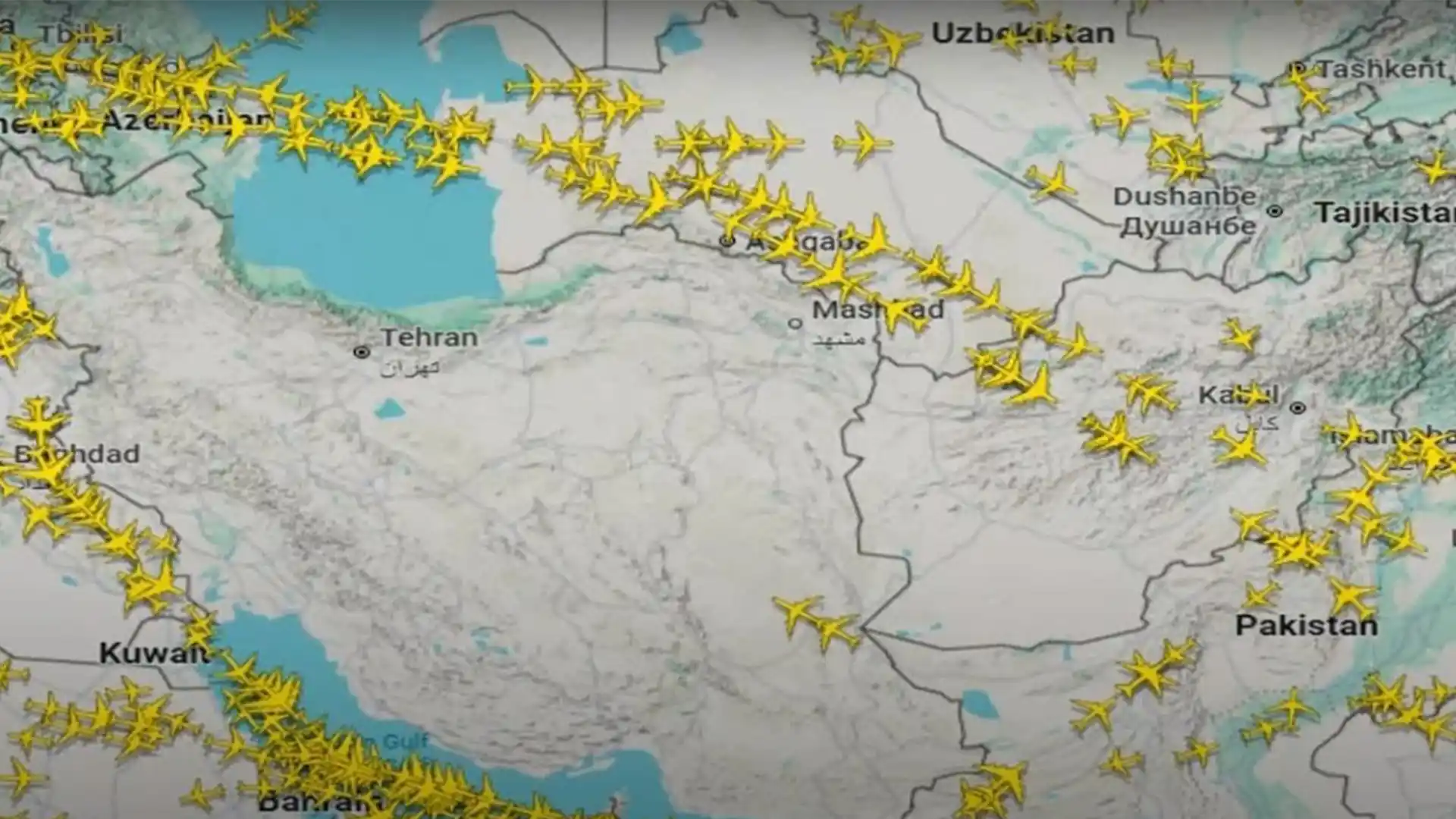
At the time of reporting, Flightradar24 data indicated that flights were once again passing through Iranian airspace as usual. However, during the closure overnight, aircraft could clearly be seen diverting around Iran, choosing longer paths to avoid the restricted zone.
By comparison, flight-tracking data from the same time the previous week showed at least a dozen aircraft crossing Iranian airspace, highlighting the sharp but temporary disruption caused by the closure.
Did the closure affect Gulf flight routes?
Yes. Many commercial flights traveling to and from Gulf countries routinely pass through Iranian airspace. When access is restricted, airlines must reroute aircraft, often adding significant distance and time to journeys. These detours can increase fuel consumption and operational costs while also contributing to delays.
What is a NOTAM?
A NOTAM, or Notice to Air Missions, is an official alert issued to pilots and airlines to inform them of changes or hazards related to airspace, airports, or flight operations. NOTAMs play a critical role during airspace closures, as they formally communicate restrictions and safety information to aviation stakeholders.
How do airlines ensure safety during such closures?
Airlines prioritize passenger and crew safety above all else. When airspace restrictions are imposed, carriers strictly avoid prohibited zones in compliance with international aviation laws. They also steer clear of areas considered high-risk due to military activity or instability and follow guidance issued by civil aviation authorities and global safety advisories.
While Iran’s airspace closure was brief, it underscored how geopolitical tensions can quickly impact global travel, forcing airlines to adapt operations in real time amid evolving security concerns.