
Dubai gold rates slipped slightly as investors booked profits, though 24-karat gold continued to trade firmly above the Dh550 mark, remaining expensive for buyers despite the mild correction.
Dubai Gold Prices Edge Down After Profit-Taking, 24K Still Costly Above Dh550.
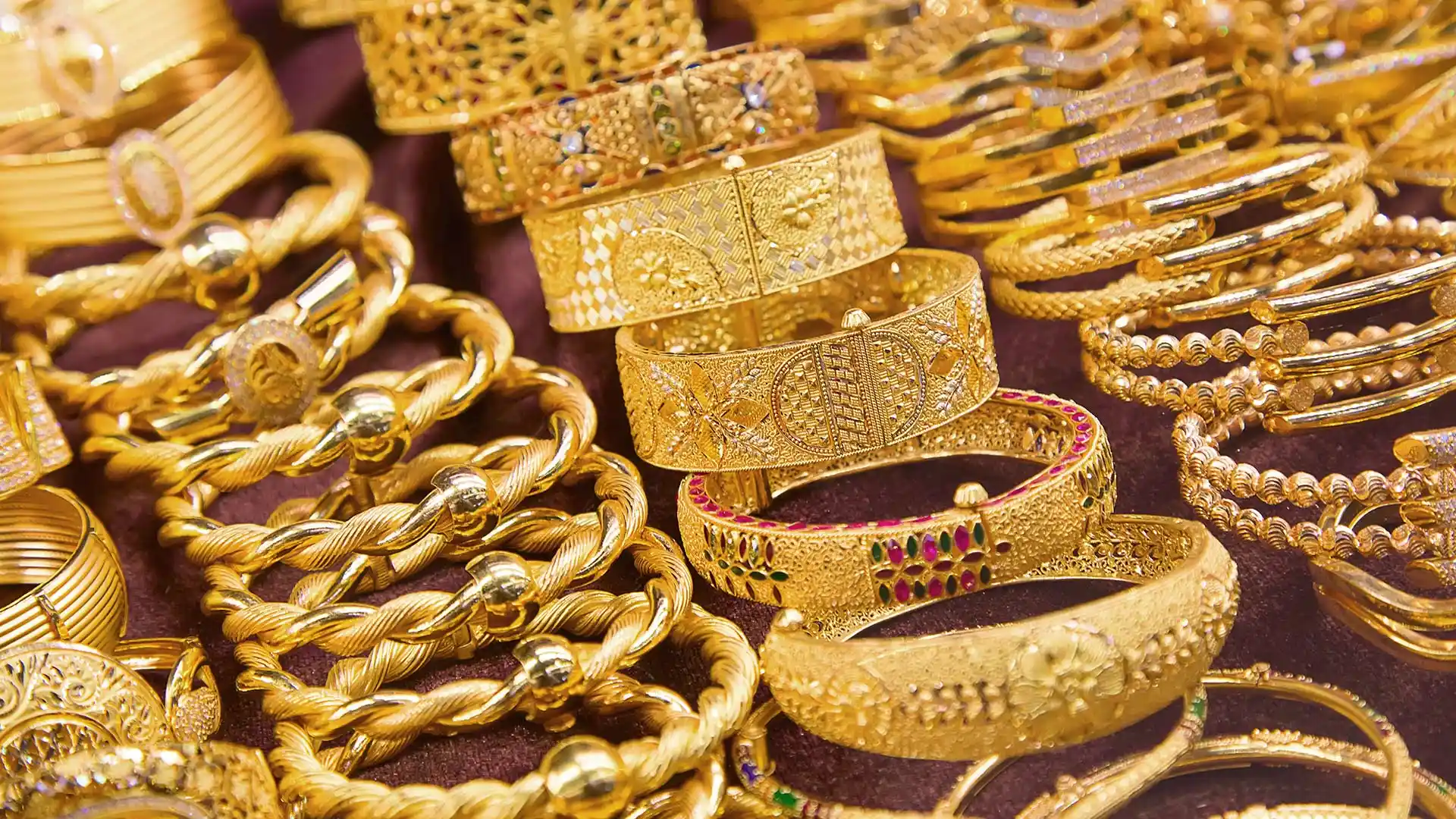
Gold Retreats After Hitting New Highs as Investors Lock in Gains
Gold prices in Dubai, in line with international markets, moved lower on Thursday morning after touching record levels earlier in the week. The decline came as investors chose to book profits following the precious metal’s strong rally, while a slightly calmer geopolitical backdrop reduced immediate demand for traditional safe-haven assets.
After several sessions of upward momentum that pushed prices to historic highs, traders opted to take money off the table, triggering a mild correction. Market participants noted that the pullback was not driven by a fundamental shift in outlook, but rather by short-term profit-taking after gold’s rapid ascent.
Dubai Gold Rates Ease but Stay Elevated
Data released by the Dubai Jewellery Group showed that retail gold prices in the emirate softened across all major categories. The price of 24-karat gold was quoted at Dh553 per gram, marking a drop of nearly Dh2 compared to the previous session. Despite the decline, prices remain near record territory, underscoring the metal’s continued strength.
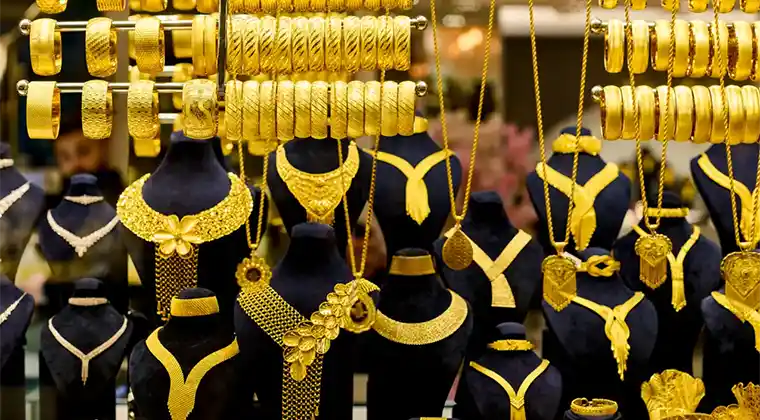
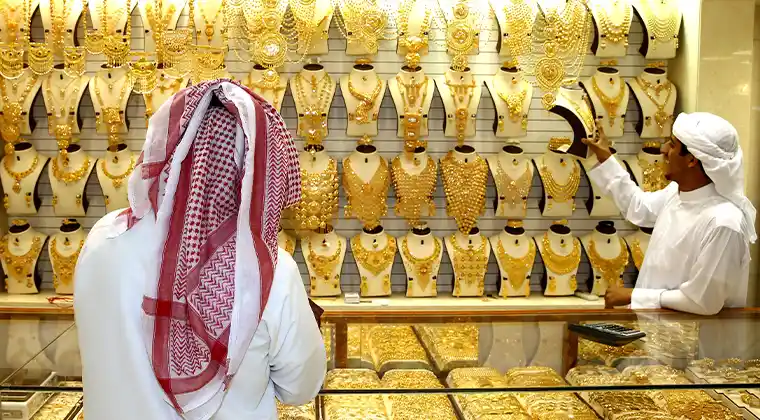
Meanwhile, 22-karat gold slipped to Dh512.25 per gram, while 21-karat gold was priced at Dh491 per gram. The lower-purity variants also edged down, with 18-karat gold trading at Dh421 per gram and 14-karat gold at Dh328.25 per gram.
Jewellers noted that while the slight drop has caught the attention of buyers, prices remain high by historical standards, keeping many consumers cautious. Some shoppers are delaying purchases in hopes of a deeper correction, while others continue to buy selectively, particularly for investment or wedding-related needs.
Global Gold Prices Mirror the Pullback
On the international front, spot gold prices were also under pressure. At around 9am UAE time, spot gold was trading at approximately $4,590 an ounce, representing a decline of about 0.8 per cent on the day. This dip followed a sharp rally that saw gold touch an all-time high in the previous session.
Market analysts emphasized that the current weakness should be viewed in context. Gold has been one of the strongest-performing assets in recent months, benefiting from a combination of economic uncertainty, geopolitical risks, and shifting expectations around global monetary policy.
Even with Thursday’s decline, gold remains firmly supported by broader macroeconomic and political factors that continue to underpin investor interest.
Inflation Data Shapes Rate Expectations
One of the key drivers influencing gold markets has been the evolving outlook for US interest rates. Recent inflation data from the United States came in below market expectations, reinforcing the belief that the US Federal Reserve could move toward easing monetary policy later this year.
Vijay Valecha, Chief Investment Officer at Century Financial, explained that the softer inflation readings have strengthened expectations for at least two interest rate cuts by the Federal Reserve in 2026. Lower interest rates typically support gold prices by reducing the opportunity cost of holding non-yielding assets such as bullion.
“The latest inflation numbers have increased confidence that the Federal Reserve will be able to cut rates twice this year,” Valecha said. “This has influenced bond yields, currency markets, and investor positioning across asset classes.”
However, he added that other developments have added complexity to the outlook, particularly concerns surrounding the US central bank’s independence.
Concerns Over the Federal Reserve Weigh on Markets
In addition to inflation data, reports suggesting potential legal challenges involving US Federal Reserve Chair Jerome Powell have unsettled financial markets. These developments have sparked debate over the independence of the central bank, a cornerstone of investor confidence in US monetary policy.
Valecha noted that uncertainty around the Federal Reserve’s autonomy has contributed to volatility in interest rate expectations and placed downward pressure on the US dollar. A weaker dollar generally supports gold prices, as the metal becomes cheaper for buyers using other currencies.
At the same time, heightened uncertainty has encouraged investors to reassess their exposure to risk assets, reinforcing gold’s appeal as a hedge against institutional and policy-related instability.
Geopolitical Risks Continue to Support Gold
Beyond monetary policy, geopolitical developments remain a major factor shaping gold’s trajectory. While Thursday’s pullback reflected some easing in immediate risk sentiment, broader global tensions continue to simmer beneath the surface.
Valecha highlighted several flashpoints that have contributed to persistent uncertainty in global markets. These include violent protests in Iran, renewed diplomatic and economic pressure from the United States on Venezuela, and fresh tariff-related threats linked to Tehran.
In addition, the ongoing conflict in Ukraine remains a significant source of instability, with no clear resolution in sight. Together, these developments have reinforced demand for assets that are perceived as being insulated from political and geopolitical shocks.
“Geopolitical risks remain elevated across multiple regions,” Valecha said. “These factors continue to push investors toward safe-haven assets, even if short-term price movements reflect temporary profit-taking.”
Investor Sentiment Remains Constructive
Despite Thursday’s decline, market participants remain broadly constructive on gold’s medium- to long-term outlook. Analysts point out that the current correction appears orderly and limited in scope, suggesting that underlying demand remains intact.
Institutional investors, central banks, and long-term asset managers have been increasing their exposure to gold as part of diversification strategies, particularly in light of growing concerns over currency stability, fiscal deficits, and political risk.
Central bank purchases, in particular, have played a crucial role in supporting gold prices over the past year. Several emerging-market central banks have continued to add to their gold reserves, seeking to reduce reliance on traditional reserve currencies.
Technical Levels in Focus
From a technical analysis perspective, Century Financial’s chief investment officer noted that gold may encounter resistance near the $4,675 level. This area corresponds to a downward trendline that connects multiple previous highs recorded on October 27, November 13, and December 26, 2025.
These levels are closely watched by traders, as they often act as psychological and technical barriers to further upside. A sustained break above this resistance zone could pave the way for renewed bullish momentum, while failure to do so may result in additional consolidation.
On the downside, support is seen around the $4,550 level, which has been tested previously and held firm. This zone is viewed as an important cushion that could help limit further declines in the absence of a major negative catalyst.
“As long as gold remains above key support levels, the broader uptrend remains intact,” Valecha explained. “Short-term corrections are a normal part of any strong rally.”
Outlook: Consolidation or the Next Leg Higher?
Looking ahead, analysts believe gold may enter a period of consolidation as markets digest recent gains and await further clarity on interest rate policy, inflation trends, and geopolitical developments.
Upcoming economic data releases, central bank communications, and political events are expected to play a significant role in determining the metal’s next move. Any signals pointing toward faster or deeper rate cuts could reignite bullish momentum, while a stronger-than-expected dollar or easing geopolitical tensions may cap gains in the near term.
For Dubai consumers and investors, prices are likely to remain elevated, even if short-term volatility continues. Jewellers say that buying interest typically picks up during pullbacks, but sustained demand depends on whether prices stabilize at lower levels.
A Market Still Defined by Uncertainty
Ultimately, gold’s recent performance reflects a world grappling with uncertainty on multiple fronts. From monetary policy shifts and institutional credibility to geopolitical flashpoints and currency dynamics, the forces shaping gold markets remain complex and interconnected.
While Thursday’s decline marked a pause after an extraordinary rally, it did little to alter the broader narrative. Gold continues to be viewed as a critical hedge in an environment where economic and political risks remain unresolved.
As investors navigate this landscape, gold’s role as a store of value and risk diversifier is likely to keep it firmly in focus — even as short-term price movements ebb and flow.